Ketamine comes up often in conversations about chronic pain and about depression. It is also the subject of a specific FDA safety alert, a great deal of unregulated online selling, and a good deal of overstatement. This article sets out what it is, what is and is not approved, and what the FDA has actually said.
Ketamine is a Schedule III controlled substance. It is FDA-approved as an injectable anesthetic. It is not FDA-approved for the treatment of any psychiatric disorder, and compounded ketamine nasal spray is not an FDA-approved product in any form. Bayview compounds ketamine only against a valid prescription written by a licensed prescriber for a named patient.
What is compounded ketamine nasal spray?
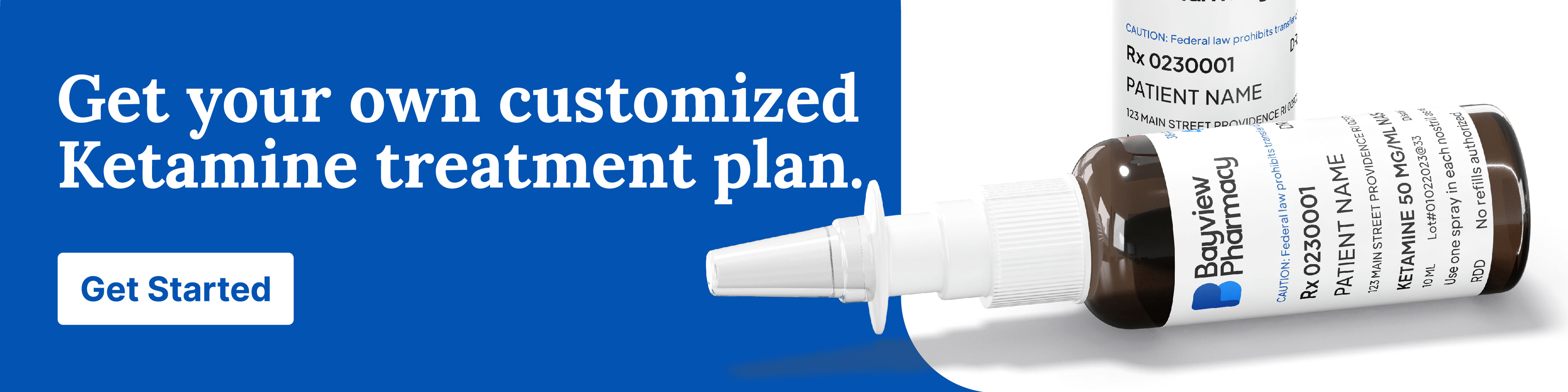
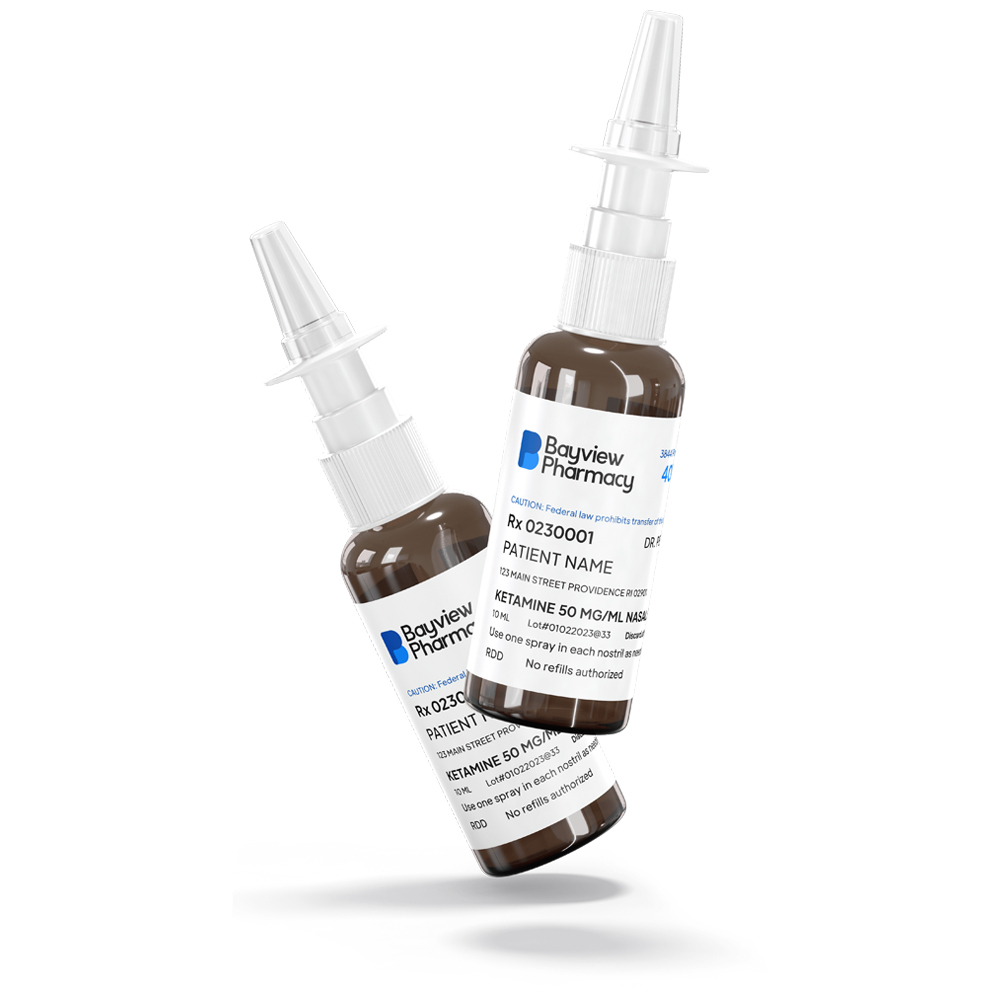
It is ketamine hydrochloride prepared into a liquid and dispensed in a metered spray bottle, at the strength and volume a prescriber specifies for one patient. A pharmacy prepares it against that prescription rather than a manufacturer producing it in batches, so a compounded ketamine nasal spray carries no FDA-reviewed labeling and no approved indication.
Ketamine is a controlled substance in Schedule III under federal law, which means it is dispensed only on a prescription written for a named patient, with the record keeping that goes with that schedule. Controlled substances are not shipped to New York addresses, and the states where Bayview is licensed are listed with the rest of our dispensing and shipping questions.
Is ketamine used for chronic pain?
Most of the published pain literature on ketamine concerns intravenous infusion given in a monitored clinical setting, not a spray used at home. A 2018 multi-society consensus guideline addressed intravenous ketamine infusions for chronic pain; it did not evaluate compounded intranasal preparations, and it is not a guideline for them.
Evidence for intranasal ketamine in chronic pain is thinner than that: small studies and case reports rather than large controlled trials. Any use of a compounded ketamine preparation for pain is off-label, and whether it is appropriate at all, at what strength, and with what monitoring, is a decision for the prescriber who is evaluating the patient. Prescribers weighing non-opioid options often start elsewhere, and our overview of compounded alternatives to opioids covers what those options are.
For pain that is localized to one area, a preparation that stays near the site of application is a different proposition from a systemic one. A topical pain cream is applied to the skin over the painful area and is compounded to a prescriber's formula. In hospice and end-of-life care the calculation changes again, and palliative care compounding describes how dose forms are chosen when swallowing is difficult.
The table below compares the ketamine-related options a prescriber may discuss. Read the regulatory status column first, because it is the column that differs most.
| Preparation | Regulatory status | Setting | Evidence |
|---|---|---|---|
| Ketamine injection | FDA-approved (anesthesia) | Clinical, monitored | Controlled trials |
| Esketamine nasal spray | FDA-approved (REMS) | Certified healthcare setting | Controlled trials |
| Compounded ketamine nasal spray | Compounded, not FDA-approved | Prescriber-arranged | Case reports |
| Compounded ketamine troche or tablet | Compounded, not FDA-approved | Prescriber-arranged | Case reports |
Esketamine nasal spray is approved for treatment-resistant depression, not for pain, so an approved product does not exist for the use this article describes. Every compounded row above is off-label for pain by definition, since a compounded preparation has no approved indication to be on-label for.
What did the FDA say about compounded ketamine nasal spray?
On February 16, 2022 the FDA alerted health care professionals to potential risks associated with compounded ketamine nasal spray. It is short, and it is worth reading in the original (FDA).
The agency stated that patients "may be at risk of serious adverse events and potential misuse and abuse," and pointed to case reports describing psychiatric events including delusion, dissociation, visual hallucination, and panic attack, as well as abuse and misuse. It noted that in most of those case reports the patients self-administered the product at home, and that it was unknown whether they were observed or monitored by a healthcare professional. It also stated plainly that "the benefit and risk profile for compounded ketamine nasal spray has not been evaluated."
The at-home, unsupervised part of that is the specific concern, and it is worth separating from the drug itself. The alert was directed at compounded ketamine for psychiatric conditions. It is the closest thing to an official position on these preparations, and it is the document to raise with a prescriber before anything is dispensed.
How is this different from esketamine nasal spray?
People frequently conflate compounded ketamine with Spravato. They are not the same thing.
Spravato is esketamine, a different molecule, and it is FDA-approved with substantial safeguards attached. It is dispensed under a Risk Evaluation and Mitigation Strategy, or REMS. It cannot be dispensed for use outside a certified healthcare setting, and patients must be monitored inside that setting for a minimum of two hours after administration. Those safeguards exist because of the risk profile of the drug class.
A compounded ketamine nasal spray carries none of that structure with it. Whatever monitoring happens is whatever the prescriber arranges. That difference is the substance of the FDA's concern, and it is the thing to discuss with a prescriber before starting.
What are the risks of ketamine nasal spray?
Ketamine is dissociative by nature. Reported effects include dissociation, hallucination, confusion, disorientation, panic, raised blood pressure and heart rate, nausea, and sedation. It is a controlled substance with recognised potential for misuse and dependence, and any claim that it carries no dependency risk is wrong.
Case series and case reports also describe urinary tract effects with frequent or long-term ketamine use, including bladder pain, urinary urgency and bladder inflammation. Most of that literature describes heavy recreational use rather than prescribed use, but it is reported often enough that prescribers ask about urinary symptoms.
Blood pressure and heart rate effects are the reason cardiovascular history matters here, and abuse potential is the reason a history of substance use disorder matters. Those are among the things a prescriber weighs before writing for ketamine at all, along with what monitoring is realistic outside a clinic.
Do not drive or operate machinery after taking it. Store it securely and out of reach of others in the household, as you would any controlled substance. Report any psychiatric symptoms, confusion, or reactions that concern you to your prescriber promptly.
Nasal spray is one route among several, and the same cautions apply to the others. Our note on compounded sublingual medications explains how buccal and sublingual dose forms behave differently from a swallowed tablet.
Can you buy ketamine online?
There is a large market of websites selling ketamine directly to consumers, and the FDA has issued warning letters to a number of them. Ketamine dispensed without a valid prescription from a licensed prescriber is being sold illegally, and there is no assurance of what is in it. A compounded preparation from a licensed pharmacy is dispensed against a prescription written for one named patient, and that is the only route we participate in.
What ketamine preparations does Bayview compound?
Bayview is a 503A compounding pharmacy in Warwick, Rhode Island. On a prescriber's order we prepare ketamine in the strength and dose form the prescription specifies. The forms we compound are:
- Nasal spray, intranasal, from $150
- Ketamine rapid dissolve tablets, sublingual, from $40
- Ketamine troche, buccal, from $250
Details of what we prepare are on our ketamine nasal spray page, and all three dose forms are catalogued under mental health and neurology.
Prescribers looking at intranasal options for reasons unrelated to ketamine sometimes ask about lidocaine nasal spray, which is a local anesthetic and a different class of preparation entirely. Both sit alongside the rest of our preparations in the searchable catalog.
Talk to your prescriber
If ketamine has been suggested to you for pain, or you have seen it advertised, take the February 2022 FDA alert to the appointment and ask how you would be monitored. Ask what the plan is if the dissociative effects are worse than expected, and ask what the alternatives are, including preparations that are FDA-approved for your condition.
We do not determine whether ketamine is appropriate for anyone, we do not provide consultations, and we do not offer treatment. Those are decisions for a prescriber who is evaluating and monitoring the patient. Prescribers can reach us at Bayview Pharmacy, 3844 Post Rd, Warwick, RI 02886, or via our for providers page.
Frequently asked questions
What is ketamine nasal spray used for?
It's compounded and prescribed off-label, under a prescriber's supervision, most often for treatment-resistant depression, depression that hasn't responded to other medications, and sometimes for related mood conditions. Your prescriber decides whether it's appropriate for you and how it fits into your overall treatment plan.
How is it different from Spravato?
Spravato (esketamine) is an FDA-approved intranasal medication for treatment-resistant depression, given in a certified healthcare setting with monitoring. Compounded ketamine nasal spray is not FDA-approved; it is prepared by a pharmacy to a prescriber's specification and used off-label. Your prescriber can explain why they've chosen a compounded formulation for your situation.
Is it FDA-approved? Is it safe?
Compounded ketamine is not FDA-approved for any psychiatric condition, and the FDA has cautioned about risks of compounded ketamine, particularly when used at home without monitoring. Known risks include sedation, dissociation, raised blood pressure, slowed breathing, bladder and urinary symptoms with long-term use, and potential for misuse. Used exactly as prescribed within a supervised plan, your prescriber weighs these risks against the potential benefit for you.
How do I use the spray?
Use it exactly as prescribed, a typical direction is one spray in each nostril, but your concentration, number of sprays, and timing are set by your prescriber. Prime the bottle if directed, stay seated, and don't drive or operate machinery until the effects have fully worn off. Follow your prescriber's guidance on the setting and any monitoring for each dose.
What side effects should I expect?
Common short-term effects include dissociation (feeling detached), dizziness, drowsiness, nausea, and a temporary rise in blood pressure. Nasal use can cause local irritation. Long-term or heavy use has been linked to bladder and urinary problems. Tell your prescriber about heart or blood-pressure conditions and all medications you take. Seek urgent care for chest pain, severe confusion, trouble breathing, or symptoms that alarm you.
Can it be misused, and how should I store it?
Yes, ketamine is a Schedule III controlled substance with potential for misuse and abuse. Store it securely, out of reach of children, teens, and anyone it isn't prescribed for, and don't share it. Take only your prescribed amount, and return or dispose of unused medication properly.
How does my provider prescribe it?
Because ketamine is a controlled substance, prescribers must send an electronic controlled-substance prescription (EPCS). Bayview fills for patients in RI, MA, CT, NJ, NH, FL, ME, and PA. Your provider can find our controlled-substance prescribing guidance and contact our pharmacists with questions.
What are ketamine rapid dissolve tablets used for?
They're compounded and prescribed off-label, under a prescriber's supervision, most often for treatment-resistant depression, depression that hasn't responded to other medications, and sometimes related mood conditions. Your prescriber decides whether they're appropriate for you and how they fit into your treatment plan.
What are ketamine troches used for?
They're compounded and prescribed off-label, under a prescriber's supervision, most often for treatment-resistant depression, depression that hasn't responded to other medications, and sometimes related mood conditions. Your prescriber decides whether they're appropriate for you and how they fit into your treatment plan.
How is a troche different from the rapid dissolve tablet?
Both absorb through the lining of the mouth rather than the stomach. A rapid dissolve tablet melts quickly under the tongue; a troche is a firmer lozenge held between the cheek and gum that dissolves more slowly. Your prescriber chooses the form, strength, and schedule that fit your plan and preference.
Can I send a controlled-substance prescription for a New York patient?
Not at this time. Bayview does not dispense or ship controlled substances to New York addresses, so please do not send controlled-substance prescriptions for patients at a New York address — we will not be able to fill them.
Non-controlled prescriptions for New York patients are filled and shipped normally. Every other state we serve — Rhode Island, Massachusetts, Connecticut, New Jersey, New Hampshire, Florida, Maine, and Pennsylvania — is unaffected for both controlled and non-controlled medications.
If you have a question about a specific patient or prescription, call our pharmacists at (401) 284-4505.
Which controlled substances do you compound?
We compound and dispense controlled substances in Schedules II through IV. Preparations we make routinely include morphine, hydromorphone and methylphenidate (Schedule II), ketamine and testosterone (Schedule III), and clonazepam and diazepam (Schedule IV).
Controlled substance prescriptions must be sent electronically through EPCS. They cannot be phoned or faxed to us, and they cannot be transferred to us by phone or fax either. Your DEA registration must be valid and the prescription must meet the requirements for its schedule.
One coverage limit to note: we do not ship controlled substances to New York addresses at this time. Non-controlled prescriptions for New York patients are unaffected.
If you are not sure whether we can prepare a particular controlled formulation, call us at 401-284-4505 before you send it and we will confirm.
How much do compounded medications cost?
Pricing varies depending on ingredients and formulation complexity.
What Bayview compounds for this
Important: Compounded medications are prepared to a prescriber's order for an individual patient. They are not FDA-approved, and the FDA has not evaluated them for safety, effectiveness, or manufacturing quality. This article is educational and is not a substitute for advice from your prescriber or pharmacist.
This preparation contains a controlled substance. Controlled-substance prescriptions carry refill limits, must be e-prescribed, and can only be shipped to states where Bayview holds the required licensure.
Uses discussed here may be off-label, meaning they are not part of any FDA-approved labeling. Off-label use is a decision for you and your prescriber, based on the available evidence.
Veterinary preparations are compounded to a veterinarian's order for a specific animal and are not FDA-approved animal drugs. Never give a compounded human medication to an animal without veterinary direction.
Compounded prescriptions are paid for directly rather than billed through insurance. Most are HSA/FSA-eligible, and many patients submit the receipt to their plan for possible reimbursement. Pricing depends on the strength, dose form and quantity your prescriber orders. Read more about cost and insurance.
A compounded ketamine nasal spray starts at $150, and the final figure depends on the strength, volume and quantity the prescription calls for. Compounded preparations are not manufactured drug products and are not billed through insurance, so payment is made directly to the pharmacy. Other ketamine dose forms are priced differently, and the pharmacy can quote a prescription before it is filled.
Bayview Pharmacy is a compounding pharmacy in Warwick, Rhode Island, licensed to fill and ship compounded prescriptions for patients in Rhode Island, Massachusetts, Connecticut, New Jersey, New Hampshire, Florida, Maine and Pennsylvania. Prescriptions for New York patients are filled on a limited basis, and controlled substances are not shipped to New York addresses. See every state we ship to.
Related reading