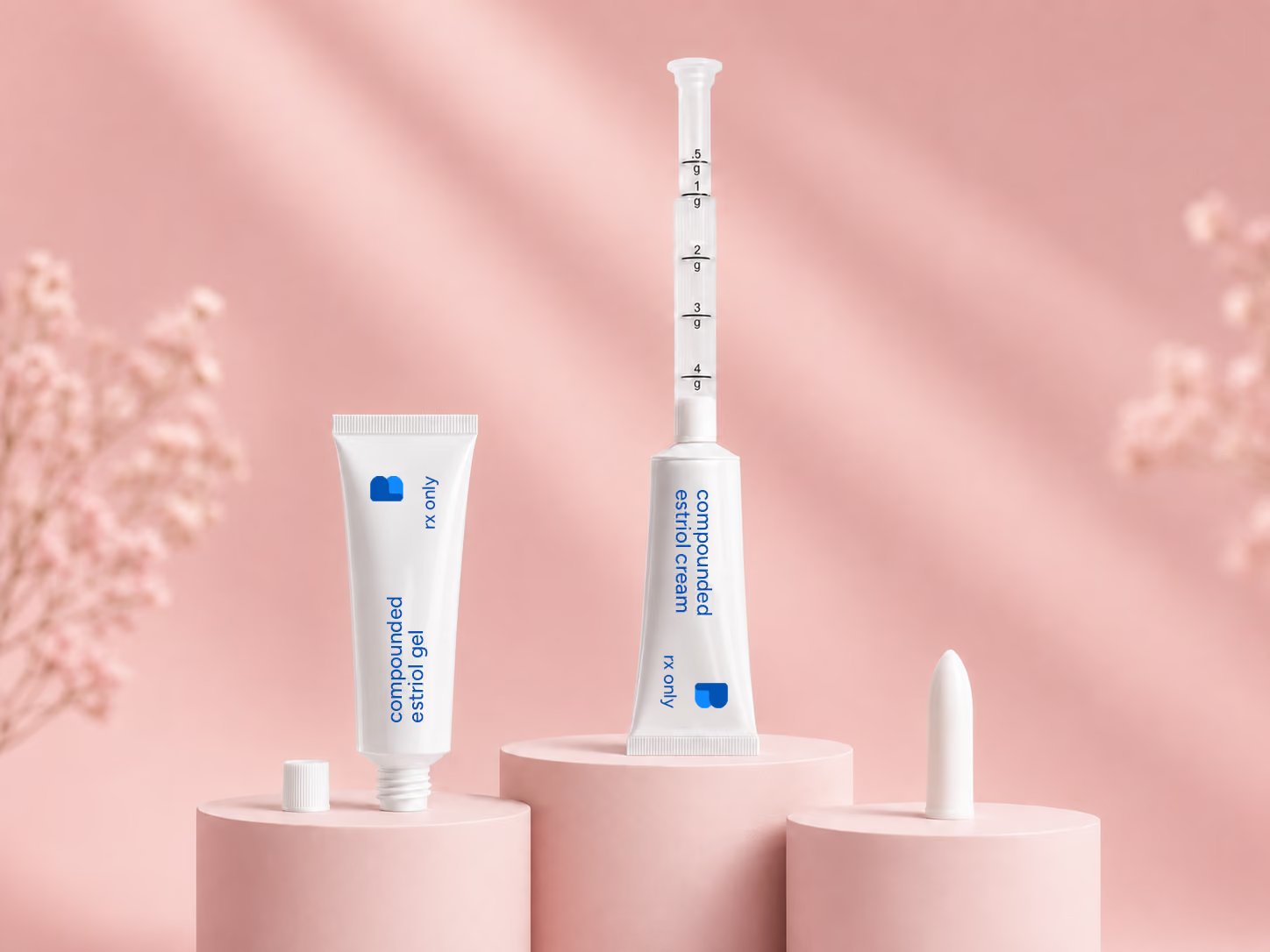
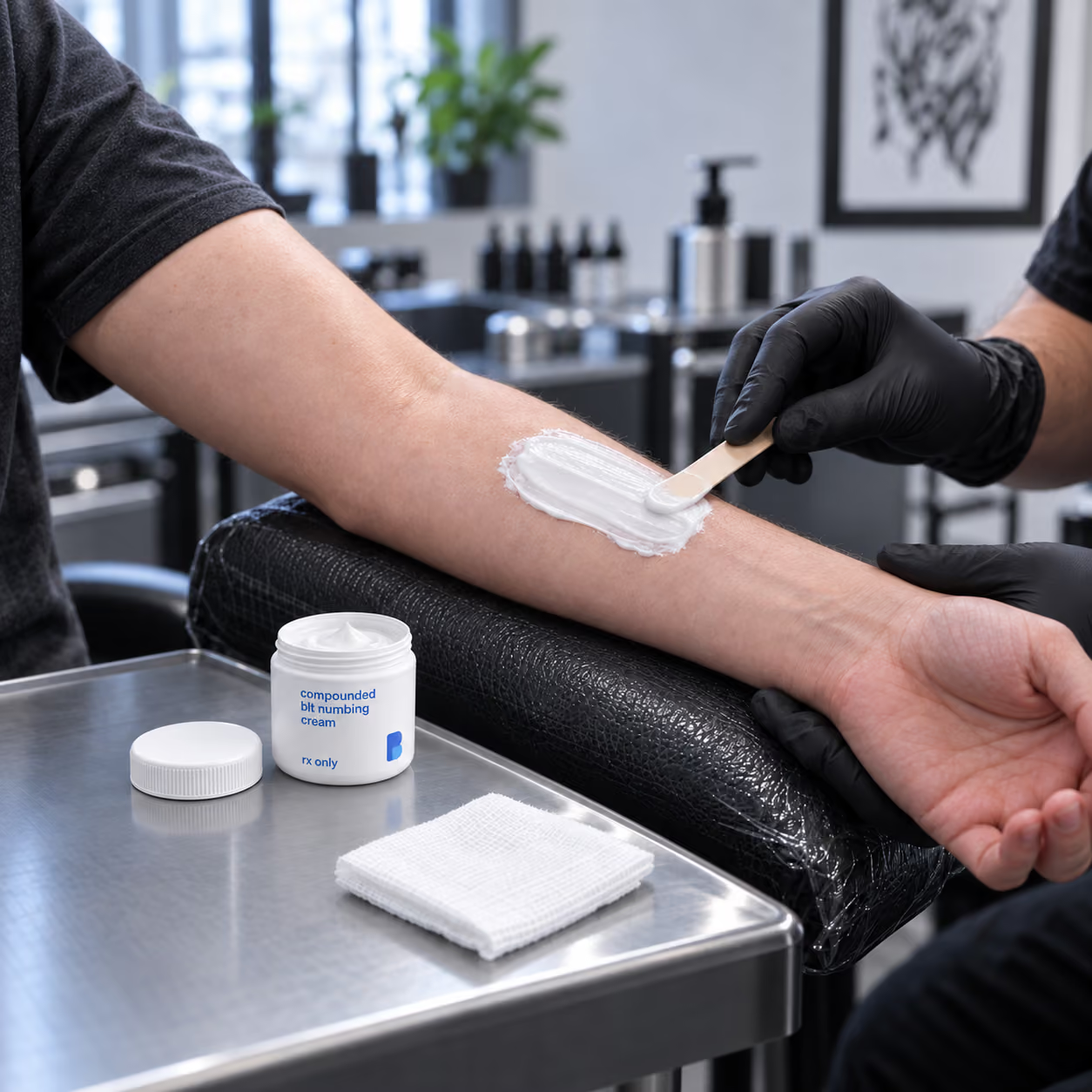
A compounded pain cream is a topical preparation a pharmacy mixes to a prescriber's written order, combining actives such as lidocaine, diclofenac, gabapentin, baclofen or cyclobenzaprine in a base chosen to carry them into the skin. It exists because no manufacturer sells that particular strength or combination. Compounded preparations are not FDA-approved and are not reviewed by the FDA for safety or effectiveness, and whether one suits a particular person is a decision for the prescriber who knows their history.
Pain management is one of the areas where compounding comes up most often, and also one where it is most often oversold. This article describes the preparations prescribers ask us for, where they fit, and what is and is not known about them.
Where does compounding fit in pain management?
Compounding is not a category of medicine. It is a way of preparing one. A pharmacy compounds when a prescriber needs a strength, a combination, or a dosage form that no manufacturer makes: a specific concentration, several actives in one base, or a liquid for someone who cannot swallow a capsule.
Where an approved product fits the prescription, that approved product is what should be dispensed, and it is usually the cheaper route as well. Compounding is for the gaps.
Bayview Pharmacy does not provide consultations and does not determine whether a medication is appropriate for anyone. Nothing on this page is a dose recommendation. The strength, the ingredients and the decision to try a preparation at all belong to the prescriber who is monitoring you.

What goes into a compounded pain cream?
The most commonly requested compounded pain preparations are topical. A prescriber specifies actives such as lidocaine, diclofenac, baclofen, gabapentin, or others, in a base chosen to carry them into the skin, and the preparation is applied to a defined area.
A compounded topical pain cream is therefore not one product. It is whatever the prescription says it is, which is why two people using something by the same name may be using very different preparations at very different strengths.
Single-agent preparations are also common. Compounded lidocaine cream and ointment is prepared from 5% to 30%, above the concentrations sold over the counter, and is used off-label for indications the approved products do not cover.
Muscle relaxants appear too. Topical cyclobenzaprine takes a drug normally swallowed as a tablet and puts it in a gel or cream, which is an off-label route for that drug.
Because these preparations are applied to one region, prescribers sometimes order them for a specific site rather than for pain in general, as in our article on compounded medications for TMJ disorders.
What does the evidence actually show?
Here the honest answer separates two things that often get blurred together. Topical NSAIDs have a real published evidence base: diclofenac 1% gel is FDA-approved and sold over the counter, and systematic reviews of topical NSAIDs in hand and knee osteoarthritis report benefit compared with placebo. That evidence belongs to those approved products at those strengths.
A compounded diclofenac preparation at 4% to 20%, or diclofenac blended with two or three other actives, has not been studied the same way. The approved product's evidence does not transfer to a different strength in a different base.
The reasoning is that delivering a drug where it hurts may achieve local effect with less systemic exposure than the same drug taken by mouth. That reasoning is sound for some drugs and some sites. It is worth knowing that the evidence for multi-ingredient compounded topical analgesics specifically is mixed: individual ingredients have varying evidence behind them, absorption differs by base and by site, and rigorous trials of specific combinations are limited. Some studies have found compounded topical combinations no better than placebo for certain pain types.
That does not make them useless, and prescribers use them for real reasons. It does mean the honest description is "an option your prescriber may consider," not "an effective solution." The wider pain and palliative care category lists the preparations we are asked for most.

How do these preparations compare?
Read the status and evidence columns together. A preparation can be widely prescribed and still have thin published support behind that specific formulation.
| Preparation | Route | Regulatory status | Evidence |
|---|---|---|---|
| Diclofenac gel 1% | Skin | FDA-approved, OTC | Randomized trials |
| Compounded diclofenac 4% to 20% | Skin | Compounded, not FDA-approved | Limited data |
| Lidocaine cream 5% to 30% | Skin | Compounded, off-label | Limited data |
| Multi-ingredient pain cream | Skin | Compounded, not FDA-approved | Mixed, some negative trials |
| Cyclobenzaprine gel | Skin | Compounded, off-label | Limited data |
| Low dose naltrexone | Oral | Compounded, off-label | Small trials, case series |
| Ketamine troche | Buccal | Controlled, off-label | Small studies |
What about troches and other forms taken by mouth?
A troche is a lozenge that dissolves in the mouth, used when a prescriber wants a route other than swallowing a tablet. Bayview also compounds oral suspensions for patients who cannot take solid forms at all, including those fed by tube.
Some troches contain controlled substances, including ketamine. Those are dispensed only against a valid prescription written for a named patient, and ketamine specifically carries an FDA safety alert and a recognised potential for misuse and dependence. We cover that separately in our article on compounded ketamine.
Controlled substances are not shipped to New York addresses.

What is low dose naltrexone, and why is it compounded?
Naltrexone is FDA-approved at 50 mg for opioid and alcohol use disorder. "Low-dose" naltrexone means roughly 1.5 to 4.5 mg, which is not an approved dose or indication for anything, and is compounded because no manufacturer makes it at that strength.
Most of the published work is small trials and case series, chiefly in fibromyalgia and Crohn's disease, and reviews consistently note that larger confirmatory trials have not been done. It is also worth knowing that naltrexone is an opioid antagonist, so it can block opioid pain medication and can precipitate withdrawal in someone who is opioid-dependent.
Bayview prepares low dose naltrexone capsules, tablets and oral liquid to the strength written on the prescription.
There is more detail on dosing ranges, side effects and what the trials looked at in our low-dose naltrexone article. Prescribers can also read the prescribing guide for clinicians, covering strengths, titration and the evidence.

Where do opioids fit in this conversation?
Compounded preparations are sometimes discussed as a way to reduce opioid use. Reducing opioid exposure where clinically appropriate is a reasonable goal, and prescribers pursue it in many ways.
What we will not tell you is that a compounded preparation matches an opioid, or that it carries no risk. Those are claims nobody is in a position to make about an individualised preparation that has not been through clinical trials, and anyone who makes them to you is overstating what is known. If you are taking opioids, changes to that regimen belong with the prescriber managing it.
Opioids are approved medicines with a defined place in care, particularly in serious illness, and this page is not an argument against them. Our article on palliative care compounding describes the settings where compounded and conventional analgesia are used side by side.

What does a compounded pain preparation cost?
Compounded topical pain creams start at $120, lidocaine cream and ointment at $90, cyclobenzaprine at $90 and low dose naltrexone at $100. The final price depends on the actives, the strengths and the quantity the prescription calls for, so ask for a price before we compound anything.
Compounded preparations are not billed through insurance, because a patient-specific preparation has no national drug code for a plan to adjudicate against. Our post on whether compounding pharmacies take insurance and how payment works explains that in more detail. Payment is made directly, and questions about shipping, payment and the states where Bayview is licensed are covered on our frequently asked questions page.
What Bayview compounds for pain
On a prescriber's order, Bayview prepares topical pain creams from $120 in combinations the prescriber specifies, diclofenac as a gel from 4% to 20%, in blends, or as acid-resistant oral capsules from $132, lidocaine cream and ointment from 5% to 30% from $90, cyclobenzaprine as a topical gel or cream, oral liquid, capsules or troches from $90, DMSO as a 10% gel or 50% cream from $90, and low dose naltrexone capsules, tablets or oral liquid from $100.
All of this is non-sterile work prepared under USP 795 standards against a prescription for a named patient. Other preparations are listed in the searchable catalog of compounded medications.
Talk to your prescriber
If you think a compounded preparation might fit your situation, the conversation to have is with your prescriber, not with a pharmacy. Ask what problem the preparation is meant to solve, what the alternative approved options are, and how you will both judge whether it is worth continuing.
If they decide to go ahead, they send a prescription specifying the actives, strengths, base and directions. Bayview is a 503A pharmacy, so we prepare each order against a prescription for a named patient; we do not supply office or clinic stock, which is the role of a 503B outsourcing facility. Prescribers can e-prescribe to Bayview Pharmacy, 3844 Post Rd, Warwick, RI 02886, or fax 401-284-4506.
Our pain management compounding page describes the preparations prescribers order most often, and a pharmacist is available for questions about a prescription you already hold.
Frequently asked questions
What is a custom pain cream?
A compounded cream that blends several prescriber-chosen pain ingredients, such as an anti-inflammatory, an anesthetic, and a nerve-pain agent, applied over a sore area so the medicine works mainly where it is rubbed in.
What kind of pain is it for?
Providers use these creams for localized musculoskeletal or nerve pain, such as arthritic joints or peripheral neuropathy. Whether it fits your situation is your provider's call, and it is used off-label.
What is in it?
Your prescriber selects the mix by pain type: NSAIDs like diclofenac or ketoprofen, anesthetics like lidocaine, and agents like gabapentin, amitriptyline, cyclobenzaprine, or baclofen. Some formulas add ketamine, which has extra requirements.
How does a topical pain cream compare to oral pain medication?
Applying medicine to the skin can mean less whole-body exposure than taking the same drugs by mouth, but some absorption still happens. Use only the amount and area your provider specifies.
Does it actually work?
Evidence for compounded topical pain creams is limited and mixed, so results vary by ingredient and person. Bayview makes no claim that any formula is proven or better than standard care, your provider decides if it is worth trying.
How do I use it?
Apply the measured or fingertip amount your provider describes directly over the painful area, such as a joint, muscle, or the path of a nerve. Avoid broken skin, eyes, and mucous membranes, and wash your hands afterward unless you are treating your hands. Give it a consistent trial; topical medications build effect with regular use.
How is compounded diclofenac gel different from the 1% gel at the pharmacy counter?
Same active ingredient, different concentration and base. Diclofenac sodium 1% gel is FDA-approved and sold over the counter for arthritis pain. Compounded gels are made at concentrations the commercial products do not offer, 4% through 20%, and in the base and container your prescriber specifies.
Compounded preparations are not FDA-approved, require a prescription, and are used off-label above 2%. We make no claim that a compounded gel performs better than an FDA-approved product; the choice belongs to your prescriber.
Why would a prescriber order a compounded diclofenac gel?
Because the commercial range is narrow: a 1% gel, a 1.5% and 2% solution, and a 1.3% patch. Prescribers order compounded preparations when that range does not fit: a different concentration, a base suited to the application site or to a patient who reacts to an ingredient in the commercial product, a dye-free or preservative-free formulation, a metered pump instead of a tube, a quantity that matches the course, or several actives combined in one application.
How is it different from the lidocaine cream at the store?
Over-the-counter lidocaine products are limited to 4%. Anything above that requires a prescription. In 2024 the FDA warned people not to use unapproved store-bought or online numbing products that contained more than 4% lidocaine, some as high as 40%, after reports of serious harm when they were spread over large areas or covered before tattoos and cosmetic procedures. A compounded prescription is written for a specific area and use, and comes with directions from your prescriber and pharmacist.
Is Low Dose Naltrexone FDA-approved?
Naltrexone is FDA-approved at standard doses for opioid and alcohol use disorders. Low Dose Naltrexone is prescribed off-label and compounded at lower strengths, so it is not FDA-approved for these uses. Your prescriber determines whether it is appropriate for your treatment plan.
Can I take LDN if I use opioid pain medication?
You should not take LDN with opioid medications unless your prescriber specifically determines it is safe. Naltrexone blocks opioid receptors, which may reduce the effect of opioid pain medications and may trigger withdrawal in someone who is physically dependent on opioids. Tell your provider and pharmacist about all medications you take.
Is it FDA-approved? Is it safe?
Compounded ketamine is not FDA-approved for any psychiatric condition, and the FDA has cautioned about risks of compounded ketamine, particularly at-home use without monitoring. Known risks include sedation, dissociation, raised blood pressure, slowed breathing, bladder and urinary symptoms with long-term use, and potential for misuse. Used exactly as prescribed within a supervised plan, your prescriber weighs these risks against the potential benefit.
How much do compounded medications cost?
Pricing varies depending on ingredients and formulation complexity.
Do you accept insurance?
Most compounded medications are not covered by insurance. We can always try and run your insurance prior to compounding your prescription if you wish.
What Bayview compounds for this
Important: Compounded medications are prepared to a prescriber's order for an individual patient. They are not FDA-approved, and the FDA has not evaluated them for safety, effectiveness, or manufacturing quality. This article is educational and is not a substitute for advice from your prescriber or pharmacist.
This preparation contains a controlled substance. Controlled-substance prescriptions carry refill limits, must be e-prescribed, and can only be shipped to states where Bayview holds the required licensure.
Uses discussed here may be off-label, meaning they are not part of any FDA-approved labeling. Off-label use is a decision for you and your prescriber, based on the available evidence.
Veterinary preparations are compounded to a veterinarian's order for a specific animal and are not FDA-approved animal drugs. Never give a compounded human medication to an animal without veterinary direction.
Compounded prescriptions are paid for directly rather than billed through insurance. Most are HSA/FSA-eligible, and many patients submit the receipt to their plan for possible reimbursement. Pricing depends on the strength, dose form and quantity your prescriber orders. Read more about cost and insurance.
Compounded topical pain creams start at $120, with the final price depending on the actives, the strengths and the quantity the prescription calls for. Compounded preparations are not billed through insurance, because a patient-specific preparation has no national drug code for a plan to adjudicate against, so payment is made directly to the pharmacy.
Bayview Pharmacy is a compounding pharmacy in Warwick, Rhode Island, licensed to fill and ship compounded prescriptions for patients in Rhode Island, Massachusetts, Connecticut, New Jersey, New Hampshire, Florida, Maine and Pennsylvania. Prescriptions for New York patients are filled on a limited basis, and controlled substances are not shipped to New York addresses. See every state we ship to.
Related reading