



In Stock
Estradiol Topical Cream | Compounded HRT | Bayview Pharmacy

Estradiol Topical Cream

Smiling man in blue pharmacist scrubs with arms crossed and pen behind his ear.
Medically reviewed by Ryan Dyer, RPh
Last updated on
July 31, 2026
Starting at
$70
for
30 g
Checkmark icon followed by text 'HSA/FSA Eligible'.
Start with a prescription
Prescribers: download order form ↓
Licensed to fill prescriptions for patients in RI, MA, CT, NY, NJ, NH & FL
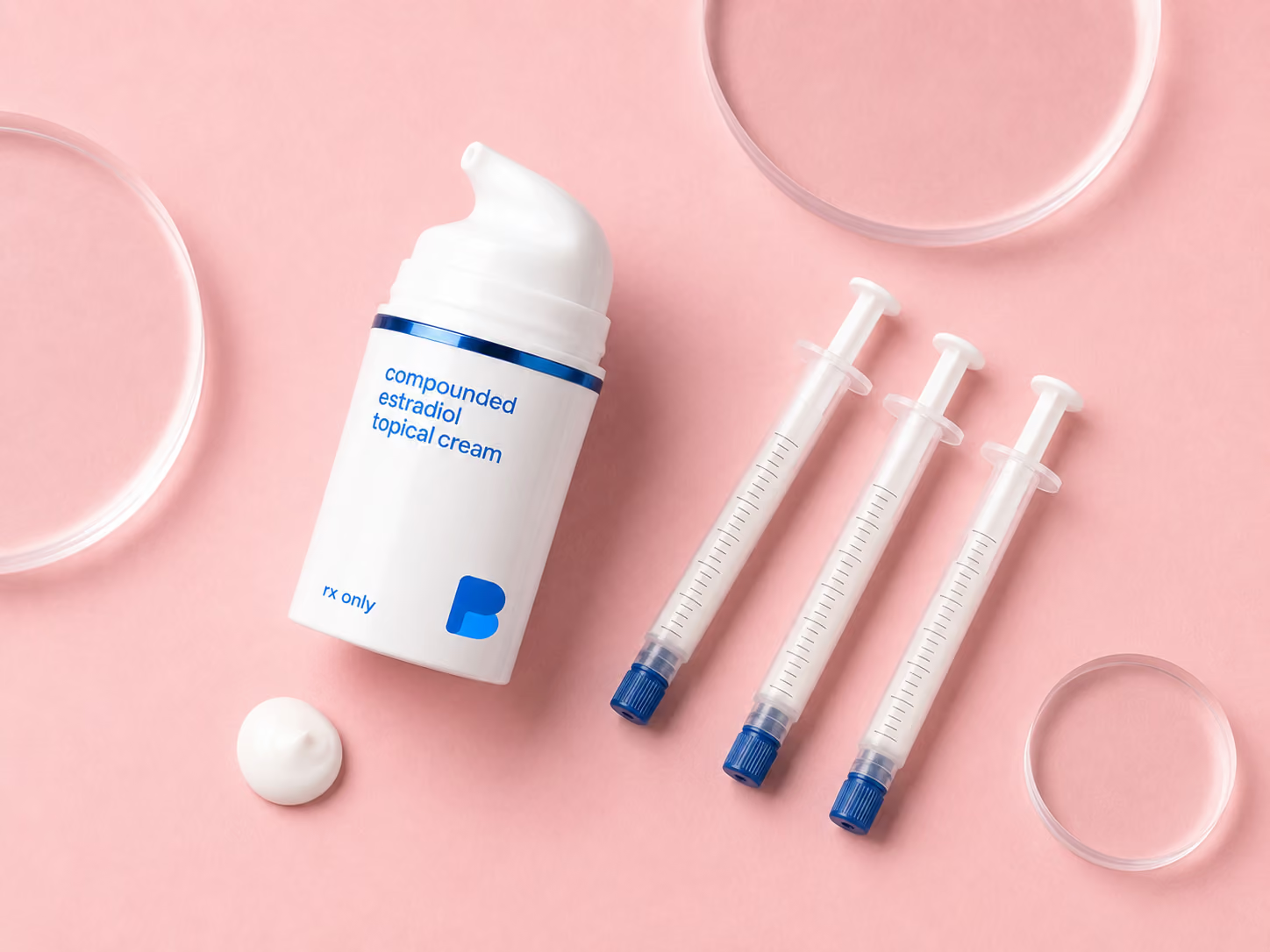
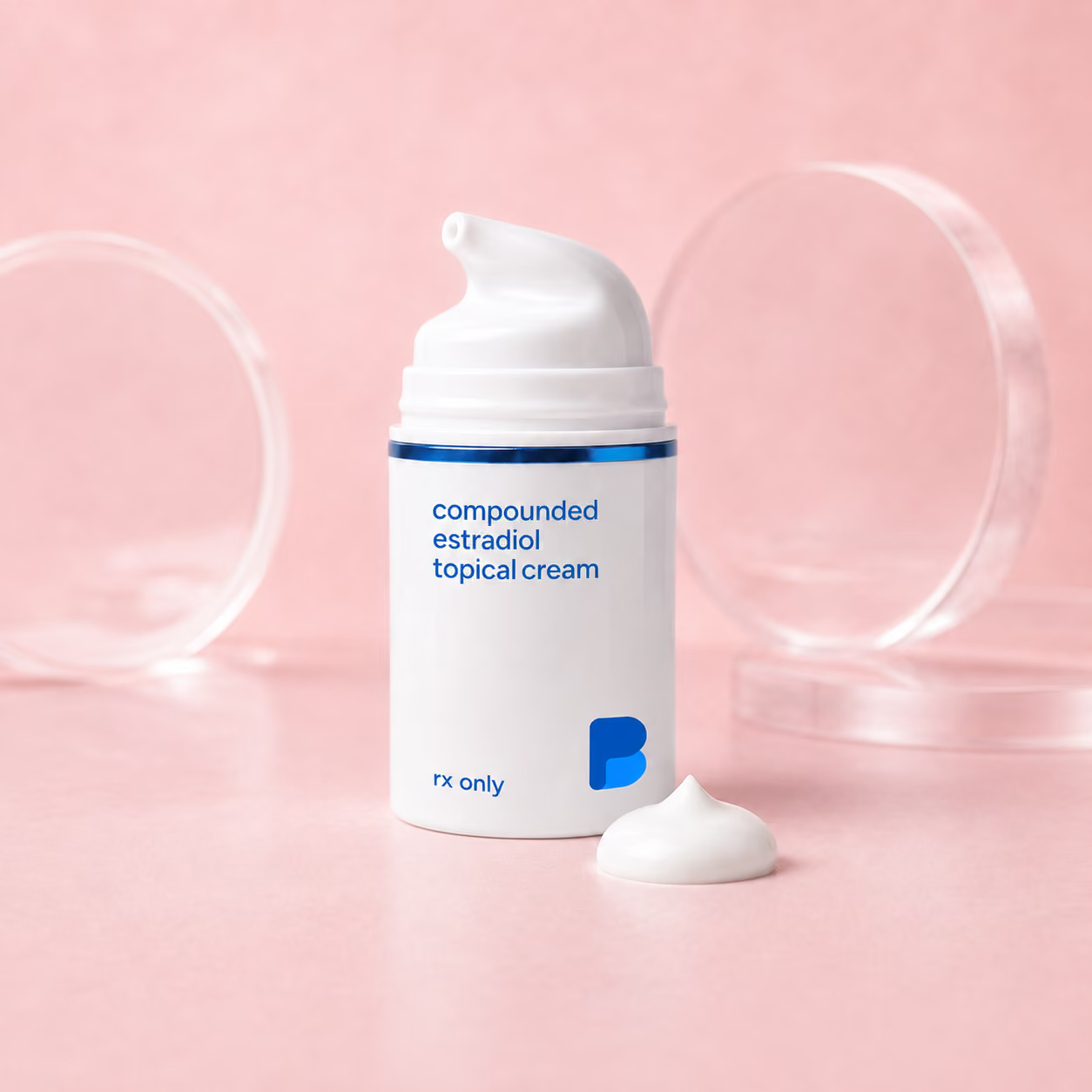
  • Estradiol compounded into a cream base for daily application to the skin
  • Prepared at the strength and volume your prescriber orders, including strengths and quantities not sold commercially
  • An option when there is a documented allergy to an ingredient in an FDA-approved product, or a need for a dosage form that is not commercially available
  • Prepared in small batches by a licensed 503A pharmacy from quality ingredients

Estradiol topical cream is a compounded, prescription hormone preparation applied to the skin, where estradiol is absorbed into the bloodstream. Prescribers use systemic estradiol for menopausal symptoms such as hot flashes, night sweats, and the sleep disruption that goes with them, and for protection against bone loss. FDA-approved transdermal estradiol products — EstroGel 0.06%, Elestrin, Divigel, the Evamist spray, and estradiol patches — are widely available, so a compounded systemic cream is generally reserved for a documented allergy to an ingredient in an approved product, or a dose or dosage form that is not commercially available. Compounded preparations are not FDA-approved, and a valid prescription is required.

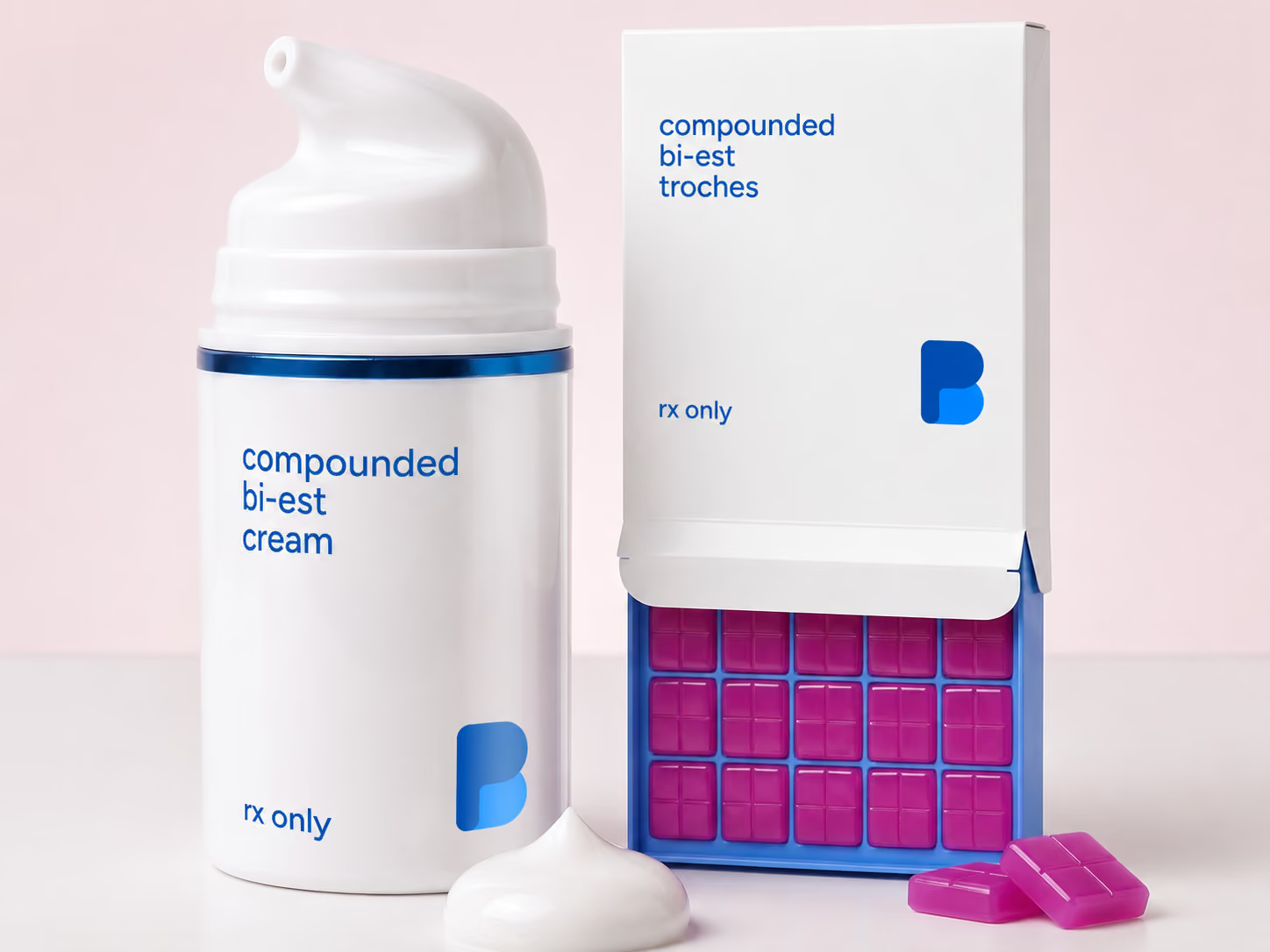
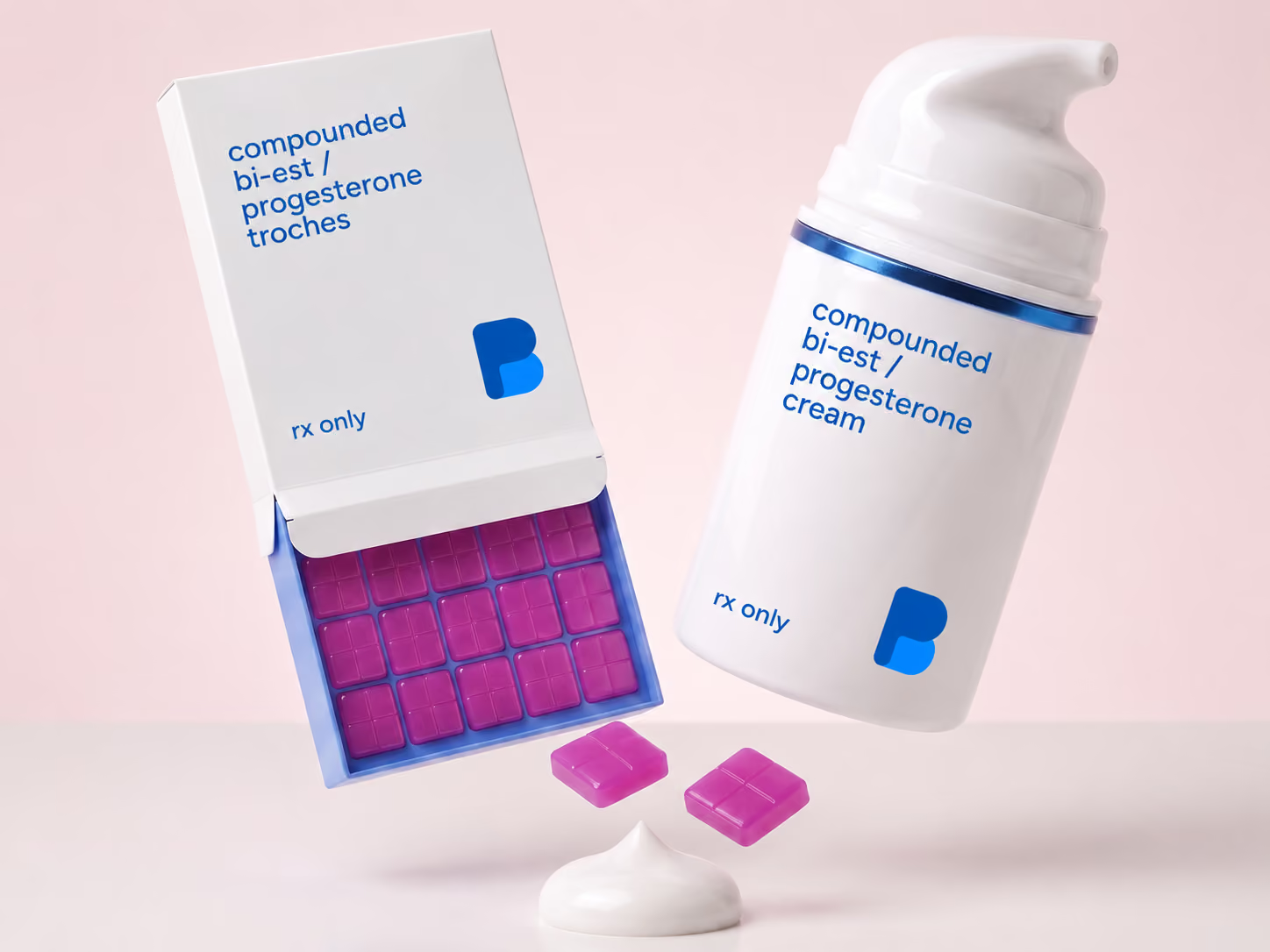
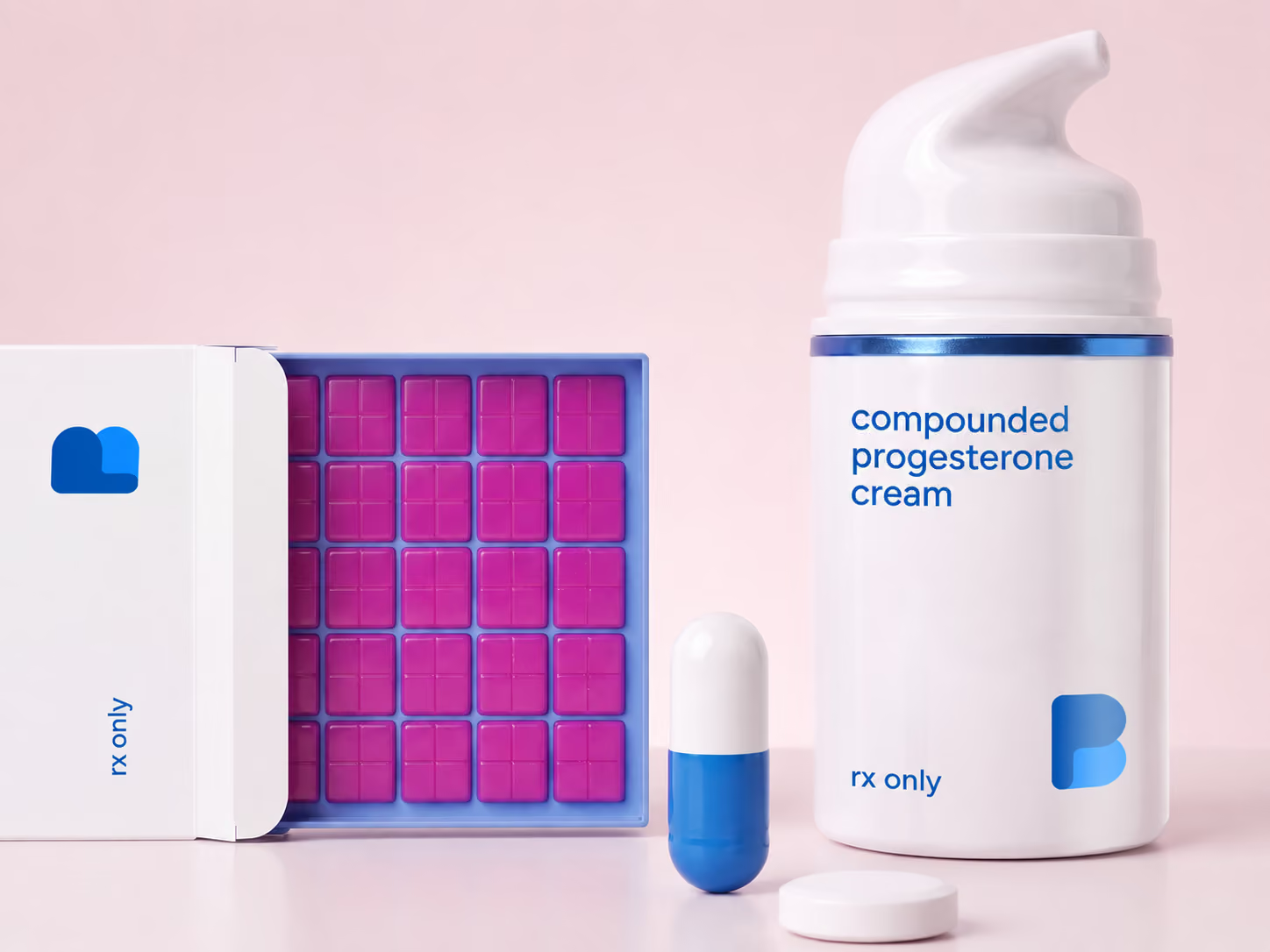
Anyone with an intact uterus needs adequate concurrent progestogen for endometrial protection; this is not optional. Bayview also compounds estradiol vaginal cream, Bi-Est, progesterone, and Bi-Est with progesterone. Bayview Pharmacy does not provide consultations or determine appropriateness; your prescriber decides whether this preparation is right for you.

Why is it compounded?

FDA-approved transdermal estradiol products, EstroGel, Elestrin, Divigel, the Evamist spray, and patches, are widely available and cover a broad range of doses. A compounded systemic cream is generally reserved for a documented allergy to an ingredient in an approved product, or a dose or dosage form that is not commercially available. Your prescriber should document the reason.

Do I need progesterone with it?

If you have a uterus, yes. Adequate concurrent progestogen is required to protect the uterine lining, and this is not optional, estrogen used alone raises the risk of endometrial hyperplasia and endometrial cancer. Your prescriber decides which progestogen and what dose. Report any unexpected vaginal bleeding promptly.

Trusted by 105,826 patients to date.
A group of faces of our past satisfied patients.
Compounded medications are prepared pursuant to a valid prescription for an individual patient and are not FDA-approved. This page is for educational purposes and is not medical advice.
**The FDA does not review or approve compounded medications for safety or effectiveness. A valid prescription from a licensed practitioner is required.
Important safety information →
Service availability

Prescription delivery in your state

Bayview Pharmacy currently serves eligible patients in six states. Check your state before getting started.

Where we currently serve

Select a highlighted state to check availability.

Currently licensed Licensed — non-controlled only Not currently licensed Your selection

Select a state on the map or use the state checker.

Do we serve your state?

Choose your state to confirm current service availability.

Thank you! Your submission has been received!
Oops! Something went wrong while submitting the form.
Currently licensed in
Start with a prescription

Getting your prescription filled is simple

Send us your prescription

STEP
1
Have your provider e-prescribe to Bayview, fax it to us, or call it in directly to one of our pharmacists.
A thin blue light beam connecting two clear glass slabs on a white surface.

A pharmacist reviews it

STEP
2
We verify your prescription and prepare your medication to your provider's exact instructions.
Close-up of a white dial with blue measurement markings and a rotating knob.

We compound & ship

STEP
3
We prepare your medication and ship it discreetly to your door, with support when you need it.
Close-up of a gray box with a precise blue line running along its folded edges.

What is Estradiol Topical Cream?

Estradiol topical cream is a compounded, prescription preparation of estradiol in a cream base that you rub into the skin. Estradiol is the main estrogen your ovaries make before menopause, and levels fall as menopause approaches. Applied to the skin, estradiol is absorbed through the skin into the bloodstream, so it works throughout the body rather than only where you put it.

It is prepared by a licensed pharmacy at the strength and volume your prescriber orders rather than mass-produced. FDA-approved transdermal estradiol products are widely available in the United States, including EstroGel 0.06%, Elestrin, Divigel, the Evamist spray, and estradiol patches. Because those approved options are broad, a compounded systemic estradiol cream is the hardest of the hormone preparations to justify. Only your prescriber can decide whether it is right for you.

FDA-approved transdermal estradiol products are widely available. Approved gels, sprays, and patches already cover a broad range of doses, so a compounded systemic estradiol cream should be reserved for specific circumstances. Your prescriber should document the reason — most often an allergy to an ingredient in an FDA-approved product, or a dose or dosage form that is not commercially available. Compounded preparations are not FDA-approved, and a valid prescription is required.

How does it work?

Estradiol is the main estrogen the ovaries produce before menopause. When you rub the cream into your skin, estradiol passes through the skin and into the bloodstream, where it acts on tissues throughout the body — which is why it can help with symptoms like hot flashes that are not limited to one area. Because it is absorbed through the skin, it does not pass through the liver first the way a swallowed tablet does. In observational and mechanistic data, that difference has been associated with a lower risk of blood clots and stroke than with estrogen taken by mouth. That comparison is between transdermal and oral estrogen in general; it is not a statement that a compounded cream performs better than an FDA-approved transdermal product.

What is it used for?

Prescribers use systemic estradiol for menopausal symptoms — hot flashes, night sweats, and the sleep disruption that comes with them — and for protection against bone loss. The Menopause Society's 2022 Hormone Therapy Position Statement supports what is often called the timing hypothesis: for women with symptoms who are under 60 or within 10 years of the onset of menopause, the benefits of hormone therapy generally outweigh the risks, and the balance becomes less favorable when therapy is started later (The Menopause Society).

Professional guidance is specific about compounded versions. The 2020 report from the National Academies of Sciences, Engineering, and Medicine recommends restricting compounded bioidentical hormone therapy to two circumstances: an allergy to an ingredient in an FDA-approved product, or a need for a dosage form that is not commercially available (NASEM, 2020). ACOG Clinical Consensus No. 6 (November 2023) states that compounded formulations should not be routinely prescribed when FDA-approved options exist, that salivary or serum hormone testing is not recommended for dosing, and that patients should be counseled that these products lack FDA approval. Bayview Pharmacy does not provide consultations or determine appropriateness, and a valid prescription is required.

How do the strengths compare?

Estradiol cream is compounded across a range of concentrations. The concentration is only half the picture: the amount of estradiol you actually absorb depends on the concentration, the volume you apply, where you apply it, and your own skin. The table below describes the common concentrations for education only.

StrengthNotes
Estradiol 0.5 mg/gmA lower concentration, often ordered when starting or stepping down
Estradiol 1 mg/gmA commonly ordered concentration
Estradiol 1.5 mg/gmAn intermediate concentration
Estradiol 2 mg/gmDelivers more estradiol in the same volume of cream
Estradiol up to 4 mg/gmOrdered when the prescriber wants more estradiol in a small volume
Prefilled syringes (for example, 1 mg per 0.1 mL)Single measured doses dispensed as a set of syringes

Strengths are described for education only and are not a statement that any concentration is better for a particular person. Dose delivery from compounded creams is imprecise: published comparisons of compounded transdermal estradiol against FDA-approved products have found meaningfully different or variable estrogen exposure. Your prescriber selects the strength, volume, and schedule.

How is it used?

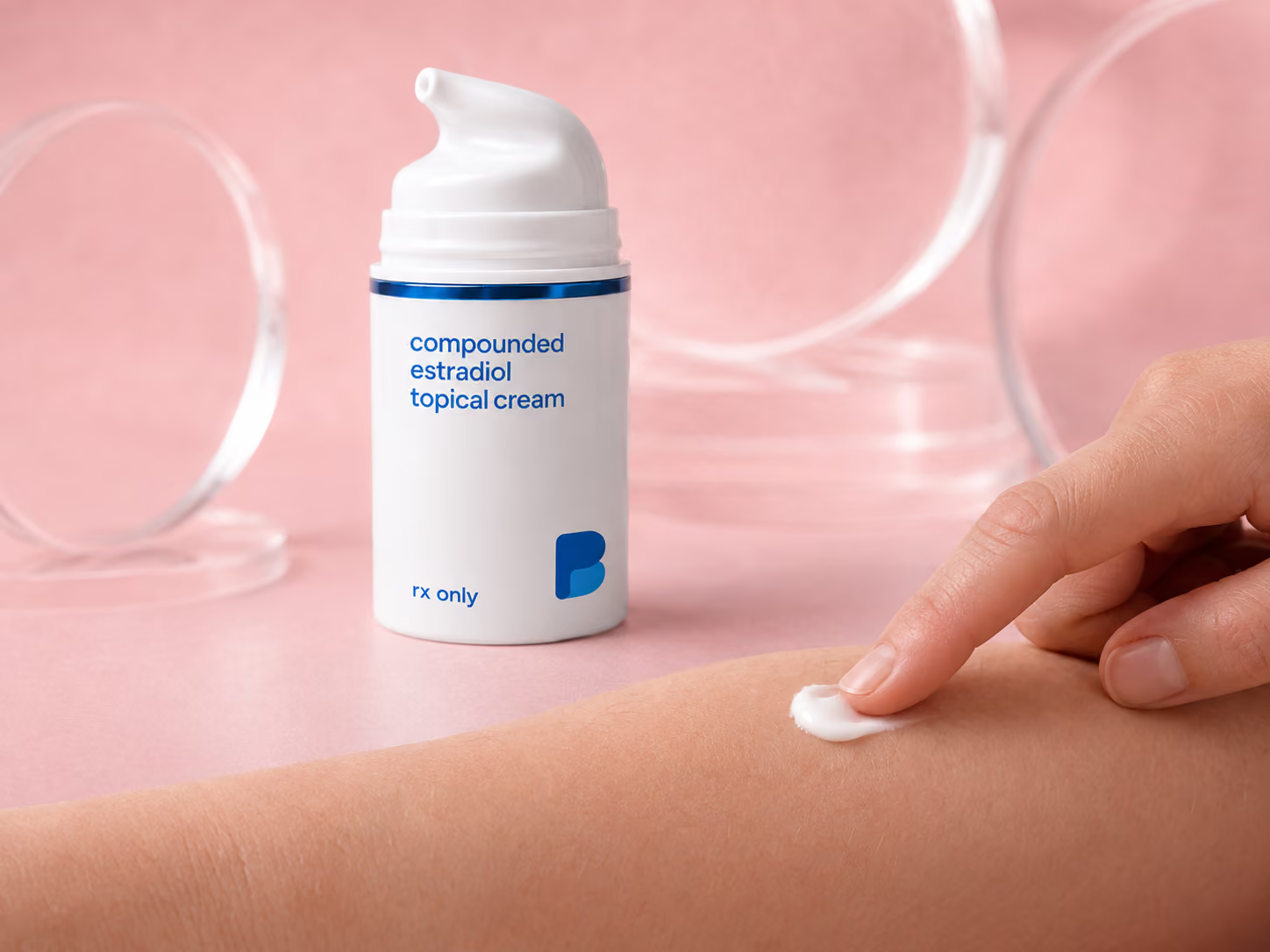
Use it exactly as your prescriber directs. A common regimen is a measured pump dose, or 0.5 to 1 mL from a prefilled syringe, applied once daily to the inner forearm, inner thigh, or abdomen, rotating sites from day to day. Rub it in and let the skin dry completely before dressing. Wash your hands with soap and water right after applying, and do not apply the cream to your breasts. Prescribers generally aim for the lowest effective dose and retitrate based on your symptoms rather than on lab numbers — ACOG specifically does not recommend salivary or serum hormone testing to guide dosing.

Because estradiol can transfer from skin to skin, keep the treated area covered or fully dry before close contact with children, partners, or pets. If your preparation uses an alcohol-containing base, treat it as flammable until the skin is dry and keep it away from open flame. Do not change the dose or stop on your own; talk with your prescriber first. A Bayview pharmacist is available if you have questions about your prescription.

Side effects & safety

The more common effects are breast tenderness, bloating, headache, nausea, mood changes, breakthrough or unexpected vaginal bleeding, and irritation where you apply the cream. Serious risks associated with estrogen therapy include blood clots in the legs or lungs (DVT and pulmonary embolism), stroke, gallbladder disease, endometrial hyperplasia or endometrial cancer when estrogen is used without adequate progestogen in someone with a uterus, and a breast cancer signal with longer-duration combined estrogen-progestogen therapy. Tell your prescriber about any unexpected vaginal bleeding, leg swelling or pain, chest pain, shortness of breath, or sudden severe headache or vision change.

If you have a uterus, you need adequate progestogen along with estrogen. Estrogen used alone thickens the lining of the uterus and raises the risk of endometrial hyperplasia and endometrial cancer. Concurrent progestogen for endometrial protection is not optional. How reliably compounded progesterone provides that protection is a recognized gap in the evidence, which is one more reason your prescriber should be directing and monitoring this therapy.
Avoid skin-to-skin transfer. Estradiol can transfer to other people and to pets through skin contact. Let the area dry fully, keep it covered, wash your hands after applying, and do not apply the cream to your breasts.

About boxed warnings. On November 10, 2025, HHS and the FDA announced the removal of boxed-warning language about cardiovascular disease, breast cancer, and probable dementia from menopausal hormone therapy products, and on February 12, 2026 the FDA approved those labeling changes for a first set of six products, with roughly 29 more still pending (FDA, February 2026). The boxed warning about endometrial cancer was not removed for systemic estrogen-alone products. Labeling is in the middle of this transition, and compounded preparations carry no FDA-approved labeling at all. None of this means estrogen therapy is without risk.

Who should not use it?

Based on the labeling for FDA-approved estradiol products, estrogen should not be used if you have undiagnosed abnormal genital bleeding; known, suspected, or a history of breast cancer; a known or suspected estrogen-dependent cancer; active or prior deep vein thrombosis or pulmonary embolism; active or prior arterial thromboembolic disease such as stroke or heart attack; liver impairment; a known blood-clotting disorder (thrombophilia); a known hypersensitivity to estradiol or to any ingredient in the preparation; or if you are or may be pregnant. Tell your prescriber about your full health history, allergies, and every medication and supplement you take so they can decide whether this preparation is appropriate for you.

How should it be stored?

Store at controlled room temperature, about 20 to 25 °C (68 to 77 °F), with the container tightly closed and away from heat and light. Do not freeze it. Keep it out of the reach of children and pets, and do not share it with anyone. Follow the beyond-use date on your label and do not use the preparation after that date. Dispose of unused medication as your pharmacist directs.

Why is this compounded?

Compounding lets a licensed pharmacy prepare estradiol at a strength, volume, or base that is not sold commercially — for example a specific concentration in a fragrance-free base, or single measured doses in prefilled syringes. It is worth being direct about the trade-off: because FDA-approved transdermal estradiol products are broadly available, a compounded systemic estradiol cream is the hardest of the hormone preparations to justify, and both NASEM and ACOG advise reserving compounded hormone therapy for a documented ingredient allergy or a dosage form that is not commercially available. As a 503A compounding pharmacy, Bayview Pharmacy prepares each order in small batches from quality ingredients. Compounded preparations are not FDA-approved, they are not reviewed by the FDA for safety, effectiveness, or manufacturing quality, and a valid prescription is required.

Clinical details for prescribers

Regulatory status. Estradiol is not a controlled substance. Multiple FDA-approved transdermal estradiol products exist (EstroGel 0.06%, Elestrin, Divigel, Evamist spray, transdermal patches), so a compounded systemic cream should be supported by a documented rationale — ingredient allergy or a dose/dosage form not commercially available (NASEM 2020; ACOG Clinical Consensus No. 6, Nov 2023). The FDA's March 2024 proposed rule on drug products presenting demonstrable difficulties for compounding covered only modified-release oral solids, liposomal products, and hot-melt-extrusion products; estradiol was not included, and the rule is not final. Compounded preparations are not FDA-approved.

Formulation & SIG. Estradiol in a cream base (commonly VersaBase), typically 0.5, 1, 1.5, 2, and up to 4 mg/gm; jars of 30, 45, 60, 90, or 180 g, or sets of prefilled 0.1 mL syringes (e.g., 1 mg/0.1 mL × 9). Typical SIG (descriptive only): apply one measured pump dose, or 0.5–1 mL, to the inner forearm, inner thigh, or abdomen once daily, rotating sites; rub in and allow to dry. Titrate to the lowest effective dose by symptom response.

Clinical points:

  • Transdermal delivery bypasses first-pass hepatic metabolism; observational and mechanistic data associate this with lower VTE and stroke risk than oral estrogen
  • The Menopause Society 2022 position statement supports the timing hypothesis — favorable benefit–risk for symptomatic women <60 years or within 10 years of menopause onset
  • Intact uterus requires adequate concurrent progestogen for endometrial protection; endometrial protection adequacy with compounded progesterone is a known evidence gap
  • Dose delivery from compounded creams is imprecise; published comparisons against approved products found meaningfully different or variable estrogen exposure
  • Salivary and serum hormone testing is not recommended for dosing (ACOG Clinical Consensus No. 6)
  • Boxed-warning labeling is mid-transition: CV disease, breast cancer, and probable dementia language is being removed (HHS/FDA Nov 2025; first six product labels approved Feb 2026, ~29 pending), while the endometrial cancer boxed warning remains for systemic estrogen-alone products. Compounded preparations carry no FDA-approved labeling.
  • Counsel on secondary transfer to children, partners, and pets; avoid breast application; alcohol-containing bases are flammable until dry

Ordering: send a prescription to Bayview Pharmacy, 3844 Post Rd, Warwick, RI 02886 (NCPDP 4106882, fax 401-284-4506). Background: FDA on the NASEM cBHT study; EstroGel 0.06% prescribing information.

This is a prescription compounded medication and is not FDA-approved. This information is educational and is not medical advice. Bayview Pharmacy does not provide consultations or determine appropriateness; your prescriber decides whether this preparation is appropriate and sets the strength and dose.
In Stock

On this page

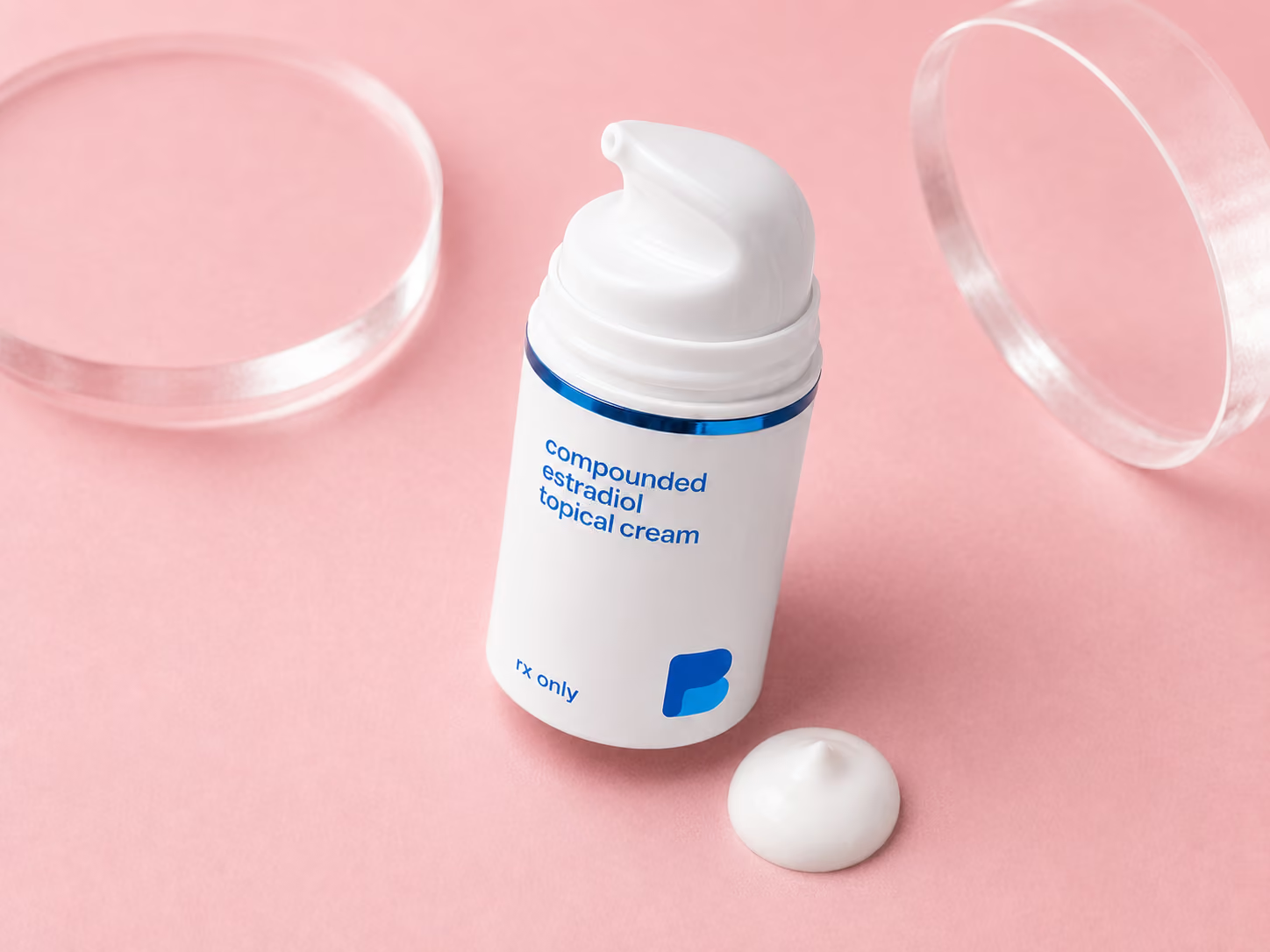
Estrogen absorbed through the skin

The cream is rubbed into the skin and absorbed into the bloodstream to ease hot flashes and night sweats. FDA-approved gels, sprays, and patches exist, so compounding is usually reserved for an allergy or a dose that is not sold.

Start with a prescription
Estrogen absorbed through the skin – Estradiol Topical Cream from Bayview Pharmacy

Strengths prepared to order

Estradiol cream is compounded from 0.5 to 4 mg/g, including prefilled syringes, with custom strengths available. If you have a uterus, your prescriber will pair it with a progestogen to protect the uterine lining.

View our formulas
Strengths prepared to order – Estradiol Topical Cream from Bayview Pharmacy

Personalized compounding for patients who need more than a standard option.

"As a compounding pharmacy, we prepare each medication to a provider’s exact specifications. My focus, and my team’s focus, is quality, consistency, and close communication with prescribers so patients receive medication prepared for their individual needs."
Ryan Dyer, RPh
Owner and Chief Pharmacist, Bayview Pharmacy
Smiling man in blue scrubs with arms crossed and pen behind his ear
Three clear liquid vials, white powder on spoon, two capsules, and a cream jar on a metal surface.
QUALITY AND TESTING

Held to a higher standard

Every preparation is made under strict quality controls, and verified by a licensed pharmacist.
We use validated quality processes and third-party testing where appropriate
Sterile compounding in a dedicated USP <797> cleanroom
Non-sterile compounding under USP <795> and <800> standards
USP/NF-grade ingredients from reputable, vetted suppliers

Why patients choose Bayview

Made in our own pharmacy
Made to your prescription
Quality tested
Real pharmacist support
Trusted since 2006

Our formulations

Estradiol cream is compounded in the strength, base, and quantity your prescriber orders. Strengths are shown for reference; your prescriber selects what is appropriate for you.

Strength Common quantity How it's used
Estradiol 0.5 mg/gm cream30, 45, 60, or 90 gMeasured dose rubbed into the skin once daily, rotating sites
Estradiol 1 mg/gm cream30, 60, or 90 gMeasured dose rubbed into the skin once daily, rotating sites
Estradiol 1.5 mg/gm cream90 or 180 gMeasured dose rubbed into the skin once daily, rotating sites
Estradiol 2 mg/gm cream30 or 90 gMeasured dose rubbed into the skin once daily, rotating sites
Estradiol up to 4 mg/gm cream90 gMeasured dose rubbed into the skin once daily, rotating sites
Estradiol 1 mg / 0.1 mL prefilled syringesSet of 9 syringes (27 g)One measured syringe applied as directed
Custom strength or baseAs prescribedAs your prescriber directs

Directions are set by the prescriber; the schedule above reflects a common once-daily regimen and is not a treatment recommendation. Strengths are listed for education only and are not a statement that any strength is better for a particular person. The amount of estradiol absorbed depends on the strength, the volume applied, and your skin, and dose delivery from compounded creams is imprecise. If you have a uterus, adequate concurrent progestogen is required for endometrial protection. A valid prescription is required, and your prescriber determines which strength and schedule are appropriate. This is a compounded medication and is not FDA-approved.

Start with a prescription
Prescribers: download order form ↓

Frequently asked questions

Why is it compounded?

FDA-approved transdermal estradiol products, EstroGel, Elestrin, Divigel, the Evamist spray, and patches, are widely available and cover a broad range of doses. A compounded systemic cream is generally reserved for a documented allergy to an ingredient in an approved product, or a dose or dosage form that is not commercially available. Your prescriber should document the reason.

Do I need progesterone with it?

If you have a uterus, yes. Adequate concurrent progestogen is required to protect the uterine lining, and this is not optional, estrogen used alone raises the risk of endometrial hyperplasia and endometrial cancer. Your prescriber decides which progestogen and what dose. Report any unexpected vaginal bleeding promptly.

How do I apply it?

Rub the measured dose into the skin once daily as directed, rotating application sites. Do not apply it to your breasts.

Estradiol can transfer to other people and to pets through skin contact, so wash your hands afterward, let the area dry fully, and keep it covered. If your base contains alcohol, it is flammable until dry.

How precise is the dose?

Less precise than an approved product. The amount of estradiol actually delivered by a compounded cream is imprecise, and published comparisons against FDA-approved products have found meaningfully different or variable estrogen exposure. Bayview prepares each order carefully, but that is a real limitation of the dosage form, and it is one reason approved gels, sprays, and patches are usually tried first.

Should I have my hormone levels tested?

Salivary and serum hormone testing is not recommended as a way to set or adjust menopausal hormone therapy doses. Levels swing widely and do not track symptoms reliably, so treatment is guided by how you feel and by your prescriber's clinical judgment. Your prescriber may order testing for other specific reasons.

Who should not use it?

Do not use it if you have undiagnosed abnormal genital bleeding, a known, suspected, or past estrogen-dependent cancer such as breast cancer, a current or past blood clot in the leg or lung, a history of stroke or heart attack, a clotting disorder, liver impairment, an allergy to estradiol or any ingredient, or if you are or may be pregnant.

Do I need a prescription?

Yes. All of our medications require a valid prescription from a licensed provider. We're a dispensing and compounding pharmacy, so we don't provide consultations or write prescriptions. If you don't have one yet, you'll need to find and see a provider first.

What is compounding?

Compounding is the practice of preparing a medication tailored to an individual patient's prescription. Instead of a mass-produced product, a compounding pharmacy makes the medication to the specific strength, form, or combination your provider orders.

Are compounded medications FDA-approved?

Compounded medications are not FDA-approved. They're prepared by a licensed pharmacy pursuant to a valid prescription for an individual patient, under USP standards. The FDA does not review compounded medications for safety or effectiveness.

How do providers send a prescription to Bayview?

Providers can submit a prescription three ways:

  • E-prescribe: Search Bayview Pharmacy, Warwick, RI (NCPDP 4106882) in your EHR. For compounds, use the compound, custom, or free-text option and include the full formulation, strength, quantity, refills, and directions.
  • Fax: Send a signed order to 401-284-4506 (alt. 401-210-2757) with patient and prescriber details, medication, quantity, refills, directions, signature, and date.
  • Phone: Call 401-284-4505 to submit, clarify, or coordinate refills.

A valid prescription is required, and compounded medications are not FDA-approved.

Can you fill a prescription from my own provider?

Yes. Your provider can send your prescription to Bayview Pharmacy by e-prescribe, fax, or phone, or you can transfer an existing prescription from another pharmacy. Start a request and we'll guide you through it.

How does shipping work?

Once your prescription is verified, we prepare your medication and ship it discreetly in plain packaging either via UPS or USPS. A pharmacy technician confirms the details with you before it goes out, and we're available if you have any questions.

How do refills and automatic refills work?

Refills are coordinated with your prescriber and your prescription. You can request a refill through our website or by calling us, and we'll handle the rest as long as you have refills remaining on a valid prescription. You can also opt into automatic refills on non-controlled substances, with no need to worry about running out of your medication. We can either ship it to you automatically, or ready for pickup.

Shipping & Delivery

Every prescription ships directly to your door in discreet packaging. Refrigerated medications travel in insulated coolers with ice packs to stay cold in transit.

Delivery AreaStandard ShippingRefrigerated Shipping
Rhode Island, Massachusetts & Connecticut$9 USPS$20 UPS
New Hampshire, New Jersey & New York$15 UPS$40 UPS Next Day Air
Florida$15 UPS$80 UPS Next Day Air

Need it faster? Expedited UPS is $15 for Rhode Island, Massachusetts and Connecticut. Your pharmacist will let you know if your medication needs refrigerated shipping. Questions? Call us at (401) 284-4505.

References

Sources reviewed

The medical information on this page draws on the following sources, which are also linked where cited.

  1. The Menopause Society. Position Statements.
  2. National Academies of Sciences, Engineering, and Medicine. Prescribers Should Restrict the Use of Non-FDA-Approved Compounded Bioidentical Hormones, Except for Specific Medical Circumstances (2020).
  3. U.S. Food and Drug Administration. NASEM Study on the Clinical Utility of Treating Patients with Compounded “Bioidentical” Hormone Therapy.
  4. U.S. Food and Drug Administration. EstroGel 0.06% (estradiol gel) prescribing information.
  5. U.S. Food and Drug Administration. FDA Approves Labeling Changes to Menopausal Hormone Therapy Products (February 2026).
  6. U.S. Food and Drug Administration. HHS Advances Women's Health, Removes Misleading FDA Warnings on Hormone Replacement Therapy (November 2025).

Important safety information

Important safety information

Compounded estradiol topical cream is a prescription medication and is not FDA-approved. FDA-approved transdermal estradiol gels, sprays, and patches are widely available, and professional guidance recommends reserving compounded hormone therapy for an allergy to an ingredient in an approved product or a dosage form that is not commercially available. Use this preparation only as prescribed and under the care of your prescriber.

Do not use estradiol cream if you:

  • Have undiagnosed abnormal genital bleeding.
  • Have, are suspected to have, or have had breast cancer, or have a known or suspected estrogen-dependent cancer.
  • Have or have had a blood clot in the legs or lungs (DVT or pulmonary embolism), or arterial clotting disease such as stroke or heart attack.
  • Have liver impairment or a known blood-clotting disorder (thrombophilia).
  • Are allergic to estradiol or any ingredient in the preparation.
  • Are pregnant or may be pregnant.

Warnings and precautions:

  • If you have a uterus, you need adequate progestogen along with estrogen to protect the uterine lining. This is not optional; estrogen used alone raises the risk of endometrial hyperplasia and endometrial cancer.
  • Estradiol can transfer to other people and to pets through skin contact. Wash your hands after applying, let the area dry fully, keep it covered, and do not apply the cream to your breasts.
  • The amount of estradiol delivered by a compounded cream is imprecise, and published comparisons against FDA-approved products have found meaningfully different or variable estrogen exposure.
  • Boxed-warning labeling for menopausal hormone therapy is in transition: HHS and the FDA announced removal of the cardiovascular disease, breast cancer, and probable dementia language in November 2025, and the FDA approved those changes for a first set of products in February 2026. The endometrial cancer boxed warning was not removed for systemic estrogen-alone products, and compounded preparations carry no FDA-approved labeling at all. This does not mean estrogen therapy is free of risk.
  • If your preparation uses an alcohol-containing base, it is flammable until the skin is dry. Keep away from open flame.
  • Tell your prescriber about your full health history, allergies, and all medications and supplements you take.

Common side effects:

  • Breast tenderness, bloating, headache, nausea, mood changes, breakthrough or unexpected vaginal bleeding, and irritation where the cream is applied.

Get emergency care for signs of a serious problem, such as:

  • Swelling, pain, or warmth in a leg; chest pain or shortness of breath.
  • Sudden severe headache, vision change, weakness or numbness on one side, or trouble speaking.
  • Signs of a serious allergic reaction such as rash, swelling, or trouble breathing.

Also contact your prescriber for:

  • Any unexpected vaginal bleeding, severe abdominal pain, yellowing of the skin or eyes, or a new breast lump.

Storage:

Store at about 20 to 25 °C (68 to 77 °F) with the container tightly closed, away from heat and light. Do not freeze. Keep out of the reach of children and pets, and do not share it. Observe the beyond-use date on your label and discard unused medication as directed by your pharmacist.

This is a compounded prescription medication and is not approved by the FDA. Use it only under the supervision of a licensed provider, exactly as prescribed. Do not adjust your dose without talking to your prescriber. Seek emergency care for any severe or unexpected reaction. This information is not complete; talk to your provider about your full medical history and all medications you take.

Ready to get started?

Send us your prescription and a Bayview pharmacist will take it from there.