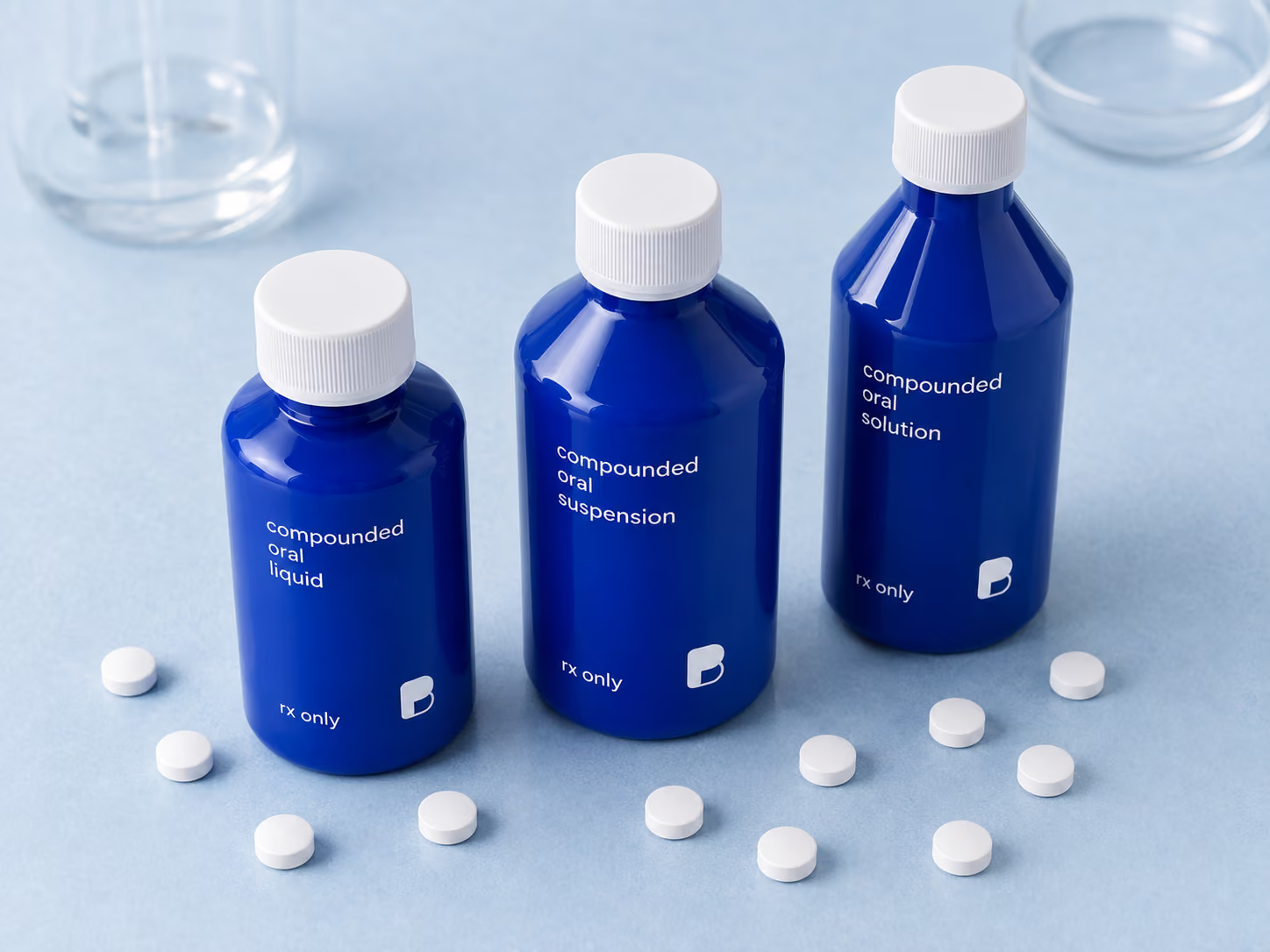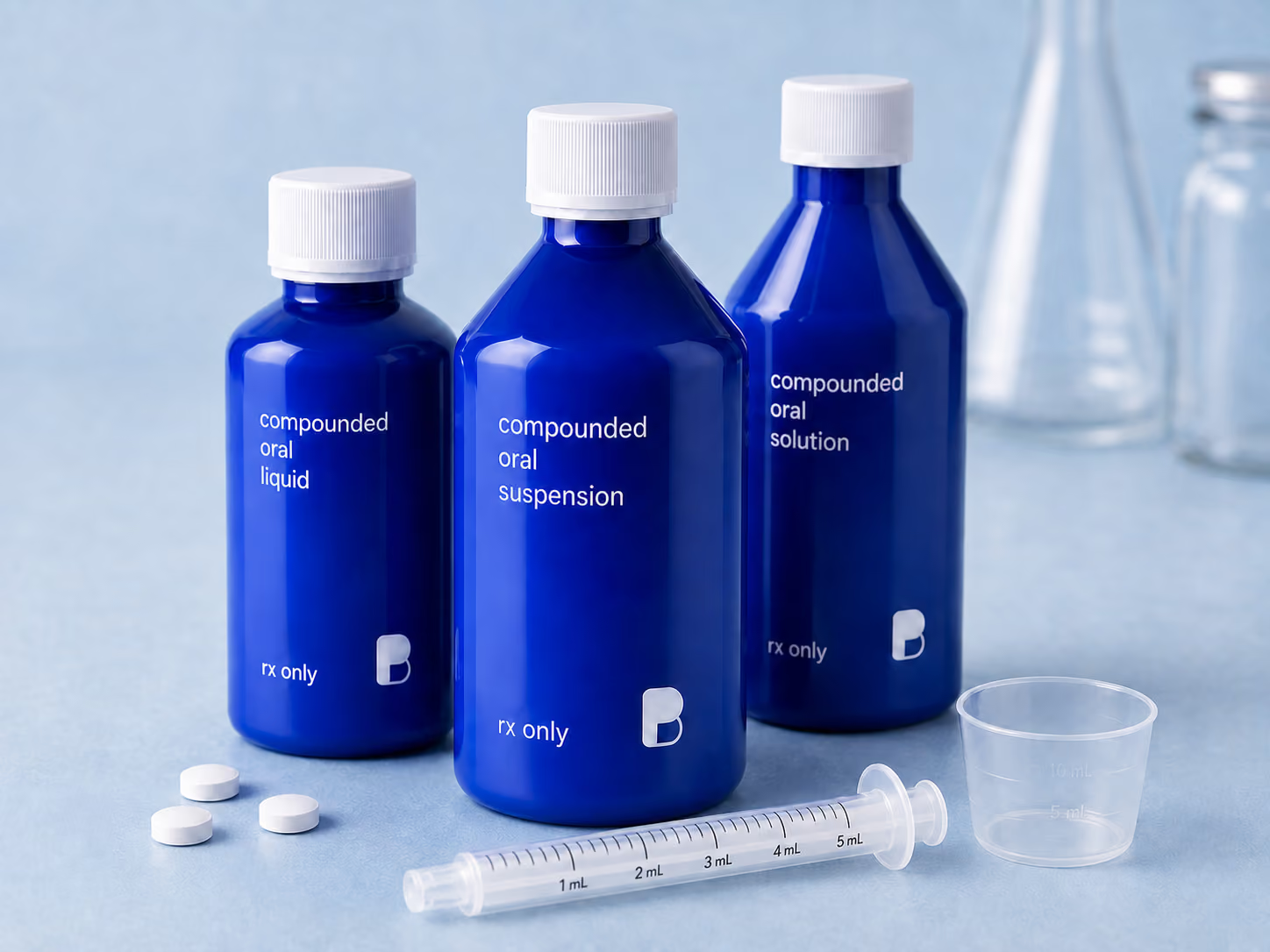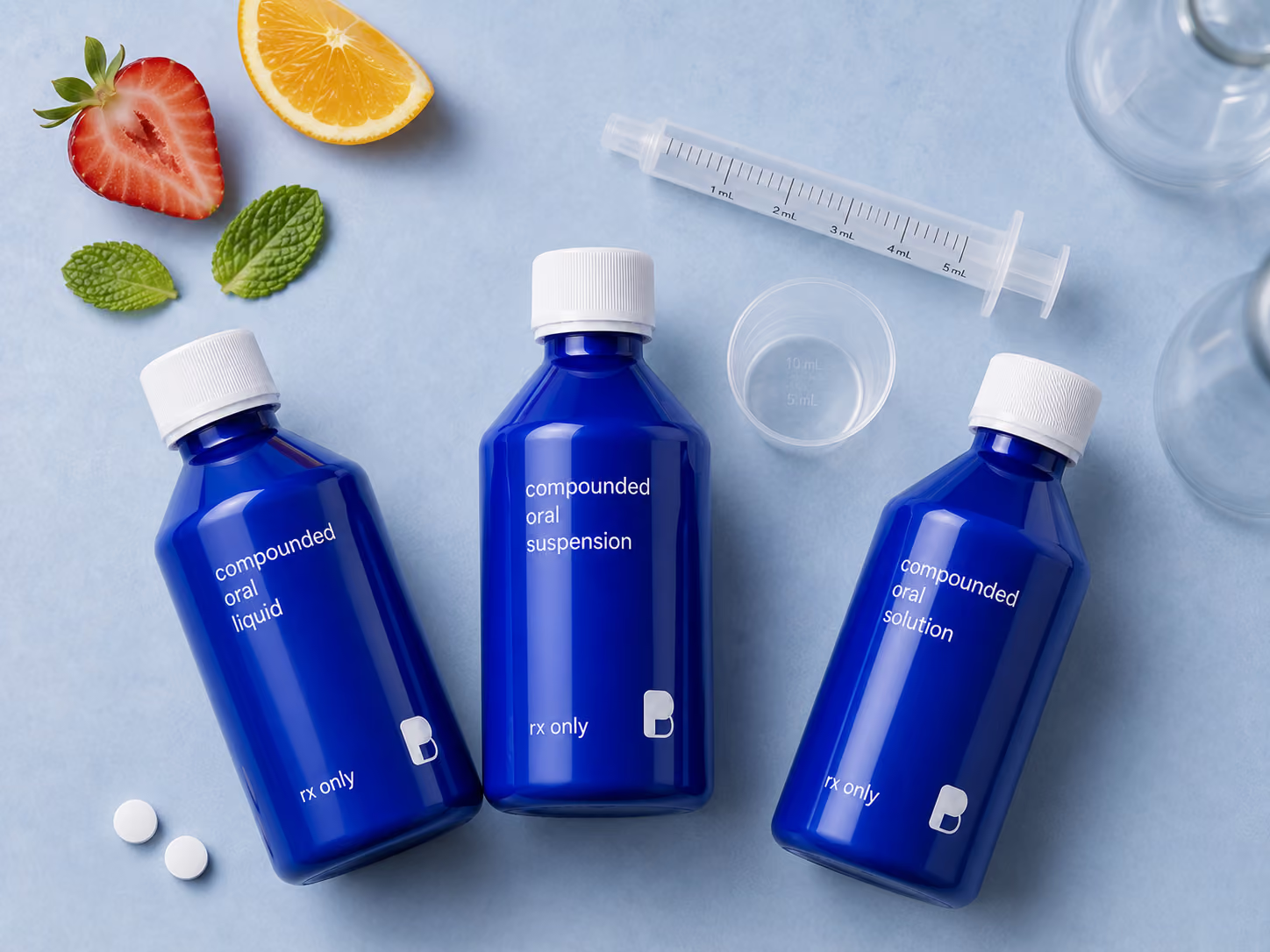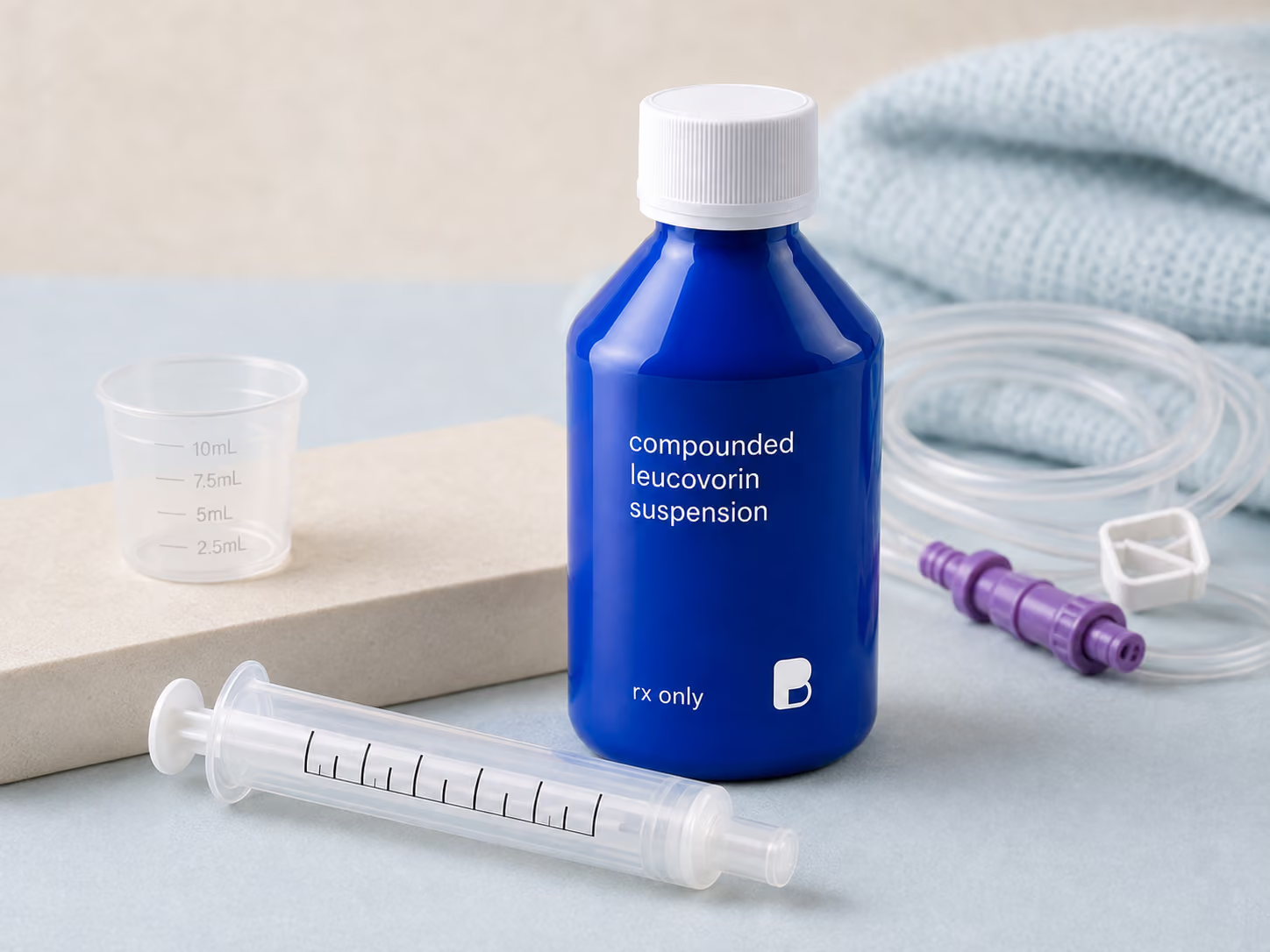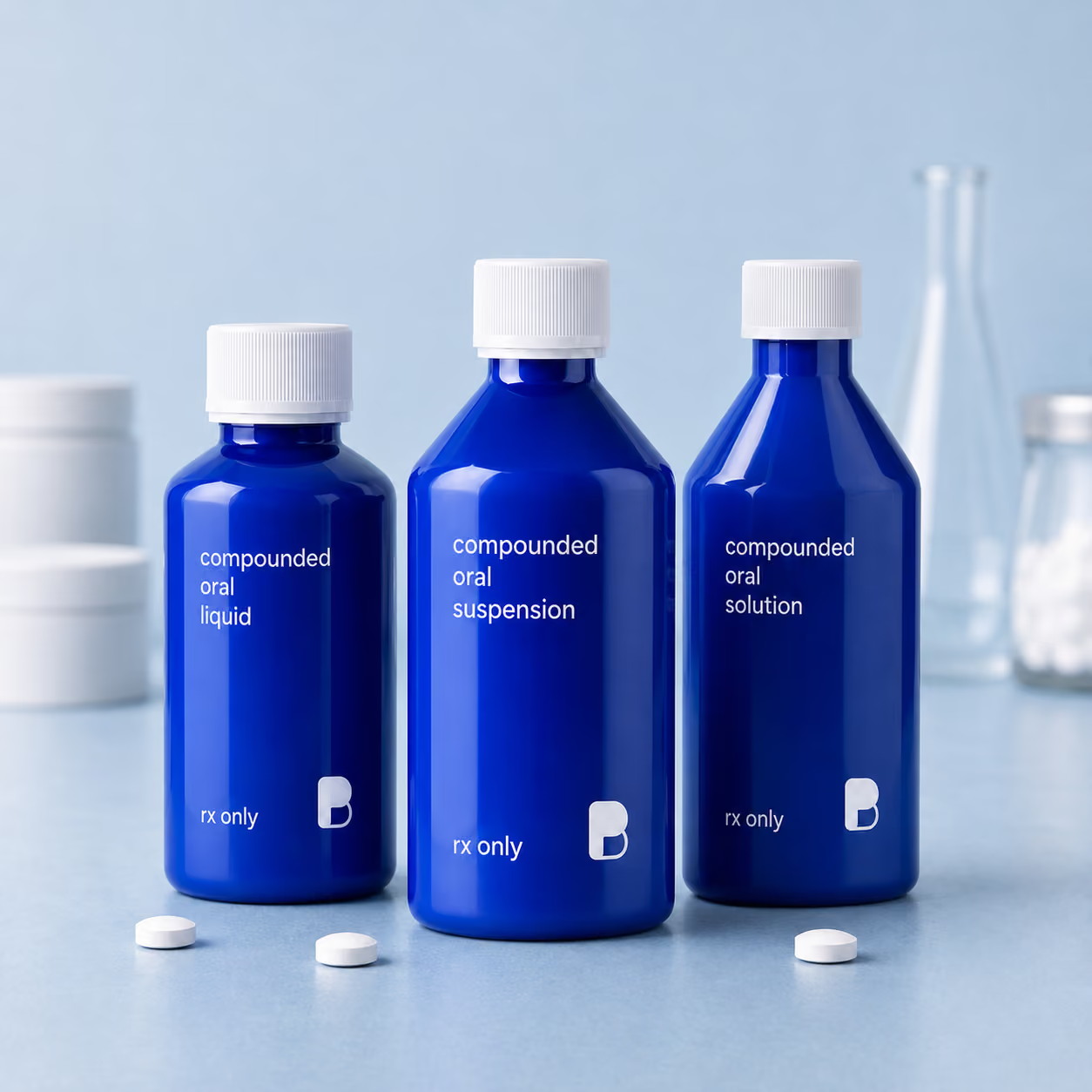






A custom oral suspension is a liquid form of a medication made by a pharmacist. The active drug, often taken from a tablet, a capsule, or pure powdered ingredient, is evenly dispersed in a liquid base called a vehicle, so that a measured amount of liquid contains a measured amount of drug. That lets a dose be drawn up in an oral syringe and swallowed, or given through a feeding tube, instead of swallowed as a pill.
Bayview compounds more than thirty different medications as oral liquids for children, for adults who have trouble swallowing, for people who are tube-fed, and for cats, dogs, and other animals. Most are prepared in an anhydrous (water-free) vehicle. Your prescriber decides whether a liquid is appropriate and sets the concentration and dose; Bayview does not provide consultations or determine appropriateness, and a valid prescription is required.
How is a suspension made?
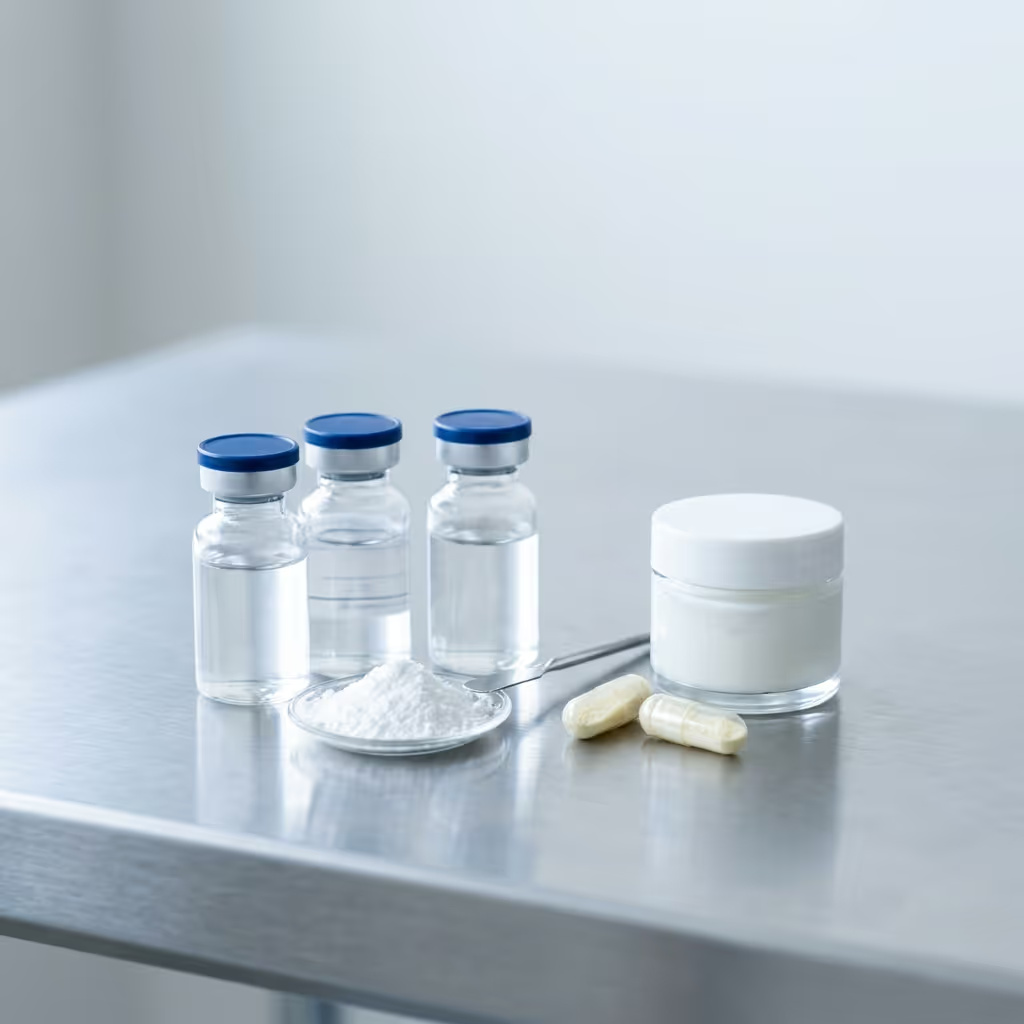
The pharmacist starts from a pure active ingredient or from a commercial tablet or capsule, reduces it to a fine, uniform powder, and wets it with a small amount of liquid so the particles do not clump. That paste is then brought up to the final volume with a suspending vehicle, a thickened liquid designed to hold the drug particles evenly rather than letting them settle into a hard cake at the bottom. The finished liquid is packaged in a bottle with an oral syringe and labeled with the concentration, the directions, the storage conditions, and a beyond-use date.
Many of Bayview's suspensions use an anhydrous vehicle, one that contains essentially no water. Water is what allows many drug molecules to break down by hydrolysis, and it is also what supports microbial growth, so removing it from the vehicle can improve the stability of the preparation and support a longer beyond-use date than the same drug in a water-based syrup. Published work on anhydrous compounding bases describes them as thixotropic: thick and stable at rest so the drug stays suspended, and thin enough to pour and measure once shaken (Banov et al., Pharmaceutics, 2023). Commercially available vehicles used across the compounding field include SuspendRx, SuspendIt, Ora-Blend, and SyrSpend; the vehicle is chosen to suit the particular drug, and some medications are better made as a water-based suspension or a true solution instead.
All of this is done under USP General Chapter <795>, the national standard for non-sterile compounding, which sets requirements for ingredients, facilities, equipment, documentation, and training, and governs how a beyond-use date is assigned to each preparation. The beyond-use date for your specific bottle is assigned under USP <795> and printed on your label. Do not assume it matches another prescription you have had.
Who is it for?
People and animals end up needing a compounded oral liquid for a handful of practical reasons:
- Trouble swallowing (dysphagia). Difficulty swallowing is common after a stroke and in conditions such as Parkinson disease, cerebral palsy, and head and neck cancer, and it becomes more common with age (MedlinePlus). A liquid can be taken when a tablet cannot.
- Children. Infants and young children usually cannot swallow pills at all, and their doses are often calculated by weight, so the dose changes as they grow. A liquid lets the dose be adjusted precisely with a syringe.
- Feeding tubes. Patients with an NG, PEG, G-tube, or J-tube need medication in a form that will pass through a narrow tube without clogging it.
- Doses a tablet cannot be split into. Splitting a tablet in half is inexact, and many tablets cannot be split at all, coated, extended-release, and very small tablets in particular. A liquid can deliver a dose that falls between commercial tablet strengths.
- Dye, allergen, sugar, or alcohol restrictions. A patient may react to a dye or filler, or need a preparation without sugar or without alcohol. FDA itself gives the example of a patient allergic to a dye in an approved product as a reason a compounded drug may be needed (FDA).
- Discontinued products and shortages. Commercial oral liquids are discontinued or go on back order fairly regularly; FDA maintains a public drug shortage database. During a documented shortage a compounded liquid can bridge the gap.
- Animals. Cats and small dogs frequently need doses far smaller than any human tablet, and many will take a flavored liquid when they will not take a pill.
Which medications does Bayview compound as a liquid?
The table below groups medications Bayview has compounded as oral liquids. It is a list of what can be prepared, not a recommendation, and it does not say that any of these work better as a liquid than as a tablet. Your prescriber chooses the medication.
| Area | Examples compounded as oral liquids | Who they are usually for |
|---|---|---|
| Neurology & seizure | Levetiracetam, zonisamide, gabapentin, clonazepam, carbidopa/levodopa, 4-aminopyridine (dalfampridine) | Children, tube-fed adults, and animals |
| Psychiatry & ADHD | Guanfacine, atomoxetine, duloxetine, fluoxetine, bupropion, mirtazapine, ziprasidone, methylphenidate | Children and adults who cannot swallow capsules |
| Heart & blood pressure | Enalapril, lisinopril, benazepril, spironolactone, aspirin, pimobendan | Small-dose pediatric and veterinary patients |
| Digestive & motility | Cisapride, prucalopride, cimetidine | Motility patients, including cats |
| Oncology supportive & specialty | Leucovorin, tacrolimus, potassium citrate, paromomycin, doxycycline | Patients on rescue, transplant, or specialty regimens |
| Pain, sedation & substance use | Ketamine, hydromorphone, naltrexone, disulfiram | Prescriber-directed; several are controlled substances |
| Veterinary | Prednisolone, methimazole, trilostane, phenylpropanolamine, pimobendan, cisapride, levetiracetam | Cats, dogs, and other animals |
Listed for education only. Inclusion here is not a statement that a compounded liquid is appropriate, effective, or preferable for any particular patient or condition. Availability of any individual medication depends on the ingredient supply and on your prescriber's order.
How is it used?
Follow the directions on your label exactly. A few habits matter with every compounded liquid:
- Shake it well before every dose. A suspension is drug particles held in a liquid, not dissolved in it. If it is not shaken, the first doses in the bottle can be weak and the last doses too strong. Shake until the liquid looks completely even.
- Use the oral syringe that came with it. Never measure with a kitchen teaspoon or tablespoon, household spoons vary widely and are a well-known source of dosing errors. If you lose the syringe, ask the pharmacy for another.
- Give it slowly. For a small child or a pet, aim the syringe into the pouch of the cheek rather than the back of the throat, and give it in small amounts.
- Through a feeding tube: flush the tube with water before and after each medication, and give medications one at a time rather than mixed together, unless your care team tells you otherwise (Memorial Sloan Kettering patient education). Ask your care team for the flush volume that is right for your tube.
- Do not transfer it to another container. The bottle it comes in is chosen for the preparation, and the label with the concentration, directions, and beyond-use date belongs with the liquid.
- Flavoring is available, bubblegum, cherry, grape, and banana are common for children, and chicken, tuna, beef, and fish are common for pets. Flavoring is cosmetic. It changes taste only; it does not change how the medication works, and it is added at the prescriber's or the family's request.
Side effects & safety
The side effects of a compounded oral liquid are the side effects of the medication it contains. Putting a drug into a liquid does not add or remove side effects, so read the information you were given about that specific medication and ask your prescriber or pharmacist what to watch for.
A few things are specific to the liquid form. Because the dose is measured rather than pre-portioned, a measuring mistake is the most likely error, double-check the number of milliliters against the label every time. Sugar-free and dye-free versions can be prepared if a patient reacts to an excipient. Tell the pharmacy about allergies before the prescription is made, not after.
Keep every compounded liquid out of the reach of children and pets. If a dose is swallowed by the wrong person, or far more than the prescribed amount is taken, contact Poison Control at 1-800-222-1222 or seek emergency care.
Who should not use it?
A compounded oral suspension is not appropriate for anyone who should not take the underlying medication. The contraindications, interactions, and warnings of the drug itself all still apply. It is also not appropriate when an FDA-approved commercial oral liquid of that drug exists and is suitable for the patient; in that situation the approved product should be used.
Tell your prescriber about allergies, other medications and supplements, and any swallowing or digestive problems, and tell the pharmacy about any dye, sugar, alcohol, or ingredient that must be avoided. Bayview Pharmacy does not diagnose, does not provide consultations, and does not determine whether a medication is appropriate; that is your prescriber's decision, and a valid prescription is required.
How should it be stored?
Store it exactly as your label directs. Some compounded suspensions are kept at room temperature away from heat and light, and some must be refrigerated. This varies by medication and by vehicle, so check the label rather than assuming it is the same as the last liquid you had. Keep the cap tightly closed, keep the bottle upright, and keep it out of the reach of children and pets.
Do not freeze a suspension unless your label specifically says to. Do not use it after the beyond-use date printed on the label, and do not use it if it looks or smells unusual, has separated in a way that will not shake back together, or has changed color. Beyond-use dates for compounded preparations are assigned according to USP <795> and are printed on your label; they are generally much shorter than the expiration date on a manufactured product. Dispose of unused medication as your pharmacist directs, and take particular care with controlled-substance liquids.
Why is this compounded?
Most medications are manufactured only as tablets or capsules, because that is what most patients can take. When a patient cannot swallow a pill, needs a dose between the available tablet strengths, needs a version without a particular ingredient, or is an animal whose dose is a fraction of a human tablet, there is often no approved liquid to reach for. Compounding fills that gap.
Federal law draws a clear line here. Under section 503A of the Federal Food, Drug, and Cosmetic Act, a pharmacy may not regularly compound a drug that is essentially a copy of a commercially available product; FDA's guidance on that restriction explains how the agency evaluates it (FDA guidance for industry). In practice that means: if an FDA-approved oral liquid of the drug exists and works for the patient, the prescriber should use it. A compounded liquid is the right tool when no approved liquid exists, when the patient needs a different concentration or a formulation without a particular excipient and the prescriber documents that difference as significant for that patient, or during a documented shortage of the commercial product.
As a 503A compounding pharmacy, Bayview Pharmacy prepares each oral suspension to order in Warwick, Rhode Island, under USP <795> standards, using quality ingredients and documented formulas. Compounded preparations are not FDA-approved, FDA does not review them for safety, effectiveness, or quality before they are dispensed, and a valid prescription is required. Related compounded liquids include Leucovorin Oral Suspension, Guanfacine, Pimobendan for Dogs, and Cisapride. The full list is in our compounded medications catalog.
Clinical details for prescribers
Scope. Bayview compounds 30+ molecules as oral liquids, most in an anhydrous suspending vehicle (e.g., SuspendRx, SuspendIt; aqueous vehicles such as Ora-Blend or SyrSpend used where the drug and formula call for it). Volumes routinely dispensed range from 10 mL to 270 mL. Concentration is compounded to the order rather than to a fixed catalog strength.
503A considerations. Where an FDA-approved oral liquid of the same drug exists, please prescribe the approved product. If a compounded liquid is needed, note the clinical basis on the prescription, e.g., a concentration not commercially available, a required dye-free/sugar-free/alcohol-free preparation, an excipient allergy, or a documented shortage, so the difference is documented as significant for the identified patient under FDA's essentially-a-copy guidance.
Controlled substances. Ketamine (CIII), hydromorphone (CII), methylphenidate (CII), and clonazepam (CIV) are compounded as oral liquids subject to all applicable DEA and state requirements, Schedule II orders require a compliant EPCS or manually signed written prescription, no refills, and state PDMP obligations apply. Please include the DEA number, patient identifiers, and, for veterinary patients, the species and weight. Counsel on secure storage.
Writing the prescription, please include:
- Drug and concentration in mg/mL (not just total mg), e.g., "gabapentin 100 mg/mL anhydrous oral suspension"
- Total volume to dispense, and dose in mL as well as mg
- Vehicle preference if any (anhydrous vs. aqueous), and dye-free / sugar-free / alcohol-free requirements
- Flavor request, if desired, flavoring is cosmetic and does not affect the active ingredient
- Route detail if the dose is given via NG/PEG/G-tube, and patient weight for weight-based pediatric or veterinary dosing
- ICD-10 diagnosis code where applicable; species and weight for veterinary orders
Beyond-use dating. BUDs are assigned per USP <795> based on the formulation and available stability information, and are printed on the dispensed label. Anhydrous vehicles reduce hydrolytic degradation and water activity relative to aqueous systems (Banov et al., Pharmaceutics 2023;15(11):2642). Call the pharmacy for the BUD on a specific formula before writing a long day supply.
Ordering: e-prescribe or fax to Bayview Pharmacy, 3844 Post Rd, Warwick, RI 02886, NCPDP 4106882, fax 401-284-4506. Licensed to dispense in RI, MA, CT, NJ, NH, FL, ME, and PA. Compounded preparations are not FDA-approved. Account setup, licensing, and ordering are covered on our for providers page.
These are prescription compounded medications and are not FDA-approved. This information is educational and is not medical advice, and it is not a claim that a compounded liquid is more effective than any other form of the same medication. Your prescriber determines whether a compounded oral liquid is appropriate and sets the medication, concentration, and dose. Bayview Pharmacy does not provide consultations or determine appropriateness. A valid prescription is required.