




Ondansetron is a prescription anti-nausea medicine, a selective 5-HT3 serotonin receptor antagonist. The 8 mg tablet is the strength most adults are prescribed for moderately emetogenic chemotherapy: 8 mg 30 minutes before treatment, 8 mg again 8 hours later, then 8 mg twice a day for 1 to 2 days (DailyMed, ondansetron tablets label). Manufactured ondansetron comes as tablets, orally disintegrating tablets, film, and an oral solution (MedlinePlus, Ondansetron), as well as injection.
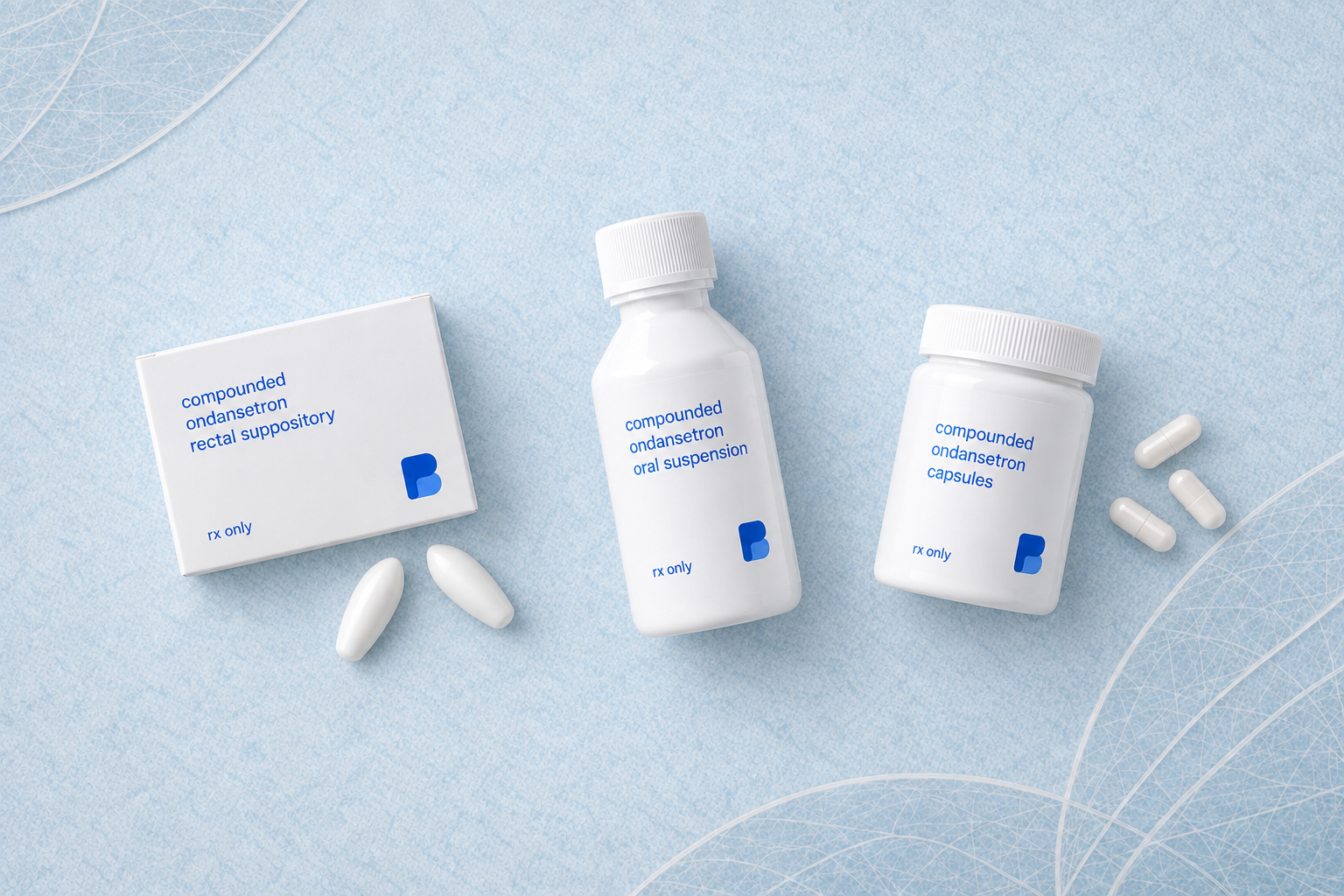
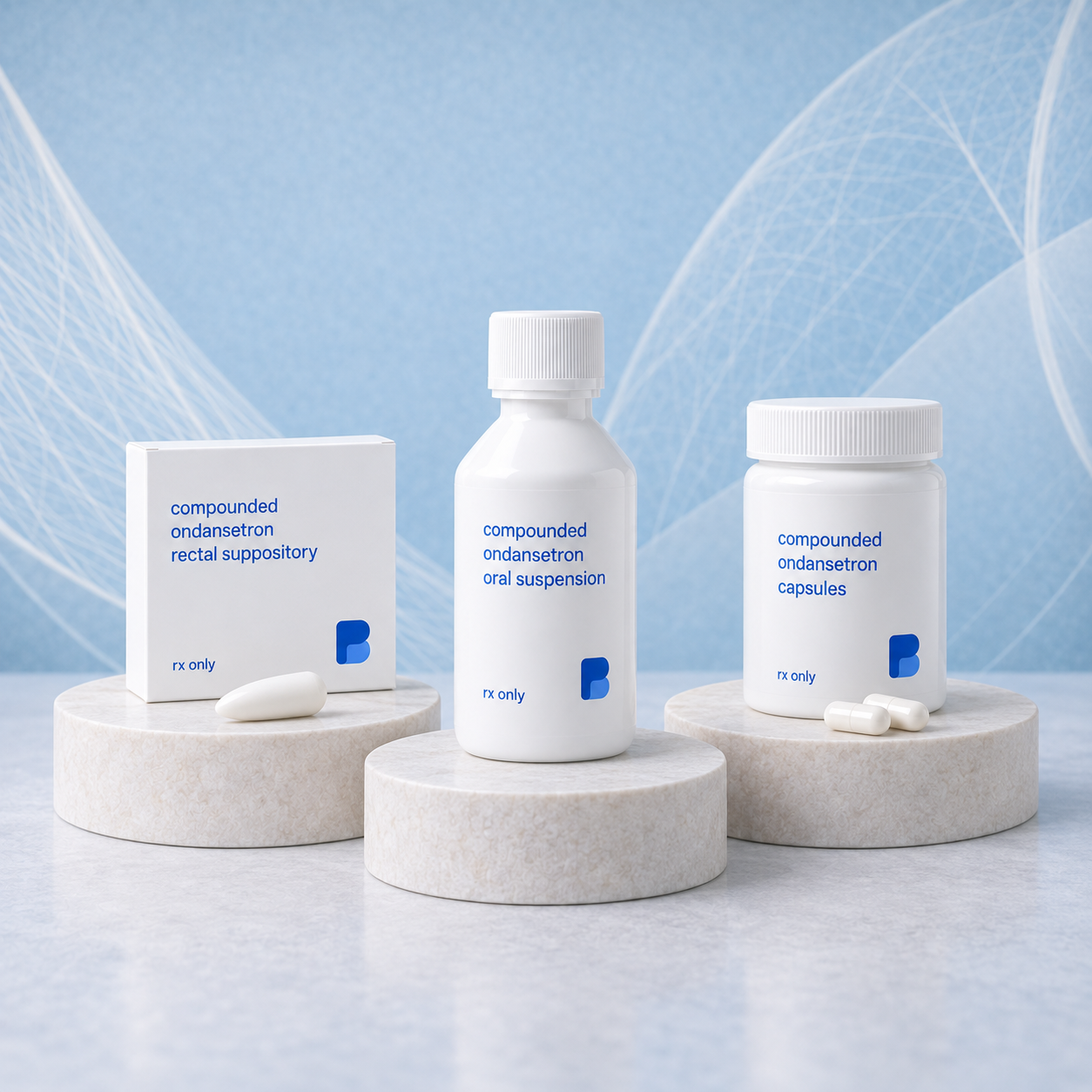
Bayview compounds ondansetron as 4 mg, 5 mg, and 8 mg rectal suppositories, a 4 mg ondansetron and 25 mg prochlorperazine suppository, a 0.8 mg/mL (4 mg/5 mL) gluten-free oral suspension, 4 mg and 8 mg slow-release capsules, and topical creams and gels, to the strength and form your prescriber orders. Ondansetron itself is an FDA-approved drug, but these compounded forms are not FDA-approved. A valid prescription is required, and only your prescriber can decide whether it is appropriate for you.
How does it work?
Ondansetron blocks 5-HT3 serotonin receptors in two places: on vagal nerve endings in the gut, which respond to irritation from chemotherapy and other triggers, and in the chemoreceptor trigger zone of the brain, which signals the vomiting reflex (StatPearls, Ondansetron). It is cleared by the liver through several CYP enzymes, with a half-life of about 3 to 4 hours in adults and longer in older adults (StatPearls, Ondansetron).
What is it used for?
Manufactured ondansetron is indicated to prevent nausea and vomiting with chemotherapy, radiation treatment, and surgery (DailyMed, ondansetron tablets label). Prescribers also use it off-label, and StatPearls reports it is not effective for motion sickness (StatPearls, Ondansetron). Off-label means the use is not in the FDA-approved labeling; uses in pregnancy should be discussed with the prescriber before starting.
| Use | Status | Evidence |
|---|---|---|
| Chemotherapy nausea and vomiting | FDA-approved (oral, IV) | Prescribing information |
| Radiation nausea and vomiting | FDA-approved (oral) | Prescribing information |
| Postoperative nausea and vomiting | FDA-approved (oral, IV) | Prescribing information |
| Nausea in pregnancy | Off-label | Cited in StatPearls |
| Cyclic vomiting syndrome (children) | Off-label | Cited in StatPearls |
| Motion sickness | Off-label | Not effective per StatPearls |
Tablet, suspension, suppository, capsule, or cream?
Manufactured ondansetron covers most prescriptions. The compounded forms each fill a specific gap, and each has a different level of published evidence behind the route.
| Form | Route | Status |
|---|---|---|
| Tablet 4 mg, 8 mg | Oral | FDA-approved |
| Orally disintegrating tablet | Oral | FDA-approved |
| Oral solution 4 mg/5 mL | Oral | FDA-approved |
| Gluten-free oral suspension | Oral | Compounded, not FDA-approved |
| Slow-release capsule | Oral | No FDA-approved product |
| Rectal suppository | Rectal | No FDA-approved product |
| Topical cream or gel | Skin | No FDA-approved product |
Rectal suppository. There is no FDA-approved ondansetron suppository in the United States. A small pharmacokinetic study in 12 healthy volunteers found ondansetron is absorbed from a rectal suppository, but absorption was slower and bioavailability was lower than with the oral tablet (VanDenBerg et al., 2000). That was one small study, and it does not establish how any compounded suppository will perform.
Slow-release capsule. There is no FDA-approved extended-release ondansetron. The release profile of a compounded slow-release capsule has not been established by FDA review, so the dosing interval is set by the prescriber.
Topical cream or gel. There is no FDA-approved topical or transdermal ondansetron, and published evidence that it is absorbed through human skin is lacking; we did not find a published human study. In a study of five healthy cats, 4 mg of ondansetron in 0.1 mL of a transdermal base applied to the ear produced no clinically relevant serum levels after single or repeated doses (Zajic et al., 2017). Prescribers who order a topical form should know the evidence for absorption is limited.
Gluten-free oral suspension. A manufactured 4 mg/5 mL oral solution exists (DailyMed, ondansetron oral solution label). A compounded suspension is for a prescriber who needs a specific vehicle, such as one prepared without gluten-containing ingredients. For other liquid preparations, see our custom oral suspensions guide.
How is it used?
Take ondansetron exactly as your prescriber directs. For the orally disintegrating tablet, peel back the foil with dry hands and place the tablet on your tongue, where it dissolves in seconds (MedlinePlus, Ondansetron). For a suppository, insert it rectally as directed; if it softens, chill it briefly before unwrapping. For a compounded cream or gel, measure the prescribed amount and apply it to the site your prescriber names. For a suspension, shake well and measure each dose with an oral syringe, not a kitchen spoon. Do not double a dose to make up for a missed one.
Side effects & safety
Common side effects of ondansetron include headache, constipation, diarrhea, and tiredness (DailyMed, ondansetron tablets label). Get medical help right away for chest pain, a fast or irregular heartbeat, fainting, rash or swelling, trouble breathing, confusion, fever with stiff muscles, or seizures (MedlinePlus, Ondansetron).
Who should not use it?
Do not use ondansetron if you are allergic to it or if you take apomorphine, because the combination has caused profound low blood pressure and loss of consciousness (DailyMed, ondansetron tablets label). Tell your prescriber if you have a heart rhythm problem or long QT syndrome, low potassium or magnesium, liver disease, or take antidepressants, triptans, or other serotonergic medicines. In severe liver impairment, the labeled maximum is 8 mg per day (DailyMed, ondansetron tablets label). The orally disintegrating tablets contain aspartame, which matters for people with phenylketonuria (MedlinePlus, Ondansetron). The prochlorperazine combination carries additional restrictions, including a boxed warning for older adults with dementia-related psychosis (DailyMed, prochlorperazine suppositories label).
How should it be stored?
Store manufactured ondansetron in its original container, away from light and moisture, and out of reach of children and pets (MedlinePlus, Ondansetron). Compounded preparations carry their own storage directions and beyond-use date on the label; suppositories are usually kept cool so they do not soften. Do not use it after the beyond-use date, and dispose of unused medication as directed.
Why is this compounded?
FDA-approved ondansetron comes as 4 mg and 8 mg tablets, orally disintegrating tablets, film, an oral solution, and injection, and when one of those fits the order, Bayview dispenses the manufactured product. Compounding covers what that line does not: a rectal form for a patient who is actively vomiting, a combined ondansetron and prochlorperazine suppository, an oral liquid prepared without specific excipients, a capsule prepared to a prescriber's release instructions, or a topical form ordered for a patient who cannot take anything by mouth or rectum.
As a 503A compounding pharmacy, Bayview prepares small batches under USP standards for individual patient prescriptions; we do not supply clinic or office stock, which is a 503B outsourcing facility role. Compounded preparations are not FDA-approved. Related guides: Scopolamine, Custom Oral Suspensions, Hospice & Palliative Care, and Magic Mouthwash. The full list is in our compounded medications catalog.
Clinical details for prescribers
Regulatory status. Ondansetron is a selective 5-HT3 receptor antagonist. FDA-approved presentations are 4 mg and 8 mg tablets, orally disintegrating tablets, film, a 4 mg/5 mL oral solution, and injection, labeled for prevention of CINV, RINV, and PONV. There is no FDA-approved ondansetron suppository, extended-release oral product, or topical product in the United States. The suppositories, suspension, slow-release capsules, and topical preparations are compounded and not FDA-approved; rectal and topical routes are off-label. Not a controlled substance. Prepared via 503A compounding.
Formulation & directions. Bayview compounds ondansetron 4 mg, 5 mg, and 8 mg rectal suppositories; ondansetron 4 mg/prochlorperazine 25 mg rectal suppositories; ondansetron 0.8 mg/mL (4 mg/5 mL) gluten-free oral suspension; ondansetron 4 mg and 8 mg slow-release capsules; and ondansetron topical cream or gel at 0.4 mg/0.1 mL, 4 mg/0.1 mL, 8 mg/mL, and 20 mg/mL. Labeled adult oral dosing: moderately emetogenic chemotherapy, 8 mg 30 minutes before treatment, 8 mg 8 hours later, then 8 mg every 12 hours for 1 to 2 days; highly emetogenic chemotherapy, 24 mg once; PONV, 16 mg 1 hour before induction (DailyMed). Specify dose, frequency, and maximum daily dose on every order for a compounded route.
Evidence by route:
- Rectal: a 12-subject healthy-volunteer pharmacokinetic study found prolonged absorption and substantially lower bioavailability from a 24 mg suppository than from the 24 mg oral tablet (small study, single dose) (VanDenBerg et al., 2000).
- Topical: no published human pharmacokinetic study located; a five-cat study of 4 mg/0.1 mL in a transdermal base found no clinically relevant serum concentrations (Zajic et al., 2017).
- Slow-release capsule: no FDA-reviewed release data exist for any extended-release ondansetron.
Safety & counseling:
- Avoid in congenital long QT syndrome; correct hypokalemia and hypomagnesemia; use ECG monitoring in patients with electrolyte abnormalities, heart failure, bradyarrhythmias, or other QT-prolonging drugs. The 32 mg single IV dose was withdrawn in 2012 (FDA).
- Monitor for serotonin syndrome with SSRIs, SNRIs, triptans, and other serotonergic agents. Contraindicated with apomorphine. May mask progressive ileus or gastric distension (DailyMed).
- Hepatic: maximum 8 mg per day in severe hepatic impairment (DailyMed).
- Lactation: LactMed states no special precautions are required (LactMed).
- Prochlorperazine combination: boxed warning for increased mortality in elderly patients with dementia-related psychosis; not for children under 2 years or under 20 lbs; extrapyramidal symptoms, tardive dyskinesia, and neuroleptic malignant syndrome can occur (DailyMed).
Non-controlled. Licensed to dispense in RI, MA, CT, NJ, NH, FL, ME, and PA. Background: StatPearls, Ondansetron; DailyMed, ondansetron tablets label; FDA Drug Safety Communication, 2012; LactMed, Ondansetron.
This is a prescription compounded medication and is not FDA-approved. This information is educational and is not medical advice. Your prescriber determines whether it is appropriate and sets the formulation and directions.
References
- DailyMed: Ondansetron tablets prescribing information
- DailyMed: Ondansetron oral solution 4 mg/5 mL prescribing information
- NCBI Bookshelf: StatPearls, Ondansetron
- MedlinePlus: Ondansetron
- FDA Drug Safety Communication: 32 mg intravenous ondansetron dose (2012)
- VanDenBerg CM, et al. Pharmacokinetics of three formulations of ondansetron hydrochloride (2000)
- Zajic LB, et al. Assessment of absorption of transdermal ondansetron in normal research cats (2017)
- DailyMed: Prochlorperazine suppositories 25 mg prescribing information
- LactMed: Ondansetron