


In Stock
Compounded Vitamin B12 Injections & Nasal Spray | Bayview Pharmacy

Vitamin B12 Injections & Nasal Spray

Smiling man in blue pharmacist scrubs with arms crossed and pen behind his ear.
Medically reviewed by Ryan Dyer, RPh
Last updated on
August 7, 2026
Starting at
$90
for
1 mL
Checkmark icon followed by text 'HSA/FSA Eligible'.
Start with a prescriptionPrescribers: request this order form →
Licensed to fill prescriptions for patients in RI, MA, CT, NY, NJ, NH & FL
  • Methylcobalamin and hydroxocobalamin forms, which have no FDA-approved vitamin B12 product in the United States
  • Preservative-free single-dose vials and prefilled syringes
  • Higher concentrations than the commercial 1,000 mcg/mL cyanocobalamin vial, when your prescriber orders them
  • A nasal spray option for people who would rather avoid needles
  • Made as a sterile preparation under USP <797> standards

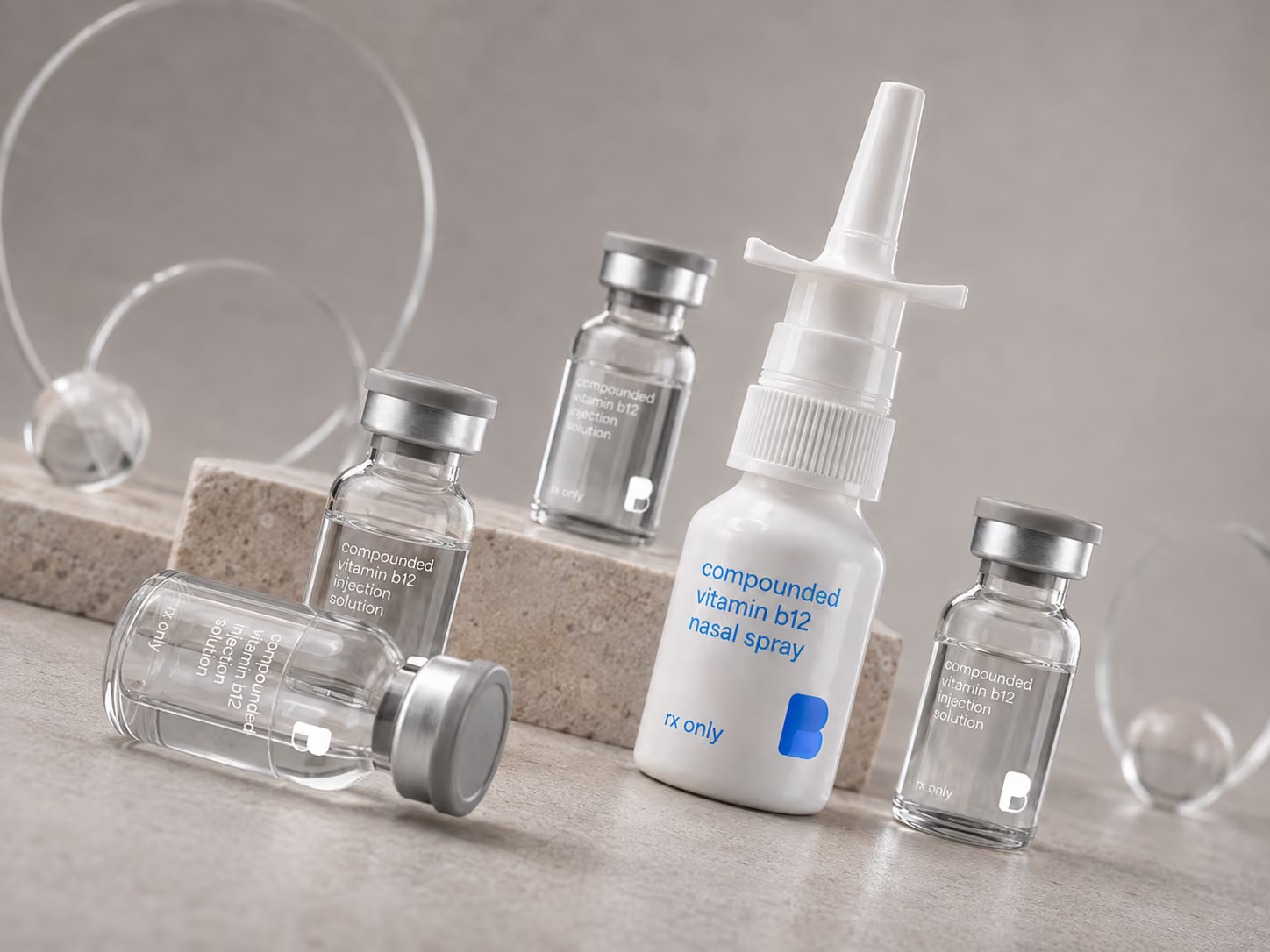
Compounded vitamin B12 is a prescription preparation of vitamin B12 — usually as methylcobalamin or hydroxocobalamin — made as a sterile injection or as a nasal spray. It is used to treat and prevent vitamin B12 deficiency. Cyanocobalamin injection and cyanocobalamin nasal spray (Nascobal) are FDA-approved and commercially available. Methylcobalamin and hydroxocobalamin are not FDA-approved as vitamin B12 products in the United States, so they are prepared by a compounding pharmacy when a prescriber orders them. Compounded medications are not FDA-approved, and a valid prescription is required.

Vitamin B12 replacement is well established for people who are actually deficient — for example from pernicious anemia, malabsorption, or bariatric surgery. B12 injections given for fatigue or energy in people who are not deficient are not supported by evidence. Bayview Pharmacy does not provide consultations or determine whether a medication is appropriate; your prescriber makes that decision and orders the form, dose, and schedule.

What is the difference between cyanocobalamin, hydroxocobalamin, and methylcobalamin?

They are three forms of the same vitamin. Cyanocobalamin is the FDA-approved one in the United States, both as an injection and as the Nascobal nasal spray. Methylcobalamin and hydroxocobalamin have no FDA-approved vitamin B12 product here, so they are compounded when a prescriber orders them.

High-quality evidence does not show the methyl or hydroxo forms work better. Claims of superiority for those forms are not well supported.

Who actually needs vitamin B12 injections?

People who are deficient. That includes pernicious anemia, malabsorption from conditions such as Crohn's or celiac disease, past bariatric surgery, long-term metformin or proton pump inhibitor use, and strict vegan diets without supplementation.

Honestly: B12 injections are not an evidence-based energy booster for people who are not deficient. If your level is normal, an injection is not expected to change fatigue, mood, or weight. Your prescriber decides whether you need treatment.

Trusted by 105,826 patients to date.
A group of faces of our past satisfied patients.
Compounded medications are prepared pursuant to a valid prescription for an individual patient and are not FDA-approved. This page is for educational purposes and is not medical advice.
**The FDA does not review or approve compounded medications for safety or effectiveness. A valid prescription from a licensed practitioner is required.
Important safety information →
Service availability

Prescription delivery in your state

Bayview Pharmacy currently serves eligible patients in six states. Check your state before getting started.

Where we currently serve

Select a highlighted state to check availability.

Currently licensed Licensed — non-controlled only Not currently licensed Your selection

Select a state on the map or use the state checker.

Do we serve your state?

Choose your state to confirm current service availability.

Thank you! Your submission has been received!
Oops! Something went wrong while submitting the form.
Currently licensed in
Start with a prescription

Send us your prescription

STEP
1
Have your provider e-prescribe to Bayview, fax it to us, or call it in directly to one of our pharmacists.
A thin blue light beam connecting two clear glass slabs on a white surface.

A pharmacist reviews it

STEP
2
We verify your prescription and prepare your medication to your provider's exact instructions.
Close-up of a white dial with blue measurement markings and a rotating knob.

We compound & ship

STEP
3
We prepare your medication and ship it discreetly to your door, with support when you need it.
Close-up of a gray box with a precise blue line running along its folded edges.

What is Vitamin B12 Injections & Nasal Spray?

Vitamin B12 (cobalamin) is a vitamin your body cannot make on its own. Compounded vitamin B12 is a prescription preparation of B12 — usually as methylcobalamin or hydroxocobalamin — prepared by a licensed pharmacy as a sterile injection or as a nasal spray, at the strength your prescriber orders.

Vitamin B12 replacement itself is not experimental. For people who are genuinely deficient, it is one of the better-established treatments in medicine. What is compounded here is the form and the presentation — preservative-free vials and syringes, higher concentrations, and forms of B12 that no company markets as an FDA-approved drug in the United States.

Cyanocobalamin is the FDA-approved form. Methylcobalamin and hydroxocobalamin are not. Cyanocobalamin injection and cyanocobalamin nasal spray (Nascobal) are FDA-approved for vitamin B12 deficiency. There is no FDA-approved methylcobalamin drug product in the United States, and no FDA-approved hydroxocobalamin product for vitamin B12 deficiency — the only FDA-approved hydroxocobalamin is Cyanokit, indicated for cyanide poisoning at a 5-gram intravenous dose, which is thousands of times the amount used for B12 replacement (Cyanokit label). Methylcobalamin and hydroxocobalamin for B12 deficiency are therefore compounded and prescribed off-label. A valid prescription is required, and your prescriber decides whether it is appropriate.

How does it work?

Vitamin B12 is a cofactor for two enzymes — methionine synthase and L-methylmalonyl-CoA mutase — and the National Institutes of Health describes it as required for “development, myelination, and function of the central nervous system; healthy red blood cell formation; and DNA synthesis” (NIH Office of Dietary Supplements). When B12 runs low, red blood cells are made poorly (megaloblastic anemia) and nerves can be damaged.

Normally B12 from food is absorbed in the last part of the small intestine, and that step requires a stomach protein called intrinsic factor. Injections and nasal sprays bypass that pathway entirely, which is why they are used when absorption through the gut is the problem. Once B12 is replaced, the body draws on it as a cofactor again; it does not act as a stimulant, and it does not add energy to a body that already has enough B12.

What is it used for?

Vitamin B12 is prescribed to treat and prevent vitamin B12 deficiency. Common reasons a prescriber orders it include:

  • Pernicious anemia — an autoimmune condition in which the stomach stops making intrinsic factor, so B12 cannot be absorbed from food
  • Malabsorption — Crohn's disease, celiac disease, small bowel resection, or other gastrointestinal conditions
  • After bariatric surgery — gastric bypass and similar procedures reduce the cells that make stomach acid and intrinsic factor
  • Medication-associated deficiency — long-term metformin, proton pump inhibitors, or H2 blockers can interfere with B12 absorption
  • Vegan and strict vegetarian diets — natural food sources of B12 are essentially limited to animal foods
  • Some neurologic situations — when a prescriber is treating or preventing the nerve damage that B12 deficiency can cause
What the evidence does and does not support. Replacing B12 in someone who is deficient is well established and can reverse anemia and, if caught early enough, nerve symptoms. What is not well supported is the idea that methylcobalamin or hydroxocobalamin works better than FDA-approved cyanocobalamin — the NIH states that “no evidence indicates that absorption rates of vitamin B12 in supplements vary by form of the vitamin.” Also not supported: B12 injections for fatigue, energy, mood, or weight loss in people whose B12 levels are normal. Bayview makes no claim that a compounded preparation works better than an FDA-approved product.

How do the forms and routes compare?

The table below describes what is and is not commercially available in the United States. It is a description of regulatory status and practical differences — not a ranking, and not a statement that any form is better for a particular person.

FormUS statusNotes
Cyanocobalamin injectionFDA-approvedThe standard, best-studied injectable B12 in the US; commercially available as 1,000 mcg/mL
Cyanocobalamin nasal spray (Nascobal)FDA-approved500 mcg in one nostril once weekly; a non-injection option that is already on the market
Methylcobalamin injectionNo FDA-approved drug productAvailable only as a compounded preparation; used off-label
Hydroxocobalamin injectionNo FDA-approved B12 productCommonly used for B12 deficiency in Europe. In the US the only approved hydroxocobalamin is Cyanokit for cyanide poisoning, at a completely different (5 g) dose
Hydroxocobalamin nasal sprayNot FDA-approvedCompounded; the FDA-approved nasal B12 is cyanocobalamin
Custom strengthCompoundedPrepared as your prescriber orders

Forms are listed for education only. High-quality evidence does not show that methylcobalamin or hydroxocobalamin is superior to FDA-approved cyanocobalamin. Your prescriber selects the form, dose, route, and schedule.

How is it used?

Use it exactly as your prescriber directs. Injectable B12 is given into a muscle (intramuscular) or under the skin (subcutaneous). Regimens vary, but a common pattern for a new diagnosis is frequent doses at first to refill your body's stores, then a much less frequent maintenance dose — the FDA label for cyanocobalamin injection describes 100 mcg daily for 6 or 7 days for pernicious anemia, then 100 mcg monthly for life (FDA cyanocobalamin injection label). Your own schedule and dose may look quite different; follow your label.

If you or a caregiver give the injections at home, use a new needle and syringe each time, clean the skin first, rotate injection sites, and dispose of sharps in a proper container. For the nasal spray, spray as directed; for the FDA-approved nasal cyanocobalamin, the label advises using it at least one hour before or after hot foods or liquids, since a runny nose can wash the dose away — the same practical point applies to a compounded nasal spray.

For most people, B12 is a long-term treatment. If the underlying cause has not gone away, stopping means the deficiency comes back. Do not stop or change the schedule on your own. A Bayview pharmacist is available for questions about your prescription.

How is deficiency diagnosed?

This is decided by your prescriber, not by the pharmacy. Testing usually starts with a serum vitamin B12 level, often alongside a complete blood count and a folate level. Serum B12 alone can be ambiguous in the borderline range, so prescribers frequently add methylmalonic acid (MMA) and homocysteine, which both rise in true B12 deficiency. That pairing also helps separate B12 deficiency from folate deficiency, where homocysteine rises but MMA stays normal (StatPearls, Vitamin B12 Deficiency).

Folic acid can hide a B12 deficiency while nerve damage keeps getting worse. The FDA label for cyanocobalamin injection warns that folic acid doses greater than 0.1 mg per day may produce a hematologic remission — the blood counts look better — but “neurologic manifestations will not be prevented with folic acid.” That is why B12 deficiency needs to be identified and treated on its own, not covered over with a folate supplement.

Side effects & safety

Vitamin B12 is generally very safe. The National Institutes of Health notes that no upper intake level has been set for B12 because of its low potential for toxicity. Most people have no side effects at all.

What can happen:

  • Injection site reactions — soreness, redness, or mild swelling where the shot was given
  • Mild effects — diarrhea, headache, dizziness, or a sensation of swelling in the body
  • Reddish discoloration — hydroxocobalamin is a deep red compound and can turn urine, and sometimes skin, reddish or pink. This is expected with hydroxocobalamin and is not harmful, but tell your prescriber if you notice it so it is not mistaken for blood in the urine.
  • Hypersensitivity — rare, but anaphylaxis and death have been reported after injectable vitamin B12. Get emergency care for rash, hives, swelling of the face or throat, or trouble breathing.
Potassium needs watching when severe deficiency is first treated. FDA labeling for both cyanocobalamin injection and Nascobal warns that “hypokalemia and sudden death may occur in severe megaloblastic anemia that is treated intensely with vitamin B12.” As new red blood cells are made rapidly, potassium moves out of the blood. Prescribers monitor potassium (and platelet counts) during the first days of repletion in severe cases. This is a reason to be under a prescriber's care rather than self-treating.

Contact your prescriber about muscle weakness or cramping, leg pain or swelling, extreme thirst, palpitations, or any new or worsening numbness, tingling, or balance problems.

Who should not use it?

Vitamin B12 is not appropriate for everyone. Tell your prescriber your full health history, allergies, and all medications and supplements you take. In particular:

  • Cobalt or vitamin B12 allergy. FDA labeling states that sensitivity to cobalt and/or vitamin B12 is a contraindication. Cobalt sits at the center of the B12 molecule.
  • Leber's hereditary optic neuropathy. FDA labeling reports that patients with early Leber's disease treated with cyanocobalamin suffered severe and rapid optic atrophy, and cyanocobalamin products are not recommended in these patients.
  • Severe megaloblastic anemia. Needs close monitoring during initial treatment, as above.
  • Kidney disease, pregnancy, or breastfeeding. Discuss with your prescriber before starting.

Bayview Pharmacy does not provide consultations or determine whether this medication is appropriate for you. Only your prescriber can do that.

How should it be stored?

Follow your label exactly — it is the authority for your specific preparation. Most compounded B12 preparations from Bayview are refrigerated, and the higher-concentration hydroxocobalamin and methylcobalamin presentations always are. Vitamin B12 is also light-sensitive; FDA labeling for cyanocobalamin injection instructs in capitals to protect the product from light. Keep vials and syringes in their carton or an opaque bag, do not freeze unless your label says to, and keep them out of the reach of children.

Preservative-free single-dose vials and syringes are meant for one use — do not save leftovers from a single-dose container. Do not use a preparation past its beyond-use date, and do not use it if the solution looks cloudy or has particles in it. Dispose of unused medication and sharps as your pharmacist directs.

Why is this compounded?

Cyanocobalamin injection and nasal spray are commercially available, so compounding is used when the commercial products do not fit what the prescriber has ordered. The usual reasons are: the prescriber wants methylcobalamin or hydroxocobalamin, neither of which has an FDA-approved B12 product in the United States; the patient needs a preservative-free single-dose presentation; the order calls for a higher concentration than the commercial 1,000 mcg/mL vial so the injected volume stays small; or the patient is needle-averse and the prescriber wants a nasal spray in a form or strength that is not commercially made.

As a 503A compounding pharmacy, Bayview Pharmacy prepares each order in small batches as a sterile preparation under USP <797> standards using quality ingredients. Compounded preparations are not FDA-approved, and no claim is made that they work better than FDA-approved cyanocobalamin.

Clinical details for prescribers

Regulatory status. Vitamin B12 is not a controlled substance. Cyanocobalamin injection USP 1,000 mcg/mL is FDA-approved (e.g., ANDA 080737) and cyanocobalamin nasal spray (Nascobal, NDA 021642) is FDA-approved for B12 deficiency. There is no FDA-approved methylcobalamin drug product in the US, and no FDA-approved hydroxocobalamin product for B12 deficiency — hydroxocobalamin's only US approval is Cyanokit (5 g IV) for known or suspected cyanide poisoning. Methylcobalamin and hydroxocobalamin B12 replacement is therefore off-label and requires compounding. Compounded preparations are not FDA-approved.

Formulation & SIG. Preservative-free sterile injections: methylcobalamin 1 mg/mL (1 mL and 4 mL), 5 mg/mL (6 mL, refrigerated), 10 mg/mL (1 mL syringe); hydroxocobalamin 1 mg/mL (4 mL, 8 mL), 25 mg/mL (1 mL syringes or SDVs, refrigerated). Hydroxocobalamin 5 mg/mL nasal spray delivering 0.5 mg per 0.1 mL spray, 10 mL. Custom concentrations available. Typical SIG examples: inject 1 mL IM weekly × 4, then monthly; or 1 spray in one nostril weekly. Prepared under USP <797>.

Evidence & clinical points:

  • NIH ODS: no evidence that absorption of B12 varies by supplement form; claims of methylcobalamin or hydroxocobalamin superiority over cyanocobalamin are not supported by high-quality comparative data
  • B12 administration for fatigue or energy in non-deficient patients is not evidence-based; Bayview makes no such claims on the patient-facing page
  • Diagnosis: serum B12 with reflex MMA (and homocysteine) in the 150–399 pg/mL borderline range; MMA elevated in B12 but not folate deficiency
  • Folic acid >0.1 mg/day may induce hematologic remission while neurologic manifestations progress — do not treat empirically with folate alone
  • Monitor potassium and platelets during intensive repletion of severe megaloblastic anemia (hypokalemia, sudden death reported)
  • Contraindicated with cobalt/B12 hypersensitivity; not recommended in Leber's hereditary optic neuropathy (cyanocobalamin)
  • Hydroxocobalamin produces chromaturia and cutaneous erythema; counsel patients so it is not mistaken for hematuria
  • High-dose oral B12 (1,000–2,000 mcg daily) is a reasonable alternative to parenteral therapy in many patients, including some with pernicious anemia

Ordering: send a prescription to Bayview Pharmacy, or fax 401-284-4506. Background: NIH ODS Vitamin B12 fact sheet; Nascobal prescribing information.

This is a prescription compounded medication and is not FDA-approved. This information is educational and is not medical advice. Bayview Pharmacy does not provide consultations or determine whether a medication is appropriate; your prescriber makes that determination and sets the form, dose, and schedule.
In Stock

On this page

Forms with no approved US product

Cyanocobalamin is the FDA-approved form of B12. Methylcobalamin and hydroxocobalamin are compounded when a prescriber orders them, though evidence does not show they work better. Your prescriber sets the form, dose, and schedule.

Start with a prescription
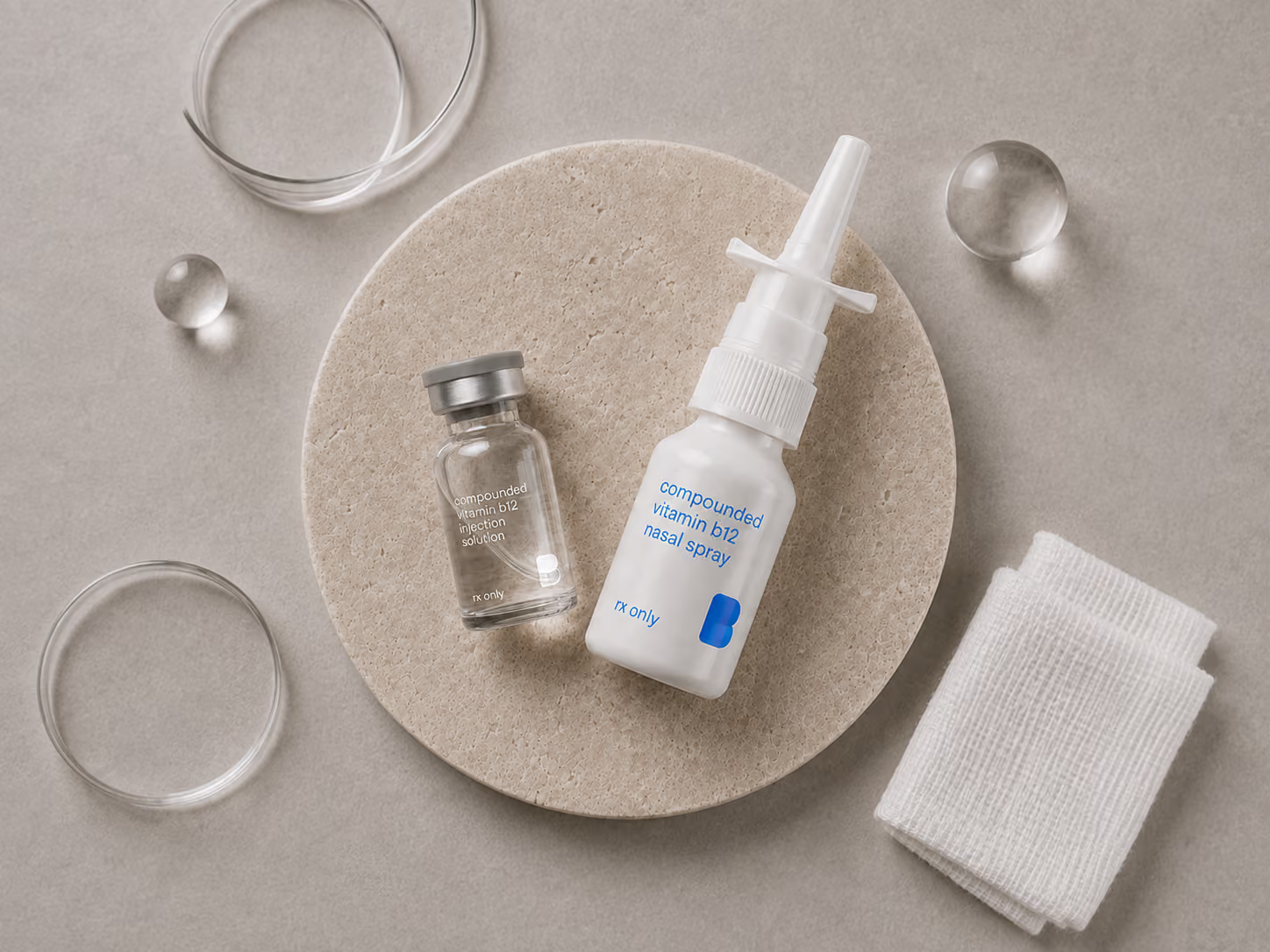
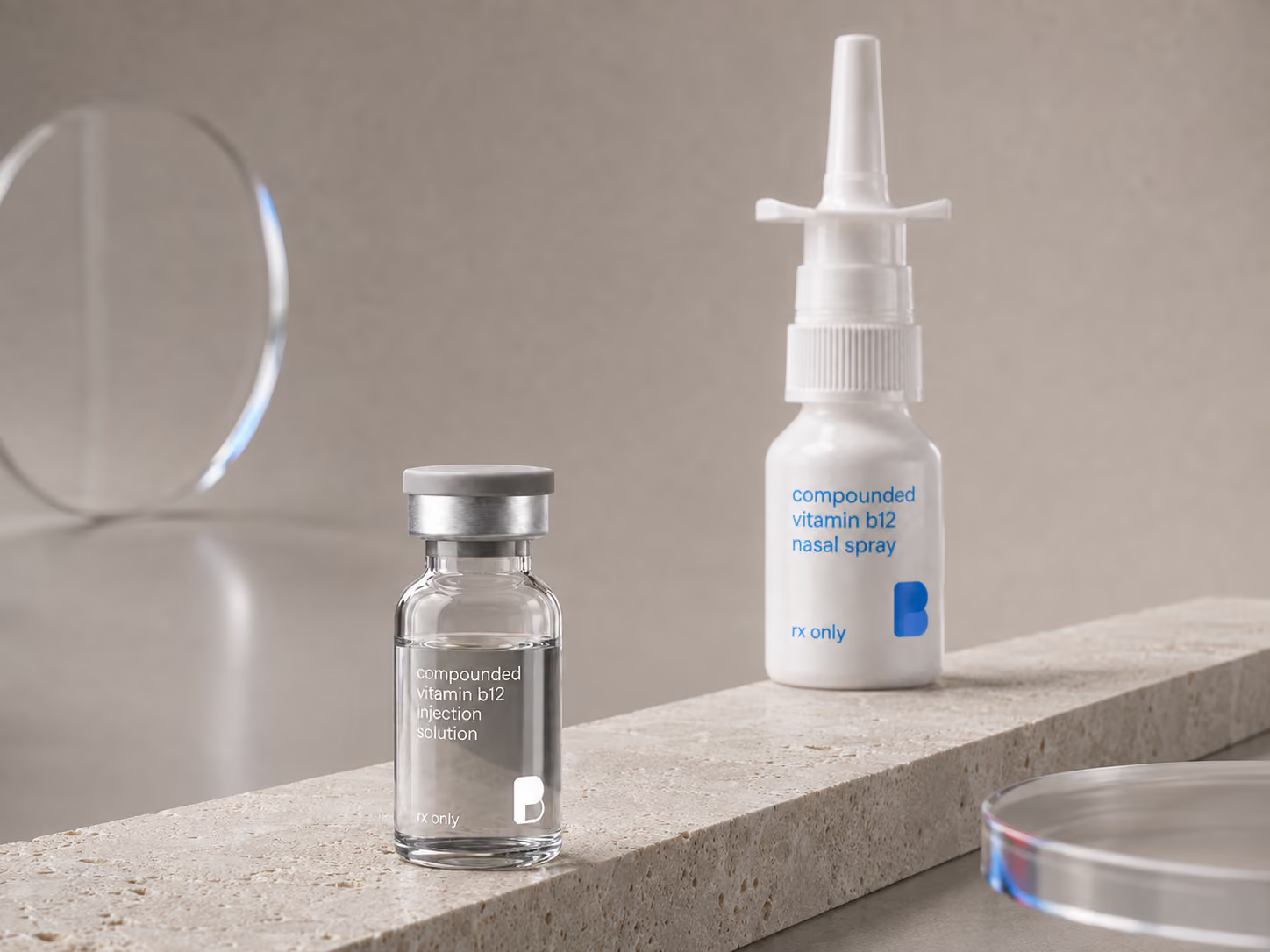
Forms with no approved US product – Vitamin B12 Injections & Nasal Spray from Bayview Pharmacy

Concentrations, vials, and a nasal option

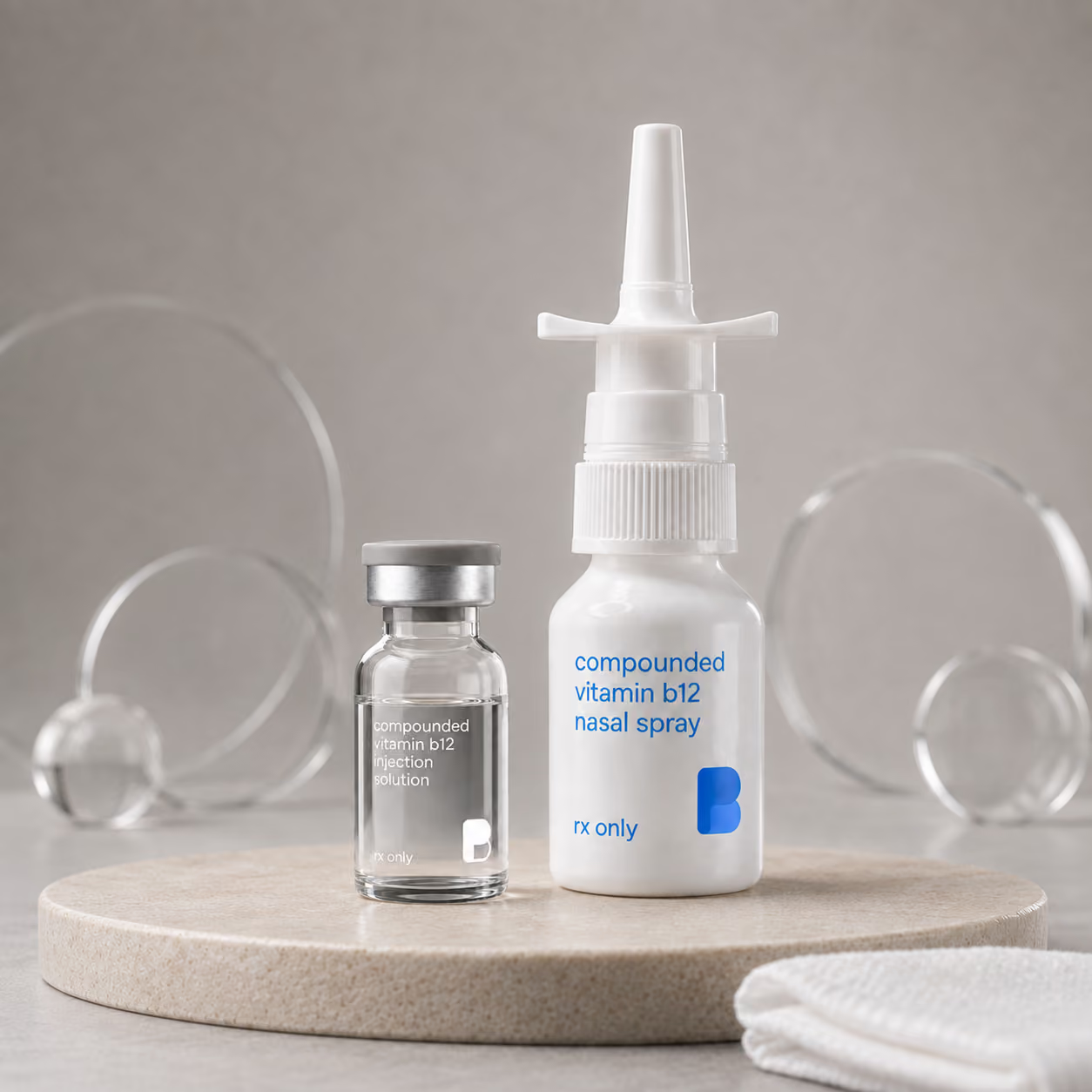
Bayview prepares methylcobalamin and hydroxocobalamin injections preservative-free, in single-dose vials or prefilled syringes, plus a hydroxocobalamin nasal spray for people who would rather skip needles. Custom concentrations are made to the written order.

View our formulas
Concentrations, vials, and a nasal option – Vitamin B12 Injections & Nasal Spray from Bayview Pharmacy

Personalized compounding for patients who need more than a standard option.

"As a compounding pharmacy, we prepare each medication to a provider’s exact specifications. My focus, and my team’s focus, is quality, consistency, and close communication with prescribers so patients receive medication prepared for their individual needs."
Ryan Dyer, RPh
Owner and Chief Pharmacist, Bayview Pharmacy
Smiling man in blue scrubs with arms crossed and pen behind his ear
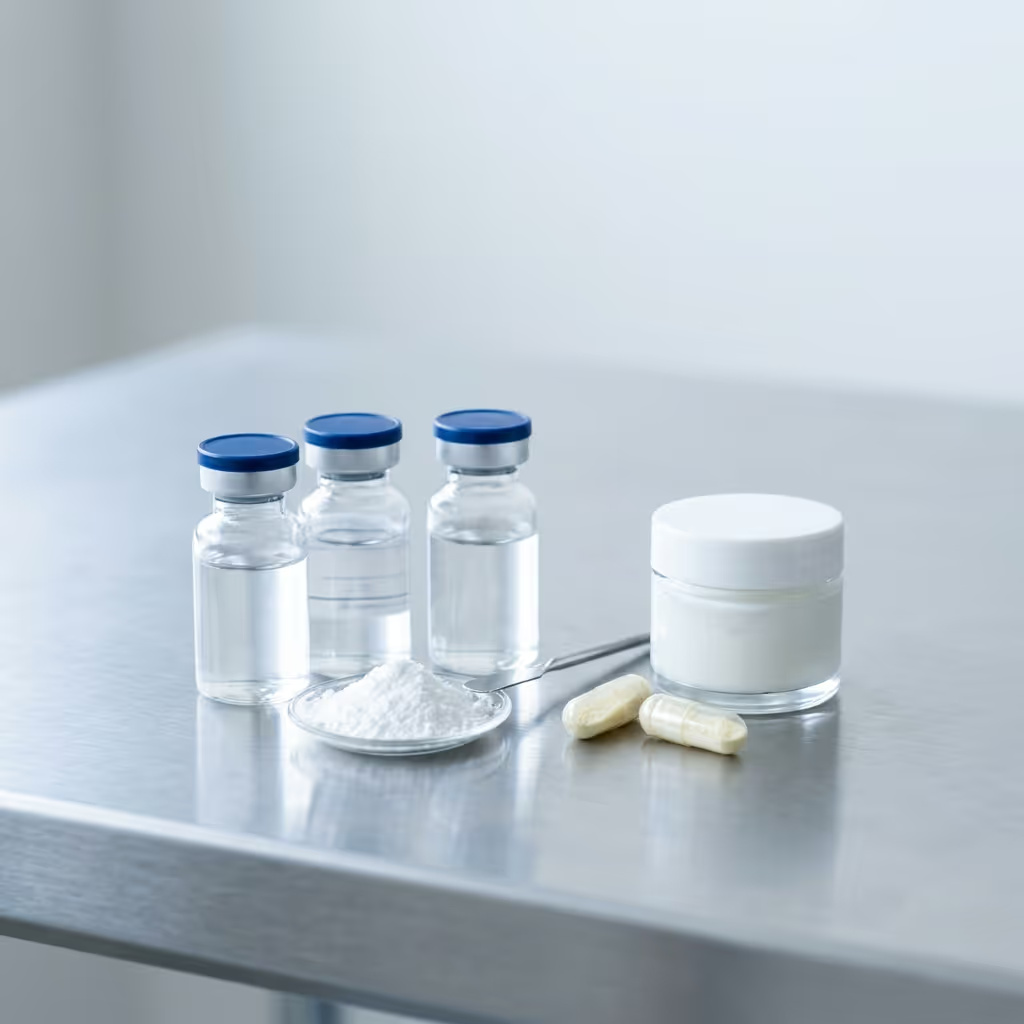
Three clear liquid vials, white powder on spoon, two capsules, and a cream jar on a metal surface.
QUALITY AND TESTING

Held to a higher standard

Every preparation is made under strict quality controls, and verified by a licensed pharmacist.
We use validated quality processes and third-party testing where appropriate
Sterile compounding in a dedicated USP <797> cleanroom
Non-sterile compounding under USP <795> and <800> standards
USP/NF-grade ingredients from reputable, vetted suppliers

Why patients choose Bayview

Made in our own pharmacy
Made to your prescription
Quality tested
Real pharmacist support
Trusted since 2006

Our formulations

Vitamin B12 is compounded in the form and concentration your prescriber orders, as a preservative-free sterile injection or as a nasal spray. Strengths are shown for reference; your prescriber selects what is appropriate.

Preparation Size How it's used
Methylcobalamin 1 mg/mL injection, preservative-free1 mL single-dose vial or 4 mL vialInjected into muscle or under the skin as prescribed
Methylcobalamin 5 mg/mL injection, preservative-free6 mL single-dose vial (refrigerated)Injected as prescribed
Methylcobalamin 10 mg/mL injection, preservative-free1 mL prefilled syringeInjected as prescribed
Hydroxocobalamin 1 mg/mL injection, preservative-free4 mL or 8 mL vialInjected as prescribed
Hydroxocobalamin 25 mg/mL injection, preservative-free1 mL prefilled syringes or single-dose vials (refrigerated)Injected as prescribed
Hydroxocobalamin 5 mg/mL nasal spray (0.5 mg per 0.1 mL spray)10 mL bottleSprayed in the nose as prescribed
Custom concentrationAs orderedAs your prescriber directs

Directions are set by the prescriber; the examples above are not treatment recommendations. Strengths and forms are listed for education only and are not a statement that any form is better for a particular person — high-quality evidence does not show methylcobalamin or hydroxocobalamin to be superior to FDA-approved cyanocobalamin. A valid prescription is required, and your prescriber determines what is appropriate. These are compounded medications and are not FDA-approved.

Start with a prescription
Prescribers: request this order form →

Frequently asked questions

What is the difference between cyanocobalamin, hydroxocobalamin, and methylcobalamin?

They are three forms of the same vitamin. Cyanocobalamin is the FDA-approved one in the United States, both as an injection and as the Nascobal nasal spray. Methylcobalamin and hydroxocobalamin have no FDA-approved vitamin B12 product here, so they are compounded when a prescriber orders them.

High-quality evidence does not show the methyl or hydroxo forms work better. Claims of superiority for those forms are not well supported.

Who actually needs vitamin B12 injections?

People who are deficient. That includes pernicious anemia, malabsorption from conditions such as Crohn's or celiac disease, past bariatric surgery, long-term metformin or proton pump inhibitor use, and strict vegan diets without supplementation.

Honestly: B12 injections are not an evidence-based energy booster for people who are not deficient. If your level is normal, an injection is not expected to change fatigue, mood, or weight. Your prescriber decides whether you need treatment.

How is B12 deficiency diagnosed?

With bloodwork ordered by your provider. A serum B12 level is the starting point, and because it can be misleading in the borderline range, methylmalonic acid and homocysteine are often added. Blood counts and a review of symptoms, diet, medications, and surgical history go with it. Bayview does not test or diagnose, bring this to your prescriber, who also sets the form and schedule.

Injection or nasal spray, and how do they differ?

An injection is given into muscle or under the skin. It is the most established route and the one used when absorption from the gut is the problem. A compounded hydroxocobalamin 5 mg/mL nasal spray is available for people who would rather avoid needles, and an FDA-approved cyanocobalamin nasal spray also exists. Nasal dosing is generally used for maintenance after levels have been corrected. Your prescriber chooses.

Why does it need refrigeration and protection from light?

Vitamin B12 is light-sensitive and degrades on exposure, and most compounded preparations are stored refrigerated. Your label is the authority, so follow it. Keep the vial or syringe in its carton or an opaque bag, and do not freeze unless the label says to. Preservative-free single-dose vials and prefilled syringes are for one use only; discard the remainder and your sharps as the pharmacist directs.

Can folic acid hide a B12 deficiency?

Yes, and it matters. Folic acid can improve the anemia of B12 deficiency so the blood counts look better, while nerve damage from the missing B12 keeps progressing. That is why B12 deficiency has to be identified and treated on its own rather than assumed to be a folate problem. Tell your provider about any new or worsening numbness, tingling, weakness, balance trouble, or memory changes.

Do I need a prescription?

Yes. All of our medications require a valid prescription from a licensed provider. We're a dispensing and compounding pharmacy, so we don't provide consultations or write prescriptions. If you don't have one yet, you'll need to find and see a provider first.

What is compounding?

Compounding is the practice of preparing a medication tailored to an individual patient's prescription. Instead of a mass-produced product, a compounding pharmacy makes the medication to the specific strength, form, or combination your provider orders.

Are compounded medications FDA-approved?

Compounded medications are not FDA-approved. They're prepared by a licensed pharmacy pursuant to a valid prescription for an individual patient, under USP standards. The FDA does not review compounded medications for safety or effectiveness.

How do providers send a prescription to Bayview?

Providers can submit a prescription three ways:

  • E-prescribe: Search Bayview Pharmacy, Warwick, RI (NCPDP 4106882) in your EHR. For compounds, use the compound, custom, or free-text option and include the full formulation, strength, quantity, refills, and directions.
  • Fax: Send a signed order to 401-284-4506 (alt. 401-210-2757) with patient and prescriber details, medication, quantity, refills, directions, signature, and date.
  • Phone: Call 401-284-4505 to submit, clarify, or coordinate refills.

A valid prescription is required, and compounded medications are not FDA-approved.

Can you fill a prescription from my own provider?

Yes. Your provider can send your prescription to Bayview Pharmacy by e-prescribe, fax, or phone, or you can transfer an existing prescription from another pharmacy. Start a request and we'll guide you through it.

How does shipping work?

Once your prescription is verified, we prepare your medication and ship it discreetly in plain packaging either via UPS or USPS. A pharmacy technician confirms the details with you before it goes out, and we're available if you have any questions.

How do refills and automatic refills work?

Refills are coordinated with your prescriber and your prescription. You can request a refill through our website or by calling us, and we'll handle the rest as long as you have refills remaining on a valid prescription. You can also opt into automatic refills on non-controlled substances, with no need to worry about running out of your medication. We can either ship it to you automatically, or ready for pickup.

Shipping & Delivery

Every prescription ships directly to your door in discreet packaging. Refrigerated medications travel in insulated coolers with ice packs to stay cold in transit.

Delivery AreaStandard ShippingRefrigerated Shipping
Rhode Island, Massachusetts & Connecticut$9 USPS$20 UPS
New Hampshire, New Jersey & New York$15 UPS$40 UPS Next Day Air
Florida$15 UPS$80 UPS Next Day Air

Need it faster? Expedited UPS is $15 for Rhode Island, Massachusetts and Connecticut. Your pharmacist will let you know if your medication needs refrigerated shipping. Questions? Call us at (401) 284-4505.

References

Sources reviewed

The medical information on this page draws on the following sources, which are also linked where cited.

  1. National Institutes of Health, Office of Dietary Supplements. Vitamin B12 — Fact Sheet for Health Professionals.
  2. MedlinePlus. Cyanocobalamin Injection. U.S. National Library of Medicine.
  3. U.S. Food and Drug Administration. Cyanocobalamin Injection, USP 1000 mcg/mL — prescribing information (ANDA 080737).
  4. U.S. Food and Drug Administration. NASCOBAL (cyanocobalamin) Nasal Spray — prescribing information.
  5. U.S. Food and Drug Administration. CYANOKIT (hydroxocobalamin for injection) — prescribing information.
  6. Ankar A, Kumar A. Vitamin B12 Deficiency. StatPearls, NCBI Bookshelf.

Important safety information

Important safety information

Compounded vitamin B12 injections and nasal spray are prescription compounded medications and are not FDA-approved. Cyanocobalamin injection and cyanocobalamin nasal spray (Nascobal) are FDA-approved; methylcobalamin and hydroxocobalamin have no FDA-approved vitamin B12 product in the United States and are used off-label. High-quality evidence does not show that methylcobalamin or hydroxocobalamin works better than cyanocobalamin. Vitamin B12 injections for fatigue or energy in people who are not deficient are not evidence-based. Use only as prescribed and under the care of a provider.

Do not use vitamin B12 if you:

  • Are sensitive or allergic to cobalt or to vitamin B12.
  • Have Leber's hereditary optic neuropathy, unless your provider specifically directs otherwise — severe and rapid optic nerve damage has been reported with cyanocobalamin in this condition.

Warnings and precautions:

  • Potassium can drop sharply when severe B12-deficiency anemia is treated intensively. Hypokalemia and sudden death have been reported. Your provider should monitor potassium and blood counts early in treatment.
  • Folic acid can improve blood counts while nerve damage from B12 deficiency continues to progress. B12 deficiency must be diagnosed and treated on its own.
  • Tell your provider about all health conditions, allergies, medicines, and supplements, including kidney disease, pregnancy, or breastfeeding.
  • If you inject at home, use a new needle and syringe each time, rotate sites, and dispose of sharps in a proper container. Preservative-free single-dose vials and syringes are for one use only.
  • Do not stop on your own. If the cause of your deficiency has not resolved, stopping allows it to return.

Common side effects:

  • Soreness, redness, or swelling at the injection site.
  • Diarrhea, headache, dizziness, or a feeling of swelling in the body.
  • With hydroxocobalamin, reddish or pink discoloration of urine and sometimes skin. This is expected and not harmful, but mention it to your provider so it is not mistaken for blood.

Get emergency care for:

  • Signs of a serious allergic reaction such as rash, hives, swelling of the face or throat, or trouble breathing. Anaphylaxis and death have been reported after injectable vitamin B12.
  • Chest pain, palpitations, severe muscle weakness or cramping, or leg pain or swelling.

Also contact your provider for:

  • New or worsening numbness, tingling, weakness, memory problems, or balance trouble.
  • Any vision change.

Storage:

Store exactly as directed on your label. Most compounded vitamin B12 preparations require refrigeration. Vitamin B12 is light-sensitive — keep it in its carton or an opaque bag and protect it from light. Do not freeze unless your label says to, keep it out of the reach of children, and do not share it. Discard unused medication and sharps as your pharmacist directs.

This is a compounded prescription medication and is not approved by the FDA. Use it only under the supervision of a licensed provider, exactly as prescribed. Do not adjust your dose without talking to your prescriber. Seek emergency care for any severe or unexpected reaction. This information is not complete; talk to your provider about your full medical history and all medications you take.

Ready to get started?

Send us your prescription and a Bayview pharmacist will take it from there.