



In Stock
Ketoprofen Gel & Cream 5% to 20% | Bayview Pharmacy

Ketoprofen Gel & Cream

Smiling man in blue pharmacist scrubs with arms crossed and pen behind his ear.
Medically reviewed by Ryan Dyer, RPh
Last updated on
October 22, 2026
Starting at
$128
for
60 g
Checkmark icon followed by text 'HSA/FSA Eligible'.
Fill my prescription
Requires a prescription from your own provider. Bayview is a pharmacy and does not prescribe.
Prescribers: how to e-prescribe this →
Licensed to fill prescriptions for patients in RI, MA, CT, NJ, NH, FL, ME & PA
  • Gel, cream, or ointment. Ketoprofen 5% to 20%, in the base your prescriber orders.
  • Compounded for the skin. FDA-approved ketoprofen sold today is a capsule taken by mouth.
  • Common combinations. With lidocaine, gabapentin, baclofen, or cyclobenzaprine.
  • Prescriber-directed. Your prescriber sets the strength, base, and schedule.

Ketoprofen is a nonsteroidal anti-inflammatory drug (NSAID). In the United States the only FDA-approved ketoprofen sold today is a capsule taken by mouth, for arthritis, pain, and painful periods. In Europe, ketoprofen gel is used on a doctor's prescription.

Bayview Pharmacy compounds ketoprofen as a topical gel, cream, or ointment, alone or with lidocaine, gabapentin, or a muscle relaxant. No topical ketoprofen is FDA-approved in the United States, and treated skin must be kept out of the sun. Compounded preparations are not FDA-approved, and a valid prescription is required.

Is ketoprofen gel available over the counter?

Not in the United States. No topical ketoprofen gel or cream is FDA-approved, over the counter or by prescription. The only FDA-approved ketoprofen sold today is a prescription capsule taken by mouth; low-dose ketoprofen tablets were once sold over the counter but have been discontinued. In the United States it is made by a compounding pharmacy on a prescriber's order. In Europe, ketoprofen gel is also a prescription medicine; the European Medicines Agency restricted it to use on a doctor's prescription in 2010 because of skin reactions to sunlight.

Why do I need to keep treated skin out of the sun?

Ketoprofen on the skin can cause an allergic skin reaction when treated skin is exposed to sunlight. Serious reactions are very rare, but European guidance says to keep treated areas out of the sun, even on hazy days, and away from tanning beds during treatment and for 2 weeks after you stop. Cover treated skin with clothing when you are outdoors. Stop using it and call your provider if you get a rash, blisters, or redness on treated skin, including after using a sunscreen, shampoo, or cosmetic that contains octocrylene.

Trusted by 105,826 patients to date.
A group of faces of our past satisfied patients.
Compounded medications are prepared pursuant to a valid prescription for an individual patient and are not FDA-approved. This page is for educational purposes and is not medical advice.
**The FDA does not review or approve compounded medications for safety or effectiveness. A valid prescription from a licensed practitioner is required.
Important safety information →
Service availability

Prescription delivery in your state

Bayview Pharmacy is licensed to serve patients in eight states and serves eligible New York patients on a limited basis while nonresident registration is pending. Check your state before getting started.

See every state we ship to, with shipping times and pickup details →

Where we currently serve

Select a highlighted state to check availability.

Currently licensed Limited basis, registration pending Not currently licensed Your selection

Select a state on the map or use the state checker.

Do we serve your state?

Choose your state to confirm current service availability.

Thank you! Your submission has been received!
Oops! Something went wrong while submitting the form.
Where we serve
Fill my prescription

Getting your prescription filled is simple

Send us your prescription

STEP
1
Have your provider e-prescribe to Bayview, fax it to us, or call it in directly to one of our pharmacists.
A thin blue light beam connecting two clear glass slabs on a white surface.

A pharmacist reviews it

STEP
2
We verify your prescription and prepare your medication to your provider's exact instructions.
Close-up of a white dial with blue measurement markings and a rotating knob.

We compound & ship

STEP
3
We prepare your medication and ship it discreetly to your door, with support when you need it.
Close-up of a gray box with a precise blue line running along its folded edges.

What is Ketoprofen Gel & Cream?

Ketoprofen is a nonsteroidal anti-inflammatory drug (NSAID). In the United States the only FDA-approved ketoprofen sold today is a prescription capsule taken by mouth, approved for the signs and symptoms of rheumatoid arthritis and osteoarthritis, for pain, and for painful periods (primary dysmenorrhea) (prescribing information). In Europe, ketoprofen is also approved as a gel for the skin. After a 2010 review, the European Medicines Agency said topical ketoprofen should be used only when a doctor prescribes it, because of skin reactions to sunlight (EMA 2010).

Topical ketoprofen is ketoprofen compounded into a gel, cream, or ointment that is applied to the skin over a painful joint or muscle. No topical ketoprofen product is FDA-approved in the United States, so it is made by a compounding pharmacy to a prescriber's order. Bayview Pharmacy prepares it in several strengths and bases, alone or combined with other pain ingredients. Your prescriber decides whether topical ketoprofen fits your situation, and a valid prescription is required.

Compounded preparations are not FDA-approved. FDA has not evaluated compounded topical ketoprofen for safety, effectiveness, or how much reaches the bloodstream. The studies described on this page tested specific ketoprofen products. Their results do not show how a compounded gel at another strength or in another base will perform.

How does topical ketoprofen work?

Injured or arthritic tissue makes prostaglandins, signaling molecules that drive pain and swelling. In laboratory studies, ketoprofen reduces the production of prostaglandins, although, as with other NSAIDs, exactly how it works is not fully understood (prescribing information). Applied to the skin, the aim is to treat the area underneath while keeping the amount in the rest of the body low.

Some ketoprofen does reach the bloodstream, but far less than from a capsule. In a small study in eight healthy volunteers, a single dose of a compounded 20% ketoprofen gel had a relative bioavailability, compared with a 50 mg capsule, of a median of 0.48%, ranging from 0.18% to 2.1% from person to person (Dowling et al. 2004). A review of a ketoprofen patch reported that total absorption was no more than 10% of the same dose taken by mouth (Mazères 2005).

What is topical ketoprofen prescribed for?

In the United States these uses are off-label: no topical ketoprofen is FDA-approved for them.

Strains, sprains, and other recent injuries. A 2015 Cochrane review of topical NSAIDs for short-term muscle and joint pain combined five studies of ketoprofen gel. For about every 2 or 3 people treated with ketoprofen gel, one more person had a good response, such as at least half their pain relieved, than with a placebo gel. These five studies were from the 1980s, and some used less clearly defined outcomes (Derry et al. 2015).

Arthritis of the knee. A 2016 Cochrane review of longer studies, 6 to 12 weeks and mostly in knee osteoarthritis, found that for about every 7 people treated with topical ketoprofen, one more had a good result than with a placebo gel. The reviewers concluded that topical ketoprofen and diclofenac help a minority of people with osteoarthritis, and they found no evidence for other long-term painful conditions (Derry et al. 2016).

What about ketoprofen combinations?

Prescribers often combine ketoprofen with other ingredients in one gel. The combinations Bayview prepared most in 2026 pair ketoprofen with lidocaine, a numbing medicine; with gabapentin and lidocaine; or with the muscle relaxants baclofen or cyclobenzaprine. These combinations are compounded, are not FDA-approved, and have been studied far less than ketoprofen alone.

In a randomized trial of 399 people with localized chronic pain, a compounded cream of ketoprofen 10%, baclofen 2%, cyclobenzaprine 2%, and lidocaine 2% did not lower pain more than a placebo cream after one month in people whose pain was classified as nociceptive (such as muscle or joint pain). Two other compounded creams tested in the same trial did not either (Brutcher et al. 2019). A 2020 National Academies review of 20 ingredients common in compounded pain creams, which did not include ketoprofen, concluded that there is limited evidence to support the use of compounded topical pain creams (National Academies 2020). Other combinations, including those with ketamine, a controlled substance, are on our custom pain cream page.

Why is topical ketoprofen compounded?

FDA has approved ketoprofen in the United States only in forms taken by mouth. A prescriber who wants ketoprofen applied to the skin needs it compounded. Compounding also lets the prescriber choose the strength, the base (a water-free gel, a cream, or an ointment), the container, and any added ingredients.

Ketoprofen gelKetoprofen combination
What it isKetoprofen alone in a water-free gel or a cream, often in a metered pumpKetoprofen with lidocaine, gabapentin, baclofen, or cyclobenzaprine in one gel or ointment
Strengths Bayview preparesKetoprofen 5%, 10%, 15%, or 20%Ketoprofen 10% or 20% in the combinations listed under strengths
Where it is usedOver a painful joint, tendon, or muscle, as your prescriber directsOver a painful joint, tendon, or muscle, as your prescriber directs

This comparison is for education only and is not a statement that either option is better or more effective. A higher percentage is not automatically a better result, and we found no study comparing compounded strengths with one another. Your prescriber chooses the form, strength, and schedule.

Side effects & safety

Skin reactions. Redness, itching, or a rash where the gel is applied can happen. In the Cochrane reviews, local skin reactions with topical NSAIDs were generally mild and short-lived, and topical ketoprofen did not increase them compared with a placebo gel in the longer arthritis studies (Derry et al. 2015; Derry et al. 2016).

Sun reactions. Ketoprofen on the skin can cause an allergic reaction on treated skin when it is exposed to sunlight (photosensitivity). The European Medicines Agency judged the risk of serious reactions to be very low, about 1 case per 1 million patients treated (EMA 2010). European guidance for topical ketoprofen says to keep treated skin out of the sun, even on hazy days, and away from tanning beds during treatment and for 2 weeks after stopping, and to cover treated areas with clothing outdoors. It also says to stop using it if any skin reaction appears, including after using products that contain octocrylene, a sun filter used in several sunscreens, shampoos, and other cosmetic products (prescriber checklist; EMA assessment report).

NSAID warnings. Ketoprofen capsules carry the boxed warnings shared by NSAIDs: a higher risk of heart attack and stroke, which can be fatal, and of serious bleeding, ulcers, and tears in the stomach or intestines (prescribing information; FDA). Studies found much less ketoprofen reaches the blood from the skin than from a capsule, but these risks are not ruled out. Do not use another NSAID, such as ibuprofen or naproxen, at the same time unless your prescriber tells you to.

Pregnancy and breastfeeding. FDA advises avoiding NSAIDs from 20 weeks of pregnancy unless a health care professional advises otherwise, because they may cause rare but serious kidney problems in the unborn baby that lead to low amniotic fluid. Its list of affected NSAIDs includes ketoprofen, as well as diclofenac products applied to the skin (FDA). LactMed reports low levels of ketoprofen in breast milk when mothers took it, but notes reports of kidney and stomach side effects in breastfed infants from one center and says other medicines are preferred, especially while nursing a newborn or premature infant (LactMed). Tell your prescriber if you are pregnant, planning a pregnancy, or breastfeeding.

Get help right away. Call 911 for chest pain, shortness of breath, weakness on one side of the body, slurred speech, swelling of the face, lips, tongue, or throat, or trouble breathing. Stop using it and call your provider for a rash, blisters, or redness on treated skin, black or bloody stools, or vomiting blood. Keep it away from your eyes and mouth, and out of the reach of children and pets.

Who should not use it?

Do not use topical ketoprofen if you have had an allergic reaction to ketoprofen, or asthma, hives, or another allergic reaction after taking aspirin or another NSAID (prescribing information; EMA assessment report). European labeling also rules it out for people who have had a reaction to sunlight on the skin, a skin allergy to ketoprofen, fenofibrate, tiaprofenic acid, sunscreens, or perfumes, and for anyone who cannot keep treated skin out of the sun during treatment and for 2 weeks after (EMA assessment report). Ketoprofen capsules are not used around heart bypass (CABG) surgery (prescribing information). Do not apply it to broken or infected skin. Tell your prescriber about heart, kidney, liver, or stomach problems, and about every medicine you take, especially blood thinners, aspirin, and other NSAIDs.

How do I get started?

Talk with the doctor or other prescriber who manages your pain. A licensed prescriber decides whether topical ketoprofen is appropriate and chooses the form, strength, and schedule. Bayview Pharmacy does not provide consultations or determine appropriateness. Already have a prescription at another pharmacy? You can transfer it to Bayview. Once you have a prescription, your prescriber can order through Bayview, and a pharmacist is available if you have questions. Topical ketoprofen is part of our compounded medications catalog, alongside our diclofenac gel and custom pain creams.

Clinical details for prescribers

Regulatory. FDA-approved ketoprofen in the United States is oral; the over-the-counter 12.5 mg tablets and the oral film once approved are discontinued, leaving the prescription capsules. Ketoprofen capsules (labeling updated April 2026) are indicated for the signs and symptoms of rheumatoid arthritis and osteoarthritis, the management of pain, and primary dysmenorrhea, with the NSAID boxed warnings for cardiovascular thrombotic events and gastrointestinal bleeding, ulceration, and perforation. Contraindications: hypersensitivity to ketoprofen; asthma, urticaria, or allergic-type reactions after aspirin or other NSAIDs; and the setting of CABG surgery (labeling). No topical ketoprofen is FDA-approved. In the EU, topical ketoprofen remains authorized: a 2010 CHMP referral found the benefit-risk balance positive and restricted it to use on a physician's prescription, with strengthened sun-exposure contraindications and an octocrylene co-sensitization warning (EMA 2010).

503A. FDA's copies guidance states that it generally does not consider a compounded drug a copy when the commercially available product is oral and the compounded product is topical (FDA guidance), so FDA generally would not consider compounded topical ketoprofen essentially a copy of the oral capsules.

Published evidence on topical ketoprofen:

  • Acute musculoskeletal pain: Derry et al. 2015, 61 studies. Ketoprofen gel NNT for clinical success (at least 50% pain relief or an equivalent measure) 2.5 (95% CI 2.0 to 3.4) from five studies from the 1980s, some with less well-defined outcomes. Local skin reactions were generally mild and transient and did not differ from placebo; the authors rated clinical success data across topical diclofenac, ibuprofen, ketoprofen, piroxicam, and indomethacin as moderate or high quality (Cochrane).
  • Chronic musculoskeletal pain: Derry et al. 2016, 39 studies, 10,631 participants. Topical ketoprofen NNT 6.9 (5.4 to 9.3) in four trials with 2,573 participants, 6 to 12 weeks, mainly knee osteoarthritis; topical diclofenac NNT 9.8. Local adverse events increased with diclofenac but not with ketoprofen. The authors found no evidence for other chronic painful conditions, and systemic adverse event reporting was poor (Cochrane).
  • Systemic exposure: Dowling et al. 2004, open-label crossover, n=8 healthy volunteers, single 200 mg dose of ketoprofen 20% in a poloxamer-lecithin organogel vs a 50 mg oral capsule, sampling to 10 hours. Median Cmax 0.021 vs 4.15 mcg/mL; median relative bioavailability 0.48% (range 0.18% to 2.1%), highly variable (Am J Health Syst Pharm). Mazères 2005: total systemic bioavailability of a ketoprofen 100 mg patch no more than 10% of oral ketoprofen 100 mg (Drugs R D). We found no multiple-dose exposure study of compounded ketoprofen gels at 10% to 20%.
  • Combinations: Brutcher et al. 2019, double-blind RCT, 399 patients with localized chronic pain. The nociceptive formula (ketoprofen 10% / baclofen 2% / cyclobenzaprine 2% / lidocaine 2%) did not differ from placebo cream in change in average pain at 1 month (difference -0.3, 95% CI -0.9 to 0.2); neuropathic and mixed formulas also did not differ (Ann Intern Med). The 2020 National Academies review of 20 APIs (ketoprofen not among them) concluded that there is limited evidence to support compounded topical pain creams in the general adult population (National Academies).

Labeling points that may matter for topical use:

  • Photosensitivity: the CHMP judged the risk of serious photoallergic reactions very low (about 1 per 1 million patients treated) (EMA). EU contraindications: any history of photosensitivity; known hypersensitivity (asthma, allergic rhinitis) to ketoprofen, fenofibrate, tiaprofenic acid, acetylsalicylic acid, or other NSAIDs; history of skin allergy to ketoprofen, tiaprofenic acid, fenofibrate, UV blockers, or perfumes; and sun exposure, including hazy sun and solarium UV, during treatment and for 2 weeks after. Counsel: wash hands after each application, no occlusive dressing, protect treated skin with clothing during treatment and for 2 weeks after, and stop at any skin reaction, including after octocrylene-containing products (EMA assessment report; prescriber checklist).
  • NSAID class: boxed cardiovascular and gastrointestinal warnings and the CABG contraindication on the oral labeling (labeling). Exposure from topical use is lower but not zero; avoid concurrent oral NSAIDs unless intended.
  • Pregnancy: FDA's October 2020 communication advises avoiding NSAIDs at 20 weeks or later (oligohydramnios, fetal renal dysfunction), with the existing advice to avoid them from about 30 weeks (premature closure of the ductus arteriosus). If treatment is needed between about 20 and 30 weeks, FDA advises the lowest effective dose for the shortest duration and considering ultrasound monitoring of amniotic fluid if treatment extends beyond 48 hours. Its table lists ketoprofen and includes topical diclofenac products (FDA).
  • Lactation: LactMed (revised June 2025) reports low milk levels after maternal ketoprofen, notes one center's reports of renal and gastrointestinal adverse effects in breastfed infants, and prefers other agents, especially with a newborn or preterm infant (LactMed).

What Bayview compounds (2026 fills):

  • Single agent: the one single-agent fill in 2026 was ketoprofen 10% topical gel with DMSO 10% in an anhydrous gel base, 60 g. Ketoprofen 5%, 10%, 15%, and 20% topical gels and creams are prepared on prescription.
  • Combinations dispensed most: gabapentin 10% / ketoprofen 20% / lidocaine 5% gel; lidocaine 20% / ketoprofen 20% ointment (jar) or gel (pump); baclofen 2% / gabapentin 6% / ketoprofen 10% / lidocaine 5% gel; ketoprofen 20% / cyclobenzaprine 2% gel; ketoprofen 10% / lidocaine / DMSO gel.
  • Ketamine-containing ketoprofen gels are Schedule III; Rhode Island rules and Bayview policy require EPCS for them. They are covered on the custom pain cream page.
  • Writing the prescription: each active ingredient and strength, the base and container (for example ketoprofen 10% topical gel, anhydrous base, 60 g pump), the application site and frequency, an ICD-10 code (for example M17.11 unilateral primary osteoarthritis of the right knee, M77.11 lateral epicondylitis of the right elbow, S93.401A sprain of unspecified ligament of right ankle, initial encounter), quantity, and refills.

Licensed to dispense in RI, MA, CT, NJ, NH, FL, ME, and PA. Ordering and account setup are covered on our for providers page.

This information is about prescription medications and is not medical advice. Compounded medications are prescription-only and are not FDA-approved. Your prescriber determines whether topical ketoprofen is appropriate and sets the form, strength, and schedule.
Reviewed by Ryan Dyer, RPh, pharmacist at Bayview Pharmacy. Last reviewed October 22, 2026. Bayview does not provide consultations and does not decide whether a medication is right for you. Your prescriber makes that call.

In Stock
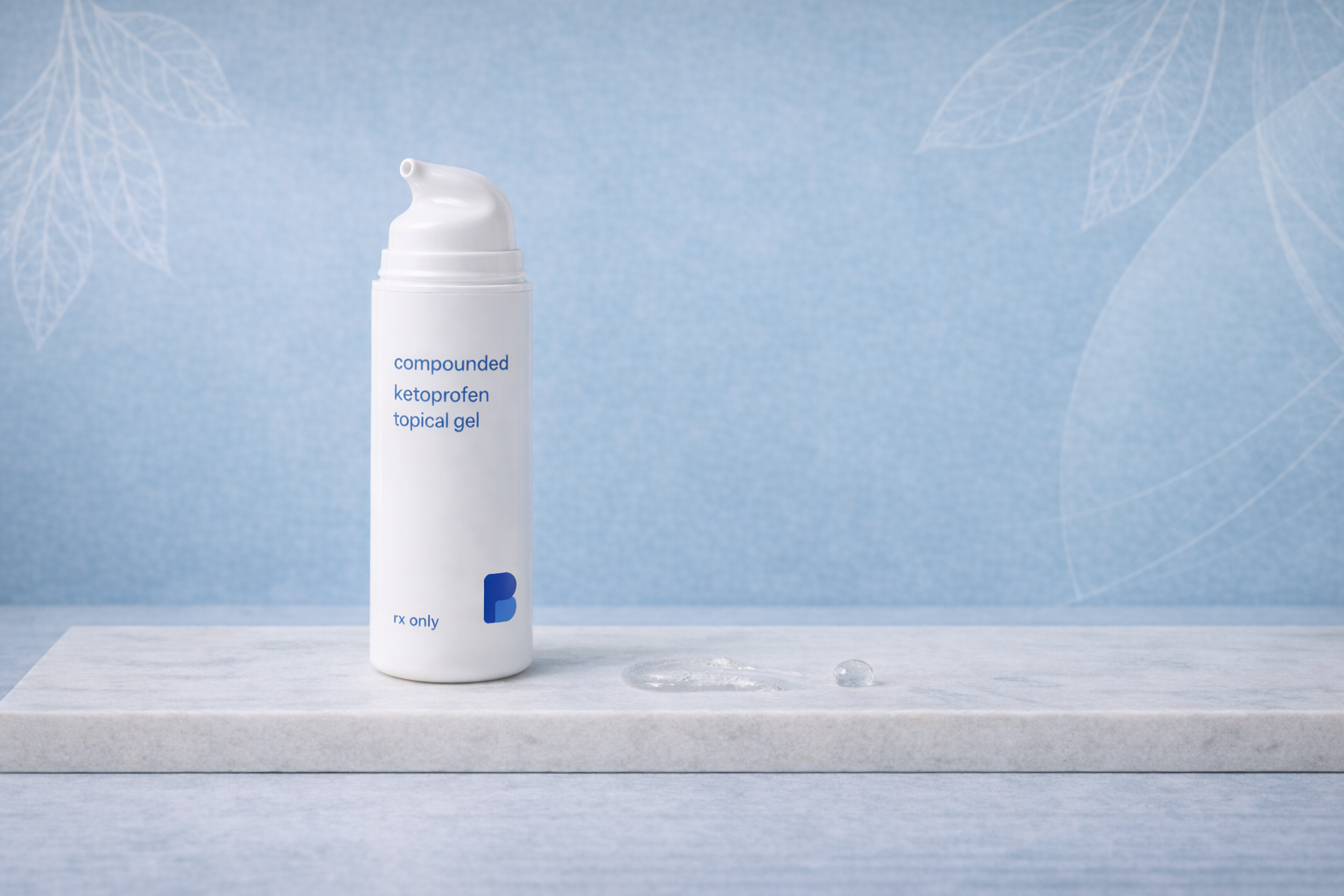
Ketoprofen Gel & Cream, a compounded medication prepared by Bayview Pharmacy

On this page

Ketoprofen gels and creams, compounded to order

Bayview compounds ketoprofen as a gel, cream, or ointment, alone or in a combination, in the strength and base your prescriber orders.

See strengths
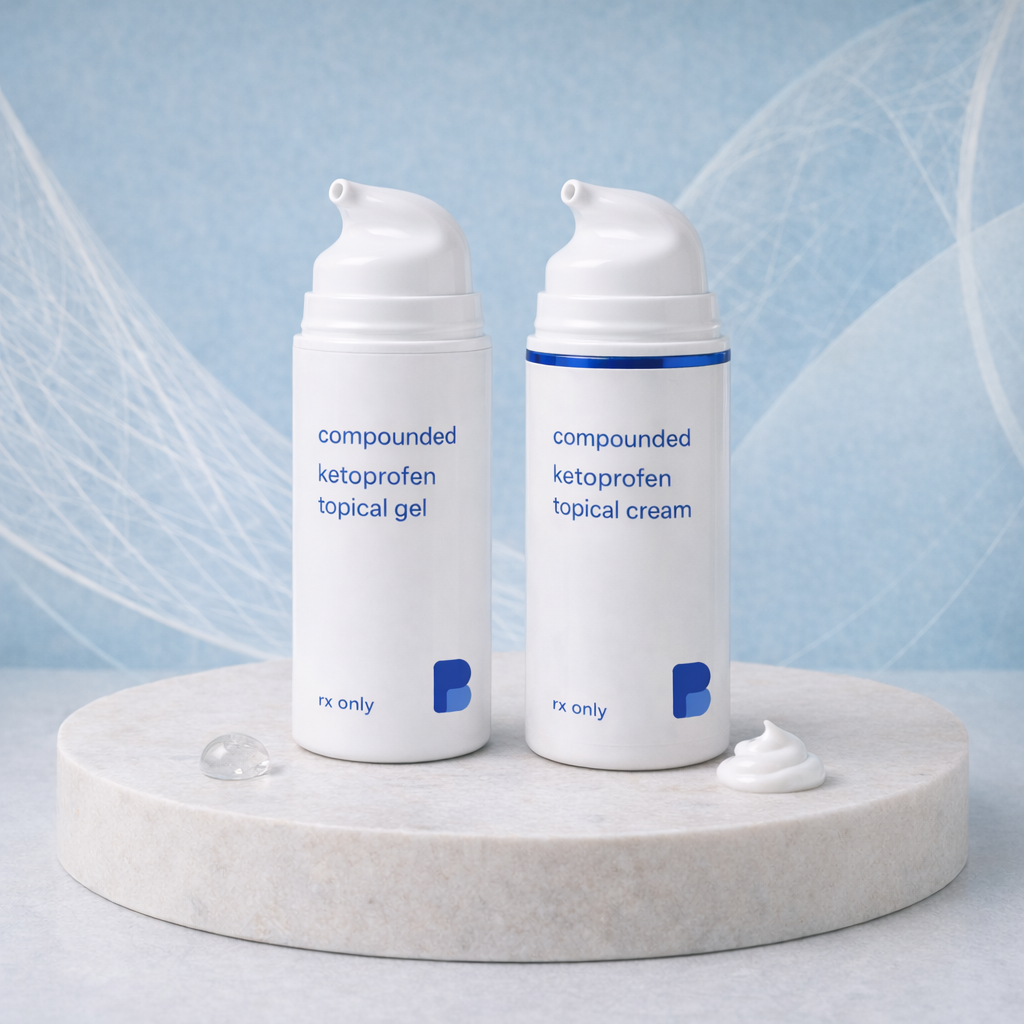
Compounded ketoprofen topical gel, topical cream, and topical ointment from Bayview Pharmacy on a marble disc

Your ketoprofen prescription, filled at Bayview

Send your prescription to Bayview. A pharmacist reviews every order, and we ship to the states where we are licensed.

Fill my prescription
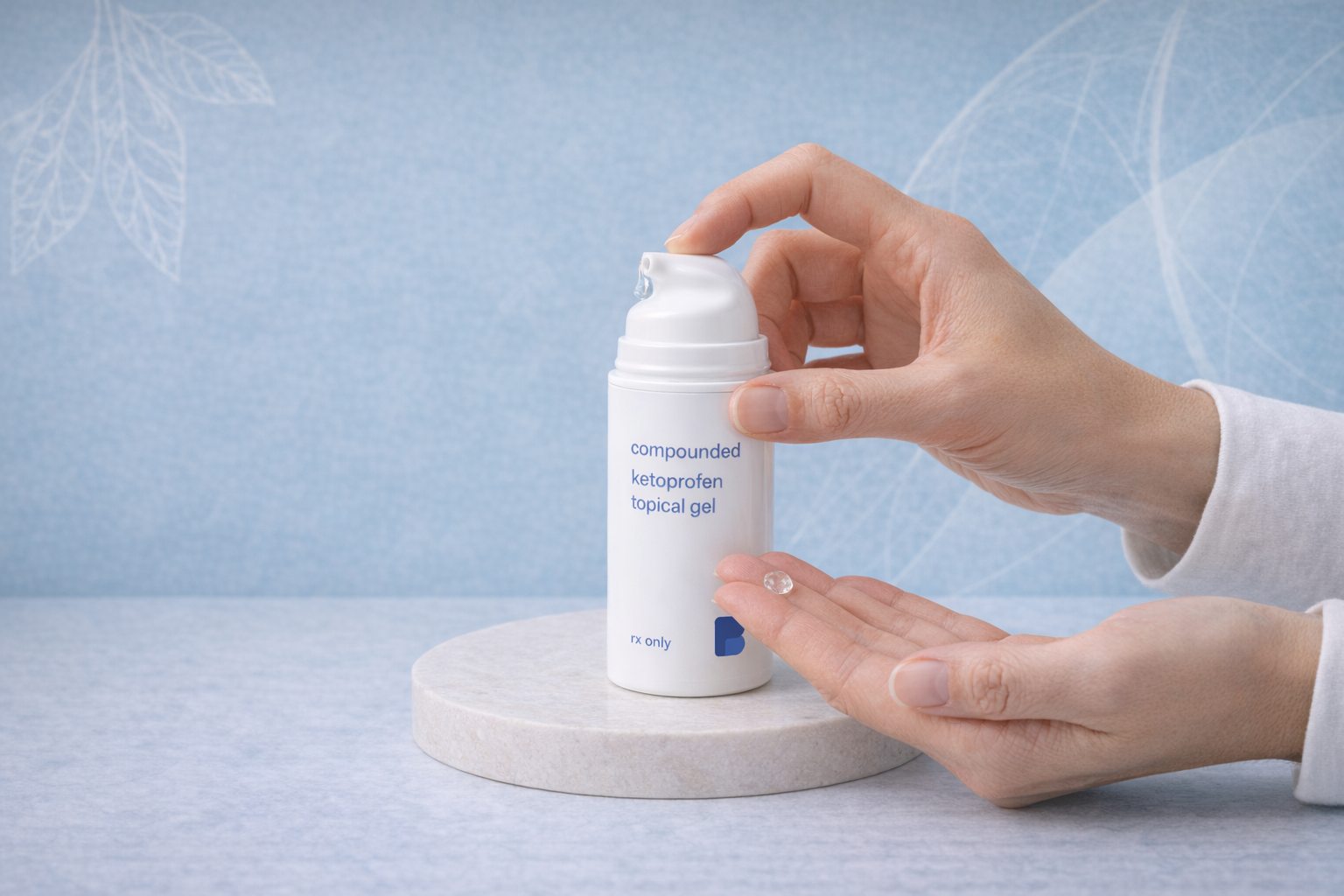
Hands dispensing compounded ketoprofen topical gel from a Bayview Pharmacy pump bottle

Personalized compounding for patients who need more than a standard option.

"As a compounding pharmacy, we prepare each medication to a provider’s exact specifications. My focus, and my team’s focus, is quality, consistency, and close communication with prescribers so patients receive medication prepared for their individual needs."
Ryan Dyer, RPh
Owner and Chief Pharmacist, Bayview Pharmacy
Smiling man in blue scrubs with arms crossed and pen behind his ear
Three clear liquid vials, white powder on spoon, two capsules, and a cream jar on a metal surface.
QUALITY AND TESTING

Held to a higher standard

Every preparation is made under strict quality controls, and verified by a licensed pharmacist.
We use validated quality processes and third-party testing where appropriate
Sterile compounding in a dedicated USP <797> cleanroom
Non-sterile compounding under USP <795> and <800> standards
USP/NF-grade ingredients from reputable, vetted suppliers

Why patients choose Bayview

Made in our own pharmacy
Made to your prescription
Quality tested
Real pharmacist support
Trusted since 2006

Our formulations

These are the topical ketoprofen preparations Bayview compounds on prescription. Your provider selects the base, strength, and schedule.
FormStrengthsSizes and notes
Topical gel (anhydrous base) or creamKetoprofen 5%, 10%, 15%, or 20%30 to 120 g
Topical gel with DMSOKetoprofen 10% with DMSO 10%, alone or with lidocaine60 g
Ointment or gel with lidocaineLidocaine 20% / ketoprofen 20%30 to 120 g (jar or pump)
Gel with gabapentin and lidocaineGabapentin 10% / ketoprofen 20% / lidocaine 5%40 to 120 g or mL
Gel with a muscle relaxantBaclofen 2% / gabapentin 6% / ketoprofen 10% / lidocaine 5%; ketoprofen 20% / cyclobenzaprine 2%30 to 180 g or mL
Other combinationsIncluding ketamine-containing gels (controlled substance)See custom pain cream

Forms and strengths are listed for education only and are not a statement that any option is better, stronger, or more effective. Other strengths and bases are available on prescription. A valid prescription is required, and your provider determines which preparation is appropriate for you. Compounded preparations are not FDA-approved.

Fill my prescription
Topical gel | Ketoprofen 10% topical gel (anhydrous base) | 60 g | Apply 1 mL (1 pump) to the affected area(s) and rub in | | Twice daily Topical gel | Ketoprofen 5% topical gel (anhydrous base) | 60 g | Apply 1 mL (1 pump) to the affected area(s) and rub in | | Twice daily Topical gel | Ketoprofen 15% topical gel (anhydrous base) | 60 g | Apply 1 mL (1 pump) to the affected area(s) and rub in | | Twice daily Topical gel | Ketoprofen 20% topical gel (anhydrous base) | 60 g | Apply 1 mL (1 pump) to the affected area(s) and rub in | | Twice daily Topical cream | Ketoprofen 10% topical cream | 60 g | Apply a thin layer to the affected area(s) and rub in | | Twice daily Topical cream | Ketoprofen 20% topical cream | 60 g | Apply a thin layer to the affected area(s) and rub in | | Twice daily Topical gel | Ketoprofen 10% / DMSO 10% topical gel | 60 g | Apply 1 mL (1 pump) to the affected area(s) and rub in | | Twice daily Combination | Lidocaine 20% / ketoprofen 20% topical ointment | 120 g | Apply a thin layer to the affected area(s) | | Twice daily Combination | Gabapentin 10% / ketoprofen 20% / lidocaine 5% topical gel | 60 g | Apply a thin layer to the affected area(s) and rub in | | Twice daily as needed Combination | Baclofen 2% / gabapentin 6% / ketoprofen 10% / lidocaine 5% topical gel | 60 g | Apply 1 mL (1 pump) to the affected area(s) and rub in | | Three times daily Combination | Ketoprofen 20% / cyclobenzaprine 2% topical gel | 60 g | Apply 1 mL (1 pump) to the affected area(s) and rub in | | Twice daily
Ketoprofen Gel

For prescribers

How to e-prescribe this formulation

Bayview accepts e-prescriptions from any Surescripts-connected EHR. Compounded preparations have no NDC, so they will not appear in your drug search. Choose the preparation below and copy the prescription into your EHR.

Patient? Send these instructions to your doctor's office.
  1. Find Bayview in your EHR's pharmacy directory

    Search by NCPDP 4106882, or by name and ZIP: Bayview Pharmacy, Warwick, RI 02886. Save it as a favorite so you never search again.

  2. Choose the preparation

    Name the preparation exactly as listed under Our formulations above: each active ingredient and strength, the dose form, the quantity, and the directions.

  3. Enter it as a compound

    Use your system's compound, non-formulary, or free-text prescription entry and paste the details. If your EHR forces you to pick a listed drug, pick the closest entry for the active ingredient and put the full formula in the prescription body (the Sig or directions field).

  4. Send it

    Transmit from your EHR. Prefer not to e-prescribe? For non-controlled preparations we also accept fax to (401) 284-4506 and phoned orders at (401) 284-4505. Order forms are in the Prescribers: download order form menu above.

Do not use Notes to Pharmacy for the formula. Some EHRs keep that field internal and never transmit it. A prescription that arrives without the formula is delayed while we call your office.

Compounded preparations are not FDA-approved. A valid prescription is required. Questions: call (401) 284-4505. Full e-prescribing guide

Frequently asked questions

Is ketoprofen gel available over the counter?

Not in the United States. No topical ketoprofen gel or cream is FDA-approved, over the counter or by prescription. The only FDA-approved ketoprofen sold today is a prescription capsule taken by mouth; low-dose ketoprofen tablets were once sold over the counter but have been discontinued. In the United States it is made by a compounding pharmacy on a prescriber's order. In Europe, ketoprofen gel is also a prescription medicine; the European Medicines Agency restricted it to use on a doctor's prescription in 2010 because of skin reactions to sunlight.

Why do I need to keep treated skin out of the sun?

Ketoprofen on the skin can cause an allergic skin reaction when treated skin is exposed to sunlight. Serious reactions are very rare, but European guidance says to keep treated areas out of the sun, even on hazy days, and away from tanning beds during treatment and for 2 weeks after you stop. Cover treated skin with clothing when you are outdoors. Stop using it and call your provider if you get a rash, blisters, or redness on treated skin, including after using a sunscreen, shampoo, or cosmetic that contains octocrylene.

How do I use ketoprofen gel?

Follow the directions on your label; your prescriber sets how much and how often. It is usually rubbed in as a thin layer over the painful joint or muscle. Apply it only to clean, intact skin, wash your hands afterward unless your hands are the treated area, and keep it out of your eyes and mouth. Do not cover the area with a tight bandage or use a heating pad on it unless your prescriber tells you to, and keep treated skin out of the sun. Do not use more, or more often, than prescribed.

How does ketoprofen gel compare to diclofenac gel?

Both are NSAIDs applied to the skin over painful joints and muscles. Diclofenac 1% gel is FDA-approved and sold over the counter for arthritis pain, while topical ketoprofen is not FDA-approved in the United States and is compounded on prescription. European labeling for ketoprofen gel also warns to keep treated skin out of the sun during treatment and for 2 weeks after. Your prescriber decides which one fits you. See our diclofenac gel page for more.

Can I use ketoprofen gel with ibuprofen or other pain relievers?

Ask your prescriber first. Ketoprofen is an NSAID, and using it with another NSAID, such as ibuprofen, naproxen, aspirin, or diclofenac, adds to your total NSAID exposure and to the risk of side effects such as stomach bleeding. Tell your prescriber about every medicine and supplement you take, especially blood thinners, other NSAIDs, steroids, and blood pressure medicines.

Can I use ketoprofen gel while pregnant or breastfeeding?

Talk with your prescriber first. FDA advises avoiding NSAIDs from 20 weeks of pregnancy unless a health care professional advises otherwise, because they may cause rare but serious kidney problems in the unborn baby and low amniotic fluid. For breastfeeding, LactMed reports low levels of ketoprofen in breast milk but prefers other medicines, especially while nursing a newborn or premature baby. Tell your prescriber if you are pregnant, planning a pregnancy, or breastfeeding.

Are compounded medications FDA-approved?

Compounded medications are not FDA-approved. They're prepared by a licensed pharmacy pursuant to a valid prescription for an individual patient, under USP standards. The FDA does not review compounded medications for safety or effectiveness.

Can you fill a prescription from my own provider?

Yes. Your provider can send your prescription to Bayview Pharmacy by e-prescribe, fax, or phone, or you can transfer an existing prescription from another pharmacy.

Do I need a prescription?

Yes. All of our medications require a valid prescription from a licensed provider. We're a dispensing and compounding pharmacy, so we don't provide consultations or write prescriptions. If you don't have one yet, you'll need to see a provider first.

How does shipping work?

Once your prescription is verified, we prepare your medication and ship it discreetly in plain packaging either via UPS or USPS. A pharmacy technician confirms the details with you before it goes out, and we're available if you have any questions.

How do providers send a prescription to Bayview?

Providers can submit a prescription three ways:

  • E-prescribe: Search Bayview Pharmacy, Warwick, RI (NCPDP 4106882) in your EHR. For compounds, use the compound, custom, or free-text option and include the full formulation, strength, quantity, refills, and directions.
  • Fax: Send a signed order to 401-284-4506 (alt. 401-210-2757) with patient and prescriber details, medication, quantity, refills, directions, signature, and date.
  • Phone: Call 401-284-4505 to submit, clarify, or coordinate refills.

A valid prescription is required, and compounded medications are not FDA-approved.

‍

How do refills and automatic refills work?

Refills are coordinated with your prescriber and your prescription. You can request a refill through our website or by calling us, and we'll handle the rest as long as you have refills remaining on a valid prescription. You can also opt into automatic refills on non-controlled substances, with no need to worry about running out of your medication. We can either ship it to you automatically, or ready for pickup.

What is compounding?

Compounding is the practice of preparing a medication tailored to an individual patient's prescription. Instead of a mass-produced product, a compounding pharmacy makes the medication to the specific strength, form, or combination your provider orders.

Examples on this site include medications compounded as liquids for people who cannot swallow pills, thyroid capsules made to a T3/T4 ratio no manufactured product offers, and all-purpose nipple ointment, which combines three actives that are not sold together commercially.

Shipping & Delivery

Every prescription ships directly to your door in discreet packaging. Refrigerated medications travel in insulated coolers with ice packs to stay cold in transit.

Delivery AreaStandard ShippingRefrigerated Shipping
Rhode Island, Massachusetts & Connecticut$9 USPS$20 UPS
New Hampshire, New Jersey, Pennsylvania, Maine & New York (limited basis)$15 UPS$40 UPS Next Day Air
Florida$15 UPS$80 UPS Next Day Air

Need it faster? Expedited UPS is $15 for Rhode Island, Massachusetts and Connecticut. Your pharmacist will let you know if your medication needs refrigerated shipping. Questions? Call us at (401) 284-4505.

References

Sources reviewed

The medical information on this page draws on the following sources, which are also linked where cited.

  1. Marnel Pharmaceuticals. Ketoprofen capsules, USP, prescribing information. DailyMed, U.S. National Library of Medicine. Updated April 2, 2026.
  2. European Medicines Agency. European Medicines Agency confirms positive benefit-risk balance of topical formulations of ketoprofen. Press release EMA/CHMP/465633/2010, July 22, 2010.
  3. European Medicines Agency. Assessment report for ketoprofen-containing medicinal products, topical formulations. Article 107 referral, 2010.
  4. Topical ketoprofen: checklist for the prescriber. Electronic medicines compendium (UK). June 2012.
  5. Derry S, Moore RA, Gaskell H, McIntyre M, Wiffen PJ. Topical NSAIDs for acute musculoskeletal pain in adults. Cochrane Database Syst Rev. 2015;(6):CD007402.
  6. Derry S, Conaghan P, Da Silva JAP, Wiffen PJ, Moore RA. Topical NSAIDs for chronic musculoskeletal pain in adults. Cochrane Database Syst Rev. 2016;4:CD007400.
  7. Dowling TC, Arjomand M, Lin ET, Allen LV, McPherson ML. Relative bioavailability of ketoprofen 20% in a poloxamer-lecithin organogel. Am J Health Syst Pharm. 2004;61(23):2541-2544.
  8. Mazères B. Topical ketoprofen patch. Drugs R D. 2005;6(6):337-344.
  9. Brutcher RE, Kurihara C, Bicket MC, et al. Compounded topical pain creams to treat localized chronic pain: a randomized controlled trial. Ann Intern Med. 2019;170(5):309-318.
  10. National Academies of Sciences, Engineering, and Medicine. Compounded Topical Pain Creams: Review of Select Ingredients for Safety, Effectiveness, and Use (Report Highlights). Washington, DC: The National Academies Press; 2020.
  11. National Institute of Child Health and Human Development. Drugs and Lactation Database (LactMed): Ketoprofen. Revised June 15, 2025.
  12. U.S. Food and Drug Administration. FDA recommends avoiding use of NSAIDs in pregnancy at 20 weeks or later because they can result in low amniotic fluid. Drug Safety Communication, October 15, 2020.
  13. U.S. Food and Drug Administration. FDA strengthens warning that non-aspirin nonsteroidal anti-inflammatory drugs (NSAIDs) can cause heart attacks or strokes. Drug Safety Communication, July 9, 2015.
  14. U.S. Food and Drug Administration. Compounded Drug Products That Are Essentially Copies of a Commercially Available Drug Product Under Section 503A of the FD&C Act: Guidance for Industry. January 2018.

Important safety information

Important safety information

Compounded topical ketoprofen gel, cream, and ointment are prescription compounded preparations and are not FDA-approved. They are for use on the skin only. Ketoprofen is a nonsteroidal anti-inflammatory drug (NSAID). Use it only as prescribed and under the care of your provider.

Do not use topical ketoprofen if you:

  • Are allergic to ketoprofen or any other ingredient in your prescription.
  • Have had asthma, hives, or another allergic reaction after taking aspirin or another NSAID.
  • Have had a reaction to sunlight on your skin, or a skin allergy to ketoprofen, fenofibrate, tiaprofenic acid, sunscreens, or perfumes.

Warnings and precautions:

  • Keep treated skin out of the sun, even on hazy days, and away from tanning beds during treatment and for 2 weeks after you stop. Cover treated areas with clothing when you are outdoors.
  • Stop using it at the first sign of a skin reaction, including a reaction after using sunscreens, shampoos, or cosmetics that contain octocrylene.
  • NSAIDs can increase the risk of heart attack, stroke, and serious stomach or intestinal bleeding. Studies found much less ketoprofen reaches the blood from the skin than from a capsule, but these risks are not ruled out. Tell your prescriber if you are about to have, or have just had, heart bypass (CABG) surgery; NSAID capsules are not used around that surgery.
  • Do not use another NSAID, including over-the-counter ibuprofen or naproxen, at the same time unless your prescriber tells you to.
  • Avoid NSAIDs from 20 weeks of pregnancy unless your prescriber directs otherwise. Tell your prescriber if you are pregnant, planning a pregnancy, or breastfeeding.
  • For external use only. Apply to clean, intact skin, not to wounds, broken skin, or a rash. Keep it out of your eyes, nose, and mouth, and wash your hands after each application unless your hands are the treated area.
  • Do not cover the treated area with a tight or airtight bandage or apply heat unless your prescriber tells you to.
  • If your prescription also contains DMSO, lidocaine, gabapentin, baclofen, or cyclobenzaprine, follow the extra directions on your label.

Possible side effects:

  • Redness, itching, dryness, or a rash where it is applied.

Stop using it and call your provider if you have:

  • A rash, blisters, swelling, or redness on treated skin, especially after sun exposure.
  • Stomach pain, black or tarry stools, or vomiting blood.

Get emergency care if you have:

  • Chest pain, shortness of breath, weakness on one side of the body, or slurred speech. Call 911.
  • Swelling of the face, lips, tongue, or throat, or trouble breathing. Call 911.

Storage:

Store at room temperature with the cap or pump closed, away from heat and moisture. Keep it out of the reach of children and pets. Do not use past the beyond-use date on the label.

This is a compounded prescription medication and is not approved by the FDA. Use it only under the supervision of a licensed provider, exactly as prescribed. Do not adjust your dose without talking to your prescriber. Seek emergency care for any severe or unexpected reaction. This information is not complete; talk to your provider about your full medical history and all medications you take.

Ready to get started?

Send us your prescription and a Bayview pharmacist will take it from there.