



Anxiety and behavior problems are seen often in dogs and cats. They include separation anxiety, fear of noises such as thunderstorms, compulsive behaviors such as repetitive licking, tail chasing, or overgrooming, urine spraying (marking) in cats, and stress around veterinary visits and travel. Medical problems can cause or contribute to behavior changes, and pain in particular is an important risk factor, so your veterinarian rules out medical causes first (Merck Veterinary Manual).
When medication is part of the plan, it is used alongside behavior modification that your veterinarian or a veterinary behaviorist designs. Bayview Pharmacy compounds four medications veterinarians prescribe for these problems: fluoxetine, trazodone, amitriptyline, and gabapentin, as small capsules, flavored oral liquids, and transdermal ear gels. They are part of our veterinary compounding line, alongside methimazole for cats, pimobendan for dogs, and cisapride.
How does it work?
Fluoxetine is a selective serotonin reuptake inhibitor (SSRI). It blocks the reuptake of serotonin, a chemical messenger in the nervous system, and is given every day. It can take 7 to 30 days before a change in behavior is seen (Merck Veterinary Manual).
Trazodone is a serotonin modulator (MedlinePlus). Veterinarians often use it ahead of a stressful event; in dogs it begins to act in about 90 to 120 minutes and lasts about 4 to 6 hours (Merck Veterinary Manual).
Amitriptyline is a tricyclic antidepressant (MedlinePlus). Tricyclics block the reuptake of serotonin or norepinephrine (Merck Veterinary Manual).
Gabapentin is an anticonvulsant in human medicine (MedlinePlus). In animals, veterinarians use it for its pain-relieving, anticonvulsant, and anti-anxiety properties, often as a dose given about 90 minutes before a stressful event such as travel or a veterinary visit (Merck Veterinary Manual).
What is it used for?
Veterinarians may prescribe these medications for:
- Separation anxiety in dogs, which can show up as destruction near doors, distress vocalization, house soiling, drooling, pacing, or restlessness when the dog is left alone.
- Noise and situational fear, such as thunderstorms, travel, and veterinary visits.
- Compulsive behaviors, such as repetitive licking, circling, tail chasing, or overgrooming.
- Urine spraying and marking in cats, which is often linked to stress, once medical causes are ruled out.
- Stress around veterinary visits and travel, especially in cats.
Medication supports learning; it does not replace it. Veterinary behavior specialists note that drugs can improve a pet's emotional state, but new behaviors are learned only with behavior modification at the same time (Merck Veterinary Manual: dogs, Merck Veterinary Manual: cats). Your veterinarian may also refer you to a veterinary behaviorist. Whether any medication fits your pet is your veterinarian's decision.
Capsules, liquids, or an ear gel?
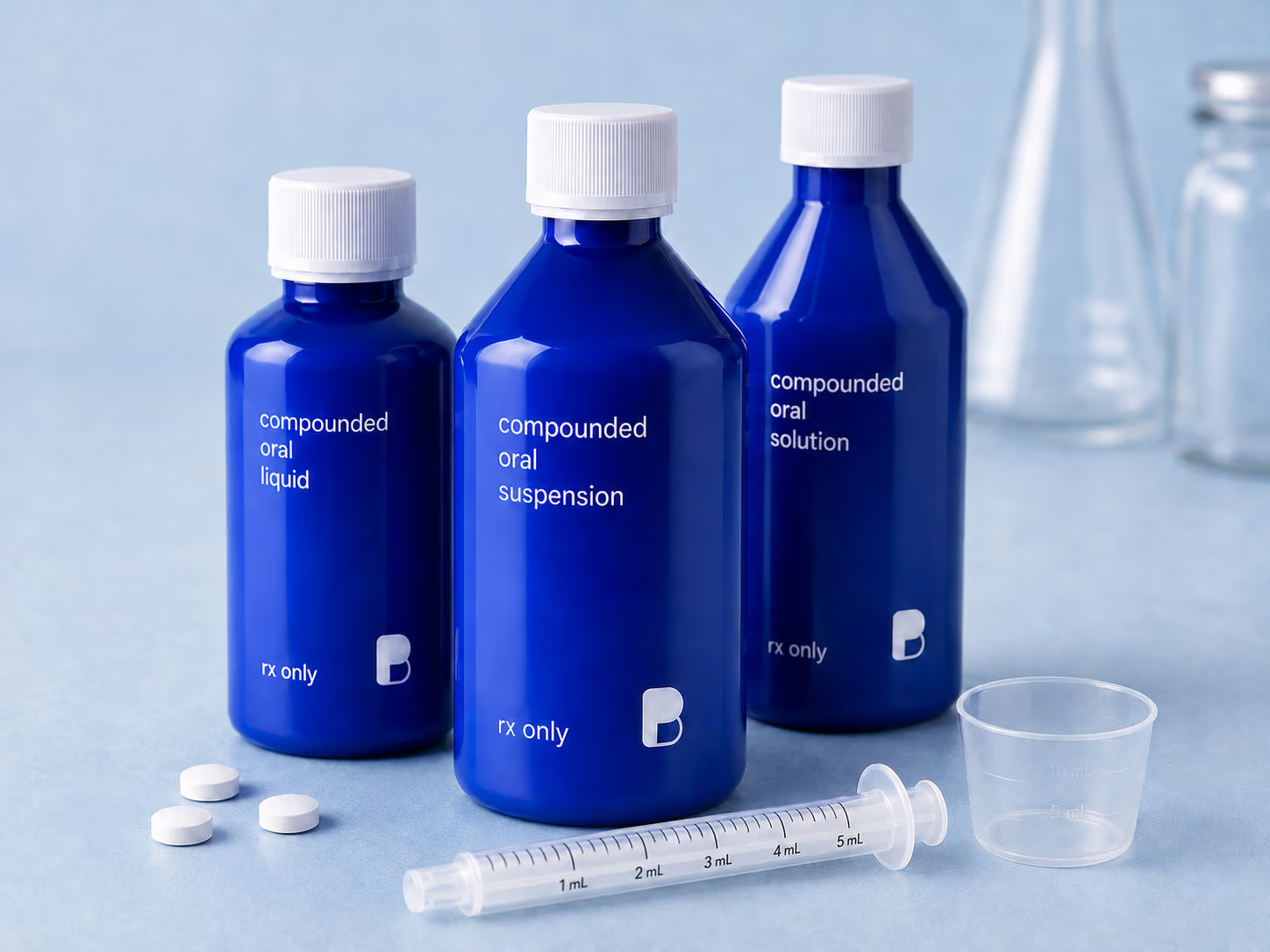
Capsules suit pets that take pills. Flavored oral liquids are measured with an oral syringe and can help with pets that will not swallow a capsule; see our custom oral suspensions. Transdermal ear gels are rubbed onto the inner ear, which can help with cats that refuse anything by mouth.
Ear gels come with a tradeoff. For several behavior medications given to cats through the skin, only a fraction of the blood level seen with oral dosing was reached, and a veterinary column suggests saving transdermal behavior drugs for cats that will not tolerate oral medication (dvm360). Amitriptyline applied to the skin was poorly absorbed compared with an oral dose (American College of Veterinary Pharmacists). A small pilot study found that gabapentin in a transdermal base was absorbed into the bloodstream in cats (Journal of Veterinary Internal Medicine). Your veterinarian weighs these points and watches your pet's response.
How is it given?
Your veterinarian sets the dose, which is specific to your pet, and the schedule. Fluoxetine is a daily medication. Trazodone and gabapentin are often given ahead of a stressful event, such as a car ride or a veterinary visit, at the time your veterinarian directs, and some pets receive them on a regular schedule instead. Do not stop or change a daily medication without talking to your veterinarian.
For ear gels, wear disposable gloves, wipe away any gel left from the last dose, and rub the new dose into the inner ear as your veterinarian directs (American College of Veterinary Pharmacists). Wash your hands afterward and do not let children handle the medication. Shake oral liquids well and measure each dose with the syringe provided.
Side effects & safety
Fluoxetine: decreased appetite, lethargy, shaking or shivering, vomiting, restlessness, and weight loss were reported with the approved fluoxetine tablet for dogs, and seizures can occur, even in dogs without a history of epilepsy (Reconcile label).
Trazodone: sleepiness, wobbliness, nausea, vomiting, or diarrhea, and in some pets agitation, restlessness, more anxiety, or aggression (Merck Veterinary Manual). In one small study, a cat became more fearful and vocal after trazodone (Veterinary Evidence).
Amitriptyline: tricyclic side effects include sleepiness, vomiting, diarrhea, constipation, urine retention, reduced tears and saliva, weight gain, and heart rhythm changes (Merck Veterinary Manual).
Gabapentin: sleepiness is the main side effect, and some pets become wobbly, vomit, have diarrhea, or drool (Merck Veterinary Manual, Veterinary Evidence). Effects after a single dose in cats were temporary in the studies reviewed.
Ear gels: watch for redness or irritation where the gel is applied (ACVP).
Too much of an antidepressant can cause serious signs such as agitation, tremors, muscle twitching, a racing heart, fever, or seizures (Merck Veterinary Manual). Call your veterinarian right away if you see these, if your pet collapses or cannot be roused, or if a person or another animal swallows the medication.
Dogs and xylitol: xylitol, a sweetener found in some human medicines, can cause a rapid, dangerous drop in a dog's blood sugar. Never give a human liquid medicine or sugar-free product in place of your dog's prescription (FDA).
Which pets should not take it?
Fluoxetine should not be given to dogs with epilepsy or a history of seizures, with drugs that lower the seizure threshold, or with a monoamine oxidase inhibitor (MAOI) such as selegiline or amitraz, or within 14 days of stopping one. It is not recommended for treating aggression, and it has not been studied in breeding, pregnant, or nursing dogs or in dogs under 6 months of age (Reconcile label). The approved label for clomipramine, a tricyclic related to amitriptyline, advises caution in dogs with heart disease, glaucoma, urine retention, slowed gut movement, or liver disease (Clomicalm label). None of these medications should be given to a pet that is allergic to it. Tell your veterinarian about your pet's full history and every medication and supplement it receives, since these drugs can interact with others (Merck Veterinary Manual).
How should it be stored?
Store as directed on the pharmacy label, keep containers tightly closed, and keep them out of reach of children and other pets. The approved fluoxetine and clomipramine labels warn that accidental ingestion needs medical attention right away, and that in children it should be treated as serious (Clomicalm label). Do not use after the beyond-use date, and ask your pharmacist how to dispose of unused medication.
Why is this compounded?
The approved fluoxetine and clomipramine tablets are labeled for dogs, and the smallest approved fluoxetine chewable tablet is 8 mg (Reconcile label). Cats and small dogs may need a smaller strength, and many cats will not take a tablet. Trazodone, amitriptyline, and gabapentin are human medications that veterinarians prescribe extralabel, which federal law allows under specific conditions (FDA). Bayview compounds these medications as small capsules, flavored oral liquids, and transdermal ear gels in strengths, flavors, and forms the approved products do not cover, when your veterinarian decides an approved product is not suitable for your pet. Each preparation is made to a veterinarian's prescription for one animal. The rest of what we compound for animals is in our compounded medications catalog.
Clinical details for prescribers
Regulatory status. These compounded preparations are not FDA-approved (FDA). Each is compounded for an individual animal on a valid prescription within a veterinarian-client-patient relationship, as extralabel use under AMDUCA (FDA); animal drugs compounded from bulk drug substances follow FDA's GFI #256 (FDA). Approved animal products: Reconcile (fluoxetine HCl chewable tablets 8, 16, 32, and 64 mg; NADA 141-272) for canine separation anxiety in conjunction with a behavior modification plan (label); Clomicalm (clomipramine HCl tablets; NADA 141-120) for separation anxiety in dogs older than 6 months as part of a comprehensive behavioral management program (label), with a generic clomipramine tablet approved in 2019 (FDA); Sileo (dexmedetomidine oromucosal gel; NADA 141-456) for noise aversion in dogs (labeling); Bonqat (pregabalin oral solution; NADA 141-580; Schedule V) for acute anxiety and fear associated with transportation and veterinary visits in cats (FDA, label). Fluoxetine, trazodone, and amitriptyline are not controlled substances (DEA). Gabapentin is not controlled under the federal Controlled Substances Act (DEA).
Dosing reported in the cited sources:
- Fluoxetine: dogs 1 to 2 mg/kg PO every 24 hours (Merck; Reconcile label). Cats 0.5 to 1.5 mg/kg PO every 24 hours, long-term, for urine marking or compulsive behavior (Merck). Onset 7 to 30 days (Merck).
- Trazodone: dogs 2 to 7.5 mg/kg PO every 8 to 24 hours as needed, up to 19.5 mg/kg in any 24-hour period (Merck); onset 90 to 120 minutes, duration 4 to 6 hours (Merck). Cats 50 to 100 mg/cat PO once, 90 minutes before a stressful event (Merck); a 2025 knowledge summary rated the evidence for pre-visit trazodone in cats as weak (Veterinary Evidence).
- Gabapentin: dogs 5 to 30 mg/kg PO every 8 hours when given regularly, or 20 to 50 mg/kg PO 90 minutes before a stressor as needed (Merck). Cats 100 to 200 mg/cat PO once, 90 to 120 minutes before the stressor (Merck); a 2019 knowledge summary rated the evidence for a single 100 mg oral dose before veterinary visits as moderate to good (Veterinary Evidence). Start at the low end and titrate to limit sedation (Merck).
- Amitriptyline: used extralabel in dogs for separation anxiety and in cats for urine marking and hypervocalization (Merck). No amitriptyline dose is cited on this page; dose per your own reference.
Transdermal notes. The ACVP feline transdermal chart lists amitriptyline as poorly absorbed after a single 5 mg dose compared with oral, with insufficient data for a recommendation, and does not list trazodone (ACVP). Because a poor response may reflect low blood levels rather than a nonresponder, transdermal behavior drugs have been suggested as a last resort for cats that will not tolerate oral dosing (dvm360). Transdermal gabapentin was absorbed systemically in a small feline pilot study that measured pain scores, not anxiety (JVIM). Monitor clinical response and the application site; caregivers wear gloves.
Counseling and clinical points:
- Rule out medical causes, especially pain, and pair any drug with a behavior modification plan (Merck).
- Fluoxetine is contraindicated with a seizure history and with MAOIs such as selegiline or amitraz (14-day interval); observe a 6-week washout after stopping before giving a drug that may interact; not recommended for aggression (Reconcile label).
- SSRIs inhibit hepatic cytochrome P450 enzymes, so review concurrent drugs (Merck).
- Counsel owners on signs of serotonin syndrome described with SSRI toxicosis: agitation, myoclonus, hyperreflexia, tremors, and fever (Merck).
- With tricyclics, QRS widening with tachycardia on ECG is an early indicator of toxicosis (Merck).
- Dogs: no human liquid or sugar-free product should be substituted at home because of xylitol (FDA).
Account setup and ordering are covered on our for providers page.
References
- Merck Veterinary Manual: Psychotropic agents
- Merck Veterinary Manual: Behavior problems of dogs
- Merck Veterinary Manual: Behavior problems of cats
- Merck Veterinary Manual: Behavior drugs for dogs (table)
- Merck Veterinary Manual: Antidepressant toxicity
- DailyMed: Reconcile label
- DailyMed: Clomicalm label
- FDA: Generic clomipramine for dogs
- Animal Drugs @ FDA: Sileo labeling
- FDA: Bonqat approval for cats
- DailyMed: Bonqat label
- FDA: Animal drug compounding
- FDA: GFI #256
- FDA: Extra-label drug use in animals
- FDA: Xylitol is dangerous for dogs
- DEA: Gabapentin fact sheet
- DEA: Controlled substances list
- ACVP: Transdermal chart for cats
- dvm360: Transdermal behavior drugs in cats
- JVIM: Transdermal gabapentin in cats
- Veterinary Evidence: Gabapentin before vet visits in cats
- Veterinary Evidence: Trazodone before vet visits in cats
- MedlinePlus: Trazodone
- MedlinePlus: Amitriptyline
- MedlinePlus: Gabapentin
The medications on this page are compounded veterinary preparations and are not FDA-approved. This information is educational and is not a substitute for your veterinarian's instructions. A veterinarian's prescription is required, and your veterinarian determines whether a medication is appropriate and sets the dose.