

Heart disease and high blood pressure are common in dogs and cats, especially as they age. In dogs, the most common heart disease is myxomatous mitral valve disease (MMVD), a slow degeneration of a heart valve that accounts for about 75% of the heart disease seen by veterinary practices in North America; Cavalier King Charles Spaniels are predisposed to it at a young age (ACVIM). In cats, hypertrophic cardiomyopathy (HCM), a thickening of the heart muscle, is the most common heart disease. It affects as many as one in seven cats, and most show no outward signs (Merck Veterinary Manual).
High blood pressure (systemic hypertension) in pets usually comes from another illness. In cats it is most often linked to chronic kidney disease or an overactive thyroid, and eye problems are the most common harm, including retinal detachment that causes blindness (Cornell Feline Health Center). Over time it can also damage the kidneys, heart, and brain. In dogs, kidney disease, hyperadrenocorticism (Cushing's disease), and diabetes are among the causes (ACVIM). Cats with cardiomyopathy are also at risk of arterial thromboembolism, a blood clot that blocks an artery, often to the back legs, causing sudden pain and weakness or paralysis (Merck Veterinary Manual).
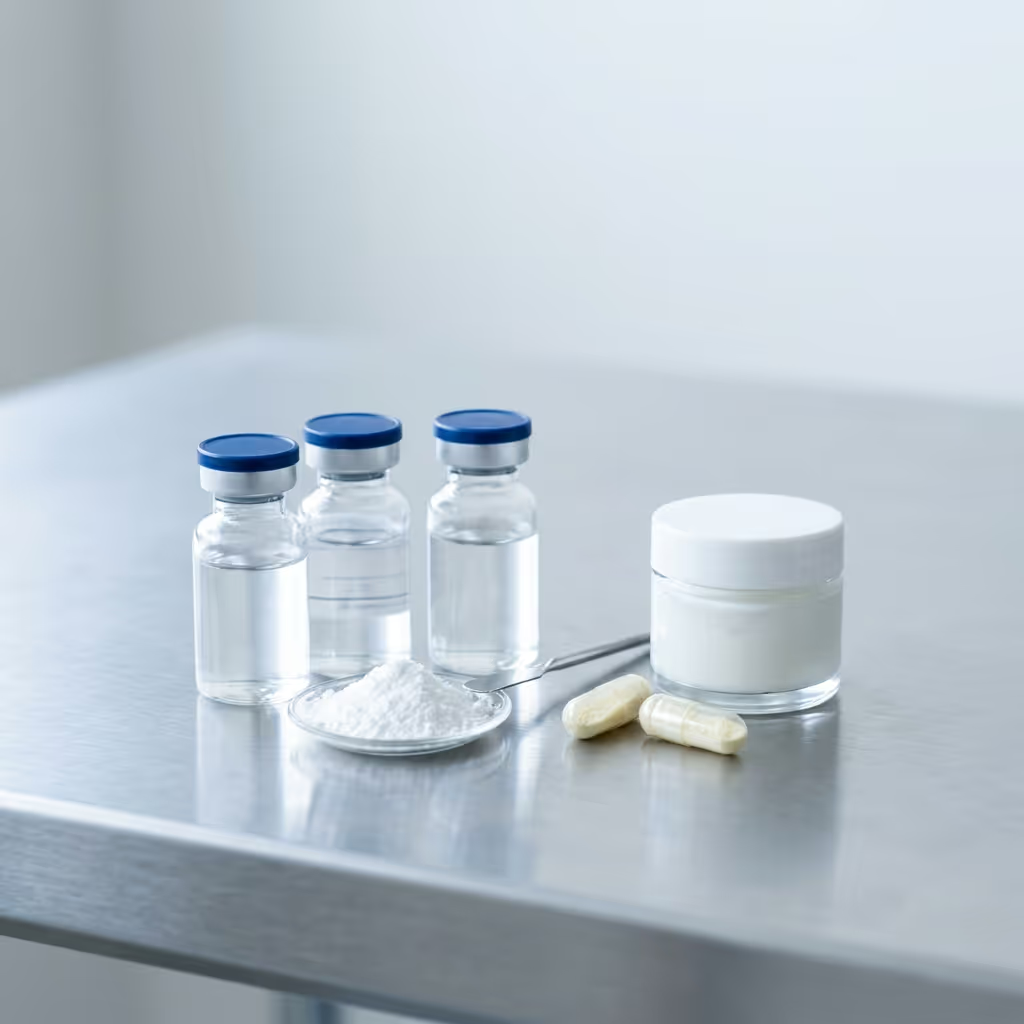
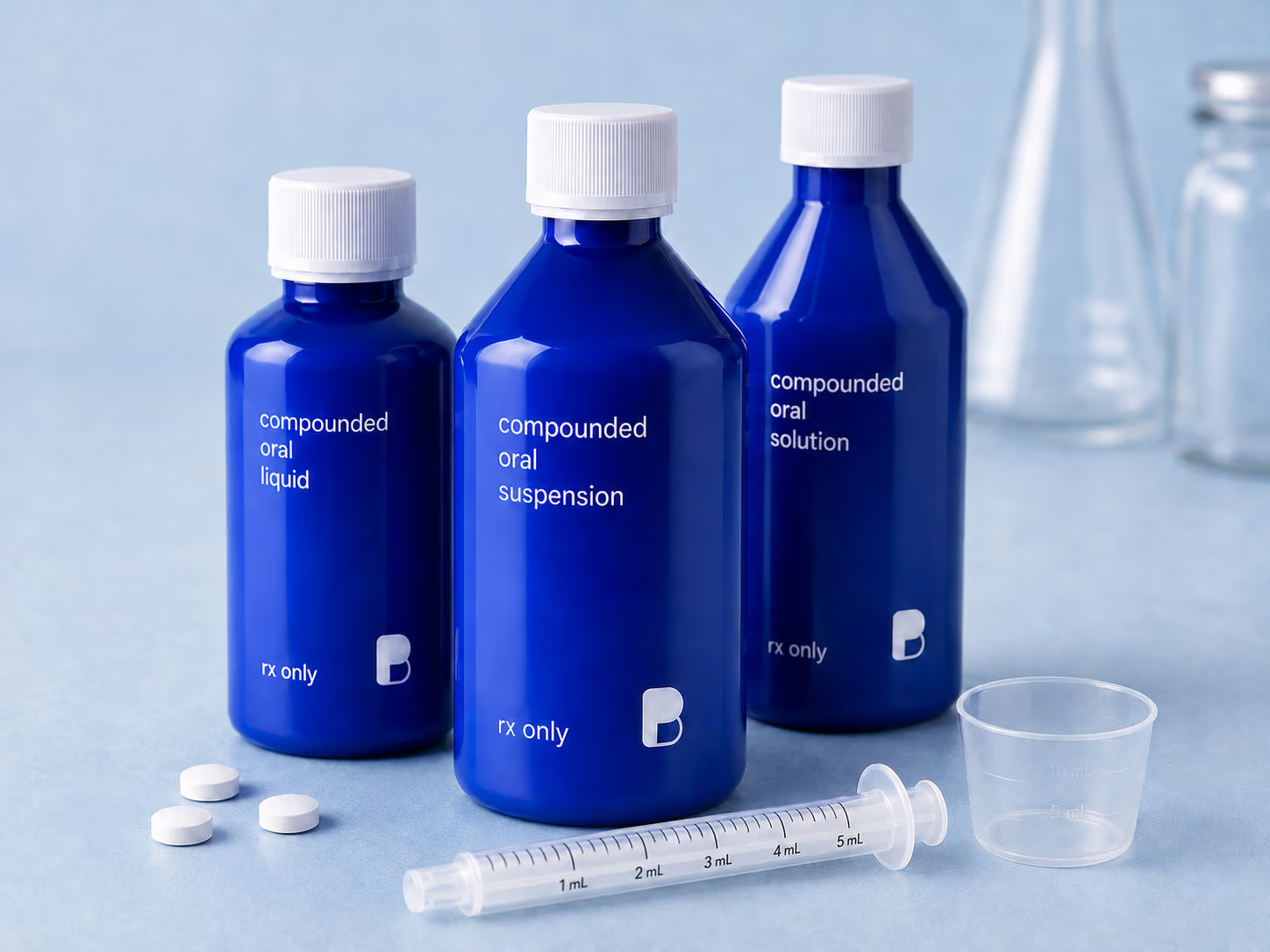
Bayview Pharmacy compounds the medicines veterinarians prescribe for these conditions as flavored oral liquids, capsules, and a transdermal ear gel, at the strength your veterinarian orders. They are part of our veterinary compounding line, alongside pimobendan for dogs, methimazole for cats, trilostane for dogs, and custom oral suspensions.
How does it work?
Each medicine on this page works differently, and pets in heart failure often take more than one at a time (ACVIM).
- Pimobendan is an inodilator. It makes the heart muscle more sensitive to calcium and blocks an enzyme called phosphodiesterase III, so the heart pumps more strongly while blood vessels relax (Merck Veterinary Manual). It has its own page: pimobendan for dogs.
- Benazepril and enalapril are ACE inhibitors. They block the body's conversion of angiotensin I to angiotensin II and help limit remodeling of the heart and blood vessels (Merck Veterinary Manual).
- Amlodipine is a calcium channel blocker and is generally the first-line medicine for high blood pressure in cats (Cornell Feline Health Center); veterinary references class it as a vasodilator, a drug that relaxes blood vessels (Merck Veterinary Manual).
- Atenolol is a beta blocker that slows the heart rate (MedlinePlus). In cats with HCM, veterinarians may use it to slow the heart and reduce a blockage of blood flow out of the heart (ACVIM).
- Clopidogrel is an antiplatelet medicine that keeps platelets from collecting and forming clots (MedlinePlus). In cats, it is the only drug shown in studies to lower the rate of arterial clots (Merck Veterinary Manual).
- Furosemide is a loop diuretic. It reduces how much sodium, chloride, and potassium the kidneys take back (Merck Veterinary Manual), and it is used for fluid buildup in the lungs or belly from heart disease (Salix label).
- Spironolactone is a potassium-sparing diuretic that blocks the hormone aldosterone (Merck Veterinary Manual).
- Sildenafil, combined with pimobendan in one of our suspensions, relaxes the arteries in the lungs and is used for pulmonary hypertension in dogs (Merck Veterinary Manual).
What is it used for?
Veterinarians prescribe these medicines for:
- Heart disease and congestive heart failure in dogs, such as MMVD and dilated cardiomyopathy (FDA). For dogs in heart failure from MMVD, current guidance combines furosemide, pimobendan, an ACE inhibitor, and spironolactone (ACVIM).
- Cardiomyopathy in cats, where treatment depends on the stage and may include furosemide for heart failure, atenolol in selected cats, and clopidogrel for cats at risk of blood clots (ACVIM).
- High blood pressure, where amlodipine, telmisartan, or both are the usual choices in cats (Merck Veterinary Manual), with benazepril as an alternative (Cornell Feline Health Center).
- Pulmonary hypertension, high pressure in the blood vessels of the lungs, for which sildenafil may be added in dogs with advanced heart failure (ACVIM).
Which medicine fits your pet, and at what stage, is a decision your veterinarian makes after an exam and tests such as blood pressure, bloodwork, chest X-rays, and an echocardiogram.
Liquid, capsule, or ear gel?
Most of these medicines are compounded as oral suspensions, measured with an oral syringe, which lets your veterinarian order small or in-between doses for cats and small dogs. Pimobendan and amlodipine suspensions are flavored, and pimobendan and benazepril are also made as capsules. Atenolol is available as a transdermal gel applied to the ear, which some owners choose for cats that resist pills.
A gel absorbed through the skin is not the same as a dose by mouth. In a study of healthy cats, atenolol gel applied to the skin produced lower and less consistent blood levels than the same dose given by mouth (American Journal of Veterinary Research). Your veterinarian takes this into account and may recheck your cat or change to a different form. More about flavored liquids is on our custom oral suspensions page.
How is it given?
Your veterinarian sets the dose, which is specific to your pet, and the schedule. Shake liquids well and measure each dose with the oral syringe provided. For the ear gel, wear gloves, apply the prescribed amount to the ear flap (pinna), alternate ears with each dose, and clean the ear before the next dose; soap and water can be used. Keep small children and other pets away from the treated ear for at least two hours after each dose (University of Illinois).
Give every dose as directed and talk to your veterinarian before stopping a heart medicine (MedlinePlus). Your veterinarian may also ask you to count your pet's breathing while resting or asleep. In dogs with MMVD, a rise above the normal resting rate is the most telling early sign of worsening heart failure (ACVIM), and for cats with heart disease the guidance aims to keep the resting rate under 30 breaths per minute (ACVIM).
Side effects & safety
Side effects depend on the medicine:
- Pimobendan: reduced appetite, vomiting or diarrhea, lethargy, and cough have been reported (Vetmedin label).
- Amlodipine: vomiting, poor appetite, dehydration, lethargy, and overgrowth of the gums (Amodip label).
- Furosemide and spironolactone: diuretics can lead to dehydration and low potassium (Merck Veterinary Manual). Early signs of an electrolyte problem include increased thirst, lethargy, drowsiness or restlessness, and passing little urine (Salix label). Some cats given spironolactone develop sores on the face (Merck Veterinary Manual).
- Benazepril and enalapril: your veterinarian checks kidney values and electrolytes, usually 3 to 14 days after starting an ACE inhibitor or furosemide (ACVIM).
- Atenolol: an overdose can slow the heart and drop blood pressure severely, and an accidental overdose can be life-threatening (Pet Poison Helpline).
- Clopidogrel: in people it can make bleeding more likely (MedlinePlus), so tell your veterinarian about any unusual bleeding or bruising.
- Ear gel: irritation at the application site is the most common problem with transdermal medicines (University of Illinois).
Never sweeten or mix your pet's medicine with human products. Xylitol, a sweetener in some cough syrups, chewable vitamins, and over-the-counter medicines, can cause a sudden, dangerous drop in blood sugar in dogs and may damage the liver (FDA). Contact your veterinarian if you notice any change that worries you.
Which pets should not take it?
These medicines are only for pets your veterinarian has diagnosed and prescribed them for. The approved animal labels for these drugs list situations where they should not be used:
- Pimobendan should not be given to pets with hypertrophic cardiomyopathy, aortic stenosis, or any other condition where increasing the heart's output is inappropriate (Vetmedin label). In cats it is considered only in specific situations and only when there is no blockage of blood flow out of the heart (ACVIM).
- Spironolactone and benazepril should not be given to dogs with Addison's disease (hypoadrenocorticism), high blood potassium, or low blood sodium, or together with an NSAID pain reliever in dogs with kidney insufficiency (Cardalis label).
- Furosemide should not be given to a pet that is not producing urine (Salix label).
- Amlodipine should not be given to cats that are allergic to it (Amodip label).
- Beta blockers such as atenolol are generally not advised for pets in active congestive heart failure (Merck Veterinary Manual).
Tell your veterinarian about all of your pet's health conditions and every other medicine and supplement, so they can decide what is appropriate.
How should it be stored?
Store as directed on the label, keep containers tightly closed, and do not use after the beyond-use date. Keep these medicines out of reach of children and other pets; approved animal labels such as Vetmedin and Cardalis state they are not for use in humans (Vetmedin label). If a person swallows a dose, seek medical attention right away and show the label (Amodip label). Ask your veterinarian or pharmacist how to dispose of any unused medicine.
Why is this compounded?
Approved animal products come in set strengths and forms, such as chewable tablets, and some pets need something different: a dose too small for a tablet, a flavored liquid for a pet that will not take pills, a capsule, or an ear gel. When your veterinarian decides an approved product is not suitable for your pet, Bayview compounds the medicine to the strength, flavor, and form ordered. Compounded animal drugs are not FDA-approved, and FDA has not reviewed them for evidence that they are safe, that they work, or that they are properly manufactured and labeled (FDA). They are not the same as, or generic versions of, approved products. The rest of what we compound for animals is in our compounded medications catalog.
Clinical details for prescribers
Regulatory status. None of the drugs on this page (pimobendan, sildenafil, atenolol, amlodipine, benazepril, enalapril, clopidogrel, furosemide, spironolactone) appears on the DEA list of federally controlled substances (DEA). FDA-approved animal products confirmed on FDA labeling: Vetmedin pimobendan chewable tablets, NADA 141-273 (label), and Vetmedin Solution 1.5 mg/mL, NADA 141-575 (label), for dogs, with Vetmedin-CA1 conditionally approved to delay CHF onset in Stage B2 MMVD (FDA); Amodip amlodipine 1.25 mg chewable tablets for feline hypertension, NADA 141-613 (label); Semintra telmisartan 10 mg/mL oral solution for feline hypertension, NADA 141-501 (label); Cardalis spironolactone and benazepril chewable tablets for canine CHF due to AVVI, NADA 141-538 (label); Salix furosemide 12.5 and 50 mg tablets for dogs and cats, NADA 034-621 (label). Each preparation on this page is compounded for an individual animal on a valid prescription within a veterinarian-client-patient relationship, as extralabel use under AMDUCA (FDA); animal drugs compounded from bulk drug substances follow FDA's GFI #256 (FDA). FDA has cautioned that compounded pimobendan has not been through FDA review and may vary in quality and potency (FDA).
Dosing in the cited literature (for reference; not Bayview recommendations):
- Canine MMVD (ACVIM 2019): Stage B2 pimobendan 0.25 to 0.3 mg/kg PO q12h. Stage C chronic: furosemide to effect, commonly 2 mg/kg PO q12h; pimobendan 0.25 to 0.3 mg/kg PO q12h; ACEI (enalapril or benazepril) 0.5 mg/kg PO q12h; spironolactone 2.0 mg/kg PO q12 to 24h as an adjunct. Sildenafil starting at 1 to 2 mg/kg PO q8h for Stage D complicated by clinically relevant pulmonary hypertension.
- Feline cardiomyopathy (ACVIM 2020): furosemide commonly started at 1 to 2 mg/kg PO q12h (range 0.5 to 2 mg/kg q8 to 12h); atenolol 6.25 mg/cat PO q12h for complex ventricular ectopy; clopidogrel recommended for cats at risk of ATE. Clopidogrel 18.75 mg/cat PO q24h (Merck).
- Feline hypertension: Amodip initial dose 0.125 to 0.25 mg/kg/day, with a higher range of 0.25 to 0.5 mg/kg/day (label).
- Extralabel ranges (Merck table): amlodipine in dogs 0.1 to 0.2 mg/kg PO q12h or 0.2 to 0.4 mg/kg PO q24h; benazepril and enalapril 0.25 to 0.5 mg/kg PO q12 to 24h in dogs and cats; atenolol 0.2 to 1.5 mg/kg PO q12h in dogs and 6.25 to 12.5 mg/cat PO q12h; pimobendan 0.25 mg/kg PO q12h in cats; spironolactone 1 to 2 mg/kg PO q12h or 2 to 4 mg/kg PO q24h in dogs; clopidogrel 1 to 4 mg/kg PO q24h in dogs.
Counseling and clinical points:
- Measure serum creatinine, BUN, and electrolytes 3 to 14 days after starting furosemide or an ACEI (ACVIM).
- Pimobendan is contraindicated in HCM, aortic stenosis, or where augmenting cardiac output is inappropriate (label). In cats, it could be considered for signs of low cardiac output provided DLVOTO is absent (ACVIM).
- Atenolol has not been shown to affect 5-year survival in cats with subclinical HCM; it may be considered in stage B1 cats with severe DLVOTO if it can be given consistently (ACVIM). Beta blockers are not generally advised in active CHF (Merck).
- Transdermal atenolol in 7 healthy cats gave lower and inconsistent plasma concentrations than oral dosing; only 2 of 7 reached therapeutic concentrations at 2 hours, versus 6 of 7 orally (Am J Vet Res). Monitor response if prescribing the gel.
- For hypertensive cats, Merck lists amlodipine, telmisartan, or the two together, and describes ACE inhibitors, diltiazem, beta blockers such as atenolol, and diuretics as generally of little use for lowering blood pressure (Merck). Cornell describes a goal of keeping systolic pressure below 160 mm Hg (Cornell).
- Spironolactone at 2 mg/kg PO q12h has been associated with facial excoriation and ulcerative dermatitis in cats (Merck).
- Have owners track resting or sleeping respiratory rate: in cats the goal is under 30 breaths/min (ACVIM); in dogs, a rise above baseline has the most predictive value for impending decompensation (ACVIM).
- Caregivers applying the ear gel should wear gloves and alternate ears (Illinois VTH).
Where an approved animal product fits the patient's dose and form, prescribe it; note the clinical reason when a compounded preparation is needed. Account setup and ordering are covered on our for providers page.
References
- ACVIM consensus: Mitral valve disease in dogs
- ACVIM consensus: Cardiomyopathies in cats
- ACVIM consensus: Systemic hypertension in dogs and cats
- Merck Veterinary Manual: Systemic hypertension
- Merck Veterinary Manual: Hypertrophic cardiomyopathy
- Merck Veterinary Manual: Cardiovascular therapy
- Merck Veterinary Manual: Cardiac medications table
- Cornell Feline Health Center: Hypertension
- FDA: Vetmedin availability and compounded pimobendan
- FDA: Vetmedin-CA1 conditional approval
- DailyMed: Vetmedin label
- DailyMed: Vetmedin Solution label
- DailyMed: Amodip label
- DailyMed: Semintra label
- DailyMed: Cardalis label
- DailyMed: Salix tablets label
- FDA: Animal drug compounding
- FDA: Extra-label drug use in animals
- FDA: Xylitol is dangerous for dogs
- Am J Vet Res: Oral vs transdermal atenolol in cats
- Illinois Veterinary Teaching Hospital: Transdermal ear medication
- Pet Poison Helpline: Atenolol
- MedlinePlus: Atenolol
- MedlinePlus: Clopidogrel
- DEA: Controlled substances list
Heart and blood pressure medications compounded by Bayview Pharmacy are compounded veterinary medications and are not FDA-approved. This information is educational and is not a substitute for your veterinarian's instructions. Your veterinarian determines whether a medication is appropriate and sets the dose.

.avif)