

In Stock
Urinary Incontinence & Stone Meds for Pets | Bayview Pharmacy

Urinary Incontinence and Bladder Stone Medications for Dogs & Cats

Smiling man in blue pharmacist scrubs with arms crossed and pen behind his ear.
Medically reviewed by Ryan Dyer, RPh
Last updated on
October 12, 2026
Starting at
$61
for
30 mL
Checkmark icon followed by text 'HSA/FSA Eligible'.
Start with a prescriptionPrescribers: how to e-prescribe this →
Licensed to fill prescriptions for patients in RI, MA, CT, NJ, NH, FL, ME & PA
  • For leaking and stones. Urinary medications your vet may prescribe.
  • Measured liquid doses. Given by oral syringe, no tablet splitting.
  • Flavored phenylpropanolamine. In 10, 25, or 50 mg/mL.
  • Your vet's strength. Compounded to the order.

Urinary incontinence is urine leaking that a pet does not control. In dogs, the most common reason the bladder fails to hold urine is urethral sphincter mechanism incompetence, a weakness of the muscle that keeps the urethra closed. It most often affects spayed female dogs, which tend to leak while sleeping or lying down but urinate normally otherwise. Veterinarians also prescribe urinary medications to make urine less acidic in pets that form calcium oxalate bladder stones, and to relax the urethra in some dogs and cats with urethral spasm.

FDA-approved products for incontinence in dogs include phenylpropanolamine chewable and extended-release tablets (Proin and Proin ER) and estriol tablets (Incurin). Bayview Pharmacy compounds phenylpropanolamine as a flavored oral liquid, along with potassium citrate and prazosin liquids, when your veterinarian decides an approved product is not suitable for your pet. These compounded preparations are prescription-only, require a prescription from a licensed veterinarian, and are not FDA-approved.

Bayview compounds other veterinary preparations to a veterinarian's order, including pimobendan for dogs, trilostane for dogs, ursodiol for pets, and custom oral suspensions.

What causes urinary incontinence in dogs?

The most common reason a dog's bladder fails to hold urine is urethral sphincter mechanism incompetence, a weakness of the muscle that keeps the urethra closed. It most often affects spayed female dogs, can appear in middle age or later, and usually shows up as leaking while sleeping or lying down (Merck Veterinary Manual). Leaking can have other causes, including a urinary tract infection, nerve disease, or a malformation, so your veterinarian works out the cause before choosing a medication.

Is there an FDA-approved medication for incontinence in dogs?

Yes. Phenylpropanolamine chewable tablets (Proin) and extended-release tablets (Proin ER) are FDA-approved for incontinence caused by weak urethral sphincter tone in dogs (FDA), and estriol tablets (Incurin) are approved for estrogen-responsive incontinence in spayed female dogs (INCURIN label). Bayview's compounded phenylpropanolamine liquid is not FDA-approved and is not the same as, or a generic of, those products. Your veterinarian may prescribe it when an approved product is not suitable for your dog, for example when a liquid form or a strength the tablets do not offer is needed.

Trusted by 105,826 patients to date.
A group of faces of our past satisfied patients.
Compounded medications are prepared pursuant to a valid prescription for an individual patient and are not FDA-approved. This page is for educational purposes and is not medical advice.
**The FDA does not review or approve compounded medications for safety or effectiveness. A valid prescription from a licensed practitioner is required.
Important safety information →
Service availability

Prescription delivery in your state

Bayview Pharmacy is licensed to serve patients in eight states and serves eligible New York patients on a limited basis while nonresident registration is pending. Check your state before getting started.

See every state we ship to, with shipping times and pickup details →

Where we currently serve

Select a highlighted state to check availability.

Currently licensed Limited basis, registration pending Not currently licensed Your selection

Select a state on the map or use the state checker.

Do we serve your state?

Choose your state to confirm current service availability.

Thank you! Your submission has been received!
Oops! Something went wrong while submitting the form.
Where we serve
Start with a prescription

Getting your prescription filled is simple

Send us your prescription

STEP
1
Have your provider e-prescribe to Bayview, fax it to us, or call it in directly to one of our pharmacists.
A thin blue light beam connecting two clear glass slabs on a white surface.

A pharmacist reviews it

STEP
2
We verify your prescription and prepare your medication to your provider's exact instructions.
Close-up of a white dial with blue measurement markings and a rotating knob.

We compound & ship

STEP
3
We prepare your medication and ship it discreetly to your door, with support when you need it.
Close-up of a gray box with a precise blue line running along its folded edges.

Understanding urinary incontinence and stones in pets

Urinary incontinence means leaking urine without control. In dogs, the most common reason the bladder fails to hold urine is urethral sphincter mechanism incompetence (USMI), a weakness of the muscle that keeps the urethra closed. It most often affects spayed female dogs, may become more noticeable in middle age and later, and typically shows up as leaking while a dog is asleep or lying down, with normal urination otherwise (Merck Veterinary Manual).

Veterinarians also prescribe urinary medications for related problems: making urine less acidic in dogs and cats that form calcium oxalate bladder stones, and relaxing the urethra in some pets with urethral spasm. Bayview Pharmacy compounds three of these as oral liquids, phenylpropanolamine, potassium citrate, and prazosin, as part of our veterinary compounding line, alongside pimobendan, trilostane, and ursodiol.

Compounded liquids prepared at your veterinarian's direction. FDA-approved products for urinary incontinence in dogs include phenylpropanolamine chewable tablets (Proin), phenylpropanolamine extended-release tablets (Proin ER), and estriol tablets (Incurin). Bayview's phenylpropanolamine, potassium citrate, and prazosin liquids are compounded for strengths, flavors, and liquid forms that approved products do not provide, when your veterinarian decides an approved product is not suitable for your pet. They are prescription-only, are not FDA-approved, and are not the same as, equivalent to, or generic versions of any approved product.

How does it work?

Phenylpropanolamine is a chemical relative of the body's own adrenaline-like messengers. It is an alpha-adrenergic drug reported to increase the tone of the urethra in dogs, the tube that carries urine out of the bladder (PROIN label).

Potassium citrate is an alkalinizing salt. Once the body processes it, urine becomes less acidic and carries more citrate. Citrate binds calcium, leaving less calcium free to combine with oxalate into crystals (Minnesota Urolith Center; Merck Veterinary Manual).

Prazosin is an alpha-blocker. In people it relaxes blood vessels and is used for high blood pressure (MedlinePlus). In pets, veterinarians use it as a smooth-muscle relaxant for the urethra when spasm is thought to be part of the problem (Veterinary Evidence).

What is it used for?

Leaking in spayed female dogs. Phenylpropanolamine is used to control urinary incontinence caused by weak urethral sphincter tone in dogs (PROIN ER label). Estriol, a hormone, is another approved option, and veterinarians sometimes combine phenylpropanolamine with an estrogen when one medication alone is not enough (Merck Veterinary Manual). Because leaking can also come from a urinary tract infection, nerve disease, or a malformation, your veterinarian looks for those causes as part of the diagnosis.

Calcium oxalate stones. Calcium oxalate bladder stones cannot be dissolved with medication or diet, so stones that cause problems are removed. Prevention focuses on diet, more water in the diet, and avoiding foods that make urine acidic, and veterinary consensus recommends considering potassium citrate for dogs and cats whose urine stays acidic (ACVIM consensus). Veterinarians may also use it to make urine less acidic in some dogs with urate stones (Merck Veterinary Manual).

Urethral spasm. Prazosin is one of the alpha-blocking medications veterinarians use for idiopathic functional urethral obstruction, also called reflex dyssynergia, a problem with the urethra relaxing during urination in dogs (Merck Veterinary Manual). Studies in male cats after a urinary blockage have not shown that it lowers the risk of another blockage within 30 days (Veterinary Evidence), so your veterinarian decides whether it fits your pet's situation.

How do the liquids compare to tablets?

The approved phenylpropanolamine products are flavored chewable tablets given twice daily and extended-release tablets given once daily (FDA). The extended-release tablets cannot be dosed safely in dogs under 10 pounds, because even the smallest tablet would exceed the labeled dose (PROIN ER label). A compounded flavored liquid is measured by oral syringe, so your veterinarian can prescribe an exact amount for a small dog or a dog that will not take a chewable. Potassium citrate is approved for people as extended-release tablets (UROCIT-K label), and Bayview prepares it as a 500 mg/mL oral solution measured to your pet's dose. Prazosin is approved for people as capsules (prazosin label), and Bayview prepares a 1 mg/mL liquid for small doses. When a pet needs a medication as a liquid that is not listed here, our custom oral suspensions page explains how that works.

How is it given?

All three are given by mouth. Shake suspensions well and measure each dose with the oral syringe provided, never a kitchen spoon. Potassium citrate is often given in food (Merck Veterinary Manual), and your veterinarian or pharmacist will tell you how to give each liquid. Your veterinarian sets the dose and schedule, which are specific to your pet. If you are asked to check urine pH at home with test strips, your veterinarian will explain when to test and what to record (Minnesota Urolith Center).

Side effects & safety

Phenylpropanolamine can raise blood pressure, and the approved labels advise caution in dogs with heart disease, high blood pressure, liver disease, kidney problems, diabetes, or glaucoma. Commonly reported effects include vomiting, poor appetite, weight loss, and increased thirst, so keep fresh water available. Restlessness, irritability, anxiety, and aggression have been reported, and post-approval reports include seizures, tremors, and loss of coordination (PROIN label; FDA).

Phenylpropanolamine and people. The veterinary labels state that it is not for human use and must be kept out of reach of children (PROIN label). FDA asked drug companies to stop marketing products containing phenylpropanolamine for people after it was linked to a risk of hemorrhagic stroke, or bleeding into the brain (FDA). If a person swallows it, contact a physician or Poison Control at 1-800-222-1222.

Potassium citrate can raise blood potassium and reduce appetite, and veterinarians lower the dose if either happens. It is used with caution in pets that are dehydrated or have kidney disease, diabetes, or hypoadrenocorticism (Addison's disease) (Minnesota Urolith Center). In people, potassium citrate is not used with high blood potassium, certain stomach and bowel conditions, or an active urinary tract infection (UROCIT-K label).

Prazosin lowers blood pressure. In people it can cause dizziness or fainting, most often after the first dose or a dose increase (MedlinePlus). Lethargy, diarrhea, and poor appetite were reported in one feline study (Veterinary Evidence).

A blocked cat is an emergency. A cat, especially a male cat, that strains to urinate or passes little or no urine needs veterinary care right away. Complete urinary obstruction can be fatal in less than 24 to 48 hours (Cornell Feline Health Center).

Which pets should not take it?

Phenylpropanolamine is used with caution in dogs with heart disease, high blood pressure, liver or kidney disease, diabetes, or glaucoma, and its use in breeding, pregnant, or nursing dogs has not been evaluated (PROIN label). It does not help leaking caused by nerve disease or malformations (PROIN ER label). Potassium citrate is used with caution in pets with kidney disease, dehydration, diabetes, or hypoadrenocorticism, and the dose is reduced if blood potassium climbs (Minnesota Urolith Center). Because prazosin lowers blood pressure, tell your veterinarian about any other medications your pet takes. Share your pet's full history and every medication and supplement so your veterinarian can decide whether a medication is appropriate.

How should it be stored?

Store as directed on the label, keep the container tightly closed, and keep all three medications out of reach of children and other pets. Store phenylpropanolamine in a secured place: the approved labels report that dogs have chewed through closed bottles of the flavored tablets and overdosed, and direct owners to keep it away from dogs, cats, and other animals (PROIN label; PROIN ER label). Do not use any medication after the beyond-use date, and ask your veterinarian or pharmacist how to dispose of leftovers.

Why is this compounded?

Approved phenylpropanolamine tablets come in set sizes, and some dogs are too small for them or will not take a chewable. Potassium citrate is approved for people as extended-release tablets, and prazosin as capsules. Bayview compounds flavored phenylpropanolamine liquids in 10, 25, and 50 mg/mL, potassium citrate as a 500 mg/mL oral solution, and prazosin as a 1 mg/mL suspension, plus other strengths to order, so your veterinarian can prescribe a measured liquid dose when an approved product is not suitable for your pet. The rest of what we compound for animals is in our compounded medications catalog.

Clinical details for prescribers

Regulatory status. Phenylpropanolamine, potassium citrate, and prazosin are not federally controlled substances; the PROIN, UROCIT-K, and prazosin capsule labels list no DEA schedule (PROIN label; UROCIT-K label; prazosin label). FDA-approved veterinary products for canine urinary incontinence include phenylpropanolamine chewable tablets (PROIN, NADA 141-324), phenylpropanolamine extended-release tablets (PROIN ER, NADA 141-517), and estriol tablets (INCURIN, NADA 141-325) (PROIN ER label; INCURIN label). Potassium citrate extended-release tablets (UROCIT-K) and prazosin capsules are FDA-approved for people. Bayview's preparations are compounded for an individual animal on a valid prescription within a veterinarian-client-patient relationship, as extralabel use under AMDUCA (FDA: AMDUCA); animal drugs compounded from bulk drug substances follow FDA's GFI #256 (FDA: Animal drug compounding).

Formulation and dosing. Phenylpropanolamine HCl flavored oral suspension 10, 25, or 50 mg/mL; potassium citrate oral solution 500 mg/mL; prazosin oral suspension 1 mg/mL; other strengths to order. Reported dosing: phenylpropanolamine 2 mg/kg PO every 8 to 12 hours (Merck Veterinary Manual); the PROIN chewable label gives 2 mg/kg twice daily and the PROIN ER label 2 to 4 mg/kg once daily with food (PROIN label; PROIN ER label). Potassium citrate: a starting dose of 75 mg/kg PO twice daily, adjusted in 20% steps toward a urine pH near 6.5 (Minnesota Urolith Center). Prazosin: 0.5 to 3 mg per dog PO every 8 to 12 hours for idiopathic functional urethral obstruction (Merck Veterinary Manual); feline studies after urethral obstruction used 0.25 to 0.5 mg per cat every 12 hours or 0.5 to 1 mg per cat once daily (Veterinary Evidence).

Counseling and clinical points:

  • Hypertension is a labeled adverse reaction (19.5% with PROIN chewables; 12.6% at or above 160 mmHg with PROIN ER). The labels advise caution with pre-existing cardiac disease, hypertension, hepatic disease, renal insufficiency, diabetes, and glaucoma, and with sympathomimetics, tricyclic antidepressants, or MAO inhibitors (PROIN label; PROIN ER label).
  • The PROIN ER label notes that phenylpropanolamine may mask incontinence due to urinary tract infection and does not help incontinence from neurologic disease or malformations. The INCURIN label likewise advises evaluating contributing factors before treatment (INCURIN label).
  • Labeled adverse reactions for PROIN include restlessness, irritability, anxiety, and aggression; post-approval reports include seizures, tremors, ataxia, and deaths. Overdoses have followed dogs chewing through closed bottles of flavored chewables, so counsel secured storage for the flavored liquid as well (PROIN label).
  • Not for human use. FDA requested that drug companies discontinue marketing products containing phenylpropanolamine because of hemorrhagic stroke risk in people (FDA).
  • Calcium oxalate uroliths are not amenable to medical dissolution. ACVIM prevention centers on high-moisture diets, avoiding acidifying diets, and considering potassium citrate for persistently acidic urine (ACVIM consensus). The Minnesota Urolith Center describes its use mainly in calcium oxalate formers with consistently low urine pH (6 or below) (Minnesota Urolith Center).
  • Have owners measure urine pH with pH paper about every 5 to 6 hours for 2 to 3 days to guide titration; reduce the dose by 20% for decreased appetite or serum potassium above 6.2 mmol/L, and use caution with dehydration, decreased kidney function, diabetes, and hypoadrenocorticism (Minnesota Urolith Center).
  • Prazosin is an alpha-adrenergic antagonist; postural hypotension and syncope are described in human labeling (prazosin label). In male cats after urethral obstruction, a knowledge summary concluded prazosin does not reduce recurrent obstruction within 30 days; one retrospective study reported recurrence after 14 days post discharge in 24% of cats given prazosin versus 13% of cats not given it, and lethargy, diarrhea, and anorexia were reported in one prospective study (Veterinary Evidence).

Bayview compounds these when an approved product is not suitable for the patient. Account setup and ordering are covered on our for providers page.

References

  1. FDA: PROIN ER approval
  2. DailyMed: PROIN label
  3. DailyMed: PROIN ER label
  4. DailyMed: INCURIN label
  5. Merck Veterinary Manual: Disorders of micturition
  6. Merck Veterinary Manual: Controlling urine pH
  7. ACVIM consensus: Uroliths in dogs and cats
  8. Minnesota Urolith Center: Potassium citrate
  9. Cornell Feline Health Center: Feline lower urinary tract disease
  10. FDA: Phenylpropanolamine public health warning
  11. DailyMed: UROCIT-K label
  12. Veterinary Evidence: Prazosin in male cats
  13. MedlinePlus: Prazosin
  14. DailyMed: Prazosin capsules label
  15. FDA: AMDUCA
  16. FDA: Animal drug compounding

Reviewed by Ryan Dyer, RPh, pharmacist at Bayview Pharmacy. Last reviewed October 12, 2026. Bayview does not provide consultations and does not decide whether a medication is right for your pet. Your veterinarian makes that call.

The medications on this page are compounded veterinary preparations and are not FDA-approved. This information is educational and is not a substitute for your veterinarian's instructions. Your veterinarian determines whether a medication is appropriate and sets the dose.
In Stock
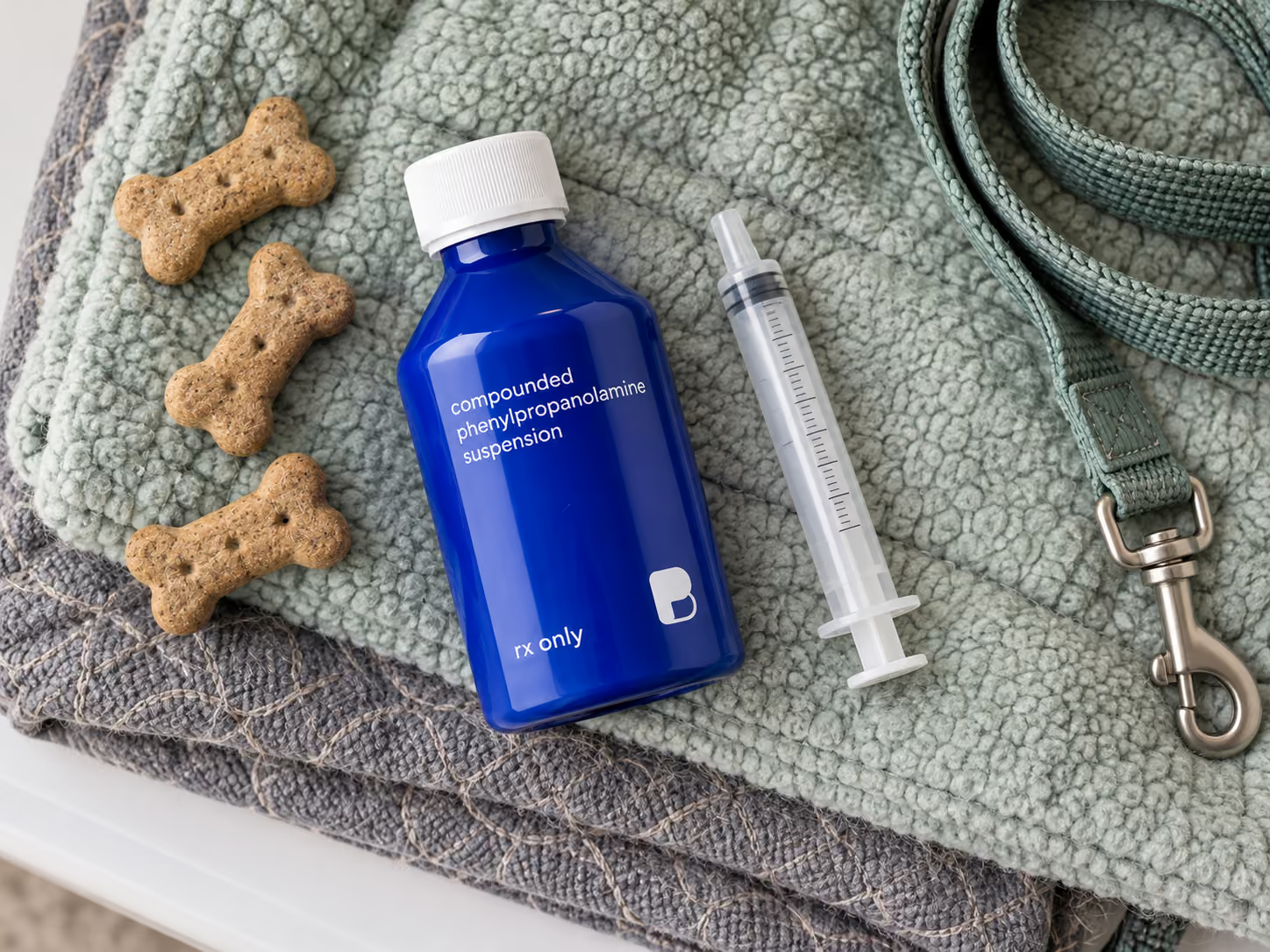
Flatlay of compounded phenylpropanolamine suspension with an oral syringe, dog biscuits and a leash, prepared by Bayview Pharmacy

On this page

Send this prescription to Bayview

Veterinarians can send prescriptions for phenylpropanolamine, potassium citrate, or prazosin through a veterinary e-prescribing platform, by fax at 401-284-4506, or by phone at 401-284-4505. Include the species, breed, and current weight. Pet owners can ask their veterinarian to send the prescription to Bayview Pharmacy.

Information for veterinarians
Compounded phenylpropanolamine, potassium citrate and prazosin beside a shipping box ready to pack, from Bayview Pharmacy

Need a different liquid for your pet?

If your veterinarian prescribes a medication your pet will not take as a tablet or capsule, we may be able to compound it as a flavored oral liquid to your veterinarian's order. Compounded preparations are prescription-only and are not FDA-approved.

Custom oral suspensions
Compounded potassium citrate solution and prazosin suspension beside pet bowls and untouched tablets, from Bayview Pharmacy

Personalized compounding for patients who need more than a standard option.

"As a compounding pharmacy, we prepare each medication to a provider’s exact specifications. My focus, and my team’s focus, is quality, consistency, and close communication with prescribers so patients receive medication prepared for their individual needs."
Ryan Dyer, RPh
Owner and Chief Pharmacist, Bayview Pharmacy
Smiling man in blue scrubs with arms crossed and pen behind his ear
Three clear liquid vials, white powder on spoon, two capsules, and a cream jar on a metal surface.
QUALITY AND TESTING

Held to a higher standard

Every preparation is made under strict quality controls, and verified by a licensed pharmacist.
We use validated quality processes and third-party testing where appropriate
Sterile compounding in a dedicated USP <797> cleanroom
Non-sterile compounding under USP <795> and <800> standards
USP/NF-grade ingredients from reputable, vetted suppliers

Why patients choose Bayview

Made to your prescription
Made in our own pharmacy
Quality tested
Real pharmacist support
Discreet, secure shipping
Trusted since 2006

Our formulations

Bayview Pharmacy prepares these urinary medications as oral liquids to the strength your veterinarian orders. The strengths below are the ones we currently prepare, and other strengths and flavors are compounded to your veterinarian's exact order.

Medication Forms and strengths Commonly ordered for Notes
Phenylpropanolamine HClFlavored oral suspension, 10, 25, or 50 mg/mLUrine leaking from urethral sphincter weakness, most often in spayed female dogsMeasured by oral syringe; store in a secured place away from pets and children
Potassium citrateOral solution, 500 mg/mLMaking urine less acidic in dogs and cats with calcium oxalate stones and persistently acidic urineOften given with food; your veterinarian may ask you to check urine pH at home
PrazosinOral suspension, 1 mg/mLRelaxing the urethra in some dogs and cats with urethral spasmSmall doses measured by oral syringe
Custom strength or formAs orderedOther strengths or flavors your veterinarian prescribesCompounded to your veterinarian's exact order

Forms and strengths are listed for education only and are not a statement that any option is better, stronger, or more effective. A prescription from a licensed veterinarian is required, and your veterinarian determines which preparation, amount, and schedule are appropriate for your pet. These are compounded medications and are not FDA-approved.

Start with a prescription
Phenylpropanolamine 10 mg/mL | Phenylpropanolamine HCl 10 mg/mL flavored oral suspension (flavor: ___) | 30 mL | Give ___ mL by mouth | | Every 12 hours Phenylpropanolamine 25 mg/mL | Phenylpropanolamine HCl 25 mg/mL flavored oral suspension (flavor: ___) | 60 mL | Give ___ mL by mouth | | Every 12 hours Phenylpropanolamine 50 mg/mL | Phenylpropanolamine HCl 50 mg/mL flavored oral suspension (flavor: ___) | 60 mL | Give ___ mL by mouth | | Every 12 hours Potassium citrate oral solution | Potassium citrate ___ mg/mL oral solution (500 mg/mL) | 420 mL | Give ___ mL by mouth with food | | Every 12 hours Prazosin oral suspension | Prazosin ___ mg/mL oral suspension (1 mg/mL) | | Give ___ mL by mouth | | Every 8 to 12 hours
Urinary Incontinence & Stone Medications for Pets

For prescribers

How to e-prescribe this formulation

Bayview accepts e-prescriptions from any Surescripts-connected EHR. Compounded preparations have no NDC, so they will not appear in your drug search. Choose the preparation below and copy the prescription into your EHR.

Patient? Send these instructions to your doctor's office.
  1. Find Bayview in your EHR's pharmacy directory

    Search by NCPDP 4106882, or by name and ZIP: Bayview Pharmacy, Warwick, RI 02886. Save it as a favorite so you never search again.

  2. Choose the preparation

    Name the preparation exactly as listed under Our formulations above: each active ingredient and strength, the dose form, the quantity, and the directions.

  3. Enter it as a compound

    Use your system's compound, non-formulary, or free-text prescription entry and paste the details. If your EHR forces you to pick a listed drug, pick the closest entry for the active ingredient and put the full formula in the prescription body (the Sig or directions field).

  4. Send it

    Transmit from your EHR. Prefer not to e-prescribe? For non-controlled preparations we also accept fax to (401) 284-4506 and phoned orders at (401) 284-4505. Order forms are in the Prescribers: download order form menu above.

Do not use Notes to Pharmacy for the formula. Some EHRs keep that field internal and never transmit it. A prescription that arrives without the formula is delayed while we call your office.

Compounded preparations are not FDA-approved. A valid prescription is required. Questions: call (401) 284-4505. Full e-prescribing guide

Frequently asked questions

What causes urinary incontinence in dogs?

The most common reason a dog's bladder fails to hold urine is urethral sphincter mechanism incompetence, a weakness of the muscle that keeps the urethra closed. It most often affects spayed female dogs, can appear in middle age or later, and usually shows up as leaking while sleeping or lying down (Merck Veterinary Manual). Leaking can have other causes, including a urinary tract infection, nerve disease, or a malformation, so your veterinarian works out the cause before choosing a medication.

Is there an FDA-approved medication for incontinence in dogs?

Yes. Phenylpropanolamine chewable tablets (Proin) and extended-release tablets (Proin ER) are FDA-approved for incontinence caused by weak urethral sphincter tone in dogs (FDA), and estriol tablets (Incurin) are approved for estrogen-responsive incontinence in spayed female dogs (INCURIN label). Bayview's compounded phenylpropanolamine liquid is not FDA-approved and is not the same as, or a generic of, those products. Your veterinarian may prescribe it when an approved product is not suitable for your dog, for example when a liquid form or a strength the tablets do not offer is needed.

How do I give my pet a liquid medication?

Shake suspensions well, then measure the dose with the oral syringe that comes with the medication, never a kitchen spoon. Your veterinarian sets the dose and schedule. Potassium citrate is often given in food (Merck Veterinary Manual), and your veterinarian may ask you to check your pet's urine pH at home with test strips while the dose is adjusted (Minnesota Urolith Center). If you miss a dose or your pet spits some out, ask your veterinarian before giving extra.

Is phenylpropanolamine a risk to people or other pets in my home?

It can be. The veterinary labels say phenylpropanolamine is not for human use and must be kept out of reach of children, and FDA asked drug companies to stop marketing it for people because of a risk of bleeding into the brain (FDA). Dogs have also overdosed after chewing through closed bottles of the flavored tablets, so store any phenylpropanolamine in a secured place away from dogs, cats, and other animals (PROIN label). If a person swallows it, contact a physician or Poison Control at 1-800-222-1222; if a pet does, call your veterinarian or an emergency animal hospital.

What side effects should I watch for?

With phenylpropanolamine, watch for vomiting, poor appetite, weight loss, increased thirst, restlessness, or irritability, and call your veterinarian right away for a seizure, tremors, stumbling, or collapse. It can also raise blood pressure (PROIN label). Potassium citrate can reduce appetite and raise blood potassium (Minnesota Urolith Center). Prazosin lowers blood pressure, so tell your veterinarian about weakness or fainting. Any cat that strains to urinate or passes little or no urine needs care right away, because a blocked urethra can be fatal in less than 24 to 48 hours (Cornell Feline Health Center).

Can potassium citrate dissolve my pet's bladder stones?

No. Calcium oxalate stones cannot be dissolved with medication or diet, and stones that cause problems are removed (ACVIM consensus; Cornell Feline Health Center). Potassium citrate is used in some dogs and cats whose urine stays acidic, as part of a prevention plan that also covers diet and water intake. Your veterinarian decides whether it fits your pet and follows progress with urine tests.

Do I need a prescription?

Yes. All of our medications require a valid prescription from a licensed provider. We're a dispensing and compounding pharmacy, so we don't provide consultations or write prescriptions. If you don't have one yet, you'll need to see a provider first.

What is compounding?

Compounding is the practice of preparing a medication tailored to an individual patient's prescription. Instead of a mass-produced product, a compounding pharmacy makes the medication to the specific strength, form, or combination your provider orders.

Examples on this site include medications compounded as liquids for people who cannot swallow pills, thyroid capsules made to a T3/T4 ratio no manufactured product offers, and all-purpose nipple ointment, which combines three actives that are not sold together commercially.

Are compounded medications FDA-approved?

Compounded medications are not FDA-approved. They're prepared by a licensed pharmacy pursuant to a valid prescription for an individual patient, under USP standards. The FDA does not review compounded medications for safety or effectiveness.

How do providers send a prescription to Bayview?

Providers can submit a prescription three ways:

  • E-prescribe: Search Bayview Pharmacy, Warwick, RI (NCPDP 4106882) in your EHR. For compounds, use the compound, custom, or free-text option and include the full formulation, strength, quantity, refills, and directions.
  • Fax: Send a signed order to 401-284-4506 (alt. 401-210-2757) with patient and prescriber details, medication, quantity, refills, directions, signature, and date.
  • Phone: Call 401-284-4505 to submit, clarify, or coordinate refills.

A valid prescription is required, and compounded medications are not FDA-approved.

‍

Can you fill a prescription from my own provider?

Yes. Your provider can send your prescription to Bayview Pharmacy by e-prescribe, fax, or phone, or you can transfer an existing prescription from another pharmacy.

How does shipping work?

Once your prescription is verified, we prepare your medication and ship it discreetly in plain packaging either via UPS or USPS. A pharmacy technician confirms the details with you before it goes out, and we're available if you have any questions.

How do refills and automatic refills work?

Refills are coordinated with your prescriber and your prescription. You can request a refill through our website or by calling us, and we'll handle the rest as long as you have refills remaining on a valid prescription. You can also opt into automatic refills on non-controlled substances, with no need to worry about running out of your medication. We can either ship it to you automatically, or ready for pickup.

Shipping & Delivery

Every prescription ships directly to your door in discreet packaging. Refrigerated medications travel in insulated coolers with ice packs to stay cold in transit.

Delivery AreaStandard ShippingRefrigerated Shipping
Rhode Island, Massachusetts & Connecticut$9 USPS$20 UPS
New Hampshire, New Jersey, Pennsylvania, Maine & New York (limited basis)$15 UPS$40 UPS Next Day Air
Florida$15 UPS$80 UPS Next Day Air

Need it faster? Expedited UPS is $15 for Rhode Island, Massachusetts and Connecticut. Your pharmacist will let you know if your medication needs refrigerated shipping. Questions? Call us at (401) 284-4505.

References

Sources reviewed

The medical information on this page draws on the following sources, which are also linked where cited.

  1. U.S. Food & Drug Administration, Center for Veterinary Medicine. FDA Approves PROIN ER Tablets for Controlling Urinary Incontinence in Dogs.
  2. DailyMed (U.S. National Library of Medicine). PROIN 25 (phenylpropanolamine hydrochloride chewable tablets) label.
  3. DailyMed (U.S. National Library of Medicine). PROIN ER (phenylpropanolamine hydrochloride extended-release tablets) label.
  4. DailyMed (U.S. National Library of Medicine). INCURIN (estriol tablets) label.
  5. Merck Veterinary Manual. Disorders of Micturition in Dogs and Cats.
  6. Merck Veterinary Manual. Controlling Urine pH in Animals.
  7. Lulich JP, et al. Journal of Veterinary Internal Medicine. ACVIM Small Animal Consensus Recommendations on the Treatment and Prevention of Uroliths in Dogs and Cats.
  8. Minnesota Urolith Center, University of Minnesota College of Veterinary Medicine. How to adjust potassium citrate to minimize calcium oxalate.
  9. Cornell Feline Health Center. Feline Lower Urinary Tract Disease.
  10. U.S. Food & Drug Administration. FDA Issues Public Health Warning on Phenylpropanolamine.
  11. DailyMed (U.S. National Library of Medicine). UROCIT-K (potassium citrate) extended-release tablets label.
  12. Hearne R. Veterinary Evidence. The efficacy of administration of prazosin in reducing the risk of recurrent urethral obstruction in male cats.
  13. MedlinePlus (U.S. National Library of Medicine). Prazosin.
  14. DailyMed (U.S. National Library of Medicine). Prazosin hydrochloride capsules label.
  15. U.S. Food & Drug Administration. Animal Medicinal Drug Use Clarification Act of 1994 (AMDUCA).
  16. U.S. Food & Drug Administration. Animal Drug Compounding.

Important safety information

Important safety information

Phenylpropanolamine, potassium citrate, and prazosin from Bayview Pharmacy are compounded veterinary medications and are not FDA-approved. Each is prescription-only and is prepared for one animal on a licensed veterinarian's prescription. Safety points differ by medication, so they are grouped by medication below.

Do not give these medications to your pet if

  • Your veterinarian has not prescribed the medication for your pet, or it was prescribed for a different animal
  • Your pet has had an allergic reaction to the medication or to any ingredient in it

Warnings and precautions

  • Give exactly as your veterinarian directs, and do not change the dose or stop the medication on your own
  • Phenylpropanolamine can raise blood pressure. Tell your veterinarian if your dog has heart disease, high blood pressure, liver disease, kidney problems, diabetes, or glaucoma
  • Phenylpropanolamine can interact with stimulant-type (sympathomimetic) medications, tricyclic antidepressants, and MAO inhibitors, so tell your veterinarian about every medication and supplement your dog takes
  • Phenylpropanolamine can hide the signs of a urinary tract infection and does not help leaking caused by nerve disease or a malformation, so your veterinarian looks for other causes of leaking
  • Phenylpropanolamine is not for human use, and its use in breeding, pregnant, or nursing dogs has not been evaluated
  • Potassium citrate can raise blood potassium. It is used with caution in pets that are dehydrated or have kidney disease, diabetes, or Addison's disease (hypoadrenocorticism), and your veterinarian may check bloodwork and ask you to test urine pH at home
  • Prazosin lowers blood pressure. In people it can cause dizziness or fainting, most often after the first dose or a dose increase

Common side effects

  • Phenylpropanolamine: vomiting, diarrhea, poor appetite, weight loss, increased thirst, restlessness, or irritability
  • Potassium citrate: poor appetite, and a rise in blood potassium that your veterinarian may check with bloodwork
  • Prazosin: tiredness, diarrhea, or poor appetite

Call your veterinarian right away if

  • Your pet strains to urinate, passes little or no urine, or cries out while urinating. In cats, especially male cats, a blocked urethra is an emergency that can be fatal in less than 24 to 48 hours
  • Your pet has a seizure, tremors, stumbling, collapse, or a sudden change in behavior such as aggression
  • Your pet seems weak or faint, especially after a first dose or a dose change
  • Your pet has repeated vomiting, refuses food, seems to have belly pain, or has blood in vomit or stool
  • Your pet, another animal, or a person swallows more than the prescribed amount. For a person, contact a physician or Poison Control at 1-800-222-1222; for a pet, contact your veterinarian or an emergency animal hospital

Storage

  • Store as directed on the label, keep the container tightly closed, and shake suspensions well before each dose
  • Keep phenylpropanolamine in a secured place out of reach of dogs, cats, and other animals; the approved labels report overdoses in dogs that chewed through closed bottles of the flavored tablets
  • Keep all medications out of reach of children and other pets, and do not use them past the beyond-use date

This is a compounded prescription medication and is not approved by the FDA. Use it only under the supervision of a licensed provider, exactly as prescribed. Do not adjust your dose without talking to your prescriber. Seek emergency care for any severe or unexpected reaction. This information is not complete; talk to your provider about your full medical history and all medications you take.

Ready to get started?

Send us your prescription and a Bayview pharmacist will take it from there.