


In Stock
Budesonide Sinus Rinse Capsules | Compounded | Bayview Pharmacy

Budesonide Sinus Rinse Capsules

Smiling man in blue pharmacist scrubs with arms crossed and pen behind his ear.
Medically reviewed by Ryan Dyer, RPh
Last updated on
July 23, 2026
  • Adds an anti-inflammatory steroid to your saline sinus rinse
  • Pre-measured 0.6 mg capsules — just open and mix, nothing to measure
  • Studied for chronic sinus inflammation, especially after sinus surgery
  • Delivers the steroid directly where the rinse reaches

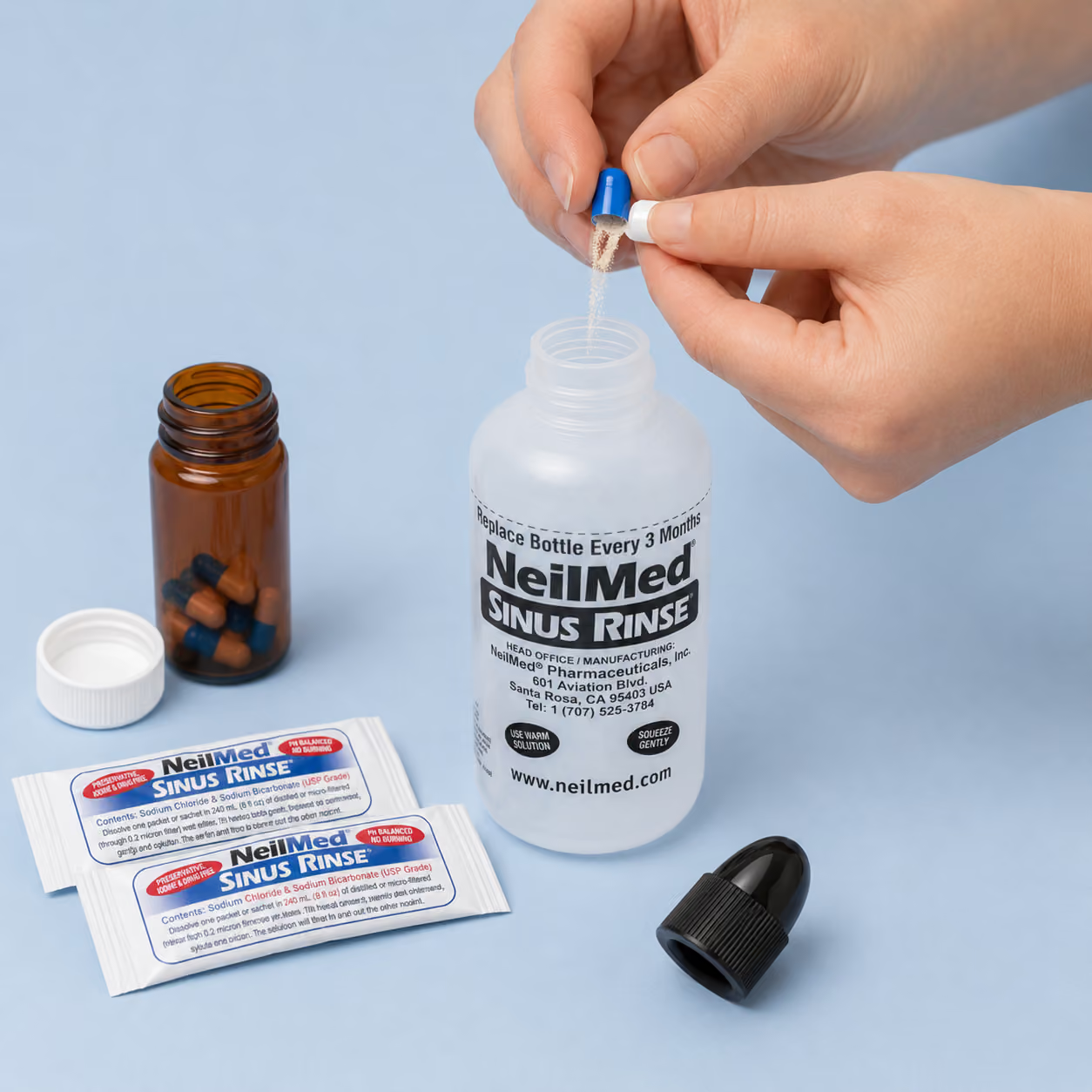
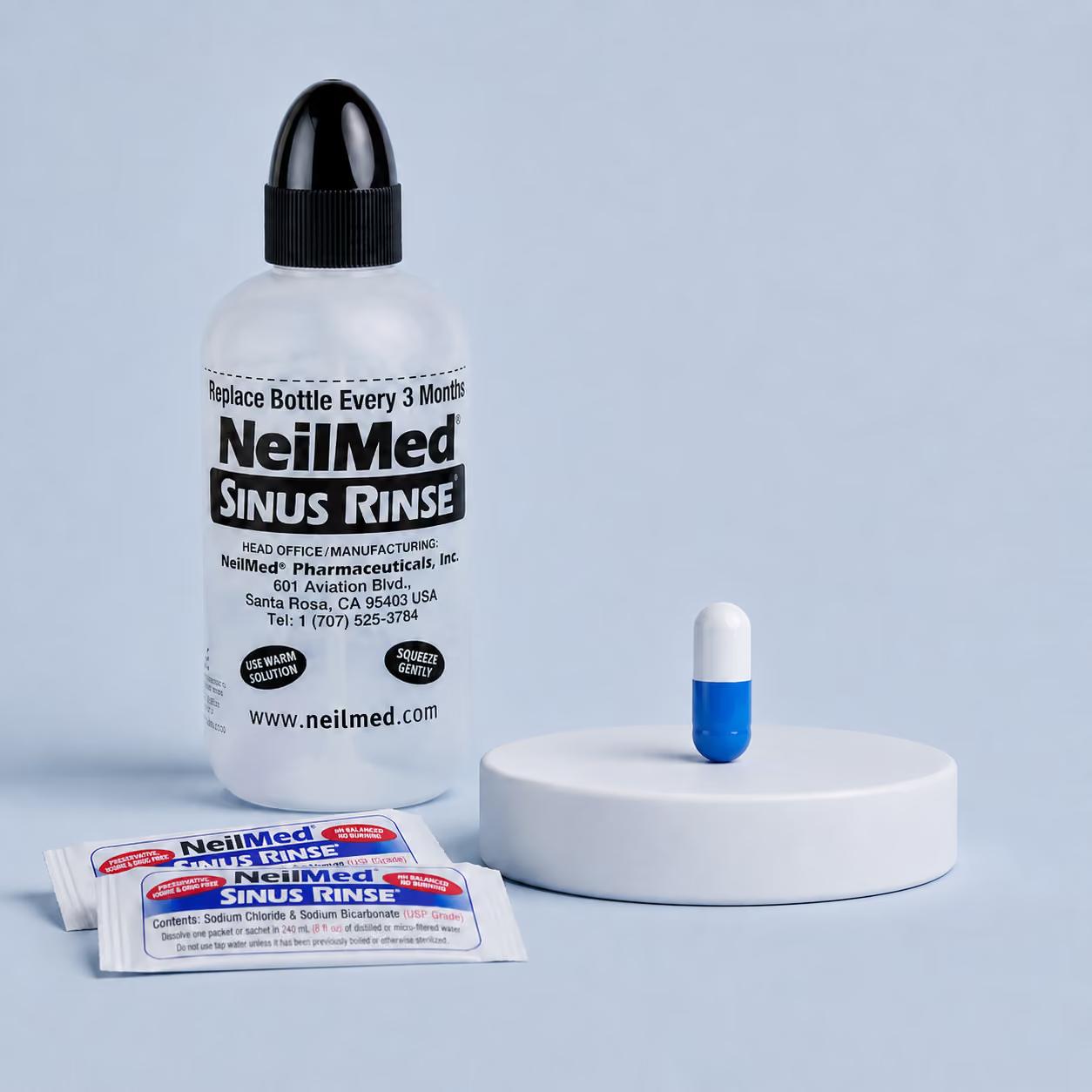
Budesonide capsules for nasal irrigation are a compounded, prescription preparation of budesonide, a corticosteroid. Each capsule holds a measured dose of powder that the patient dissolves into a saline sinus rinse, such as a NeilMed Sinus Rinse, or a nebulizer, delivering the anti-inflammatory medication to the lining of the nose and sinuses. Bayview most often compounds these at 0.6 mg, with other strengths to a provider's order.

Budesonide is FDA-approved in other forms, but no budesonide product is made to be added to a sinus rinse, so this preparation is compounded and the use is off-label. Compounded medications are not FDA-approved, and a valid prescription is required.

What are budesonide capsules for nasal irrigation?

They are compounded, prescription capsules that hold a measured dose of budesonide, a corticosteroid, in a dissolvable powder. You open a capsule and mix the powder into a saline sinus rinse, such as a NeilMed bottle, or a nebulizer, so the anti-inflammatory medication reaches the lining of your nose and sinuses. Bayview most often makes these at 0.6 mg.

What is it used for?

Providers most often prescribe budesonide sinus rinses for chronic rhinosinusitis, ongoing inflammation of the nose and sinuses, especially when nasal sprays and plain saline rinses have not been enough, and often after sinus surgery. Studies show the clearest benefit in people with nasal polyps or prior sinus surgery. Only your provider can decide whether it is appropriate for you.

Trusted by 105,826 patients to date.
A group of faces of our past satisfied patients.
Compounded medications are prepared pursuant to a valid prescription for an individual patient and are not FDA-approved. This page is for educational purposes and is not medical advice.
**The FDA does not review or approve compounded medications for safety or effectiveness. A valid prescription from a licensed practitioner is required.
Important safety information →

Internal Pricing

This is internal data that only pharmacy staff can see.

INTERNAL — PRICING REFERENCE · DO NOT PUBLISH TO PATIENTS

Based on 33 cash fills in 2025 (cash, autofill, and pickup/cash autofill; insurance-adjudicated fills excluded). Usual is the most commonly charged price for that product and quantity; the range reflects discounts, autofill pricing, and mid-year price changes.

ProductQtyUsual2025 rangeFills
BUDESONIDE 0.6MG CAPSULES SIZE #1 (XYLIFOS™/LOXASPERSE™) NASONEB60 capsul$134.72$110–$134.725
BUDESONIDE 0.6MG CAPSULES SIZE #1 (XYLIFOS™/LOXASPERSE™) NEILMED *60 capsules$135.96$70–$140.9623
BUDESONIDE 0.6MG CAPSULES SIZE #1 (XYLIFOS™/LOXASPERSE™) NEILMED *180 capsules$180$1802

+ 3 additional low-volume combinations (3 fills) not shown — check the dispensing system before quoting anything unusual.

Starting price shown on the page: $134.72 (60 capsul). Compiled July 2026 from 2025 dispensing data. Confirm current pricing for special orders, unusual quantities, or compounded-to-order strengths before quoting.

Getting your prescription filled is simple

Send us your prescription

STEP
1
Have your provider e-prescribe to Bayview, fax it to us, or call it in directly to one of our pharmacists.
A thin blue light beam connecting two clear glass slabs on a white surface.

A pharmacist reviews it

STEP
2
We verify your prescription and prepare your medication to your provider's exact instructions.
Close-up of a white dial with blue measurement markings and a rotating knob.

We compound & ship

STEP
3
We prepare your medication and ship it discreetly to your door, with support when you need it.
Close-up of a gray box with a precise blue line running along its folded edges.

What is Budesonide Sinus Rinse Capsules?

Budesonide capsules for nasal irrigation are a compounded, prescription preparation of budesonide, a corticosteroid (anti-inflammatory) medication. Each capsule holds a measured dose of budesonide in a dissolvable powder base. The patient opens the capsule and mixes the powder into a saline sinus rinse, such as a NeilMed Sinus Rinse bottle, or into a nebulizer, so the medication is delivered directly to the lining of the nose and sinuses. Bayview most often compounds these as 0.6 mg capsules, and other strengths can be prepared to a provider's order.

Budesonide is FDA-approved in other forms, such as an inhaled suspension for asthma and a nasal spray for allergies, but there is no FDA-approved budesonide product made to be added to a sinus rinse. Using budesonide this way is an off-label approach that providers, most often ENT specialists, may choose for ongoing sinus inflammation, and it relies on a compounding pharmacy to prepare the measured capsules.

Budesonide sinus rinse capsules are compounded, and this use is off-label. Budesonide is an FDA-approved corticosteroid in other forms, but the capsules made to dissolve in a sinus rinse or nebulizer are a compounded preparation, and delivering budesonide by nasal irrigation is off-label. Compounded medications are not FDA-approved. A valid prescription is required, and only your provider can determine whether this approach is appropriate for you.

How does it work?

Budesonide is a corticosteroid. Corticosteroids calm inflammation, and in the nose and sinuses that means less swelling of the lining, which can improve congestion, drainage, and pressure. Rinsing with budesonide adds an anti-inflammatory medication to a saline rinse that is already clearing mucus and irritants, delivering it across the sinus lining. Distributing the medication this way works best when the sinuses are open, which is why it is used most often after endoscopic sinus surgery (Tait et al., randomized trial). Because it acts mainly on the surface it contacts, only small amounts are absorbed into the rest of the body, though some absorption does occur.

What is it used for?

Providers most often prescribe budesonide sinus rinses for chronic rhinosinusitis, meaning inflammation of the nose and sinuses lasting twelve weeks or longer, especially when nasal sprays and saline rinses alone have not controlled the symptoms, and often after sinus surgery. Studies have found that adding budesonide to saline irrigation improves the appearance of the sinus lining and symptom scores, with the clearest benefit in people who have nasal polyps or who have had prior sinus surgery, since surgery lets the rinse reach more of the sinus cavity (Tait et al.; Jiang et al.). Only a licensed provider can decide whether this approach is right for a person; Bayview Pharmacy does not provide consultations or determine appropriateness, and a valid prescription is required.

Why capsules for a rinse?

The capsule is a convenient, measured way to add budesonide to a rinse. Instead of measuring liquid respules, the patient opens one capsule and empties the powder into the saline bottle. The powder base (a dissolving and dispersing blend) is designed to mix into water for intranasal use, and a capsule is easy to store and has a longer shelf life than a pre-mixed liquid, which can make a daily routine easier to keep up. The table below describes the delivery options for education only.

DeliveryHow it's usedNotes
Saline sinus rinseCapsule contents dissolved in a rinse bottle (for example NeilMed), then rinsed through the noseLarge-volume rinse; distributes best when the sinuses are open
NebulizerCapsule contents dissolved and delivered as a mist with a nasal nebulizer deviceSmaller particles; used with a device as the provider directs

Delivery options are described for education only and are not a statement that any option is better or more effective. Your provider sets the strength, delivery method, and schedule that are appropriate for you.

How is it used?

Use it exactly as your provider directs. A common approach is to dissolve the contents of one capsule in a saline sinus rinse once or twice daily, often after first clearing the nose with a plain saline rinse. Mix a fresh rinse each time, use lukewarm distilled, sterile, or previously boiled and cooled water for the saline (never untreated tap water), and lean over a sink and breathe through your mouth while you rinse. Rinse the bottle or nebulizer parts and let them air dry between uses. Because it treats ongoing inflammation, budesonide rinses are often continued for many weeks or months; keep your follow-up appointments, and do not change your dose or stop on your own. A Bayview pharmacist is available if you have questions about your prescription.

Side effects & safety

Rinsing with budesonide is generally well tolerated, and long-term use has been studied as safe for most people (Smith et al., safety analysis). The most common effects are local, such as nasal irritation or stinging, dryness, mild nosebleeds, or throat irritation if the rinse drips back. As with any corticosteroid, budesonide is absorbed in small amounts, so providers may monitor people who use it at higher doses or for a long time, because corticosteroids can affect the body's own steroid balance (the HPA axis) and, with long-term steroid exposure generally, can affect eye pressure (Smith et al.).

Tell your provider about all medications you take, including other corticosteroids (inhaled, nasal, oral, or on the skin) and certain antifungal or antiviral medications that can raise budesonide levels, and share your full medical history so they can decide whether it is appropriate for you.

Do not use untreated tap water for nasal rinses. Always use distilled, sterile, or previously boiled and cooled water to mix a nasal rinse. Untreated tap water can rarely carry organisms that are dangerous when they reach the nose and sinuses. Follow the water and cleaning instructions for your rinse device.

Seek care for signs that an infection is not improving or is worsening, such as increasing facial pain or pressure, fever, or thick discolored drainage, and contact your provider about any reaction that concerns you.

Who should not use it?

Budesonide sinus rinses are not appropriate for everyone. They should not be used by people who are allergic to budesonide or to any ingredient in the capsule. They are used with caution in people who have an untreated infection in the nose or sinuses, recent nasal surgery or injury before the provider clears rinsing, or conditions where corticosteroids need close monitoring, such as diabetes, glaucoma, or a suppressed immune system. Tell your provider about certain antifungal and antiviral medicines that can increase budesonide levels in the body. If you are pregnant, planning to become pregnant, or breastfeeding, talk with your provider. Share your full medical history and all medications you take so your provider can determine whether this formulation is appropriate for you.

How should it be stored?

Store the capsules exactly as directed on your label, at room temperature and away from heat, light, and moisture, with the container tightly closed so the powder stays dry. Mix each rinse fresh and do not store leftover mixed solution unless your pharmacist directs otherwise. Keep the capsules out of the reach of children and others in the home, and do not share them. Do not use them after the beyond-use date, and dispose of unused medication as directed.

Why is this compounded?

Budesonide is manufactured as an inhaled suspension and a nasal spray, but no company makes a budesonide product designed to be measured into a saline sinus rinse or nasal nebulizer. Compounding lets a licensed pharmacy prepare budesonide as measured capsules, at the strength a provider selects, in a base made to dissolve and disperse in water for intranasal use. As a 503A compounding pharmacy, Bayview Pharmacy prepares each order in small batches under USP <795> standards using quality ingredients. Compounded preparations are not FDA-approved, and this use is off-label.

Clinical details for prescribers

Regulatory status. Budesonide is not a controlled substance. It is FDA-approved as budesonide inhalation suspension (Pulmicort Respules) and intranasal spray (Rhinocort), among other forms; there is no FDA-approved budesonide product formulated for saline sinus irrigation or nasal nebulization. Compounded budesonide capsules for irrigation are a 503A preparation, and delivery by nasal irrigation is off-label. Compounded preparations are not FDA-approved.

Formulation. Compounded as budesonide capsules (commonly 0.6 mg; other strengths to order) in a dissolution/dispersion powder base intended for reconstitution in large-volume saline irrigation or nebulization. Reported regimens use roughly 0.5 mg to 2 mg budesonide per irrigation, once or twice daily; contents of one capsule are dispersed in the saline rinse. Distribution to the sinuses is markedly improved in the post-surgical cavity.

Evidence and clinical points:

  • A double-blind RCT of budesonide added to large-volume low-pressure saline irrigation showed improvement in CRS outcomes vs. saline alone (Tait et al., 2018); benefit is greatest with nasal polyps and prior ESS
  • Post-ESS budesonide irrigation improves endoscopic scores and can reduce oral corticosteroid burden in CRS with asthma (Jiang et al.)
  • Long-term budesonide irrigation is generally safe, though asymptomatic HPA-axis suppression can occur in selected patients; consider monitoring with higher doses or prolonged use, and be alert to intraocular pressure with chronic corticosteroid exposure (Smith et al.)
  • Budesonide is a CYP3A4 substrate; strong inhibitors (e.g., azole antifungals, certain antivirals) can raise systemic exposure
  • Counsel on rinse water safety (distilled, sterile, or boiled-and-cooled) and device hygiene

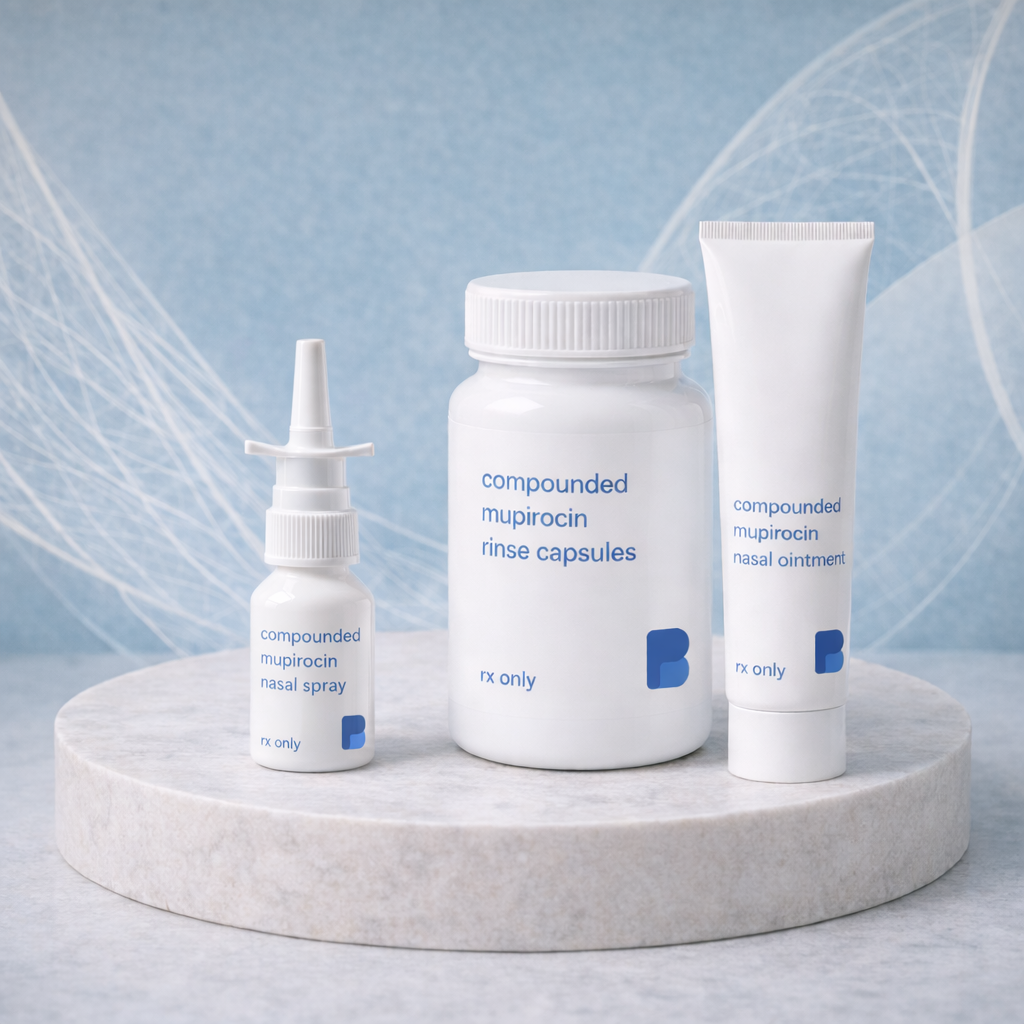
Budesonide is frequently co-compounded with an antibiotic (for example mupirocin, gentamicin, or clindamycin) in the same irrigation capsule for selected culture-directed cases. Background: MedlinePlus, Budesonide Oral Inhalation.

This is a prescription compounded medication and is not FDA-approved; delivery by nasal irrigation is off-label. This information is educational and is not medical advice. Your provider determines whether it is appropriate and sets the formulation and dose.

In Stock

On this page

Anti-inflammatory, delivered by rinse

Chronic sinus problems are driven by inflammation, swelling of the lining that blocks drainage and causes pressure and congestion. Budesonide is a corticosteroid that calms that inflammation. Adding it to a saline rinse delivers the medication across the sinus lining while the rinse itself clears mucus and irritants. Research shows the benefit is greatest when the sinuses are open, which is why providers often use it after sinus surgery and for people with nasal polyps.

Start with a prescription

A capsule you just open and mix

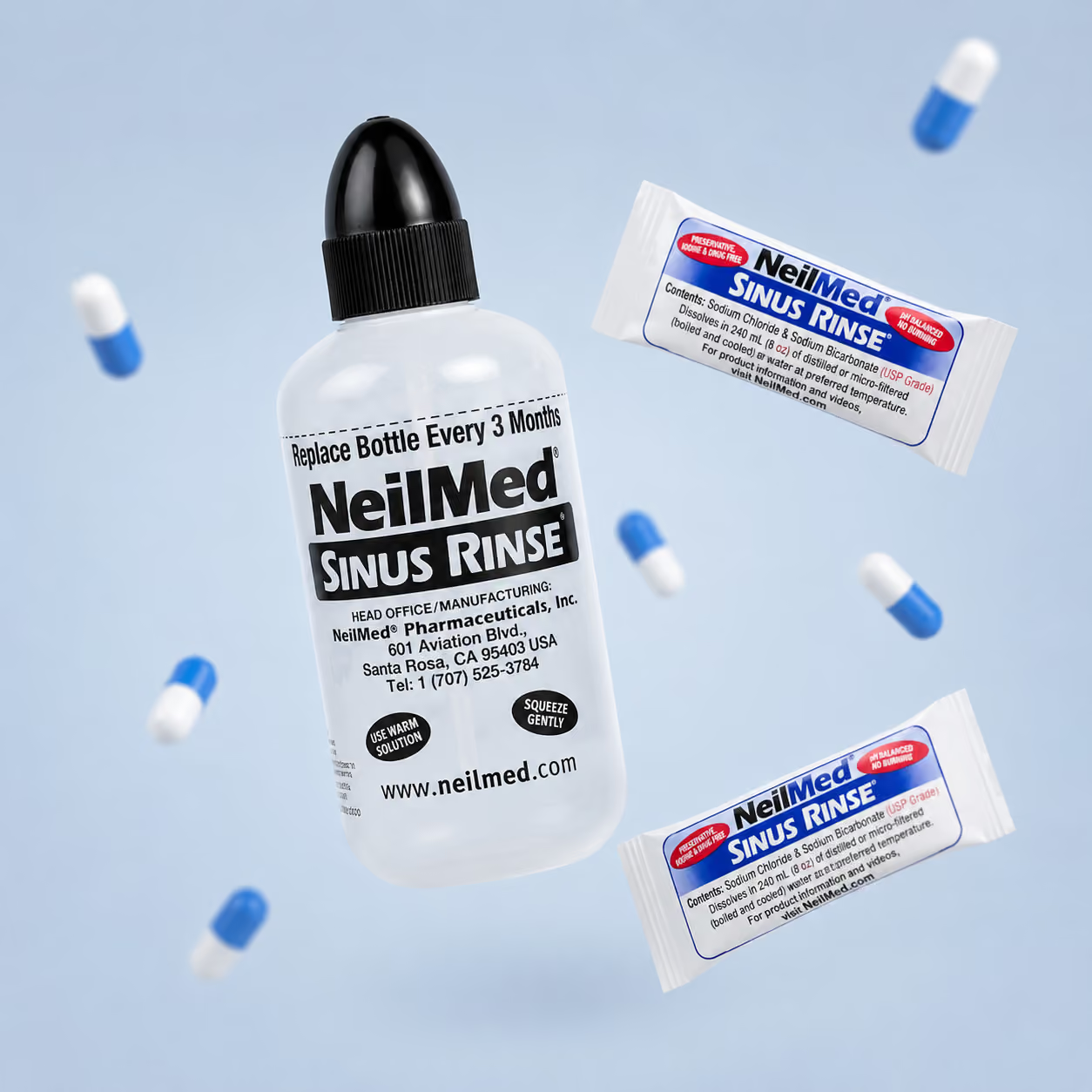
Instead of measuring a liquid, you open one capsule and empty the powder into your saline rinse bottle. The powder base is made to dissolve and disperse in water for use in the nose, and capsules store easily and last longer than a pre-mixed liquid, which can make a daily routine easier to keep up. Bayview most often prepares 0.6 mg capsules, and can compound other strengths, or add an antibiotic, to your provider's order.

View our formulas

Personalized compounding for patients who need more than a standard option.

"As a compounding pharmacy, we prepare each medication to a provider’s exact specifications. My focus, and my team’s focus, is quality, consistency, and close communication with prescribers so patients receive medication prepared for their individual needs."
Ryan Dyer, RPh
Owner and Chief Pharmacist, Bayview Pharmacy
Smiling man in blue scrubs with arms crossed and pen behind his ear
Three clear liquid vials, white powder on spoon, two capsules, and a cream jar on a metal surface.
QUALITY AND TESTING

Held to a higher standard

Every preparation is made under strict quality controls, and verified by a licensed pharmacist.
We use validated quality processes and third-party testing where appropriate
Sterile compounding in a dedicated USP <797> cleanroom
Non-sterile compounding under USP <795> and <800> standards
USP/NF-grade ingredients from reputable, vetted suppliers

Why patients choose Bayview

Made in our own pharmacy
Made to your prescription
Quality tested
Real pharmacist support
Discreet, secure shipping
Trusted since 2006

Our formulations

Budesonide is compounded as measured capsules that dissolve into a saline sinus rinse or nebulizer. Bayview most often prepares 0.6 mg capsules, and other strengths can be compounded to your provider's order. Your provider selects the strength, delivery method, and schedule that are appropriate for you.

Form Strength How it's used
Capsule (standard)0.6 mg budesonideContents dissolved in a saline sinus rinse or nebulizer
Capsule (other strengths)Compounded to orderPrepared at the strength your provider specifies

Budesonide can also be co-compounded with an antibiotic in the same irrigation capsule when a provider orders it. Strengths are listed for education only and are not a statement that any strength is better, stronger, or more effective. A valid prescription is required, and your provider determines the preparation, strength, and schedule that are appropriate for you. This is a compounded medication and is not FDA-approved; use by nasal irrigation is off-label.

Start with a prescription
Prescribers: download order form ↓

Frequently asked questions

What are budesonide capsules for nasal irrigation?

They are compounded, prescription capsules that hold a measured dose of budesonide, a corticosteroid, in a dissolvable powder. You open a capsule and mix the powder into a saline sinus rinse, such as a NeilMed bottle, or a nebulizer, so the anti-inflammatory medication reaches the lining of your nose and sinuses. Bayview most often makes these at 0.6 mg.

What is it used for?

Providers most often prescribe budesonide sinus rinses for chronic rhinosinusitis, ongoing inflammation of the nose and sinuses, especially when nasal sprays and plain saline rinses have not been enough, and often after sinus surgery. Studies show the clearest benefit in people with nasal polyps or prior sinus surgery. Only your provider can decide whether it is appropriate for you.

Why is it compounded, and why capsules?

Budesonide is FDA-approved as an inhaled suspension and a nasal spray, but no company makes a version designed to be added to a sinus rinse, so it is compounded, and this use is off-label. The capsule is a convenient, measured way to add it: you just open one and mix it into your rinse, and capsules store easily with a longer shelf life than a pre-mixed liquid. Compounded medications are not FDA-approved.

How do I use it?

Follow your provider's directions. A common approach is to dissolve the contents of one capsule in a saline rinse once or twice daily, often after a plain saline rinse first. Mix each rinse fresh with distilled, sterile, or previously boiled and cooled water, never untreated tap water. Lean over a sink, breathe through your mouth, and rinse. Clean and air-dry your bottle or nebulizer parts between uses.

Is it safe to use long term?

Budesonide rinses are generally well tolerated, and long-term use has been studied as safe for most people. Because it is a corticosteroid absorbed in small amounts, your provider may monitor you if you use a higher dose or use it for a long time. Tell your provider about other steroids you use and about antifungal or antiviral medicines that can raise budesonide levels. Use it only as prescribed.

Can it be combined with an antibiotic?

Yes. Providers sometimes order budesonide in the same irrigation capsule as an antibiotic such as mupirocin, gentamicin, or clindamycin, usually guided by a culture, for selected cases. Your provider decides whether a combination is appropriate and Bayview compounds it to that prescription.

What kind of water should I use?

Only distilled, sterile, or previously boiled and cooled water. Never mix a nasal rinse with untreated tap water, which can rarely carry organisms that are dangerous in the nose and sinuses. Follow the water and cleaning instructions that come with your rinse device.

What is compounding?

Compounding is the practice of preparing a medication tailored to an individual patient's prescription. Instead of a mass-produced product, a compounding pharmacy makes the medication to the specific strength, form, or combination your provider orders.

Do I need a prescription?

Yes. All of our medications require a valid prescription from a licensed provider. We're a dispensing and compounding pharmacy, so we don't provide consultations or write prescriptions. If you don't have one yet, you'll need to find and see a provider first.

Are compounded medications FDA-approved?

Compounded medications are not FDA-approved. They're prepared by a licensed pharmacy pursuant to a valid prescription for an individual patient, under USP standards. The FDA does not review compounded medications for safety or effectiveness.

How do providers send a prescription to Bayview?

Providers can submit a prescription three ways:

  • E-prescribe: Search Bayview Pharmacy, Warwick, RI (NCPDP 4106882) in your EHR. For compounds, use the compound, custom, or free-text option and include the full formulation, strength, quantity, refills, and directions.
  • Fax: Send a signed order to 401-284-4506 (alt. 401-210-2757) with patient and prescriber details, medication, quantity, refills, directions, signature, and date.
  • Phone: Call 401-284-4505 to submit, clarify, or coordinate refills.

A valid prescription is required, and compounded medications are not FDA-approved.

Can you fill a prescription from my own provider?

Yes. Your provider can send your prescription to Bayview Pharmacy by e-prescribe, fax, or phone, or you can transfer an existing prescription from another pharmacy. Start a request and we'll guide you through it.

How does shipping work?

Once your prescription is verified, we prepare your medication and ship it discreetly in plain packaging either via UPS or USPS. A pharmacy technician confirms the details with you before it goes out, and we're available if you have any questions.

How do refills and automatic refills work?

Refills are coordinated with your prescriber and your prescription. You can request a refill through our website or by calling us, and we'll handle the rest as long as you have refills remaining on a valid prescription. You can also opt into automatic refills on non-controlled substances, with no need to worry about running out of your medication. We can either ship it to you automatically, or ready for pickup.

References

Important safety information

Important safety information

Budesonide capsules for nasal irrigation are a prescription compounded medication and are not FDA-approved; delivering budesonide by sinus rinse or nebulizer is off-label. Budesonide is a corticosteroid that acts mainly on the lining of the nose and sinuses, and it is absorbed into the rest of the body only in small amounts. Use it only as prescribed and under the care of your provider.

Do not use budesonide sinus rinse capsules if you:

  • Are allergic to budesonide or to any ingredient in the capsule.
  • Have an untreated infection in the nose or sinuses, unless your provider directs otherwise.

Warnings and precautions:

  • Use only safe water. Mix rinses with distilled, sterile, or previously boiled and cooled water, never untreated tap water.
  • Tell your provider about other corticosteroids you use (inhaled, nasal, oral, or on the skin), since they add up, and about antifungal or antiviral medicines that can raise budesonide levels.
  • Long-term or higher-dose use may need monitoring. Corticosteroids can affect the body's own steroid balance and, over time, eye pressure.
  • Use exactly as directed, and do not change your dose or stop on your own. If you are pregnant, planning to become pregnant, or breastfeeding, talk with your provider first.

Common side effects:

  • Nasal irritation or stinging, dryness, mild nosebleeds, or throat irritation if the rinse drips back.

Get medical care if you have:

  • Signs an infection is not improving or is worsening, such as increasing facial pain or pressure, fever, or thick discolored drainage.
  • Signs of a serious allergic reaction such as rash, swelling, or trouble breathing.

Also contact your provider for:

  • Vision changes, or any reaction that concerns you.

Storage:

Store capsules at room temperature as directed on the label, away from heat, light, and moisture, with the container tightly closed so the powder stays dry. Mix each rinse fresh and do not store leftover mixed solution unless your pharmacist directs otherwise. Keep the capsules out of the reach of children and others in the home, and do not share them. Do not use them after the beyond-use date, and discard unused medication as directed by your pharmacist.

This is a compounded prescription medication and is not approved by the FDA. Use it only under the supervision of a licensed provider, exactly as prescribed. Do not adjust your dose without talking to your prescriber. Seek emergency care for any severe or unexpected reaction. This information is not complete; talk to your provider about your full medical history and all medications you take.

Ready to get started?

Send us your prescription and a Bayview pharmacist will take it from there.