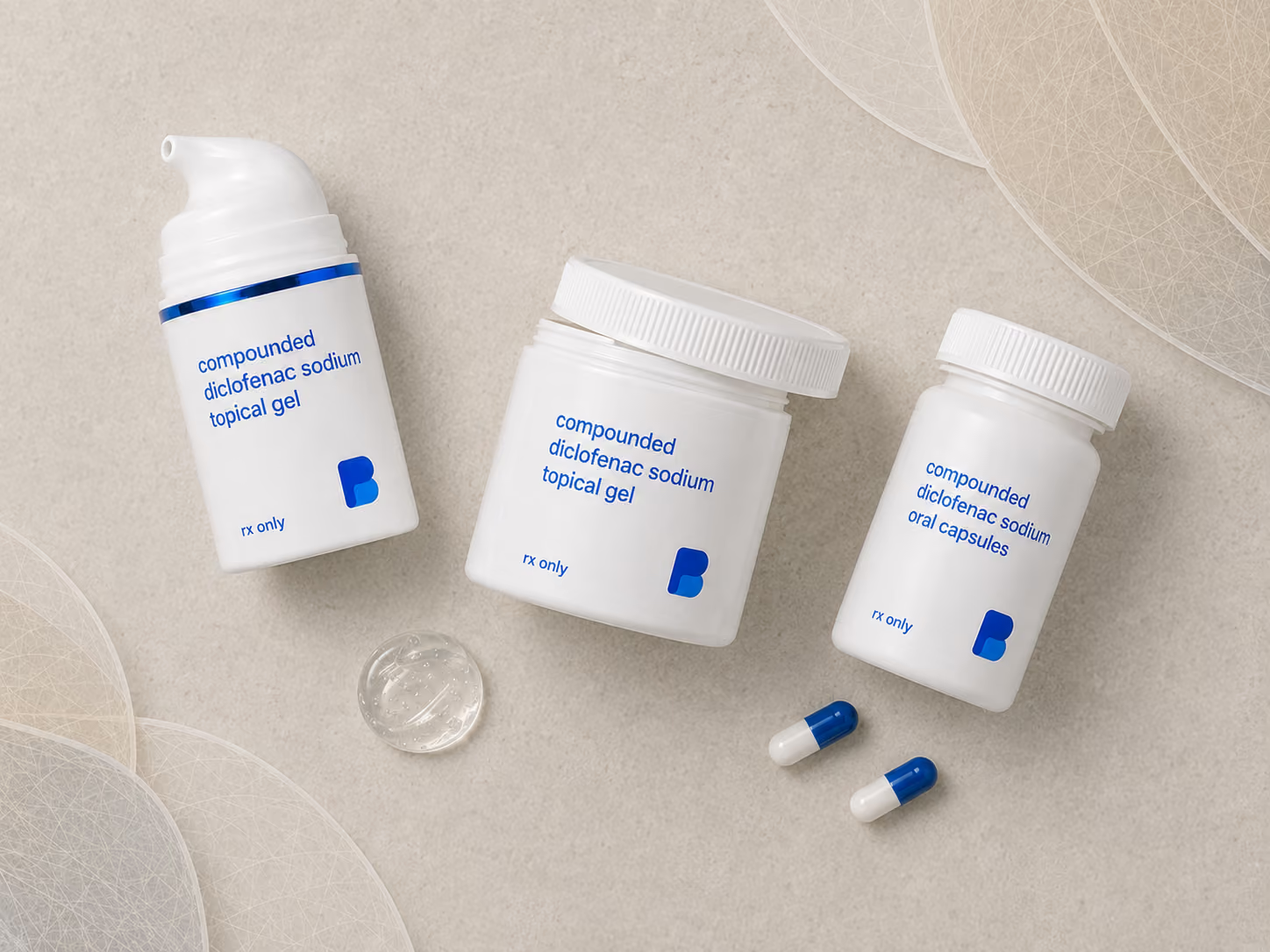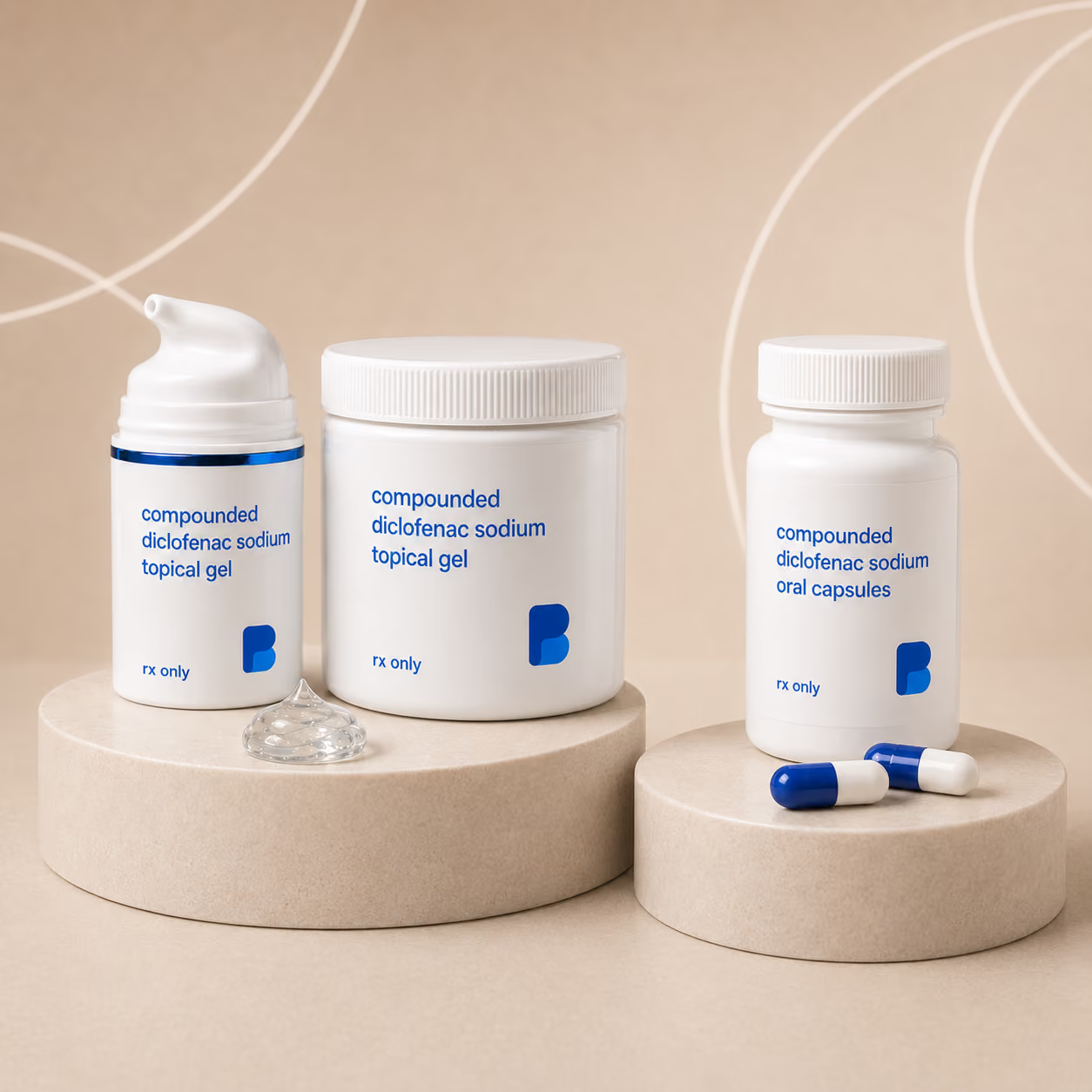






Diclofenac is a nonsteroidal anti-inflammatory drug (NSAID). Applied to the skin over a painful joint or muscle, it delivers most of its effect where it is rubbed in, with far less of the drug reaching the bloodstream than the same medicine taken by mouth. That is the whole reason topical NSAIDs exist.
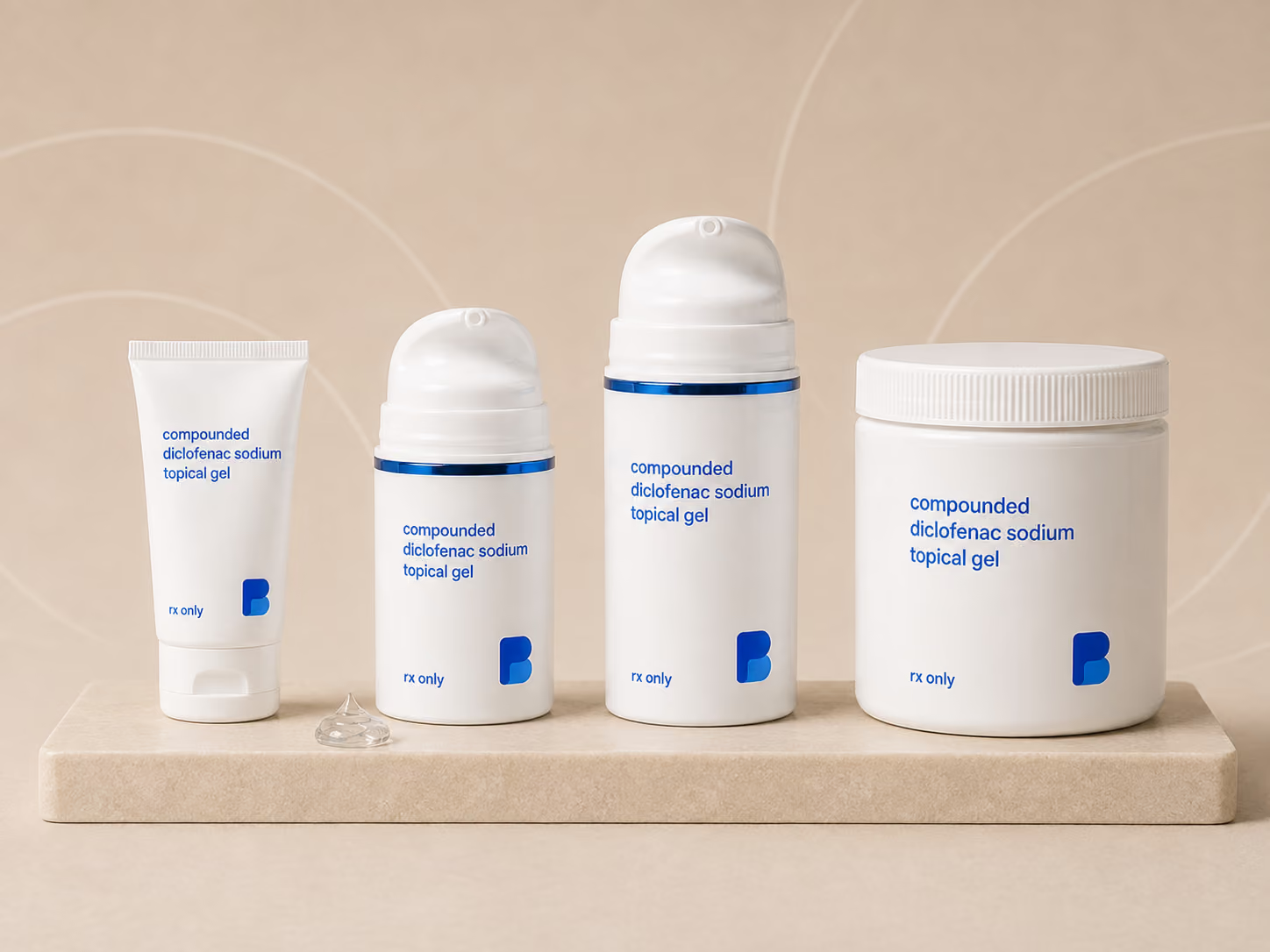
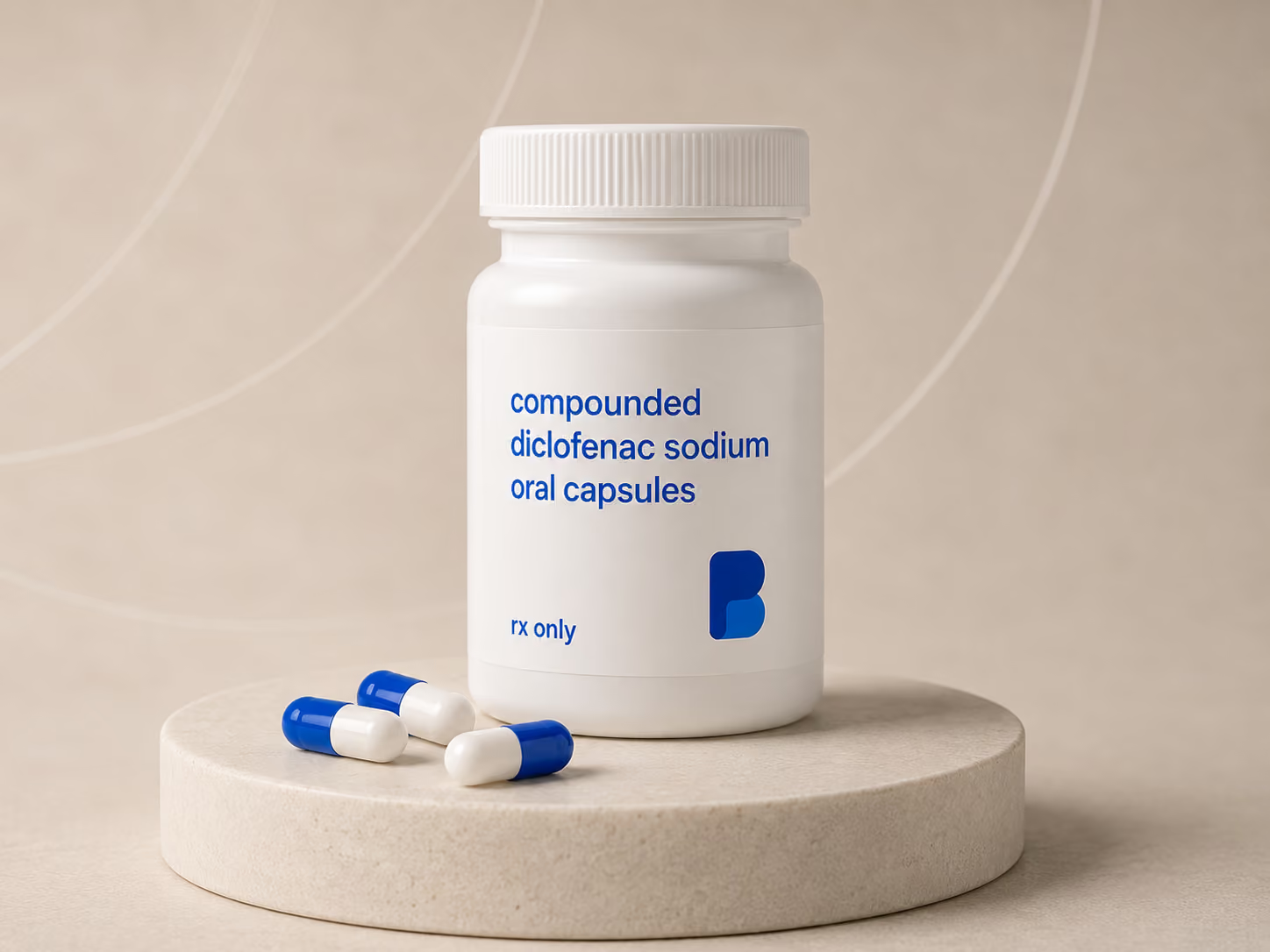
The version most people have seen is the 1% gel sold over the counter for arthritis pain. Bayview compounds diclofenac at higher concentrations, from 4% to 20% or a custom strength, and in combination with other actives. It is also compounded as oral liquids, acid-resistant capsules and suppositories, in the base and container your prescriber specifies. This page explains what is FDA-approved, what is compounded, and where the evidence is strong and where it is thin.
How does it work?
Injured or arthritic tissue produces prostaglandins, signaling molecules that amplify pain and swelling. Diclofenac blocks the cyclooxygenase (COX) enzymes that make them, which is how every NSAID works. Applied to the skin, the drug concentrates in the tissue underneath (skin, fat, muscle, and the joint capsule) rather than circulating throughout the body first.
That difference is measurable. The prescribing information for topical diclofenac products describes systemic exposure from application to the skin as a small fraction of the exposure from an equivalent oral dose (PENNSAID prescribing information, DailyMed). Lower systemic exposure is why topical NSAIDs are often considered when oral NSAIDs are a concern, but it is not zero, which is why the NSAID class warnings still appear on topical labels.
What is it used for?
Topical diclofenac is used for pain in joints and soft tissue close enough to the skin for the drug to reach. The evidence is not uniform across those uses.
- Osteoarthritis of the hands and knees. This is the FDA-approved use of the 1% gel and the 1.5%/2% solution, and the evidence behind it is the strongest in this category. A Cochrane systematic review of topical NSAIDs for chronic musculoskeletal pain found that topical diclofenac provided meaningful pain relief for a substantial minority of people with hand and knee osteoarthritis, with results comparable to oral NSAIDs and fewer systemic side effects (Derry et al., Cochrane Database of Systematic Reviews, 2016). The review also noted that most of the trial evidence sits with the approved concentrations.
- Acute strains, sprains, and contusions. This is the approved use of the 1.3% diclofenac epolamine patch. Trials of topical NSAIDs in acute soft-tissue injury are generally positive, though shorter and smaller than the osteoarthritis literature.
- Tendinitis, bursitis, and other localized soft-tissue pain. Off-label. Commonly prescribed, supported more by clinical practice and small studies than by large trials.
- Deeper or more diffuse pain, including neuropathic pain. Off-label, and the evidence is weakest here. Topical NSAIDs are not established for nerve pain, and depth of penetration is a genuine limit: a hip joint is much further from the skin surface than a knuckle.
Bayview compounds diclofenac to a prescriber's order for these situations. We do not diagnose, and nothing on this page is a recommendation that diclofenac is right for a particular condition or person.
How do the strengths compare?
This is the question most people arrive with, and it deserves a direct answer: a higher percentage is not automatically a better result. The percentage describes how much diclofenac is in the base. How much of it actually crosses the skin depends on the base, the surface area treated, how often it is applied, and the individual. Above the approved concentrations, there is little comparative trial data.
| Concentration | Regulatory status | Evidence |
|---|---|---|
| 1% gel | FDA-approved, over the counter | Strongest; multiple randomized trials in hand and knee osteoarthritis |
| 1.3% patch | FDA-approved, prescription | Established for acute strains, sprains, contusions |
| 1.5% and 2% solution | FDA-approved, prescription | Established for knee osteoarthritis |
| 4% to 20% compounded | No FDA-approved product; compounded and off-label | Limited; no comparable randomized trials against the approved strengths |
| Combination gels | No FDA-approved product; compounded and off-label | Varies by ingredient; combinations as a whole are not well studied |
A prescriber may choose a compounded strength for reasons the commercial products cannot meet: a concentration the approved products do not offer, a base that suits a particular patient or application site, a dye-free or preservative-free preparation, a container the patient can actually manage, or a combination of actives in one application. Those are compounding reasons, not claims of superior results.
What about combination gels?
Many of the diclofenac preparations in our catalog pair it with other actives (lidocaine, gabapentin, baclofen, menthol, or dimethyl sulfoxide, among others) in a single topical gel or cream. The reasoning a prescriber gives is usually practical: several mechanisms in one application, one product to apply instead of three.
Worth saying plainly: combination topical preparations are compounded, are not FDA-approved, and are studied far less than single-ingredient topical NSAIDs. Every active in the mix brings its own cautions and interactions. The choice of ingredients and concentrations is the prescriber's.
How is it used?
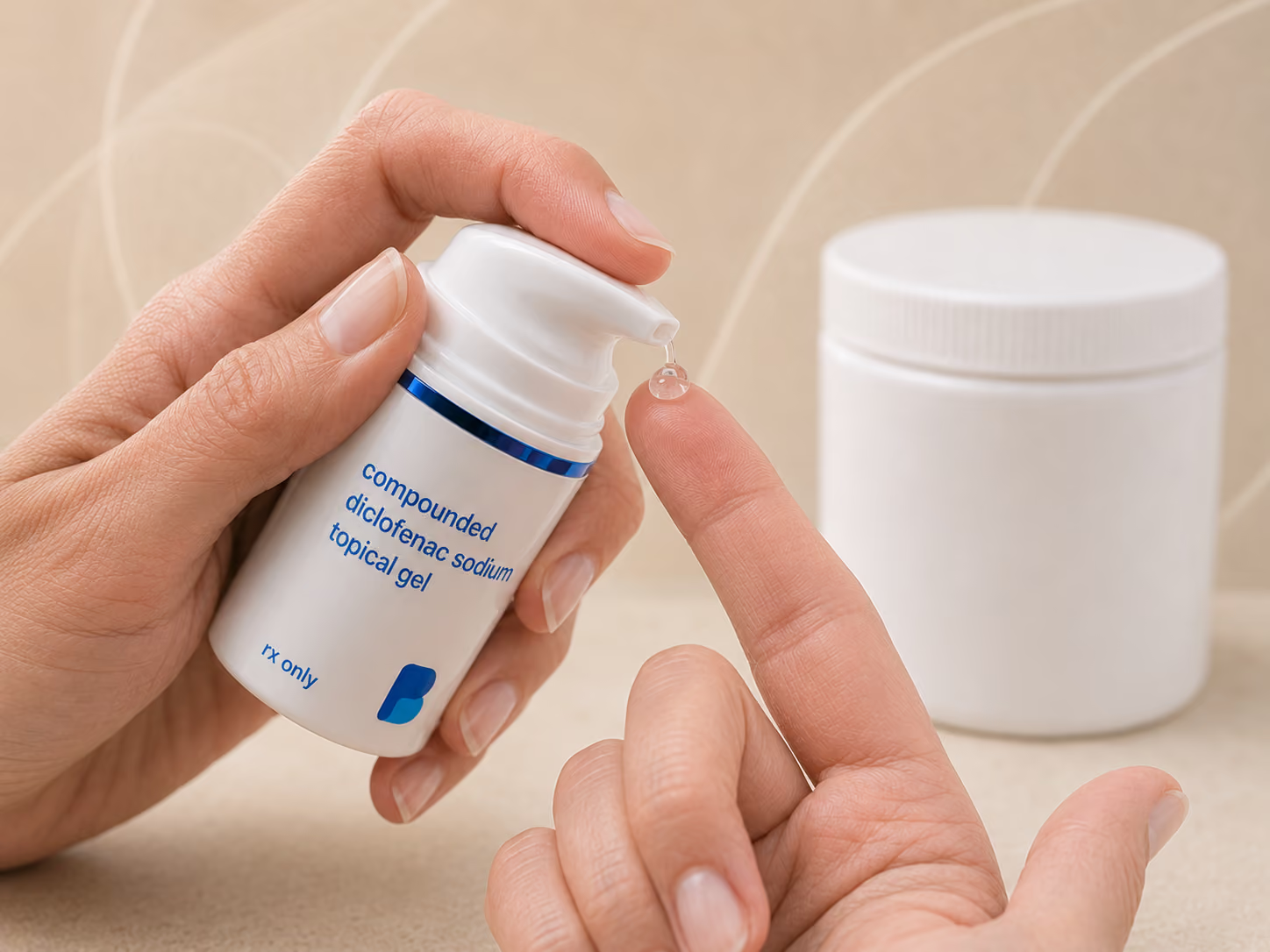
Follow the directions on your label; they come from your prescriber, not from this page. In general terms, topical diclofenac is applied to clean, intact skin over the painful area and rubbed in, and hands are washed afterward unless the hands are the treated area. Most preparations come in a jar, tube, or metered pump, and a pump is often used when a consistent measured amount matters.
A few practical points that apply across preparations: do not apply it to broken skin, wounds, or a rash; keep it away from the eyes, nose, mouth, and other mucous membranes; do not cover the area with an occlusive bandage or apply heat unless your prescriber tells you to, since both increase absorption; and let it dry before dressing. If sunscreen, insect repellent, or another topical product goes on the same area, ask your pharmacist about spacing them out.
Side effects & safety
The most common effects are local, at the site of application: dryness, redness, itching, scaling, or a rash. These are usually mild, and they are the reason prescribers sometimes rotate application sites or change the base.
The NSAID class warnings still apply. The FDA has strengthened the warning that non-aspirin NSAIDs can increase the risk of heart attack and stroke, and NSAIDs also carry a risk of serious gastrointestinal bleeding, ulceration, and perforation, which can occur without warning (FDA Drug Safety Communication). Systemic absorption from the skin is much lower than from a tablet, so these risks are lower with topical use, but they are not eliminated, and they rise with higher concentrations, larger treated areas, and longer use. Anyone taking an oral NSAID at the same time should tell their prescriber, since the exposure adds up.
Tell your prescriber about kidney or liver disease, heart failure, high blood pressure, a history of stomach ulcers or bleeding, asthma, and every medication you take, particularly blood thinners, aspirin, other NSAIDs, corticosteroids, SSRIs, lithium, methotrexate, and diuretics or blood-pressure medicines.
Who should not use it?
- Anyone who has had an allergic reaction to diclofenac, aspirin, or another NSAID, especially asthma, hives, or swelling after taking one.
- Anyone in the period immediately before or after coronary artery bypass graft (CABG) surgery.
- Anyone pregnant at 20 weeks or later, unless a prescriber directs otherwise; the FDA advises against NSAID use from 20 weeks because of the risk of low amniotic fluid, and use at 30 weeks and later carries additional fetal risk. Tell your prescriber if you are pregnant, may become pregnant, or are breastfeeding.
- Anyone applying it to broken skin, an open wound, an infected area, or a site treated with another topical medication, unless directed.
- Children, unless a prescriber has specifically directed it; topical diclofenac is not established for pediatric use.
Diclofenac is also toxic to dogs and cats. Keep treated skin away from pets, and store the medication where they cannot reach it.
How should it be stored?
Store it exactly as your label directs. Compounded gels and creams are generally kept at room temperature, tightly closed, away from heat and moisture, but bases vary, and some preparations have specific requirements, so the label is the authority. Do not freeze. Keep it out of reach of children and pets, do not share it, and discard unused medication as your pharmacist directs. Compounded preparations carry a beyond-use date that is usually shorter than the expiration date on a manufactured product.
Why is this compounded?
Commercially, topical diclofenac exists in a narrow range: a 1% gel, a 1.5% and 2% solution, and a 1.3% patch. Prescribers order compounded preparations when that range does not fit: a different concentration, a base chosen for the application site or for a patient who reacts to an ingredient in the commercial product, a dye-free or preservative-free formulation, a pump instead of a tube, a quantity that matches the course, or several actives combined in one application.
Bayview compounds each preparation to the prescription in our Rhode Island pharmacy, in the strength, base, and container the prescriber orders. Compounded medications are not FDA-approved, and we make no claim that a compounded preparation performs better than an FDA-approved product.
Clinical details for prescribers
Regulatory status. Noncontrolled as compounded here, so fax and phone orders are accepted alongside e-prescribing. Diclofenac sodium 1% gel is FDA-approved over the counter; a 1.5% and 2% topical solution, a 1.3% patch and oral tablets are FDA-approved by prescription. There is no FDA-approved topical diclofenac above 2% and no FDA-approved diclofenac combination gel, so those preparations are compounded and prescribed off-label. Adding ketamine to a diclofenac blend makes the preparation Schedule III and EPCS-only.
Formulation & dosing. Topical and transdermal gels at 1.3%, 4%, 5%, 6%, 7.5%, 8%, 10%, 15% and 20%, or a custom concentration. Combination gels are compounded to the prescriber's exact ingredient list; the most frequently dispensed are diclofenac 5% / gabapentin 10% / lidocaine 7% and amitriptyline 2% / diclofenac 5% / gabapentin 5%. Commonly reported directions are a thin layer to the affected joint or muscle two to four times daily, typically dispensed in 60 mL, in a jar, tube or metered pump. Also compounded as 5, 10 and 15 mg/mL oral liquids, 50 mg and 75 mg acid-resistant capsules in immediate or slow release, and 50 mg suppositories.
Counseling / clinical points:
- Screen for cardiovascular and gastrointestinal risk, renal or hepatic impairment, NSAID or aspirin hypersensitivity, and anticoagulant therapy before prescribing
- Systemic absorption is far lower than oral dosing but is not zero, and rises with concentration, treated surface area, duration, heat and occlusion; consider both when selecting a strength
- Avoid concurrent oral NSAIDs unless intended, since exposure is additive
- Apply to clean, intact skin only, not to wounds, broken skin or mucous membranes, and counsel on hand-washing after application
- Avoid from 20 weeks of pregnancy per FDA guidance, and note diclofenac is toxic to dogs and cats
- Local application-site reactions are the most common adverse effect; a base change often resolves intolerance
- Trial evidence sits with the approved 1% to 2% concentrations; above that, comparative data is limited, so match the strength to a clinical rationale rather than to the number
Useful ICD-10 codes include M17.11 (unilateral primary osteoarthritis, right knee), M19.041 (primary osteoarthritis, right hand), M77.11 (lateral epicondylitis, right elbow) and M25.511 (pain in right shoulder). Account setup, licensing, and ordering are covered on our for providers page.
Compounded diclofenac is a compounded medication and is not FDA-approved. This information is educational and is not medical advice. Your provider determines whether it is appropriate and sets the dose.