



In Stock
Compounded Amphotericin B | Sterile Rx | Bayview Pharmacy

Compounded Amphotericin B

Smiling man in blue pharmacist scrubs with arms crossed and pen behind his ear.
Medically reviewed by Ryan Dyer, RPh
Last updated on
August 7, 2026
Starting at
$111
for
30 mL
Checkmark icon followed by text 'HSA/FSA Eligible'.
Start with a prescriptionPrescribers: request this order form →
Licensed to fill prescriptions for patients in RI, MA, CT, NY, NJ, NH & FL
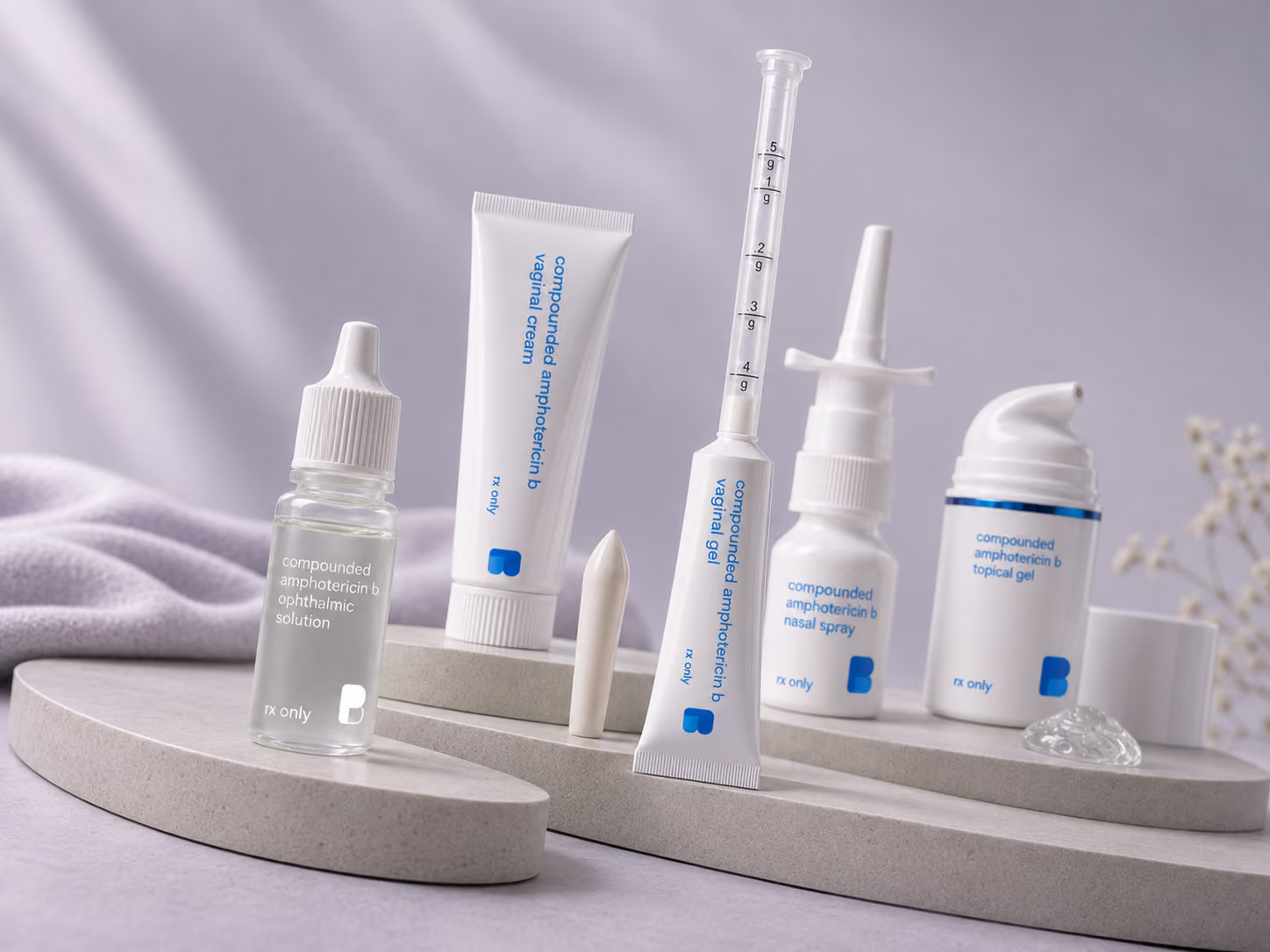
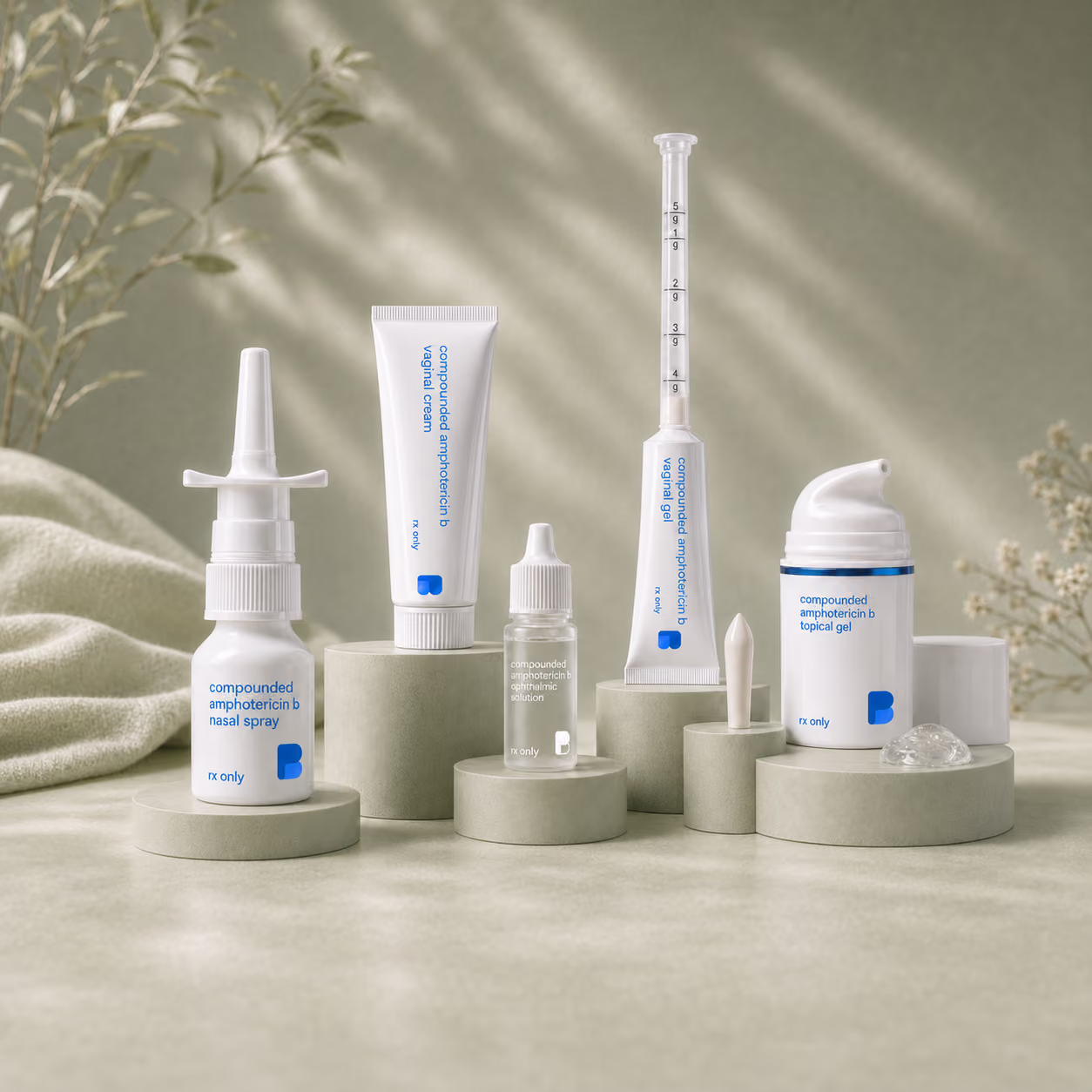
  • Topical amphotericin B prepared for the eye, nose, or vagina at the strength your prescriber orders
  • Preservative-free ophthalmic solutions compounded sterile under USP <797> standards
  • Fills a real gap — natamycin 5% is the only FDA-approved topical eye antifungal in the US
  • Topical use avoids the kidney toxicity and infusion reactions linked to intravenous amphotericin B
  • The evidence differs a lot by route, and this page says plainly where it is weak

Amphotericin B compounded preparations are prescription antifungal medicines prepared for topical use — as preservative-free eye drops, as a nasal spray, or as a vaginal suppository or cream. None of these forms is manufactured commercially in the United States, so a compounding pharmacy prepares them to your prescriber's order. Compounded medications are not FDA-approved, and a valid prescription is required. How strong the evidence is depends a great deal on which route is being used, and this page describes each one honestly.

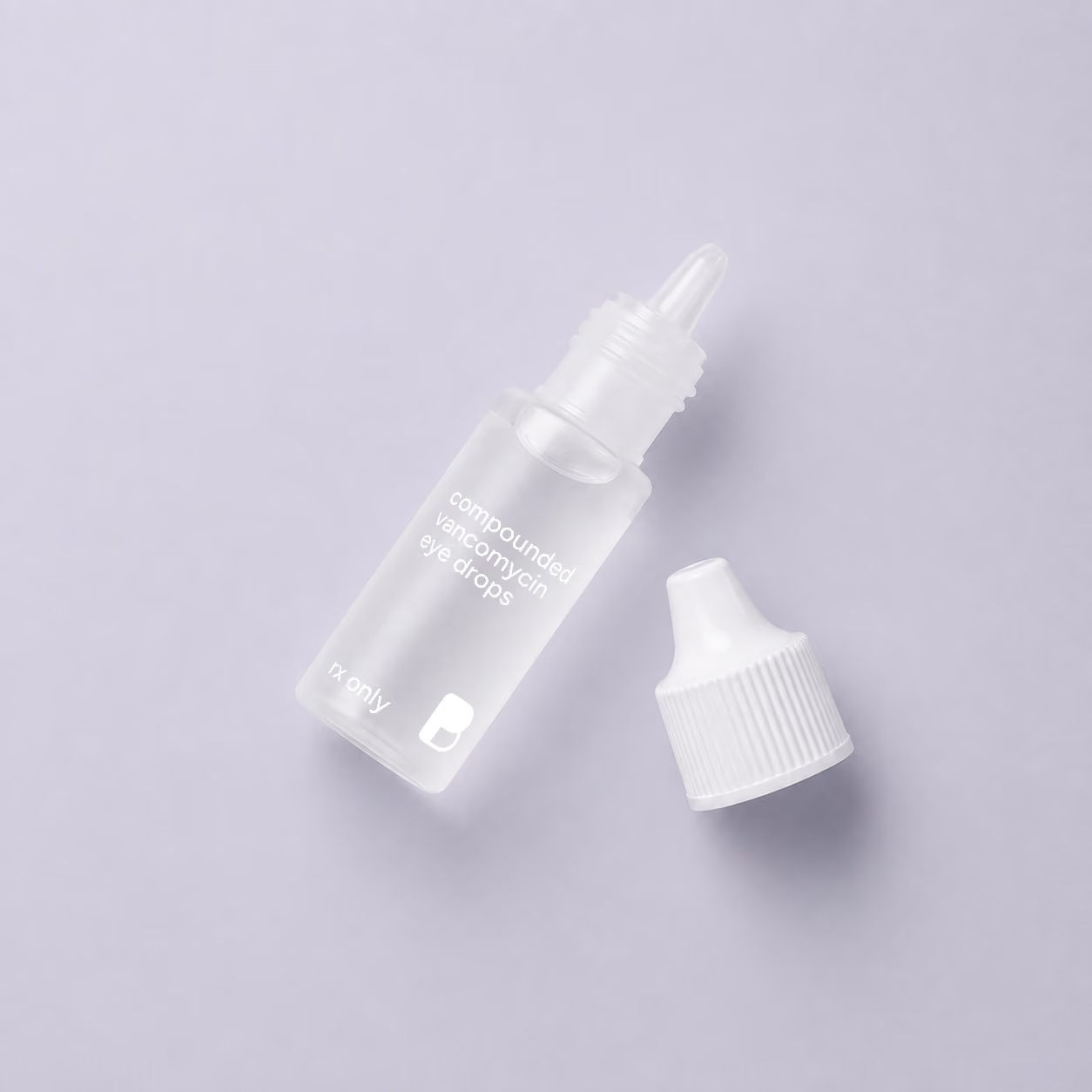
Bayview also compounds fortified antibiotic eye drops including vancomycin, tobramycin, and gentamicin.

How is this different from IV amphotericin B?

Amphotericin B is an antifungal. Given by vein in the hospital for life-threatening fungal infections, it can damage the kidneys and cause fever-and-chills infusion reactions. The preparations described here are topical, eye drops, a nasal spray, or a vaginal suppository or cream, and are barely absorbed, so those body-wide toxicities are not expected by these routes.

Why are the eye drops compounded?

There is no manufactured topical amphotericin B in the United States, so ophthalmic solutions are prepared by a compounding pharmacy at the strength your eye doctor orders. Natamycin 5% is the only FDA-approved topical ophthalmic antifungal and remains first-line for filamentous fungi; amphotericin B is generally reserved for yeast keratitis, particularly Candida. Of the three routes, this one has the best support.

Trusted by 105,826 patients to date.
A group of faces of our past satisfied patients.
Compounded medications are prepared pursuant to a valid prescription for an individual patient and are not FDA-approved. This page is for educational purposes and is not medical advice.
**The FDA does not review or approve compounded medications for safety or effectiveness. A valid prescription from a licensed practitioner is required.
Important safety information →
Service availability

Prescription delivery in your state

Bayview Pharmacy currently serves eligible patients in six states. Check your state before getting started.

Where we currently serve

Select a highlighted state to check availability.

Currently licensed Licensed — non-controlled only Not currently licensed Your selection

Select a state on the map or use the state checker.

Do we serve your state?

Choose your state to confirm current service availability.

Thank you! Your submission has been received!
Oops! Something went wrong while submitting the form.
Currently licensed in
Start with a prescription

Send us your prescription

STEP
1
Have your provider e-prescribe to Bayview, fax it to us, or call it in directly to one of our pharmacists.
A thin blue light beam connecting two clear glass slabs on a white surface.

A pharmacist reviews it

STEP
2
We verify your prescription and prepare your medication to your provider's exact instructions.
Close-up of a white dial with blue measurement markings and a rotating knob.

We compound & ship

STEP
3
We prepare your medication and ship it discreetly to your door, with support when you need it.
Close-up of a gray box with a precise blue line running along its folded edges.

What is Compounded Amphotericin B?

Amphotericin B is an antifungal medicine. Bayview compounds it for topical use in three different places: as preservative-free eye drops, as a nasal spray, and as a vaginal suppository or cream. None of these forms is sold as a manufactured product in the United States, so a licensed compounding pharmacy prepares them at the strength your prescriber orders.

These three uses are not equally well supported by research, and it would be misleading to describe them as if they were. The eye use is the best established. The vaginal use appears in infectious disease guidance for stubborn yeast infections. The nasal use has been studied in large trials and those trials were negative. Each section below says which is which.

Topical amphotericin B is compounded and is not FDA-approved. There is no FDA-approved amphotericin B eye drop, nasal spray, or vaginal suppository in the United States. The only FDA-approved topical antifungal for the eye is natamycin 5% (Natacyn). A valid prescription is required, and your prescriber decides whether any of these preparations is appropriate for you. Bayview Pharmacy does not provide consultations or determine appropriateness.

How does it work?

Amphotericin B belongs to a group of antifungals called polyenes. It attaches to ergosterol, a fatty molecule that fungal cell membranes contain but human cell membranes do not. Once attached, it punches pores in the membrane so the contents of the fungal cell leak out and the cell dies. Because human cells use cholesterol instead of ergosterol, the drug targets the fungus far more than it targets you.

Amphotericin B is not absorbed to any meaningful degree across mucous membranes or the surface of the eye. That is the whole point of using it topically: the medicine stays where you put it and works locally, instead of circulating through the body.

What is it used for?

In the eye. Topical amphotericin B is used for fungal infections of the cornea (fungal keratitis), and it is most often chosen when the fungus is a yeast such as Candida. For mold-type fungi with branching filaments — Fusarium and Aspergillus — natamycin is generally the preferred first choice.

In the nose. Some ear, nose, and throat specialists prescribe amphotericin B nasal spray or nasal rinse for long-standing sinus inflammation thought to involve fungus. As explained below, the controlled research does not support this as a routine treatment.

In the vagina. Amphotericin B is prescribed for yeast infections that have not responded to the usual azole medicines such as fluconazole, especially infections caused by Candida glabrata. The 2016 Infectious Diseases Society of America candidiasis guideline lists topical 3% amphotericin B cream, alone or combined with 17% flucytosine cream for 14 days, among the options for azole-refractory C. glabrata vaginitis (IDSA candidiasis guideline).

Only a licensed prescriber can decide whether any of these uses is right for you. All of them are off-label, and a valid prescription is required.

What does the evidence show?

Eye — the strongest of the three. Topical amphotericin B is a long-recognized option for yeast keratitis. For filamentous fungi, the Mycotic Ulcer Treatment Trial (MUTT I) randomized 323 people with fungal corneal ulcers to topical natamycin 5% or topical voriconazole 1% and found natamycin gave better three-month vision, fewer corneal perforations, and better clearing of the fungus, with the advantage largest in Fusarium cases; the authors concluded voriconazole should not be used alone for filamentous keratitis (MUTT I). MUTT did not test amphotericin B, so it does not tell us how amphotericin B compares — but it is the reason natamycin remains the standard first choice for mold keratitis, and it is part of why amphotericin B is generally reserved for yeast.

Nose — the controlled evidence is negative. Please read this carefully. A Cochrane systematic review of antifungal therapy for chronic rhinosinusitis pooled seven placebo-controlled studies of topical antifungals in 437 people. None of them showed a statistically significant benefit for disease-specific quality of life or symptom severity, the certainty of the evidence was rated low to very low, and topical antifungals may cause more local irritation than placebo. The reviewers concluded it is uncertain whether antifungals have any effect on patient outcomes (Cochrane review). Bayview does not claim that amphotericin B nasal spray works for chronic sinus disease. Some specialists still prescribe it for selected patients, and that judgment belongs to your prescriber, not to us.

Vagina — guideline-supported but not first-line. The IDSA candidiasis guideline includes 3% amphotericin B cream as an option for azole-refractory C. glabrata vaginitis, alongside intravaginal boric acid 600 mg daily for 14 days and nystatin suppositories, and rates the amphotericin B option on lower-quality evidence than the alternatives. The CDC STI Treatment Guidelines section on vulvovaginal candidiasis recommends a longer course of a non-fluconazole azole for non-albicans yeast and, if it recurs, boric acid 600 mg vaginally daily for three weeks; the CDC section does not mention amphotericin B at all (CDC STI Treatment Guidelines). So this is a real, guideline-listed option — but it sits behind boric acid and nystatin, not ahead of them.

How do the forms and strengths compare?

Bayview compounds amphotericin B in several forms. The table describes them for education only; your prescriber chooses the form and strength.

FormTypical strengthsNotes
Preservative-free ophthalmic solution2, 3, or 5 mg/mLCompounded sterile under USP <797>; refrigerated; short beyond-use dating
Nasal spray0.1% to 0.25%Sprayed into the nose; evidence for chronic sinus disease is negative
Vaginal suppository50 mg or 100 mgUsed for azole-resistant yeast, most often C. glabrata
Vaginal cream or gel3%The concentration named in the IDSA guideline, alone or with flucytosine
CustomAs orderedOther strengths and volumes as your prescriber directs

Forms and strengths are listed for education only and are not a statement that any one of them is better for a particular person. Your prescriber selects the preparation, strength, and schedule.

How is it used?

Use it exactly as your prescriber directs and finish the course they set. The instructions differ by form.

Eye drops. Wash your hands, tilt your head back, and instill the number of drops prescribed into the affected eye. Do not let the dropper tip touch your eye, your eyelid, or any surface, because that can contaminate the bottle. For a serious corneal infection the schedule can be very frequent at first, sometimes hourly around the clock, and your eye doctor will taper it. If you use more than one eye medication, wait about five minutes between them.

Nasal spray. Blow your nose gently first, then spray the prescribed number of sprays into each nostril as directed. Wipe the tip and recap it after use, and do not share the bottle.

Vaginal suppository or cream. Insert the prescribed dose vaginally as directed, usually at bedtime so it stays in place, for the number of days your prescriber specifies. A panty liner helps with leakage.

Do not stop early just because you feel better, and do not change the schedule on your own. A Bayview pharmacist is available if you have questions about your prescription.

Side effects & safety

Because topical amphotericin B is barely absorbed, side effects are usually limited to the area treated.

Eye drops commonly cause burning, stinging, redness, and blurred vision right after the drop goes in. Tell your eye doctor about worsening pain, increasing redness, or vision that gets worse rather than better. Compounded eye drops demand strict sterility: keep them refrigerated as labeled, never touch the dropper tip to anything, do not use a bottle that looks cloudy or discolored, and discard the bottle at the beyond-use date printed on your label even if medicine remains.

Nasal spray commonly causes nasal irritation, burning, dryness, sneezing, and nosebleeds. The Cochrane review found local irritation was more common with topical antifungals than with placebo.

Vaginal preparations commonly cause local irritation, burning, or itching, and some leakage.

Topical amphotericin B is not the same as intravenous amphotericin B. Amphotericin B given by vein is a hospital medicine reserved for serious, life-threatening fungal infections, and it is known for kidney damage, electrolyte problems, and fever-and-chills infusion reactions (MedlinePlus). Applying amphotericin B to the eye, nose, or vagina does not put meaningful amounts of drug into the bloodstream, so those systemic toxicities are not expected with the topical preparations described here. Do not assume the two are interchangeable in either direction.

Stop and seek care for signs of a serious allergic reaction such as rash, swelling of the face or throat, or trouble breathing.

Who should not use it?

Do not use it if you have had an allergic reaction to amphotericin B. Ophthalmic amphotericin B should not be used with contact lenses in place, and your eye doctor will usually tell you to leave lenses out entirely while a corneal infection is being treated. Vaginal preparations are generally avoided if you might be pregnant unless your prescriber specifically directs otherwise, and oil- or fat-based vaginal products can weaken latex condoms and diaphragms. Tell your prescriber about your full health history, allergies, pregnancy or breastfeeding status, and all other medicines, so they can decide whether this preparation is appropriate.

How should it be stored?

Store it exactly as your label directs. Amphotericin B preparations are normally refrigerated and must be protected from light, because the drug breaks down when exposed to light — keep the container in its carton or opaque bag and out of direct sunlight. Do not freeze. Keep it out of the reach of children, and do not share it. Compounded preparations carry a beyond-use date assigned according to USP <797> for sterile preparations or USP <795> for non-sterile preparations; that date is printed on your label. Do not use the preparation after that date, even if some is left, and dispose of unused medication as directed.

Why is this compounded?

Amphotericin B is manufactured in the United States only as a powder for intravenous infusion. There is no commercial eye drop, nasal spray, or vaginal suppository. Natamycin 5% (Natacyn) is the only FDA-approved topical antifungal for the eye, and it is indicated for fungal blepharitis, conjunctivitis, and keratitis (Natacyn label). When a prescriber wants amphotericin B for a yeast keratitis, a resistant vaginal yeast infection, or an intranasal trial, compounding is the only way to get it. As a 503A compounding pharmacy, Bayview prepares each order in small batches using quality ingredients — ophthalmic preparations sterile under USP <797>, non-sterile preparations under USP <795>. Compounded preparations are not FDA-approved.

Clinical details for prescribers

Regulatory status. Amphotericin B is not a controlled substance. No FDA-approved topical ophthalmic, intranasal, or intravaginal amphotericin B product exists in the US; natamycin 5% is the only FDA-approved topical ophthalmic antifungal. All topical uses are off-label and require compounding. Compounded preparations are not FDA-approved.

Formulations. PF ophthalmic solution 2, 3, and 5 mg/mL (5 mL and 10 mL); nasal spray 0.1–0.25% (15, 24, and 30 mL); vaginal suppositories 50 mg and 100 mg; 3% vaginal cream/gel (anhydrous base, 1 mL syringes). Ophthalmic preparations compounded under USP <797>; BUDs assigned per USP <797>/<795> and printed on the label. Refrigerate and protect from light.

Evidence & clinical points:

  • Keratitis: topical amphotericin B is conventionally favored for yeast (Candida) keratitis; natamycin remains first-line for filamentous fungi. MUTT I (n=323) showed natamycin superior to voriconazole for filamentous ulcers, most markedly in Fusarium; MUTT II found no benefit from adding oral voriconazole. Neither trial included an amphotericin B arm.
  • Chronic rhinosinusitis: Cochrane 2018 — seven RCTs, 437 participants, topical antifungal vs placebo; no statistically significant difference in disease-specific QoL or symptom severity; low to very low certainty; more local irritation. Routine use is not supported.
  • Azole-refractory VVC: IDSA 2016 lists boric acid 600 mg PV daily ×14 d and nystatin 100,000 U PV daily ×14 d, with topical 17% flucytosine ± 3% amphotericin B cream ×14 d as a lower-evidence alternative for C. glabrata. CDC 2021 STI guidelines recommend a non-fluconazole azole ×7–14 d, then boric acid 600 mg PV daily ×3 weeks; they do not address amphotericin B.
  • Negligible mucosal and corneal absorption — nephrotoxicity and infusion reactions associated with IV amphotericin B are not expected with topical routes.

Ordering: send a prescription to Bayview Pharmacy, 3844 Post Rd, Warwick, RI 02886 (NCPDP 4106882, fax 401-284-4506). Background: MUTT I; Cochrane, antifungals for chronic rhinosinusitis.

These are prescription compounded medications and are not FDA-approved. This information is educational and is not medical advice. Bayview Pharmacy does not provide consultations or determine whether a preparation is appropriate — your prescriber does that and sets the dose.

In Stock

On this page

Prepared for the eye, nose, or vagina

None of these forms is sold commercially, so amphotericin B is compounded to your prescriber's order. Topical use is not the same as IV amphotericin B and does not carry the same kidney risks.

Start with a prescription
Prepared for the eye, nose, or vagina – Amphotericin B Compounded Preparations from Bayview Pharmacy

Forms, strengths, and where evidence stands

Sterile eye drops, nasal sprays, and vaginal suppositories or cream, in a range of strengths. The eye use for fungal keratitis has the best support; studies of antifungal nasal sprays for chronic sinusitis were negative.

View our formulas
Forms, strengths, and where evidence stands – Amphotericin B Compounded Preparations from Bayview Pharmacy

Personalized compounding for patients who need more than a standard option.

"As a compounding pharmacy, we prepare each medication to a provider’s exact specifications. My focus, and my team’s focus, is quality, consistency, and close communication with prescribers so patients receive medication prepared for their individual needs."
Ryan Dyer, RPh
Owner and Chief Pharmacist, Bayview Pharmacy
Smiling man in blue scrubs with arms crossed and pen behind his ear
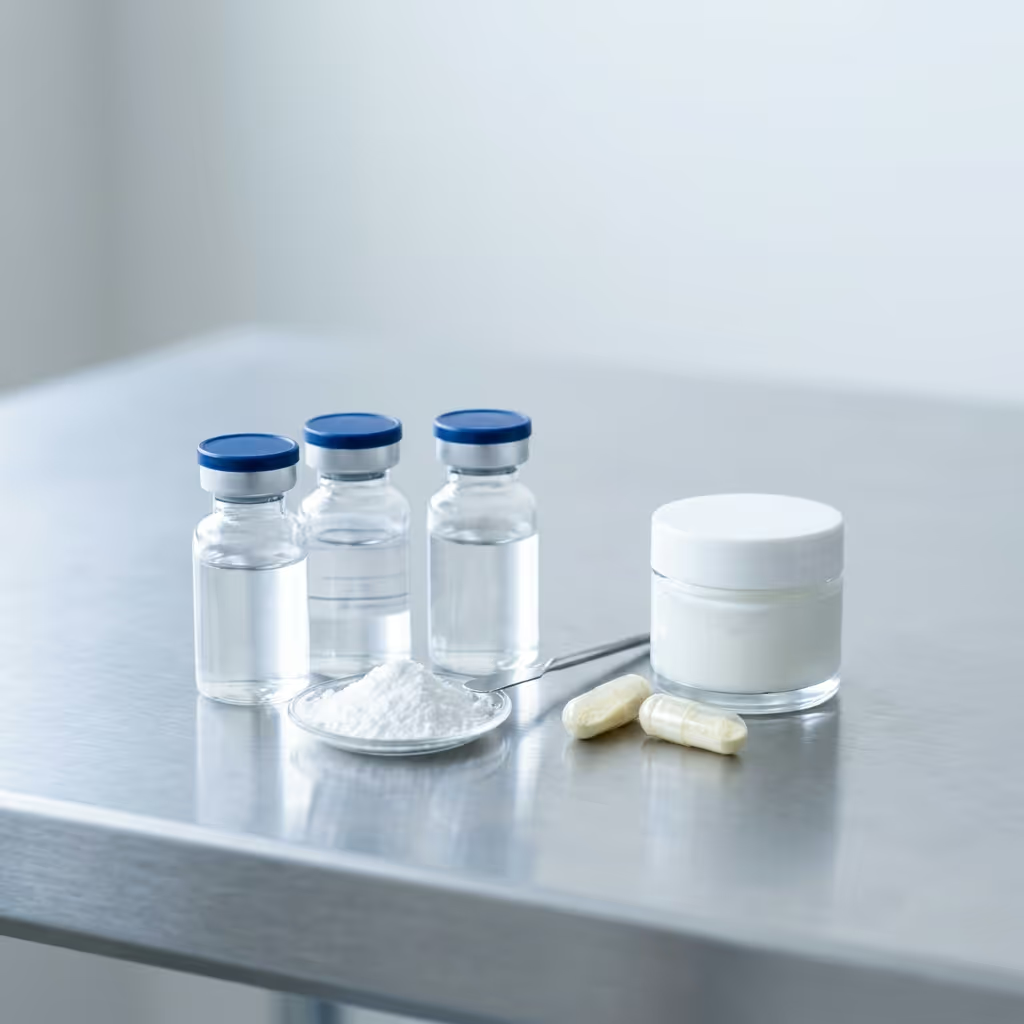
Three clear liquid vials, white powder on spoon, two capsules, and a cream jar on a metal surface.
QUALITY AND TESTING

Held to a higher standard

Every preparation is made under strict quality controls, and verified by a licensed pharmacist.
We use validated quality processes and third-party testing where appropriate
Sterile compounding in a dedicated USP <797> cleanroom
Non-sterile compounding under USP <795> and <800> standards
USP/NF-grade ingredients from reputable, vetted suppliers

Why patients choose Bayview

Made in our own pharmacy
Made to your prescription
Quality tested
Real pharmacist support
Trusted since 2006

Our formulations

Amphotericin B is compounded in the form and strength your prescriber orders. The strengths below reflect what Bayview commonly prepares and are shown for reference only.

Form Strength & size How it's used
Ophthalmic solution (preservative-free, sterile)2, 3, or 5 mg/mL; 5 mL or 10 mLInstilled in the affected eye as your eye doctor directs
Nasal spray0.1%, 0.2%, or 0.25%; 15, 24, or 30 mLSprayed into each nostril as directed
Vaginal suppository50 mg or 100 mgInserted vaginally, usually at bedtime, for a set course
Vaginal cream or gel3% (anhydrous base), 1 mL syringesInserted vaginally as your prescriber directs
Custom preparationAs orderedAs your prescriber directs

Directions are set by the prescriber; the descriptions above reflect common regimens and are not treatment recommendations. Forms and strengths are listed for education only and are not a statement that any one is better for a particular person. A valid prescription is required, and your prescriber determines whether a preparation is appropriate. Bayview Pharmacy does not provide consultations or determine appropriateness. These are compounded medications and are not FDA-approved.

Start with a prescription
Prescribers: request this order form →

Frequently asked questions

How is this different from IV amphotericin B?

Amphotericin B is an antifungal. Given by vein in the hospital for life-threatening fungal infections, it can damage the kidneys and cause fever-and-chills infusion reactions. The preparations described here are topical, eye drops, a nasal spray, or a vaginal suppository or cream, and are barely absorbed, so those body-wide toxicities are not expected by these routes.

Why are the eye drops compounded?

There is no manufactured topical amphotericin B in the United States, so ophthalmic solutions are prepared by a compounding pharmacy at the strength your eye doctor orders. Natamycin 5% is the only FDA-approved topical ophthalmic antifungal and remains first-line for filamentous fungi; amphotericin B is generally reserved for yeast keratitis, particularly Candida. Of the three routes, this one has the best support.

Does the nasal spray work?

The evidence does not support routine use of antifungal nasal sprays for chronic sinus inflammation. Randomized, placebo-controlled trials of topical antifungals in chronic rhinosinusitis were negative, and a Cochrane review found no significant benefit. If your prescriber has recommended one anyway, ask what they expect it to do and how they will judge whether to continue it.

Why would amphotericin B be used vaginally?

It is prescribed for vaginal yeast that has not responded to standard azole treatment such as fluconazole, most often non-albicans species like Candida glabrata. Topical amphotericin B appears among the options in IDSA candidiasis guidance for azole-refractory cases; it is not part of CDC treatment guidance. Your prescriber decides whether it is appropriate for you.

Why does it need refrigeration and light protection?

Amphotericin B is light-sensitive and degrades with warmth, so these preparations are refrigerated and protected from light unless your label says otherwise. Do not freeze them. Beyond-use dates are assigned according to USP standards for sterile or non-sterile preparations and are printed on your label, discard the container on that date even if medicine remains.

How is sterility handled for the eye drops?

Ophthalmic solutions are compounded preservative-free and sterile under USP <797> standards. Because there is no preservative, handling matters: keep the bottle closed and refrigerated as labeled, never let the dropper tip touch your eye or any surface, leave contact lenses out unless your eye doctor directs otherwise, and do not use a solution that looks cloudy or discolored.

Do I need a prescription?

Yes. All of our medications require a valid prescription from a licensed provider. We're a dispensing and compounding pharmacy, so we don't provide consultations or write prescriptions. If you don't have one yet, you'll need to find and see a provider first.

What is compounding?

Compounding is the practice of preparing a medication tailored to an individual patient's prescription. Instead of a mass-produced product, a compounding pharmacy makes the medication to the specific strength, form, or combination your provider orders.

Are compounded medications FDA-approved?

Compounded medications are not FDA-approved. They're prepared by a licensed pharmacy pursuant to a valid prescription for an individual patient, under USP standards. The FDA does not review compounded medications for safety or effectiveness.

How do providers send a prescription to Bayview?

Providers can submit a prescription three ways:

  • E-prescribe: Search Bayview Pharmacy, Warwick, RI (NCPDP 4106882) in your EHR. For compounds, use the compound, custom, or free-text option and include the full formulation, strength, quantity, refills, and directions.
  • Fax: Send a signed order to 401-284-4506 (alt. 401-210-2757) with patient and prescriber details, medication, quantity, refills, directions, signature, and date.
  • Phone: Call 401-284-4505 to submit, clarify, or coordinate refills.

A valid prescription is required, and compounded medications are not FDA-approved.

Can you fill a prescription from my own provider?

Yes. Your provider can send your prescription to Bayview Pharmacy by e-prescribe, fax, or phone, or you can transfer an existing prescription from another pharmacy. Start a request and we'll guide you through it.

How does shipping work?

Once your prescription is verified, we prepare your medication and ship it discreetly in plain packaging either via UPS or USPS. A pharmacy technician confirms the details with you before it goes out, and we're available if you have any questions.

How do refills and automatic refills work?

Refills are coordinated with your prescriber and your prescription. You can request a refill through our website or by calling us, and we'll handle the rest as long as you have refills remaining on a valid prescription. You can also opt into automatic refills on non-controlled substances, with no need to worry about running out of your medication. We can either ship it to you automatically, or ready for pickup.

Shipping & Delivery

Every prescription ships directly to your door in discreet packaging. Refrigerated medications travel in insulated coolers with ice packs to stay cold in transit.

Delivery AreaStandard ShippingRefrigerated Shipping
Rhode Island, Massachusetts & Connecticut$9 USPS$20 UPS
New Hampshire, New Jersey & New York$15 UPS$40 UPS Next Day Air
Florida$15 UPS$80 UPS Next Day Air

Need it faster? Expedited UPS is $15 for Rhode Island, Massachusetts and Connecticut. Your pharmacist will let you know if your medication needs refrigerated shipping. Questions? Call us at (401) 284-4505.

References

Sources reviewed

The medical information on this page draws on the following sources, which are also linked where cited.

  1. Centers for Disease Control and Prevention. Vulvovaginal Candidiasis — STI Treatment Guidelines.
  2. Pappas PG, et al. Clinical Practice Guideline for the Management of Candidiasis: 2016 Update by the Infectious Diseases Society of America. Clinical Infectious Diseases.
  3. DailyMed / US Food and Drug Administration. NATACYN (natamycin ophthalmic suspension) 5% prescribing information.
  4. Prajna NV, et al. The Mycotic Ulcer Treatment Trial: A Randomized Trial Comparing Natamycin vs Voriconazole. JAMA Ophthalmology.
  5. Head K, et al. Topical and systemic antifungal therapy for chronic rhinosinusitis. Cochrane Database of Systematic Reviews.
  6. MedlinePlus, US National Library of Medicine. Amphotericin B Injection.

Important safety information

Important safety information

Compounded amphotericin B eye drops, nasal spray, and vaginal preparations are prescription compounded medications and are not FDA-approved. There is no FDA-approved topical amphotericin B product in the United States, so every topical use is off-label. Use only as prescribed and under the care of your prescriber.

Do not use amphotericin B preparations if you:

  • Have had an allergic reaction to amphotericin B.
  • Are using the eye drops while wearing contact lenses — leave lenses out unless your eye doctor directs otherwise.
  • Are or may be pregnant and have been prescribed a vaginal preparation, unless your prescriber specifically directs it.

Warnings and precautions:

  • Compounded eye drops require strict sterility. Keep the bottle refrigerated as labeled, never touch the dropper tip to your eye or any surface, do not use a cloudy or discolored solution, and discard the bottle at the beyond-use date on your label even if medicine remains.
  • The evidence does not support routine use of amphotericin B nasal spray for chronic sinus inflammation. A Cochrane review of placebo-controlled trials found no significant benefit. If your prescriber has recommended it, discuss with them what you should expect.
  • Finish the course as prescribed. Do not stop early because symptoms improve, and do not change the schedule on your own.
  • Oil- or fat-based vaginal preparations can weaken latex condoms and diaphragms.
  • Tell your prescriber about your full health history, allergies, pregnancy or breastfeeding status, and all medications you take.

Common side effects:

  • Eye drops — burning, stinging, redness, and temporary blurred vision.
  • Nasal spray — irritation, burning, dryness, sneezing, and nosebleeds.
  • Vaginal — local irritation, burning, itching, and leakage.

Topical is not the same as intravenous:

Amphotericin B given by vein is used in hospitals for life-threatening fungal infections and can damage the kidneys and cause fever-and-chills infusion reactions. Topical amphotericin B is barely absorbed, so those body-wide toxicities are not expected with the eye, nose, or vaginal preparations described here.

Get emergency care for:

  • Signs of a serious allergic reaction such as rash, swelling of the face or throat, or trouble breathing.

Also contact your prescriber for:

  • Eye pain that worsens, increasing redness, or vision that gets worse rather than better.
  • Repeated nosebleeds, or vaginal irritation that does not settle.

Storage:

Refrigerate and protect from light — amphotericin B is light-sensitive. Do not freeze. Keep out of the reach of children and do not share. Beyond-use dates are assigned according to USP <797> for sterile preparations or USP <795> for non-sterile preparations and are printed on your label; do not use after that date. Discard unused medication as directed by your pharmacist.

This is a compounded prescription medication and is not approved by the FDA. Use it only under the supervision of a licensed provider, exactly as prescribed. Do not adjust your dose without talking to your prescriber. Seek emergency care for any severe or unexpected reaction. This information is not complete; talk to your provider about your full medical history and all medications you take.

Ready to get started?

Send us your prescription and a Bayview pharmacist will take it from there.