

In Stock
Low-Dose Atropine Eye Drops for Myopia | Compounded | Bayview Pharmacy

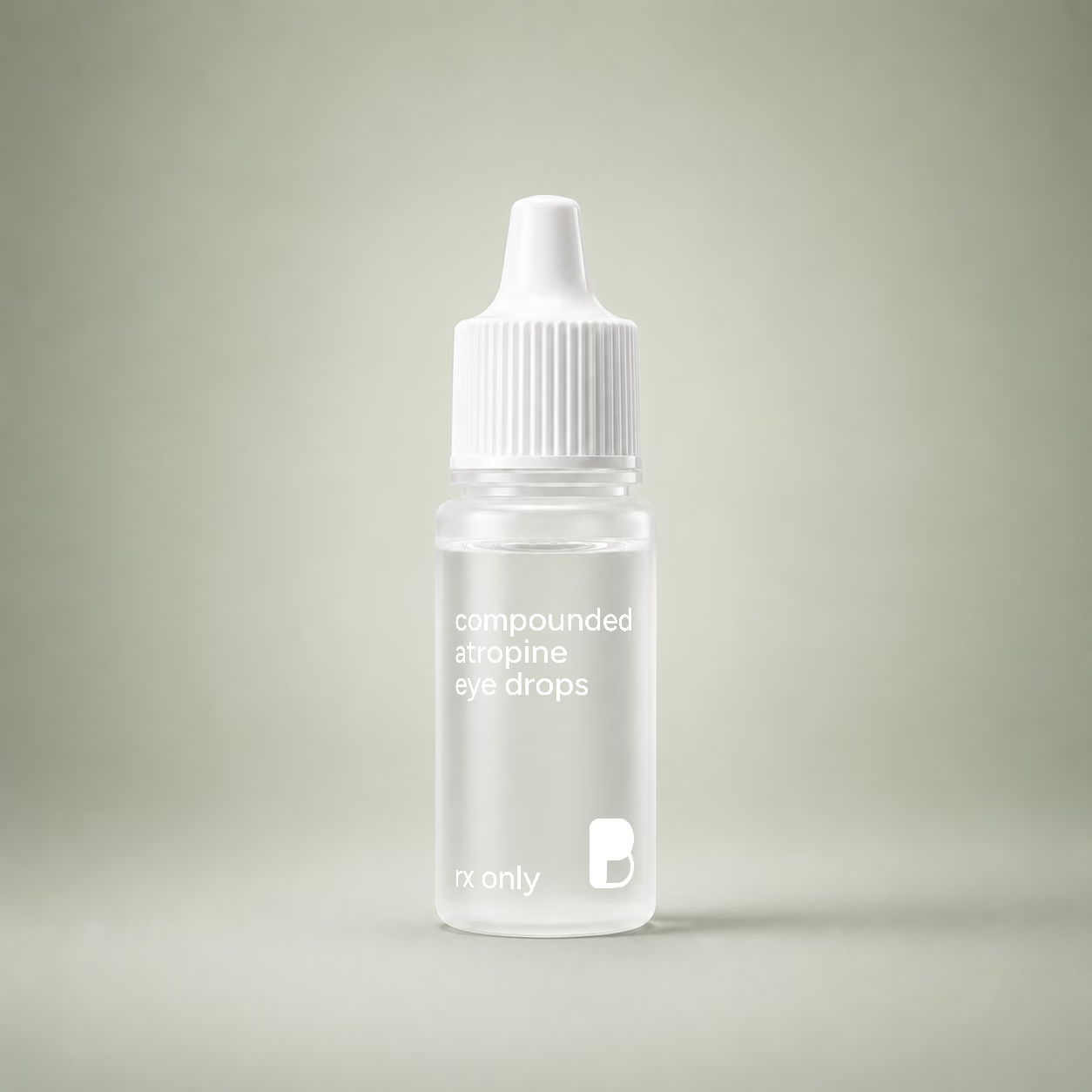
Atropine Eye Drops

Smiling man in blue pharmacist scrubs with arms crossed and pen behind his ear.
Medically reviewed by Ryan Dyer, RPh
Last updated on
July 23, 2026
  • Low-dose atropine to help slow the progression of nearsightedness in children
  • Compounded at the strength your eye doctor orders — 0.01%, 0.02%, or 0.05%
  • Fills a gap — the low myopia strengths have no FDA-approved product
  • Made under sterile USP <797> standards

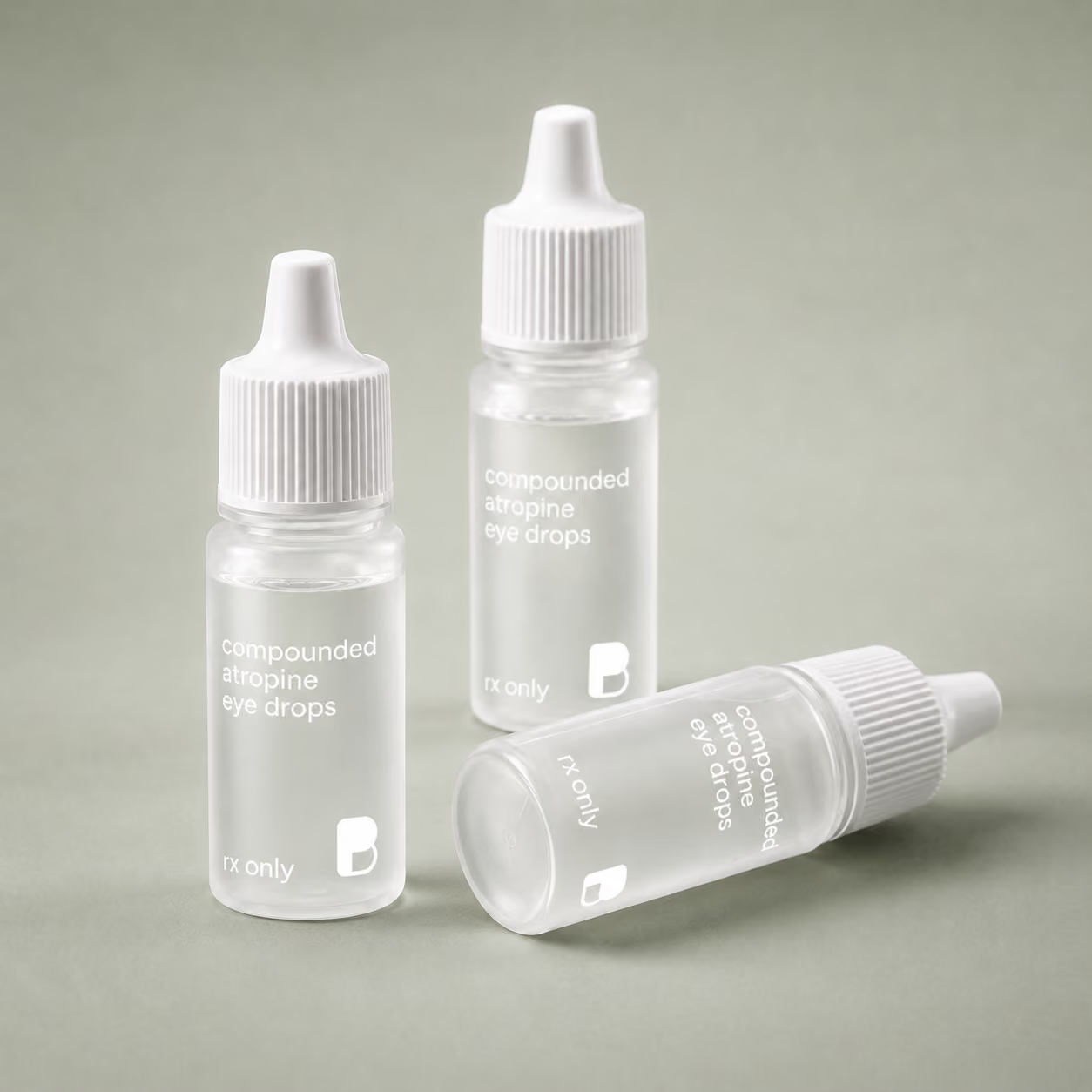
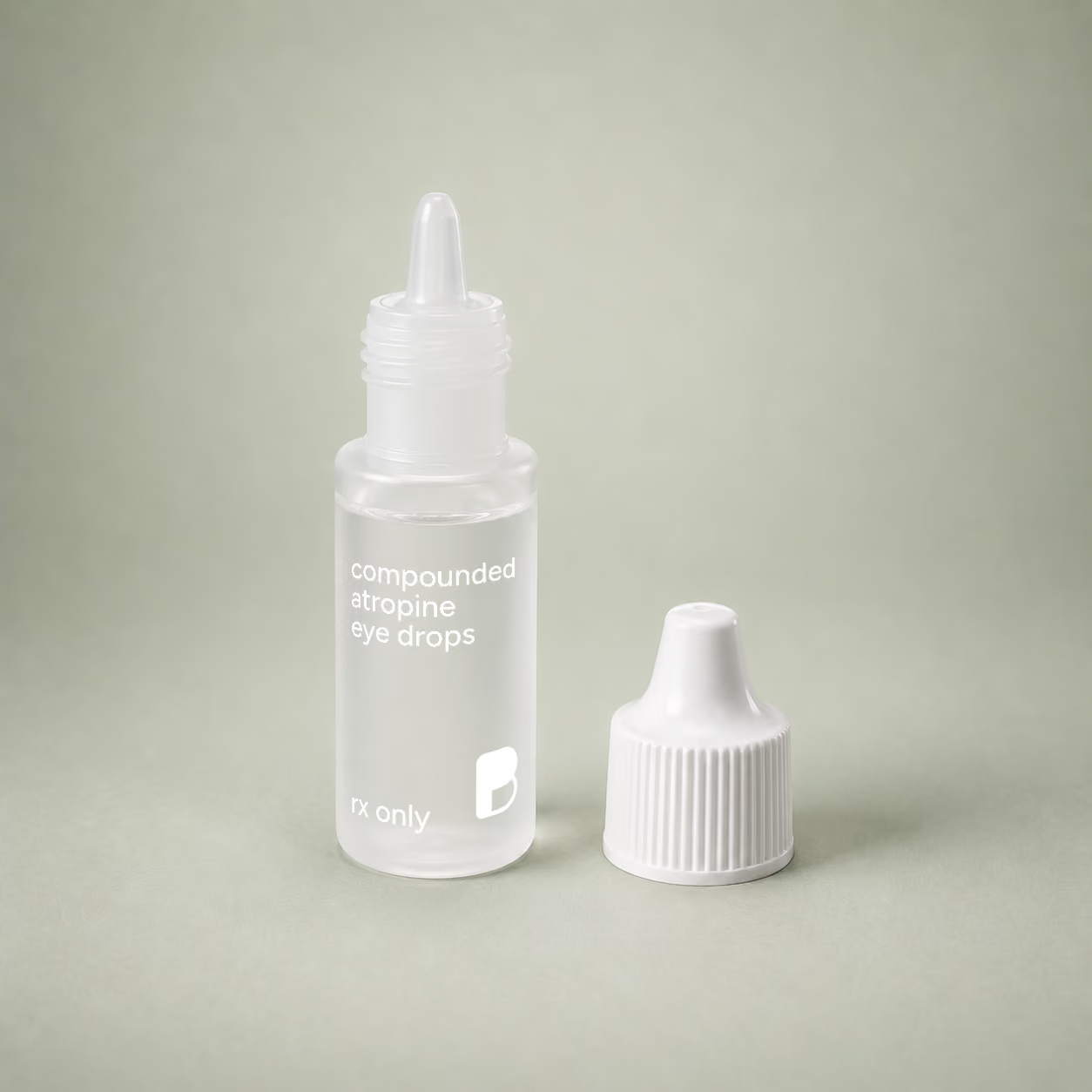
Atropine eye drops (low-dose) are a compounded, prescription ophthalmic solution used to help slow the progression of nearsightedness (myopia) in children. Because there is no FDA-approved low-dose atropine product in the United States, eye doctors prescribe it off-label and Bayview prepares it sterile at the strength ordered. Compounded medications are not FDA-approved, and a valid prescription is required.

What is low-dose atropine used for?

Eye doctors prescribe low-dose atropine eye drops to help slow the progression of nearsightedness (myopia) in children, usually one drop at bedtime over a period of years. It is used off-label, and a valid prescription is required.

What is low-dose atropine used for?

The American Academy of Ophthalmology and about two decades of research support that low-dose atropine can slow myopia progression in many children. The size of the effect varies, and your eye doctor decides whether it is appropriate and which concentration to use.

Trusted by 105,826 patients to date.
A group of faces of our past satisfied patients.
Compounded medications are prepared pursuant to a valid prescription for an individual patient and are not FDA-approved. This page is for educational purposes and is not medical advice.
**The FDA does not review or approve compounded medications for safety or effectiveness. A valid prescription from a licensed practitioner is required.
Important safety information →

Internal Pricing

This is internal data that only pharmacy staff can see.

INTERNAL — PRICING REFERENCE · DO NOT PUBLISH TO PATIENTS

Based on 1376 cash fills in 2025 (cash, autofill, and pickup/cash autofill; insurance-adjudicated fills excluded). Usual is the most commonly charged price for that product and quantity; the range reflects discounts, autofill pricing, and mid-year price changes.

ProductQtyUsual2025 rangeFills
ATROPINE 0.01% OPHTHALMIC (PRESERVED)5 mL$40$35–$50453
ATROPINE 0.01% OPHTHALMIC (PRESERVED)10 mL$80$70–$100114
ATROPINE 0.02% OPHTHALMIC (PRESERVED)5 mL$50$45–$60269
ATROPINE 0.02% OPHTHALMIC (PRESERVED)10 mL$100$60–$12057
ATROPINE 0.05% OPHTHALMIC (PRESERVED)5 mL$60$55–$70415
ATROPINE 0.05% OPHTHALMIC (PRESERVED)10 mL$120$40–$18068

Starting price shown on the page: $40 (5 mL). Compiled July 2026 from 2025 dispensing data. Confirm current pricing for special orders, unusual quantities, or compounded-to-order strengths before quoting.

Getting your prescription filled is simple

Send us your prescription

STEP
1
Have your provider e-prescribe to Bayview, fax it to us, or call it in directly to one of our pharmacists.
A thin blue light beam connecting two clear glass slabs on a white surface.

A pharmacist reviews it

STEP
2
We verify your prescription and prepare your medication to your provider's exact instructions.
Close-up of a white dial with blue measurement markings and a rotating knob.

We compound & ship

STEP
3
We prepare your medication and ship it discreetly to your door, with support when you need it.
Close-up of a gray box with a precise blue line running along its folded edges.

What is Atropine Eye Drops?

Atropine eye drops (low-dose) are a compounded, prescription ophthalmic solution of atropine prepared at low concentrations. Low-dose atropine is used to help slow the progression of nearsightedness (myopia) in children. It is prepared by a licensed pharmacy to the strength your eye doctor orders rather than mass-produced, most commonly at 0.01%, 0.02%, or 0.05%.

Because there is no FDA-approved low-dose atropine product in the United States, eye doctors prescribe it off-label and rely on a compounding pharmacy to prepare these low concentrations. Only a licensed eye care provider can decide whether it is right for a child.

Low-dose atropine for myopia is compounded and used off-label. Only 1% atropine is commercially available in the United States. The low concentrations used for myopia control (about 0.01% to 0.05%) have no FDA-approved product, so they are prepared by a compounding pharmacy to your eye doctor's prescription. A valid prescription is required, and your eye doctor determines whether it is appropriate.

How does it work?

Myopia tends to progress as a child's eye grows too long from front to back, so distant objects focus in front of the retina instead of on it. Used as a nightly eye drop, low-dose atropine is thought to act on the eye to slow that excessive lengthening, which slows how quickly myopia progresses (American Academy of Ophthalmology). Evidence gathered over about two decades supports that low-dose atropine can slow myopia progression in many children (AAO Ophthalmic Technology Assessment). Your eye doctor sets the concentration and schedule.

What is it used for?

Low-dose atropine is prescribed to help slow the progression of myopia in children, typically one drop at bedtime over a period of years while the eyes are still growing. The American Academy of Ophthalmology notes that low-dose atropine can slow myopia progression, and in the LAMP study, among the low doses compared, 0.05% showed the greatest effect, while 0.01% had the fewest side effects; the right concentration depends on the individual child (LAMP study). It is used off-label because there is no FDA-approved low-dose atropine product in the United States. Only a licensed eye care provider can decide whether it is appropriate; Bayview Pharmacy does not provide consultations or determine appropriateness, and a valid prescription is required.

How do the strengths compare?

Low-dose atropine is compounded at a few low concentrations that differ mainly in how strong they are. In general, higher concentrations within this low range may slow progression somewhat more but can cause a little more light sensitivity and near blur, while the lowest concentration has the fewest side effects. The table below describes those differences for education only.

StrengthNotes
0.01%The most studied low dose; generally the fewest side effects and the least rebound when stopped
0.02%An intermediate low concentration
0.05%Among the low doses in the LAMP study, showed the greatest effect; may cause slightly more light sensitivity or near blur
CustomOther concentrations as your eye doctor orders

Strengths are described for education only and are not a statement that any concentration is better for a particular child. Your eye doctor selects the concentration and schedule that are appropriate.

How is it used?

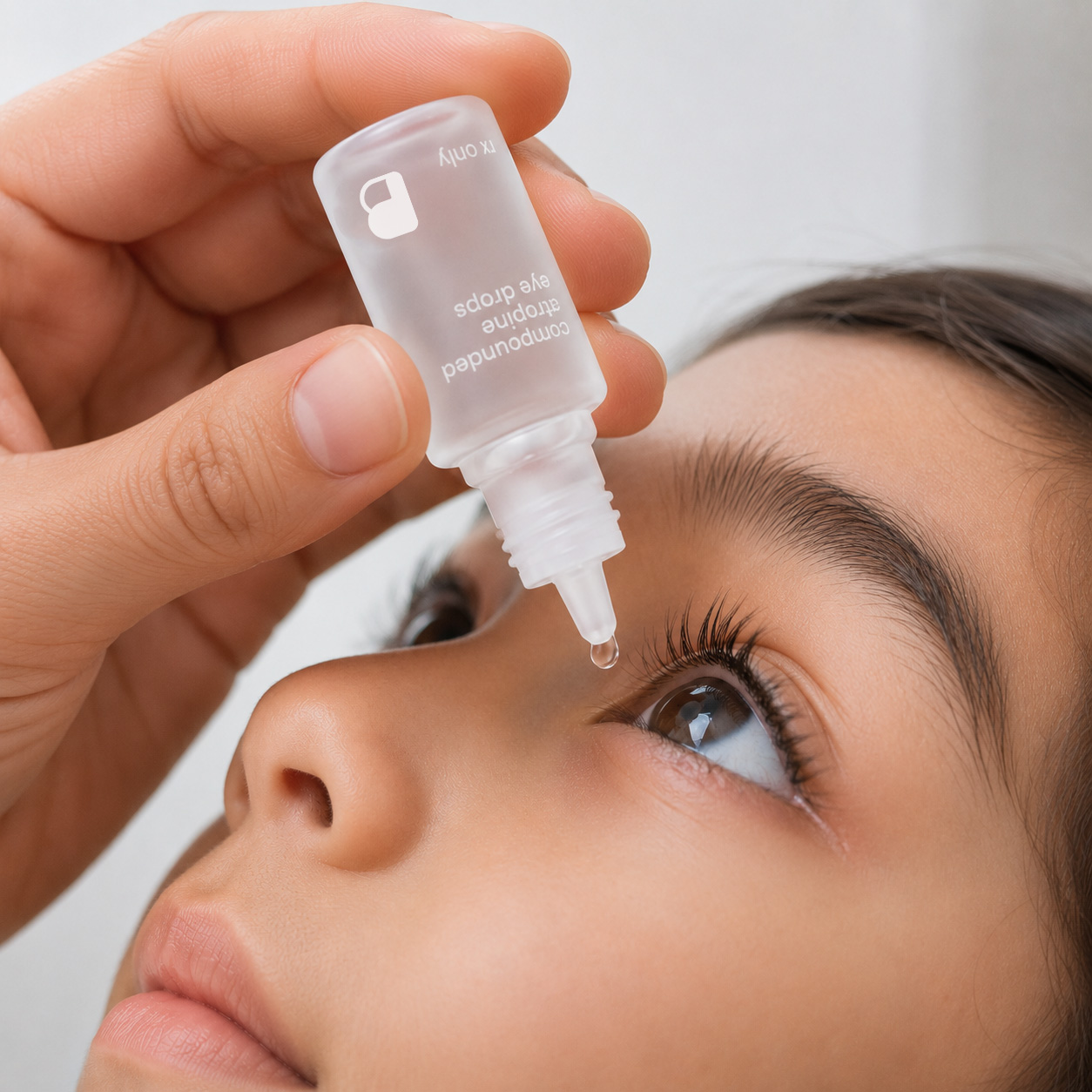
Use it exactly as your eye doctor directs, which is usually one drop in each eye once daily at bedtime. Wash your hands before and after, and do not let the dropper tip touch the eye or any surface. For a child, an adult should give the drops. Using the drop at bedtime helps reduce daytime light sensitivity and blurred near vision. If more than one eye drop is prescribed, wait about five minutes between them. Do not stop or change the schedule on your own, because stopping suddenly can allow faster progression again (rebound); follow your eye doctor's plan. A Bayview pharmacist is available if you have questions about your prescription.

Side effects & safety

Low-dose atropine is generally well tolerated. The most common effects are mild and related to the concentration, such as light sensitivity (from slightly larger pupils), blurred near vision, and eye redness or itching; these are less common at the lowest concentrations, and using the drop at bedtime helps limit daytime symptoms. Rarely, atropine can cause body-wide (anticholinergic) effects such as facial flushing, dry mouth, fast heartbeat, or fever, which are uncommon at low ophthalmic doses; seek care if these occur.

Keep atropine out of the reach of children. Atropine can be harmful if swallowed. Store the bottle safely and out of reach. If a child swallows the medication, or if far more than the prescribed amount is used, contact Poison Control at 1-800-222-1222 or seek emergency care right away.

Contact your eye doctor about eye redness that does not go away, eye pain, or any vision change that concerns you.

Who should not use it?

Atropine is not appropriate for everyone. It should not be used by anyone with a known allergy to atropine or related belladonna alkaloids, or with certain eye conditions such as untreated narrow-angle glaucoma, unless a provider specifically directs otherwise. Tell your eye doctor about the full health history, allergies, and all medications of the person who will use it, so they can determine whether low-dose atropine is appropriate.

How should it be stored?

Store exactly as directed on your label, away from heat and light; some compounded atropine drops are kept refrigerated, so follow your label. Keep the bottle tightly closed and out of the reach of children, and do not share it. To avoid contamination, do not touch the dropper tip to the eye or any surface. Do not use it after its beyond-use date, and dispose of unused medication as directed.

Why is this compounded?

Only 1% atropine is commercially available in the United States, and there is no FDA-approved low-dose atropine product for myopia. Compounding lets a licensed pharmacy prepare atropine at the low concentrations used for myopia control, for example 0.01%, 0.02%, or 0.05%, to your eye doctor's exact prescription. As a 503A compounding pharmacy, Bayview Pharmacy prepares each order as a sterile ophthalmic preparation in small batches under USP <797> standards using quality ingredients. Compounded preparations are not FDA-approved.

Clinical details for prescribers

Regulatory status. Atropine is not a controlled substance. There is no FDA-approved low-dose atropine product for myopia in the United States; only 1% atropine is commercially available (approved for cycloplegia, mydriasis, and as an adjunct for amblyopia/uveitis). Low-dose atropine for myopia is prescribed off-label and requires compounding. (Sydnexis SYD-101 received an FDA Complete Response Letter in 2025; a low-dose atropine was authorized in the EU in 2025.) Compounded preparations are not FDA-approved.

Formulation & SIG. Compounded sterile ophthalmic solution at 0.01%, 0.02%, and 0.05% (custom concentrations available), in 5 mL or 10 mL. Typical SIG: instill 1 drop into each eye (or as specified) once daily at bedtime. Prepared under USP <797> sterile-compounding standards.

Evidence & clinical points:

  • AAO Ophthalmic Technology Assessment: Level I evidence supports atropine to slow myopic progression
  • LAMP study: dose-related effect (0.05% > 0.025% > 0.01%); 0.05% greatest effect among low doses; 0.01% fewest side effects and least rebound
  • Monitor with cycloplegic refraction and axial length; plan duration and tapering given rebound considerations
  • Contraindicated with atropine/belladonna-alkaloid hypersensitivity; caution with narrow-angle glaucoma

Ordering: send a prescription to Bayview, or use our Atropine Ophthalmic order form (fax 401-284-4506). Background: AAO, Low-Dose Atropine for Kids with Myopia; LAMP study.

This is a prescription compounded medication and is not FDA-approved. This information is educational and is not medical advice. Your eye care provider determines whether it is appropriate and sets the concentration and dose.
In Stock

On this page

Helping slow myopia in children

A single low-dose atropine drop at bedtime can help slow how fast nearsightedness progresses in many children, based on research gathered over two decades. Because there is no FDA-approved low-dose product, Bayview compounds it sterile at the strength your eye doctor orders.

Start with a prescription

Prepared to your eye doctor's directions

Atropine eye drops are compounded to the concentration ordered by the prescriber and dispensed as a sterile eye drop. Options include 0.01%, 0.02%, and 0.05%, in 5 mL or 10 mL, matched to the patient.

View our formulas

Personalized compounding for patients who need more than a standard option.

"As a compounding pharmacy, we prepare each medication to a provider’s exact specifications. My focus, and my team’s focus, is quality, consistency, and close communication with prescribers so patients receive medication prepared for their individual needs."
Ryan Dyer, RPh
Owner and Chief Pharmacist, Bayview Pharmacy
Smiling man in blue scrubs with arms crossed and pen behind his ear
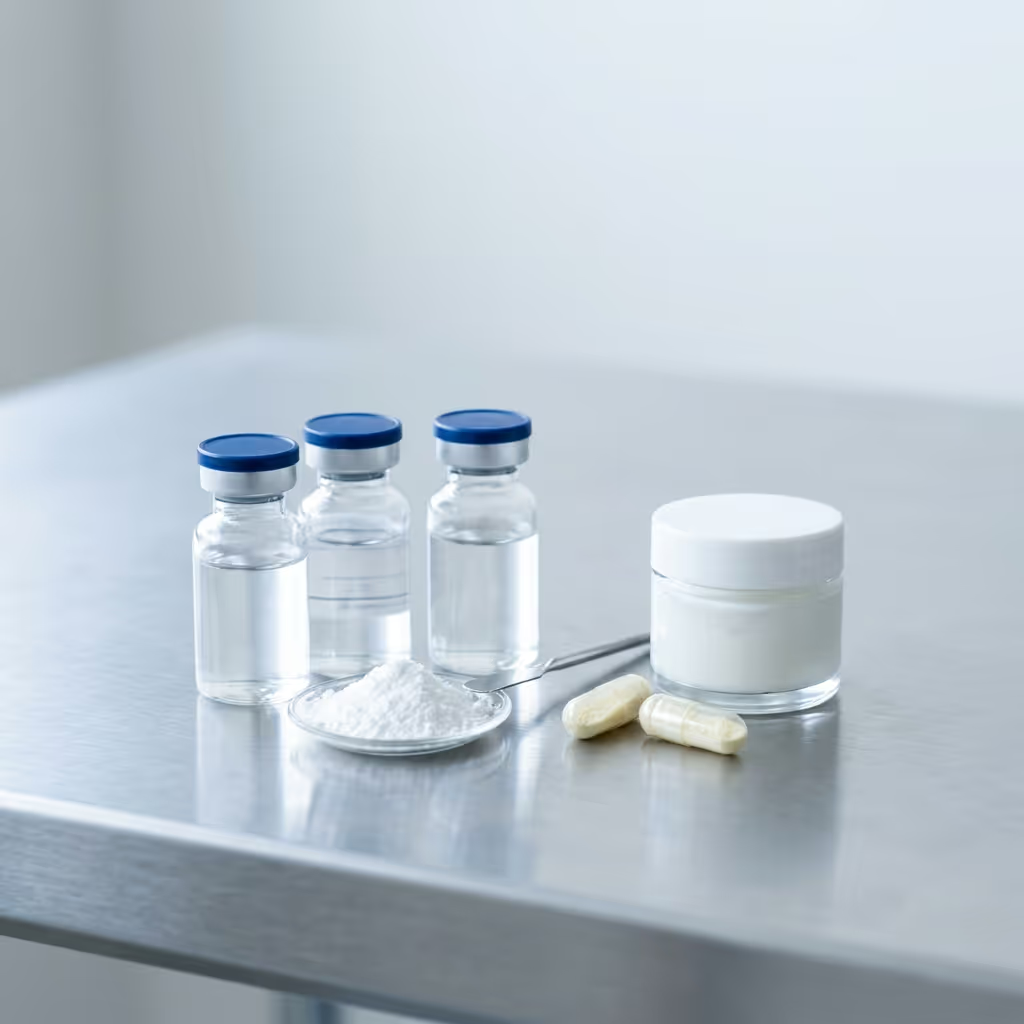
Three clear liquid vials, white powder on spoon, two capsules, and a cream jar on a metal surface.
QUALITY AND TESTING

Held to a higher standard

Every preparation is made under strict quality controls, and verified by a licensed pharmacist.
We use validated quality processes and third-party testing where appropriate
Sterile compounding in a dedicated USP <797> cleanroom
Non-sterile compounding under USP <795> and <800> standards
USP/NF-grade ingredients from reputable, vetted suppliers

Why patients choose Bayview

Made in our own pharmacy
Made to your prescription
Quality tested
Real pharmacist support
Trusted since 2006

Our formulations

Low-dose atropine is compounded in the concentration your eye doctor orders and dispensed as a sterile eye drop. Strengths are shown for reference; your eye doctor selects the concentration that is appropriate.

Strength Bottle size How it's used
Atropine 0.01%5 mL or 10 mL1 drop in each eye at bedtime
Atropine 0.02%5 mL or 10 mL1 drop in each eye at bedtime
Atropine 0.05%5 mL or 10 mL1 drop in each eye at bedtime
Custom concentration5 mL or 10 mLAs your eye doctor directs

Directions are set by the prescriber; the schedule above reflects the common bedtime regimen and is not a treatment recommendation. Strengths are listed for education only and are not a statement that any concentration is better for a particular child. A valid prescription is required, and your eye doctor determines which concentration and schedule are appropriate. This is a compounded medication and is not FDA-approved.

Start with a prescription
Prescribers: download order form ↓

Frequently asked questions

What is low-dose atropine used for?

Eye doctors prescribe low-dose atropine eye drops to help slow the progression of nearsightedness (myopia) in children, usually one drop at bedtime over a period of years. It is used off-label, and a valid prescription is required.

What is low-dose atropine used for?

The American Academy of Ophthalmology and about two decades of research support that low-dose atropine can slow myopia progression in many children. The size of the effect varies, and your eye doctor decides whether it is appropriate and which concentration to use.

Is low-dose atropine FDA-approved?

No. Only 1% atropine is commercially available in the US; the low concentrations used for myopia (about 0.01% to 0.05%) have no FDA-approved product, so they are compounded and prescribed off-label, and are not FDA-approved.

Which strength is best — 0.01%, 0.02%, or 0.05%?

Your eye doctor chooses. In the LAMP study, 0.05% had the greatest effect among the low doses, while 0.01% had the fewest side effects and the least rebound. The right concentration depends on the individual child.

What are the side effects?

The most common are mild — light sensitivity, blurred near vision, or eye redness or itching — and are less common at the lowest concentrations. Using the drop at bedtime helps limit daytime symptoms.

How is it used?

Usually one drop in each eye once daily at bedtime, exactly as your eye doctor directs. Wash hands first, don't touch the dropper tip to the eye, and for a child an adult should give the drops.

Do I need a prescription?

Yes. All of our medications require a valid prescription from a licensed provider. We're a dispensing and compounding pharmacy, so we don't provide consultations or write prescriptions. If you don't have one yet, you'll need to find and see a provider first.

What is compounding?

Compounding is the practice of preparing a medication tailored to an individual patient's prescription. Instead of a mass-produced product, a compounding pharmacy makes the medication to the specific strength, form, or combination your provider orders.

Are compounded medications FDA-approved?

Compounded medications are not FDA-approved. They're prepared by a licensed pharmacy pursuant to a valid prescription for an individual patient, under USP standards. The FDA does not review compounded medications for safety or effectiveness.

How do providers send a prescription to Bayview?

Providers can submit a prescription three ways:

  • E-prescribe: Search Bayview Pharmacy, Warwick, RI (NCPDP 4106882) in your EHR. For compounds, use the compound, custom, or free-text option and include the full formulation, strength, quantity, refills, and directions.
  • Fax: Send a signed order to 401-284-4506 (alt. 401-210-2757) with patient and prescriber details, medication, quantity, refills, directions, signature, and date.
  • Phone: Call 401-284-4505 to submit, clarify, or coordinate refills.

A valid prescription is required, and compounded medications are not FDA-approved.

Can you fill a prescription from my own provider?

Yes. Your provider can send your prescription to Bayview Pharmacy by e-prescribe, fax, or phone, or you can transfer an existing prescription from another pharmacy. Start a request and we'll guide you through it.

How does shipping work?

Once your prescription is verified, we prepare your medication and ship it discreetly in plain packaging either via UPS or USPS. A pharmacy technician confirms the details with you before it goes out, and we're available if you have any questions.

How do refills and automatic refills work?

Refills are coordinated with your prescriber and your prescription. You can request a refill through our website or by calling us, and we'll handle the rest as long as you have refills remaining on a valid prescription. You can also opt into automatic refills on non-controlled substances, with no need to worry about running out of your medication. We can either ship it to you automatically, or ready for pickup.

References

Sources reviewed

The medical information on this page draws on the following sources, which are also linked where cited.

  1. American Academy of Ophthalmology. Myopia Control in Children.
  2. American Academy of Ophthalmology. Low-Dose Atropine for Kids with Myopia.
  3. American Academy of Ophthalmology. Atropine for the Prevention of Myopia Progression in Children (Ophthalmic Technology Assessment).
  4. Yam JC, et al. Efficacy and Safety of 8 Atropine Concentrations for Myopia Control in Children (LAMP Study). Ophthalmology.

Important safety information

Important safety information

Low-dose atropine eye drops are a prescription compounded medication and are not FDA-approved; there is no FDA-approved low-dose atropine product for myopia in the United States, so it is used off-label. Use it only as prescribed and under the care of an eye care provider.

Do not use atropine eye drops if the person:

  • Is allergic to atropine or related belladonna alkaloids.
  • Has untreated narrow-angle glaucoma, unless a provider specifically directs otherwise.

Warnings and precautions:

  • Keep out of the reach of children. Atropine can be harmful if swallowed. If it is swallowed, or if far more than prescribed is used, contact Poison Control at 1-800-222-1222 or seek emergency care.
  • Use exactly as directed, usually one drop in each eye at bedtime. Do not touch the dropper tip to the eye or any surface. For a child, an adult should give the drops.
  • Do not stop suddenly on your own. Follow your eye doctor's plan, since stopping abruptly can allow faster progression again.
  • Tell your eye doctor about the full health history, allergies, and all medications of the person who will use it.

Common side effects:

  • Light sensitivity, blurred near vision, or eye redness or itching — usually mild and less common at the lowest concentrations.

Get emergency care for signs of too much atropine, such as:

  • Facial flushing, dry mouth, fast heartbeat, fever, confusion, or trouble breathing.
  • Signs of a serious allergic reaction such as rash, swelling, or trouble breathing.

Also contact your eye doctor for:

  • Eye redness that does not go away, eye pain, or any vision change that concerns you.

Storage:

Store as directed on the label, away from heat and light; some compounded drops need refrigeration. Keep the bottle tightly closed and out of the reach of children, and do not share it. Discard unused medication as directed by your pharmacist.

This is a compounded prescription medication and is not approved by the FDA. Use it only under the supervision of a licensed provider, exactly as prescribed. Do not adjust your dose without talking to your prescriber. Seek emergency care for any severe or unexpected reaction. This information is not complete; talk to your provider about your full medical history and all medications you take.

Ready to get started?

Send us your prescription and a Bayview pharmacist will take it from there.