



In Stock
Estradiol Vaginal Cream & Suppositories | Bayview Pharmacy

Estradiol Vaginal Cream & Suppositories

Smiling man in blue pharmacist scrubs with arms crossed and pen behind his ear.
Medically reviewed by Ryan Dyer, RPh
Last updated on
July 31, 2026
Starting at
$50
for
8 mL
Checkmark icon followed by text 'HSA/FSA Eligible'.
Start with a prescription
Prescribers: download order form ↓
Licensed to fill prescriptions for patients in RI, MA, CT, NY, NJ, NH & FL
  • Low-dose estradiol placed where the symptoms are, with limited absorption into the bloodstream
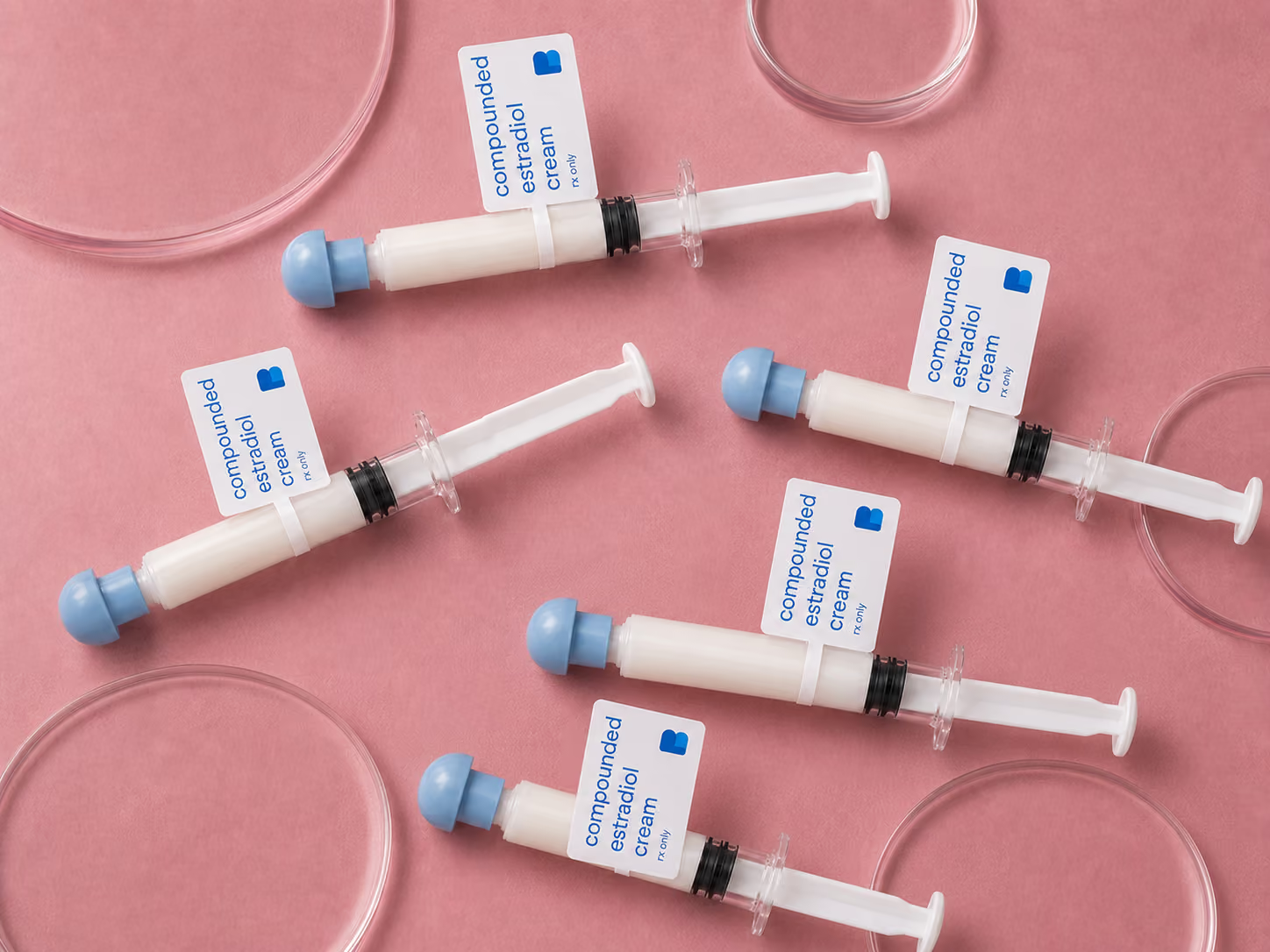
  • Dispensed in single-use prefilled syringes so each dose is measured for you
  • Compounded at the strength and in the form your provider orders — cream or suppository
  • Preservative and base options for people who react to commercial creams

Compounded vaginal estradiol is a prescription preparation used for genitourinary syndrome of menopause (GSM) — vaginal dryness, burning, irritation, painful sex, and related urinary symptoms. Bayview prepares it as a 0.01% or 0.02% cream in a VersaBase base, dispensed in 1 mL prefilled syringes or a tube, and as 0.1 mg vaginal suppositories. Compounded medications are not FDA-approved, several FDA-approved vaginal estrogen products are available, and a valid prescription is required.

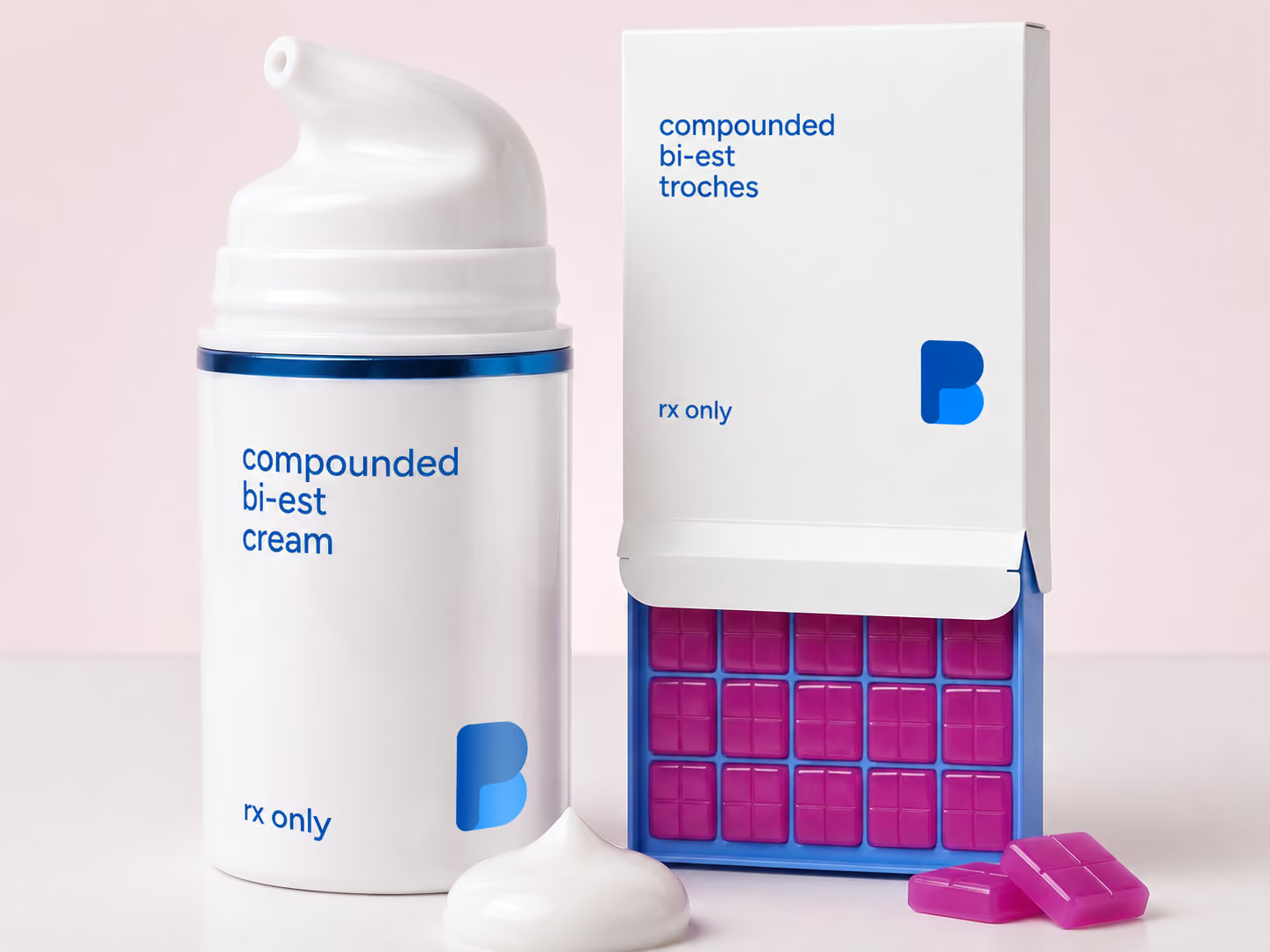
Bayview also compounds vaginal estriol, estradiol topical cream, Bi-Est, progesterone, and testosterone for women.

Why is it compounded?

FDA-approved vaginal estrogen creams, inserts, and a ring are all commercially available. Bayview compounds this preparation when your provider determines you need something those products do not offer, a base without propylene glycol or parabens, a strength that is not marketed, or a prefilled-syringe form. Compounded preparations are not FDA-approved.

How do I use it?

Follow your provider's directions. A common pattern is a nightly dose for about two weeks, then one to three times a week. A prefilled syringe delivers a fixed 1 mL; a tube is measured on the applicator; a suppository is inserted as directed.

Cream and oil-containing bases can weaken latex condoms and diaphragms.

Trusted by 105,826 patients to date.
A group of faces of our past satisfied patients.
Compounded medications are prepared pursuant to a valid prescription for an individual patient and are not FDA-approved. This page is for educational purposes and is not medical advice.
**The FDA does not review or approve compounded medications for safety or effectiveness. A valid prescription from a licensed practitioner is required.
Important safety information →
Service availability

Prescription delivery in your state

Bayview Pharmacy currently serves eligible patients in six states. Check your state before getting started.

Where we currently serve

Select a highlighted state to check availability.

Currently licensed Licensed — non-controlled only Not currently licensed Your selection

Select a state on the map or use the state checker.

Do we serve your state?

Choose your state to confirm current service availability.

Thank you! Your submission has been received!
Oops! Something went wrong while submitting the form.
Currently licensed in
Start with a prescription

Getting your prescription filled is simple

Send us your prescription

STEP
1
Have your provider e-prescribe to Bayview, fax it to us, or call it in directly to one of our pharmacists.
A thin blue light beam connecting two clear glass slabs on a white surface.

A pharmacist reviews it

STEP
2
We verify your prescription and prepare your medication to your provider's exact instructions.
Close-up of a white dial with blue measurement markings and a rotating knob.

We compound & ship

STEP
3
We prepare your medication and ship it discreetly to your door, with support when you need it.
Close-up of a gray box with a precise blue line running along its folded edges.

What is Estradiol Vaginal Cream & Suppositories?

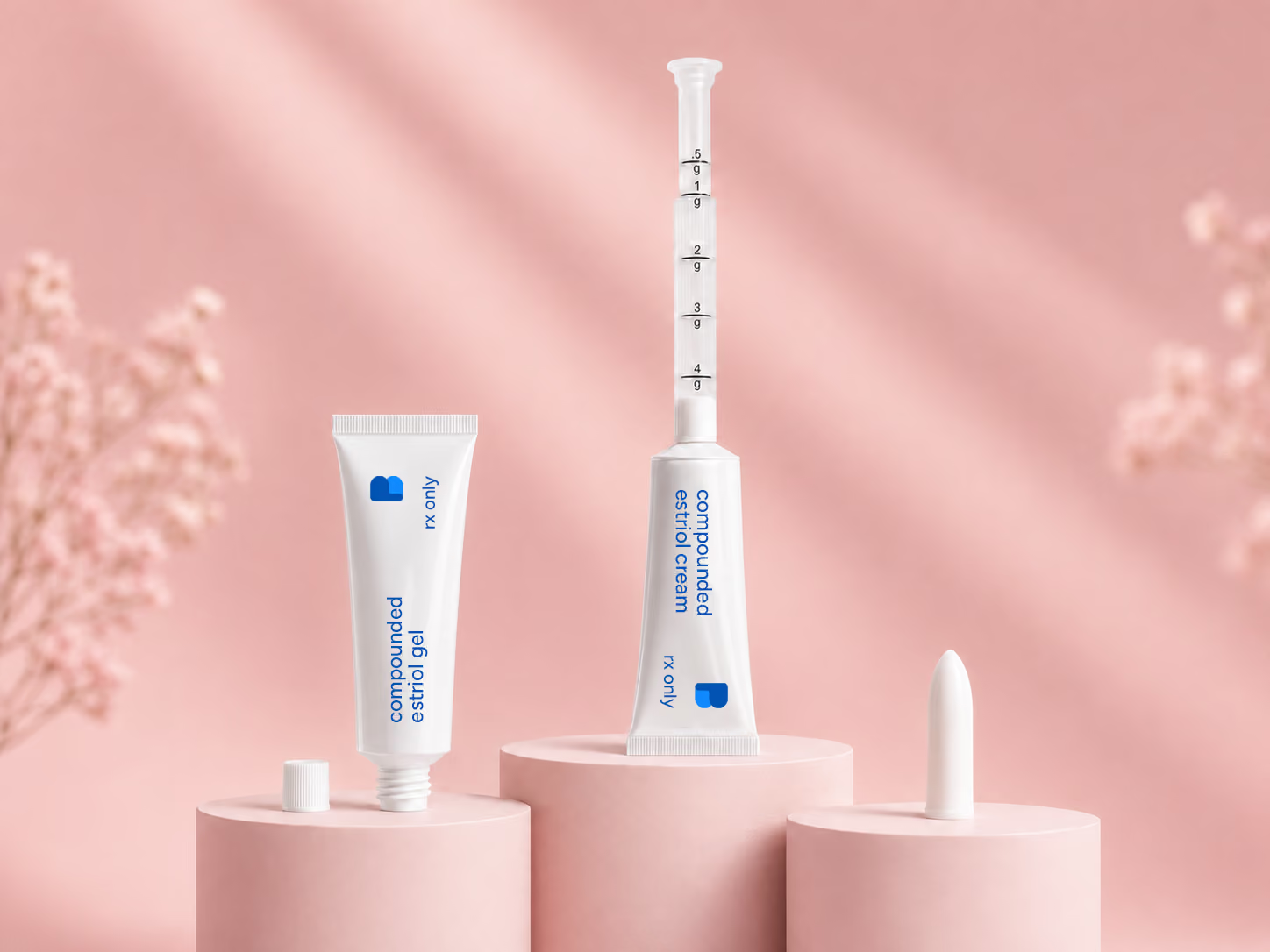
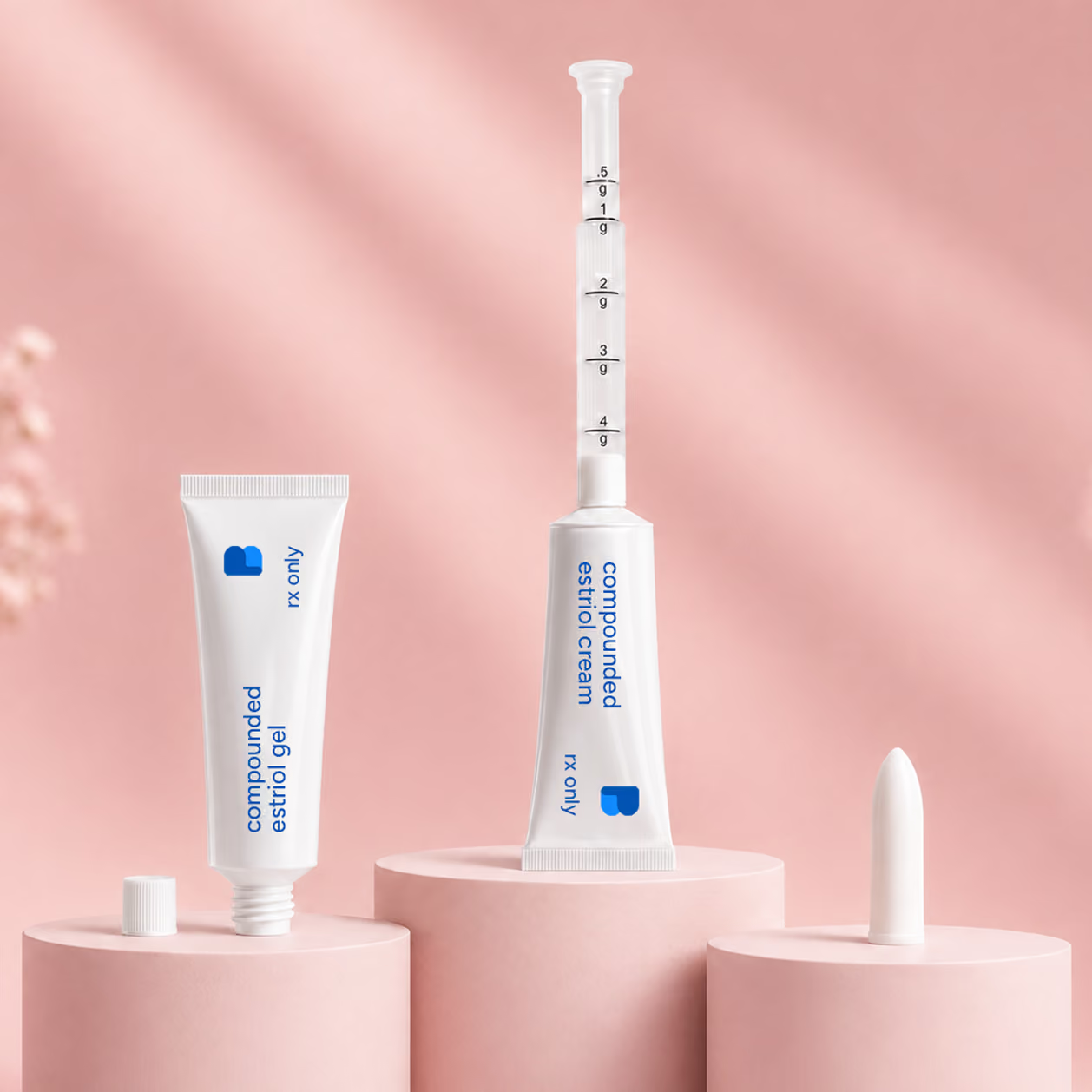
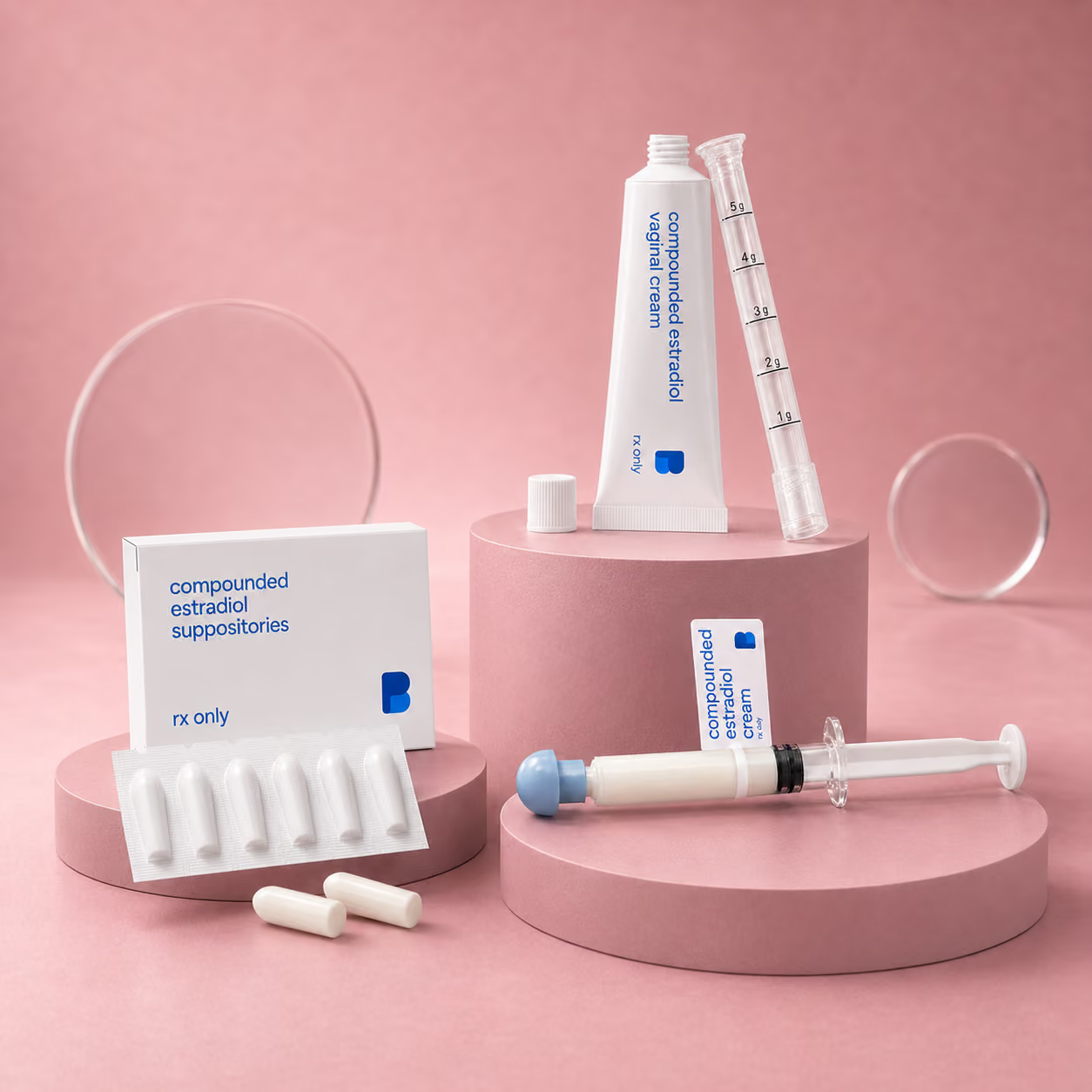
Estradiol is the main estrogen the ovaries make before menopause. Vaginal estradiol is a compounded prescription preparation that places a small, low dose of estradiol directly in the vagina, where the tissue changes of menopause cause symptoms. Bayview prepares it as a 0.01% or 0.02% cream in a VersaBase base, dispensed either in single-use 1 mL prefilled syringes or in a tube with an applicator, and as 0.1 mg vaginal suppositories.

Because the dose is low and delivered locally, most of the effect stays in the vaginal and lower urinary tissue and blood levels remain low. Only your provider can decide whether it is right for you, and a valid prescription is required.

FDA-approved vaginal estrogen products already exist. Estradiol vaginal cream, vaginal inserts, and a vaginal ring are all FDA-approved and commercially available. A compounded version is prepared when your provider determines you need something those products cannot provide — for example a base without propylene glycol or parabens, a strength that is not marketed, or a prefilled-syringe form. Compounded preparations are not FDA-approved.

How does it work?

After menopause, falling estrogen thins the lining of the vagina and lower urinary tract, reduces blood flow and natural lubrication, raises vaginal pH, and shifts the normal bacteria. Estradiol placed in the vagina restores estrogen signaling in that tissue: the lining thickens, moisture and elasticity improve, pH falls, and healthy lactobacilli return. Symptoms usually improve over a few weeks, with fuller benefit by about twelve weeks.

What is it used for?

Vaginal estrogen is used for genitourinary syndrome of menopause: vaginal dryness, burning and irritation, painful intercourse, and urinary urgency, frequency, and recurrent urinary tract infections related to menopause. The evidence for low-dose vaginal estrogen is strong. The 2025 AUA/SUFU/AUGS guideline on genitourinary syndrome of menopause gives a Strong Recommendation that clinicians offer local low-dose vaginal estrogen for vulvovaginal discomfort, dryness, and painful sex, states that it does not increase the risk of endometrial hyperplasia with atypia or endometrial cancer, and recommends against endometrial surveillance undertaken solely because a patient uses it. The Menopause Society's 2022 position statement likewise supports low-dose vaginal estrogen as first-line for isolated genitourinary symptoms. Bayview Pharmacy does not provide consultations or determine appropriateness.

What forms and strengths are available?

The strength and form are chosen by your provider. The cream is measured differently depending on how it is dispensed: a prefilled syringe delivers a fixed 1 mL, while a tube is measured with an applicator. The table below describes the options for education only.

FormNotes
0.02% cream, 1 mL prefilled syringesThe most commonly dispensed form here; each syringe is a single measured dose
0.01% cream, 1 mL prefilled syringesA lower strength; note this matches the strength of the FDA-approved cream
Cream in a tube with applicatorFor people who prefer a tube; dose measured on the applicator
Propylene glycol and paraben-free baseFor sensitivity or reaction to ingredients in commercial creams
0.1 mg vaginal suppositoryA solid insert; some people find it less messy than a cream

Forms are listed for education only and are not a statement that any option is better for a particular person. Your provider selects the strength, form, and schedule.

How is it used?

Use it exactly as your provider directs. A common approach is one dose inserted into the vagina at bedtime for about two weeks, then reducing to one to three times a week for maintenance. Bedtime dosing helps because lying down reduces leakage. With prefilled syringes, insert the syringe, press the plunger, and discard it; with a tube, fill the applicator to the mark your provider specified, insert, and wash the applicator afterward. Wash your hands before and after. Do not double up if you miss a dose. If symptoms have not improved after several weeks, tell your provider rather than increasing the dose yourself.

Side effects & safety

The most common effects are local: vaginal irritation or burning when starting, discharge, and sometimes mild breast tenderness or headache. These often settle as treatment continues. Cream and oil-containing bases can weaken latex condoms and diaphragms, so use another method of protection if that applies to you.

Any vaginal bleeding after menopause needs to be evaluated. Contact your provider promptly about vaginal bleeding or spotting after menopause, a new breast lump, chest pain, shortness of breath, swelling or pain in one leg, a severe headache, or any change in vision. Do not wait for a scheduled appointment.

Labeling for menopausal hormone therapy is currently changing. In November 2025 HHS and FDA announced the removal of boxed-warning language about cardiovascular disease, breast cancer, and probable dementia from menopausal hormone therapy products, and in February 2026 FDA approved those label changes for a first group of products including a topical vaginal estrogen, with further submissions pending. Compounded preparations carry no FDA-approved labeling of their own. Discuss your individual risks with your provider rather than relying on any general statement.

Who should not use it?

Based on the labeling for FDA-approved estradiol vaginal cream, estrogen is not appropriate for people with undiagnosed abnormal genital bleeding; known, suspected, or a history of breast cancer; other estrogen-dependent cancer; a current or past blood clot in the leg or lung; a history of stroke or heart attack; a known clotting disorder; liver disease; a known allergy to the product; or known or suspected pregnancy. The 2025 AUA/SUFU/AUGS guideline notes that use after breast cancer can be considered within multidisciplinary shared decision-making. Tell your provider your full health history, allergies, and all medications so they can determine whether it is appropriate for you.

How should it be stored?

Store as directed on your label, generally at controlled room temperature away from heat and light, and do not let it get above about 40 °C. Some suppository bases require refrigeration, so follow the label the pharmacy assigned. Keep it tightly closed and out of the reach of children, do not share it, and do not use it after the beyond-use date. Dispose of unused medication as your pharmacist directs.

Why is this compounded?

Several FDA-approved vaginal estrogen products are available, including estradiol vaginal cream, estradiol vaginal inserts, an estradiol vaginal ring, and conjugated estrogens vaginal cream. Compounding is appropriate when a patient needs something those products do not offer. The National Academies of Sciences, Engineering, and Medicine concluded in 2020 that compounded bioidentical hormone therapy should be restricted to two circumstances: an allergy to an ingredient in an FDA-approved product, or the need for a dosage form that is not commercially available. ACOG's 2023 clinical consensus similarly advises that compounded formulations should not be routinely prescribed when FDA-approved options exist, and that patients be counseled that compounded products lack FDA approval. As a 503A pharmacy, Bayview prepares each order to the prescriber's specification under USP <795> standards.

Clinical details for prescribers

Regulatory status. Estradiol is not a controlled substance. FDA-approved vaginal estrogens include estradiol vaginal cream 0.01% (Estrace and generics), estradiol vaginal inserts 10 mcg (Vagifem/Yuvafem), estradiol softgel inserts 4 and 10 mcg (Imvexxy), the estradiol vaginal ring (Estring), and conjugated estrogens vaginal cream (Premarin). The compounded 0.01% cream is the same strength as the approved cream and is therefore exposed to the “essentially a copy” restriction under FDCA 503A — please document the clinically significant difference for the individual patient (documented excipient sensitivity, or a dosage form the patient cannot otherwise use). The 0.02% cream and the 0.1 mg suppository are not marketed strengths or forms. Compounded preparations are not FDA-approved.

Dose equivalence caution. A 0.1 mg suppository contains roughly the estradiol in 1 g of 0.01% cream, but approximately 10 times a 10 mcg insert and 25 times a 4 mcg insert. Dose it as a cream equivalent, not as an insert equivalent.

Formulation & SIG. Estradiol 0.01% or 0.02% in VersaBase, dispensed as 1 mL prefilled syringes (8–36 mL) or in a 24–30 g tube; PG- and paraben-free base available; estradiol 0.1 mg vaginal suppositories (small shell), 24 count. Typical SIG: insert 1 mL intravaginally at bedtime for 14 days, then 1–3 times weekly. Prepared under USP <795>.

Evidence & clinical points:

  • AUA/SUFU/AUGS 2025 GSM guideline: Strong Recommendation for local low-dose vaginal estrogen; no increase in endometrial hyperplasia with atypia or endometrial cancer; recommends against endometrial surveillance solely for its use.
  • The Menopause Society 2022 position statement: first-line for isolated GSM; no routine progestogen required for endometrial protection at low local doses.
  • NASEM 2020 and ACOG Clinical Consensus No. 6 (2023): restrict cBHT to ingredient allergy or an unavailable dosage form; salivary and serum hormone testing is not recommended for dosing.
  • Menopausal hormone therapy labeling is in transition following the November 2025 HHS/FDA announcement and February 2026 label approvals; the endometrial cancer boxed warning was not removed for systemic estrogen-alone products.
  • Monitoring: annual review; prompt workup of any postmenopausal bleeding. Routine estradiol level monitoring is not indicated for local therapy.

Ordering: e-prescribe to Bayview Pharmacy, Warwick RI, or fax 401-284-4506. Background: AUA/SUFU/AUGS GSM Guideline (2025); FDA summary of the NASEM cBHT study.

This is a prescription compounded medication and is not FDA-approved. This information is educational and is not medical advice. Your provider determines whether it is appropriate and sets the strength, form, and schedule.
In Stock

On this page

Relief where the symptoms are

Vaginal estradiol places a low dose of estrogen right where menopause causes dryness, burning, painful sex, and urinary symptoms. Blood levels stay low. Your provider decides between this and FDA-approved options.

Start with a prescription
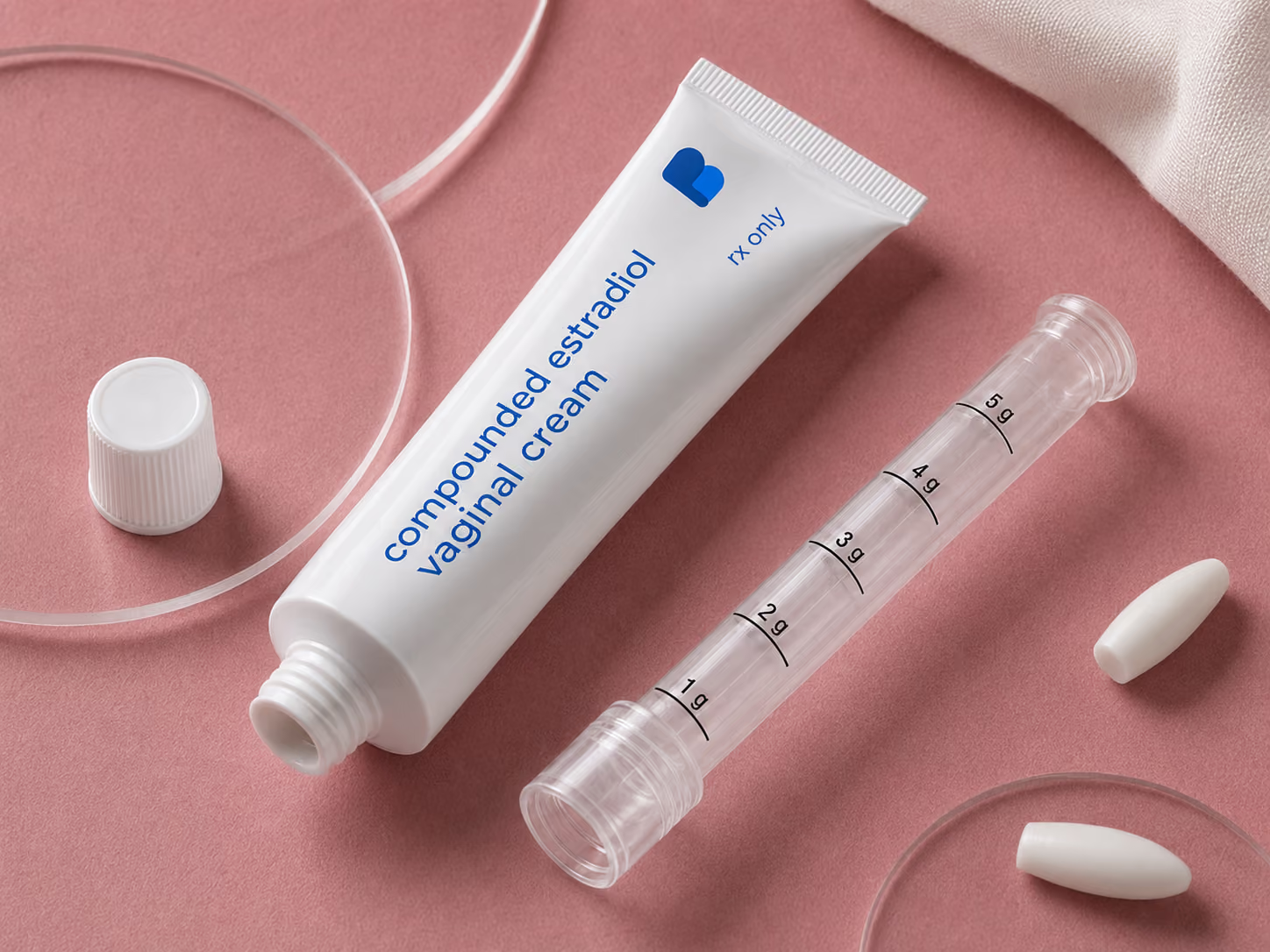
Relief where the symptoms are – Estradiol Vaginal Cream from Bayview Pharmacy

Syringes, tubes, and suppositories

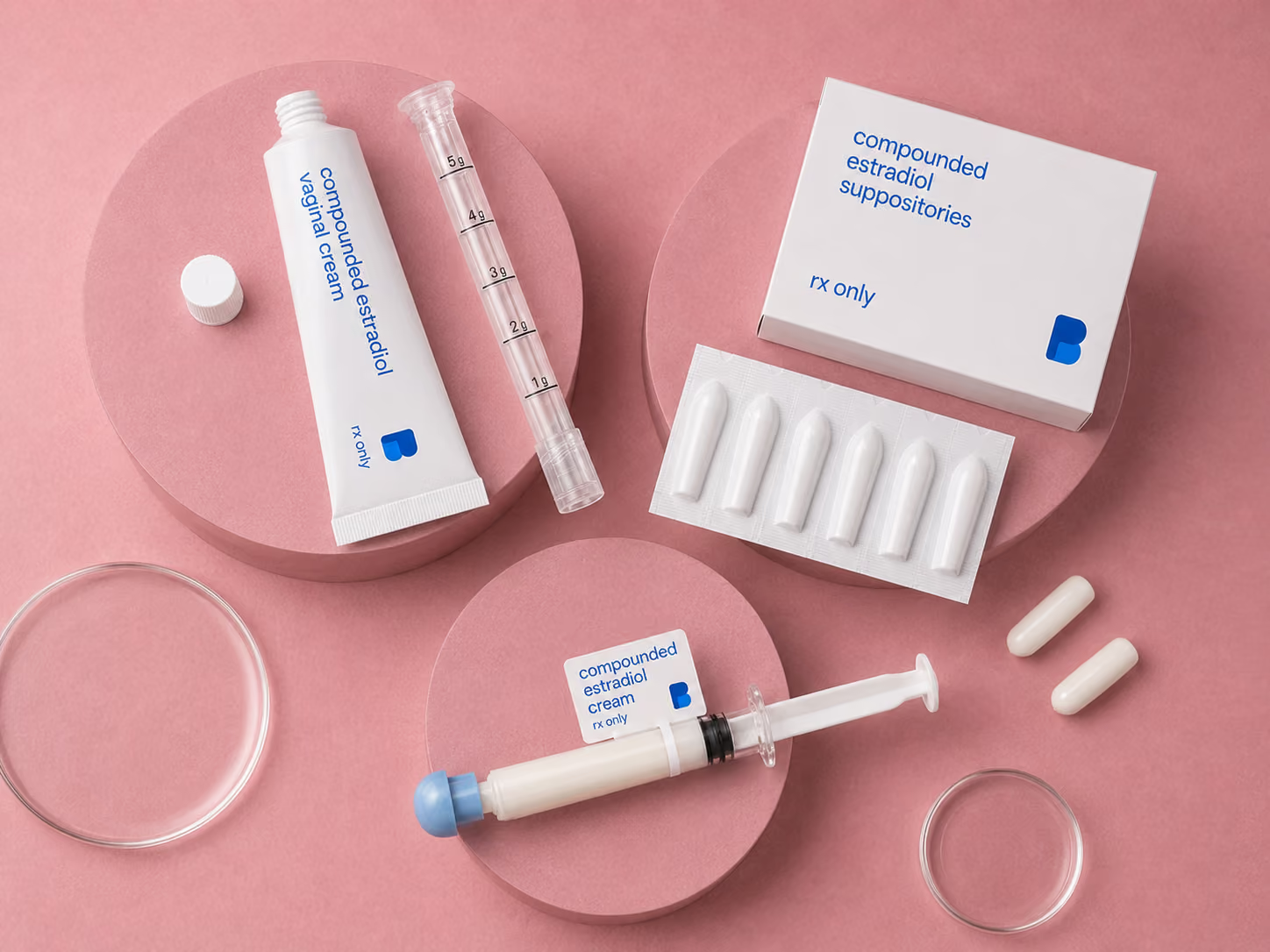
Estradiol vaginal cream comes in single-use prefilled syringes or a tube with an applicator, plus 0.1 mg suppositories. A propylene glycol- and paraben-free base is available, with custom strengths to order.

View our formulas
Syringes, tubes, and suppositories – Estradiol Vaginal Cream from Bayview Pharmacy

Personalized compounding for patients who need more than a standard option.

"As a compounding pharmacy, we prepare each medication to a provider’s exact specifications. My focus, and my team’s focus, is quality, consistency, and close communication with prescribers so patients receive medication prepared for their individual needs."
Ryan Dyer, RPh
Owner and Chief Pharmacist, Bayview Pharmacy
Smiling man in blue scrubs with arms crossed and pen behind his ear
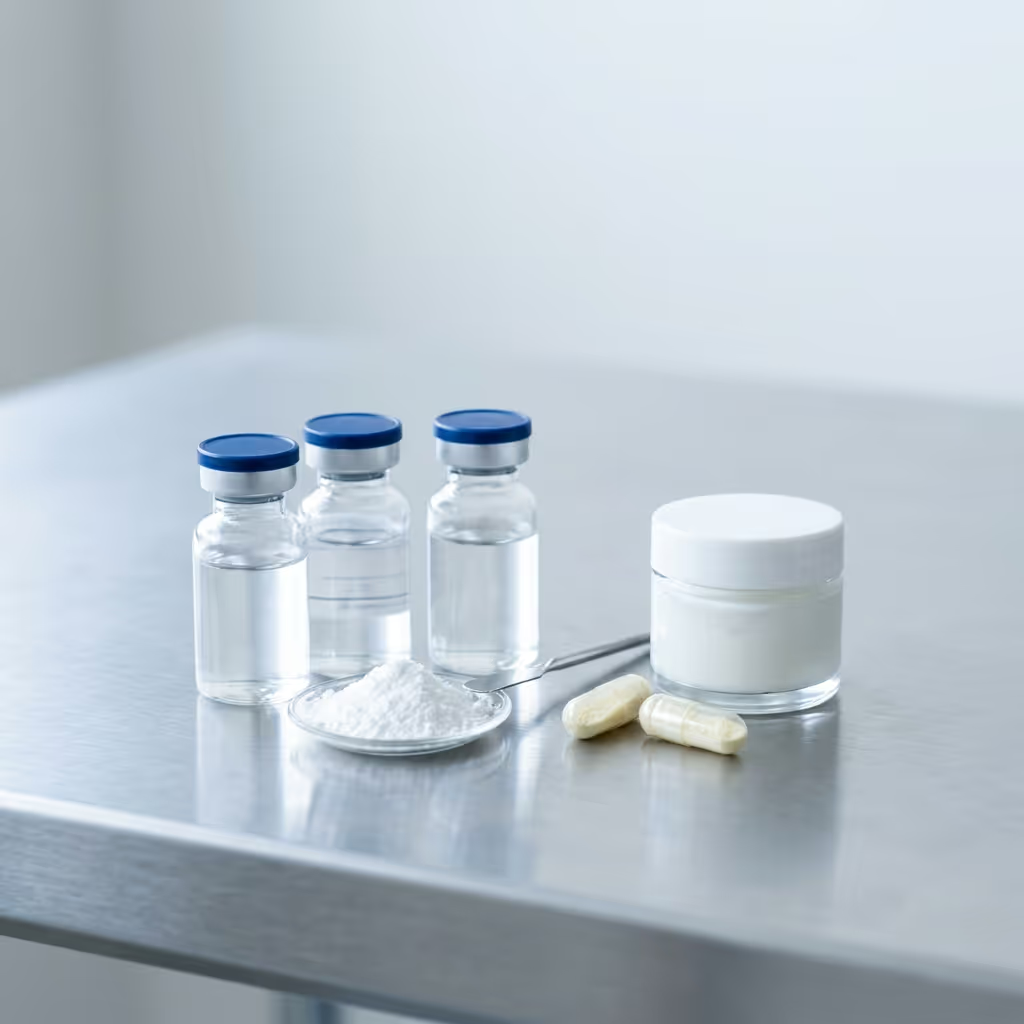
Three clear liquid vials, white powder on spoon, two capsules, and a cream jar on a metal surface.
QUALITY AND TESTING

Held to a higher standard

Every preparation is made under strict quality controls, and verified by a licensed pharmacist.
We use validated quality processes and third-party testing where appropriate
Sterile compounding in a dedicated USP <797> cleanroom
Non-sterile compounding under USP <795> and <800> standards
USP/NF-grade ingredients from reputable, vetted suppliers

Why patients choose Bayview

Made in our own pharmacy
Made to your prescription
Quality tested
Real pharmacist support
Trusted since 2006

Our formulations

Vaginal estradiol is compounded in the strength and form your provider orders. Options are shown for reference.

Strength & form Dispensed as How it's used
Estradiol 0.02% cream1 mL prefilled syringes, 8–36 mL1 mL intravaginally at bedtime, then 1–3× weekly
Estradiol 0.01% cream1 mL prefilled syringes or tube1 mL intravaginally at bedtime, then 1–3× weekly
Estradiol 0.01% or 0.02%, PG/paraben-free24–30 g tube with applicatorAs measured on the applicator
Estradiol 0.1 mg vaginal suppository24 count, small shellOne inserted at bedtime as directed
Custom strength or baseAs orderedAs your provider directs

Directions are set by the prescriber; the schedules above reflect common regimens and are not treatment recommendations. FDA-approved vaginal estrogen products are available; a compounded preparation is dispensed when your provider determines you need a strength, base, or form those products do not offer. A valid prescription is required. This is a compounded medication and is not FDA-approved.

Start with a prescription
Prescribers: download order form ↓

Frequently asked questions

Why is it compounded?

FDA-approved vaginal estrogen creams, inserts, and a ring are all commercially available. Bayview compounds this preparation when your provider determines you need something those products do not offer, a base without propylene glycol or parabens, a strength that is not marketed, or a prefilled-syringe form. Compounded preparations are not FDA-approved.

How do I use it?

Follow your provider's directions. A common pattern is a nightly dose for about two weeks, then one to three times a week. A prefilled syringe delivers a fixed 1 mL; a tube is measured on the applicator; a suppository is inserted as directed.

Cream and oil-containing bases can weaken latex condoms and diaphragms.

How long until it works?

Most people notice improvement over a few weeks as the vaginal lining thickens and moisture and elasticity return, with fuller benefit by about twelve weeks. Vaginal estrogen is used continuously rather than as needed, so symptoms generally return if you stop. Your provider will review treatment with you at least once a year.

Does vaginal estrogen raise my cancer risk?

The 2025 AUA/SUFU/AUGS guideline on genitourinary syndrome of menopause states that low-dose vaginal estrogen does not increase the risk of endometrial hyperplasia with atypia or endometrial cancer, and recommends against endometrial surveillance done solely because someone uses it.

Any vaginal bleeding after menopause still needs to be evaluated by your provider promptly, whatever the cause.

Is it FDA-approved?

No. This is a compounded preparation and carries no FDA-approved labeling. FDA-approved vaginal estrogen products are available and may be the right choice for you.

Labeling for menopausal hormone therapy is also mid-transition following FDA actions in November 2025 and February 2026, so discuss your individual risks with your provider rather than relying on packaging alone.

Who should not use it?

Do not use it if you have vaginal bleeding that has not been evaluated, a known or suspected estrogen-dependent cancer such as breast cancer, a current or past blood clot in the leg or lung, a history of stroke or heart attack, a clotting disorder, liver disease, or known or suspected pregnancy. Share your full history with your provider.

Do I need a prescription?

Yes. All of our medications require a valid prescription from a licensed provider. We're a dispensing and compounding pharmacy, so we don't provide consultations or write prescriptions. If you don't have one yet, you'll need to find and see a provider first.

What is compounding?

Compounding is the practice of preparing a medication tailored to an individual patient's prescription. Instead of a mass-produced product, a compounding pharmacy makes the medication to the specific strength, form, or combination your provider orders.

Are compounded medications FDA-approved?

Compounded medications are not FDA-approved. They're prepared by a licensed pharmacy pursuant to a valid prescription for an individual patient, under USP standards. The FDA does not review compounded medications for safety or effectiveness.

How do providers send a prescription to Bayview?

Providers can submit a prescription three ways:

  • E-prescribe: Search Bayview Pharmacy, Warwick, RI (NCPDP 4106882) in your EHR. For compounds, use the compound, custom, or free-text option and include the full formulation, strength, quantity, refills, and directions.
  • Fax: Send a signed order to 401-284-4506 (alt. 401-210-2757) with patient and prescriber details, medication, quantity, refills, directions, signature, and date.
  • Phone: Call 401-284-4505 to submit, clarify, or coordinate refills.

A valid prescription is required, and compounded medications are not FDA-approved.

Can you fill a prescription from my own provider?

Yes. Your provider can send your prescription to Bayview Pharmacy by e-prescribe, fax, or phone, or you can transfer an existing prescription from another pharmacy. Start a request and we'll guide you through it.

How does shipping work?

Once your prescription is verified, we prepare your medication and ship it discreetly in plain packaging either via UPS or USPS. A pharmacy technician confirms the details with you before it goes out, and we're available if you have any questions.

How do refills and automatic refills work?

Refills are coordinated with your prescriber and your prescription. You can request a refill through our website or by calling us, and we'll handle the rest as long as you have refills remaining on a valid prescription. You can also opt into automatic refills on non-controlled substances, with no need to worry about running out of your medication. We can either ship it to you automatically, or ready for pickup.

Shipping & Delivery

Every prescription ships directly to your door in discreet packaging. Refrigerated medications travel in insulated coolers with ice packs to stay cold in transit.

Delivery AreaStandard ShippingRefrigerated Shipping
Rhode Island, Massachusetts & Connecticut$9 USPS$20 UPS
New Hampshire, New Jersey & New York$15 UPS$40 UPS Next Day Air
Florida$15 UPS$80 UPS Next Day Air

Need it faster? Expedited UPS is $15 for Rhode Island, Massachusetts and Connecticut. Your pharmacist will let you know if your medication needs refrigerated shipping. Questions? Call us at (401) 284-4505.

References

Sources reviewed

The medical information on this page draws on the following sources, which are also linked where cited.

  1. American Urological Association, SUFU, and AUGS. Genitourinary Syndrome of Menopause: AUA/SUFU/AUGS Guideline (2025).
  2. The Menopause Society. Position Statements, including the 2022 Hormone Therapy Position Statement.
  3. DailyMed. Estrace (estradiol) vaginal cream label.
  4. MedlinePlus. Estrogen Vaginal: MedlinePlus Drug Information.
  5. National Academies of Sciences, Engineering, and Medicine. Prescribers Should Restrict the Use of Non-FDA-Approved Compounded Bioidentical Hormones, Except for Specific Medical Circumstances (2020).
  6. U.S. Food and Drug Administration. FDA Approves Labeling Changes to Menopausal Hormone Therapy Products (February 2026).

Important safety information

Important safety information

Compounded vaginal estradiol is a prescription estrogen and is not FDA-approved. FDA-approved vaginal estrogen products are available. Use this only as prescribed and under the care of your provider.

Do not use vaginal estradiol if you have:

  • Vaginal bleeding that has not been evaluated.
  • Known, suspected, or a history of breast cancer, or another estrogen-dependent cancer, unless your care team specifically directs otherwise.
  • A current or past blood clot in the leg or lung, or a history of stroke or heart attack.
  • A known clotting disorder, liver disease, a known allergy to the product, or known or suspected pregnancy.

Warnings and precautions:

  • Report any vaginal bleeding or spotting after menopause to your provider promptly.
  • Cream and oil-containing bases can weaken latex condoms and diaphragms.
  • Tell your provider your full health history, allergies, and all medications, and review your treatment at least once a year.
  • Labeling for menopausal hormone therapy is currently changing following FDA actions in November 2025 and February 2026. Discuss your individual risks with your provider.

Common side effects:

  • Vaginal irritation or burning, discharge, breast tenderness, headache, or nausea — usually mild and often settling with continued use.

Contact your provider right away for:

  • Vaginal bleeding after menopause, or a new breast lump.
  • Chest pain, shortness of breath, swelling or pain in one leg, severe headache, or vision changes — seek emergency care.

Storage:

Store as directed on your label, generally at room temperature away from heat and light; some suppository bases require refrigeration. Keep tightly closed and out of the reach of children, and do not share it. Discard unused medication as directed by your pharmacist.

This is a compounded prescription medication and is not approved by the FDA. Use it only under the supervision of a licensed provider, exactly as prescribed. Do not adjust your dose without talking to your prescriber. Seek emergency care for any severe or unexpected reaction. This information is not complete; talk to your provider about your full medical history and all medications you take.

Ready to get started?

Send us your prescription and a Bayview pharmacist will take it from there.