

In Stock
Ketamine Troche | Compounded Buccal Lozenge | Bayview Pharmacy

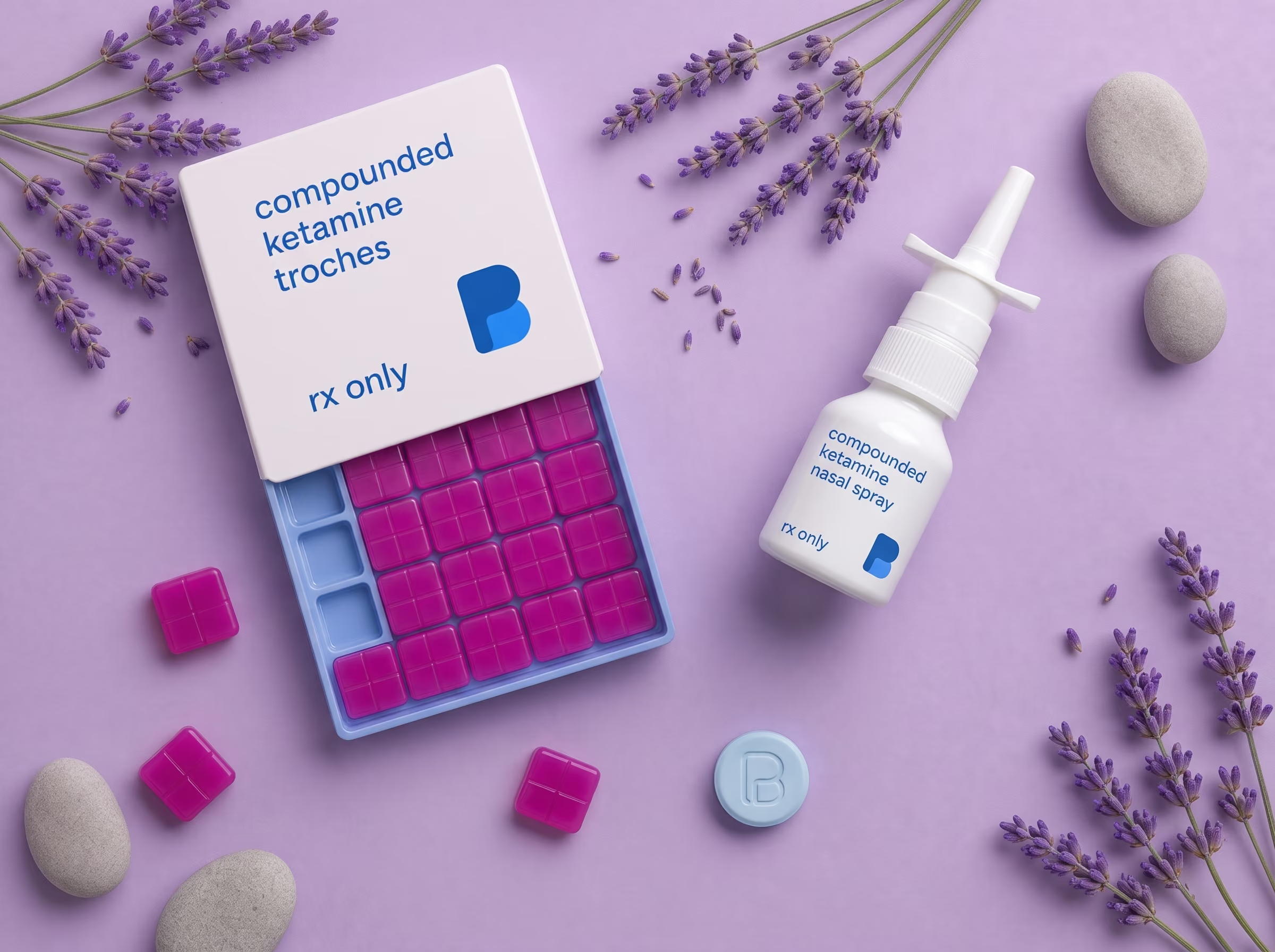
Ketamine Troches

Smiling man in blue pharmacist scrubs with arms crossed and pen behind his ear.
Medically reviewed by Ryan Dyer, RPh
Last updated on
July 23, 2026
This medication is a controlled substance. Your provider must send it by electronic prescribing for controlled substances (EPCS).
  • Acts on the brain's NMDA/glutamate system — a different target than SSRIs
  • Prescribed off-label for treatment-resistant depression, in a supervised plan
  • A slow-dissolving lozenge held between cheek and gum — no injection or IV
  • Compounded to any strength from 10 mg to 200 mg

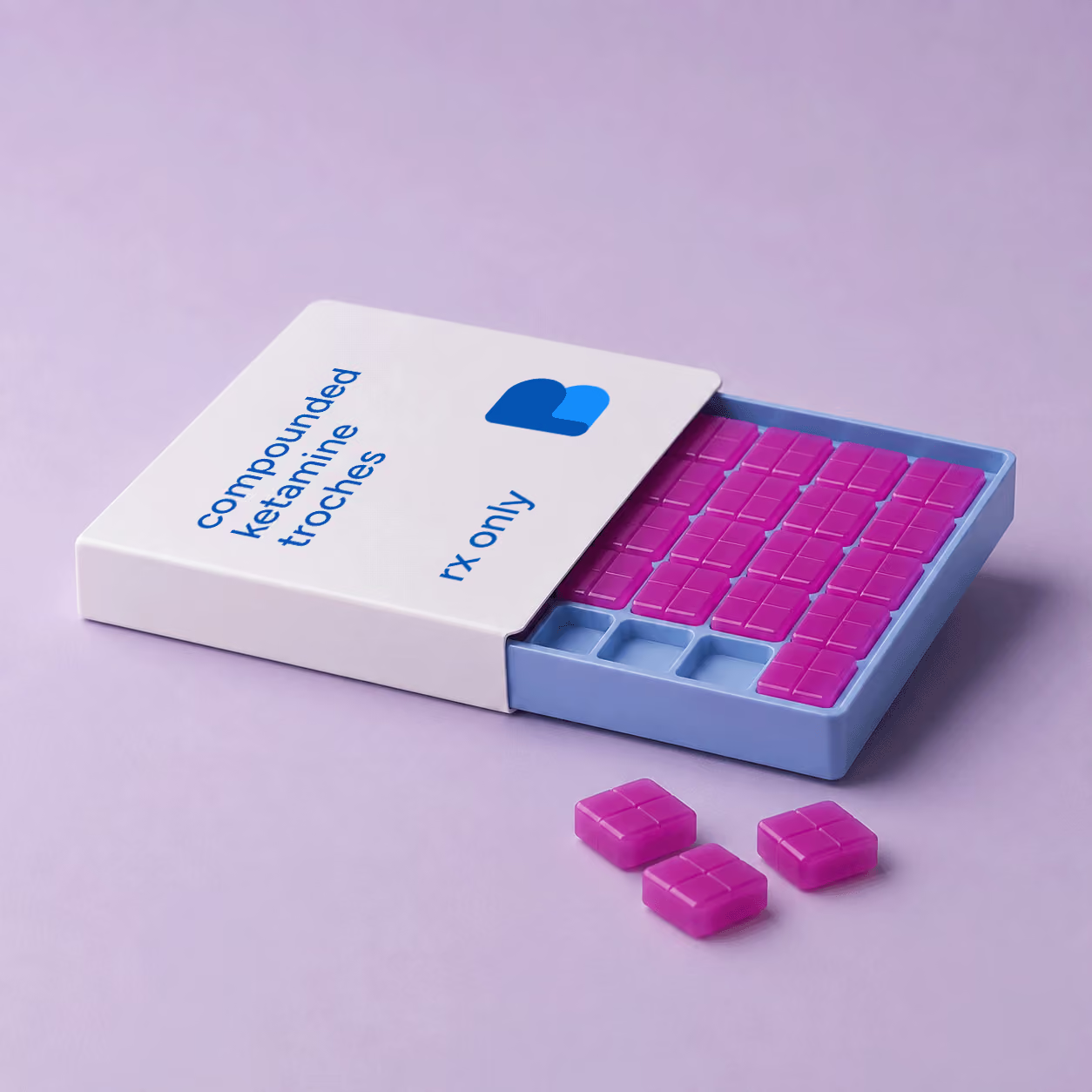
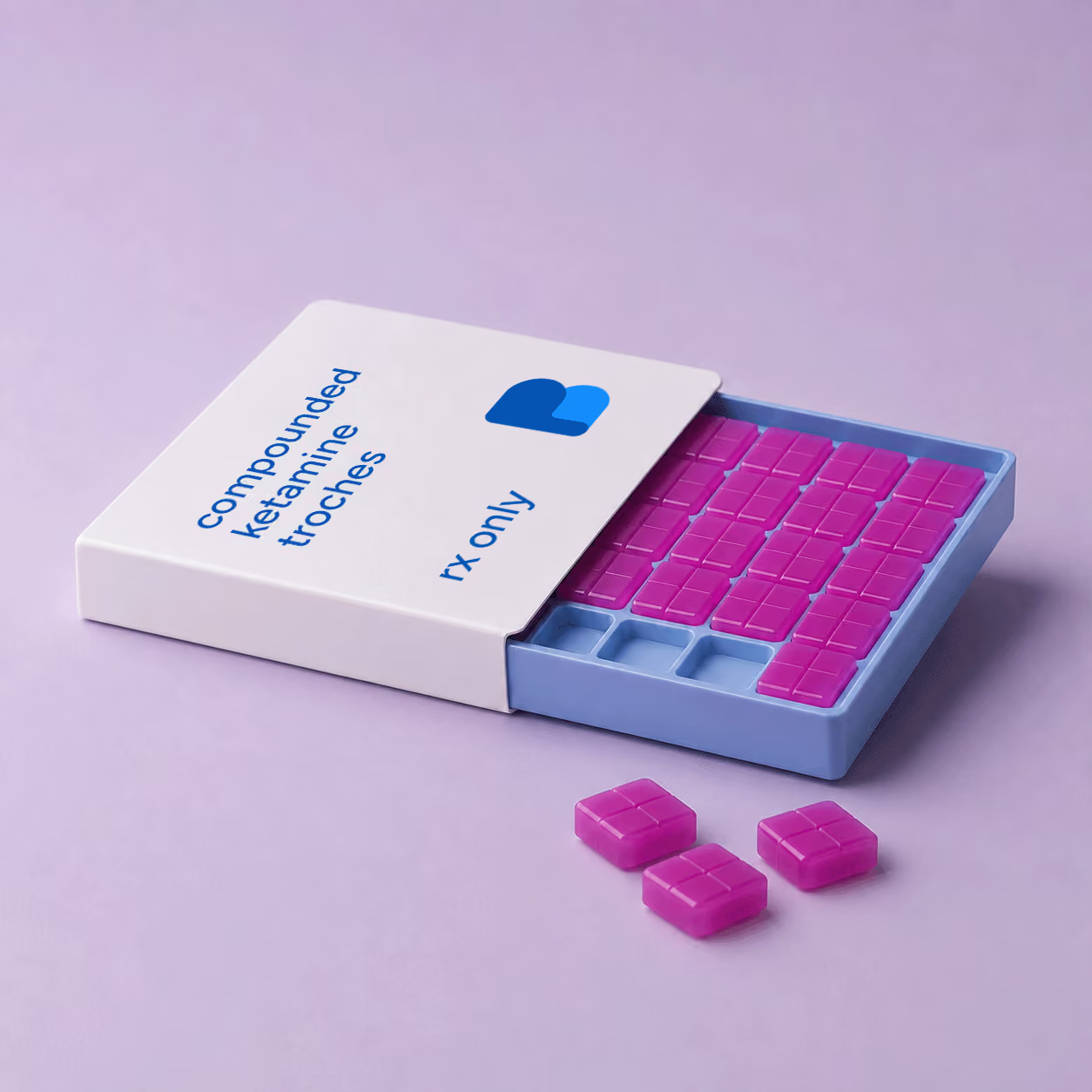
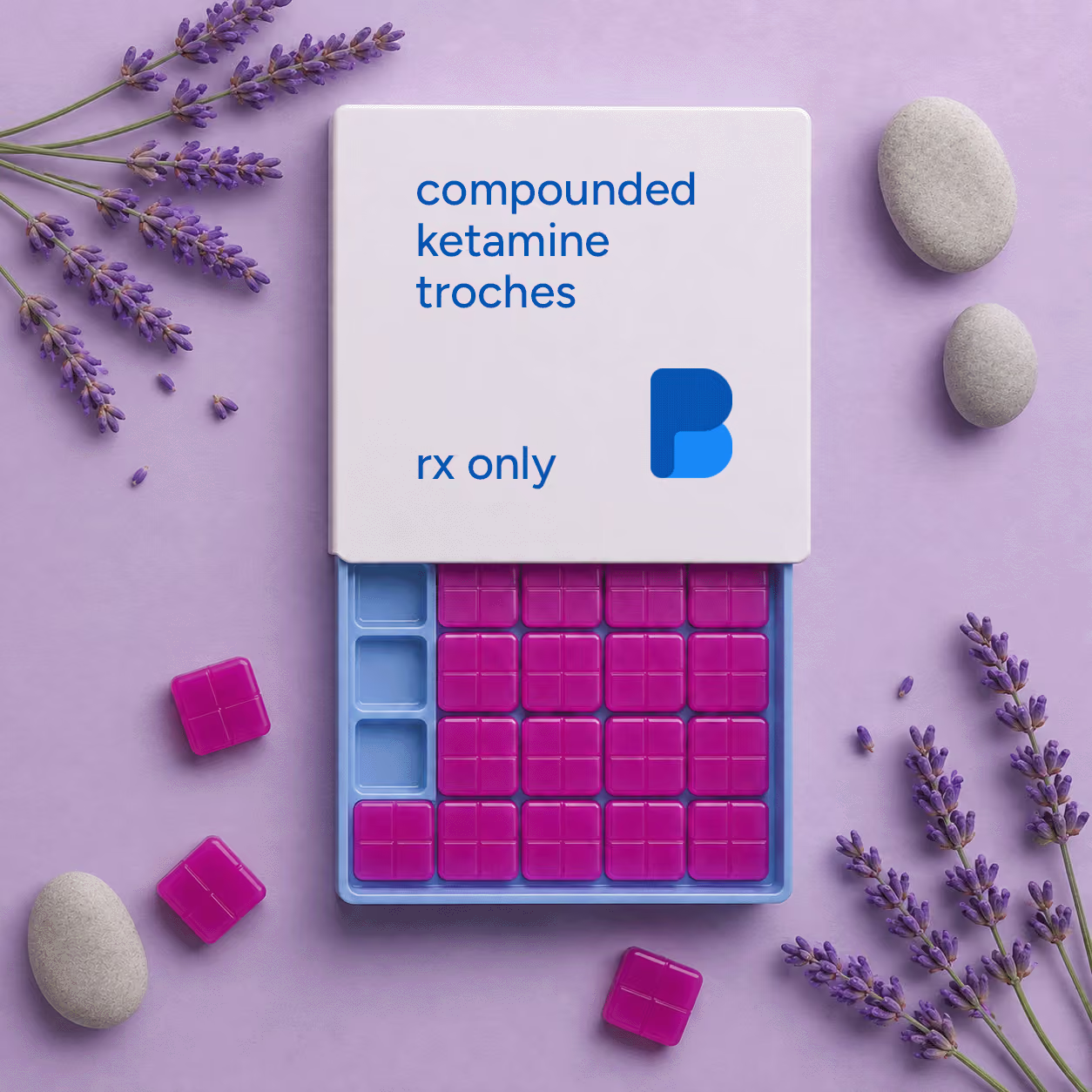
Ketamine troches are compounded, prescription lozenges held between the cheek and gum to dissolve slowly. They are used off-label, under a prescriber's supervision, for treatment-resistant depression and related mood conditions. Ketamine is an NMDA-receptor antagonist — it works on the brain's glutamate signaling differently than standard antidepressants, and for some patients its effects can appear over hours to days rather than weeks. Bayview compounds each troche to the strength your prescriber specifies, anywhere from 10 mg to 200 mg.

Ketamine is a Schedule III controlled substance and requires an electronic controlled-substance prescription. There is no FDA-approved compounded ketamine product, and the FDA has cautioned about the risks of compounded ketamine for psychiatric use — particularly at-home use without monitoring. This medication should be used only as directed within a supervised treatment plan.

What are ketamine troches used for?

They're compounded and prescribed off-label, under a prescriber's supervision, most often for treatment-resistant depression — depression that hasn't responded to other medications — and sometimes related mood conditions. Your prescriber decides whether they're appropriate for you and how they fit into your treatment plan.

How do I take a troche?

Use it exactly as prescribed. A common direction is to dissolve one troche between the cheek and gum once daily. Try not to swallow saliva for a few minutes so the medication can absorb, stay seated, and don't drive or operate machinery until the effects have fully worn off. Follow your prescriber's guidance on setting and any monitoring.

Trusted by 105,826 patients to date.
A group of faces of our past satisfied patients.
Compounded medications are prepared pursuant to a valid prescription for an individual patient and are not FDA-approved. This page is for educational purposes and is not medical advice.
**The FDA does not review or approve compounded medications for safety or effectiveness. A valid prescription from a licensed practitioner is required.
Important safety information →

Internal Pricing

This is internal data that only pharmacy staff can see.

INTERNAL — PRICING REFERENCE · DO NOT PUBLISH TO PATIENTS

Based on 230 cash fills in 2025 (cash, autofill, and pickup/cash autofill; insurance-adjudicated fills excluded). Usual is the most commonly charged price for that product and quantity; the range reflects discounts, autofill pricing, and mid-year price changes.

ProductQtyUsual2025 rangeFills
KETAMINE HCL 100MG TROCHE STRAWBERRY TROCHE56 troches$202$164.75–$2023
KETAMINE HCL 100MG TROCHE TROCHE30 troches$150$1503
KETAMINE HCL 100MG TROCHE WATERMELON TROCHE30 troches$150$1504
KETAMINE HCL 100MG TROCHE WATERMELON TROCHE50 troches$190$1903
KETAMINE HCL 100MG TROCHE WATERMELON TROCHE56 troches$202$2029
KETAMINE HCL 100MG TROCHE WATERMELON TROCHE60 troches$210$171.93–$21014
KETAMINE HCL 100MG TROCHE WATERMELON TROCHE90 troches$270$2704
KETAMINE HCL 10MG BASE A TROCHE [SPECIAL ORDER] FLAVORLESS-NO SWEETENERS TROCHE100 troches$267$2674
KETAMINE HCL 150MG TROCHE STRAWBERRY TROCHE30 troches$170$1704
KETAMINE HCL 150MG TROCHE WATERMELON TROCHE30 troches$170$1705
KETAMINE HCL 160MG TROCHE WATERMELON25 troches$184$180–$1846
KETAMINE HCL 200MG TROCHE STRAWBERRY TROCHE30 troches$190$1907
KETAMINE HCL 200MG TROCHE WATERMELON TROCHE30 troches$190$160–$19016
KETAMINE HCL 200MG TROCHE WATERMELON TROCHE25 troches$190$19010
KETAMINE HCL 200MG TROCHE WATERMELON TROCHE90 troches$310$275.08–$3107
KETAMINE HCL 20MG TROCHE STRAWBERRY TROCHE90 troches$240$2408
KETAMINE HCL 250MG TROCHE TEABERRY TROCHE12 troches$212.23$212.234
KETAMINE HCL 300MG TROCHE STRAWBERRY TROCHE4 troches$100$10011
KETAMINE HCL 300MG TROCHE STRAWBERRY TROCHE12 troches$140$1406
KETAMINE HCL 300MG TROCHE STRAWBERRY TROCHE16 troches$160$1606
KETAMINE HCL 300MG TROCHE STRAWBERRY TROCHE28 troches$220$2205
KETAMINE HCL 300MG TROCHE WATERMELON TROCHE84 troches$338$3384
KETAMINE HCL 40MG TROCHE WATERMELON TROCHE90 troches$250$25011
KETAMINE HCL 50MG TROCHE FLAVORLESS TROCHE90 troches$250$2507
KETAMINE HCL 50MG TROCHE WATERMELON TROCHE90 troches$250$2508
KETAMINE HCL 80MG TROCHE WATERMELON TROCHE90 troches$250$2506

+ 41 additional low-volume combinations (55 fills) not shown — check the dispensing system before quoting anything unusual.

Starting price shown on the page: $100 (4 troches). Compiled July 2026 from 2025 dispensing data. Confirm current pricing for special orders, unusual quantities, or compounded-to-order strengths before quoting.

Getting your prescription filled is simple

Your provider e-prescribes it

STEP
1
This medication is a controlled substance, so your provider must send it electronically (EPCS) from a DEA-registered account. A licensed provider has to decide it's appropriate first.
A thin blue light beam connecting two clear glass slabs on a white surface.

A pharmacist reviews it

STEP
2
We verify your electronic prescription and its controlled-substance requirements, then prepare your medication to your provider's exact instructions.
Close-up of a white dial with blue measurement markings and a rotating knob.

We compound & ship

STEP
3
We prepare your medication and ship it discreetly to your door, with support when you need it. Refills and quantities follow the limits set by law for its drug schedule and by your prescriber.
Close-up of a gray box with a precise blue line running along its folded edges.

What is Ketamine Troches?

Ketamine troches are a compounded prescription medication designed to dissolve slowly in the mouth, usually between the cheek and gum or under the tongue. They are prescribed off-label, under a prescriber's supervision, for treatment-resistant depression and related mood conditions. Ketamine is an NMDA-receptor antagonist that acts on the brain's glutamate signaling differently from SSRIs and other standard antidepressants. Each troche is prepared by a licensed pharmacy at the strength ordered by the patient's provider.

Injectable ketamine is FDA-approved as an anesthetic, while an intranasal form of its S-enantiomer, esketamine (Spravato), is FDA-approved for treatment-resistant depression and administered in a certified healthcare setting. There is no FDA-approved ketamine troche for psychiatric treatment. Compounded ketamine troches are available only by prescription and are used off-label. Ketamine is a Schedule III controlled substance and requires an electronic controlled-substance prescription.

Compounded ketamine troches are not FDA-approved. The FDA has cautioned about the risks of compounded ketamine for psychiatric use, including at-home use without a healthcare provider present to monitor for sedation and dissociation. Each troche is prepared by a licensed pharmacy at the strength ordered by the patient's provider and should be used only as directed within a monitored treatment plan. A valid prescription is required, and only a licensed provider can determine whether ketamine treatment is appropriate.

How does it work?

Most antidepressants act on serotonin, norepinephrine, or dopamine and may take several weeks to help. Ketamine works on a different system by blocking the NMDA glutamate receptor. This appears to initiate a series of changes in synaptic signaling and connectivity within the brain (StatPearls, Ketamine).

This difference is why prescribers may consider ketamine when several standard antidepressants have not worked, a situation known as treatment-resistant depression. For some patients, effects may appear over hours to days rather than weeks. A troche dissolves slowly in the mouth so ketamine can be absorbed across the oral mucosa before the remaining medication is swallowed.

What is it used for?

Providers prescribe compounded ketamine troches off-label, most often for treatment-resistant depression and sometimes for related mood conditions, as part of a supervised treatment plan. The strongest evidence for ketamine in depression comes from clinician-administered intravenous ketamine and FDA-approved intranasal esketamine. Evidence supporting compounded buccal, sublingual, and oral ketamine formulations is growing but remains more limited (Swainson et al., Frontiers in Psychiatry 2022).

Only a licensed provider can determine whether this formulation is appropriate for a particular patient. Bayview Pharmacy does not provide psychiatric consultations or determine whether a patient is a candidate for ketamine treatment. A valid prescription is required.

Used within a supervised plan

Compounded ketamine is prescribed as part of a structured treatment plan that may include medical and psychiatric screening, individualized dosing instructions, monitoring, and follow-up. The prescriber determines whether treatment is appropriate, where each dose should be taken, and whether another person or healthcare professional should be present.

Ketamine may be prepared in different customized dosage forms depending on the prescriber's treatment plan. Learn more about our compounded ketamine rapid dissolve tablets and compounded ketamine nasal spray.

How does it compare to other treatments?

Ketamine may be administered in several dosage forms that differ in how they are used, how quickly they dissolve or absorb, their FDA status, and the treatment setting. The table below is provided for education only.

Option What it is Notes
Compounded ketamine troche Racemic ketamine prepared in a slowly dissolving buccal or sublingual dosage form Compounded only; prescribed off-label within a prescriber-supervised treatment plan
Compounded ketamine rapid dissolve tablet Racemic ketamine prepared as a rapidly dissolving sublingual tablet Compounded only; prescribed off-label according to individualized prescriber instructions
Compounded ketamine nasal spray Racemic ketamine administered intranasally Compounded only; prescribed off-label within a monitored treatment plan
Esketamine (Spravato) S-enantiomer of ketamine administered intranasally FDA-approved for treatment-resistant depression and administered in a certified healthcare setting under a REMS program
Intravenous ketamine Racemic ketamine administered intravenously Clinician-administered in a monitored setting and the most extensively studied racemic ketamine route for depression

These options are described for education only and are not a statement that any one formulation is better, stronger, safer, or more effective. The patient's provider selects the medication, dosage form, route, dose, treatment setting, and monitoring plan.

How is it used?

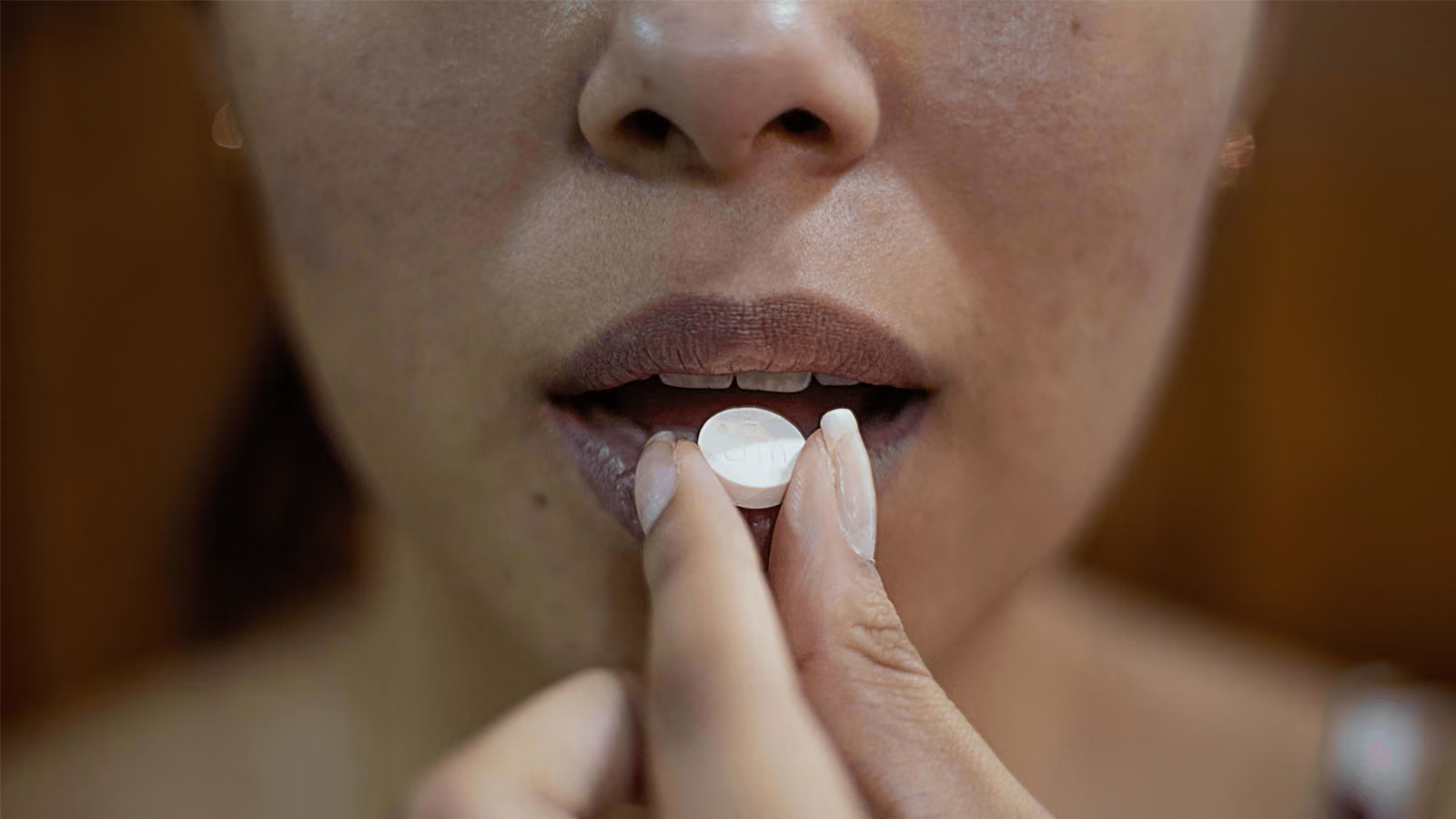
Ketamine troches should be used according to the exact strength, portion of a troche, schedule, and treatment setting established by the prescriber. Depending on the prescription directions, the troche may be placed between the cheek and gum or under the tongue and allowed to dissolve slowly. Do not chew or swallow the troche whole unless specifically directed by the prescriber.

Patients should remain seated while the dose takes effect and follow their prescriber's instructions regarding supervision, observation, and monitoring. Do not drive, operate machinery, or perform activities requiring full alertness until the effects have completely worn off. Never increase the dose, use the medication more frequently than prescribed, or discontinue treatment without speaking with the prescriber.

Side effects & safety

Common short-term effects include dissociation, which may feel like detachment from the body or surroundings, dizziness, drowsiness, nausea, altered perception, increased saliva, changes in taste, and a temporary increase in blood pressure. Long-term or heavy ketamine use has been associated with bladder and urinary symptoms (StatPearls, Ketamine).

Patients should tell their provider about heart or blood-pressure conditions, substance-use history, psychiatric conditions, bladder problems, and all prescription medications, over-the-counter medications, and supplements they use.

Ketamine is meant to be used within a supervised plan. The FDA has warned that compounded ketamine used at home without a healthcare provider present to monitor for sedation and dissociation carries additional risks, including misuse and abuse. Use ketamine only as prescribed, in the setting directed by the prescriber, and never while alone when the treatment plan requires another person to be present.

Seek emergency care for chest pain, trouble breathing, severe confusion, loss of consciousness, or symptoms of a serious allergic reaction. Anyone experiencing a mental health crisis or thoughts of self-harm should call or text 988 for the Suicide & Crisis Lifeline or seek emergency care.

Who should not use it?

Ketamine troches are not appropriate for everyone. They should not be used by patients with a known allergy to ketamine or any ingredient in the compounded preparation. Ketamine may require additional caution or may not be appropriate for patients with uncontrolled high blood pressure, certain heart or blood-vessel conditions, a history of substance misuse, certain psychiatric conditions, or bladder problems.

Patients should tell their provider if they are pregnant, planning to become pregnant, or breastfeeding. The prescriber should review the patient's complete medical history and medication list before determining whether compounded ketamine is appropriate.

How should it be stored?

Ketamine is a Schedule III controlled substance. Store the troches according to the instructions on the prescription label in a secure location that is out of reach of children, teenagers, visitors, and anyone for whom the medication was not prescribed.

Keep the troches in their original packaging and protect them from excessive heat or moisture unless the prescription label provides different instructions. Never share ketamine with another person. Take only the prescribed amount, keep track of the medication supply, and follow the pharmacist's instructions for disposing of unused or expired medication.

Why is this compounded?

There is no FDA-approved ketamine troche for psychiatric treatment. Compounding allows a licensed pharmacy to prepare ketamine in a customized, slowly dissolving dosage form at the strength ordered by an authorized prescriber.

As a 503A compounding pharmacy, Bayview Pharmacy prepares each prescription for an individually identified patient using quality ingredients and applicable compounding standards. Compounded preparations are not reviewed or approved by the FDA.

Explore ketamine dosage forms

Learn more about other compounded ketamine formulations available from Bayview Pharmacy:

Clinical details for prescribers

Regulatory status. Ketamine is a Schedule III controlled substance. Racemic ketamine is FDA-approved as an anesthetic. Intranasal esketamine (Spravato) is FDA-approved for treatment-resistant depression under a REMS program. No compounded ketamine product is FDA-approved for a psychiatric indication, and the FDA has issued safety communications concerning compounded ketamine, including at-home use without appropriate monitoring.

Formulation. Compounded ketamine HCl troches are prepared in individualized strengths specified by the prescriber. Troches are designed to dissolve slowly in the buccal or sublingual space. The prescribed strength, portion of a troche, frequency, quantity, treatment setting, and monitoring requirements are prescriber-directed.

Information about additional compounded dosage forms is available on the ketamine rapid dissolve tablet and ketamine nasal spray formulation pages.

Evidence base. Relevant literature includes intranasal esketamine (P&T 2019), racemic ketamine randomized controlled data (KADS, British Journal of Psychiatry 2023), and reports involving off-label sublingual or at-home ketamine use (Frontiers in Psychiatry 2022).

EPCS and prescribing points:

  • Schedule II through V prescriptions must be signed and transmitted electronically when required by applicable state law.
  • Select Ketamine bulk powder as the controlled medication so the EPCS signature validates. Do not select the brand name Ketalar.
  • Include the prescribed troche strength, complete administration directions, diagnosis code when required, quantity, and authorized refills.
  • Specify whether the patient should use a whole troche or a scored portion and whether administration should be buccal or sublingual.
  • Counsel patients regarding dissociation, sedation, driving restrictions, secure storage, misuse risk, and the prescribed setting and monitoring requirements.

Bayview Pharmacy may dispense controlled-substance prescriptions to patients in RI, MA, CT, NJ, NH, and FL, subject to applicable prescription and dispensing requirements. Background references include StatPearls, Ketamine and the FDA Compounding Risk Alerts.

This is a prescription compounded medication and is not FDA-approved. This information is educational and is not medical advice. The patient's provider determines whether ketamine is appropriate and establishes the formulation, dose, treatment setting, monitoring, and follow-up plan.
In Stock

On this page

A different mechanism for depression

Ketamine targets the brain’s glutamate system rather than serotonin, norepinephrine, or dopamine. It may help people with treatment-resistant depression when standard antidepressants have not worked. Evidence is strongest for intravenous ketamine and FDA-approved Spravato, while compounded forms require individualized prescriber oversight.

Start with a prescription

Used within a supervised plan

Compounded ketamine is prescribed as part of a structured treatment plan with appropriate screening, dosing guidance, monitoring, and follow-up. Your prescriber will determine whether treatment is appropriate and how it should be used safely.

View our formulas

Personalized compounding for patients who need more than a standard option.

"As a compounding pharmacy, we prepare each medication to a provider’s exact specifications. My focus, and my team’s focus, is quality, consistency, and close communication with prescribers so patients receive medication prepared for their individual needs."
Ryan Dyer, RPh
Owner and Chief Pharmacist, Bayview Pharmacy
Smiling man in blue scrubs with arms crossed and pen behind his ear
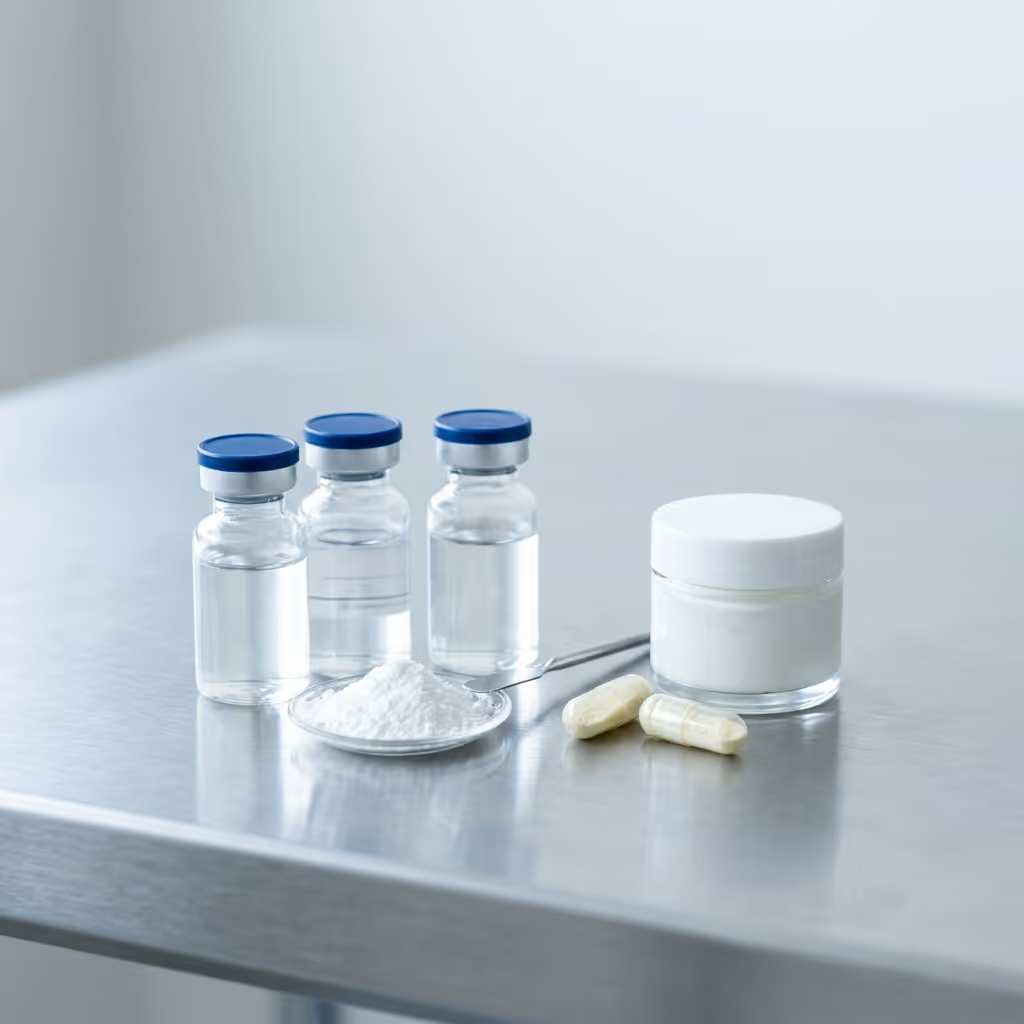
Three clear liquid vials, white powder on spoon, two capsules, and a cream jar on a metal surface.
QUALITY AND TESTING

Held to a higher standard

Every preparation is made under strict quality controls, and verified by a licensed pharmacist.
We use validated quality processes and third-party testing where appropriate
Sterile compounding in a dedicated USP <797> cleanroom
Non-sterile compounding under USP <795> and <800> standards
USP/NF-grade ingredients from reputable, vetted suppliers

Why patients choose Bayview

Made in our own pharmacy
Made to your prescription
Real pharmacist support
Quality tested
Discreet, secure shipping
Trusted since 2006

Our formulations

Ketamine rapid dissolve tablets are compounded to the strength your provider orders, from 10 mg to 300 mg. The quantity is dispensed to your prescription, subject to the federal limit of 100 dosage units. Your provider selects the strength and schedule that are appropriate for you.

Form Strength Notes
Rapid dissolve tablet (sublingual)10–300 mgCompounded to the strength your provider specifies; dissolved under the tongue

Strengths are listed for education only and are not a statement of effectiveness. Strength and dosing are prescriber-directed, and a valid prescription is required. This is a compounded medication and is not FDA-approved. Ketamine is a Schedule III controlled substance.

Start with a prescription
Prescribers: order & e-prescribe →

Frequently asked questions

What are ketamine troches used for?

They're compounded and prescribed off-label, under a prescriber's supervision, most often for treatment-resistant depression — depression that hasn't responded to other medications — and sometimes related mood conditions. Your prescriber decides whether they're appropriate for you and how they fit into your treatment plan.

How do I take a troche?

Use it exactly as prescribed. A common direction is to dissolve one troche between the cheek and gum once daily. Try not to swallow saliva for a few minutes so the medication can absorb, stay seated, and don't drive or operate machinery until the effects have fully worn off. Follow your prescriber's guidance on setting and any monitoring.

How is a troche different from the rapid dissolve tablet?

Both absorb through the lining of the mouth rather than the stomach. A rapid dissolve tablet melts quickly under the tongue; a troche is a firmer lozenge held between the cheek and gum that dissolves more slowly. Your prescriber chooses the form, strength, and schedule that fit your plan and preference.

Is it FDA-approved? Is it safe?

Compounded ketamine is not FDA-approved for any psychiatric condition, and the FDA has cautioned about risks of compounded ketamine — particularly at-home use without monitoring. Known risks include sedation, dissociation, raised blood pressure, slowed breathing, bladder and urinary symptoms with long-term use, and potential for misuse. Used exactly as prescribed within a supervised plan, your prescriber weighs these risks against the potential benefit.

What side effects should I expect?

Common short-term effects include dissociation (feeling detached), dizziness, drowsiness, nausea, and a temporary rise in blood pressure. Long-term or heavy use has been linked to bladder and urinary problems. Tell your prescriber about heart or blood-pressure conditions and all medications you take. Seek urgent care for chest pain, severe confusion, trouble breathing, or symptoms that alarm you.

Can it be misused, and how should I store it?

Yes — ketamine is a Schedule III controlled substance with potential for misuse and abuse. Store troches securely, out of reach of children, teens, and anyone they aren't prescribed for, and don't share them. Take only your prescribed amount and dispose of unused medication properly.

How does my provider prescribe them?

Because ketamine is a controlled substance, prescribers must send an electronic controlled-substance prescription (EPCS). Bayview fills for patients in RI, MA, CT, NJ, NH, and FL. Your provider can find our controlled-substance prescribing guidance and contact our pharmacists with questions.

Are compounded medications FDA-approved?

Compounded medications are not FDA-approved. They're prepared by a licensed pharmacy pursuant to a valid prescription for an individual patient, under USP standards. The FDA does not review compounded medications for safety or effectiveness.

Can you fill a prescription from my own provider?

Yes. Your provider can send your prescription to Bayview Pharmacy by e-prescribe, fax, or phone, or you can transfer an existing prescription from another pharmacy. Start a request and we'll guide you through it.

Do I need a prescription?

Yes. All of our medications require a valid prescription from a licensed provider. We're a dispensing and compounding pharmacy, so we don't provide consultations or write prescriptions. If you don't have one yet, you'll need to find and see a provider first.

How does shipping work?

Once your prescription is verified, we prepare your medication and ship it discreetly in plain packaging either via UPS or USPS. A pharmacy technician confirms the details with you before it goes out, and we're available if you have any questions.

How do providers send a prescription to Bayview?

Providers can submit a prescription three ways:

  • E-prescribe: Search Bayview Pharmacy, Warwick, RI (NCPDP 4106882) in your EHR. For compounds, use the compound, custom, or free-text option and include the full formulation, strength, quantity, refills, and directions.
  • Fax: Send a signed order to 401-284-4506 (alt. 401-210-2757) with patient and prescriber details, medication, quantity, refills, directions, signature, and date.
  • Phone: Call 401-284-4505 to submit, clarify, or coordinate refills.

A valid prescription is required, and compounded medications are not FDA-approved.

How do refills and automatic refills work?

Refills are coordinated with your prescriber and your prescription. You can request a refill through our website or by calling us, and we'll handle the rest as long as you have refills remaining on a valid prescription. You can also opt into automatic refills on non-controlled substances, with no need to worry about running out of your medication. We can either ship it to you automatically, or ready for pickup.

What is compounding?

Compounding is the practice of preparing a medication tailored to an individual patient's prescription. Instead of a mass-produced product, a compounding pharmacy makes the medication to the specific strength, form, or combination your provider orders.

References

Sources reviewed

The medical information on this page draws on the following sources, which are also linked where cited.

  1. U.S. Food & Drug Administration. Compounding Risk Alerts (compounded ketamine).
  2. StatPearls (NCBI Bookshelf). Ketamine.
  3. Molero P, et al. Intranasal Esketamine (Spravato) for Treatment-Resistant Depression. P&T (2019).
  4. Loo C, et al. Repeated subcutaneous ketamine for treatment-resistant depression (KADS). Br J Psychiatry (2023).
  5. Swainson J, et al. Sublingual ketamine in depression and anxiety: off-label at-home use. Front Psychiatry (2022).

Important safety information

Important safety information

Ketamine rapid dissolve tablets are a prescription compounded medication and are not FDA-approved; there is no FDA-approved compounded ketamine product. Ketamine is a Schedule III controlled substance with potential for misuse, abuse, and dependence. Use only as prescribed, under the care of your provider, and never share it.

Do not use ketamine tablets if you:

  • Are allergic to ketamine or to any ingredient in the tablet.

Warnings and precautions:

  • Controlled substance. Ketamine can be misused and can cause dependence. Store it securely, take only your prescribed amount, and keep it away from children, teens, and others.
  • Sedation and dissociation. Ketamine can cause drowsiness and a sense of detachment. Do not drive or operate machinery until effects have fully worn off, and follow your provider's guidance on the setting for each dose. The FDA warns that at-home use without monitoring carries added risk.
  • Heart and blood pressure. Ketamine can raise blood pressure and heart rate; tell your provider about any heart or blood-vessel conditions.
  • Bladder and urinary symptoms have been linked to long-term or heavy use.
  • If you are pregnant, planning to become pregnant, or breastfeeding, talk with your provider before using it.
  • Use exactly as directed. Do not change your dose, use it more often, or stop abruptly on your own.

Common side effects:

  • Dissociation, dizziness, drowsiness, nausea, and a temporary rise in blood pressure.

Get emergency care if you have:

  • Chest pain, trouble breathing, or severe confusion.
  • Signs of a serious allergic reaction such as rash, swelling, or trouble breathing.
  • Thoughts of harming yourself — call or text 988 (Suicide & Crisis Lifeline) or seek emergency care.

Storage:

Store as directed on the label, secured and out of reach of children and others; ketamine is a controlled substance, so keep track of your supply and do not share it. Do not use after the beyond-use date, and discard unused medication as directed by your pharmacist.

This is a compounded prescription medication and is not approved by the FDA. Use it only under the supervision of a licensed provider, exactly as prescribed. Do not adjust your dose without talking to your prescriber. Seek emergency care for any severe or unexpected reaction. This information is not complete; talk to your provider about your full medical history and all medications you take.

Ready to get started?

Send us your prescription and a Bayview pharmacist will take it from there.