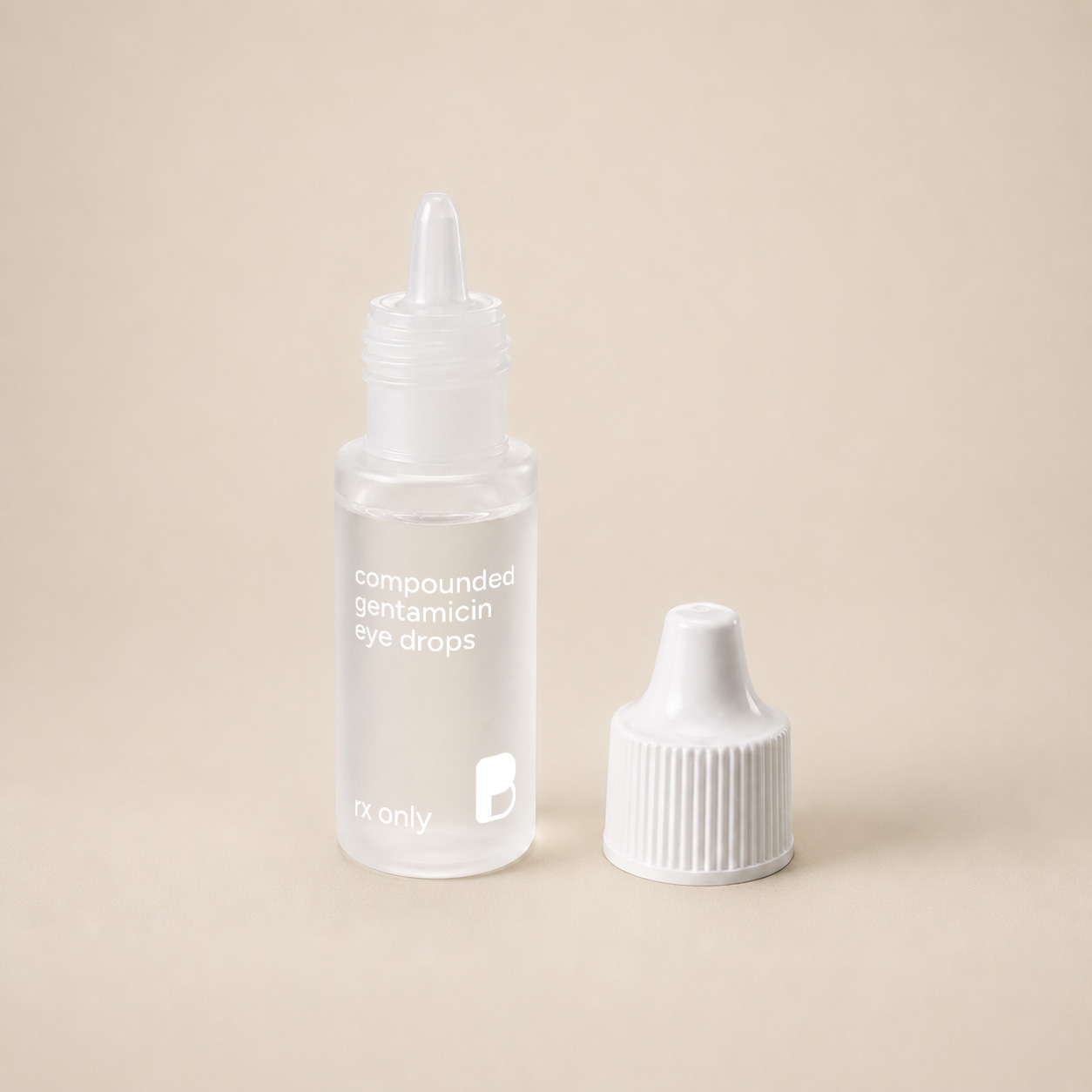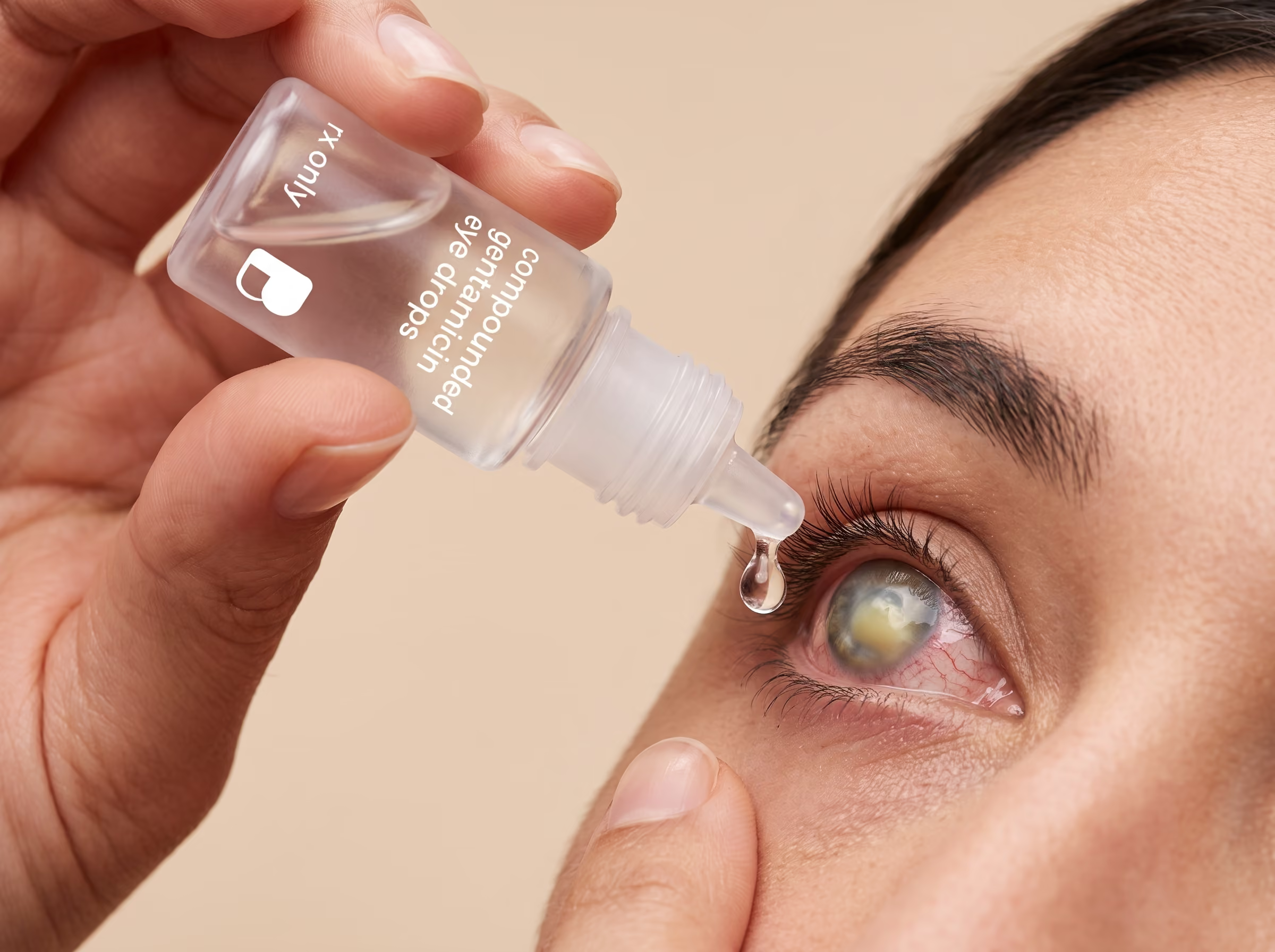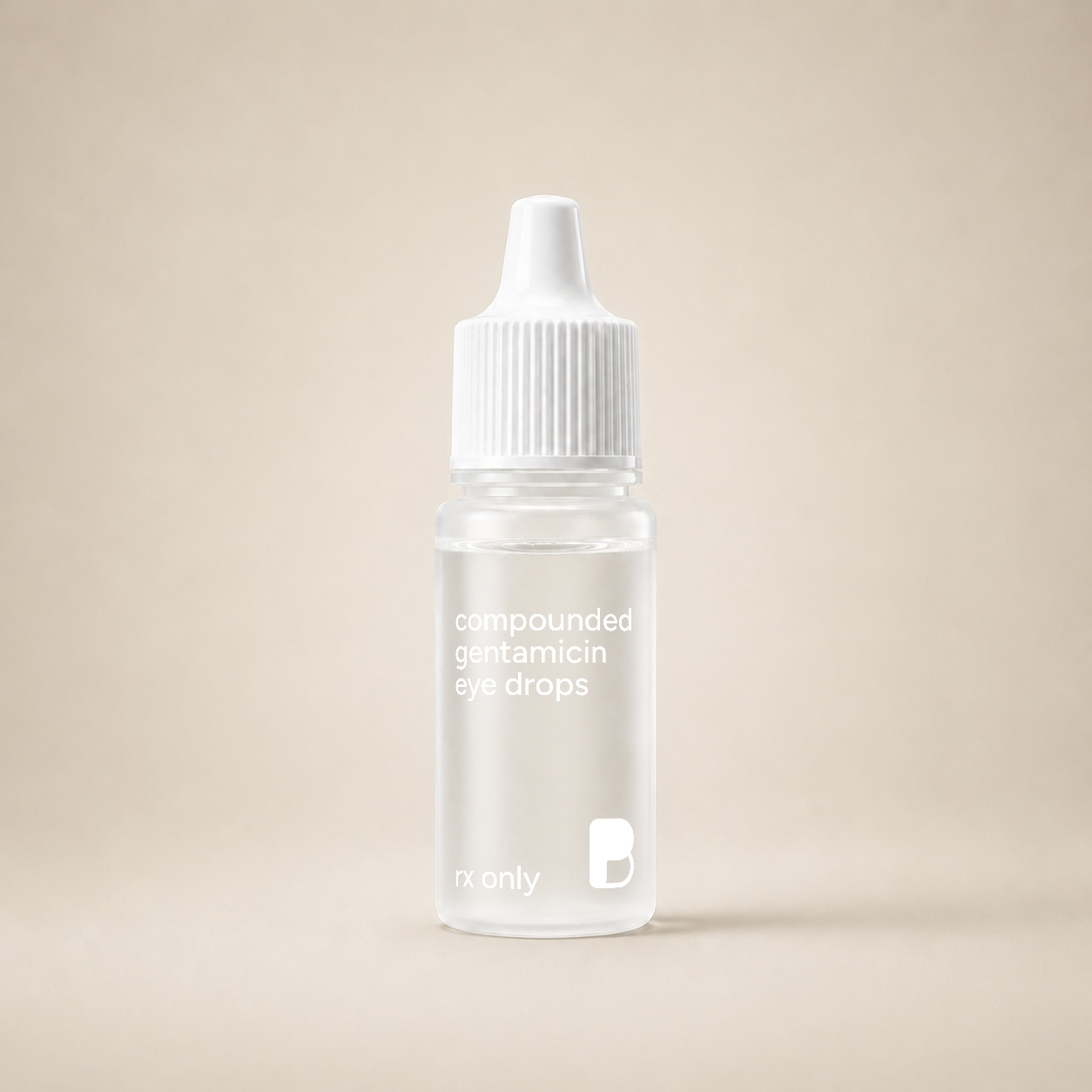






Gentamicin ophthalmic solution (fortified) is a compounded, prescription antibiotic eye drop. It is a "fortified" preparation, meaning it is made at a higher concentration than the standard commercial gentamicin eye drop (0.3%, or 3 mg/mL). Gentamicin is an aminoglycoside antibiotic that is especially active against gram-negative bacteria, including Pseudomonas aeruginosa. It is prepared by a licensed pharmacy as a sterile eye drop and is used under the care of an eye specialist to treat serious bacterial eye infections.
Bayview compounds fortified gentamicin at 15 mg/mL, about five times the strength of the commercial drop. Because there is no commercially available fortified gentamicin eye drop, providers prescribe this concentration and rely on a compounding pharmacy to prepare it. Only a licensed provider can decide whether it is appropriate, and it is typically prescribed and monitored by an eye specialist. Bayview compounds this as part of our ophthalmic compounding line.
How does it work?
Gentamicin is an aminoglycoside antibiotic. It kills bacteria by binding to their ribosomes and disrupting the production of the proteins they need to survive, and it is especially active against aerobic gram-negative bacteria, including Pseudomonas aeruginosa (StatPearls, Gentamicin). Aminoglycosides show concentration-dependent killing, which is part of the rationale for using a fortified (high-concentration) drop delivered directly to the surface tissue where a serious infection is present. Your eye specialist sets the concentration, schedule, and length of treatment, often based on cultures of the infection.
What is it used for?
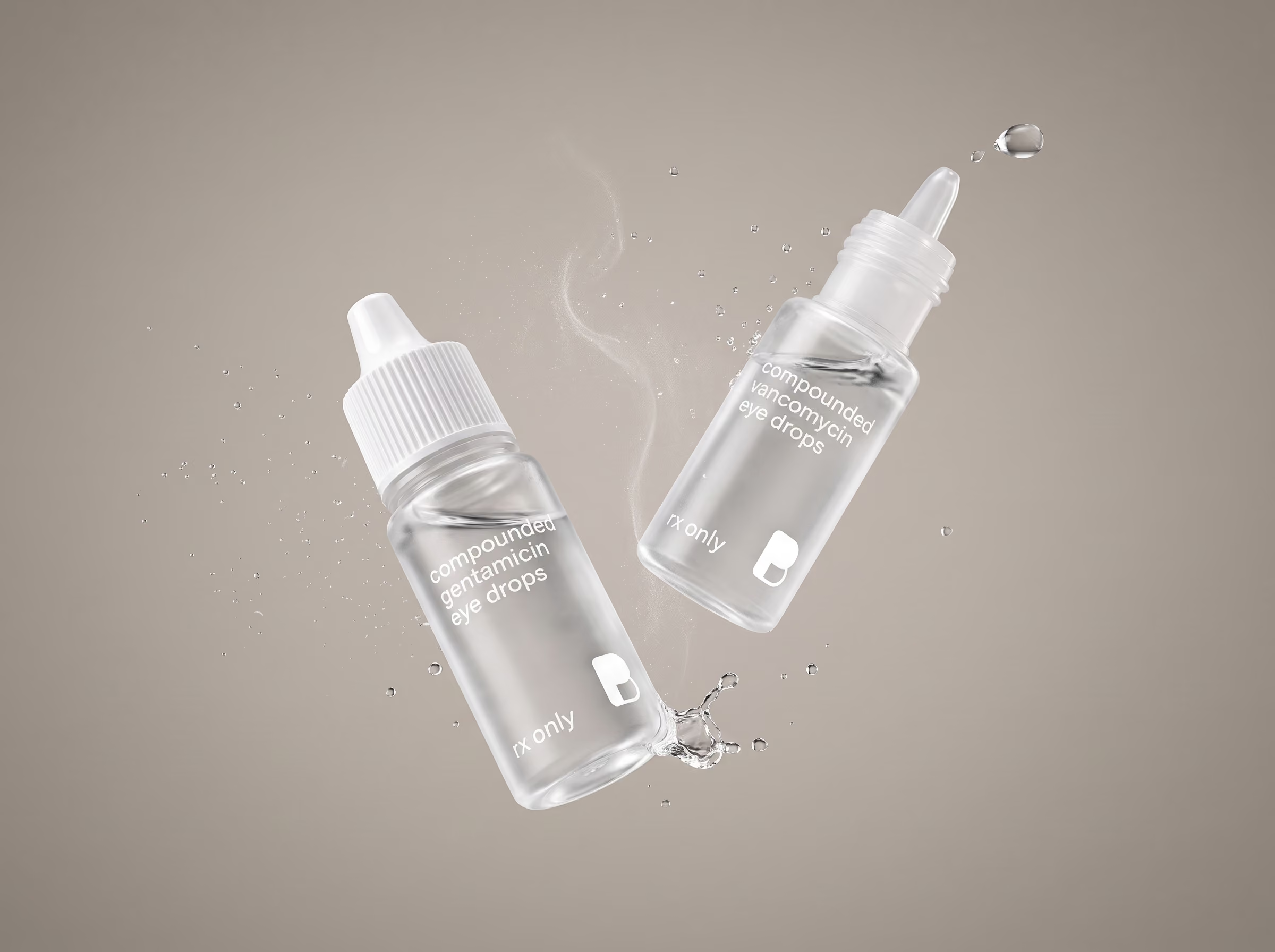
Fortified gentamicin eye drops are used to treat serious bacterial eye infections caused, or suspected to be caused, by gram-negative bacteria such as Pseudomonas. The most common use is bacterial keratitis, an infection of the cornea (sometimes called a corneal ulcer). Because a serious corneal infection may involve either gram-negative or gram-positive bacteria, gentamicin is frequently prescribed together with a second fortified antibiotic, such as fortified vancomycin or cefazolin, to cover a broader range of bacteria until cultures return (EyeWiki, Bacterial Keratitis). The fortified concentration is used off-label, because there is no commercially available fortified gentamicin product. Only a licensed provider can decide whether it is appropriate; Bayview Pharmacy does not provide consultations or determine appropriateness, and a valid prescription is required.
How does the strength compare?
Fortified gentamicin is compounded at 15 mg/mL (1.5%), about five times the concentration of the commercial 0.3% (3 mg/mL) drop. The higher concentration delivers more antibiotic to the surface of the eye, which is why a specialist may choose a fortified preparation for a serious infection. This is described for education only.
| Strength | Notes |
|---|---|
| 15 mg/mL (1.5%) | A fortified concentration, about five times the commercial 0.3% drop; in the traditional range used for keratitis |
Strength is described for education only and is not a statement that any concentration is better, stronger, or more effective for a particular infection. Your eye specialist selects the concentration, schedule, and length of treatment.
How is it used?
Use it exactly as your eye specialist directs. Because these are serious infections, the drops are often used very frequently at first, for example one drop in the affected eye every hour or every two hours while awake, and then tapered as the infection improves. When it is prescribed with a second antibiotic drop, your specialist will tell you how to alternate them and how many minutes to wait between different drops. Wash your hands before use, and do not let the dropper tip touch the eye or any surface. Keep every follow-up appointment so your specialist can check that the infection is responding, and do not stop early even if the eye feels better. A Bayview pharmacist is available if you have questions about your prescription.
Side effects & safety
The most common effects are local, such as stinging or burning when the drop goes in, eye redness or irritation, itching, and temporary blurred vision. Because the drops are strong and are often used very frequently, they can sometimes irritate the surface of the eye (surface toxicity); your specialist weighs this against treating the infection and may adjust the plan. Allergic reactions to gentamicin or other aminoglycosides are possible.
Who should not use it?
Fortified gentamicin eye drops are not appropriate for everyone. They should not be used by anyone with a known allergy to gentamicin, to other aminoglycoside antibiotics, or to any ingredient in the preparation. Tell your provider about the full health history, allergies, contact-lens use, and all medications of the person who will use it, and tell your provider if you are pregnant or breastfeeding. Contact lenses are generally not worn during treatment of an eye infection unless your specialist directs otherwise.
How should it be stored?
Store exactly as directed on your label. Fortified gentamicin drops are kept refrigerated and have a short beyond-use date because the medication is only stable for a limited time, so follow your label closely and do not use the drops past the date given. Keep the bottle tightly closed and out of the reach of children, do not share it, and do not touch the dropper tip to the eye or any surface. Dispose of unused medication as directed, and ask your pharmacist if you need a fresh supply to complete your course.
Why is this compounded?
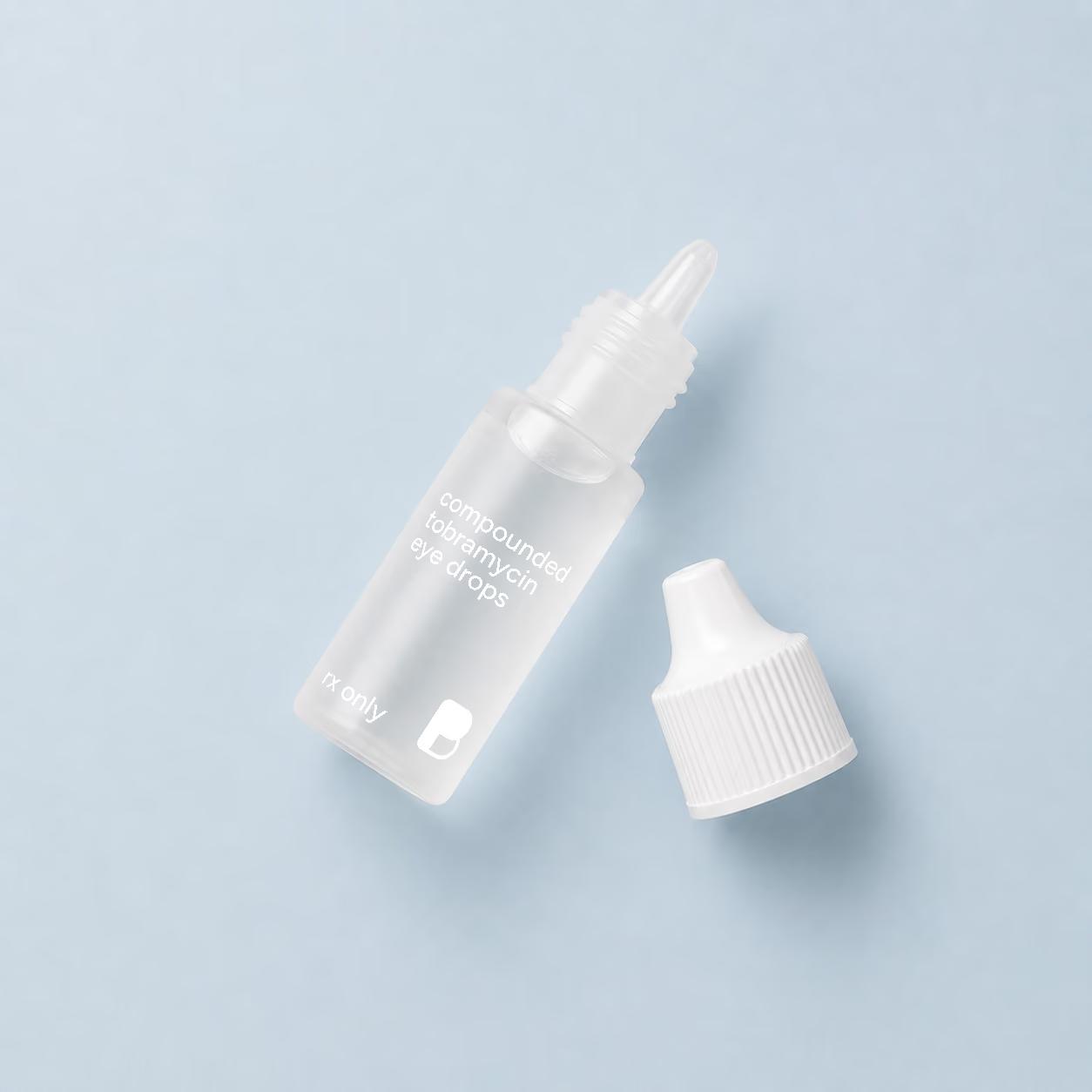
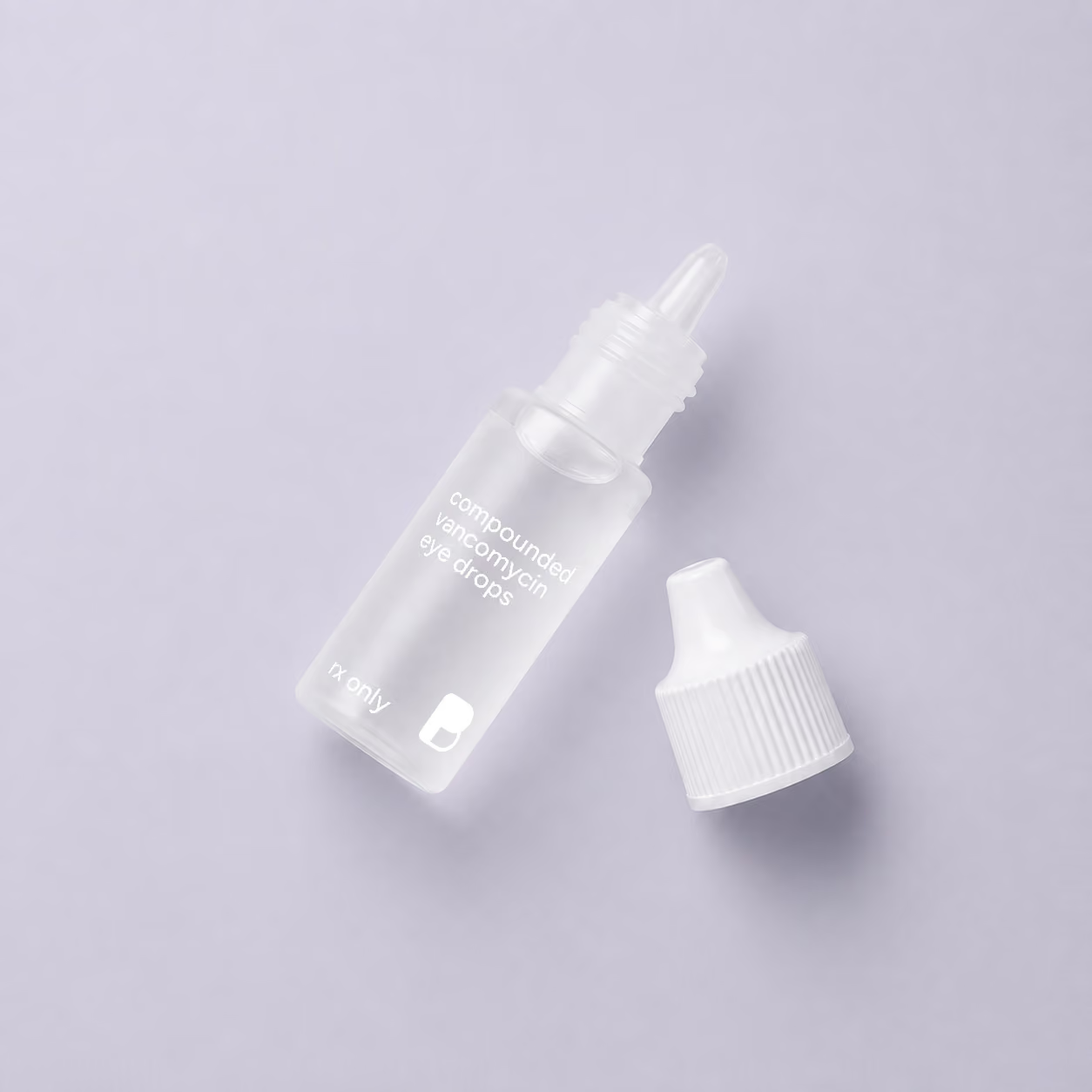
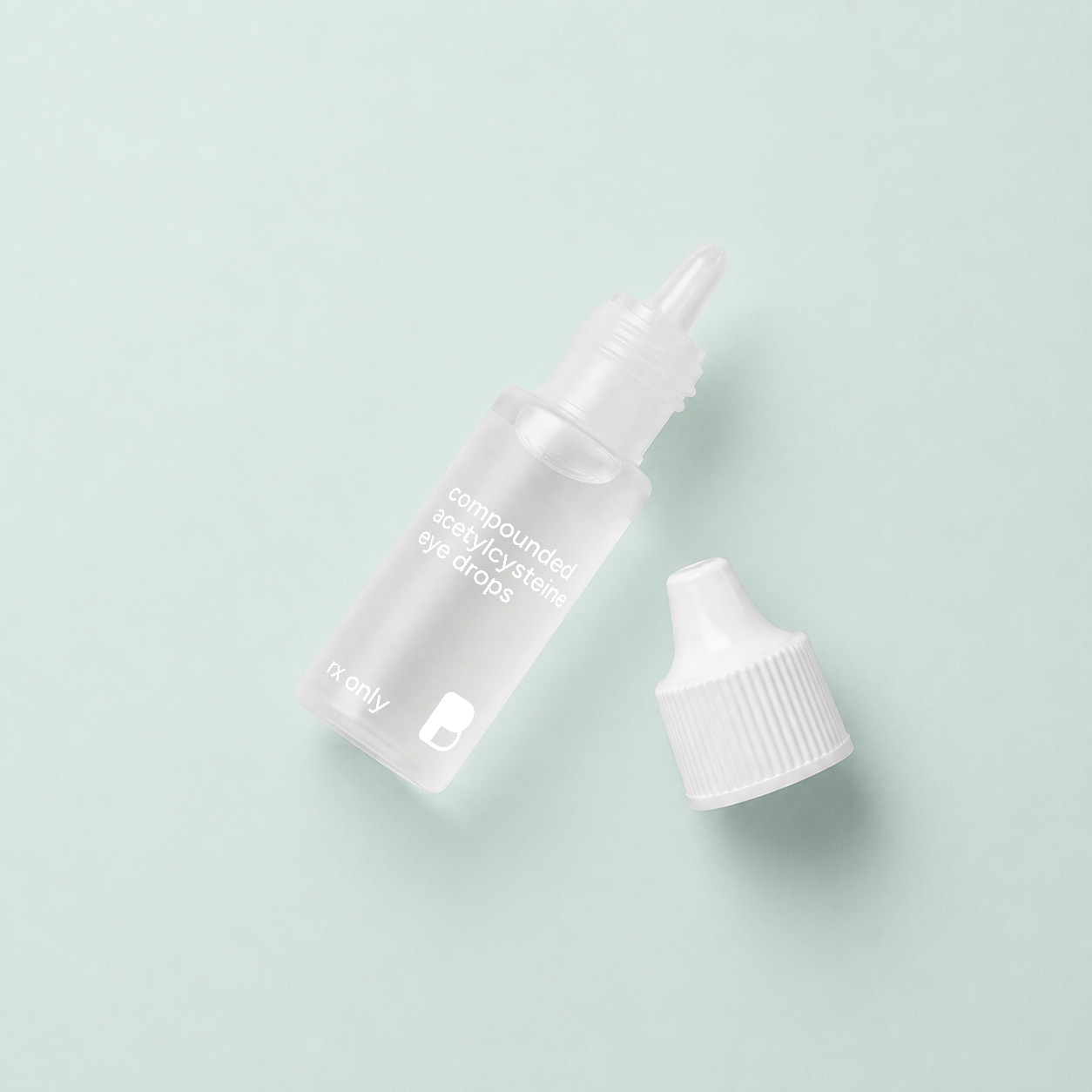
The commercial gentamicin eye drop is available only at 0.3% (3 mg/mL), and the fortified (high) concentration needed to treat a serious eye infection is not sold as a manufactured product. Compounding lets a licensed pharmacy prepare gentamicin as a sterile eye drop at the concentration a specialist orders, such as 15 mg/mL. As a 503A compounding pharmacy, Bayview Pharmacy prepares each order as a sterile ophthalmic preparation in small batches under USP <797> standards using quality ingredients. You can read how we handle sterile compounding. Compounded preparations are not FDA-approved. Bayview compounds other ophthalmic preparations with no commercial equivalent, including Tobramycin (Fortified Eye Drops), Vancomycin Ophthalmic Solution (Fortified), Acetylcysteine Ophthalmic Solution, and Atropine Ophthalmic Drops. The full list is in our compounded medications catalog.
Clinical details for prescribers
Formulation. Fortified gentamicin sterile ophthalmic solution at 15 mg/mL (1.5%), compounded under USP <797>, typically from injectable gentamicin. Roughly 5× the commercial 0.3% (3 mg/mL) drop and within the traditional fortified range (~9 to 15 mg/mL) used for bacterial keratitis. Refrigerated storage; short beyond-use date.
Spectrum. Aminoglycoside; aerobic gram-negative coverage including Pseudomonas aeruginosa; concentration-dependent killing. Commonly used as empiric dual therapy for bacterial keratitis alternating with a gram-positive agent (fortified vancomycin or fortified cefazolin) pending culture and sensitivities. See also fortified tobramycin as an alternative aminoglycoside.
Counseling points:
- Loading regimen (e.g., q1h, sometimes q15 to 30min initially) then taper per clinical response; specify alternating schedule when paired with a second fortified antibiotic
- Watch for ocular surface toxicity with prolonged high-frequency dosing
- Do not touch dropper tip; refrigerate; observe the beyond-use date and re-supply to complete the course
- Hold contact lens wear during treatment unless otherwise directed
Background: StatPearls, Gentamicin; EyeWiki, Bacterial Keratitis. Account setup, licensing, and ordering are covered on our for providers page.
This is a prescription compounded medication and is not FDA-approved. This information is educational and is not medical advice. Your provider determines whether it is appropriate and sets the concentration, schedule, and length of treatment.