





Apomorphine is a dopamine agonist, a medicine that stimulates dopamine receptors in the brain. Despite the name it is not an opioid and is not related to morphine in how it works. In the United States it is FDA-approved as an injection and as a wearable infusion for the "off" episodes of Parkinson's disease; a sublingual film for the same use was approved in 2020 and withdrawn in 2023. Low-dose sublingual apomorphine for erectile dysfunction was approved in Europe in 2001 and has never been approved in the United States, so it is prepared by compounding.
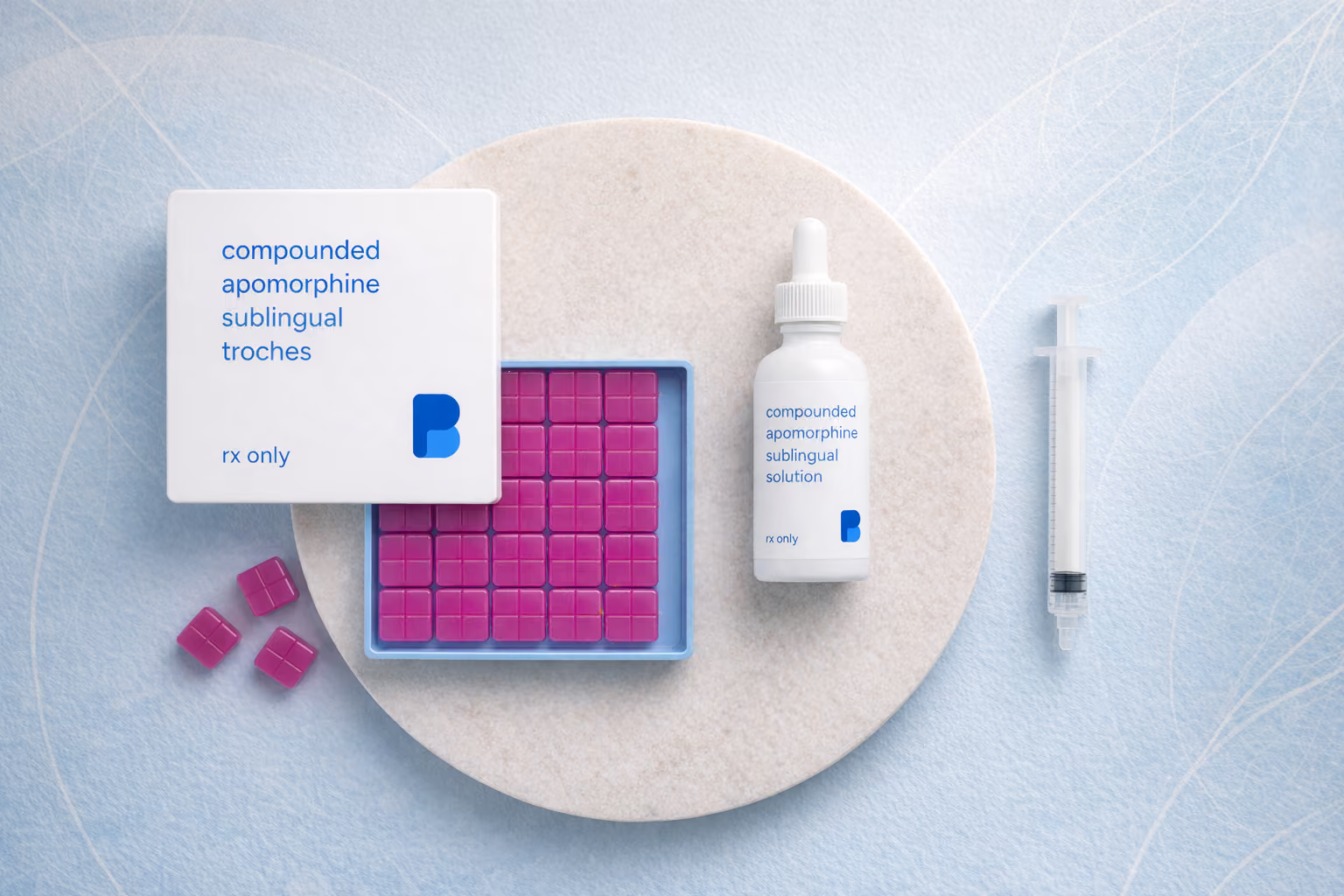
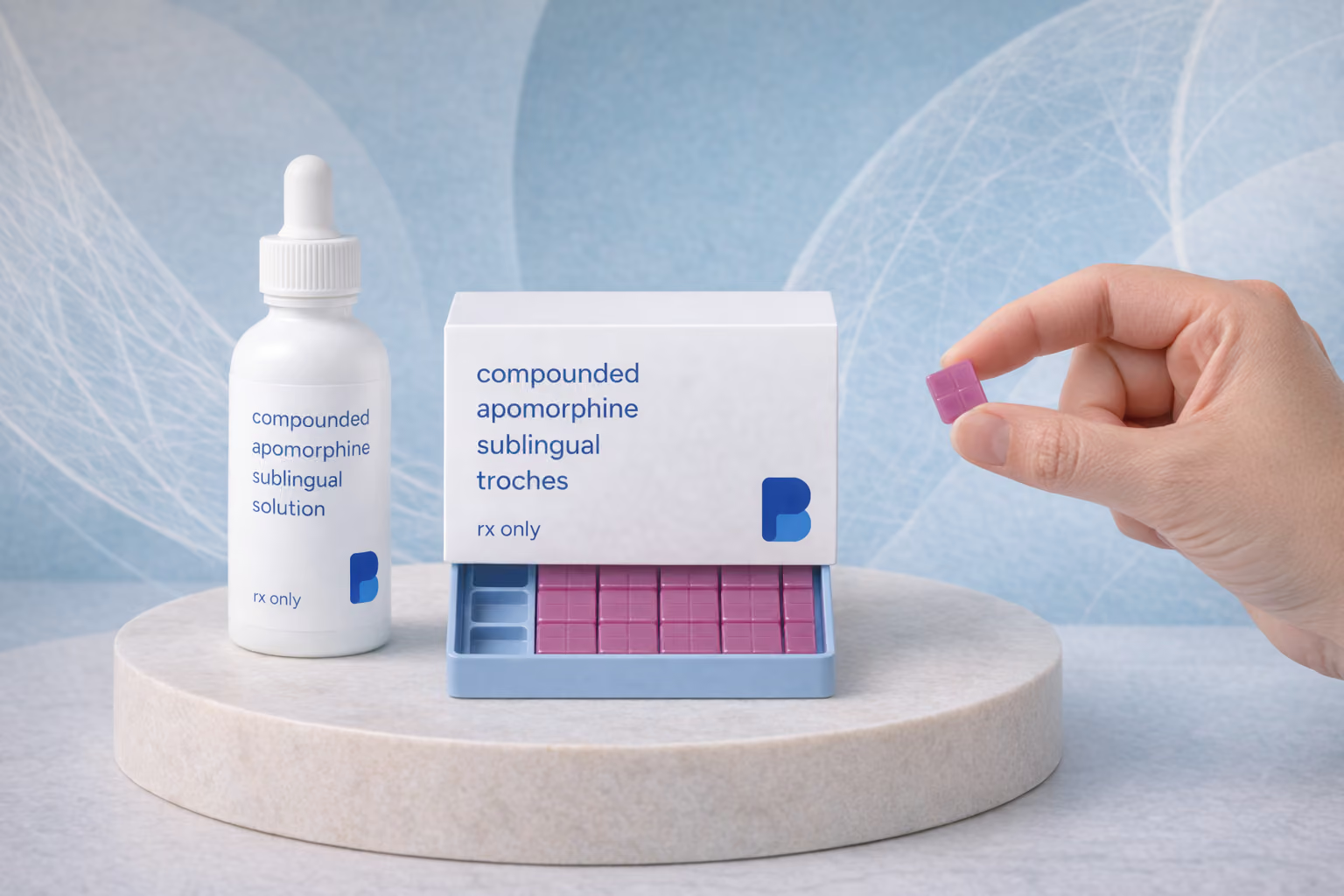
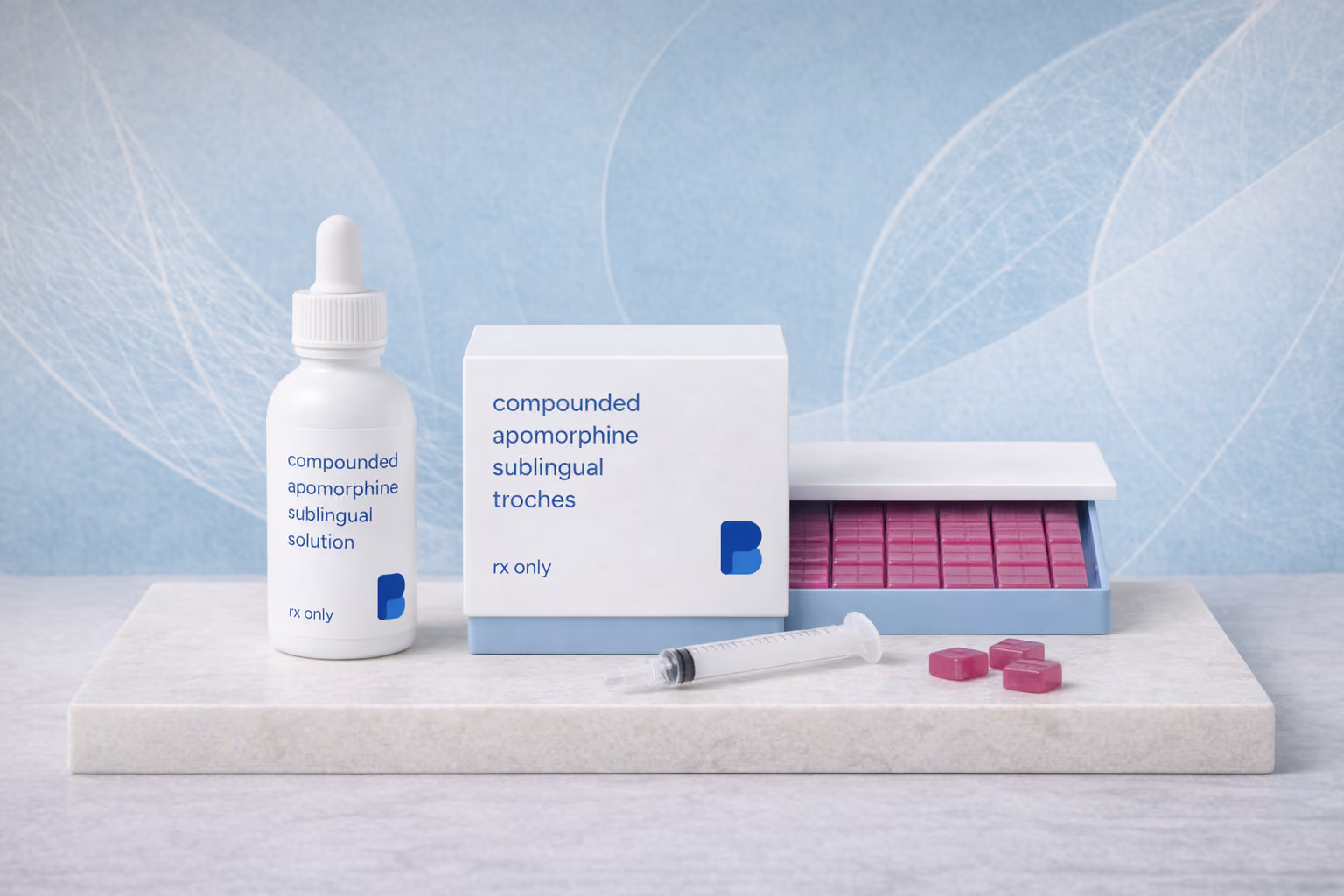
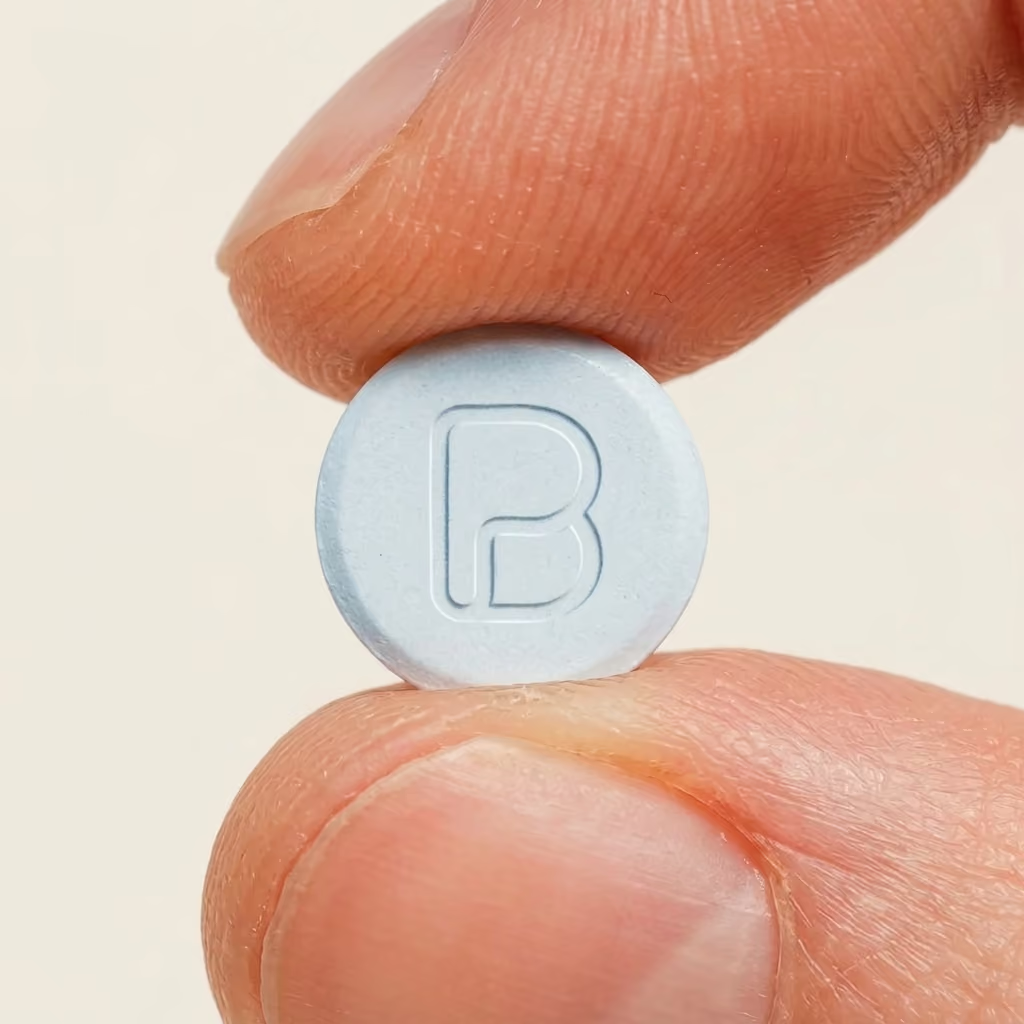
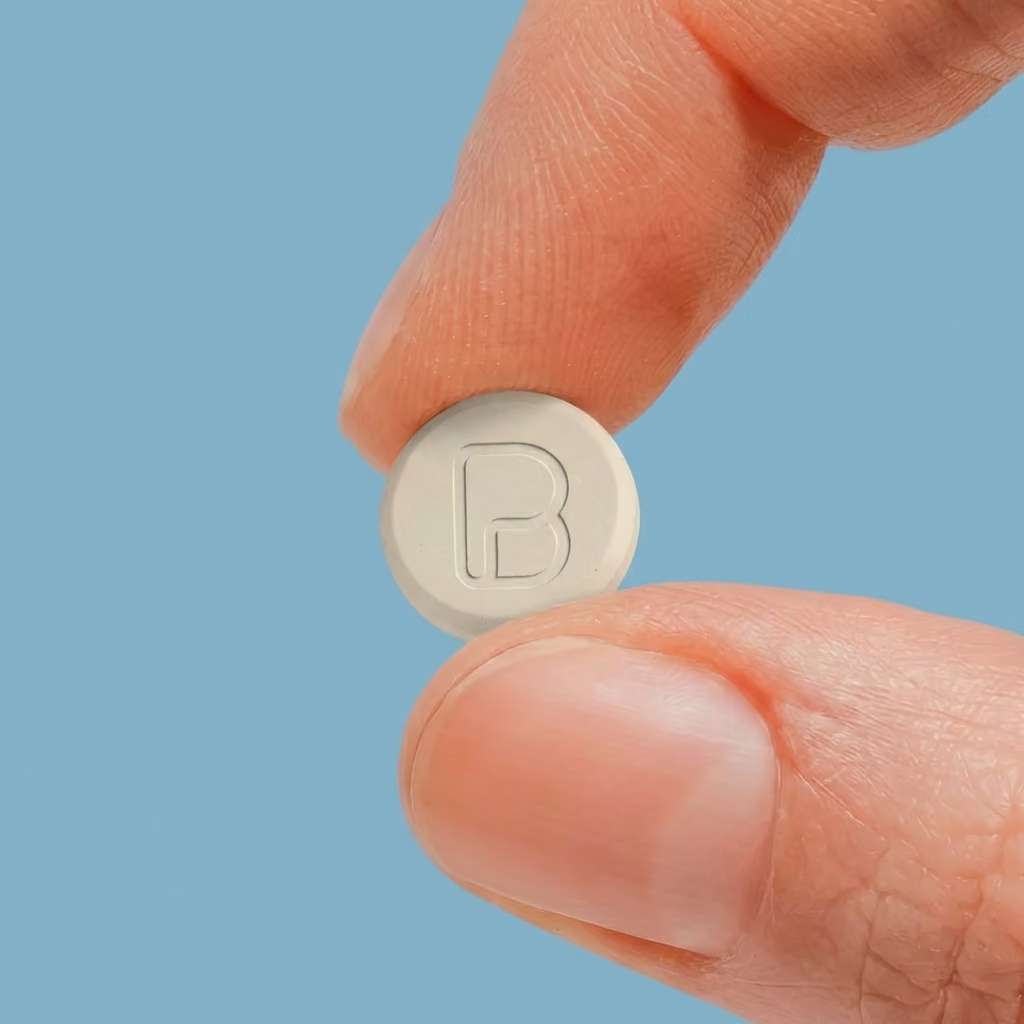
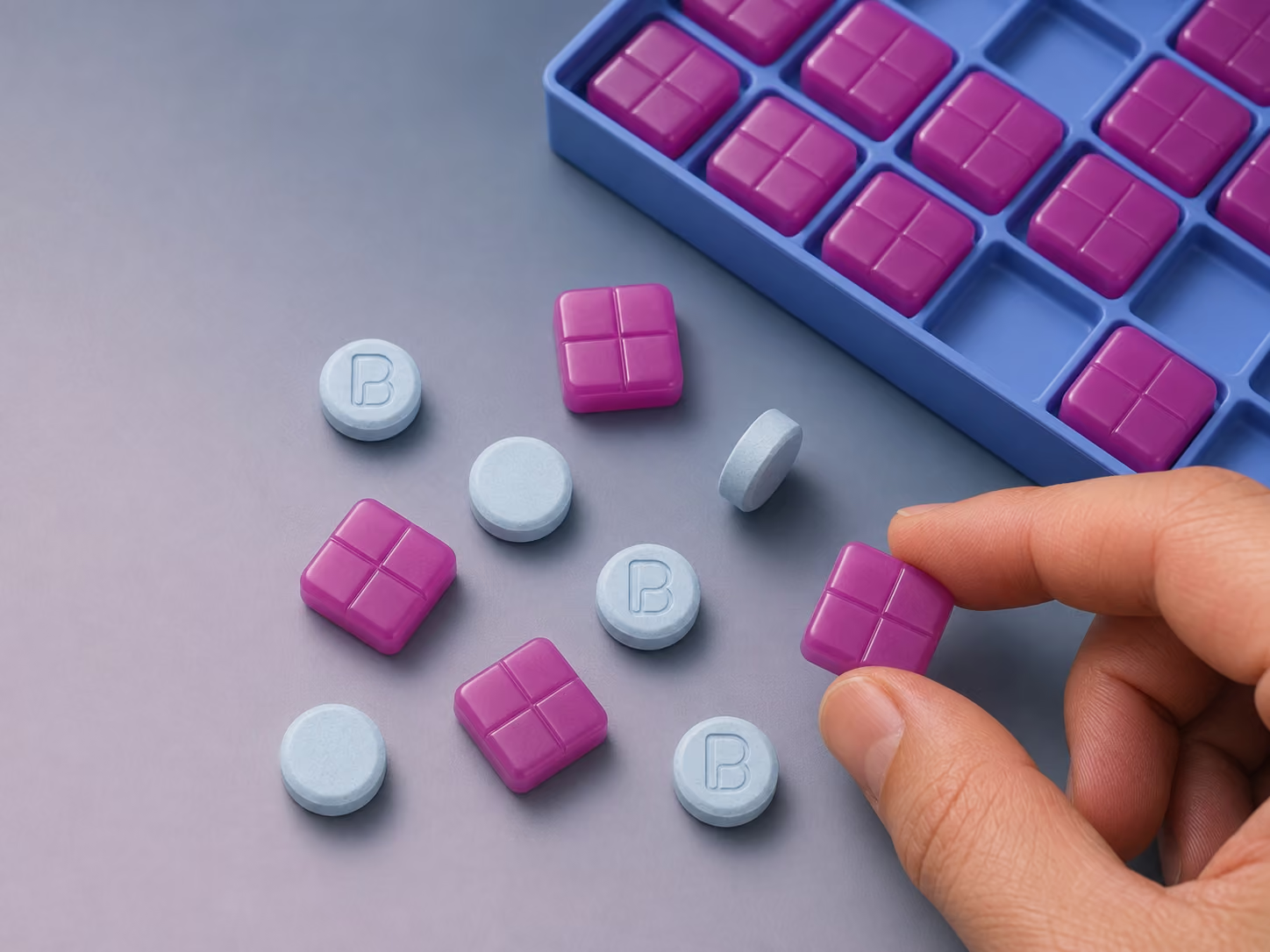
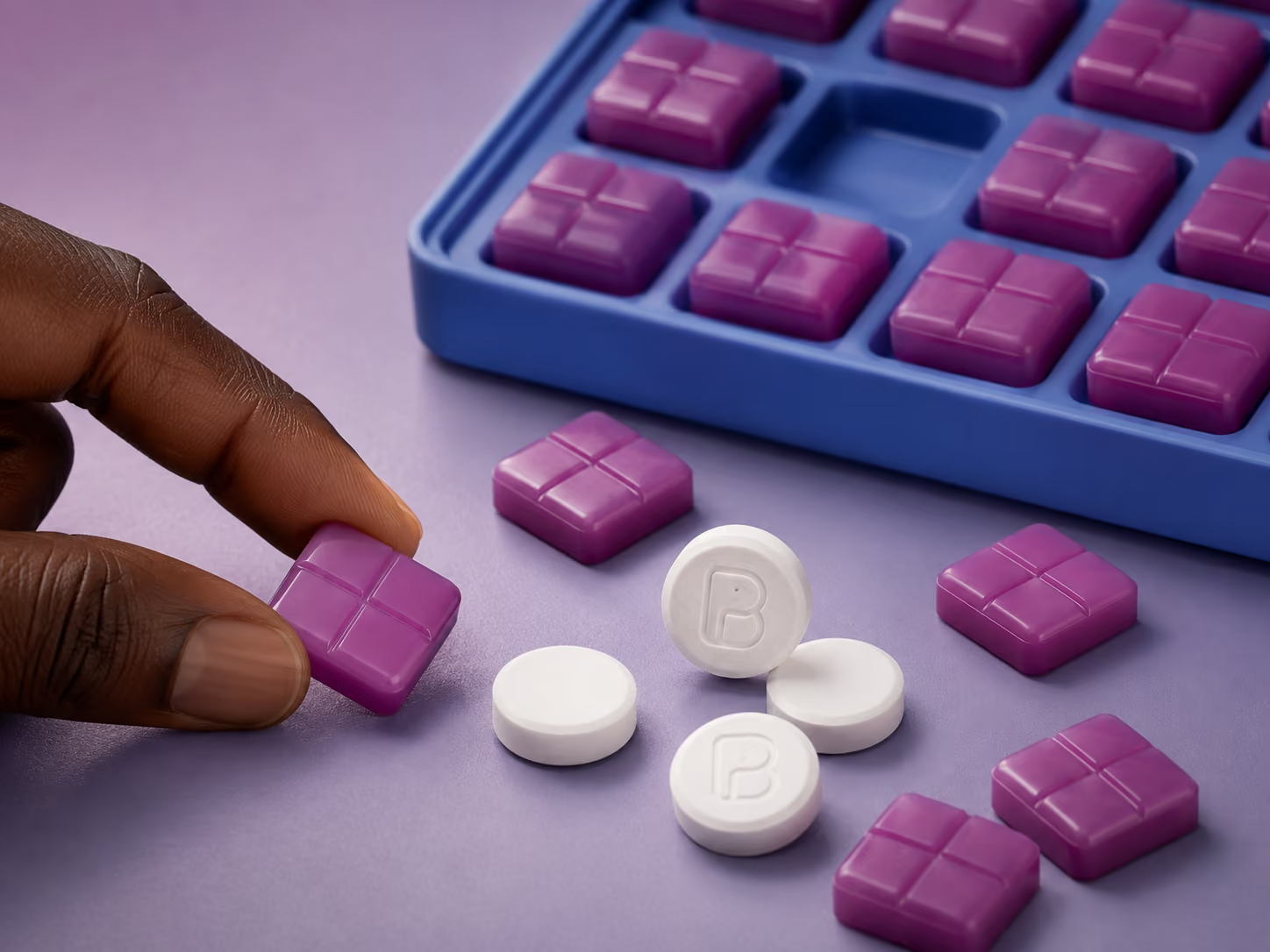
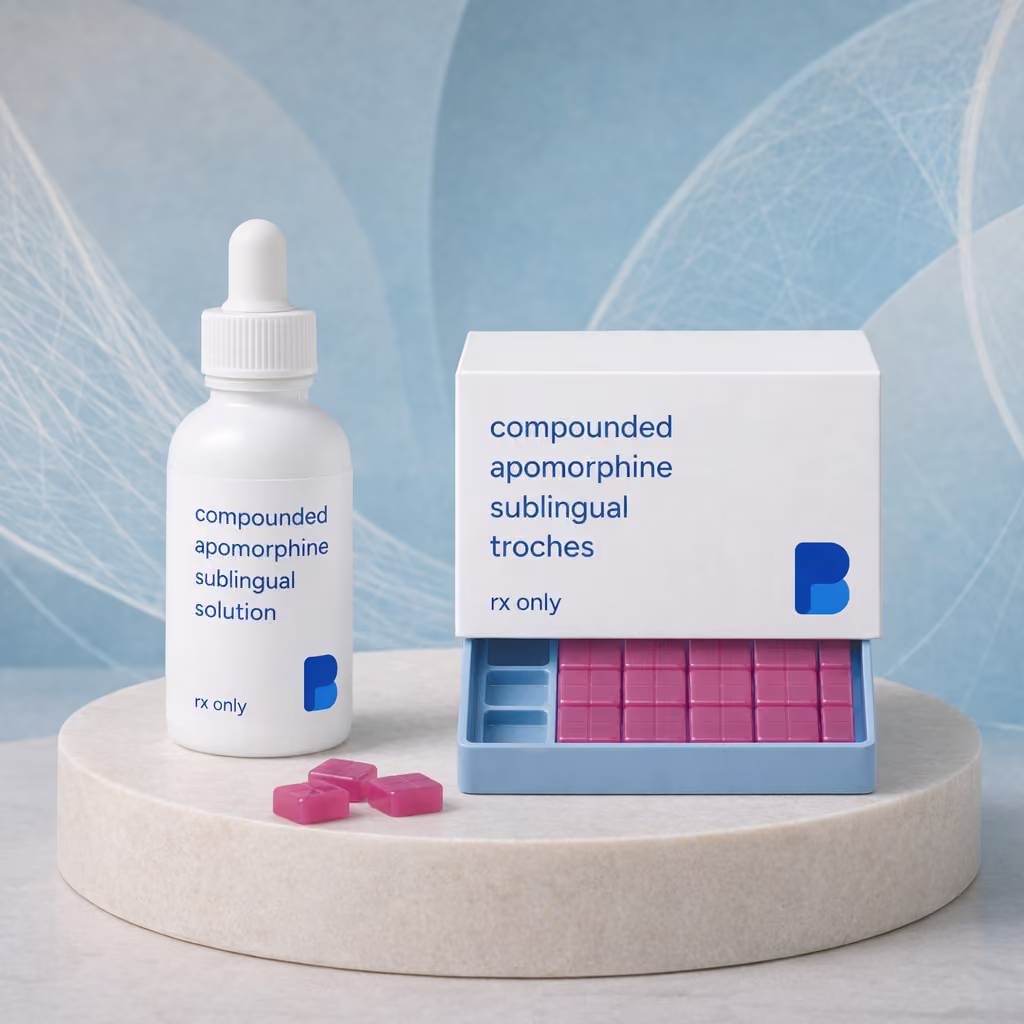
Bayview compounds apomorphine hydrochloride as 2 mg and 3 mg sublingual troches in a slow-dissolving polyglycol base, and as a 3 mg/mL sublingual solution, to the strength and form your prescriber orders. Apomorphine itself is an FDA-approved drug, but these compounded sublingual preparations are not FDA-approved, and their use for erectile dysfunction is off-label. A valid prescription is required, and only your prescriber can decide whether it is appropriate for you. Bayview compounds this as part of our erectile dysfunction line.
How does it work?
Apomorphine stimulates dopamine receptors, mainly the D2 family, in the brain (LiverTox, Apomorphine). In Parkinson's disease that stimulation substitutes for the dopamine the brain no longer makes, which is why the approved injection and infusion are used to rescue "off" episodes (Michael J. Fox Foundation, Onapgo). In erectile dysfunction the target is different: dopamine signaling in the hypothalamus is part of the pathway that starts an erection, and apomorphine acts there rather than on the blood vessels of the penis, which is how sildenafil and tadalafil work. Placed under the tongue it is absorbed through the lining of the mouth and acts within about 20 minutes; swallowed, it is largely destroyed by the liver, which is why the sublingual route matters.
What is it used for?
Prescribers order the 2 mg and 3 mg sublingual strengths for erectile dysfunction, most often for men who cannot take a PDE5 inhibitor, who did not respond to one, or whose prescriber wants a medicine that works through a different pathway. The 2 mg and 3 mg doses are the ones studied in the European trials: in a randomized crossover study of 296 men, 3 mg sublingual apomorphine produced more erections firm enough for intercourse than placebo and was comparable to 4 mg with fewer side effects (Dula et al., 2001). That evidence is for the sublingual tablet marketed in Europe, not for any compounded preparation. The Parkinson's doses of sublingual apomorphine were 10 to 30 mg (FDA, Kynmobi label), and Parkinson's treatment belongs with a neurologist and the approved products. Your prescriber decides whether it fits your situation.
Troche or solution?
The troche is a small lozenge that dissolves slowly under the tongue over several minutes; it holds a fixed dose and travels easily. The solution is drawn up with an oral syringe, held under the tongue, and lets a prescriber adjust the dose in small steps, for example starting below 2 mg. Both are absorbed through the lining of the mouth. Your prescriber selects the form and strength; see the strengths section for what Bayview compounds.
How is it used?
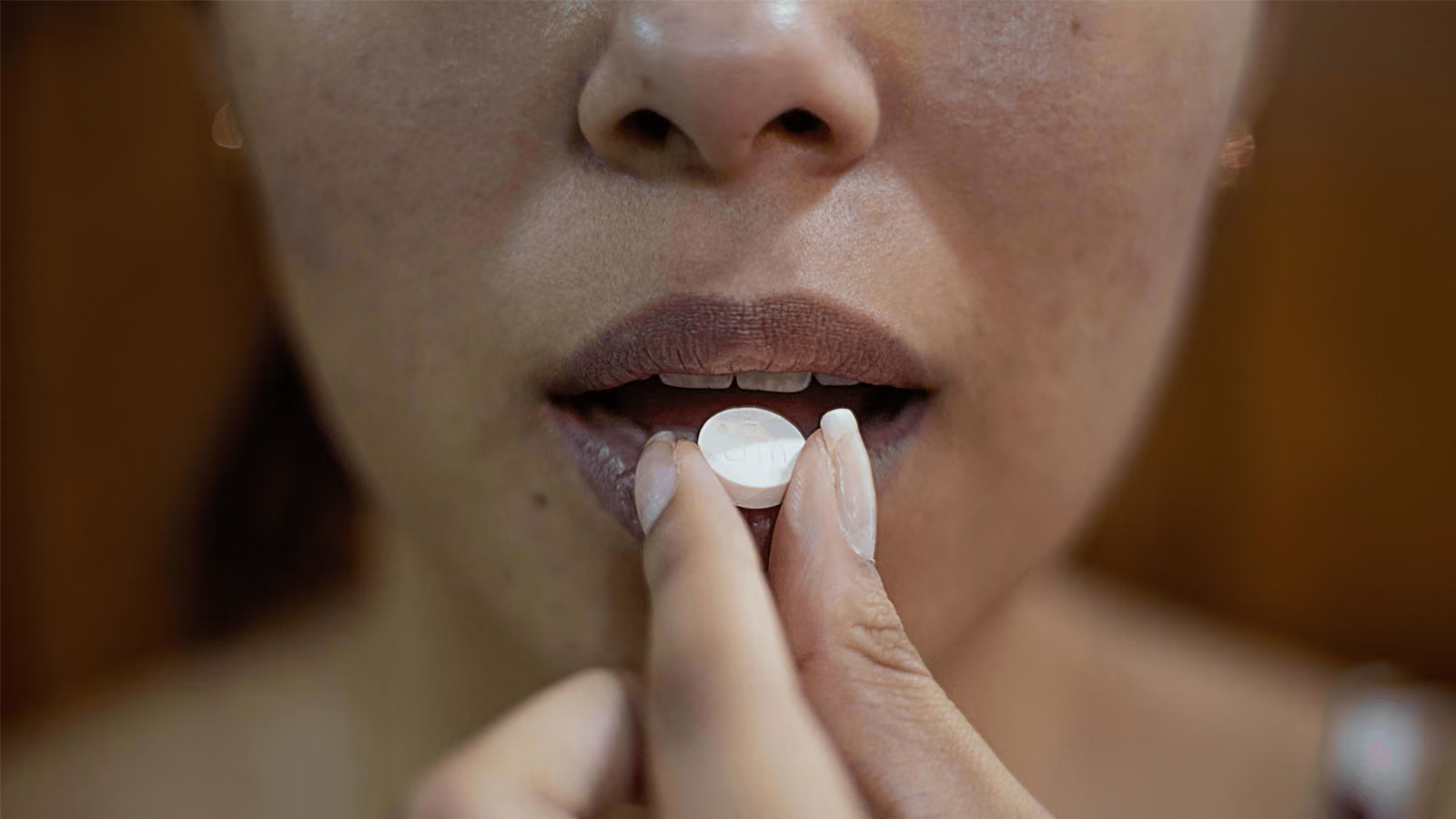
Place the troche under your tongue about 20 to 30 minutes before sexual activity and let it dissolve completely without chewing or swallowing it. For the solution, draw up the amount your prescriber set, hold it under your tongue for the time directed, then swallow. Take no more than one dose in the interval your prescriber set, commonly no more than once in 8 hours, and do not take a second dose because the first seemed not to work. Avoid alcohol around the dose, since it adds to dizziness and low blood pressure. Sit or lie down if you feel lightheaded, and stand up slowly afterward.
Side effects & safety
The most common side effects at 2 mg and 3 mg are nausea, headache, and dizziness, along with yawning, flushing, sweating, drowsiness, and a change in taste; in the European trial program they were mostly mild and short-lived (Bukofzer and Livesey, 2001). Nausea is dose-related, which is one reason prescribers start low.
Who should not use it?
Do not use apomorphine with ondansetron, granisetron, dolasetron, or palonosetron. Avoid it if you are allergic to it, and talk with your prescriber before using it if you have had a recent heart attack, unstable angina, severe heart failure, very low blood pressure, a heart rhythm disorder, or fainting spells, or if you take nitrates, blood pressure medicines, or other medicines that lower blood pressure or affect heart rhythm. It has not been studied in women for this use, is not for children, and should be discussed with your prescriber if you are pregnant or breastfeeding. People with Parkinson's disease should not use a compounded low-dose troche in place of their neurologist's treatment.
How should it be stored?
Store as directed on your label, at room temperature away from heat, light, and moisture, and keep it out of the reach of children and pets. Do not use it after the beyond-use date, and dispose of unused medication as directed.
Why is this compounded?
The FDA-approved apomorphine products are an injection (Apokyn) and a continuous infusion (Onapgo, approved in 2025) for Parkinson's disease, at doses far above 2 or 3 mg. The sublingual film (Kynmobi) was withdrawn from the US market in 2023, and the 2 mg and 3 mg sublingual tablets used for erectile dysfunction were approved only in Europe. When a prescriber wants low-dose sublingual apomorphine, compounding is the only way to prepare it. As a 503A compounding pharmacy, Bayview prepares each order in small batches under USP standards, pursuant to a prescription for an individual patient. We do not supply it as clinic or office stock, that is the role of a 503B outsourcing facility, which Bayview is not. Compounded preparations are not FDA-approved. Related preparations include Sildenafil Oral Dissolve Tablets, Tadalafil Oral Dissolve Tablets, Sildenafil, and Tadalafil. The full list is in our compounded medications catalog.
Clinical details for prescribers
Regulatory status. Apomorphine HCl is a non-ergoline dopamine agonist. FDA-approved presentations: subcutaneous injection (Apokyn, 2004) and continuous subcutaneous infusion (Onapgo, 2025), both for Parkinson's "off" episodes; the sublingual film (Kynmobi, 10 to 30 mg) was approved in 2020 and withdrawn from the US market in 2023. Apomorphine SL 2 and 3 mg (Uprima, Ixense) was approved in Europe in 2001 for erectile dysfunction and was never approved in the United States. Compounded 2 mg and 3 mg troches and 3 mg/mL solution are 503A preparations, not FDA-approved, and off-label for ED. Not a controlled substance.
Formulation & directions. Bayview compounds apomorphine HCl 2 mg and 3 mg sublingual troches (polyglycol base) and a 3 mg/mL sublingual solution. Dispensed 15 or 30 troches; 25 or 30 mL. Typical directions: 2 or 3 mg sublingually 20 to 30 minutes before sexual activity, no more than one dose in 8 hours; the solution allows titration in 0.5 mg (roughly 0.17 mL) steps. Combination troches with tadalafil or sildenafil are separate preparations and are not covered by this page.
Safety & counseling:
- Contraindicated with 5-HT3 antagonists (profound hypotension and loss of consciousness reported); manage nausea with a non-5-HT3 agent if needed (FDA, Kynmobi label).
- At 2 to 3 mg the pooled trial data show nausea, headache, and dizziness as the common effects, little hemodynamic change, and syncope under 0.2%; syncope rises with dose (Bukofzer and Livesey, 2001). Counsel on positional hypotension, alcohol, and antihypertensives; use caution with nitrates and in significant cardiovascular disease.
- Class effects from the approved labeling: somnolence and sudden sleep onset, hallucinations and psychosis, impulse-control disorders, dose-related QTc prolongation, and, for sublingual forms, oropharyngeal soft-tissue irritation (FDA, Kynmobi label).
- Efficacy evidence for the 3 mg dose is from the European sublingual tablet program (Dula et al. 2001, n = 296 crossover), not from compounded preparations; the ED use is off-label in the United States.
- Not studied in women for this indication; avoid in pregnancy and lactation absent a specific indication.
Non-controlled; ship to patient or office per the order form. Licensed to dispense in RI, MA, CT, NJ, NH, FL, ME, and PA. Background: FDA, Kynmobi label; Dula et al., 2001; Bukofzer and Livesey, 2001. Account setup, licensing, and ordering are covered on our for providers page.
This is a prescription compounded medication and is not FDA-approved; use for erectile dysfunction is off-label. This information is educational and is not medical advice. Your prescriber determines whether it is appropriate and sets the formulation and directions.
References
- FDA: Kynmobi (apomorphine sublingual film) prescribing information
- NCBI Bookshelf: LiverTox, Apomorphine
- Dula et al., European Urology 2001: 3 mg apomorphine SL vs placebo in ED
- Bukofzer and Livesey, IJIR 2001: safety and tolerability of apomorphine SL
- Michael J. Fox Foundation: Onapgo apomorphine infusion (2025)