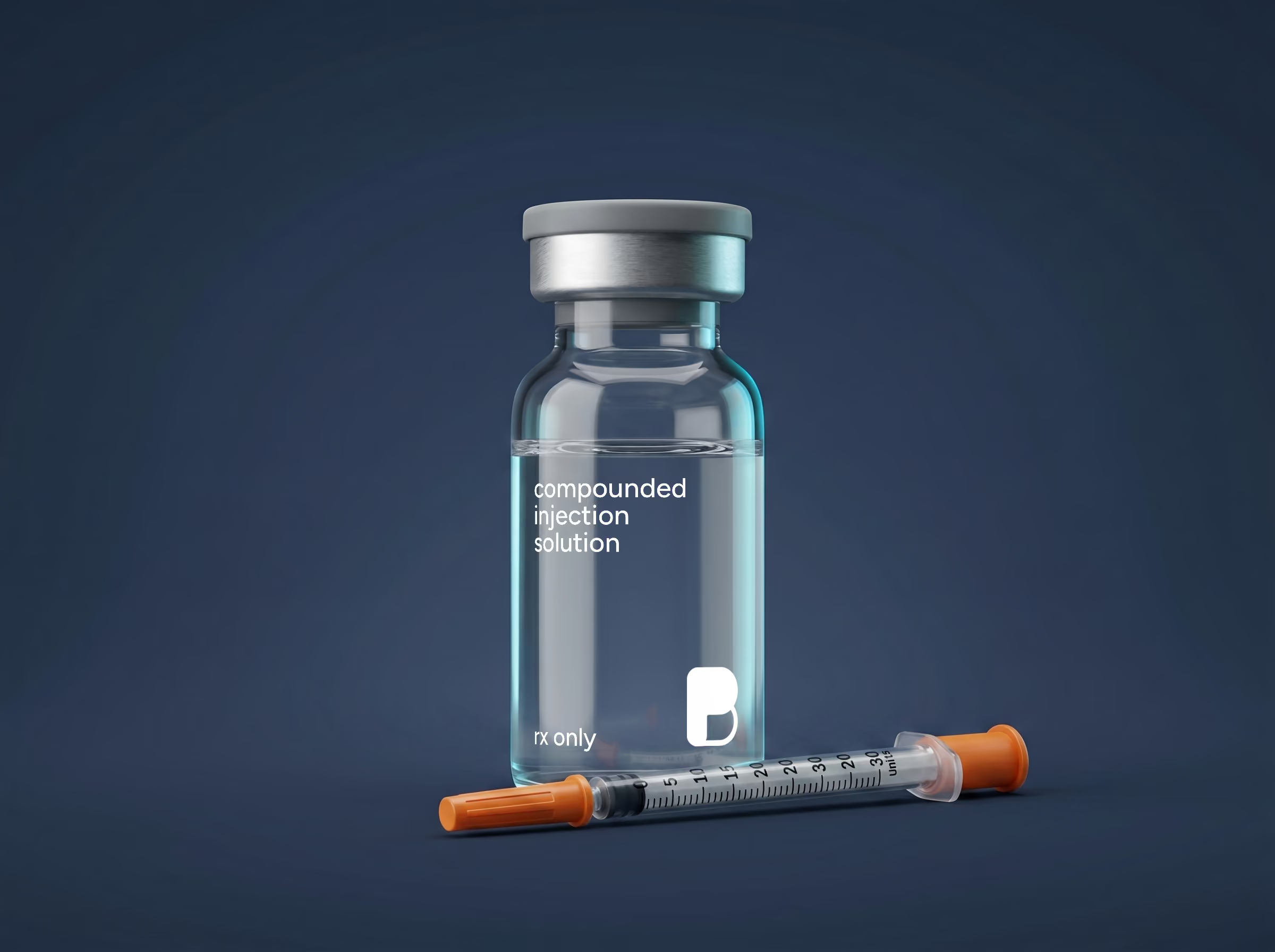






Atropine Trimix Injection is a compounded, prescription-only medication prepared by a licensed pharmacy and given as a small injection into the side of the penis (intracavernosal injection), as directed by a prescribing provider. It combines three active ingredients, papaverine, phentolamine, and atropine, and is custom-compounded to the strength your provider orders rather than mass-produced.
It is one option a provider may consider as part of care for erectile dysfunction (ED), often when oral medications are not suitable or have not worked well enough for a particular patient. Bayview compounds this as part of our erectile dysfunction compounding line.
How does it work?
The ingredients work together to relax the smooth muscle inside the penis and increase localized blood flow, which can support an erection when a patient is sexually stimulated:
- Papaverine: a smooth-muscle relaxant (vasodilator) that helps widen blood vessels and increase blood flow into the penis (MedlinePlus monograph).
- Phentolamine: a non-selective alpha-adrenergic blocker that reduces the signals that constrict blood vessels, supporting the increased blood flow (DailyMed label).
- Atropine: an anticholinergic (antimuscarinic) agent included to support smooth-muscle relaxation (StatPearls, NIH).
What is it used for?
Providers may prescribe Atropine Trimix Injection as part of care for erectile dysfunction when they determine it is appropriate for a patient. Injectable therapy is one of several recognized ED treatment options described in the American Urological Association ED guideline. Only a licensed provider can decide whether this formulation is right for an individual; Bayview Pharmacy does not provide consultations or determine appropriateness, and a valid prescription is required.
How does it compare to other ED options?
ED treatments differ mainly in how they are taken and how they are used. The table below describes those differences for education only.
| Option | Form / route | How it's used |
|---|---|---|
| Oral PDE5 inhibitors (e.g., sildenafil, tadalafil) | Tablet, by mouth | Taken before sexual activity; depend on nerve signaling and blood flow |
| Bimix Injection (papaverine + phentolamine) | Intracavernosal injection | Two-ingredient injectable that acts locally on penile blood vessels |
| Atropine Trimix (papaverine + phentolamine + atropine) | Intracavernosal injection | Three-ingredient injectable compounded option |
| Trimix (papaverine + phentolamine + alprostadil) | Intracavernosal injection | Three-ingredient injectable that includes a prostaglandin |
| Quadmix (adds alprostadil to this formula) | Intracavernosal injection | Four-ingredient compounded option |
Differences in form and route are described for education only and are not a statement that any option is better, stronger, or more effective. Your provider determines what is appropriate for you.
How is it used?
Atropine Trimix Injection is given as a small injection into the side of the penis following the exact technique, instructions, and dose set by your prescriber, who establishes your starting dose and any adjustments. Never change your dose on your own. If you are unsure about the injection technique or dosing, contact your prescriber, and a Bayview pharmacist is available if you have questions about your prescription.
Side effects & safety
As with any medication, side effects are possible. Reported effects of penile injection therapy can include pain or aching at the injection site, bruising or minor bleeding, dizziness or flushing, and, with long-term use, scarring or firm areas (fibrosis) in the penile tissue. Because this formulation contains atropine, anticholinergic effects such as dry mouth, blurred vision, or a faster heartbeat are also possible. Report any of these to your provider.
Contact your provider promptly if you have new or worsening penile pain, curvature, or lumps, or any reaction that concerns you.
Who should not use it?
Penile injection therapy is not appropriate for everyone. It is generally avoided in men for whom sexual activity is inadvisable, and extra caution applies to those with conditions that raise the risk of prolonged erections (such as sickle cell disease, leukemia, or multiple myeloma), penile anatomical conditions, or a known sensitivity to the ingredients. Because this formulation contains atropine, your provider will also consider conditions that anticholinergic medications can affect, such as glaucoma or certain heart conditions. Tell your provider about your health conditions and all medications you take so they can determine whether this formulation is appropriate for you.
How should it be stored?
Store exactly as directed on your label, which is often refrigerated and away from heat, light, and moisture. Keep it out of the reach of children. Dispose of needles and syringes in an approved sharps container, and do not reuse needles.
Why is this compounded?
This preparation is not available as a standard manufactured product. Compounding lets a licensed pharmacy tailor the strength and form to an individual prescription. As a 503A compounding pharmacy, Bayview Pharmacy prepares each order in small batches under USP <795>/<797> standards using quality ingredients. You can read how we handle sterile compounding. Other options in the same line include Alprostadil / Papaverine / Phentolamine Injection, Alprostadil / Atropine / Papaverine / Phentolamine Injection, Papaverine / Phentolamine Injection, and Alprostadil Injection. The full list is in our compounded medications catalog.
Clinical details for prescribers
Formulation. Three-agent intracavernosal vasoactive preparation: papaverine (non-specific phosphodiesterase inhibitor producing cavernosal smooth-muscle relaxation), phentolamine (non-selective alpha-adrenergic antagonist attenuating sympathetic vasoconstriction), and atropine (competitive antimuscarinic antagonist included to support smooth-muscle relaxation; StatPearls).
Clinical role. Does not contain alprostadil, so it may be selected where a prostaglandin component is not preferred or tolerated, distinguishing it from Trimix. Adding alprostadil to this base yields the four-agent Quadmix; omitting atropine returns to Bimix.
Counseling points:
- Individualized dose titration set by the prescriber
- Injection technique training before independent use
- Anticholinergic precautions with the atropine component
- Priapism precautions: erection >4 hours is an emergency
Background: intracavernosal injection therapy review (PubMed); AUA/SMSNA priapism guideline. Account setup, licensing, and ordering are covered on our for providers page.
This is a prescription-only compounded medication and is not FDA-approved. Your provider determines whether it is appropriate and sets the formulation and dose.