





Wrinkles and fine lines are creases and folds that develop in the skin as it ages. Fine lines usually appear first around the eyes, mouth, and forehead, while deeper wrinkles form over time as the skin loses collagen, elastin, and moisture. They are a normal part of aging, and sun exposure is the single biggest factor in how early and how prominently they appear.
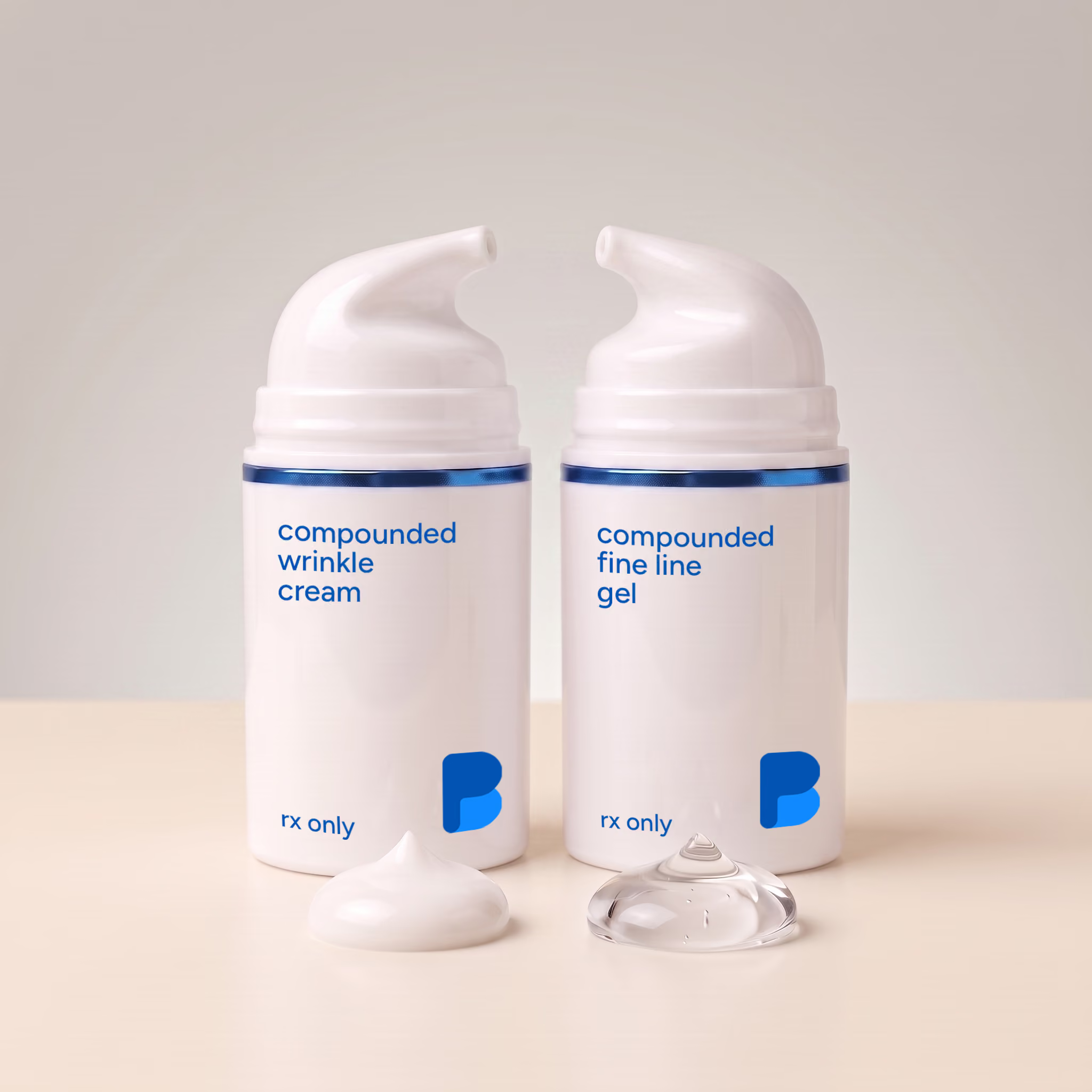
Bayview Pharmacy prepares compounded, prescription-only tretinoin-based creams that a provider can use as part of care for wrinkles and fine lines, tailored to the patient's skin and how it tolerates treatment. Bayview compounds this as part of our dermatology compounding line.
Why do wrinkles happen?
As skin ages, it produces less collagen and elastin, the fibers that give it strength and flexibility, and cell turnover slows. Ultraviolet light accelerates this breakdown, which is why sun-exposed areas wrinkle earliest and why daily sun protection is central to any treatment plan. Sun exposure also drives melasma and dark spots, which is why the two often appear together. Repeated facial expressions, genetics, smoking, and dryness all contribute as well.
Because the process is gradual and ongoing, treatment works by encouraging the skin to renew itself and supporting its moisture barrier over time rather than erasing lines overnight. You can read more about how skin changes with age from MedlinePlus (NIH).
How Bayview treats wrinkles and fine lines
Every formula in this line is built around tretinoin, a prescription retinoid used to reduce fine wrinkles. It works by increasing the production of new skin cells, speeding the turnover of older ones (MedlinePlus, tretinoin topical). The line offers four tretinoin concentrations, from 0.01% to 0.1%, so a provider can start where it makes sense for your skin and adjust over time.
Each cream also pairs the tretinoin with niacinamide, a form of vitamin B3 that helps calm the skin and support its barrier, and sodium hyaluronate, a humectant form of hyaluronic acid that draws in and holds moisture, which helps offset the dryness retinoids can cause. Tretinoin's turnover effect is also why it anchors several of our compounded acne formulas, where it keeps pores from clogging.
Our wrinkle & fine line lineup
Four compounded tretinoin creams, from a low introductory concentration to the highest in the line, matched to your skin and how it tolerates treatment.
Compare the formulasWhy a personalized, compounded approach?
Commercial tretinoin products come in fixed strengths and rarely include supporting ingredients. Compounding lets a licensed pharmacy combine the tretinoin with barrier-supporting niacinamide and hydrating sodium hyaluronate in one cream, and offer a graduated range of concentrations so your provider can match the formula to your skin, your history, and how you tolerate treatment, then adjust as your skin adapts. As a 503A compounding pharmacy, Bayview prepares each order in small batches under USP <795> standards using quality ingredients. Related dermatology preparations include Melasma & Dark Spots, Rosacea & Redness, Acne, and BLT Numbing Cream. The full list is in our compounded medications catalog.
What to expect
Retinoids work gradually. It may take 3 to 4 months, and sometimes up to 6, before you notice improvement in fine lines, and some dryness, redness, or peeling is common in the first weeks as your skin adjusts. Providers often start with application a few times per week and increase as tolerated. Daily broad-spectrum sunscreen is essential, both because tretinoin makes skin more sun-sensitive and because sun exposure drives the aging process itself. Results vary from person to person, improvement depends on continued use, and your provider may adjust your formula over time.
What to know before you start
Your provider decides whether one of these creams is right for you. These are the points they are most likely to raise.
- Your skin will probably get red and flaky for the first few weeks. This is expected with any retinoid and usually settles as your skin adjusts. Starting at a lower strength two or three nights a week, rather than every night, is the usual way to ease into it.
- Wear broad-spectrum sunscreen every day. Tretinoin makes skin more sensitive to sun, and sun exposure is part of what causes the lines you are treating.
- Do not use tretinoin if you are pregnant, trying to become pregnant, or breastfeeding. Tell your provider if any of this applies to you or changes during treatment.
- Go easy on other active skincare. Scrubs, acids, and other strong topicals layered on top usually cause more irritation than benefit. Check with your provider before combining.
How do I get started?
Because these are prescription formulas, a licensed provider decides whether treatment is appropriate and chooses the formula and strength for you. Bayview Pharmacy does not provide consultations or determine appropriateness, and a valid prescription is required. Once you have a prescription, your provider can order through Bayview, and a pharmacist is available if you have questions.
Clinical details for prescribers
Formulation. Each preparation pairs tretinoin (0.01 to 0.1%) with niacinamide 2% and sodium hyaluronate 0.05%. Tretinoin, a retinoic acid receptor agonist, normalizes keratinocyte differentiation, accelerates epidermal turnover, and supports dermal collagen in photoaged skin (StatPearls; MedlinePlus). Niacinamide provides barrier support and mitigates retinoid dermatitis; sodium hyaluronate provides humectant hydration.
Titration. The four-tier concentration ladder supports initiating low, with application 2 to 3 times weekly, and advancing frequency and concentration as tolerated.
Counseling points:
- Expected retinization: transient erythema and desquamation in early weeks
- Strict photoprotection, daily broad-spectrum SPF
- Avoid concomitant irritating topicals unless directed
- Avoid in pregnancy or lactation
Full formula options and safety information appear elsewhere on this page. Account setup, licensing, and ordering are covered on our for providers page.
This information is about a skin condition and its treatment options and is not medical advice. Compounded medications are prescription-only and are not FDA-approved. Your provider determines whether treatment is appropriate and sets the formulation and dose.