


Triamcinolone acetonide is a synthetic corticosteroid that has been used on the skin since the late 1950s and remains one of the most prescribed topical steroids in the United States. It sits in the middle of the potency range: strong enough for eczema and psoriasis on the body and limbs, milder than the class I steroids reserved for the thickest plaques.
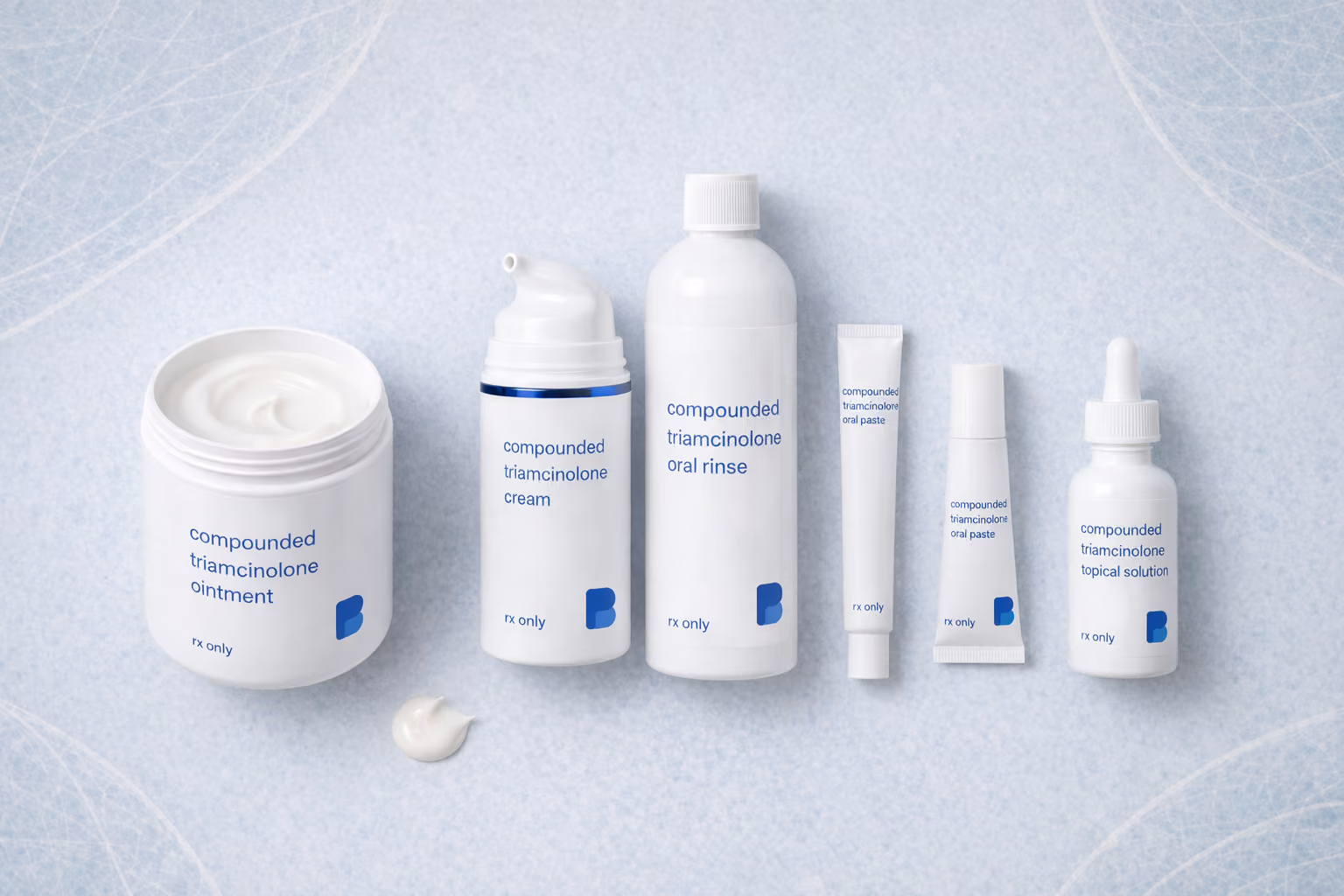
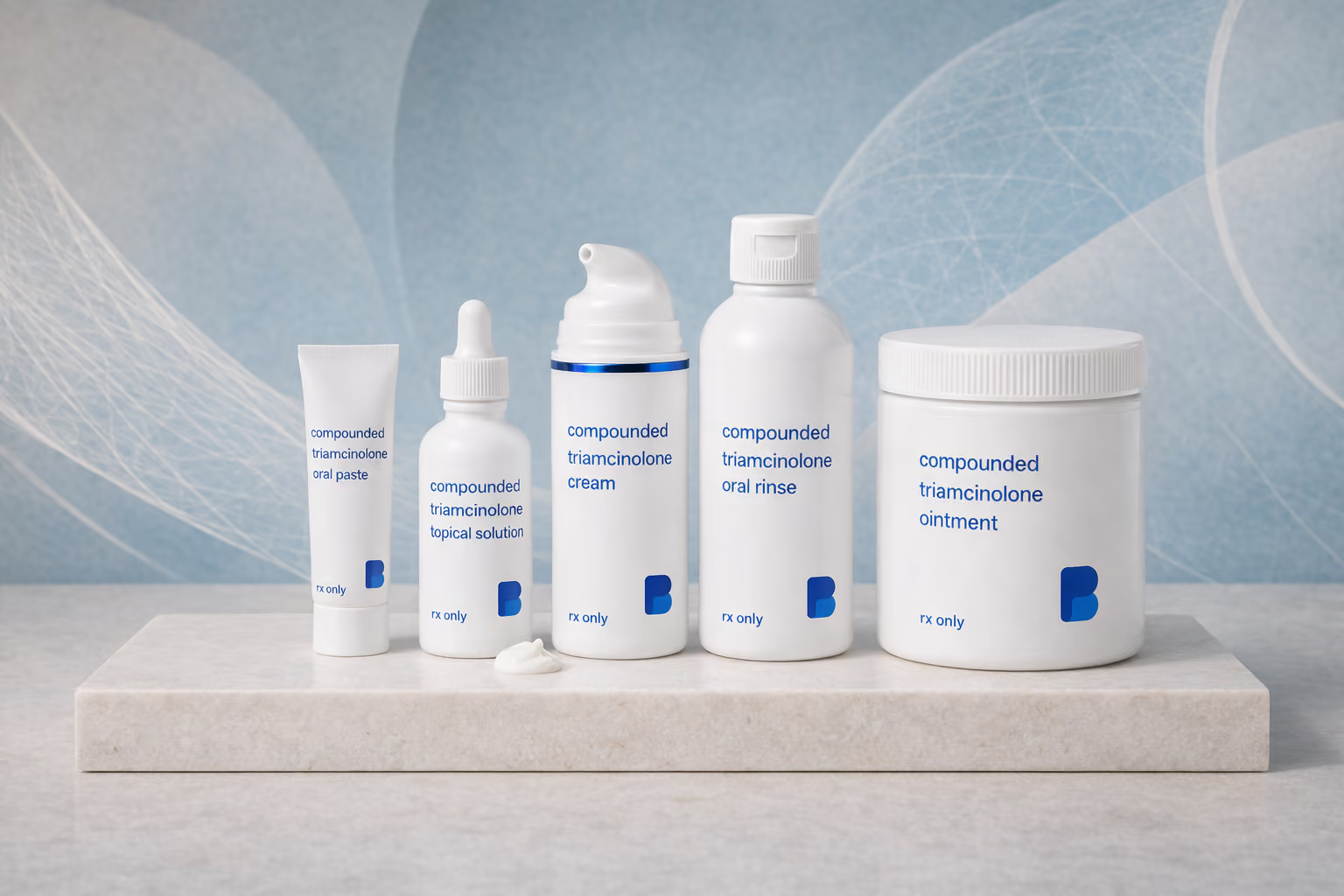
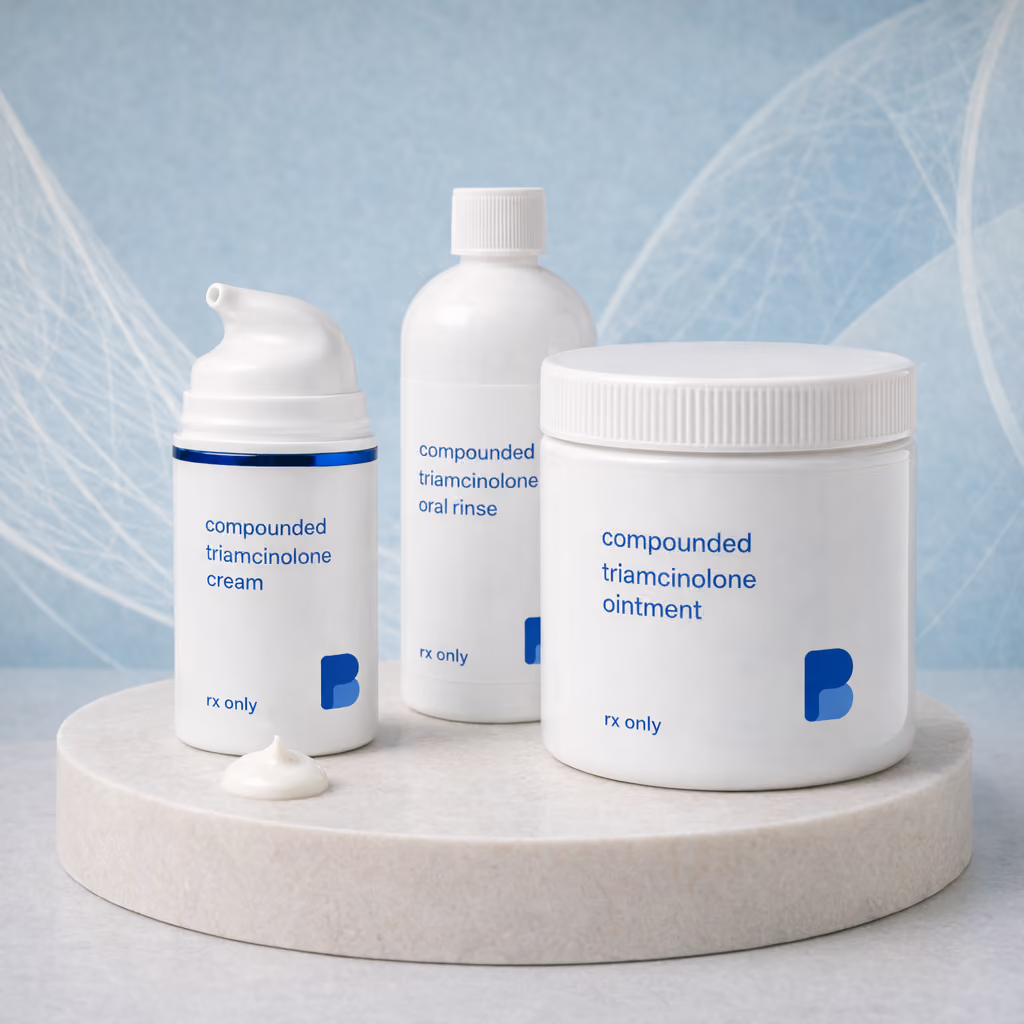
In the United States triamcinolone acetonide is FDA-approved as a 0.025%, 0.1%, and 0.5% cream and ointment, as a lotion, as a topical spray, and as a 0.1% dental paste for the inside of the mouth. Bayview compounds it when a prescriber needs a strength, base, or form those products do not offer: a preservative-free or simplified cream or ointment, a 0.5% gel, a 0.1% solution, a shampoo for the scalp, or a swish-and-spit oral rinse. These compounded preparations are not FDA-approved, and a valid prescription is required. When a manufactured product fits the order, that is what Bayview dispenses. Bayview compounds this as part of our dermatology compounding line.
How does it work?
Triamcinolone is a glucocorticoid. In the skin it binds to steroid receptors inside cells and switches off the chemical signals that drive inflammation, mainly by inhibiting phospholipase A2 and so cutting the production of prostaglandins and leukotrienes; the result is less redness, swelling, and itch and, over days, a calmer plaque (StatPearls, Triamcinolone). It also narrows small blood vessels and slows the multiplication of skin cells, which is part of why it helps in psoriasis (DailyMed, triamcinolone acetonide cream label). Inside the mouth the same anti-inflammatory action, delivered by a paste that sticks to the sore or a rinse that bathes the whole lining, quiets the inflamed tissue (DailyMed, triamcinolone dental paste label).
What is it used for?
Manufactured triamcinolone cream and ointment are FDA-approved for the relief of the inflammatory and itchy manifestations of corticosteroid-responsive skin conditions (DailyMed, triamcinolone acetonide cream label). Prescribers use it for eczema and atopic dermatitis, plaque psoriasis, contact dermatitis, seborrheic dermatitis, lichen planus, and similar inflammatory conditions on the body, limbs, and scalp (MedlinePlus, Triamcinolone Topical). The dental paste is approved as an adjunct and for temporary relief of the symptoms of oral inflammatory and ulcerative lesions caused by trauma (DailyMed, triamcinolone dental paste label).
Topical steroids in a paste or a rinse are also a first-line treatment for symptomatic oral lichen planus and are used for recurrent canker sores and other inflamed spots in the mouth; the rinse is ordered when the sores are too many or too far back for a paste (StatPearls, Oral Lichen Planus). Your prescriber decides whether it fits your situation and how it should be used.
Cream, ointment, or something else?
Ointment is the greasiest and the most occlusive, so it holds moisture in dry, thickened, or cracked skin; cream absorbs and suits weeping or acute patches and the daytime; gel, solution, and lotion spread through hair and over large areas and dry without residue; the spray reaches skin that hurts to touch; the shampoo treats the scalp in the shower. The oral adhesive paste is pressed onto a single sore and forms a film that holds the steroid there; the rinse is swished around the mouth and spat out, for sores a paste cannot cover. Your prescriber selects the form and strength; see the strengths section for what Bayview compounds.
How is it used?
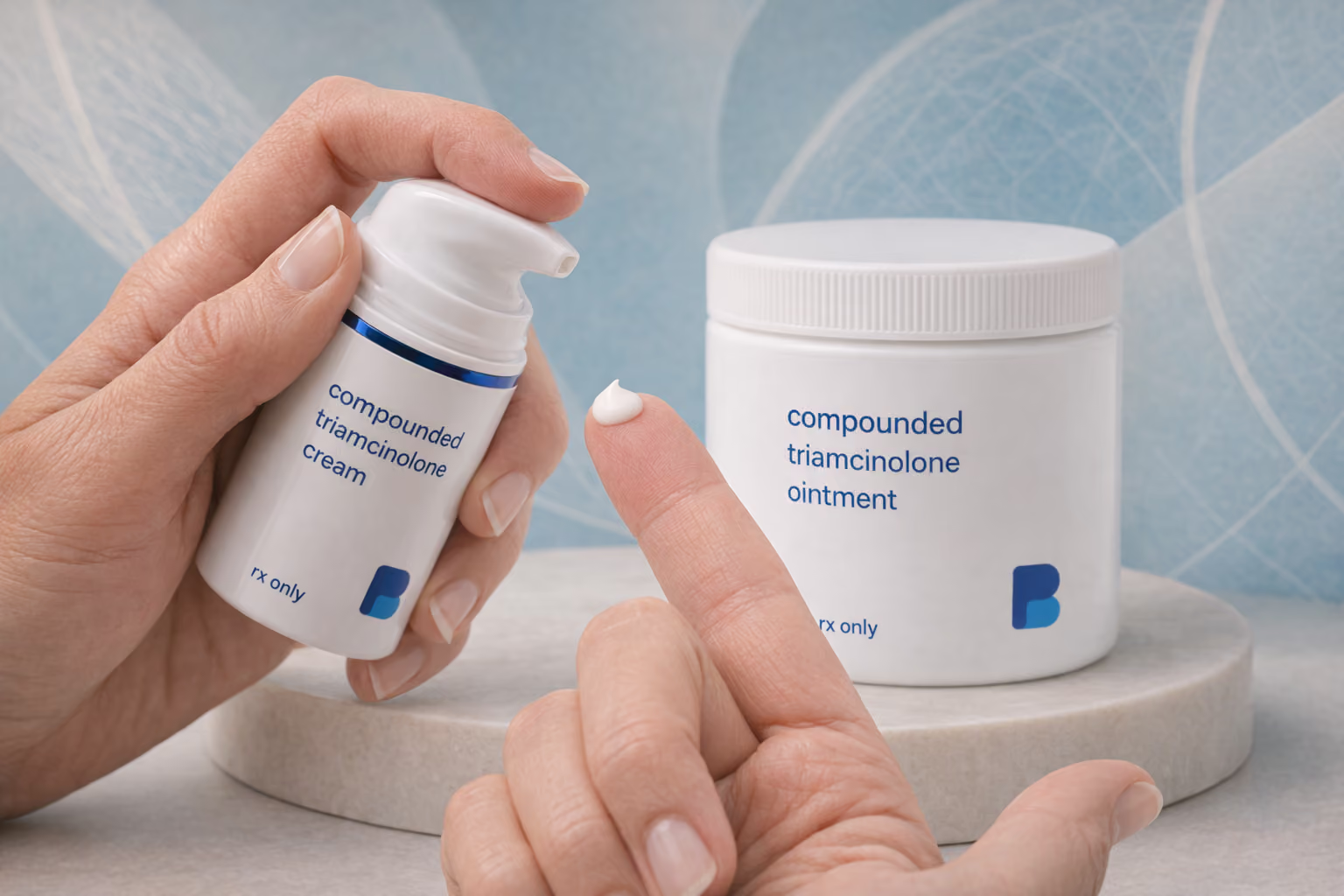
Follow the directions on your label exactly. For the cream or ointment, apply a thin film to the affected skin and rub it in gently; the 0.025% strength is usually applied two to four times a day and the 0.1% and 0.5% strengths two to three times a day, though your prescriber may set a different schedule (DailyMed, triamcinolone acetonide cream label). Do not bandage or cover the area, and do not use it under a diaper, unless told to; covering the skin increases how much steroid is absorbed. Keep it away from the eyes, and avoid the face, groin, and underarms unless your prescriber directed it there (MedlinePlus, Triamcinolone Topical).
For the paste, press a small dab onto the sore at bedtime, or two or three times a day after meals, until a thin film forms, and do not rub it in (DailyMed, triamcinolone dental paste label). For the rinse, swish the measured amount for the time on your label, spit it out, do not swallow, and do not eat or drink for 30 minutes afterward. Use any form for as long as your prescriber said and no longer; if a mouth sore has not improved in a week, tell your prescriber.
Side effects & safety
Most effects are local: burning, itching, irritation, dryness, and redness on application, acne-like bumps, folliculitis, extra hair growth at the site, lightening of the skin, and a rash around the mouth when it is used on the face. Steroids used for too long, on thin skin, or under occlusion can cause thinning, stretch marks, and visible blood vessels, and can let a skin infection take hold or worsen (DailyMed, triamcinolone acetonide cream label). In the mouth the most common problem is thrush, a yeast overgrowth that shows up as white patches (StatPearls, Oral Lichen Planus).
Who should not use it?
Avoid triamcinolone if you are allergic to it or to other corticosteroids. Do not put it on infected skin, cold sores, or thrush unless your prescriber is treating the infection at the same time, and do not use the paste or rinse while you have a fungal, viral, or bacterial infection of the mouth or throat, because a steroid can let the infection spread (DailyMed, triamcinolone dental paste label). Tell your prescriber if you are pregnant; the manufactured cream carries a pregnancy caution and is used only when the benefit justifies it (DailyMed, triamcinolone acetonide cream label).
If you are breastfeeding, a topical steroid applied to a small area for a short time is unlikely to pose a risk to the infant, but it should not be applied to the nipple area before feeding, and the lowest strength on the smallest area is preferred (LactMed, Triamcinolone, Topical). Also mention diabetes, glaucoma, any other steroid medicines you use, and whether the area to be treated is large. Use in children calls for a pediatric prescriber's direction.
How should it be stored?
Store as directed on your label, at room temperature away from heat and moisture, and keep it out of the reach of children and pets. Do not use it after the beyond-use date, and dispose of unused medication as directed.
Why is this compounded?
FDA-approved triamcinolone acetonide comes as 0.025%, 0.1%, and 0.5% cream and ointment, as a lotion, a spray, and a 0.1% dental paste, and when one of those fits the order, that is what Bayview dispenses. Compounding is for the cases the manufactured line does not cover: a preservative-free or simplified base for a patient who reacts to an ingredient in the tube, a 0.5% gel or a 0.1% solution for the scalp, a medicated shampoo, a larger or smaller container, or a swish-and-spit oral rinse, which no manufacturer makes.
As a 503A compounding pharmacy, Bayview prepares each order in small batches under USP standards, pursuant to a prescription for an individual patient. We do not supply triamcinolone as clinic or office stock, that is the role of a 503B outsourcing facility, which Bayview is not. Compounded preparations are not FDA-approved. Related preparations include Fluocinonide Cream & Ointment, Compounded Tacrolimus, and Magic Mouthwash. The full list is in our compounded medications catalog.
Clinical details for prescribers
Regulatory status. Triamcinolone acetonide is a synthetic fluorinated corticosteroid of medium potency (the 0.5% cream and ointment are upper-medium, the 0.025% preparations low). FDA-approved topical presentations: 0.025%, 0.1%, and 0.5% cream and ointment; 0.025% and 0.1% lotion; topical aerosol spray; 0.1% dental paste. Other strengths and bases (preservative-free or simplified cream and ointment, 0.5% gel, 0.05% lotion, 0.1% solution, 0.04% spray, shampoo) and the oral rinse are compounded and not FDA-approved. Not a controlled substance. Prepared via 503A compounding.
Formulation & directions. Bayview compounds triamcinolone acetonide as 0.025%, 0.1%, and 0.5% cream and ointment (15 to 120 g), 0.5% gel, 0.05% lotion, 0.1% topical solution, 0.04% spray, 0.025% and 0.1% shampoo, 0.1% oral adhesive paste, and 0.1%, 0.2%, and 0.4% oral rinse (240 mL; the 0.4% preservative-free). Typical directions: cream or ointment, a thin film two to three times daily (0.025%: two to four times daily) for 14 days, no occlusion, not on the face or intertriginous areas; paste, a small dab at bedtime or two to three times daily after meals, pressed not rubbed; rinse, 5 mL swished for 2 minutes and expectorated three times daily after meals for 14 days, nothing by mouth for 30 minutes after. Specify site, frequency, duration, and whether occlusion is permitted on every prescription. Combinations (nystatin, antibiotics, coal tar, urea, local anesthetics) are separate preparations.
Safety & counseling:
- Systemic absorption can produce reversible HPA-axis suppression, Cushing's syndrome, hyperglycemia, and glucosuria; risk rises with the 0.5% strength, large surface areas, occlusive dressings, prolonged use, and in children. Consider urinary free cortisol or ACTH stimulation testing when a large area is treated for long; withdraw, reduce frequency, or substitute a less potent steroid if suppression is found (DailyMed, triamcinolone acetonide cream label).
- Local adverse reactions, more frequent under occlusion: burning, itching, irritation, dryness, folliculitis, hypertrichosis, acneiform eruptions, hypopigmentation, perioral dermatitis, allergic contact dermatitis, maceration, secondary infection, skin atrophy, striae, miliaria (DailyMed, triamcinolone acetonide cream label).
- Dental paste: contraindicated in fungal, viral, or bacterial infections of the mouth or throat; if significant repair or regeneration has not occurred in 7 days, investigate the etiology; pediatric HPA susceptibility applies. Oral candidiasis is the common complication of intraoral steroid courses (DailyMed, triamcinolone dental paste label; StatPearls, Oral Lichen Planus).
- Pediatrics: greater systemic absorption relative to body weight; reports of HPA suppression, Cushing's syndrome, and intracranial hypertension in children on topical steroids; linear growth retardation and delayed weight gain. Lowest effective strength, limited course, no occlusion, no diapers or plastic pants over treated skin (DailyMed, triamcinolone acetonide cream label).
- Pregnancy: cream labeling, use only if the potential benefit justifies the potential risk to the fetus; avoid extensive areas, large amounts, and prolonged use. Lactation: topical triamcinolone has not been studied; short-term use on a limited area is unlikely to pose a risk; use the lowest potency on the smallest area, keep the infant's skin from contacting treated skin, and do not apply to the nipple before feeding (LactMed, Triamcinolone, Topical).
Non-controlled; ship to patient or office per the order form. Licensed to dispense in RI, MA, CT, NJ, NH, FL, ME, and PA. Background: DailyMed, triamcinolone acetonide cream label; DailyMed, triamcinolone dental paste label; StatPearls, Triamcinolone; StatPearls, Oral Lichen Planus; LactMed, Triamcinolone, Topical. Account setup, licensing, and ordering are covered on our for providers page.
This is a prescription compounded medication and is not FDA-approved. This information is educational and is not medical advice. Your prescriber determines whether it is appropriate and sets the formulation and directions.
References
- DailyMed: triamcinolone acetonide cream prescribing information
- DailyMed: triamcinolone acetonide dental paste prescribing information
- NCBI Bookshelf: StatPearls, Triamcinolone
- NCBI Bookshelf: StatPearls, Oral Lichen Planus
- MedlinePlus: Triamcinolone Topical
- NCBI Bookshelf: LactMed, Triamcinolone, Topical