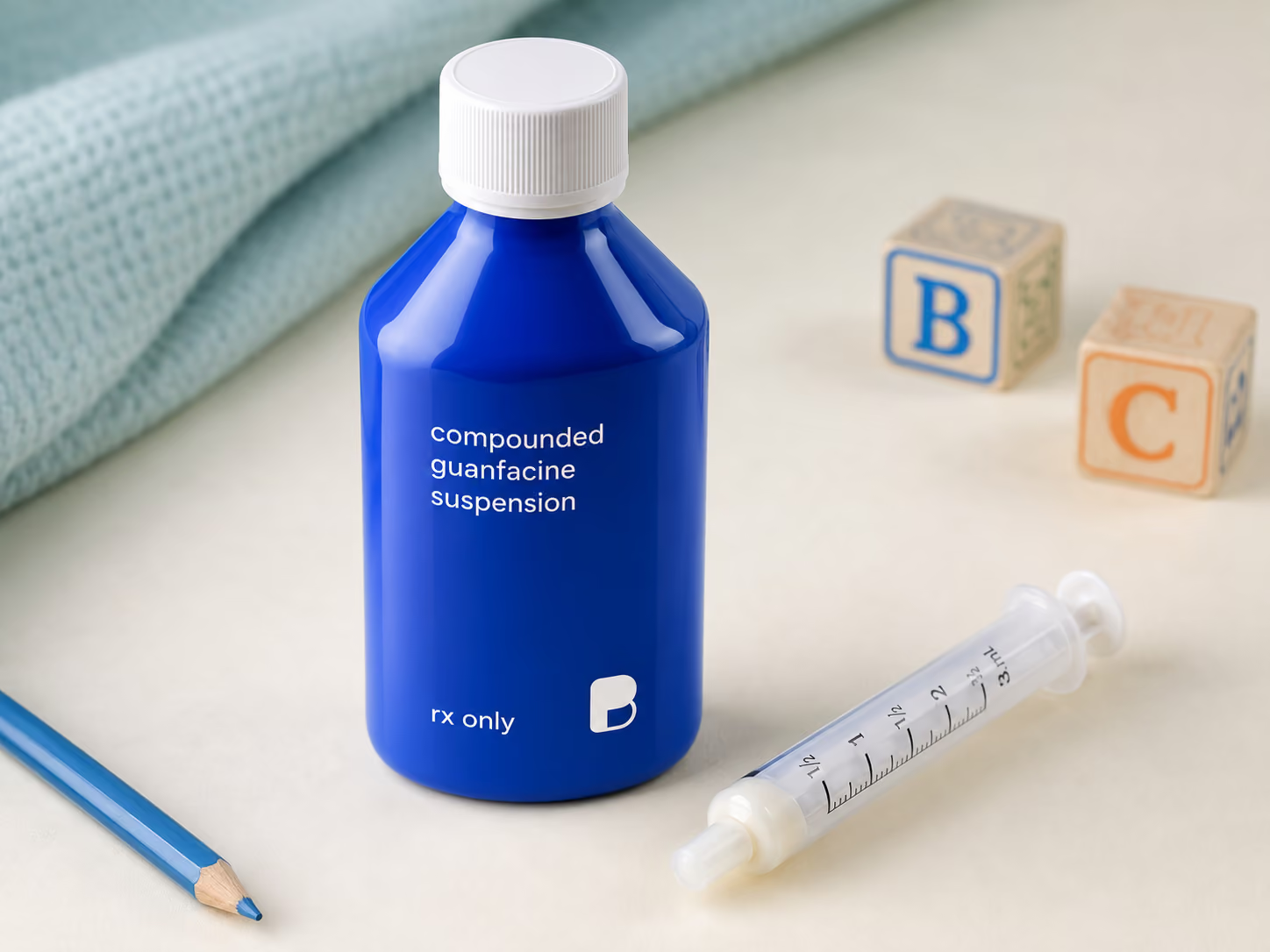






Guanfacine is a selective alpha-2A adrenergic agonist. Providers most often prescribe it for ADHD, frequently in children, and sometimes for high blood pressure; it is also used for related concerns such as tics or anxiety, as the provider determines.
FDA-approved guanfacine products are tablets. Bayview Pharmacy compounds guanfacine as an oral suspension so it can be swallowed easily and prepared in a custom, weight-based strength.
How does it work?
Guanfacine is a selective alpha-2A adrenergic agonist. In ADHD it is thought to act on the part of the brain that supports attention and impulse control, and it can also lower blood pressure by slowing heart rate and relaxing blood vessels.
What is it used for?
Providers prescribe guanfacine most often for ADHD, particularly in children, and sometimes for high blood pressure. It may also be used for related concerns such as tics or anxiety. Some uses may be off-label; your provider decides whether it fits your situation.
Immediate-release liquid vs. extended-release tablets
This compounded suspension is an immediate-release form of guanfacine. It is not interchangeable with extended-release tablets (Intuniv), because the two release the medication differently and are dosed differently. Your provider specifies the exact product and dose, and you should not switch between them on your own.
How is it used?
Guanfacine oral suspension is taken by mouth. Your provider sets the strength, amount, and schedule, and the dose is often adjusted gradually. Shake the bottle and measure each dose exactly as directed.
Side effects & safety
Reported effects include sleepiness or sedation, fatigue, low blood pressure, dizziness, and dry mouth. Do not stop guanfacine suddenly, as this can cause rebound high blood pressure; any change should be tapered under provider guidance. Use caution with other blood-pressure or sedating medicines.
Who should not use it?
Guanfacine is not appropriate for everyone. Tell your provider about your medical history and all medicines you take, especially other blood-pressure or sedating medicines. Your provider monitors treatment, particularly in children, and decides whether it is suitable.
How should it be stored?
Store as directed on the pharmacy label, keep the bottle tightly closed and out of the reach of children, and discard any unused medication after the beyond-use date.
Why is this compounded?
Compounding lets Bayview prepare a swallowable liquid and a precise, weight-based strength for children and others who cannot take commercially available tablets. Related compounded liquids include Omeprazole, Ketotifen Capsules, and Low Dose Naltrexone (LDN). The full list is in our compounded medications catalog.
Clinical details for prescribers
Regulatory status. Guanfacine is not a controlled substance. It is FDA-approved as immediate-release tablets (hypertension) and extended-release tablets (ADHD); the compounded oral suspension is for patients who cannot swallow tablets and is not FDA-approved.
Formulation & dosing. Compounded as an oral suspension in 0.25, 0.5, 1, 1.5, and 2 mg/mL concentrations. Specify that the suspension behaves as immediate-release, do not convert mg-for-mg from extended-release products. ADHD titration commonly starts at 0.5 to 1 mg once daily with weekly adjustments per response; give at a consistent time each day.
Counseling / clinical points:
- Monitor heart rate and blood pressure, sedation, hypotension, and bradycardia are the key dose-limiting effects
- Taper over at least a week when discontinuing; abrupt cessation can cause rebound hypertension
- Additive sedation with other CNS depressants; counsel accordingly
- CYP3A4 interactions: strong inhibitors (ketoconazole) raise levels; inducers (carbamazepine) lower them
The suspension enables fine, weight-based pediatric titration that fixed tablet strengths cannot achieve. Account setup, licensing, and ordering are covered on our for providers page.
Guanfacine Oral Suspension (Compounded) is a compounded medication and is not FDA-approved. This information is educational and is not medical advice. Your provider determines whether it is appropriate and sets the dose.