



Cromolyn sodium is a mast-cell stabilizer. It helps keep mast cells from releasing histamine, leukotrienes, and other inflammatory mediators that drive allergic and gastrointestinal symptoms.
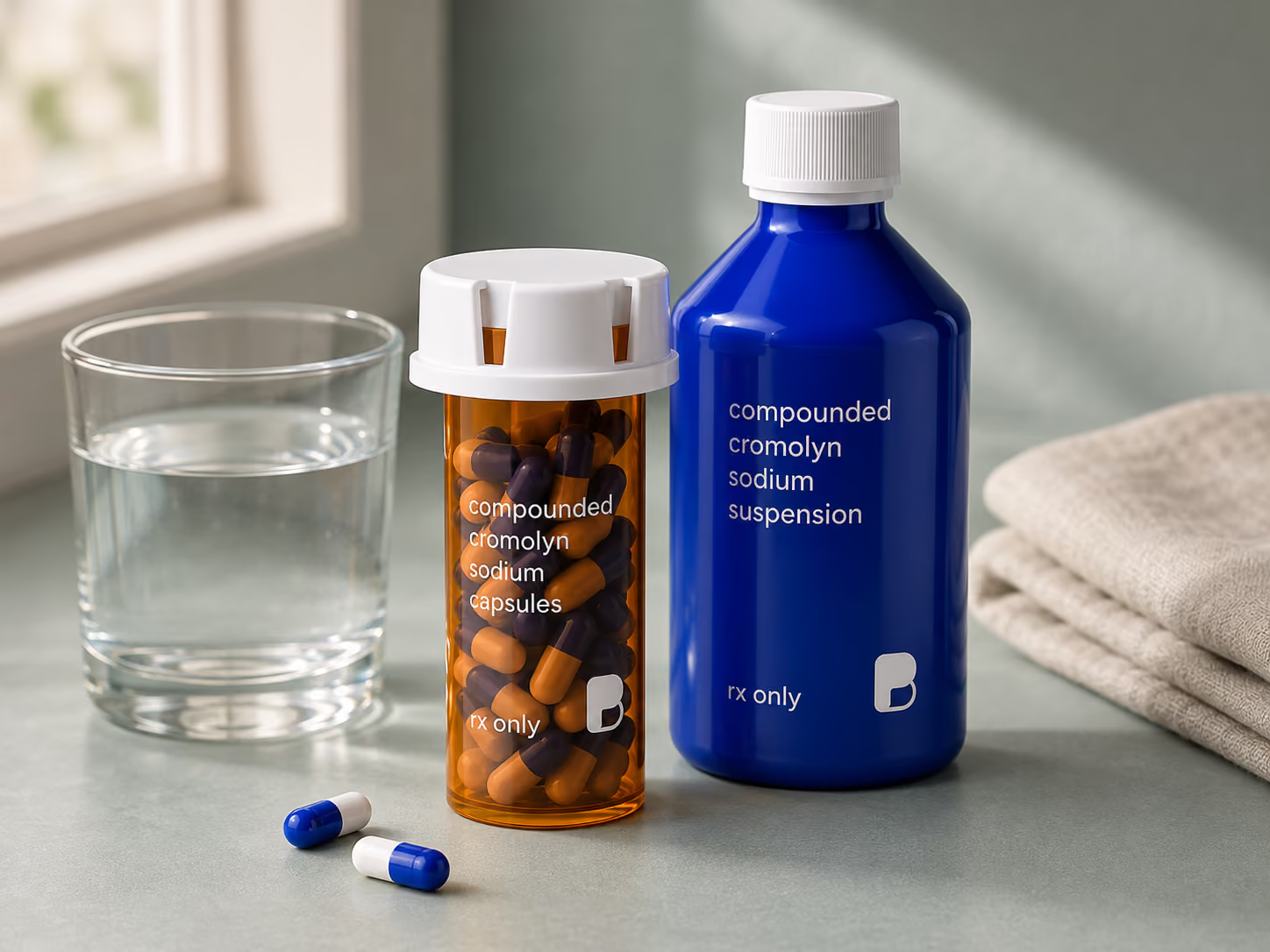
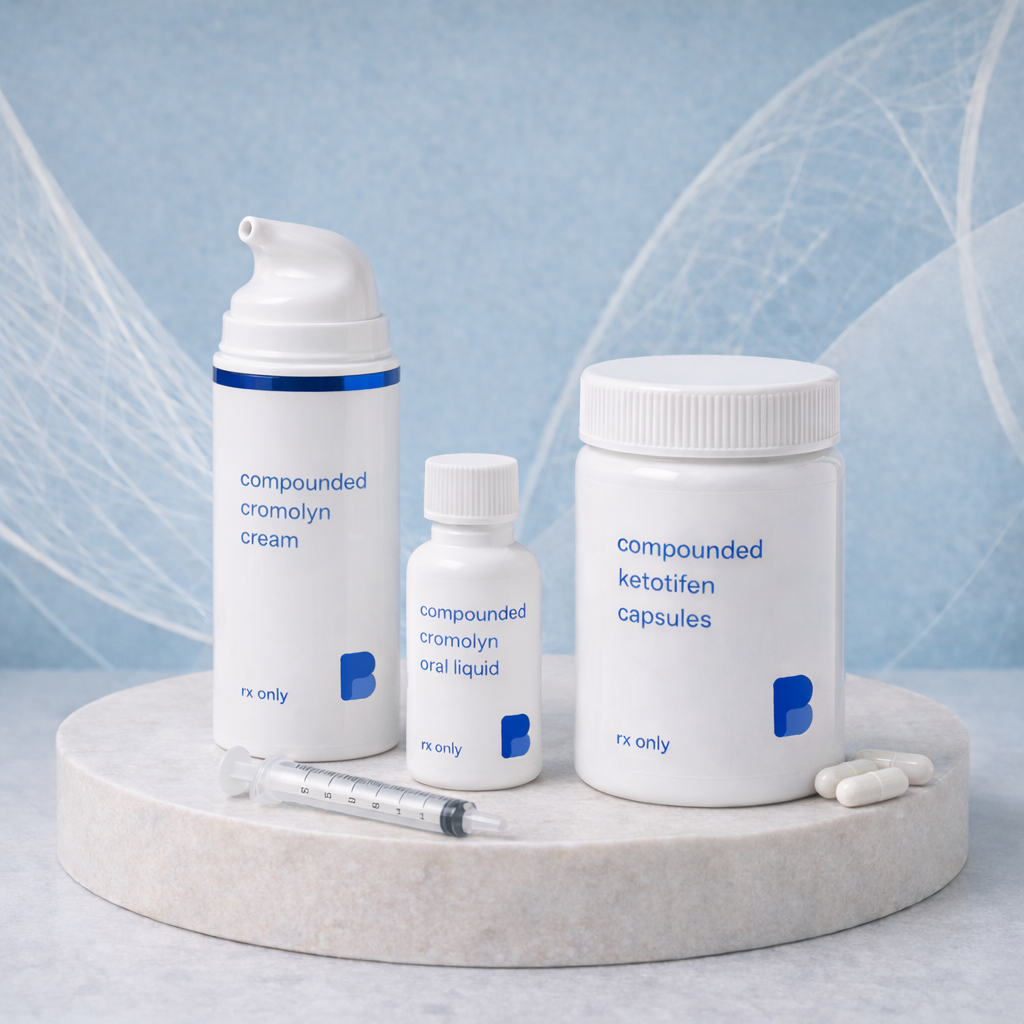
Bayview compounds oral cromolyn as custom-strength capsules and suspensions, made to a provider's prescription.
How does it work?
As a mast-cell stabilizer, cromolyn helps prevent mast cells from releasing histamine and other mediators that cause allergic and gut symptoms. Because oral cromolyn acts largely within the gastrointestinal tract and builds up gradually, benefit can take two to six weeks to appear.
What is it used for?
Providers prescribe oral cromolyn for mastocytosis and for mast cell activation syndrome (MCAS), where excess or overactive mast cells release mediators such as histamine and cause flushing, abdominal pain, nausea, and diarrhea. Use for MCAS and related conditions is typically off-label.
Cromolyn and ketotifen in mast cell care
Cromolyn and ketotifen are both mast-cell stabilizers used in mast cell disorders, and some providers use them together as part of a broader plan. They are not interchangeable, and whether either or both fit your situation is a decision only your prescriber can make.
How is it used?
Oral cromolyn is often taken before meals so it is present when food triggers symptoms, and it works best taken consistently rather than as needed. Your provider sets the strength, amount, and schedule.
Side effects & safety
Oral cromolyn is generally well tolerated. Reported effects include headache, diarrhea, nausea, and abdominal pain, and some people notice an unpleasant taste. It is a maintenance medication, not a rescue treatment, so it will not stop an acute reaction already underway.
Who should not use it?
It is not appropriate for anyone with a known allergy to cromolyn sodium. Tell your provider about your other conditions, medications, and any pregnancy or breastfeeding so they can judge whether it is suitable for you.
How should it be stored?
Store as directed on your label, away from heat and moisture and out of the reach of children. Compounded preparations carry a beyond-use date; do not use past it.
Why is this compounded?
Bayview compounds cromolyn when a patient needs a strength or form the commercial product does not offer, such as specific capsule strengths, an oral suspension, or a dye- and filler-free preparation. Each is made to your provider's prescription. Related preparations for mast-cell and histamine-driven conditions include Ketotifen Capsules, Low Dose Naltrexone (LDN), and Budesonide Capsules for Nasal Irrigation. The full list is in our compounded medications catalog.
Clinical details for prescribers
Regulatory status. Cromolyn sodium is not a controlled substance. Oral cromolyn is FDA-approved for systemic mastocytosis (as oral concentrate); compounded capsules and suspensions provide dye-free, filler-free, and custom-strength alternatives and are not FDA-approved. Other uses (e.g., mast cell activation syndrome) are off-label.
Formulation & dosing. Compounded as 100 and 200 mg capsules and 25 to 50 mg/mL oral suspension. Commonly reported adult dosing is 200 mg four times daily, 30 minutes before meals and at bedtime; sensitive patients often start much lower and titrate using the suspension. Systemic absorption is minimal (~1%), so effects are largely luminal/local.
Counseling / clinical points:
- Effect builds gradually, counsel that benefit is typically assessed after 2 to 4 weeks of consistent dosing
- Timing matters: doses are most effective taken before meals
- Not a rescue medication, patients should maintain their usual reaction/anaphylaxis plans
- Dye- and filler-free capsules suit highly reactive or excipient-sensitive patients
Cromolyn stabilizes mast cells and blunts mediator release; the compounded forms allow the slow, individualized titration these patients often need. Account setup, licensing, and ordering are covered on our for providers page.
Oral Cromolyn Sodium (Compounded) is a compounded medication and, in this form, is not FDA-approved. This information is educational and is not medical advice. Your provider determines whether it is appropriate and sets the dose.