



In Stock
Leucovorin (Folinic Acid) Oral Suspension | Bayview Pharmacy

Leucovorin (Folinic Acid)

Smiling man in blue pharmacist scrubs with arms crossed and pen behind his ear.
Medically reviewed by Ryan Dyer, RPh
Last updated on
August 7, 2026
Starting at
$112
for
30 mL
Checkmark icon followed by text 'HSA/FSA Eligible'.
Start with a prescriptionPrescribers: request this order form →
Licensed to fill prescriptions for patients in RI, MA, CT, NY, NJ, NH & FL
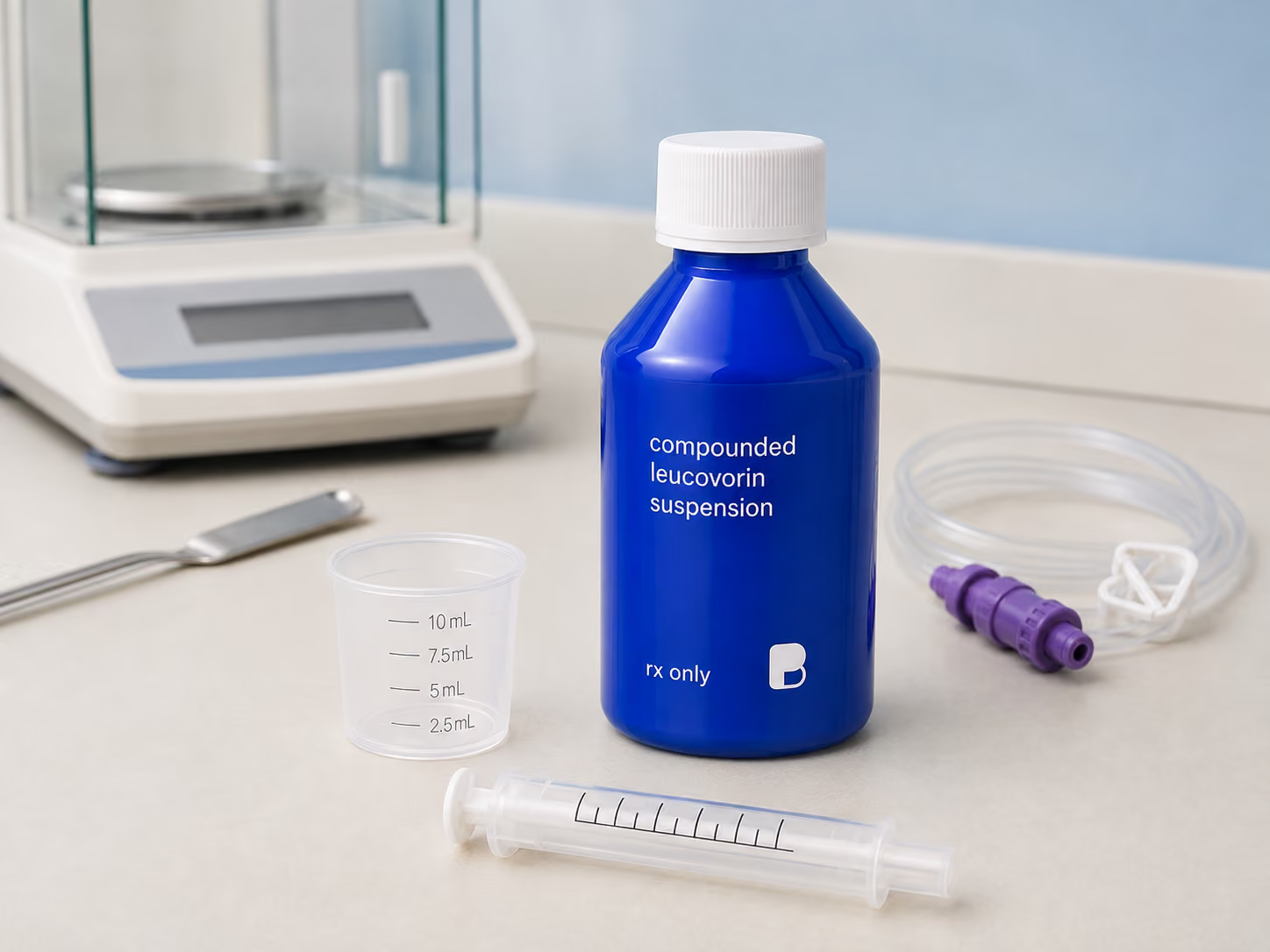
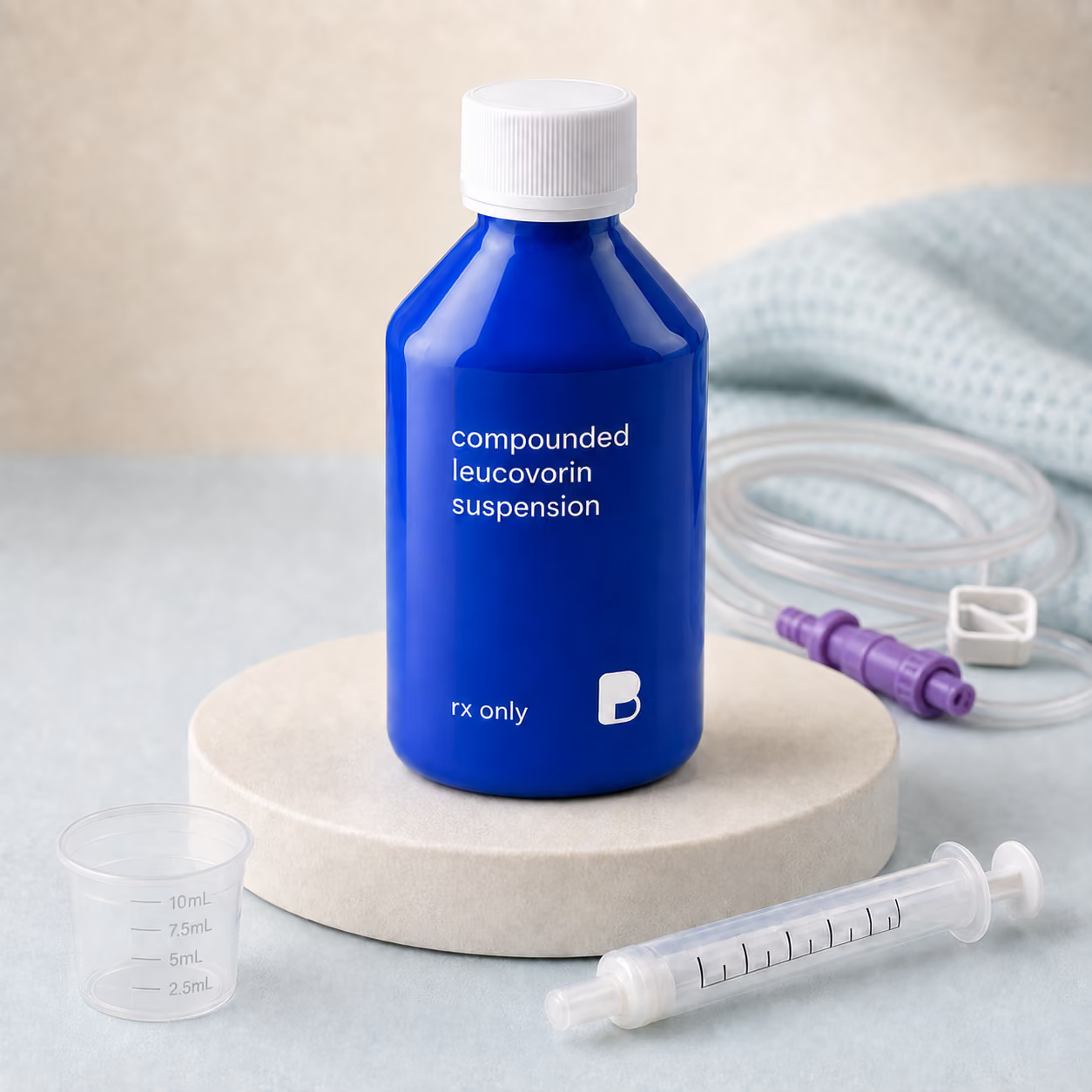
  • An oral liquid form of leucovorin (folinic acid) — there is no FDA-approved leucovorin liquid
  • Compounded at the concentration your prescriber orders, commonly 2.5, 5, 10, 15, or 20 mg/mL
  • Makes small, weight-based, and divided doses easy to measure with an oral syringe
  • Practical for infants, young children, people with trouble swallowing, and feeding-tube (G-tube) administration
  • Prepared in a non-aqueous (anhydrous) vehicle, because leucovorin breaks down in water
  • Prepared as a nonsterile oral liquid under USP <795> standards

Leucovorin oral suspension is a compounded, prescription liquid form of leucovorin calcium, also known as folinic acid — a reduced, already-active form of folate. Leucovorin is FDA-approved as 5 mg and 25 mg tablets and as an injection, but there is no FDA-approved oral liquid, so a suspension is compounded when a measurable liquid dose is needed for an infant, a young child, someone who cannot swallow tablets, or a feeding tube. Bayview prepares it in the concentration your prescriber orders.

Compounded medications are not FDA-approved, and a valid prescription is required. Bayview Pharmacy does not provide consultations and does not determine whether a medication is appropriate — that decision belongs to your prescriber.

Why is leucovorin compounded as a liquid?

Leucovorin is FDA-approved as 5 mg and 25 mg tablets and as an injection. There is no FDA-approved oral liquid. Bayview compounds a suspension when a measurable liquid dose is needed, for an infant or young child, for someone who cannot swallow tablets, or for a feeding tube. It is prepared in the concentration your prescriber orders.

Did the FDA approve leucovorin for autism?

No. On March 10, 2026 the FDA approved Wellcovorin (leucovorin calcium) tablets for cerebral folate transport deficiency in people with a confirmed FOLR1 gene variant, not for autism, although some news coverage reported it that way.

The American Academy of Pediatrics states that current evidence is insufficient to support prescribing leucovorin for autism in the absence of cerebral folate deficiency, and that there are no FDA-cleared tests for folate receptor alpha autoantibodies. Those tests are laboratory-developed. Use in that setting is off-label and is your prescriber's decision.

Trusted by 105,826 patients to date.
A group of faces of our past satisfied patients.
Compounded medications are prepared pursuant to a valid prescription for an individual patient and are not FDA-approved. This page is for educational purposes and is not medical advice.
**The FDA does not review or approve compounded medications for safety or effectiveness. A valid prescription from a licensed practitioner is required.
Important safety information →
Service availability

Prescription delivery in your state

Bayview Pharmacy currently serves eligible patients in six states. Check your state before getting started.

Where we currently serve

Select a highlighted state to check availability.

Currently licensed Licensed — non-controlled only Not currently licensed Your selection

Select a state on the map or use the state checker.

Do we serve your state?

Choose your state to confirm current service availability.

Thank you! Your submission has been received!
Oops! Something went wrong while submitting the form.
Currently licensed in
Start with a prescription

Send us your prescription

STEP
1
Have your provider e-prescribe to Bayview, fax it to us, or call it in directly to one of our pharmacists.
A thin blue light beam connecting two clear glass slabs on a white surface.

A pharmacist reviews it

STEP
2
We verify your prescription and prepare your medication to your provider's exact instructions.
Close-up of a white dial with blue measurement markings and a rotating knob.

We compound & ship

STEP
3
We prepare your medication and ship it discreetly to your door, with support when you need it.
Close-up of a gray box with a precise blue line running along its folded edges.

What is Leucovorin (Folinic Acid)?

Leucovorin oral suspension is a compounded, prescription liquid form of leucovorin calcium — also called folinic acid. Folinic acid is a reduced, already-active form of folate (vitamin B9). Because it is a liquid, a dose can be measured in milliliters with an oral syringe instead of split from a tablet, which matters a great deal when the dose is based on body weight or is divided over the day.

Leucovorin is FDA-approved as 5 mg and 25 mg tablets and as an injection. There is no FDA-approved oral liquid. A licensed compounding pharmacy prepares the suspension in the concentration your prescriber orders. Compounded preparations are not FDA-approved, and a valid prescription is required.

What the FDA did and did not approve. On September 22, 2025 the FDA announced it was beginning the process of approving leucovorin for cerebral folate deficiency, in a press release titled “FDA Takes Action to Make a Treatment Available for Autism Symptoms.” On March 10, 2026 the FDA approved Wellcovorin (leucovorin calcium) tablets for the treatment of cerebral folate transport deficiency in adult and pediatric patients who have a confirmed variant in the folate receptor 1 gene (FOLR1-CFTD). The FDA did not approve leucovorin for autism. A number of news outlets reported this incorrectly. Use of leucovorin for autism symptoms in a child who has folate receptor alpha autoantibodies but no confirmed FOLR1 variant remains an off-label use, and that decision belongs to the prescriber.

How does it work?

Folate has to be in an active, reduced form before the body can use it to build DNA and to make the methyl groups the brain and blood cells depend on. Ordinary folate and folic acid must first be converted by an enzyme called dihydrofolate reductase (DHFR). Folinic acid is different: it is 5-formyl-tetrahydrofolate, historically called “citrovorum factor,” and it is already reduced, so it does not need DHFR to become usable.

That single difference explains both of its main jobs. First, when methotrexate blocks DHFR, folinic acid supplies the active folate that the blocked enzyme can no longer produce — this is what “leucovorin rescue” means. Second, folinic acid can get into the central nervous system by routes that depend less on the folate receptor alpha (FRα) transport system at the choroid plexus, the doorway that normally carries folate from the blood into the spinal fluid.

That second point is the reason leucovorin is used in cerebral folate deficiency (CFD). In CFD, the level of active folate in the spinal fluid (CSF 5-MTHF) is low even though the folate level in the blood is normal, because FRα transport is blocked — by variants in both copies of the FOLR1 gene, by autoantibodies against FRα, or by mitochondrial disease. High-dose folinic acid can partly get around that block and raise folate levels in the spinal fluid.

What is it used for?

Leucovorin has several long-established uses. It is FDA-approved to rescue normal cells after high-dose methotrexate and to treat methotrexate overdose or impaired methotrexate elimination — these uses are well established and supported by strong evidence. It is also used for megaloblastic anemia caused by folate deficiency when oral folate cannot be used, and as an adjunct to fluorouracil (5-FU) in colorectal cancer.

As of March 10, 2026, leucovorin calcium tablets (Wellcovorin) are FDA-approved for cerebral folate transport deficiency in adults and children with a confirmed FOLR1 variant. A compounded oral suspension is not an FDA-approved product, but prescribers order one when a patient with this or a related condition needs a liquid.

Leucovorin is also discussed as a possible treatment for language and communication difficulties in some autistic children, and this is where care is needed. The best study to date is a randomized, double-blind, placebo-controlled trial by Frye and colleagues published in Molecular Psychiatry in 2018: 48 children received 2 mg/kg/day (up to 50 mg/day) or placebo for 12 weeks. Verbal communication scores improved by 5.7 standardized points (95% confidence interval 1.0–10.4; Cohen's d 0.70), and by 7.3 points in children who tested positive for FRα autoantibodies (d 0.91). The rest of the supporting work is largely open-label or retrospective. This is promising, but it is not established treatment.

What the American Academy of Pediatrics says. The AAP's guidance for prescribing clinicians states that “current evidence is insufficient to support prescribing leucovorin for autism in the absence of CFD,” and that “there are no FDA cleared or approved tests for FRAAs.” Folate receptor alpha autoantibody (FRAA) testing is available only as a laboratory-developed test under CLIA — it is not an FDA-cleared diagnostic. Leucovorin does not treat or reverse autism. Whether a trial of leucovorin makes sense for a particular child is a decision only that child's prescriber can make.

How do the concentrations compare?

The suspension is compounded at whatever concentration your prescriber orders. The concentration does not change how the medicine works — it changes how many milliliters make up a dose. Lower concentrations suit small infant doses that need to be measured precisely; higher concentrations keep the volume manageable for larger doses. The table below is for education only.

ConcentrationNotes
2.5 mg/mLA dilute strength; useful for very small or finely divided doses, typically dispensed in larger bottles
5 mg/mLA common pediatric strength; balances precise measuring against bottle size
10 mg/mLThe most frequently dispensed strength; the 30 mL starting size uses this concentration
15 mg/mLKeeps volume down for mid-size doses
20 mg/mLFor larger doses, so each dose stays a small number of milliliters
CustomOther concentrations as your prescriber orders

Concentrations are described for education only and are not a statement that any strength is better for a particular person. Your prescriber selects the concentration, the dose, and the schedule.

How is it used?

Use it exactly as your prescriber directs. Shake the bottle well before every dose, then draw the dose up with the oral syringe the pharmacy provides — kitchen spoons are not accurate enough for a weight-based dose. If the dose is given through a feeding tube, follow the flushing instructions your prescriber or nurse gave you.

For reference, the FDA-approved dosing for Wellcovorin tablets in FOLR1-confirmed cerebral folate transport deficiency starts at 1 to 2 mg/kg per day, with a maximum of 8.5 mg/kg per day for patients under 40 kg or 330 mg per day for patients 40 kg and over. Single doses are preferably 25 mg or less and should not exceed 75 mg, given once daily or divided into as many as six doses a day. Dividing a dose into small pieces several times a day is exactly the situation where a liquid is easier and more accurate than tablets.

In the autism research setting, the dosing described in published studies has been roughly 0.5 to 2 mg/kg per day divided into two doses, up to about 50 mg per day. The AAP notes that clinicians who choose to prescribe generally start low — around 5 mg twice daily or less — and increase gradually over several weeks; the published trials ran 12 weeks. This is descriptive only and is not a recommendation. Do not start, stop, or change a dose on your own. A Bayview pharmacist is happy to answer questions about your prescription, but dosing decisions belong to your prescriber.

Side effects & safety

Leucovorin is generally well tolerated. The prescribing information warns about hypersensitivity reactions, including anaphylaxis and urticaria (hives), which can involve itching, rash, shortness of breath, or rigors. Get emergency care for a rash with swelling, trouble breathing, or any reaction that comes on quickly.

The AAP also flags irritability or behavioral activation, trouble sleeping, and stomach upset. These are among the more common reasons a trial is stopped or a dose is lowered — tell your prescriber if you see them.

Check vitamin B12 before starting. Folate in any form can mask a vitamin B12 deficiency: it can correct the anemia while nerve damage from the B12 deficiency quietly continues. The AAP recommends checking B12 before starting leucovorin. Your prescriber will decide what baseline testing is needed.

Leucovorin also interacts with two other medicines in important ways. It can antagonize antifolate therapy, so it must not be taken alongside — or added around — methotrexate used for rheumatologic conditions unless the prescriber specifically directs it. And it increases the toxicity of fluorouracil (5-FU). Tell every one of your prescribers that you are taking leucovorin.

Who should not use it?

Leucovorin is not appropriate for everyone. It should not be used by anyone with a known allergy to leucovorin, folinic acid, or folic acid. It should not be taken with methotrexate prescribed for a rheumatologic condition, or adjusted around methotrexate dosing, without direct instruction from the prescriber, because it can work against that therapy. Anyone receiving fluorouracil needs their oncology team to manage leucovorin, since it increases 5-FU toxicity. Tell your prescriber the full health history, all allergies, and every medication and supplement the person takes — including folic acid — so they can determine whether leucovorin is appropriate.

How should it be stored?

Store it exactly as directed on the label the pharmacy assigns, and protect it from light. Shake well before each dose, keep the bottle tightly closed, and use only the oral syringe provided. Keep it out of the reach of children and do not share it with anyone. Your label carries a beyond-use date assigned under USP <795> standards — do not use the suspension after that date, and dispose of any unused medication as your pharmacist directs.

Why is this compounded?

The approved dosage forms of leucovorin are 5 mg and 25 mg tablets and an injection. There is no FDA-approved oral liquid at all. That leaves a real gap for infants, young children, people with dysphagia or other trouble swallowing, and anyone who takes medication through a G-tube — and for the divided, weight-based dosing that leucovorin regimens often call for, where a tablet simply cannot be split accurately enough.

Bayview compounds the suspension in a non-aqueous (anhydrous) vehicle. That is a stability decision, not a preference: leucovorin degrades in water, so a water-based liquid would not hold up. As a 503A compounding pharmacy, Bayview prepares each order to the prescriber's concentration as a nonsterile oral liquid under USP <795> standards — not USP <797>, which governs sterile preparations — using quality ingredients. Compounded preparations are not FDA-approved.

Clinical details for prescribers

Regulatory status. Leucovorin is not a controlled substance. FDA-approved dosage forms are 5 mg and 25 mg tablets and injection; there is no FDA-approved oral liquid. On 2025-09-22 FDA announced it was initiating approval of leucovorin for cerebral folate deficiency (press release: “FDA Takes Action to Make a Treatment Available for Autism Symptoms”), working with GSK to relabel Wellcovorin. On 2026-03-10 FDA approved Wellcovorin (leucovorin calcium) tablets for the treatment of cerebral folate transport deficiency in adult and pediatric patients with a confirmed variant in the folate receptor 1 gene (FOLR1-CFTD). FDA did not approve leucovorin for autism; use in FRα-autoantibody-positive autism without FOLR1 confirmation remains off-label. Compounded preparations are not FDA-approved.

Pharmacology. Leucovorin calcium is folinic acid (5-formyl-tetrahydrofolate, “citrovorum factor”), a reduced folate that bypasses DHFR. This underlies both methotrexate rescue and CNS entry by routes less dependent on FRα-mediated transport at the choroid plexus, permitting partial circumvention of the transport block in CFD (biallelic FOLR1 variants, FRα autoantibodies, or mitochondrial disease).

Formulation & SIG. Compounded nonsterile oral suspension in a non-aqueous (anhydrous) vehicle — leucovorin hydrolyzes in water — commonly 2.5, 5, 10, 15, and 20 mg/mL; custom concentrations available; volumes from 30 mL to 360 mL. Prepared under USP <795> standards. Beyond-use date is assigned per USP <795> and printed on the dispensing label. Typical SIG format: state mg per dose and frequency, plus the concentration to be compounded.

Dosing reference:

  • FOLR1-CFTD (Wellcovorin label): 1–2 mg/kg/day initially; max 8.5 mg/kg/day (<40 kg) or 330 mg/day (≥40 kg); single doses preferably ≤25 mg and not >75 mg; once daily or divided up to 6 times daily — divided dosing is where a liquid is most useful
  • Autism research dosing (descriptive only): 0.5–2 mg/kg/day divided BID, max ~50 mg/day; AAP describes starting at ~5 mg BID or lower with titration over weeks; trials ran 12 weeks

Diagnostics & monitoring:

  • CSF 5-MTHF by lumbar puncture is the diagnostic standard for cerebral folate deficiency
  • FOLR1 sequencing identifies the FDA-approved indication (FOLR1-CFTD)
  • Serum FRAA testing is a laboratory-developed test under CLIA only; per AAP, “there are no FDA cleared or approved tests for FRAAs”
  • Obtain baseline vitamin B12 and folate; folate can mask B12 deficiency while neurologic injury progresses
  • Monitor response with validated scales (SRS, ABC, Vineland) over at least 12 weeks; monitor for behavioral activation, irritability, and insomnia

Safety & interactions:

  • Label warns of hypersensitivity including anaphylaxis and urticaria (pruritus, rash, dyspnea, rigors)
  • AAP flags irritability/behavioral activation and GI upset
  • Antagonizes antifolate therapy — do not co-administer with or adjust around rheumatologic methotrexate without prescriber direction; increases 5-FU toxicity

Evidence in autism. Frye RE, et al., Molecular Psychiatry 2018: 12-week randomized double-blind placebo-controlled trial, n=48, 2 mg/kg/day up to 50 mg/day; verbal communication improved 5.7 standardized points (95% CI 1.0–10.4; Cohen's d 0.70) and 7.3 points in FRAA-positive children (d 0.91). Supporting literature is largely open-label or retrospective. Per AAP, “current evidence is insufficient to support prescribing leucovorin for autism in the absence of CFD.”

Ordering: e-prescribe or send a prescription to Bayview Pharmacy, 3844 Post Rd, Warwick, RI 02886 (NCPDP 4106882, fax 401-284-4506). Background: FDA approval announcement (March 10, 2026); AAP FAQs for prescribing clinicians.

This is a prescription compounded medication and is not FDA-approved. This information is educational and is not medical advice. Bayview Pharmacy does not provide consultations and does not determine whether a medication is appropriate; your prescriber decides that and sets the concentration, dose, and schedule.
In Stock

On this page

A liquid for small doses

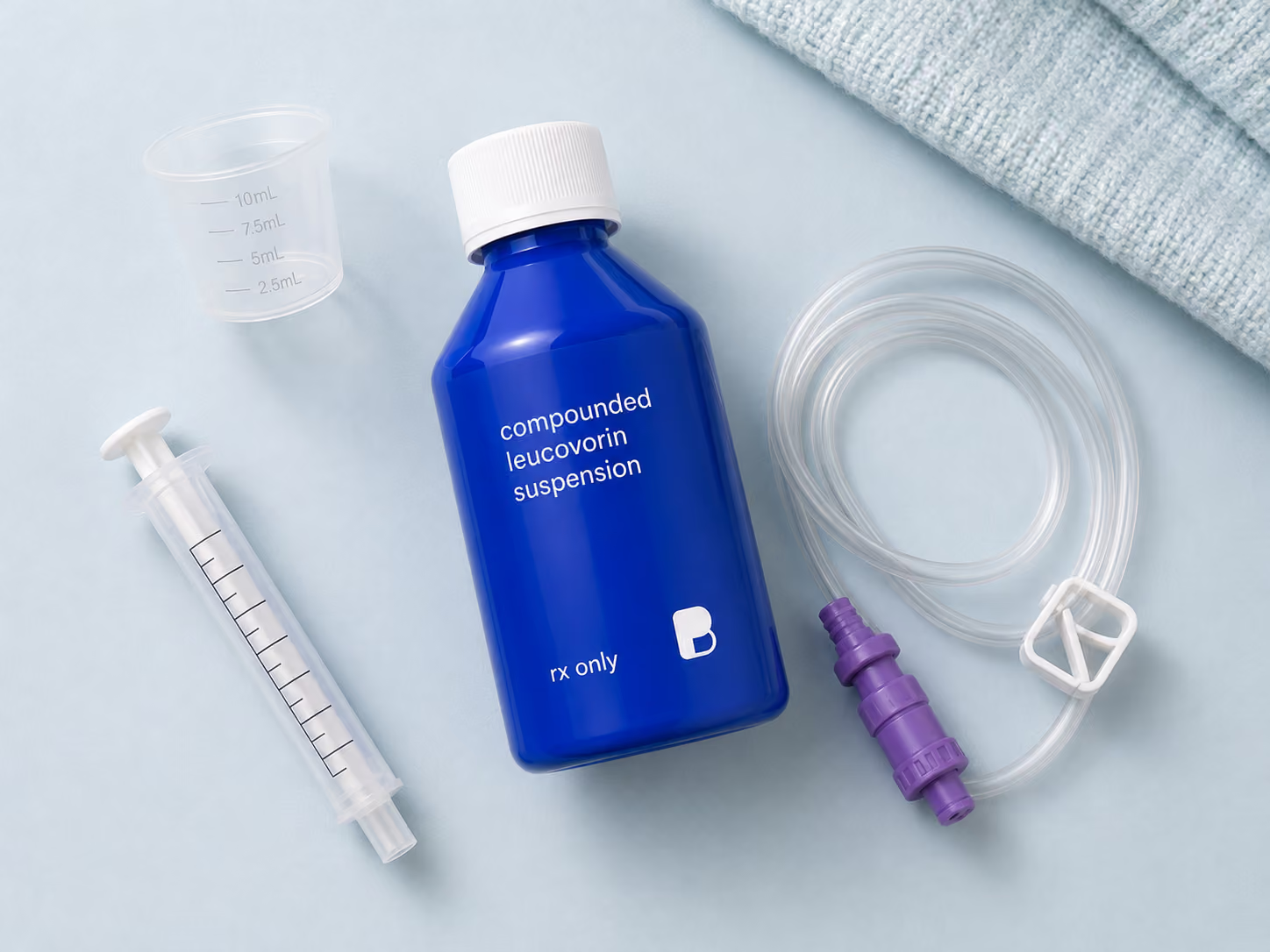
Leucovorin, also called folinic acid, is an active form of folate. There is no FDA-approved liquid version, only tablets and an injection, so Bayview compounds a suspension for small, weight-based, or feeding-tube doses.

Start with a prescription
A liquid for small doses – Leucovorin Oral Suspension from Bayview Pharmacy

Concentrations made to order

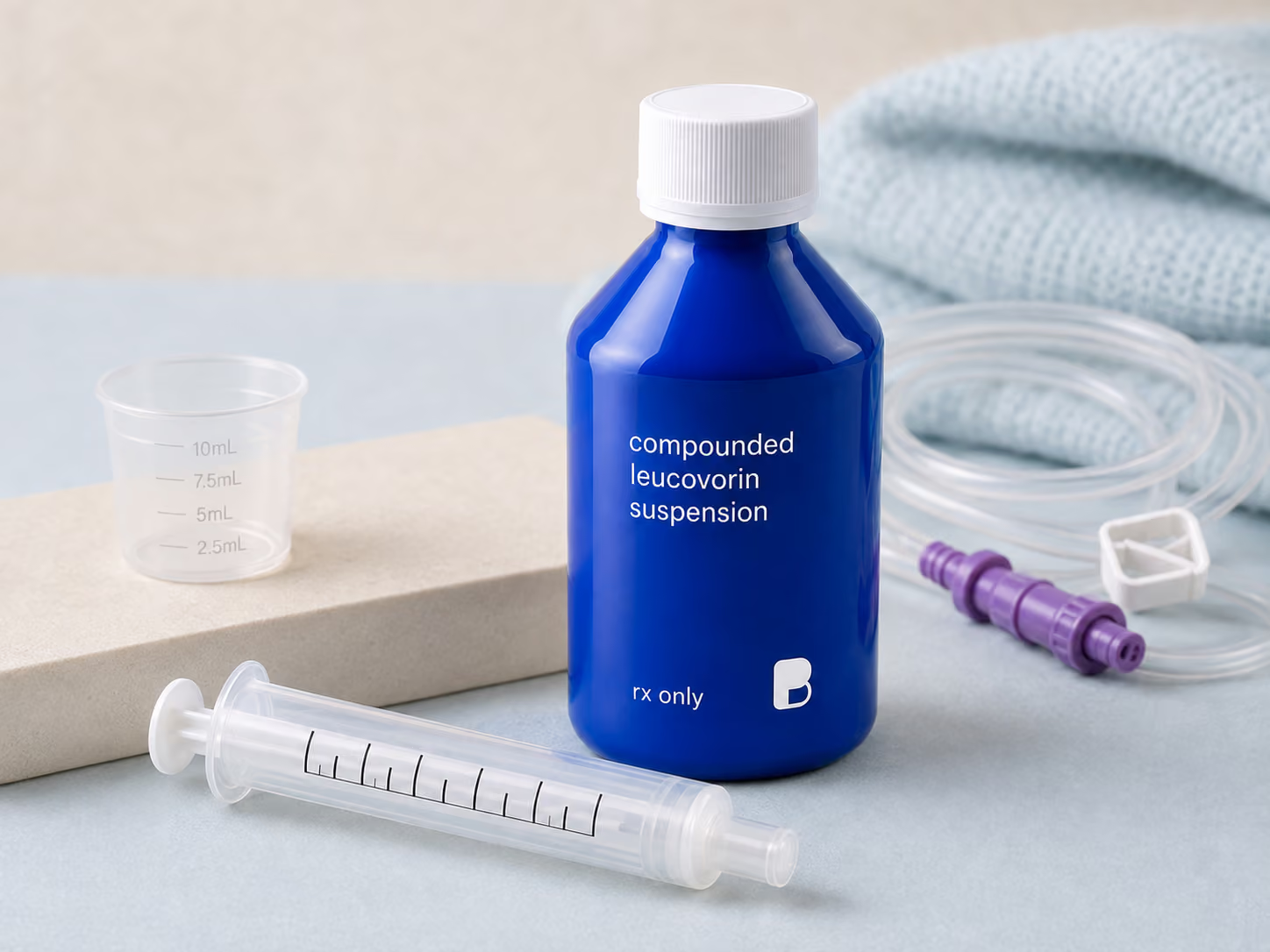
Prepared at the concentration your prescriber orders, commonly 2.5 to 20 mg/mL, and dispensed with an oral syringe for accurate measuring. Leucovorin breaks down in water, so it is compounded in a water-free base.

View our formulas
Concentrations made to order – Leucovorin Oral Suspension from Bayview Pharmacy

Personalized compounding for patients who need more than a standard option.

"As a compounding pharmacy, we prepare each medication to a provider’s exact specifications. My focus, and my team’s focus, is quality, consistency, and close communication with prescribers so patients receive medication prepared for their individual needs."
Ryan Dyer, RPh
Owner and Chief Pharmacist, Bayview Pharmacy
Smiling man in blue scrubs with arms crossed and pen behind his ear
Three clear liquid vials, white powder on spoon, two capsules, and a cream jar on a metal surface.
QUALITY AND TESTING

Held to a higher standard

Every preparation is made under strict quality controls, and verified by a licensed pharmacist.
We use validated quality processes and third-party testing where appropriate
Sterile compounding in a dedicated USP <797> cleanroom
Non-sterile compounding under USP <795> and <800> standards
USP/NF-grade ingredients from reputable, vetted suppliers

Why patients choose Bayview

Made in our own pharmacy
Made to your prescription
Quality tested
Real pharmacist support
Trusted since 2006

Our formulations

Leucovorin is compounded in the concentration your prescriber orders and dispensed as an oral suspension with an oral syringe. Concentrations are shown for reference; your prescriber selects the one that is appropriate and sets the dose.

Concentration Typical volumes How it's used
Leucovorin 2.5 mg/mLUp to 360 mLBy mouth or feeding tube, as directed
Leucovorin 5 mg/mL50 mL to 255 mLBy mouth or feeding tube, as directed
Leucovorin 10 mg/mL30 mL, 60 mL, 75 mL, larger on requestBy mouth or feeding tube, as directed
Leucovorin 15 mg/mL60 mL, larger on requestBy mouth or feeding tube, as directed
Leucovorin 20 mg/mL60 mL, larger on requestBy mouth or feeding tube, as directed
Custom concentrationAs orderedAs your prescriber directs

All concentrations are prepared as a nonsterile oral suspension in a non-aqueous (anhydrous) vehicle under USP <795> standards, because leucovorin degrades in water. Directions are set by the prescriber; the entries above are not treatment recommendations. Concentrations are listed for education only and are not a statement that any strength is better for a particular person. A valid prescription is required, and your prescriber determines which concentration, dose, and schedule are appropriate. Bayview Pharmacy does not provide consultations or determine appropriateness. This is a compounded medication and is not FDA-approved.

Start with a prescription
Prescribers: request this order form →

Frequently asked questions

Why is leucovorin compounded as a liquid?

Leucovorin is FDA-approved as 5 mg and 25 mg tablets and as an injection. There is no FDA-approved oral liquid. Bayview compounds a suspension when a measurable liquid dose is needed, for an infant or young child, for someone who cannot swallow tablets, or for a feeding tube. It is prepared in the concentration your prescriber orders.

Did the FDA approve leucovorin for autism?

No. On March 10, 2026 the FDA approved Wellcovorin (leucovorin calcium) tablets for cerebral folate transport deficiency in people with a confirmed FOLR1 gene variant, not for autism, although some news coverage reported it that way.

The American Academy of Pediatrics states that current evidence is insufficient to support prescribing leucovorin for autism in the absence of cerebral folate deficiency, and that there are no FDA-cleared tests for folate receptor alpha autoantibodies. Those tests are laboratory-developed. Use in that setting is off-label and is your prescriber's decision.

How is the liquid given?

Shake the bottle well before every dose and measure only with the oral syringe provided, household spoons are not accurate enough for weight-based doses. It can be given by mouth or through a feeding tube, as directed. Your prescriber sets the strength, the amount, and the schedule, including whether the daily dose is divided.

Should vitamin B12 be checked first?

Usually, yes. Folate in any form can mask a vitamin B12 deficiency, it can correct the anemia while nerve damage from the B12 deficiency quietly continues. The American Academy of Pediatrics recommends checking B12 before starting leucovorin. Your prescriber decides what baseline testing is needed.

Does it interact with other medicines?

Two interactions matter especially. Leucovorin can work against antifolate therapy, so it should not be taken alongside methotrexate prescribed for a rheumatologic condition unless your prescriber specifically directs it. And it increases the toxicity of fluorouracil (5-FU), so it should not be used with 5-FU outside oncology direction. Tell your prescriber and pharmacist everything the person takes.

What side effects should we watch for?

Leucovorin is generally well tolerated. The prescribing information warns about hypersensitivity reactions, including hives and anaphylaxis, get emergency care for a rash with swelling or trouble breathing. The AAP also notes irritability or behavioral activation, trouble sleeping, and stomach upset, which are common reasons a dose is lowered or a trial is stopped. Tell your prescriber if you see them.

Do I need a prescription?

Yes. All of our medications require a valid prescription from a licensed provider. We're a dispensing and compounding pharmacy, so we don't provide consultations or write prescriptions. If you don't have one yet, you'll need to find and see a provider first.

What is compounding?

Compounding is the practice of preparing a medication tailored to an individual patient's prescription. Instead of a mass-produced product, a compounding pharmacy makes the medication to the specific strength, form, or combination your provider orders.

Are compounded medications FDA-approved?

Compounded medications are not FDA-approved. They're prepared by a licensed pharmacy pursuant to a valid prescription for an individual patient, under USP standards. The FDA does not review compounded medications for safety or effectiveness.

How do providers send a prescription to Bayview?

Providers can submit a prescription three ways:

  • E-prescribe: Search Bayview Pharmacy, Warwick, RI (NCPDP 4106882) in your EHR. For compounds, use the compound, custom, or free-text option and include the full formulation, strength, quantity, refills, and directions.
  • Fax: Send a signed order to 401-284-4506 (alt. 401-210-2757) with patient and prescriber details, medication, quantity, refills, directions, signature, and date.
  • Phone: Call 401-284-4505 to submit, clarify, or coordinate refills.

A valid prescription is required, and compounded medications are not FDA-approved.

Can you fill a prescription from my own provider?

Yes. Your provider can send your prescription to Bayview Pharmacy by e-prescribe, fax, or phone, or you can transfer an existing prescription from another pharmacy. Start a request and we'll guide you through it.

How does shipping work?

Once your prescription is verified, we prepare your medication and ship it discreetly in plain packaging either via UPS or USPS. A pharmacy technician confirms the details with you before it goes out, and we're available if you have any questions.

How do refills and automatic refills work?

Refills are coordinated with your prescriber and your prescription. You can request a refill through our website or by calling us, and we'll handle the rest as long as you have refills remaining on a valid prescription. You can also opt into automatic refills on non-controlled substances, with no need to worry about running out of your medication. We can either ship it to you automatically, or ready for pickup.

Shipping & Delivery

Every prescription ships directly to your door in discreet packaging. Refrigerated medications travel in insulated coolers with ice packs to stay cold in transit.

Delivery AreaStandard ShippingRefrigerated Shipping
Rhode Island, Massachusetts & Connecticut$9 USPS$20 UPS
New Hampshire, New Jersey & New York$15 UPS$40 UPS Next Day Air
Florida$15 UPS$80 UPS Next Day Air

Need it faster? Expedited UPS is $15 for Rhode Island, Massachusetts and Connecticut. Your pharmacist will let you know if your medication needs refrigerated shipping. Questions? Call us at (401) 284-4505.

References

Sources reviewed

The medical information on this page draws on the following sources, which are also linked where cited.

  1. U.S. Food and Drug Administration. FDA Approves First Treatment for Patients with Cerebral Folate Transport Deficiency (March 10, 2026).
  2. U.S. Food and Drug Administration. FDA Takes Action to Make a Treatment Available for Autism Symptoms (September 22, 2025).
  3. U.S. Food and Drug Administration. Wellcovorin (leucovorin calcium) tablets prescribing information.
  4. American Academy of Pediatrics. Frequently Asked Questions for Pediatricians and other Prescribing Pediatric Clinicians: Leucovorin Use in Autism and Cerebral Folate Deficiency.
  5. Frye RE, et al. Folinic acid improves verbal communication in children with autism and language impairment: a randomized double-blind placebo-controlled trial. Molecular Psychiatry (2018).
  6. National Organization for Rare Disorders. Cerebral Folate Deficiency.
  7. MedlinePlus. Leucovorin: MedlinePlus Drug Information.

Important safety information

Important safety information

Compounded leucovorin oral suspension is a prescription medication and is not FDA-approved. Leucovorin tablets and injection are FDA-approved, but there is no FDA-approved oral liquid. On March 10, 2026 the FDA approved Wellcovorin (leucovorin calcium) tablets for cerebral folate transport deficiency in patients with a confirmed FOLR1 gene variant. The FDA did not approve leucovorin for autism; use for autism symptoms without a confirmed FOLR1 variant is off-label. Use this medication only as prescribed and under the care of a prescriber.

Do not use leucovorin oral suspension if the person:

  • Is allergic to leucovorin, folinic acid, or folic acid.
  • Is taking methotrexate for a rheumatologic condition, unless the prescriber specifically directs it — leucovorin can work against antifolate therapy.
  • Is receiving fluorouracil (5-FU) without oncology direction — leucovorin increases 5-FU toxicity.

Warnings and precautions:

  • Have vitamin B12 checked before starting. Folate in any form can mask a B12 deficiency — correcting the anemia while nerve damage continues.
  • Shake well before every dose and measure only with the oral syringe provided. Household spoons are not accurate enough for weight-based doses.
  • Do not start, stop, or change the dose on your own. Follow the prescriber's plan.
  • Tell every prescriber and pharmacist that the person takes leucovorin, and share the full health history, allergies, and all medications and supplements — including folic acid.
  • Keep out of the reach of children and do not share this medication.

Possible side effects:

  • Irritability or behavioral activation, trouble sleeping, and stomach upset are the effects most often reported.

Get emergency care for signs of a hypersensitivity reaction, such as:

  • Hives, itching, or rash; swelling of the face, lips, or throat.
  • Trouble breathing, shortness of breath, or shaking chills (rigors).

Also contact your prescriber for:

  • New or worsening irritability, agitation, or insomnia.
  • Ongoing nausea, vomiting, or diarrhea, or any change that concerns you.

Storage:

Store as directed on the label the pharmacy assigns and protect from light. Shake well before each dose, keep the bottle tightly closed, and use the oral syringe provided. The beyond-use date is assigned under USP <795> standards and is printed on your label — do not use the suspension after that date. Discard unused medication as directed by your pharmacist.

This is a compounded prescription medication and is not approved by the FDA. Use it only under the supervision of a licensed provider, exactly as prescribed. Do not adjust your dose without talking to your prescriber. Seek emergency care for any severe or unexpected reaction. This information is not complete; talk to your provider about your full medical history and all medications you take.

Ready to get started?

Send us your prescription and a Bayview pharmacist will take it from there.