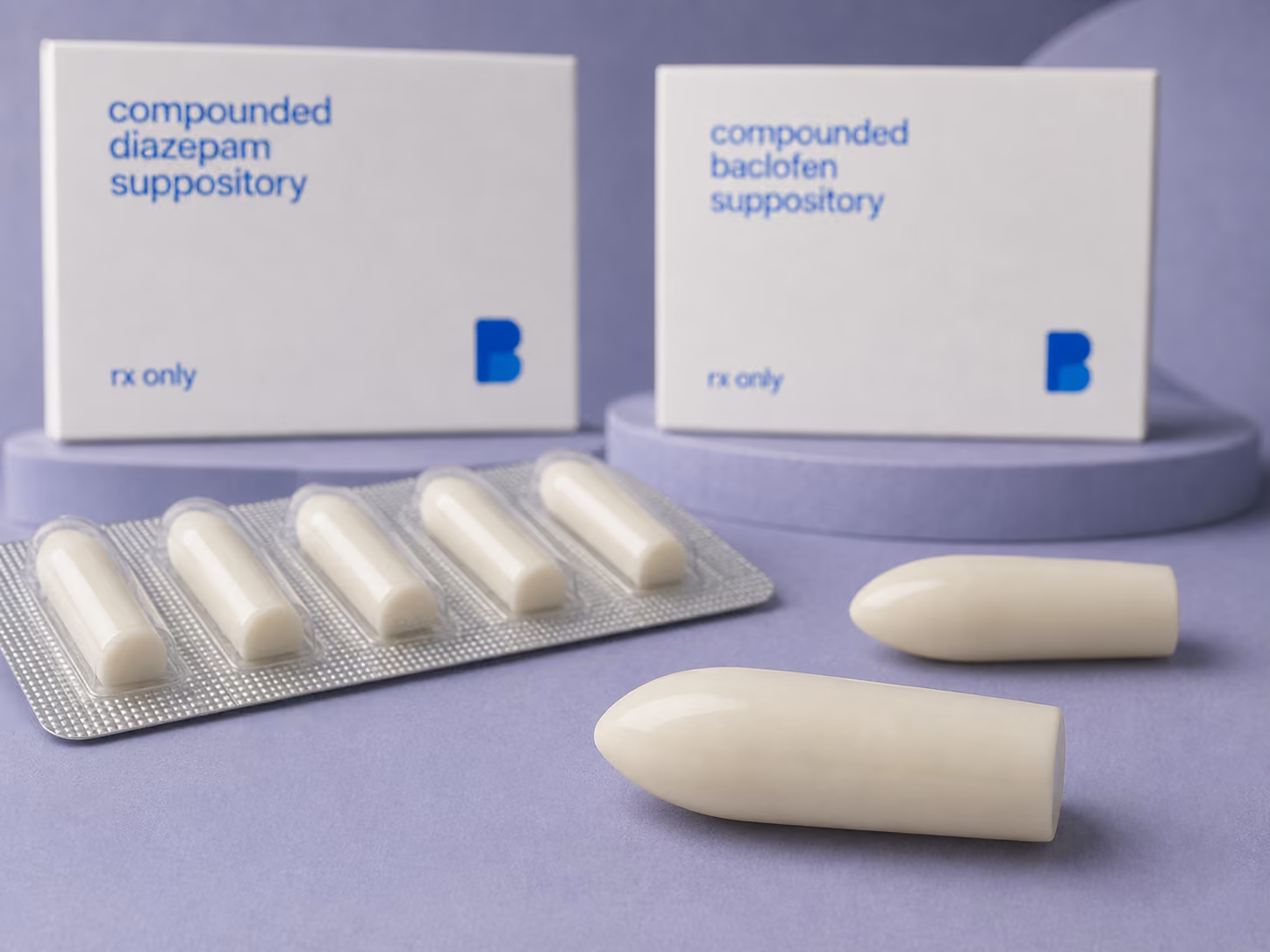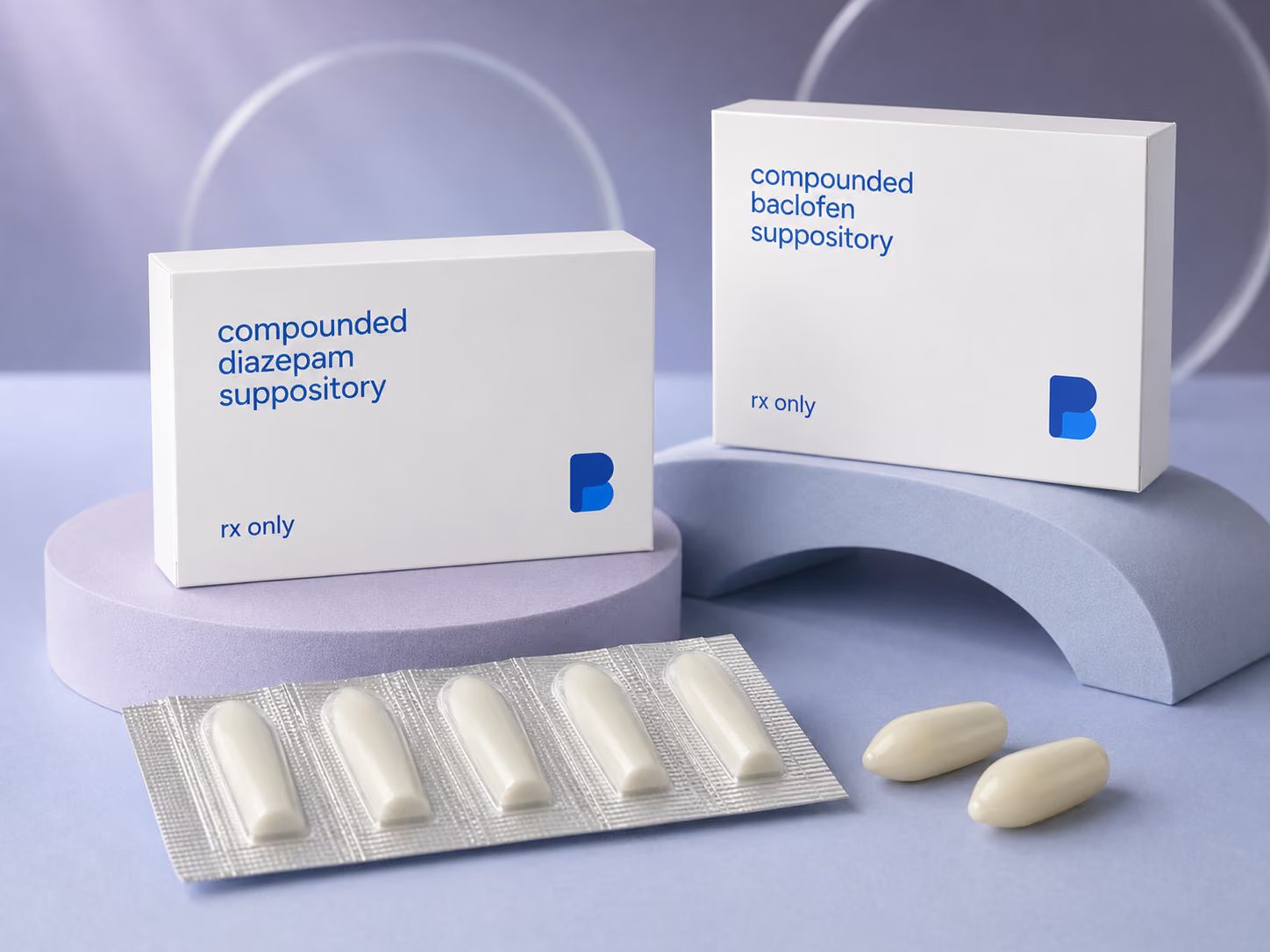




In Stock
Diazepam / Baclofen Suppositories | Compounded Rx | Bayview Pharmacy

Diazepam & Baclofen Suppositories

Smiling man in blue pharmacist scrubs with arms crossed and pen behind his ear.
Medically reviewed by Ryan Dyer, RPh
Last updated on
August 7, 2026
Starting at
$90
for
15 suppositories
Checkmark icon followed by text 'HSA/FSA Eligible'.
Start with a prescription
Licensed to fill prescriptions for patients in RI, MA, CT, NY, NJ, NH & FL
This medication is a controlled substance. Your provider must send it by electronic prescribing for controlled substances (EPCS).
  • Prepared to the strengths and suppository base your prescriber specifies — commonly diazepam 5 mg with baclofen 10 mg
  • Molded as vaginal or rectal suppositories, dispensed in 15-count or 30-count
  • Made under USP <795> non-sterile compounding standards
  • Prepared on prescriber request only, as an adjunct within a prescriber-directed plan
  • Benefit is not established; the randomized evidence is negative, and Bayview makes no claim that these work

Diazepam / baclofen suppositories are a compounded, prescription preparation inserted vaginally or rectally, most often at diazepam 5 mg with baclofen 10 mg. Prescribers order them for hypertonic (high-tone) pelvic floor dysfunction, usually alongside pelvic floor physical therapy. Benefit is not established: the best-designed randomized placebo-controlled trial found no difference from placebo on pelvic floor EMG or on any validated questionnaire, and a second placebo-controlled trial also failed to show benefit.

Diazepam is a Schedule IV controlled substance and carries the benzodiazepine class boxed warnings. There is no FDA-approved vaginal or rectal suppository of diazepam, baclofen, or any combination for pelvic floor dysfunction. Compounded medications are not FDA-approved, a valid prescription is required, and Bayview Pharmacy does not provide consultations or determine whether a medication is appropriate for you.

Do these suppositories work?

Benefit is not established. In the best-designed study, nightly 10 mg vaginal diazepam over four weeks produced no difference in resting pelvic floor EMG at any time point and no difference on any validated questionnaire compared with placebo, and a second double-blind, placebo-controlled trial also failed to show benefit.

Pelvic floor physical therapy is the intervention with actual evidence for hypertonic pelvic floor dysfunction. If you are considering these, ask your prescriber how they fit alongside physical therapy rather than in place of it.

Is this a local-only treatment?

No. Vaginal diazepam is not confined to the pelvic floor, pharmacokinetic studies show measurable diazepam in the bloodstream after vaginal dosing. That means the ordinary systemic effects of a benzodiazepine apply, including sedation, impaired driving and coordination, and interactions with alcohol and opioids. Any description of these suppositories as acting locally only, or as having minimal systemic absorption, is not accurate.

Trusted by 105,826 patients to date.
A group of faces of our past satisfied patients.
Compounded medications are prepared pursuant to a valid prescription for an individual patient and are not FDA-approved. This page is for educational purposes and is not medical advice.
**The FDA does not review or approve compounded medications for safety or effectiveness. A valid prescription from a licensed practitioner is required.
Important safety information →
Service availability

Prescription delivery in your state

Bayview Pharmacy currently serves eligible patients in six states. Check your state before getting started.

Where we currently serve

Select a highlighted state to check availability.

Currently licensed Licensed — non-controlled only Not currently licensed Your selection

Select a state on the map or use the state checker.

Do we serve your state?

Choose your state to confirm current service availability.

Thank you! Your submission has been received!
Oops! Something went wrong while submitting the form.
Currently licensed in
Start with a prescription

Getting your prescription filled is simple

Your provider e-prescribes it

STEP
1
This medication is a controlled substance, so your provider must send it electronically (EPCS) from a DEA-registered account. A licensed provider has to decide it's appropriate first.
A thin blue light beam connecting two clear glass slabs on a white surface.

A pharmacist reviews it

STEP
2
We verify your electronic prescription and its controlled-substance requirements, then prepare your medication to your provider's exact instructions.
Close-up of a white dial with blue measurement markings and a rotating knob.

We compound & ship

STEP
3
We prepare your medication and ship it discreetly to your door, with support when you need it. Refills and quantities follow the limits set by law for its drug schedule and by your prescriber.
Close-up of a gray box with a precise blue line running along its folded edges.

What is Diazepam & Baclofen Suppositories?

Diazepam / baclofen suppositories are a compounded, prescription preparation that is inserted vaginally or rectally. The most commonly ordered combination is diazepam 5 mg with baclofen 10 mg, molded into a suppository base and dispensed in a 15-count or 30-count. Some prescriptions also include ketamine. They are prepared by a licensed pharmacy to the strengths your prescriber orders rather than mass-produced.

Prescribers order them for hypertonic (high-tone) pelvic floor dysfunction, in which the muscles of the pelvic floor stay tight and can cause pelvic pain, painful intercourse, or urinary and bowel symptoms. There is no FDA-approved vaginal or rectal suppository of diazepam, baclofen, or any combination of them for this or any other purpose, so the dosage form itself is unapproved. This page exists so that you and your prescriber can see what is actually known, including the findings that do not support it.

The randomized evidence is negative, and physical therapy is the treatment with actual evidence. In the best-designed study — Crisp CC, Vaccaro CM, Estanol MV, et al., Intra-vaginal diazepam for high-tone pelvic floor dysfunction: a randomized placebo-controlled trial, Int Urogynecol J 2013;24(11):1915–23, N=21 — nightly 10 mg vaginal diazepam over four weeks produced no difference in resting vaginal EMG at any time point and no difference on any validated questionnaire compared with placebo. A second double-blind, placebo-controlled trial (Female Pelvic Med Reconstr Surg, 2019) likewise failed to show benefit over placebo. Pelvic floor physical therapy is the intervention with actual evidence for hypertonic pelvic floor dysfunction. Suppositories are, at best, an adjunct to it.

How does it work?

Diazepam is a benzodiazepine. It positively modulates GABA-A receptors, which produces muscle relaxation, reduced anxiety, and sedation, largely through effects on the central nervous system. Baclofen is a GABA-B agonist that acts at the spinal cord to reduce spasticity. Ketamine, when a prescriber includes it, is an NMDA receptor antagonist added with the intent of addressing neuropathic pain.

The idea behind giving these vaginally or rectally is that the medication sits near the levator ani and obturator internus muscles and may help them relax. That is the reasoning, not a proven effect.

This is not a “local only” treatment. Vaginal diazepam is not confined to the pelvic floor. Pharmacokinetic studies show measurable diazepam in the bloodstream after vaginal dosing, so the ordinary systemic effects of a benzodiazepine apply — sedation, impaired driving and coordination, interactions with alcohol and opioids, and the potential for dependence. Any description of these suppositories as acting locally only, or as having minimal systemic absorption, is inaccurate.

What is it used for?

Prescribers order these suppositories for hypertonic pelvic floor dysfunction, and for the symptoms that go with it, such as pelvic pain, painful intercourse, and vaginismus. They are usually intended as an adjunct to pelvic floor physical therapy, not as a treatment on their own.

Benefit is not established for any of these uses, and Bayview makes no claim that these suppositories relieve pelvic pain, vaginismus, or painful intercourse. Only a licensed prescriber can decide whether to try them. Bayview Pharmacy does not provide consultations and does not determine whether a medication is appropriate for you; a valid prescription is required.

What does the evidence show?

Plainly: benefit is not established, and the controlled trials that exist are negative.

  • The main randomized trial found no benefit. Crisp and colleagues (Int Urogynecol J, 2013; N=21) compared nightly 10 mg vaginal diazepam with placebo over four weeks. There was no difference in resting vaginal EMG at any time point, and no difference on any validated questionnaire.
  • A second placebo-controlled trial also found no benefit. A double-blind, placebo-controlled study published in Female Pelvic Medicine & Reconstructive Surgery in 2019 likewise failed to show an advantage over placebo.
  • A 2025 systematic review found the evidence base small and low quality. That is the current state of the literature, not a pending question with a promising answer.
  • Baclofen suppositories have no completed randomized trial. The support consists of case series and conference abstracts.
  • Ketamine has no controlled evidence for this route or this indication.
  • No society guideline endorses these. No urogynecology, urology, or gynecology society guideline recommends compounded diazepam or baclofen suppositories as standard therapy.

The honest bottom line is that pelvic floor physical therapy is the intervention with actual evidence for hypertonic pelvic floor dysfunction. If you are considering these suppositories, ask your prescriber how they fit alongside physical therapy rather than in place of it.

Diazepam is a Schedule IV controlled substance. Benzodiazepines carry boxed warnings. Taken with opioids, they can cause profound sedation, life-threatening respiratory depression, coma, and death. They also carry risks of abuse, misuse, and addiction, and physical dependence can develop, so stopping abruptly can cause withdrawal — including seizures, tremor, anxiety, insomnia, problems with memory and concentration, and ringing in the ears. Do not stop on your own; ask your prescriber about tapering. Store these suppositories securely, out of reach of children and others, and never share them.

How is it used?

Use them exactly as your prescriber directs. As commonly prescribed, one suppository — often diazepam 5 mg with baclofen 10 mg — is inserted vaginally or rectally at bedtime, or twice daily, and dispensed in a 15-count or 30-count. Strengths seen in practice range from diazepam 2–10 mg with baclofen 5–20 mg.

Prescribers usually set a defined trial of two to four weeks, often timed around pelvic floor physical therapy sessions, rather than open-ended refills. Wash your hands before and after inserting. Because sedation is expected, bedtime dosing is common, and you should not drive or do anything requiring alertness until you know how it affects you. A panty liner can help with base leakage. These details describe common regimens and are not treatment recommendations; your prescriber sets the strengths, the schedule, and when to stop.

What strengths are made?

These suppositories are compounded to order. The combinations below are the ones prescribers request most often.

CombinationRouteCount
Diazepam 5 mg / baclofen 10 mgVaginal or rectal15 or 30
Diazepam 10 mg / baclofen 10 mgVaginal or rectal30
Custom: diazepam 2–10 mg / baclofen 5–20 mgVaginal or rectalAs ordered
Diazepam / baclofen / ketamine (e.g. 5-5-17.25 mg to 5-5-25 mg)Vaginal or rectal30

Strengths are listed for reference only. None has been shown to be better than placebo, and listing them is not a statement that any combination works or that one is better than another.

If your prescription includes ketamine, read this. On October 10, 2023, the FDA issued a warning about compounded ketamine products, citing sedation, dissociation, worsening of psychiatric symptoms, elevated blood pressure, respiratory depression, abuse and misuse, and lower urinary tract and bladder toxicity. The FDA specifically warned about use at home without monitoring by a health care provider. Bayview does not promote the ketamine-containing version. If your prescriber has ordered one, talk with them about why, how you will be monitored, and when it will stop.

Side effects & safety

Expect sedation. Drowsiness, dizziness, impaired driving and coordination, falls, and problems with memory or concentration are the effects reported most often, and they are made worse by alcohol and by opioids. Do not drink alcohol while using these, and tell your prescriber about every medication you take, especially opioids, other sedatives, sleep medications, and muscle relaxants.

Extra caution is needed in older adults (benzodiazepines appear on the Beers criteria list of medications to avoid), and in people with breathing problems, sleep apnea, liver impairment, or a history of substance use.

Baclofen can cause drowsiness and muscle weakness. Stopping baclofen abruptly can cause a serious withdrawal syndrome with seizures, fever, confusion, muscle stiffness, and hallucinations, so it should be tapered rather than stopped suddenly, and doses need care in kidney impairment.

Local effects include vaginal irritation, discharge, and leakage or staining from the suppository base. Avoid use in pregnancy and while breastfeeding unless you have had a clear conversation with your prescriber about it.

Who should not use it?

Do not use these if you are allergic to diazepam, baclofen, ketamine (in versions containing it), or any ingredient in the suppository base. They are not appropriate if you have a benzodiazepine allergy, acute narrow-angle glaucoma, or severe respiratory insufficiency, and they should be avoided or used only with specific direction if you take opioids, have untreated sleep apnea, severe liver disease, myasthenia gravis, or a history of benzodiazepine or other substance misuse. Avoid in pregnancy and lactation absent a clear discussion with your prescriber. Tell your prescriber about your full health history, your allergies, and everything you take, including alcohol and anything bought over the counter.

How should it be stored?

Store them according to your label, because it depends on the base. Polyethylene glycol (PEG) based suppositories are generally kept at controlled room temperature. Cocoa butter and other fatty-base suppositories are generally refrigerated at 2–8 °C, or at least kept below 25 °C, so they do not melt. Follow the storage instruction the pharmacy puts on your label.

Protect them from light and heat, and do not store them in a bathroom. Because diazepam is a controlled substance, keep them secured and out of the reach of children and anyone else in the household, and do not share them. Discard after the beyond-use date on the label, and dispose of unused suppositories through a drug take-back program.

Why is this compounded?

There is no FDA-approved vaginal or rectal suppository of diazepam, baclofen, or any combination of them. The approved and commercially available products are oral diazepam tablets and solution (Valium), diazepam rectal gel (Diastat, approved only for acute repetitive seizures), oral baclofen and intrathecal baclofen (Lioresal), ketamine injection, and esketamine nasal spray (Spravato). A suppository can therefore exist only as a compounded preparation.

When a prescriber orders one, Bayview Pharmacy prepares it as a 503A compounding pharmacy under USP <795> standards, at the strengths and in the base specified. Compounding makes the dosage form available; it does not make it effective. Compounded preparations are not FDA-approved.

Clinical details for prescribers

Key negative evidence. Crisp CC, Vaccaro CM, Estanol MV, et al. Intra-vaginal diazepam for high-tone pelvic floor dysfunction: a randomized placebo-controlled trial. Int Urogynecol J. 2013;24(11):1915–23. N=21. Nightly vaginal diazepam 10 mg over 4 weeks produced no difference in resting vaginal EMG at any time point and no difference on any validated questionnaire versus placebo. A second double-blind placebo-controlled trial (Female Pelvic Med Reconstr Surg, 2019) also failed to demonstrate benefit over placebo. A 2025 systematic review concluded the evidence base is small and of low quality. Baclofen suppositories are supported only by case series and abstracts, with no completed RCT. Ketamine has no controlled evidence for this route or indication.

Bottom line. Benefit is not established. Pelvic floor physical therapy is the intervention with actual evidence for hypertonic pelvic floor dysfunction; suppositories are adjunctive at best. No urogynecology, urology, or gynecology society guideline endorses compounded diazepam or baclofen suppositories as standard therapy.

Pharmacokinetics. Vaginal diazepam is not confined locally — measurable serum concentrations occur after vaginal administration, so systemic benzodiazepine effects and interactions apply. Counseling that frames the route as “local only” or as having minimal systemic absorption is not accurate.

Regulatory. FDA-approved products: oral diazepam tablets/solution (Valium); diazepam rectal gel (Diastat, indicated only for acute repetitive seizures); oral baclofen and intrathecal baclofen (Lioresal); ketamine injection; esketamine nasal spray (Spravato). No FDA-approved vaginal or rectal suppository of diazepam, baclofen, or any combination exists for pelvic floor dysfunction — the dosage form itself is unapproved. Diazepam is a Schedule IV controlled substance; DEA registration and CIV prescribing, recordkeeping, and refill limits apply. FDA issued a warning on October 10, 2023 regarding compounded ketamine products (sedation, dissociation, worsening psychiatric symptoms, blood pressure elevation, respiratory depression, abuse and misuse, lower urinary tract and bladder toxicity), specifically addressing unmonitored at-home use. Compounded preparations are not FDA-approved.

Formulation & SIG. Commonly diazepam 5 mg / baclofen 10 mg vaginal or rectal suppository; also diazepam 10 mg / baclofen 10 mg; custom diazepam 2–10 mg with baclofen 5–20 mg; ketamine-containing versions (e.g. 5-5-17.25 mg to 5-5-25 mg). Dispensed 15 or 30 count. Descriptive SIG: insert one suppository vaginally or rectally at bedtime, or twice daily. Prepared under USP <795>.

Clinical points:

  • Set a defined trial duration (commonly 2–4 weeks) with a stop or taper plan rather than open-ended refills; consider timing around pelvic floor physical therapy sessions.
  • Monitor sedation, functional impairment, cumulative benzodiazepine exposure, and signs of dependence; counsel on driving, alcohol, and concurrent opioids.
  • Reassess with pelvic floor examination and validated pain and function measures rather than refill volume.
  • Benzodiazepine boxed warnings apply: risks from concomitant opioid use (profound sedation, respiratory depression, coma, death); abuse, misuse, and addiction; dependence and withdrawal reactions, including seizures, on abrupt discontinuation.
  • Baclofen requires tapering; abrupt withdrawal can cause seizures, fever, confusion, muscle rigidity, and hallucinations. Reduce dose in renal impairment.
  • Caution in older adults (Beers criteria), respiratory disease, sleep apnea, hepatic impairment, and substance use history. Avoid in pregnancy and lactation absent a clear risk discussion.
  • Comply with DEA Schedule IV prescribing, recordkeeping, and refill limitations; a DEA number is required.

Ordering: e-prescribe to Bayview. Bayview does not recommend this preparation and makes no efficacy claim; it is prepared on prescriber request as an adjunct within a prescriber-directed plan. References: Crisp et al., Int Urogynecol J 2013; FDA compounded ketamine warning (October 10, 2023).

This is a prescription compounded medication and is not FDA-approved. This information is educational and is not medical advice, and it is not a recommendation to use this preparation. Benefit for hypertonic pelvic floor dysfunction, pelvic pain, vaginismus, and painful intercourse is not established; randomized placebo-controlled trials of vaginal diazepam were negative, and pelvic floor physical therapy is the intervention with actual evidence. Diazepam is a Schedule IV controlled substance. Your prescriber determines whether it is appropriate and sets the strengths and directions. A valid prescription is required.
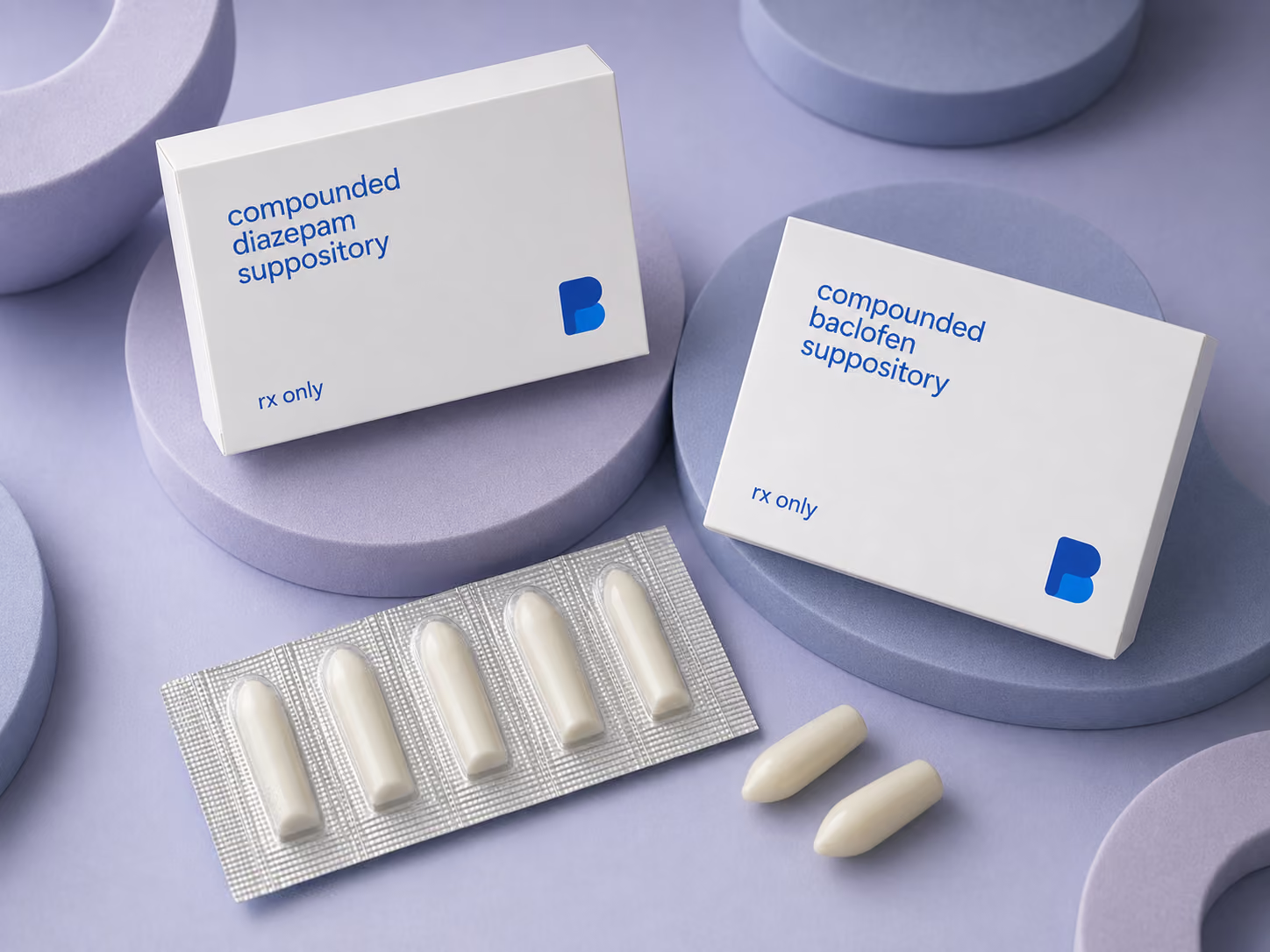
In Stock

On this page

Made only when a prescriber orders

These are compounded only on a prescriber's order, as an adjunct to care. Placebo-controlled trials of vaginal diazepam did not show benefit, and pelvic floor physical therapy remains the treatment with real evidence. Diazepam is a controlled substance.

Start with a prescription
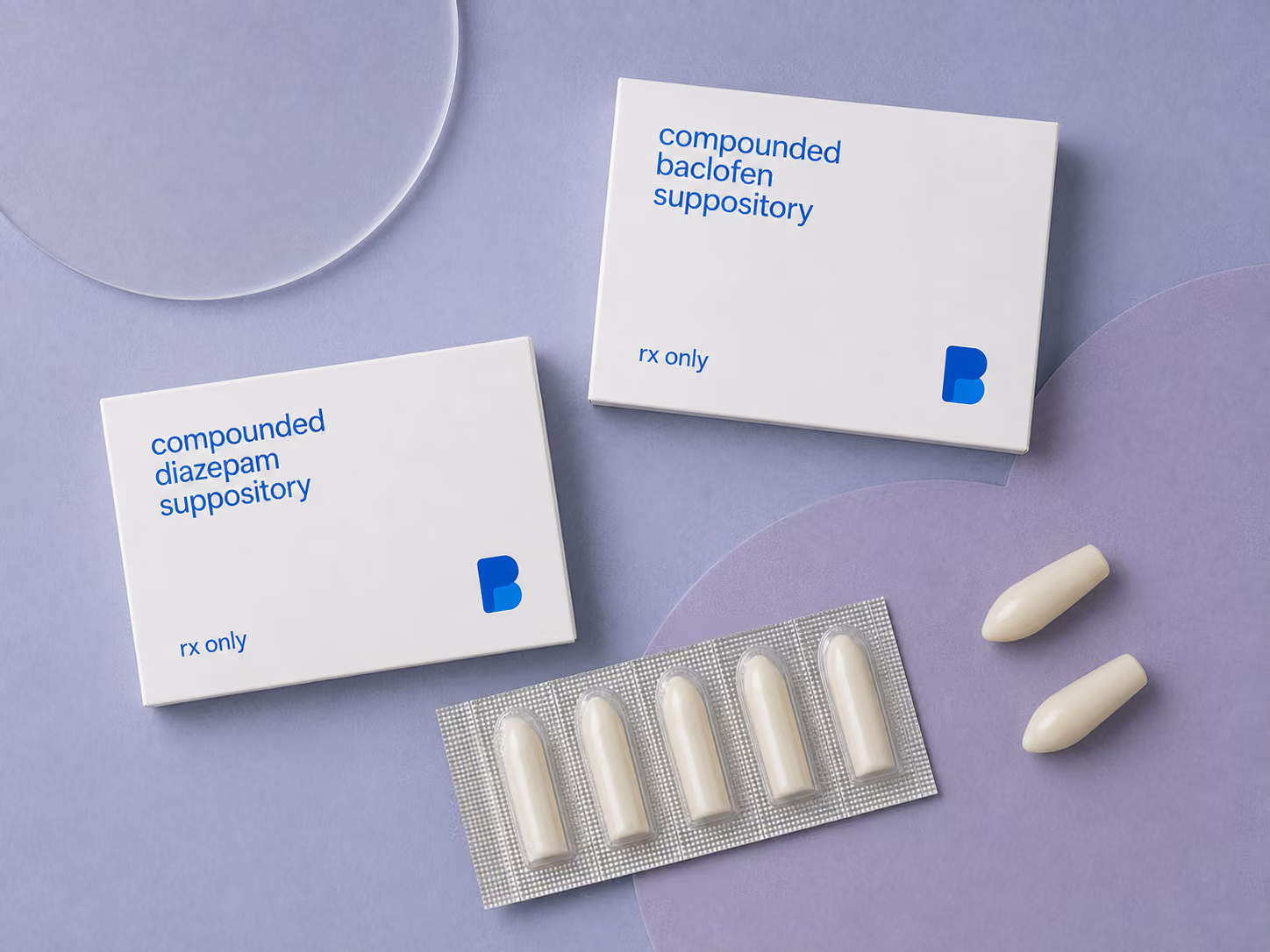
Made only when a prescriber orders – Diazepam / Baclofen Suppositories from Bayview Pharmacy

Strengths, routes, and counts

Most often diazepam 5 mg with baclofen 10 mg, molded as a vaginal or rectal suppository. Custom strengths and ketamine-containing versions are made on request.

View our formulas
Strengths, routes, and counts – Diazepam / Baclofen Suppositories from Bayview Pharmacy

Personalized compounding for patients who need more than a standard option.

"As a compounding pharmacy, we prepare each medication to a provider’s exact specifications. My focus, and my team’s focus, is quality, consistency, and close communication with prescribers so patients receive medication prepared for their individual needs."
Ryan Dyer, RPh
Owner and Chief Pharmacist, Bayview Pharmacy
Smiling man in blue scrubs with arms crossed and pen behind his ear
Three clear liquid vials, white powder on spoon, two capsules, and a cream jar on a metal surface.
QUALITY AND TESTING

Held to a higher standard

Every preparation is made under strict quality controls, and verified by a licensed pharmacist.
We use validated quality processes and third-party testing where appropriate
Sterile compounding in a dedicated USP <797> cleanroom
Non-sterile compounding under USP <795> and <800> standards
USP/NF-grade ingredients from reputable, vetted suppliers

Why patients choose Bayview

Made in our own pharmacy
Made to your prescription
Quality tested
Real pharmacist support
Trusted since 2006

Our formulations

These suppositories are compounded in the strengths, route, and count your prescriber orders. The combinations below are listed for reference only.

Combination Route Count
Diazepam 5 mg / baclofen 10 mgVaginal or rectal15 or 30
Diazepam 10 mg / baclofen 10 mgVaginal or rectal30
Custom: diazepam 2–10 mg / baclofen 5–20 mgVaginal or rectalAs ordered
Diazepam / baclofen / ketamine (e.g. 5-5-17.25 mg to 5-5-25 mg)Vaginal or rectal30

Strengths are listed for reference only. None has been shown in a randomized trial to be better than placebo for hypertonic pelvic floor dysfunction, and listing them is not a statement that any of them works or that one is better than another. Ketamine-containing versions carry the additional risks described in the FDA's October 10, 2023 warning about compounded ketamine products. Diazepam is a Schedule IV controlled substance. A valid prescription is required, and your prescriber decides what to order. These are compounded preparations and are not FDA-approved.

Start with a prescription

Frequently asked questions

Do these suppositories work?

Benefit is not established. In the best-designed study, nightly 10 mg vaginal diazepam over four weeks produced no difference in resting pelvic floor EMG at any time point and no difference on any validated questionnaire compared with placebo, and a second double-blind, placebo-controlled trial also failed to show benefit.

Pelvic floor physical therapy is the intervention with actual evidence for hypertonic pelvic floor dysfunction. If you are considering these, ask your prescriber how they fit alongside physical therapy rather than in place of it.

Is this a local-only treatment?

No. Vaginal diazepam is not confined to the pelvic floor, pharmacokinetic studies show measurable diazepam in the bloodstream after vaginal dosing. That means the ordinary systemic effects of a benzodiazepine apply, including sedation, impaired driving and coordination, and interactions with alcohol and opioids. Any description of these suppositories as acting locally only, or as having minimal systemic absorption, is not accurate.

Is diazepam a controlled substance?

Yes. Diazepam is a Schedule IV controlled substance and the benzodiazepine boxed warnings apply. Taken with opioids it can cause profound sedation, life-threatening respiratory depression, coma, and death. Abuse, misuse, and addiction are risks, and continued use can cause physical dependence, so stopping abruptly can cause withdrawal including seizures. Do not stop on your own, ask your prescriber about tapering.

How are they used?

Use them exactly as your prescriber directs. As commonly prescribed, one suppository is inserted vaginally or rectally at bedtime, or twice daily, often as a defined two-to-four-week trial timed around pelvic floor physical therapy rather than as open-ended refills. Wash your hands before and after. Because sedation is expected, do not drive until you know how it affects you, and a panty liner helps with base leakage.

What side effects should I expect?

Expect sedation. Drowsiness, dizziness, impaired coordination, falls, and problems with memory or concentration are the most common, and alcohol and opioids make them worse. Baclofen adds drowsiness and muscle weakness and must be tapered rather than stopped suddenly. Locally, vaginal irritation, discharge, and leakage or staining from the suppository base are common. Extra caution applies in older adults.

How should I store them?

Follow your label, because storage depends on the base: PEG-based suppositories are generally kept at controlled room temperature, while cocoa butter and other fatty bases are generally refrigerated at 2 to 8 °C, or at least below 25 °C, so they do not melt. Because diazepam is a controlled substance, keep them secured and out of the reach of children and others, and never share them.

Do I need a prescription?

Yes. All of our medications require a valid prescription from a licensed provider. We're a dispensing and compounding pharmacy, so we don't provide consultations or write prescriptions. If you don't have one yet, you'll need to find and see a provider first.

What is compounding?

Compounding is the practice of preparing a medication tailored to an individual patient's prescription. Instead of a mass-produced product, a compounding pharmacy makes the medication to the specific strength, form, or combination your provider orders.

Are compounded medications FDA-approved?

Compounded medications are not FDA-approved. They're prepared by a licensed pharmacy pursuant to a valid prescription for an individual patient, under USP standards. The FDA does not review compounded medications for safety or effectiveness.

How do providers send a prescription to Bayview?

Providers can submit a prescription three ways:

  • E-prescribe: Search Bayview Pharmacy, Warwick, RI (NCPDP 4106882) in your EHR. For compounds, use the compound, custom, or free-text option and include the full formulation, strength, quantity, refills, and directions.
  • Fax: Send a signed order to 401-284-4506 (alt. 401-210-2757) with patient and prescriber details, medication, quantity, refills, directions, signature, and date.
  • Phone: Call 401-284-4505 to submit, clarify, or coordinate refills.

A valid prescription is required, and compounded medications are not FDA-approved.

Can you fill a prescription from my own provider?

Yes. Your provider can send your prescription to Bayview Pharmacy by e-prescribe, fax, or phone, or you can transfer an existing prescription from another pharmacy. Start a request and we'll guide you through it.

How does shipping work?

Once your prescription is verified, we prepare your medication and ship it discreetly in plain packaging either via UPS or USPS. A pharmacy technician confirms the details with you before it goes out, and we're available if you have any questions.

How do refills and automatic refills work?

Refills are coordinated with your prescriber and your prescription. You can request a refill through our website or by calling us, and we'll handle the rest as long as you have refills remaining on a valid prescription. You can also opt into automatic refills on non-controlled substances, with no need to worry about running out of your medication. We can either ship it to you automatically, or ready for pickup.

Shipping & Delivery

Every prescription ships directly to your door in discreet packaging. Refrigerated medications travel in insulated coolers with ice packs to stay cold in transit.

Delivery AreaStandard ShippingRefrigerated Shipping
Rhode Island, Massachusetts & Connecticut$9 USPS$20 UPS
New Hampshire, New Jersey & New York$15 UPS$40 UPS Next Day Air
Florida$15 UPS$80 UPS Next Day Air

Need it faster? Expedited UPS is $15 for Rhode Island, Massachusetts and Connecticut. Your pharmacist will let you know if your medication needs refrigerated shipping. Questions? Call us at (401) 284-4505.

References

Sources reviewed

The medical information on this page draws on the following sources, which are also linked where cited.

  1. Crisp CC, et al. Intra-vaginal diazepam for high-tone pelvic floor dysfunction: a randomized placebo-controlled trial. Int Urogynecol J. 2013.
  2. MedlinePlus. Diazepam: MedlinePlus Drug Information.
  3. MedlinePlus. Baclofen: MedlinePlus Drug Information.
  4. U.S. Food and Drug Administration. FDA warns patients and health care providers about potential risks associated with compounded ketamine products, including oral formulations, for the treatment of psychiatric disorders (October 10, 2023).

Important safety information

Important safety information

Diazepam / baclofen suppositories are a prescription compounded medication and are not FDA-approved. There is no FDA-approved vaginal or rectal suppository of diazepam, baclofen, or any combination for pelvic floor dysfunction, so the dosage form itself is unapproved. Diazepam is a Schedule IV controlled substance.

Boxed warnings for benzodiazepines apply:

  • Taking benzodiazepines with opioids can cause profound sedation, life-threatening respiratory depression, coma, and death.
  • Benzodiazepines carry risks of abuse, misuse, and addiction, which can lead to overdose and death.
  • Continued use can cause physical dependence. Stopping abruptly or reducing the dose too quickly can cause withdrawal reactions, including seizures, tremor, anxiety, insomnia, problems with memory and concentration, and ringing in the ears. Do not stop on your own — ask your prescriber about tapering.

Effectiveness is not established:

  • A randomized placebo-controlled trial of nightly 10 mg vaginal diazepam (Crisp et al., Int Urogynecol J 2013, N=21) found no difference in resting vaginal EMG at any time point and no difference on any validated questionnaire versus placebo. A second placebo-controlled trial in 2019 also showed no benefit.
  • Baclofen suppositories have no completed randomized trial, and ketamine has no controlled evidence for this route or indication.
  • Pelvic floor physical therapy is the intervention with actual evidence for hypertonic pelvic floor dysfunction. No urogynecology, urology, or gynecology society guideline endorses these suppositories as standard therapy.

This is not a local-only treatment:

  • Vaginal diazepam is absorbed into the bloodstream at measurable levels, so ordinary systemic benzodiazepine effects and drug interactions apply.

Do not use if you:

  • Are allergic to diazepam, baclofen, ketamine (in versions containing it), or any ingredient in the suppository base.
  • Have acute narrow-angle glaucoma or severe respiratory insufficiency.
  • Are pregnant or breastfeeding, unless your prescriber has specifically discussed it with you.

Warnings and precautions:

  • Do not drink alcohol. Alcohol and opioids greatly increase sedation and the risk of respiratory depression.
  • Do not drive or operate machinery until you know how this affects you. Falls and cognitive effects are possible.
  • Use extra caution in older adults (Beers criteria), and with respiratory disease, sleep apnea, liver impairment, or a history of substance use.
  • Baclofen must be tapered. Stopping it abruptly can cause seizures, fever, confusion, muscle stiffness, and hallucinations. Dose caution is needed in kidney impairment.
  • Ketamine-containing versions: the FDA warned on October 10, 2023 about compounded ketamine products, citing sedation, dissociation, worsening psychiatric symptoms, elevated blood pressure, respiratory depression, abuse and misuse, and lower urinary tract and bladder toxicity, and specifically warned about unmonitored use at home.
  • Store securely and never share. Sharing a controlled substance is illegal and dangerous.

Common side effects:

  • Drowsiness, dizziness, weakness, and problems with memory or concentration.
  • Vaginal irritation or discharge, and leakage or staining from the suppository base.

Get emergency care for:

  • Slow or shallow breathing, extreme sleepiness, or someone being difficult to wake.
  • Seizures, severe confusion, hallucinations, fever with muscle stiffness, or signs of a serious allergic reaction such as rash, swelling, or trouble breathing.

Storage:

Follow your label, because storage depends on the base: PEG-based suppositories are generally kept at controlled room temperature, while cocoa butter and other fatty bases are generally refrigerated at 2–8 °C or kept below 25 °C to prevent melting. Protect from light and heat and do not store in a bathroom. Because diazepam is a controlled substance, keep it secured and out of the reach of children and others, and do not share it. Discard after the beyond-use date and dispose of unused medication through a drug take-back program.

This is a compounded prescription medication and is not approved by the FDA. Use it only under the supervision of a licensed provider, exactly as prescribed. Do not adjust your dose without talking to your prescriber. Seek emergency care for any severe or unexpected reaction. This information is not complete; talk to your provider about your full medical history and all medications you take.

Ready to get started?

Send us your prescription and a Bayview pharmacist will take it from there.