



In Stock
Scopolamine Gel & Capsules, Compounded | Bayview Pharmacy

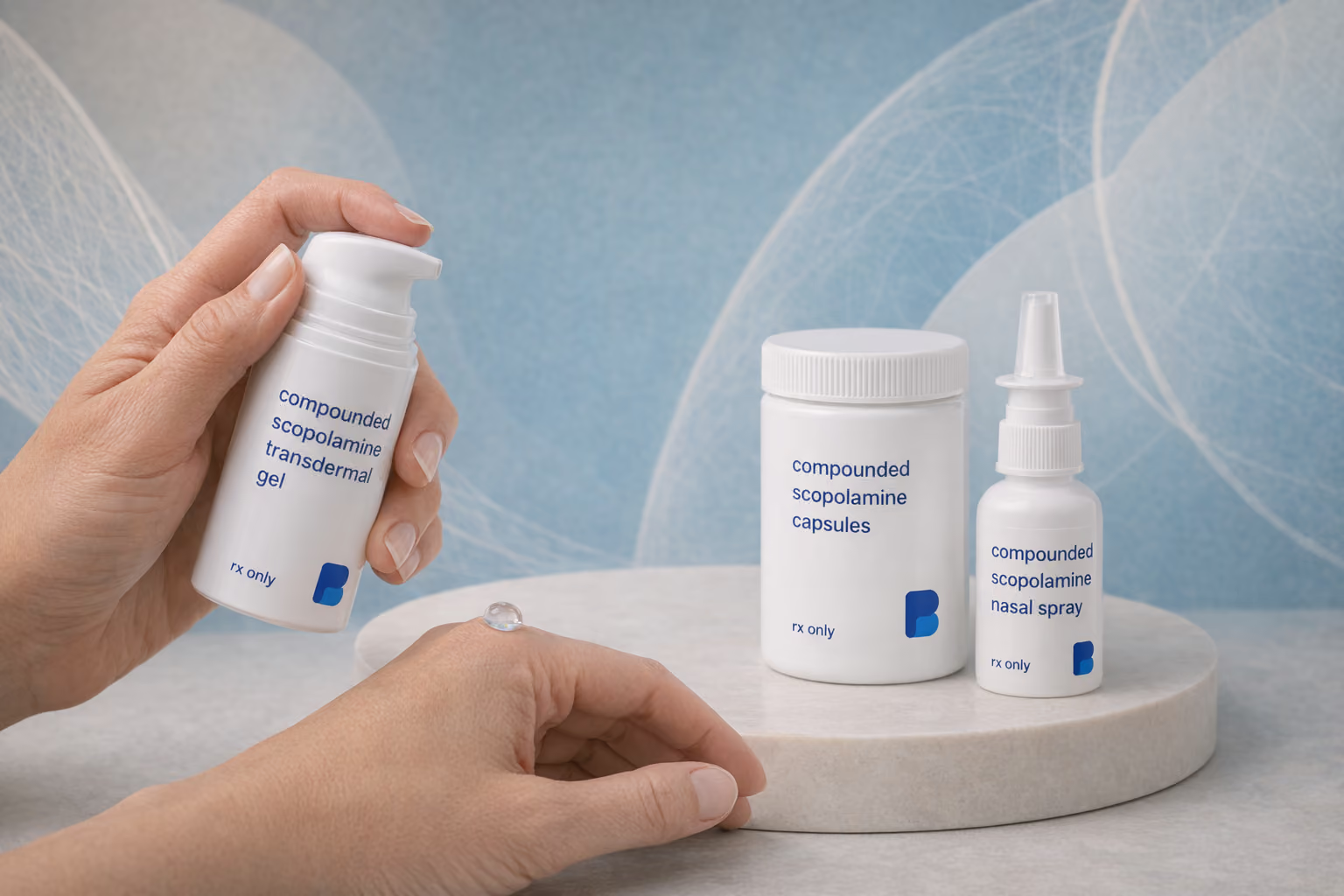
Scopolamine Transdermal Gel, Capsules & Nasal Spray

Smiling man in blue pharmacist scrubs with arms crossed and pen behind his ear.
Medically reviewed by Ryan Dyer, RPh
Last updated on
September 3, 2026
Starting at
$98
for
30 capsules
Checkmark icon followed by text 'HSA/FSA Eligible'.
Start with a prescription
Licensed to fill prescriptions for patients in RI, MA, CT, NY, NJ, NH & FL
  • A dose the patch cannot give. The manufactured patch delivers about 1 mg over 3 days; compounding lets a prescriber set a smaller or different dose.
  • Gel, capsule, troche, or spray. For patients who react to patch adhesive or need a route the patch does not offer.
  • Not manufactured in these forms. In the United States scopolamine is approved only as the transdermal patch and an injection.
  • Compounded to order. Prepared in our Rhode Island pharmacy for an individual prescription.

Scopolamine is an anticholinergic medicine that blocks acetylcholine at muscarinic receptors, including the signals that drive nausea and vomiting. The FDA-approved scopolamine products are the transdermal patch worn behind the ear, for motion sickness and for nausea after surgery, and an injection. No scopolamine gel, capsule, troche, or nasal spray is manufactured in the United States, so when a prescriber orders one, Bayview compounds scopolamine hydrobromide in that form and strength. These preparations are not FDA-approved, their use is off-label, and a valid prescription is required.

Prescribers order compounded scopolamine when the fixed-dose patch does not fit: a patient whose skin reacts to the adhesive, a dose that needs to be lower or adjusted in steps, a short course for a single trip or procedure, or the persistent nausea and drooling that come with some neurologic conditions. Your prescriber decides whether it is appropriate, in which form, and at what strength.

Bayview also compounds betahistine capsules for vertigo, custom oral suspensions, and the full range of digestive preparations.

What is compounded scopolamine?

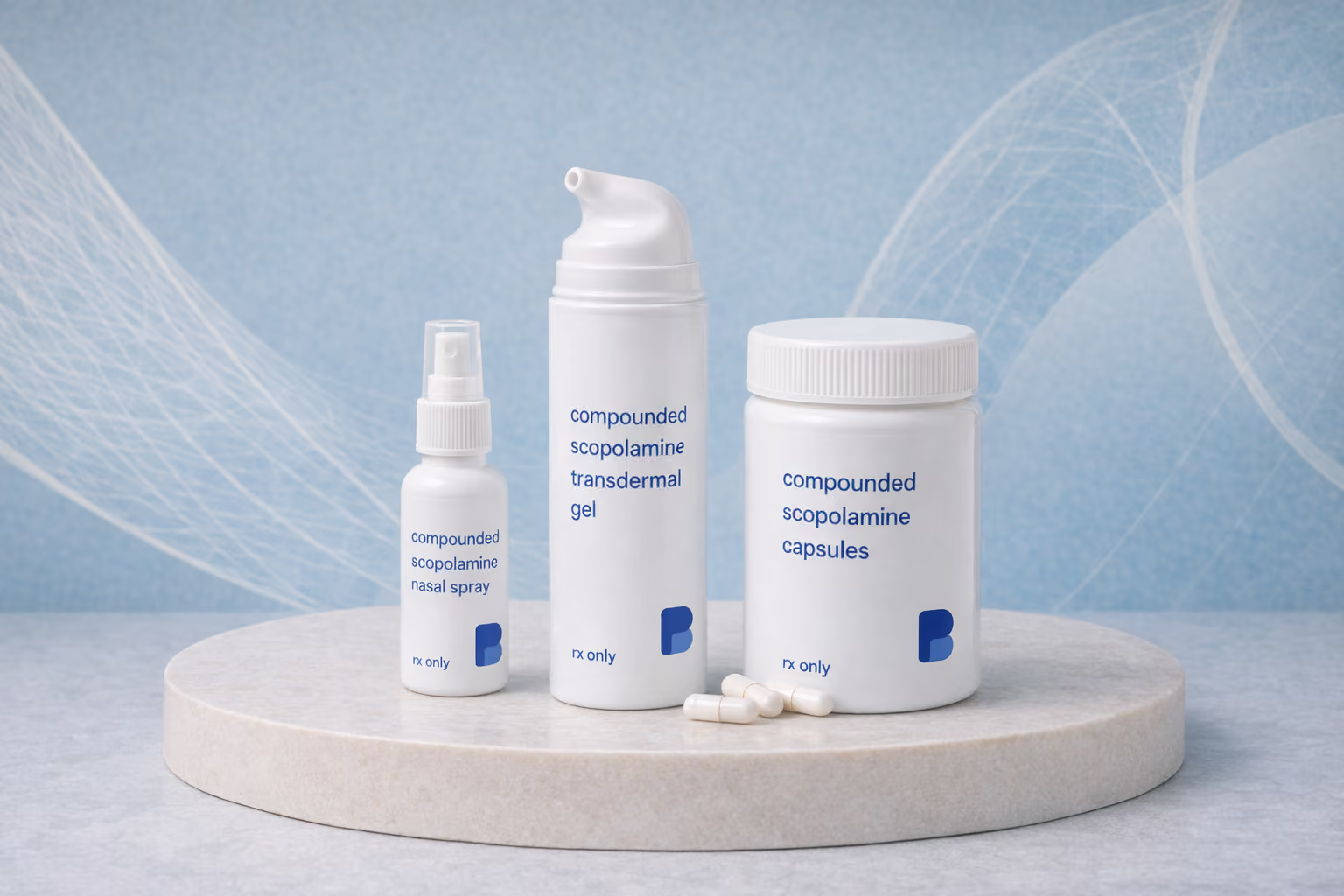
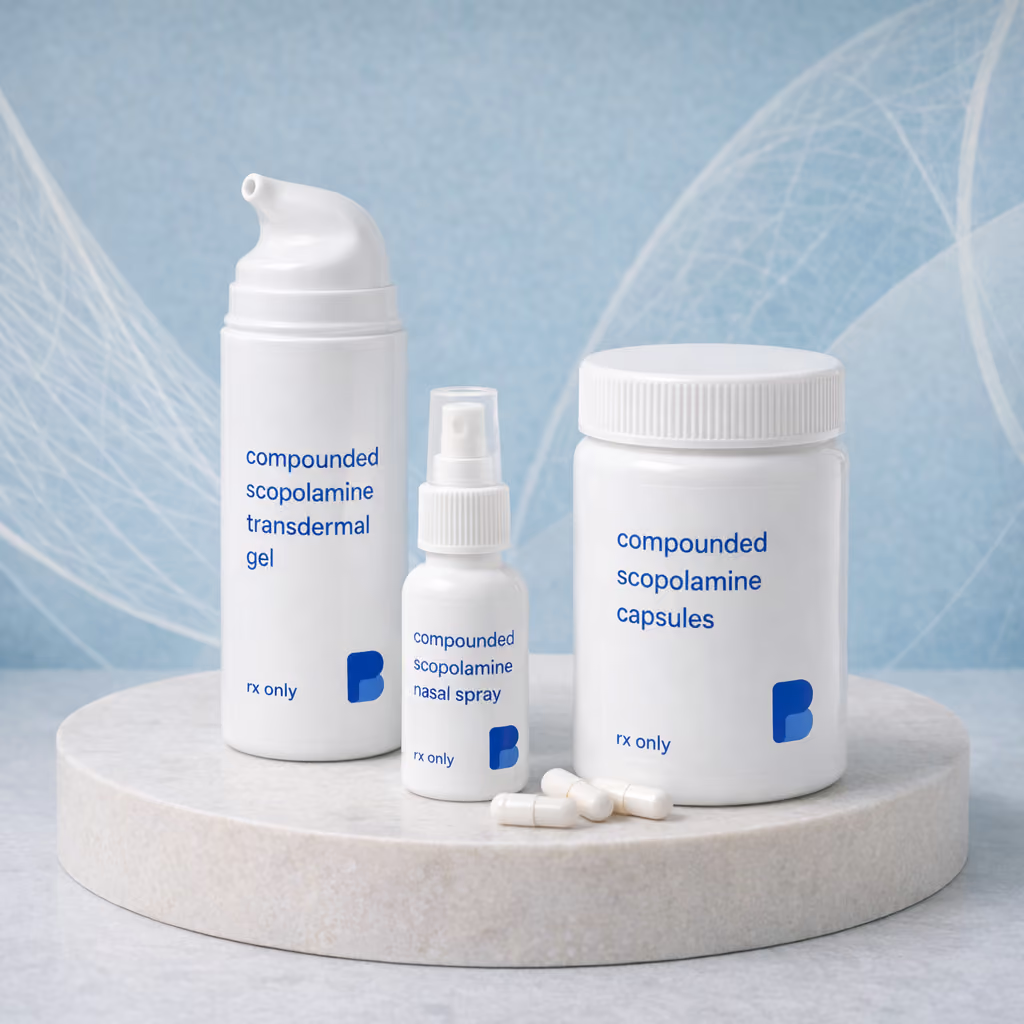
Scopolamine, the medicine in the motion sickness patch, prepared by Bayview as a transdermal gel, oral capsules or troches, an oral suspension, or a nasal spray in the strength your prescriber orders. In the United States scopolamine is manufactured only as the patch and an injection, so the other forms are compounded. They are not FDA-approved, their use is off-label, and a prescription is required.

Why not just use the patch?

The patch delivers about 1 mg over three days and comes in one strength. A prescriber may want a smaller dose, a dose that can be adjusted, a single dose for one trip or procedure, or scopolamine for a patient whose skin reacts to the adhesive. The compounded gel gives the same route without adhesive, and the capsules, troche, suspension, and spray give routes the patch does not offer. Which one fits you is your prescriber's call.

Trusted by 105,826 patients to date.
A group of faces of our past satisfied patients.
Compounded medications are prepared pursuant to a valid prescription for an individual patient and are not FDA-approved. This page is for educational purposes and is not medical advice.
**The FDA does not review or approve compounded medications for safety or effectiveness. A valid prescription from a licensed practitioner is required.
Important safety information →
Service availability

Prescription delivery in your state

Bayview Pharmacy currently serves eligible patients in six states. Check your state before getting started.

Where we currently serve

Select a highlighted state to check availability.

Currently licensed Licensed — non-controlled only Not currently licensed Your selection

Select a state on the map or use the state checker.

Do we serve your state?

Choose your state to confirm current service availability.

Thank you! Your submission has been received!
Oops! Something went wrong while submitting the form.
Currently licensed in
Start with a prescription

Send us your prescription

STEP
1
Have your provider e-prescribe to Bayview, fax it to us, or call it in directly to one of our pharmacists.
A thin blue light beam connecting two clear glass slabs on a white surface.

A pharmacist reviews it

STEP
2
We verify your prescription and prepare your medication to your provider's exact instructions.
Close-up of a white dial with blue measurement markings and a rotating knob.

We compound & ship

STEP
3
We prepare your medication and ship it discreetly to your door, with support when you need it.
Close-up of a gray box with a precise blue line running along its folded edges.

What is Scopolamine Transdermal Gel, Capsules & Nasal Spray?

Scopolamine is an anticholinergic medicine from the belladonna family of plants. It blocks acetylcholine at muscarinic receptors throughout the body, including the pathways in the brain and inner ear that turn motion into nausea, which is why it has been used against seasickness for well over a century and why its side effects, dry mouth, drowsiness, and blurred vision, are the classic anticholinergic ones.

In the United States scopolamine is FDA-approved as a transdermal patch worn behind the ear, which delivers about 1 mg over three days for motion sickness and for nausea and vomiting after surgery, and as an injection. The oral tablets sold in other countries were never kept on the US market. No scopolamine gel, capsule, troche, or nasal spray is manufactured here, so when a prescriber orders one, Bayview compounds scopolamine hydrobromide in that form and strength. These compounded preparations are not FDA-approved, their use is off-label, and a valid prescription is required.

Compounded scopolamine is not FDA-approved, and this use is off-label. It is prepared by a licensed pharmacy to a prescriber's order. Scopolamine is dosed in fractions of a milligram and its effects on the mind, the eyes, and the bladder are dose-related, so the strength, the form, and the maximum number of doses in a day are set by your prescriber and should not be exceeded.

How does it work?

Scopolamine is a competitive inhibitor at postganglionic muscarinic receptors of the parasympathetic nervous system (DailyMed, Transderm Scop label). It is thought to act mainly on M1 receptors in the vestibular nuclei and the vomiting center, interrupting the signal from the balance organs of the inner ear that produces motion sickness (StatPearls, Scopolamine). The same receptor blockade dries saliva and other secretions, slows the gut and bladder, dilates the pupil, and, at higher doses, clouds thinking. Absorbed through the skin, it acts within hours; by mouth or by nasal spray it acts sooner and wears off sooner.

What is it used for?

The approved uses of the patch are the prevention of nausea and vomiting from motion sickness and after surgery (DailyMed, Transderm Scop label). Prescribers order the compounded forms for the same problems when the patch does not fit, for example a patient whose skin reacts to the adhesive, a child or a small adult who needs less than the patch delivers, or a single trip or procedure that does not need a three-day patch. They also order it off-label for persistent nausea in gastroparesis or chemotherapy, for vertigo, and for the drooling that comes with Parkinson's disease and other neurologic conditions, where drying saliva is the point (StatPearls, Scopolamine). Evidence for those uses comes from the manufactured products and from clinical practice, not from trials of compounded gels or capsules. Your prescriber decides whether it fits your situation.

Gel, capsule, troche, or spray?

The transdermal gel is measured with a marked applicator and rubbed into a thin-skinned area, usually the inner wrist or behind the ear, and is the closest compounded equivalent to the patch without the adhesive. Capsules and slow-release capsules are for people who prefer a tablet-like dose or need a longer effect; the troche dissolves in the mouth for someone who cannot swallow; the suspension allows very small or adjustable doses by syringe; the nasal spray acts quickly through the lining of the nose. Your prescriber selects the form and strength; see the strengths section for what Bayview compounds.

How is it used?

Follow the directions on your label exactly. For the gel, measure the dose with the applicator, rub it into clean, dry skin at the site your prescriber named, and wash your hands afterward, because scopolamine on a fingertip can dilate the pupil and blur vision if it reaches the eye (MedlinePlus, Scopolamine Transdermal). For motion sickness, take or apply the dose ahead of travel as directed, commonly an hour before by mouth or several hours before through the skin. Do not take a second dose sooner than your prescriber allowed, and do not combine it with the patch. If you have used it for several days, stopping can bring on dizziness, nausea, headache, and sweating a day or more later; tell your prescriber if that happens (MedlinePlus, Scopolamine Transdermal).

Side effects & safety

Dry mouth is the most common effect; about two thirds of patch users in the motion sickness studies reported it, followed by drowsiness and blurred vision (DailyMed, Transderm Scop label). Dilated pupils, dizziness, constipation, and difficulty urinating are the other typical anticholinergic effects, and the gel can leave mild redness at the site.

Confusion, the eyes, and the bladder. The approved labeling warns that scopolamine can cause hallucinations, confusion, agitation, and psychosis, that it can raise eye pressure and is contraindicated in angle-closure glaucoma, that it can cause urinary retention and worsen a bowel obstruction, and that it may lower the seizure threshold; older adults are more sensitive to the effects on the mind (DailyMed, Transderm Scop label). In overdose the picture is a fast heart rate, hot dry skin, hallucinations, and fever, which needs emergency care (StatPearls, Scopolamine). Other anticholinergic medicines, alcohol, and sedatives add to every one of these effects, so tell your prescriber about everything you take.

Who should not use it?

Do not use scopolamine if you have angle-closure glaucoma or are allergic to scopolamine or other belladonna alkaloids. Talk with your prescriber before using it if you have an enlarged prostate or trouble urinating, a bowel obstruction or severe constipation, a seizure disorder, heart disease, kidney or liver disease, myasthenia gravis, or a history of psychosis, or if you are over 65. It should be avoided in severe preeclampsia. Safety in children has not been established and serious reactions have been reported in children (DailyMed, Transderm Scop label). No information is available on scopolamine during breastfeeding, and anticholinergics can reduce milk supply with longer use (LactMed, Scopolamine); tell your prescriber if you are pregnant or breastfeeding.

How should it be stored?

Store as directed on your label, at room temperature away from heat, light, and moisture, and keep it out of the reach of children and pets; a child who handles the gel or spray can absorb a full adult dose. Do not use it after the beyond-use date, and dispose of unused medication as directed.

Why is this compounded?

The manufactured scopolamine products are the 1 mg three-day patch and an injection; the short-acting oral products sold elsewhere were left off the US market because of their variable blood levels and side effects (StatPearls, Scopolamine). When a prescriber wants a smaller or adjustable dose, a route other than the patch, or scopolamine without adhesive, compounding is the only way to prepare it. As a 503A compounding pharmacy, Bayview prepares each order in small batches under USP standards, pursuant to a prescription for an individual patient. We do not supply it as clinic or office stock, that is the role of a 503B outsourcing facility, which Bayview is not. Compounded preparations are not FDA-approved. Related preparations include Betahistine Capsules, Custom Oral Suspensions, and Omeprazole Suspension. The full list is in our compounded medications catalog.

Clinical details for prescribers

Regulatory status. Scopolamine hydrobromide, a nonselective muscarinic antagonist. FDA-approved presentations: the transdermal system (Transderm Scop, about 1 mg over 3 days) for motion sickness and PONV, and the injection. Oral scopolamine hydrobromide and butylbromide products are marketed outside the US only. Compounded transdermal gel, cream, capsules, troches, suspension, and nasal spray are 503A preparations, not FDA-approved, and off-label. Not a controlled substance.

Formulation & directions. Bayview compounds scopolamine HBr as 0.25 mg/0.1 mL and 0.4 mg/0.1 mL transdermal gel (measured applicator, 10 or 30 mL), 0.25 and 2.5 mg/mL topical cream, 0.2, 0.4, and 1.2 mg capsules, 0.5 and 1 mg slow-release capsules, 0.4 mg troches, 0.1 mg/mL oral suspension, and 0.2% nasal spray. Typical directions: gel 0.1 mL to the inner wrist or postauricular skin every 8 hours as needed, maximum 3 doses in 24 hours; capsules 0.2 to 0.4 mg by mouth 1 hour before travel, repeat once in 8 hours if needed. Write an explicit maximum daily dose on every prescription; the combination capsules with caffeine or chlorpheniramine, and the methscopolamine preparations, are separate items not covered here.

Safety & counseling:

  • Contraindicated in angle-closure glaucoma and belladonna alkaloid hypersensitivity; warnings for neuropsychiatric reactions, seizure threshold, eclampsia, urinary retention, GI obstruction, and withdrawal after removal or discontinuation (dizziness, nausea, headache, sweating, confusion at 24 hours or more) (DailyMed, Transderm Scop label).
  • Dry mouth in about two thirds of motion-sickness patients; in PONV trials dry mouth 29%, dizziness 12%, somnolence 8%, agitation 6% (DailyMed, Transderm Scop label). Counsel on hand washing after the gel (unilateral mydriasis from finger-to-eye transfer) and on driving.
  • Additive effects with other anticholinergics, CNS depressants, and alcohol; increased CNS sensitivity in the elderly; monitor for psychiatric symptoms; discontinue if difficulty urinating develops (StatPearls, Scopolamine). Anticholinergic toxidrome responds to physostigmine in severe cases.
  • Pediatric safety and effectiveness not established; serious adverse reactions reported. Lactation: no published data; anticholinergics may inhibit lactation with prolonged use (LactMed, Scopolamine).
  • Evidence for the compounded routes is extrapolated from the patch and from practice; no trials of compounded scopolamine gel or capsules were identified. Frame expectations accordingly, particularly for sialorrhea and vertigo.

Non-controlled; ship to patient or office per the order form. Licensed to dispense in RI, MA, CT, NY, NJ, NH, and FL. Background: DailyMed, Transderm Scop label; StatPearls, Scopolamine; LactMed, Scopolamine. Account setup, licensing, and ordering are covered on our for providers page.

This is a prescription compounded medication and is not FDA-approved; its use is off-label. This information is educational and is not medical advice. Your prescriber determines whether it is appropriate and sets the formulation and directions.

References

  1. DailyMed: Transderm Scop (scopolamine patch) prescribing information
  2. NCBI Bookshelf: StatPearls, Scopolamine
  3. MedlinePlus: Scopolamine Transdermal Patch
  4. NCBI Bookshelf: LactMed, Scopolamine

Reviewed by Ryan Dyer, RPh, pharmacist at Bayview Pharmacy. Last reviewed September 3, 2026. Bayview does not provide consultations and does not decide whether a medication is right for you. Your prescriber makes that call.

In Stock

On this page

The patch's medicine, in the dose and form your prescriber sets

Scopolamine compounded as a transdermal gel, capsules, troches, an oral suspension, or a nasal spray, to your prescriber's order, for patients the fixed-dose patch does not fit.

Start with a prescription

Five forms, none of them manufactured in the US

Transdermal gel in a measured applicator, immediate and slow-release capsules, a troche, an oral suspension, and a 0.2% nasal spray, each in fractions of a milligram, shipped to your patient or your office.

View our formulas

Personalized compounding for patients who need more than a standard option.

"As a compounding pharmacy, we prepare each medication to a provider’s exact specifications. My focus, and my team’s focus, is quality, consistency, and close communication with prescribers so patients receive medication prepared for their individual needs."
Ryan Dyer, RPh
Owner and Chief Pharmacist, Bayview Pharmacy
Smiling man in blue scrubs with arms crossed and pen behind his ear
Three clear liquid vials, white powder on spoon, two capsules, and a cream jar on a metal surface.
QUALITY AND TESTING

Held to a higher standard

Every preparation is made under strict quality controls, and verified by a licensed pharmacist.
We use validated quality processes and third-party testing where appropriate
Sterile compounding in a dedicated USP <797> cleanroom
Non-sterile compounding under USP <795> and <800> standards
USP/NF-grade ingredients from reputable, vetted suppliers

Why patients choose Bayview

Made in our own pharmacy
Made to your prescription
Quality tested
Real pharmacist support
Trusted since 2006

Our formulations

Bayview compounds scopolamine hydrobromide in the form and strength your prescriber orders. The transdermal gel is measured with a marked applicator and rubbed into a thin-skinned area such as the inner wrist or behind the ear; the capsules, troches, and suspension are taken by mouth; the nasal spray is a metered pump. Scopolamine is a potent medicine dosed in fractions of a milligram, so every form is made to be measured exactly. The manufactured patch delivers about 1 mg over 3 days and is not what this page describes.

Strength Form Commonly ordered for Sizes
Scopolamine HBr 0.25 mg per 0.1 mLTransdermal gel (measured applicator)The lower gel strength; a common starting point for motion sickness or nausea10 mL, 30 mL
Scopolamine HBr 0.4 mg per 0.1 mLTransdermal gel (measured applicator)The higher gel strength; ordered when a larger single dose is wanted10 mL, 30 mL
Scopolamine HBr 0.25 mg/mL and 2.5 mg/mLTopical creamApplied to the skin as the prescriber directs; the 2.5 mg/mL cream is measured in small amounts30 g
Scopolamine HBr 0.2 mg, 0.4 mg, 1.2 mgOral capsulesImmediate-release capsules for motion sickness, nausea, or drooling30, 50 capsules
Scopolamine HBr 0.5 mg, 1 mgSlow-release oral capsulesLonger-acting oral dosing30 capsules
Scopolamine HBr 0.4 mgOral trocheDissolves in the mouth; an option for patients who cannot swallow a capsule30 troches
Scopolamine HBr 0.1 mg/mLOral suspensionMeasured by oral syringe for small or adjustable doses30 mL, 60 mL
Scopolamine HBr 0.2%Nasal sprayA metered spray absorbed through the nose5 mL, 24 mL
Custom strengthAs orderedStrength and form set by your prescriberAs ordered

Strengths are listed for education only and are not a statement of effectiveness. Strength, directions, and the maximum number of doses in a day are prescriber-directed, and a valid prescription is required. Compounded preparations are not FDA-approved, and this use is off-label.

Start with a prescription

Frequently asked questions

What is compounded scopolamine?

Scopolamine, the medicine in the motion sickness patch, prepared by Bayview as a transdermal gel, oral capsules or troches, an oral suspension, or a nasal spray in the strength your prescriber orders. In the United States scopolamine is manufactured only as the patch and an injection, so the other forms are compounded. They are not FDA-approved, their use is off-label, and a prescription is required.

Why not just use the patch?

The patch delivers about 1 mg over three days and comes in one strength. A prescriber may want a smaller dose, a dose that can be adjusted, a single dose for one trip or procedure, or scopolamine for a patient whose skin reacts to the adhesive. The compounded gel gives the same route without adhesive, and the capsules, troche, suspension, and spray give routes the patch does not offer. Which one fits you is your prescriber's call.

What do prescribers order it for?

Most often for motion sickness and for nausea, the uses the patch is approved for, when the patch does not fit. Some prescribers also order it, off-label, for persistent nausea in gastroparesis or during chemotherapy, for vertigo, and for the drooling that comes with Parkinson's disease and similar conditions, because scopolamine dries saliva. The evidence for those uses comes from the manufactured products and from practice, not from trials of compounded gel or capsules.

How do I use the gel?

Measure the dose with the marked applicator, rub it into clean, dry skin where your prescriber directed, usually the inner wrist or behind the ear, and wash your hands right away. Scopolamine on a fingertip can dilate your pupil and blur your vision if it touches your eye. Apply it ahead of travel as directed, do not repeat it sooner than your prescriber allowed, and never use it together with a scopolamine patch.

What are the side effects?

Dry mouth is the most common, then drowsiness, dizziness, blurred vision, and dilated pupils; constipation and difficulty urinating can also occur. Do not drive until you know how it affects you, and avoid alcohol. Confusion, agitation, or hallucinations, more likely in older adults or at higher doses, mean you should stop it and call your prescriber. If you have used it for several days, dizziness, nausea, and headache can appear a day or more after stopping.

Who should not use scopolamine?

Anyone with angle-closure glaucoma or an allergy to scopolamine or other belladonna alkaloids. Talk with your prescriber first if you have an enlarged prostate or trouble urinating, a bowel obstruction, a seizure disorder, heart disease, myasthenia gravis, or a history of psychosis, if you are over 65, or if you are pregnant or breastfeeding. It is not established as safe in children, and other anticholinergic medicines and sedatives add to its effects.

Do I need a prescription?

Yes. All of our medications require a valid prescription from a licensed provider. We're a dispensing and compounding pharmacy, so we don't provide consultations or write prescriptions. If you don't have one yet, you'll need to find and see a provider first.

What is compounding?

Compounding is the practice of preparing a medication tailored to an individual patient's prescription. Instead of a mass-produced product, a compounding pharmacy makes the medication to the specific strength, form, or combination your provider orders.

Examples on this site include medications compounded as liquids for people who cannot swallow pills, thyroid capsules made to a T3/T4 ratio no manufactured product offers, and all-purpose nipple ointment, which combines three actives that are not sold together commercially.

Are compounded medications FDA-approved?

Compounded medications are not FDA-approved. They're prepared by a licensed pharmacy pursuant to a valid prescription for an individual patient, under USP standards. The FDA does not review compounded medications for safety or effectiveness.

How do providers send a prescription to Bayview?

Providers can submit a prescription three ways:

  • E-prescribe: Search Bayview Pharmacy, Warwick, RI (NCPDP 4106882) in your EHR. For compounds, use the compound, custom, or free-text option and include the full formulation, strength, quantity, refills, and directions.
  • Fax: Send a signed order to 401-284-4506 (alt. 401-210-2757) with patient and prescriber details, medication, quantity, refills, directions, signature, and date.
  • Phone: Call 401-284-4505 to submit, clarify, or coordinate refills.

A valid prescription is required, and compounded medications are not FDA-approved.

Can you fill a prescription from my own provider?

Yes. Your provider can send your prescription to Bayview Pharmacy by e-prescribe, fax, or phone, or you can transfer an existing prescription from another pharmacy.

How does shipping work?

Once your prescription is verified, we prepare your medication and ship it discreetly in plain packaging either via UPS or USPS. A pharmacy technician confirms the details with you before it goes out, and we're available if you have any questions.

How do refills and automatic refills work?

Refills are coordinated with your prescriber and your prescription. You can request a refill through our website or by calling us, and we'll handle the rest as long as you have refills remaining on a valid prescription. You can also opt into automatic refills on non-controlled substances, with no need to worry about running out of your medication. We can either ship it to you automatically, or ready for pickup.

Shipping & Delivery

Every prescription ships directly to your door in discreet packaging. Refrigerated medications travel in insulated coolers with ice packs to stay cold in transit.

Delivery AreaStandard ShippingRefrigerated Shipping
Rhode Island, Massachusetts & Connecticut$9 USPS$20 UPS
New Hampshire, New Jersey & New York$15 UPS$40 UPS Next Day Air
Florida$15 UPS$80 UPS Next Day Air

Need it faster? Expedited UPS is $15 for Rhode Island, Massachusetts and Connecticut. Your pharmacist will let you know if your medication needs refrigerated shipping. Questions? Call us at (401) 284-4505.

References

Sources reviewed

The medical information on this page draws on the following sources, which are also linked where cited.

  1. DailyMed, US National Library of Medicine. TRANSDERM SCOP (scopolamine transdermal system): Prescribing Information.
  2. StatPearls (NCBI Bookshelf). Scopolamine.
  3. MedlinePlus, US National Library of Medicine. Scopolamine Transdermal Patch.
  4. Drugs and Lactation Database (LactMed), NCBI Bookshelf. Scopolamine.

Important safety information

Important safety information

Compounded scopolamine gel, capsules, troches, and nasal spray are prescription compounded medications and are not FDA-approved. Scopolamine is an anticholinergic dosed in fractions of a milligram; take or apply it exactly as prescribed, never more often than your prescriber allows, and never share it.

Do not use scopolamine if you:

  • Have angle-closure (narrow-angle) glaucoma.
  • Are allergic to scopolamine or to other belladonna alkaloids such as atropine or hyoscyamine, or to any ingredient in the preparation.

Warnings and precautions:

  • Confusion and hallucinations. Scopolamine can cause confusion, agitation, hallucinations, and, rarely, psychosis, more often in older adults and at higher doses. Stop it and call your prescriber if these occur.
  • Drowsiness and blurred vision. Do not drive, operate machinery, or do anything hazardous until you know how it affects you. Alcohol and other sedating medicines add to the effect.
  • Eyes. Scopolamine on the fingers can dilate the pupil and blur vision if it reaches the eye. Wash your hands after applying the gel, and keep the gel and spray away from your eyes. Tell your prescriber about any eye pain or halos around lights.
  • Bladder and bowel. Scopolamine can make it hard to urinate and slows the gut. Tell your prescriber if you have an enlarged prostate, difficulty urinating, or a known bowel obstruction, and stop it if you cannot pass urine.
  • Seizures and other conditions. Use caution with a history of seizures, heart disease, kidney or liver disease, or myasthenia gravis. It should be avoided in severe preeclampsia.
  • Stopping after several days. Dizziness, nausea, headache, sweating, and confusion can start a day or more after stopping a course of several days or longer. Tell your prescriber if this happens.
  • Other medicines. Other anticholinergics (some antihistamines, antidepressants, and bladder medicines) and sedatives increase the effects. Tell your prescriber about every medicine you take.
  • Pregnancy, breastfeeding, and children. Safety in children has not been established and serious reactions have been reported. Anticholinergics may reduce milk supply. Tell your prescriber if you are pregnant or breastfeeding.

Common side effects:

  • Dry mouth is the most common, then drowsiness, dizziness, blurred vision, dilated pupils, and constipation. With the gel, mild redness at the site.

Get medical care if you have:

  • Confusion, hallucinations, or agitation.
  • Eye pain, sudden blurred vision, or halos around lights.
  • Inability to urinate, or a fast or pounding heartbeat with hot dry skin.

Storage:

Store as directed on your label, at room temperature away from heat, light, and moisture, and keep it out of the reach of children and pets. Do not use after the beyond-use date, and discard unused medication as directed by your pharmacist.

This is a compounded prescription medication and is not approved by the FDA. Use it only under the supervision of a licensed provider, exactly as prescribed. Do not adjust your dose without talking to your prescriber. Seek emergency care for any severe or unexpected reaction. This information is not complete; talk to your provider about your full medical history and all medications you take.

Ready to get started?

Send us your prescription and a Bayview pharmacist will take it from there.