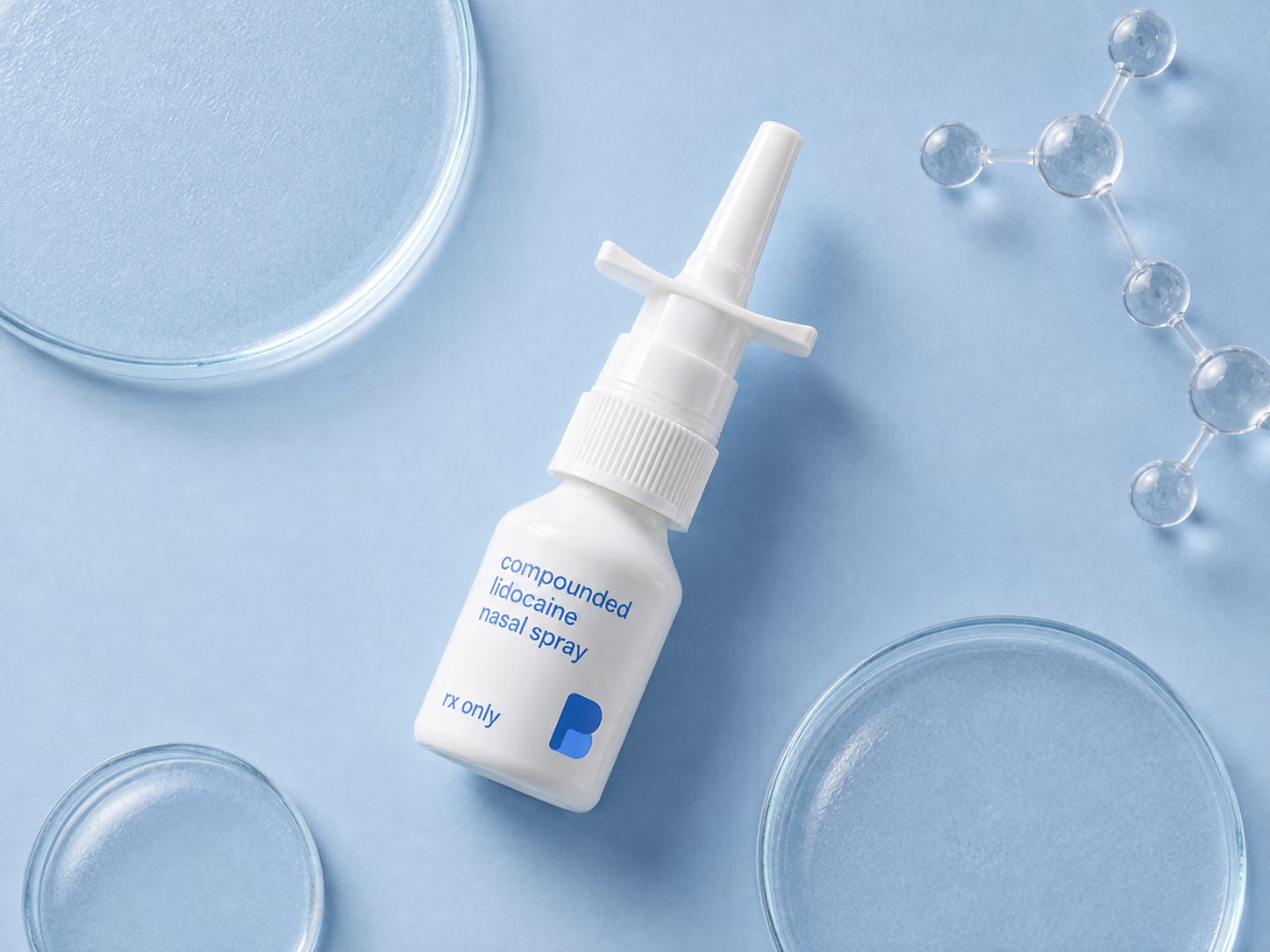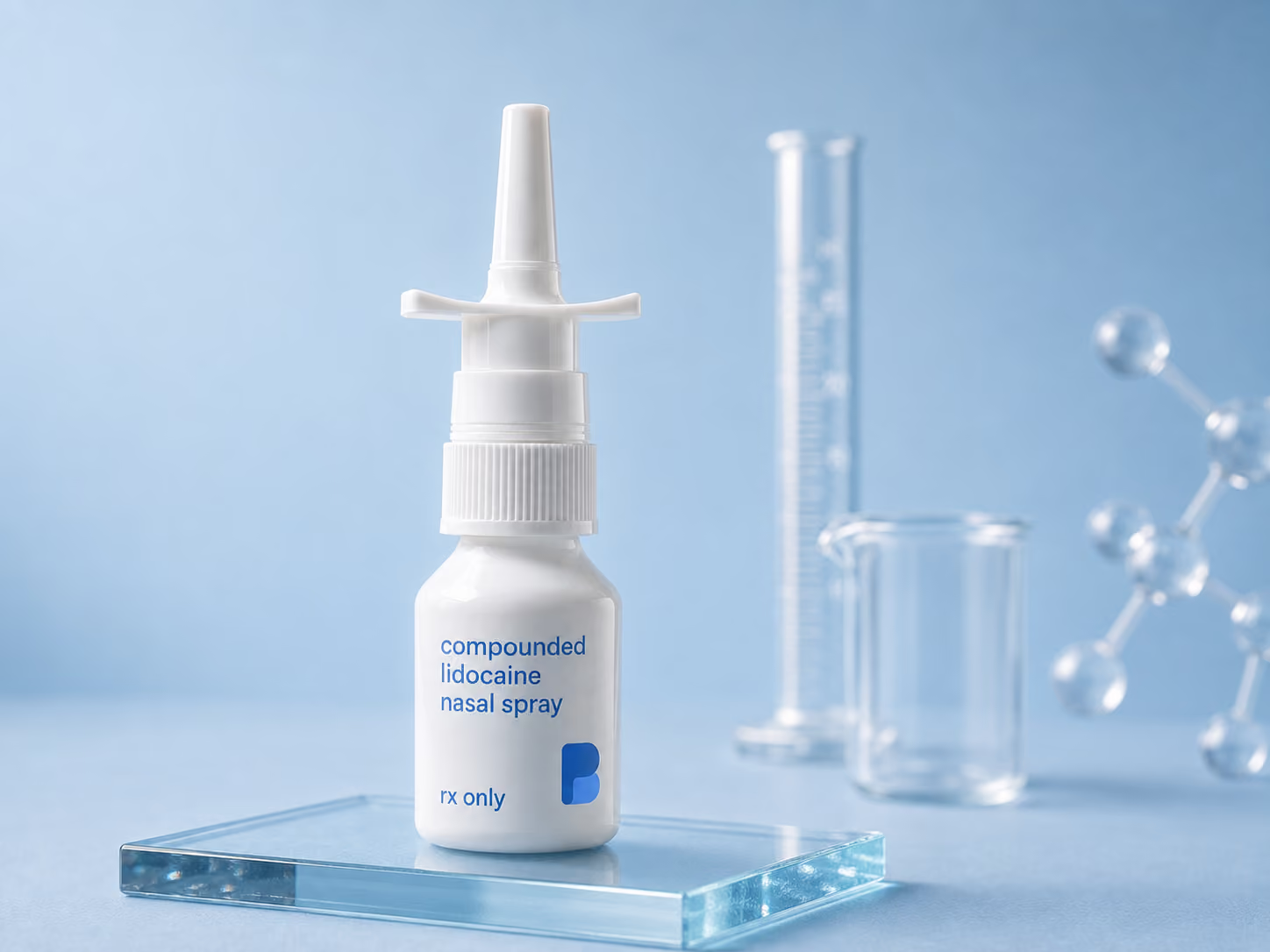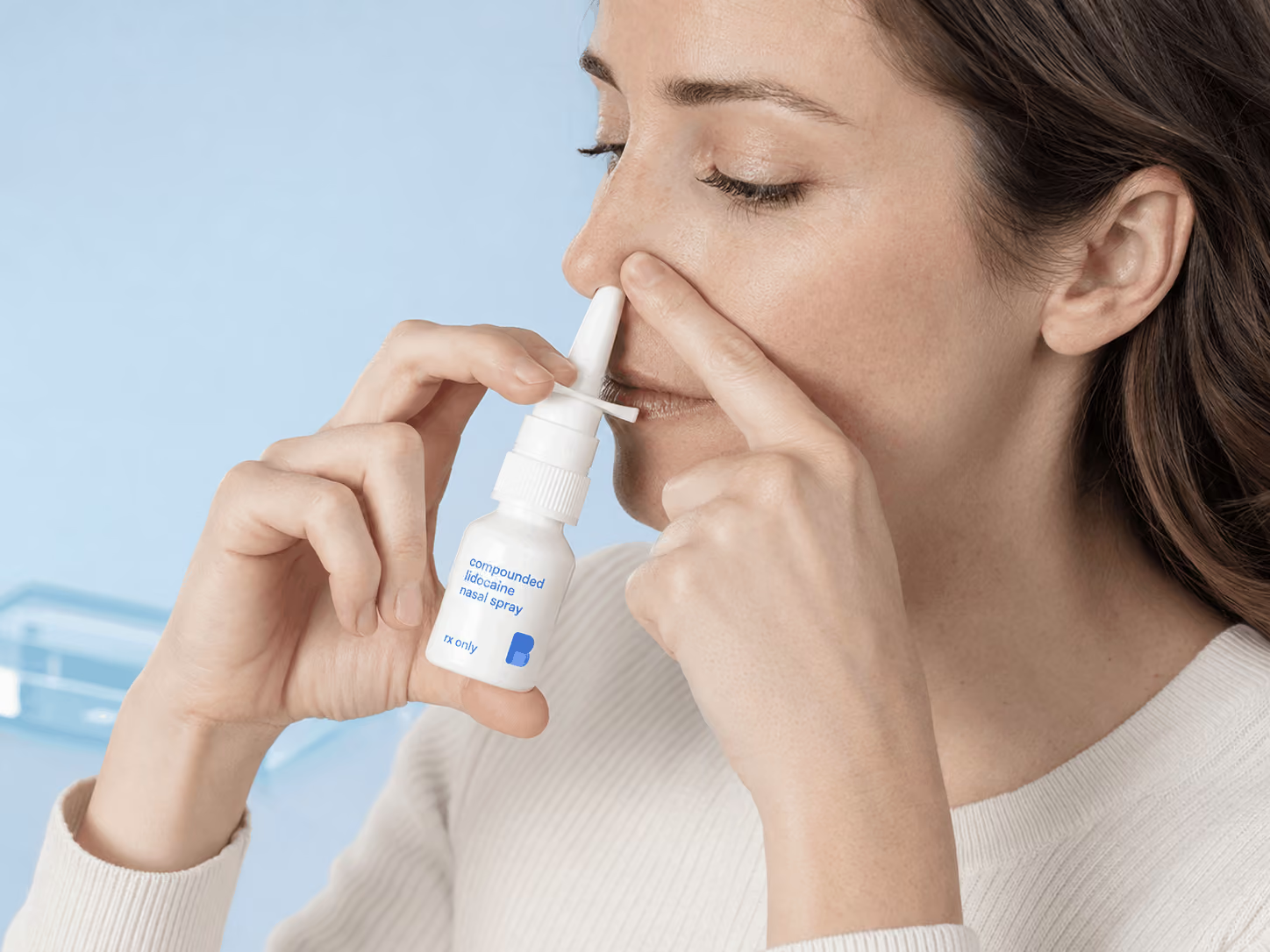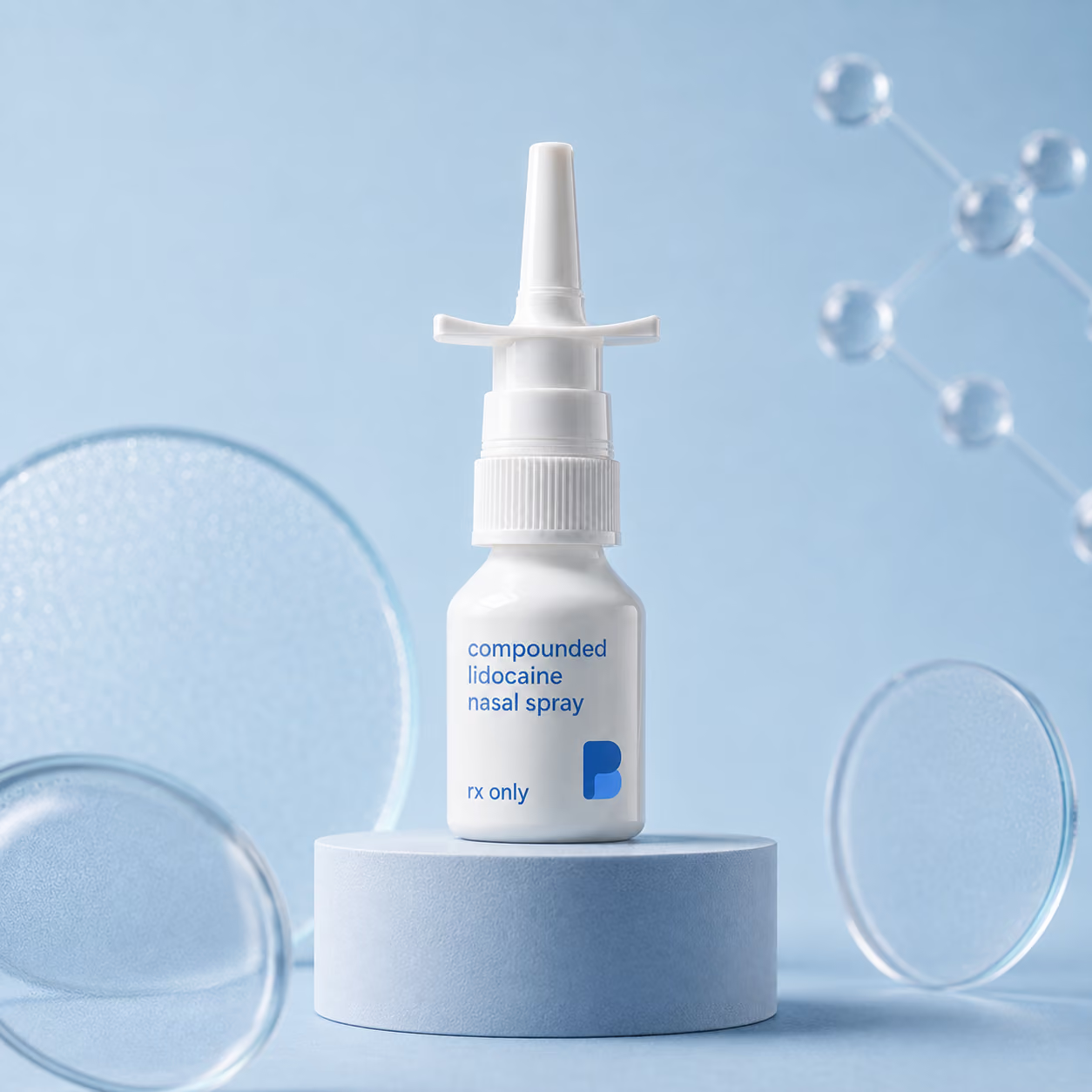






Lidocaine nasal spray is a compounded, prescription local anesthetic that you spray into your nose. Lidocaine is the same numbing medicine dentists inject and that pharmacies sell as patches and gels; here it is prepared as a spray so it can reach the lining at the back of the nasal cavity.
It is prescribed for two quite different reasons. One is straightforward numbing, making the inside of the nose insensitive before a procedure such as passing a scope or a tube. The other is as an abortive treatment for headache, particularly cluster headache and migraine, which is an off-label use with a modest and mixed evidence base. Bayview prepares the spray at the strength and volume your prescriber orders.
How does it work?
Lidocaine blocks sodium channels on sensory nerves. Nerves signal pain by letting sodium rush in; block the channel and the nerve cannot fire, so the area goes numb. On the nasal lining this happens within a minute or two.
The headache rationale goes a step further. Deep behind the nose, near the back wall of the nasal cavity, sits a cluster of nerves called the sphenopalatine ganglion, which is involved in the pain of cluster headache and migraine. Lidocaine sprayed toward that area is thought to diffuse across the thin mucous membrane and quiet that nerve cluster. That is why the technique matters. The spray has to reach the back of the nose, not just the tip, which is why prescribers so often ask you to tilt your head back or to the side.
What is it used for?
Cluster headache and migraine. Intranasal lidocaine has been studied as an abortive treatment, something you use when an attack starts, not something you take every day to prevent attacks.
Topical anesthesia of the nose. Numbing the nasal lining before a procedure such as nasal endoscopy or placing a nasogastric tube. This matches the FDA-approved use of lidocaine topical solution on nasal mucous membranes (FDA label).
Other uses some prescribers try. Persistent hiccups and certain kinds of face pain in the trigeminal nerve territory. These are less studied still.
Only a licensed prescriber can decide whether lidocaine nasal spray is right for you, and a valid prescription is required.
What does the evidence show?
Honest answer: it works for some people, it works fast when it works, it often does not last, and it is not a first-line headache treatment.
Migraine. A meta-analysis pooled six randomized controlled trials of intranasal lidocaine for acute migraine covering 613 patients. Lidocaine beat placebo for pain reduction at 5 minutes and at 15 minutes, and more patients reached a treatment success. But the same analysis found no significant difference in the relapse rate, headaches came back about as often as with control, and the benefit largely disappeared when an antiemetic was given as well. Local irritation was reported in up to 49% of patients, though no major adverse events occurred (PLOS ONE meta-analysis). In American Headache Society acute migraine grading, intranasal lidocaine has carried only a Level C recommendation since 2015, and reviewers describe it as best suited to an adjunctive role because of its short duration and equivocal results (Practical Neurology).
Cluster headache. The evidence here is thinner. Reviews of acute cluster headache treatment describe intranasal lidocaine as offering modest benefit at best and better suited to an adjunctive role; in one study of 30 men with cluster headache, 27% reported moderate relief with lidocaine. By contrast, high-flow oxygen, subcutaneous sumatriptan, and zolmitriptan nasal spray all carry Level A recommendations in the American Headache Society cluster headache guidelines (Practical Neurology).
What this means for you: if your prescriber has offered lidocaine nasal spray, it is reasonable to expect it may take the edge off an attack quickly, and equally reasonable to expect it may not hold. It is generally an addition to, not a replacement for, the treatments with stronger evidence. Talk to your prescriber about where it fits in your plan.
How do the strengths and formulations compare?
Bayview compounds lidocaine nasal spray in several concentrations, plain or isotonic. Isotonic means the solution's salt balance is adjusted to match body fluids, which meaningfully reduces the stinging and burning that plain lidocaine solutions cause in the nose. The table is for education only; your prescriber selects the strength.
| Strength | Notes |
|---|---|
| 2% | The lowest strength commonly dispensed; less drug per spray |
| 4% | The most frequently prescribed strength, plain or isotonic |
| 4.42% isotonic | A formulation adjusted so the solution is isotonic at that lidocaine concentration |
| 5% and 8% | Higher strengths; more drug per spray, so the maximum number of sprays matters more |
| Isotonic vs. plain | Isotonic versions sting and burn less; plain versions are simpler to prepare |
Strengths are described for education only and are not a statement that any concentration is better for a particular person. Your prescriber selects the strength, the number of sprays, and the maximum daily amount.
How is it used?
Use it exactly as your prescriber directs. Descriptively, prescriptions for headache typically call for a specified number of sprays into one nostril or both, often the nostril on the same side as the pain, with your head tilted back or turned to the side so the solution runs toward the back of the nasal cavity rather than dripping out the front. Some prescribers ask you to sniff gently rather than sharply, so the spray stays in the nose instead of going down your throat. The dose may be repeated after a set interval, up to a maximum number of sprays per day.
That maximum is not a formality. It is the main thing standing between a local effect and a body-wide one, so do not exceed the number of sprays on your label, and do not use it more often than directed.
Expect your nose, throat, and part of your mouth to feel numb afterward. Do not eat or drink until normal feeling returns, because numbness makes it easy to choke or to burn yourself on something hot without noticing. A Bayview pharmacist is available if you have questions about your prescription.
Side effects & safety
The common effects are local and short-lived: numbness of the nose, throat, and mouth; a bitter taste; stinging or burning as the spray goes in; sneezing; a runny nose; and nosebleeds. Isotonic formulations were developed specifically to reduce the stinging. Local irritation was reported by up to about half of patients in the migraine trials.
Tell your prescriber if you develop rash, swelling of the face or throat, or trouble breathing. These can signal a serious allergic reaction and need emergency care.
Who should not use it?
Lidocaine nasal spray is not appropriate for everyone. Do not use it if you are allergic to lidocaine or to other amide-type local anesthetics. Extra caution and prescriber judgment are needed if you have liver disease, since the liver clears lidocaine and impairment lets it build up; if you have heart block, a significant arrhythmia, or severe heart failure; or if you take class I antiarrhythmic medicines such as mexiletine, flecainide, or tocainide, because their effects on the heart can add together. Caution also applies in older adults, in seriously ill patients, and where the nasal lining is broken or inflamed, since damaged mucosa absorbs more drug.
Keep it away from children, for whom a small amount can represent a large dose. Tell your prescriber about your full health history, allergies, pregnancy or breastfeeding status, and every medicine you take, so they can decide whether this is appropriate.
How should it be stored?
Store it exactly as directed on your label, usually at controlled room temperature away from heat, light, and moisture, unless your label says to refrigerate. Keep the bottle tightly closed and upright, wipe and recap the spray tip after use, and do not share it with anyone. Keep it out of the reach of children. Compounded preparations carry a beyond-use date assigned under USP standards, which is printed on your label; do not use it after that date, even if solution remains, and dispose of unused medication as directed.
Why is this compounded?
No manufacturer makes a lidocaine nasal spray in the United States. The FDA-approved lidocaine topical solution 4% is indicated for topical anesthesia of the mucous membranes of the oral and nasal cavities, but it comes as a bottle of solution, not as a metered spray, and no lidocaine product of any kind is FDA-approved for headache. Compounding lets a licensed pharmacy put lidocaine into a nasal spray bottle at the exact concentration a prescriber wants, and lets us make isotonic versions that sting far less than plain solution. As a 503A compounding pharmacy, Bayview prepares each order in small batches using quality ingredients. Compounded preparations are not FDA-approved. Related ear, nose, and throat preparations include Ketamine Nasal Spray. The full list is in our compounded medications catalog.
Clinical details for prescribers
Regulatory status. Lidocaine is not a controlled substance. No FDA-approved lidocaine nasal spray exists in the US; lidocaine HCl topical solution 4% is approved for topical anesthesia of accessible mucous membranes of the oral and nasal cavities and proximal digestive tract, but no lidocaine product is approved for headache. Intranasal use for cluster headache or migraine is off-label, and the spray presentation is compounded. Compounded preparations are not FDA-approved.
Formulations. Nasal spray 2%, 4%, 4.42%, 5%, and 8%; plain or isotonic (isotonic markedly reduces mucosal stinging). Volumes 5, 6, 10, 12, 15, and 20 mL. BUDs assigned per USP standards and printed on the label.
Evidence & clinical points:
- Migraine: meta-analysis of 6 RCTs (n=613), superior to placebo for pain reduction at 5 and 15 min (RR for success 3.55), but no significant difference in relapse rate and benefit attenuated when antiemetics were co-administered; local irritation up to 49.4%. AHS acute migraine grading: Level C since 2015; positioned as adjunctive.
- Cluster headache: modest benefit at best; ~27% moderate relief in one series of 30 men. AHS cluster guidelines give Level A to high-flow oxygen, SC sumatriptan, and zolmitriptan nasal spray.
- Mechanism/technique: presumed sphenopalatine ganglion blockade; delivery to the posterior nasal cavity (head extended or lateral recumbent) is central to any effect.
- Dosing ceiling: total lidocaine should stay below 300 mg and should not exceed 4.5 mg/kg in healthy adults per the FDA topical solution label. Absorption rises with inflamed or abraded mucosa. Specify a maximum daily number of sprays on every prescription.
- Cautions: hepatic impairment, heart block or significant arrhythmia, severe heart failure, concurrent class I antiarrhythmics; amide-anesthetic hypersensitivity is a contraindication. Counsel on impaired swallowing (no food for 60 minutes per FDA label) and on LAST symptoms.
Ordering: send a prescription to Bayview Pharmacy, 3844 Post Rd, Warwick, RI 02886 (NCPDP 4106882, fax 401-284-4506). Background: Intranasal lidocaine for acute migraine meta-analysis; lidocaine HCl topical solution 4% FDA label. Account setup, licensing, and ordering are covered on our for providers page.
This is a prescription compounded medication and is not FDA-approved. This information is educational and is not medical advice. Bayview Pharmacy does not provide consultations or determine whether this preparation is appropriate, your prescriber does that and sets the dose.