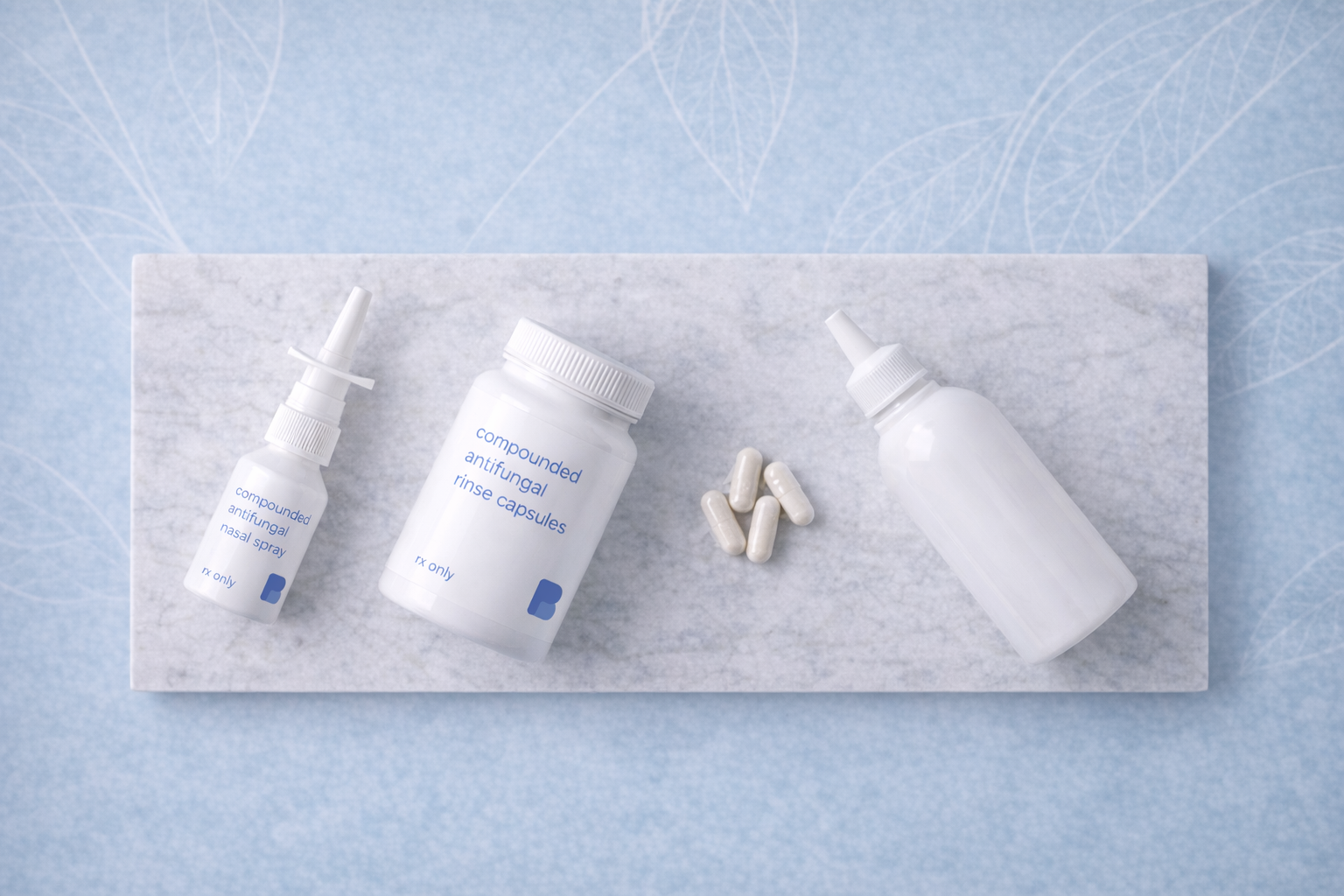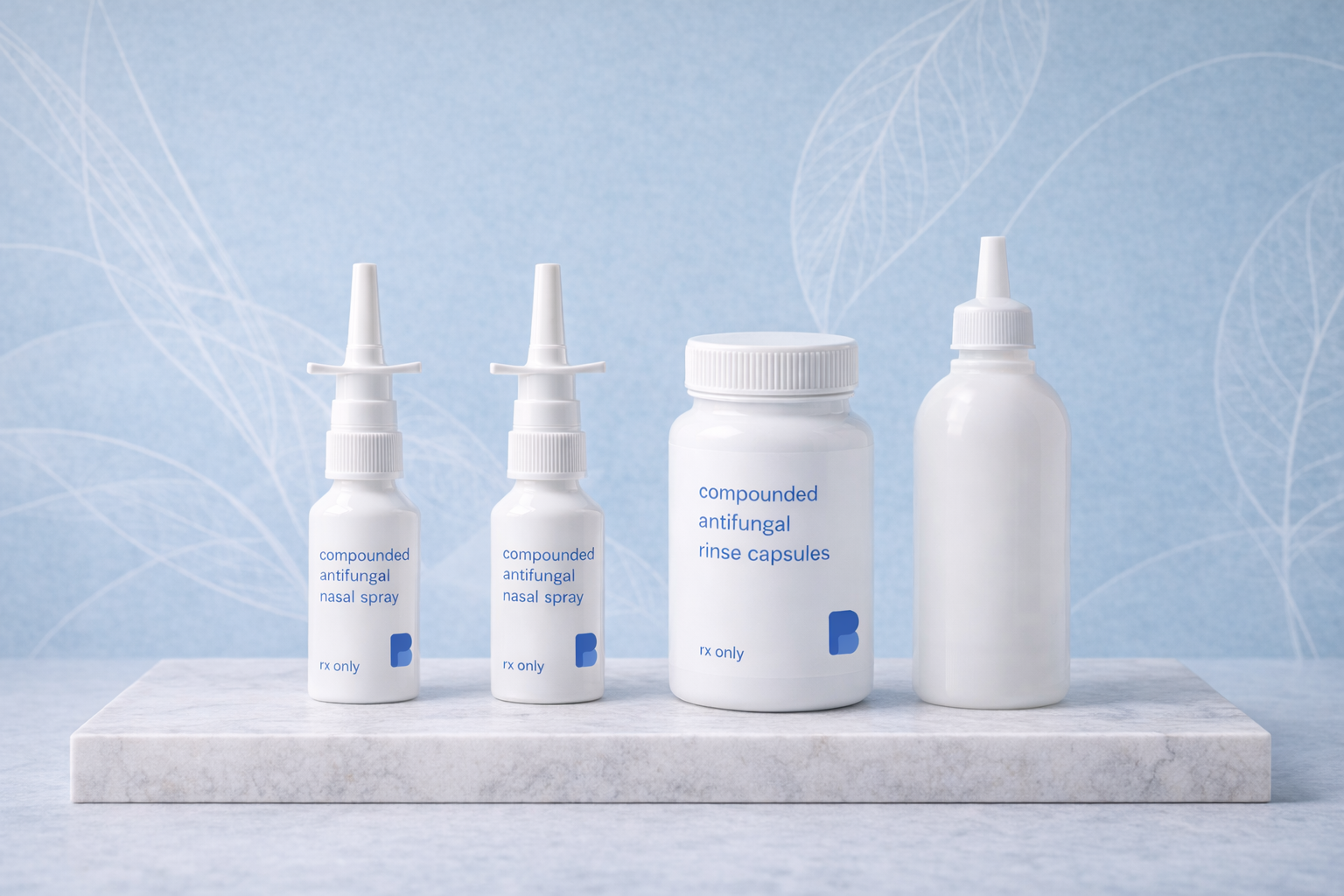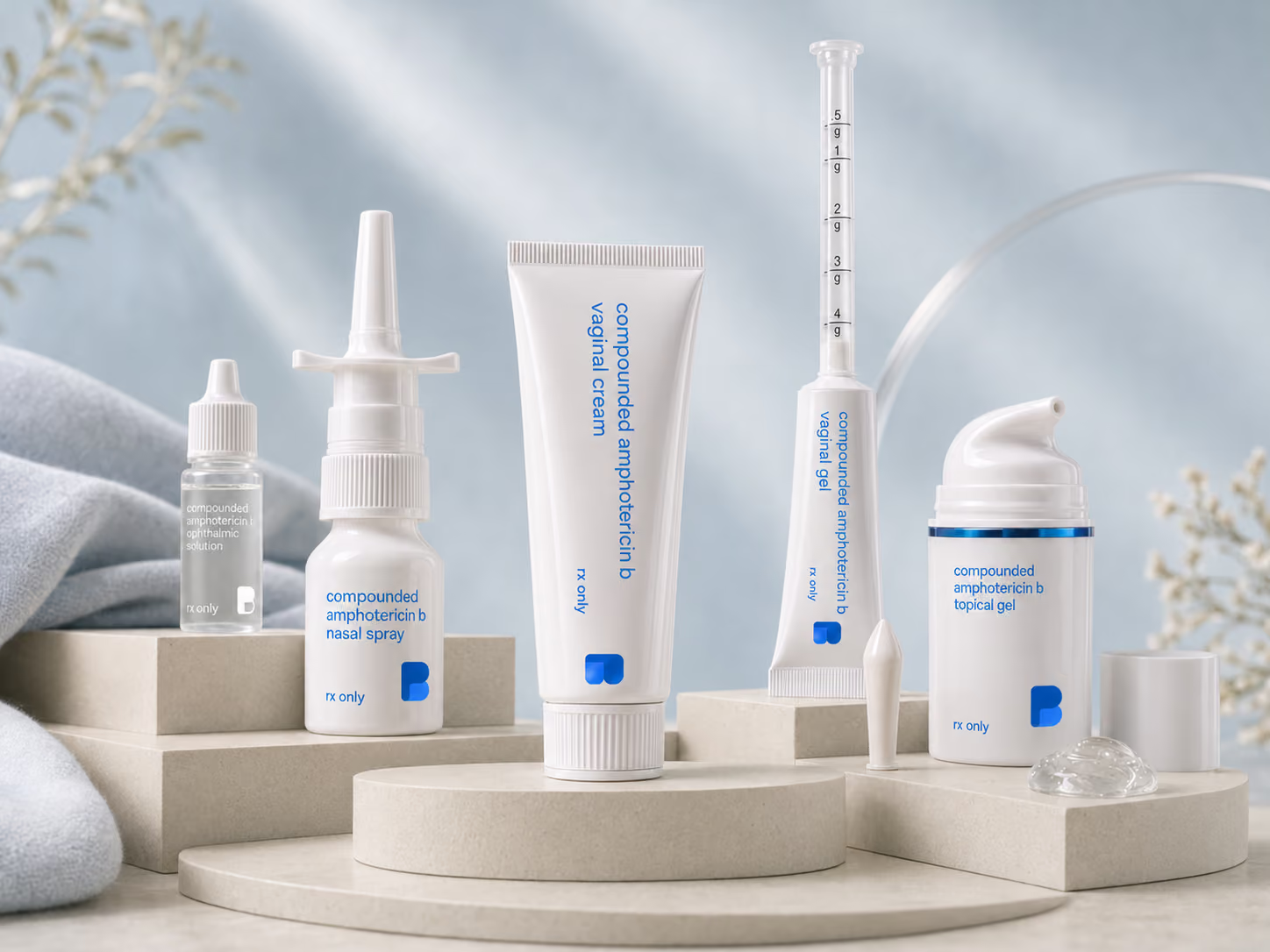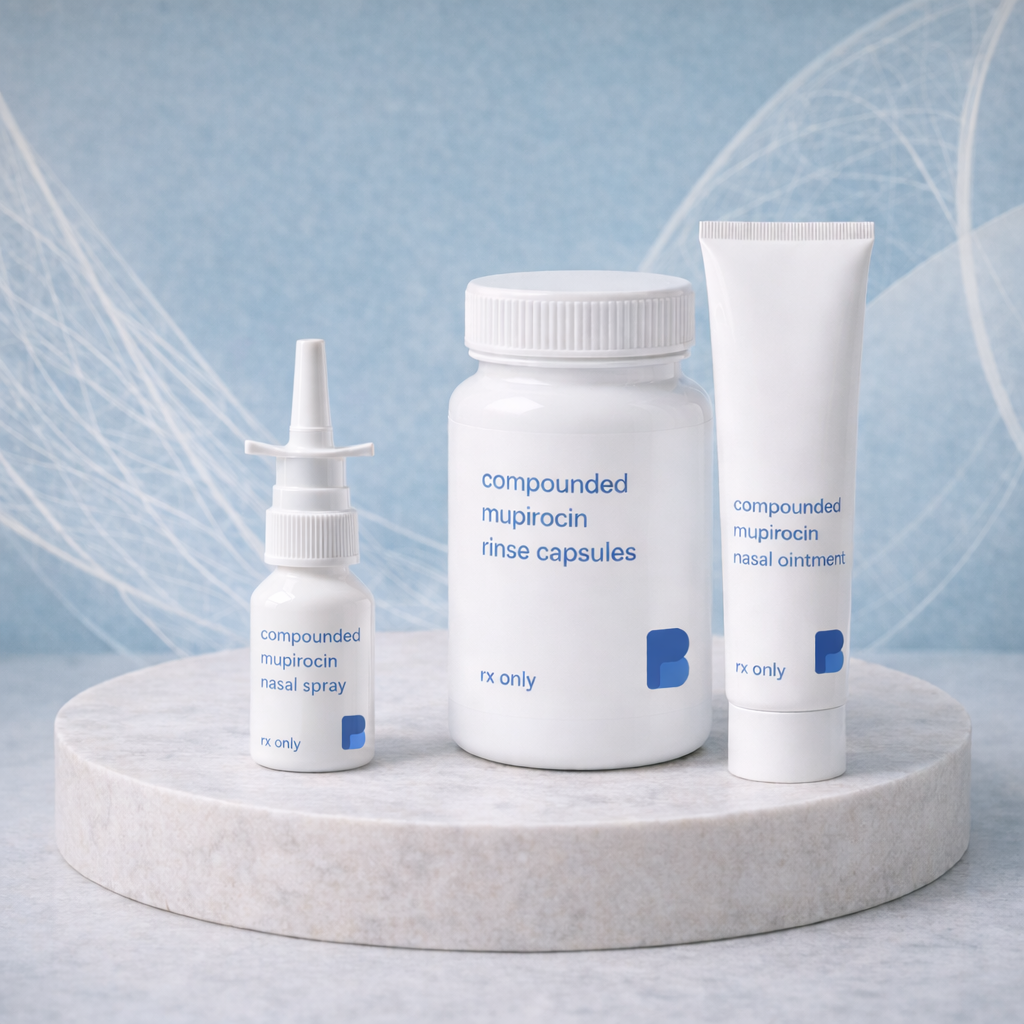




Antifungal nasal sprays and sinus rinses are compounded, prescription preparations that put an antifungal medicine directly on the lining of the nose. Bayview compounds itraconazole, ketoconazole, fluconazole, and miconazole nasal sprays, a combination spray with itraconazole, mupirocin, and gentamicin, and sinus rinse capsules whose powder is mixed into a saline rinse, each to your provider's prescription.
There is no FDA-approved antifungal nasal spray or sinus rinse. When Bayview searched FDA's drug databases in October 2026, every listed product containing itraconazole, ketoconazole, fluconazole, miconazole, clotrimazole, amphotericin B, or nystatin was taken by mouth, given by injection, or made for the skin, mouth, vagina, or ear (Drugs@FDA; NDC Directory).
What is fungal sinusitis?
Fungal sinusitis is a group of conditions, not one disease, and each is treated differently (StatPearls):
- Allergic fungal sinusitis is an allergic reaction to fungus in the sinuses that leads to thick, sticky mucus and nasal polyps. It is usually treated with sinus surgery, then steroid medicines and saline rinses (StatPearls; EPOS 2020).
- A fungus ball is a clump of fungus, usually inside one sinus. Surgery to remove it is usually the only treatment needed (IDSA).
- Invasive fungal sinusitis is fungus growing into the tissue, most often in people with a weakened immune system. The fast-moving form is a medical emergency treated with surgery and antifungal medicine given by IV or mouth (StatPearls; IDSA).
Antifungal sprays and rinses are also prescribed for long-lasting sinus inflammation (chronic rhinosinusitis) when a provider suspects fungus plays a part. The next section covers what testing has shown.
Do antifungal nasal sprays work?
The research does not show that they help chronic rhinosinusitis. A Cochrane review of seven trials in 437 people, six of them placebo-controlled, with amphotericin B in six and fluconazole in one, found no difference in quality of life, and in one trial the people using placebo had less severe symptoms. The review rated the evidence low to very low certainty (Cochrane). U.S., European, and international guidelines recommend against antifungal sprays and rinses for chronic rhinosinusitis (AAO-HNSF guideline; EPOS 2020; ICAR-RS 2021).
For allergic fungal sinusitis the evidence is thinner. The Cochrane review found no trials in it. One small study after sinus surgery reported fewer relapses with fluconazole nasal spray, but it did not report the spray's strength or its statistics, it was not included in the Cochrane review, and no later trial has confirmed it. Guidelines still center care on surgery and steroids (Cochrane; Khalil 2011; IDSA). Bayview is not aware of any published study of most strengths compounded today, including ketoconazole 2% and itraconazole 0.2% sprays.
Bayview prepares these sprays and rinses when a prescriber orders them, but we do not claim they work, and they should not replace the care your ear, nose, and throat specialist recommends.
Which antifungals are used in the nose?
Several antifungal medicines are compounded for the nose. None of them is FDA-approved in a nasal form (Drugs@FDA). The table below is for education only.
| Medicine | Compounded for the nose | FDA-approved forms (none for the nose) |
|---|---|---|
| Itraconazole | Nasal spray, most often 0.2%; 50 mg in combination rinse capsules | Capsules and oral solution |
| Ketoconazole | Nasal spray, 1% or 2% | Tablets; cream, shampoo, foam, and gel for the skin |
| Fluconazole | Nasal spray, 0.25% or 0.5%; 15 mg in combination rinse capsules | Tablets, oral suspension, and IV |
| Miconazole | Nasal spray or solution, 1% or 2% | Skin and vaginal products; a buccal tablet |
| Clotrimazole | 10 mg or 30 mg in combination rinse capsules | Skin, vaginal, and ear products; troches |
| Amphotericin B | Nasal spray (see amphotericin B) | IV injection |
| Nystatin | 2% nasal spray (see nystatin) | Oral suspension and tablets; skin products |
Strengths are listed for education only and are not a statement that any medicine or strength is better or more effective. Your provider sets the medicine, strength, and length of treatment.
Nasal spray or sinus rinse?
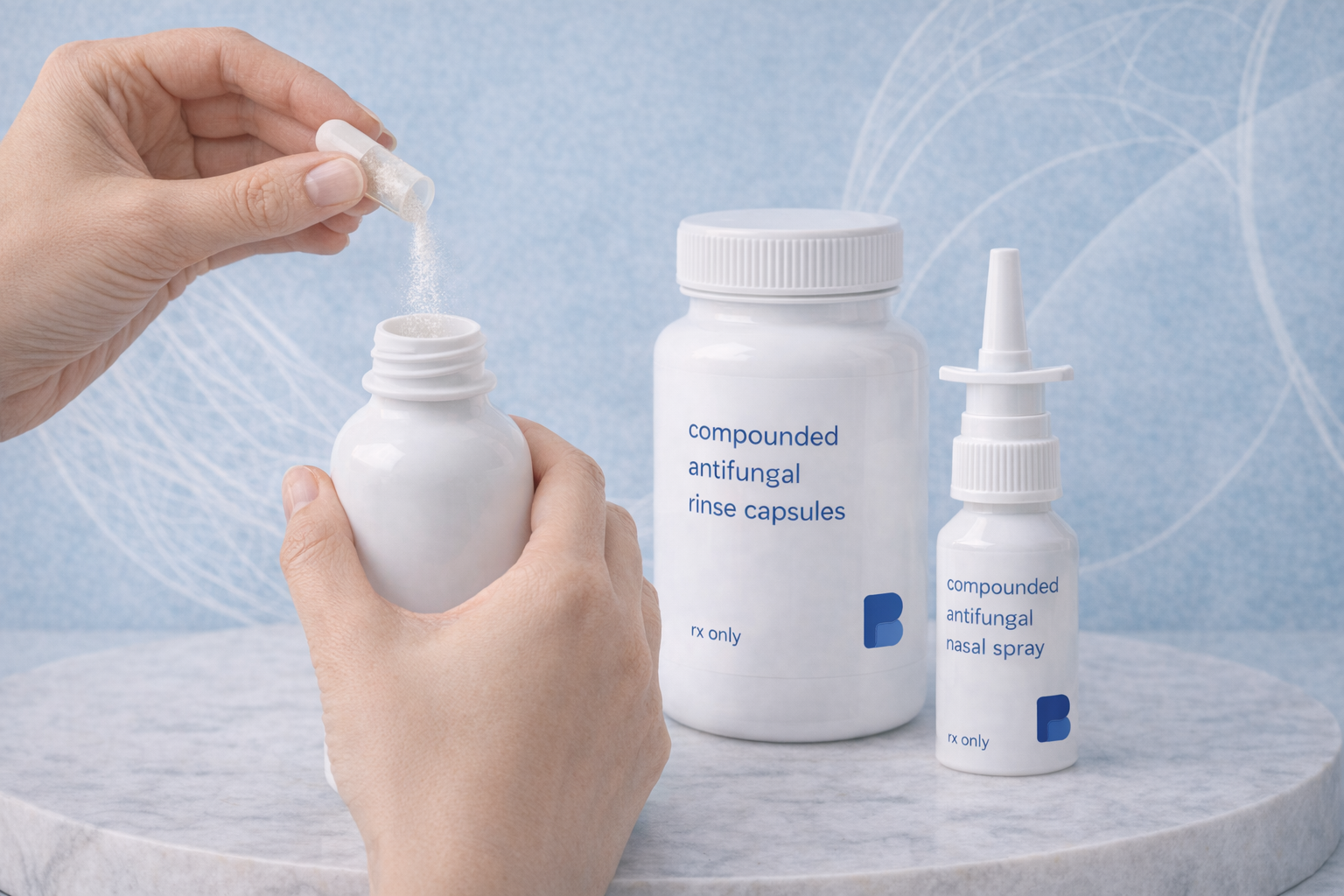
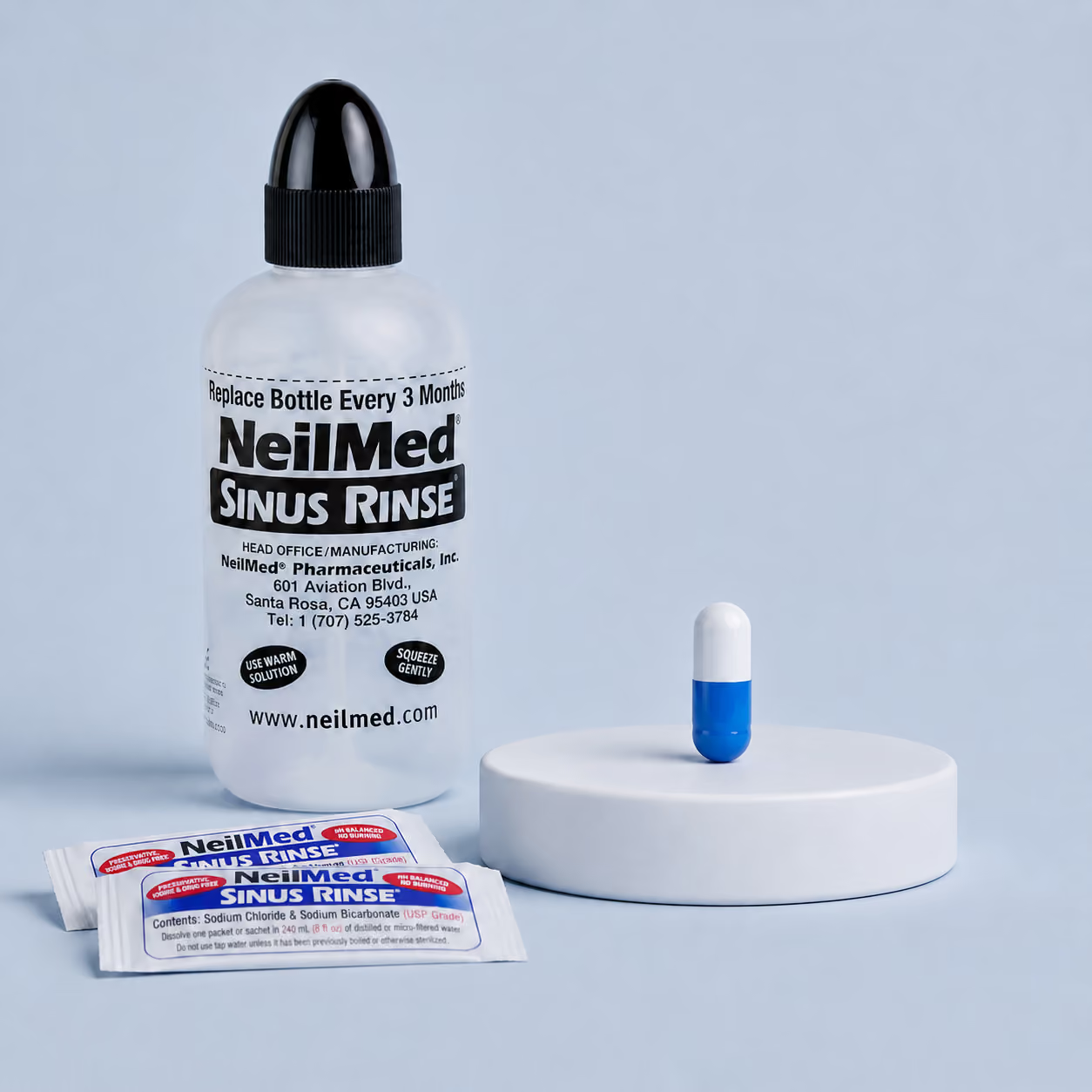
A nasal spray delivers a small, measured mist into each nostril from a pump bottle. A sinus rinse uses a squeeze bottle, such as a NeilMed Sinus Rinse bottle, to wash a larger volume of saline, usually 240 mL (8 ounces), through the nasal passages. Bayview's rinse capsules are not swallowed: you open one and empty the powder into the saline.
Rinse capsules are usually combinations that pair the antifungal with a steroid such as fluticasone or betamethasone, an antibiotic such as mupirocin, or both. The most often prepared spray is also a combination: gentamicin, itraconazole, mupirocin, and edetate disodium. Related single-ingredient preparations include budesonide sinus rinse capsules and mupirocin nasal preparations.
How is it used?
Use it exactly as your label directs. For a spray, blow your nose gently first, then spray the number of sprays your label says into each nostril. For a rinse, open one capsule, empty the powder into your saline rinse bottle (for example, NeilMed Sinus Rinse), mix, and rinse as directed.
FDA advises using only distilled or sterile water, tap water that has been boiled for 3 to 5 minutes and cooled until lukewarm, or water passed through a filter made to trap germs. Untreated tap water can carry organisms that are harmless to swallow but can survive in the nose and cause serious, and in rare cases fatal, infections. Wash the bottle and let it dry after each use (FDA). Ask your provider how to time a rinse with any steroid or saline sprays you already use.
Side effects & safety
In the Cochrane review's trials, most of them with amphotericin B, topical antifungals may have caused more irritation inside the nose than placebo (low certainty). Nosebleeds were about as common with either (low certainty), and whether headaches were more common is uncertain (very low certainty) (Cochrane). In one amphotericin B spray trial, nasal burning was more common with the medicine than with a saline spray (Weschta 2004). Side effect data for compounded azole sprays and rinses are limited, and combination products can also cause side effects from their antibiotic or steroid.
The pill forms of two of these medicines carry boxed warnings: ketoconazole tablets for serious liver injury and dangerous heart rhythm problems with certain other drugs, and itraconazole capsules for heart failure and serious drug interactions (ketoconazole tablet label; Sporanox label). Those warnings are for medicine swallowed as a pill, and it is not known whether these risks apply to nasal use. Bayview found no published measurements of how much of these azole antifungals reaches the bloodstream after a nasal spray or rinse, so tell your provider and pharmacist about every medicine you take.
Who should not use it?
Do not use an antifungal spray or rinse if you are allergic to its antifungal or to any other ingredient, including the antibiotic or steroid in a combination product. Tell your provider if you are pregnant or breastfeeding. The labels for the pill forms carry pregnancy warnings: high daily doses of fluconazole taken for most of the first trimester have been linked to birth defects, and itraconazole capsules should not be used for nail fungus during pregnancy (Diflucan label; Sporanox label). Those warnings come from swallowed doses; it is not known whether these risks apply to nasal use, and Bayview found no pregnancy data for nasal use. Tell your provider about all of your conditions and medicines, including anything that weakens your immune system.
How should it be stored?
Store as directed on your label. Some compounded nasal sprays are kept in the refrigerator. Keep rinse capsules in their closed container, dry and at room temperature. Keep all forms out of reach of children, and do not use them after the beyond-use date.
Why is this compounded?
No antifungal is FDA-approved as a nasal spray or sinus rinse; the approved forms of these medicines are taken by mouth, given by injection, or made for the skin, mouth, vagina, or ear (Drugs@FDA). Compounding lets a licensed pharmacy prepare a nasal spray or measured rinse capsules to an individual prescription. As a 503A compounding pharmacy, Bayview prepares each order pursuant to an individual patient prescription under USP <795> standards. Compounded preparations are not FDA-approved. Related preparations include Amphotericin B, Nystatin Suppositories & Nasal Spray, Budesonide Sinus Rinse Capsules, and Mupirocin Nasal Ointment, Spray & Sinus Rinse. The full list is in our compounded medications catalog.
Clinical details for prescribers
Regulatory status. Itraconazole, ketoconazole, fluconazole, miconazole, and clotrimazole are not controlled substances. Drugs@FDA and NDC Directory searches on October 23, 2026 found no approved or listed product of itraconazole, ketoconazole, fluconazole, miconazole, clotrimazole, amphotericin B, or nystatin with a nasal route; their routes were oral, intravenous, topical, vaginal, buccal, and otic (Drugs@FDA; NDC Directory). Bayview's sprays and irrigation capsules are 503A compounded preparations; they are not FDA-approved, and no use of them is FDA-approved.
Chronic rhinosinusitis. Cochrane (search to November 2017): 7 RCTs, 437 participants, topical antifungal vs placebo or no treatment (6 amphotericin B trials, 383 participants; 1 fluconazole trial, 54). Disease-specific HRQL: 4 trials, not pooled, no significant difference (low certainty). Symptom severity: 2 trials, one no difference and one favoring placebo (very low). Local irritation RR 2.29 (95% CI 0.61 to 8.62); epistaxis RR 0.97 (0.14 to 6.63); headache RR 1.26 (0.60 to 2.63). Patients within six weeks of sinus surgery were excluded (Cochrane). AAO-HNSF Adult Sinusitis Update, Key Action Statement 12: clinicians should not prescribe topical or systemic antifungal therapy for CRS (recommendation against therapy) (AAO-HNSF guideline). ICAR-RS 2021: strong recommendation against topical antifungals in CRS with or without polyps (ICAR-RS 2021). EPOS 2020 advises against antimycotics in CRS (EPOS 2020).
Trials. Amphotericin B irrigation 100 mcg/mL, 25 mL per nostril twice daily for 3 months (116 randomized): no difference on any outcome (Ebbens 2006). Amphotericin B 250 mcg/mL, 20 mL per nostril twice daily for 6 months (30 randomized, 24 completed): CT mucosal thickening (P = .030) and endoscopy scores (P = .038) favored amphotericin B; no between-group difference in SNOT-20 (P = .72, full text) (Ponikau 2005). Amphotericin B 3 mg/mL spray, 200 microliters per nostril four times daily for 8 weeks, vs saline spray: symptoms worse with amphotericin B (P < .005), with more nasal burning (Weschta 2004). Fluconazole 0.2% drops for 8 weeks (54 patients): no difference in SNOT-20, endoscopy, or CT (Hashemian 2016).
Allergic fungal rhinosinusitis. No AFRS trials met Cochrane criteria (Cochrane). IDSA: polypectomy and sinus washout are optimal, with topical nasal steroids; oral mold-active triazoles for refractory or relapsing disease (weak recommendation, low-quality evidence); no recommendation addresses topical antifungals (IDSA). A randomized study of post-FESS AFRS patients (50 enrolled, 41 followed, five arms, control n = 10) reported recurrence of 10.0% with fluconazole nasal spray vs 75.0% in controls over up to 9 months; the abstract does not report concentrations or statistical testing, and Cochrane excluded it (Khalil 2011). An uncontrolled pilot of fluconazole spray in 16 AFRS patients also taking oral steroids and itraconazole reported 12 stable or improved at 3 months (Jen 2004).
Invasive disease. Acute invasive fungal rhinosinusitis needs urgent surgical debridement, systemic antifungal therapy, and correction of immunosuppression; topical antifungals are not recommended (StatPearls; IDSA).
Systemic exposure. Bayview found no published serum concentrations after intranasal or irrigated azoles. Oral ketoconazole carries boxed warnings for hepatotoxicity and QT prolongation with contraindicated drugs; oral itraconazole for negative inotropy and CYP3A4 interactions (ketoconazole tablet label; Sporanox label). Whether these apply to intranasal use is unknown; review interacting medications.
Preparations. Itraconazole 0.2% nasal spray (0.1% suspension and 1% to order); ketoconazole 1% or 2%; fluconazole 0.25% or 0.5%; miconazole 1% or 2%; gentamicin 0.25% / itraconazole 0.2% / mupirocin 0.2% / edetate disodium 0.1% spray; irrigation capsules with itraconazole 50 mg, fluconazole 15 mg, or clotrimazole 10 to 30 mg in combination with a corticosteroid and/or antibiotic, each dissolved in 240 mL saline.
Counseling / clinical points:
- Irrigation water: distilled, sterile, boiled 3 to 5 minutes and cooled, or suitably filtered (FDA)
- Refer urgently for signs of invasive disease: facial numbness or swelling, orbital signs, black or necrotic nasal tissue, or neurologic change (StatPearls)
- Combination products: screen for allergy and cautions to every component, including aminoglycosides, fluoroquinolones, tetracyclines, and corticosteroids
- Pregnancy: high-dose oral fluconazole labeling and itraconazole labeling apply to systemic use; no intranasal data (Diflucan label; Sporanox label)
Account setup, licensing, and ordering are covered on our for providers page.
Antifungal nasal sprays and sinus rinse capsules are compounded medications and are not FDA-approved. This information is educational and is not medical advice. Your provider determines whether one is appropriate and sets the dose and length of treatment.