In Stock
Oral Lichen Planus Treatment & Mouth Rinses | Bayview Pharmacy

Oral Lichen Planus Treatments

Smiling man in blue pharmacist scrubs with arms crossed and pen behind his ear.
Medically reviewed by Ryan Dyer, RPh
Last updated on
October 22, 2026
Starting at
$92
for
30 g
Checkmark icon followed by text 'HSA/FSA Eligible'.
Fill my prescription
Requires a prescription from your own provider. Bayview is a pharmacy and does not prescribe.
Prescribers: how to e-prescribe this →
Licensed to fill prescriptions for patients in RI, MA, CT, NJ, NH, FL, ME & PA
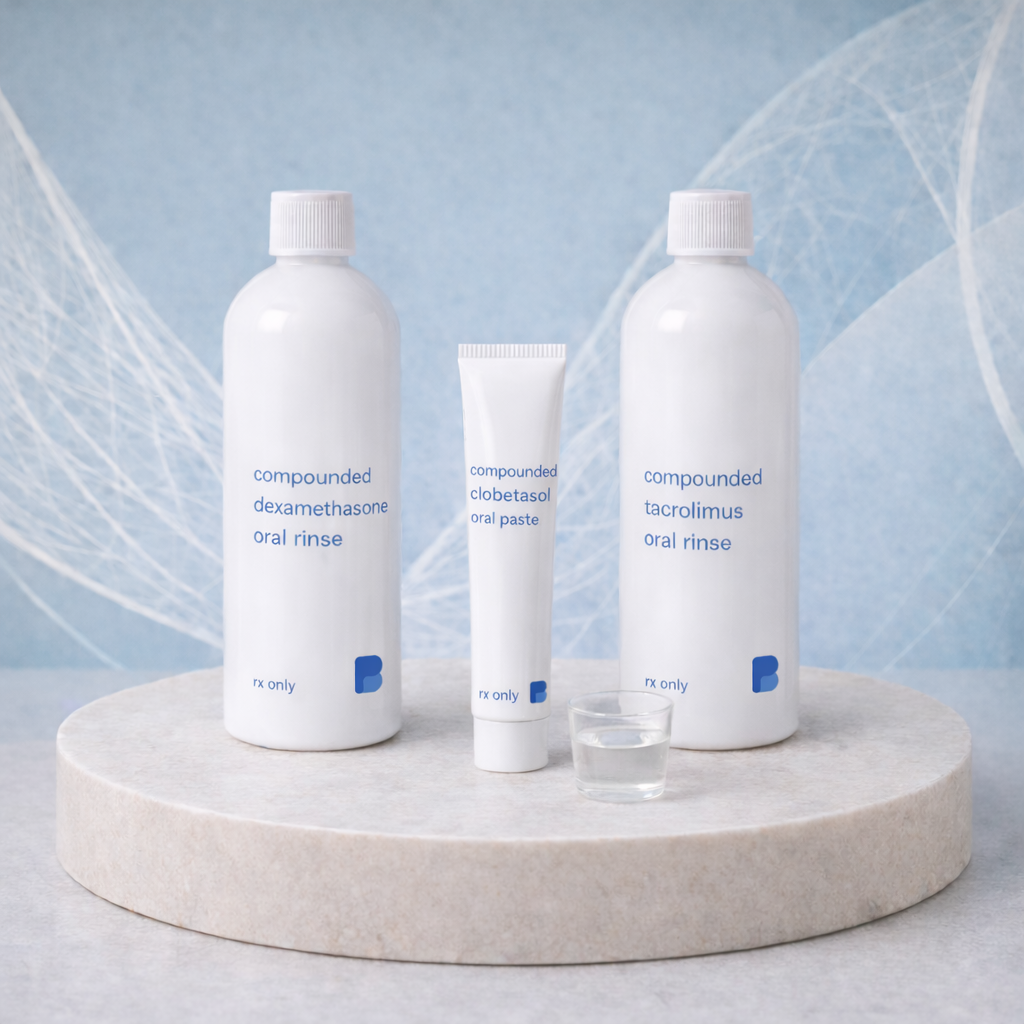
  • Rinse or paste. A rinse reaches widespread patches; a paste is applied to one spot.
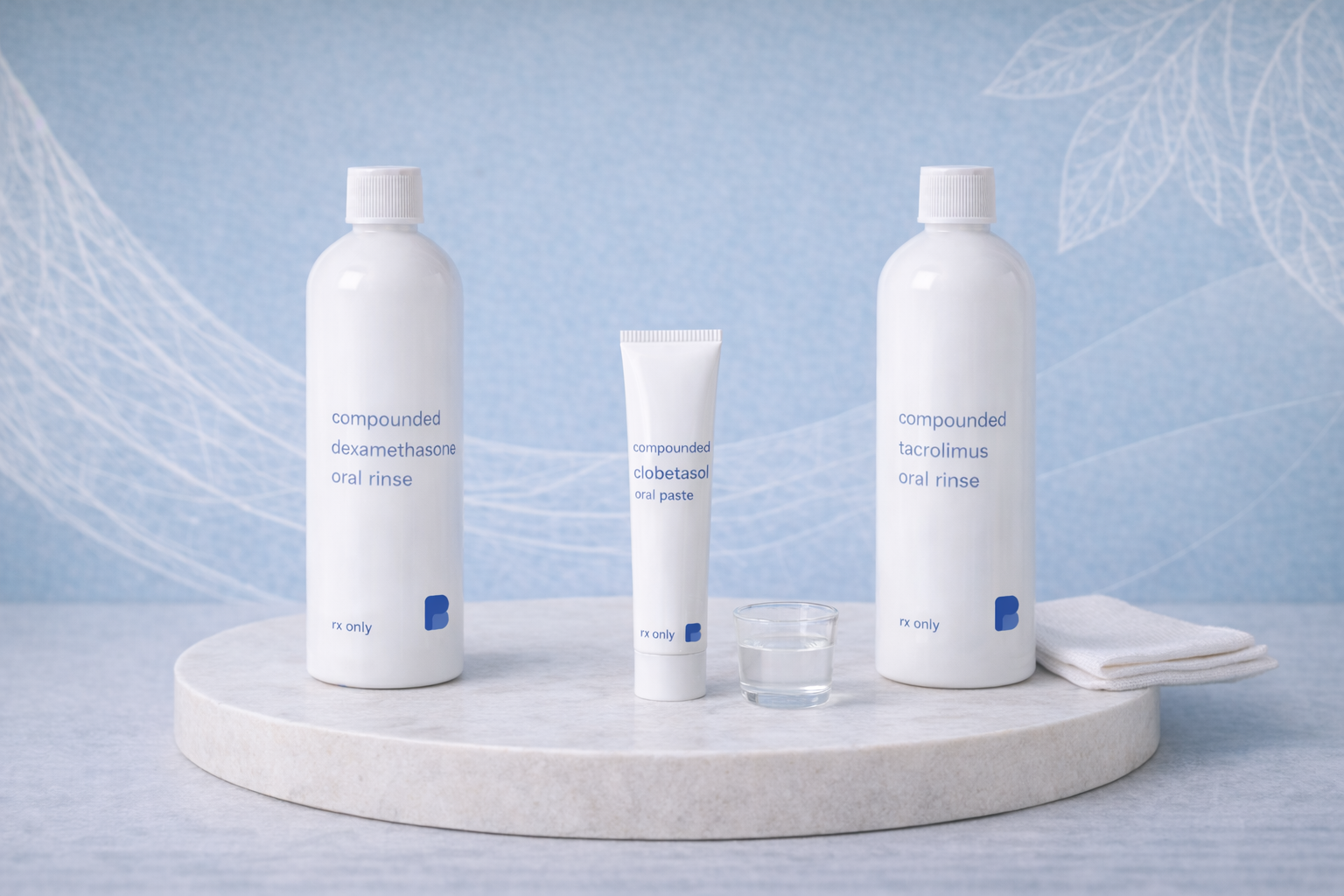
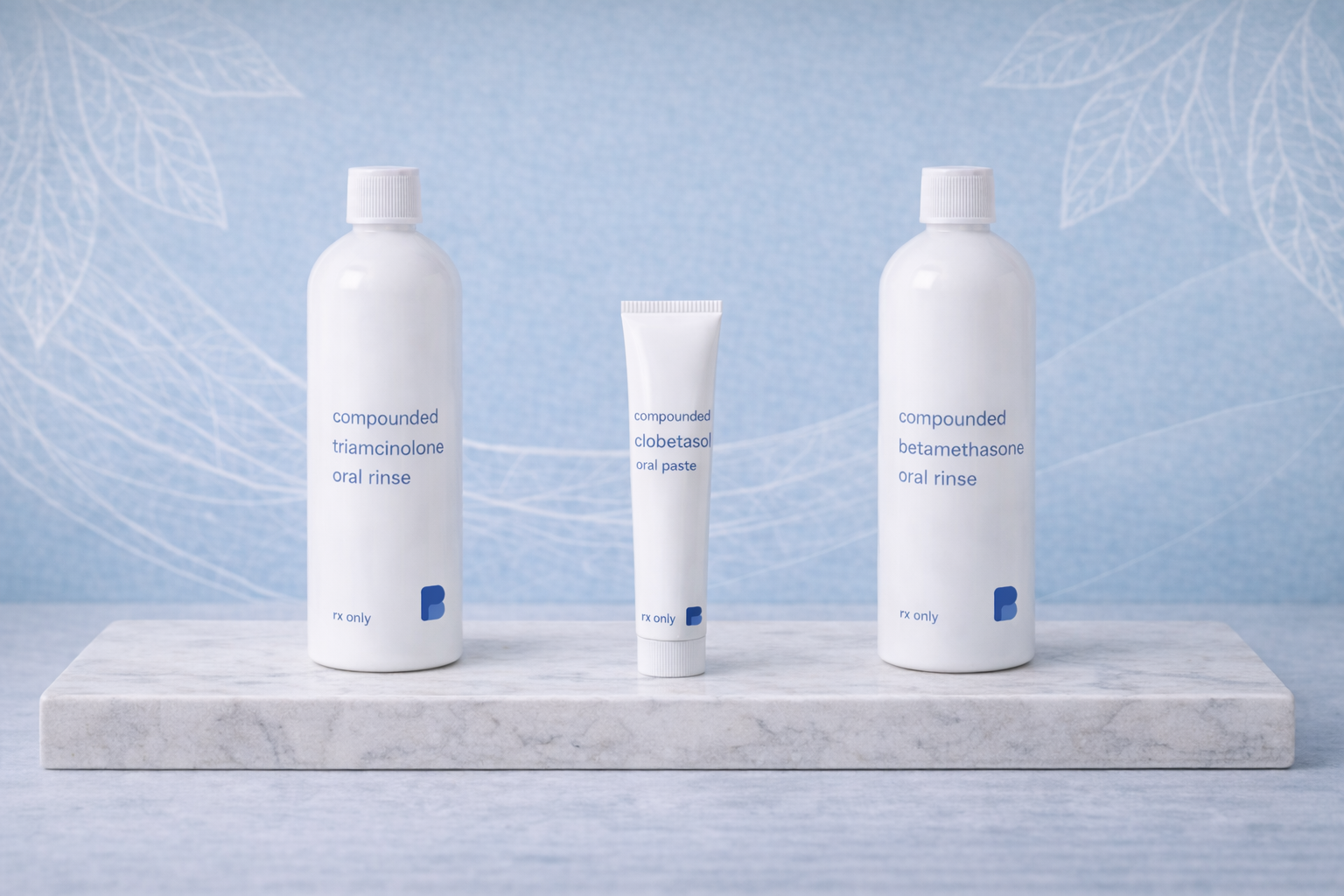
  • Five steroids. Clobetasol, fluocinonide, triamcinolone, betamethasone, dexamethasone.
  • A non-steroid rinse. Tacrolimus, when your prescriber chooses it.
  • Prescriber-directed. Your prescriber sets the medicine, strength, and schedule.

Oral lichen planus is a long-term inflammatory condition of the lining of the mouth. It usually shows up as white, lacy patches on the cheeks or tongue, and some people also get red, sore areas that sting when they eat. Treatment usually starts with a steroid used inside the mouth, as a rinse or an adhesive paste.

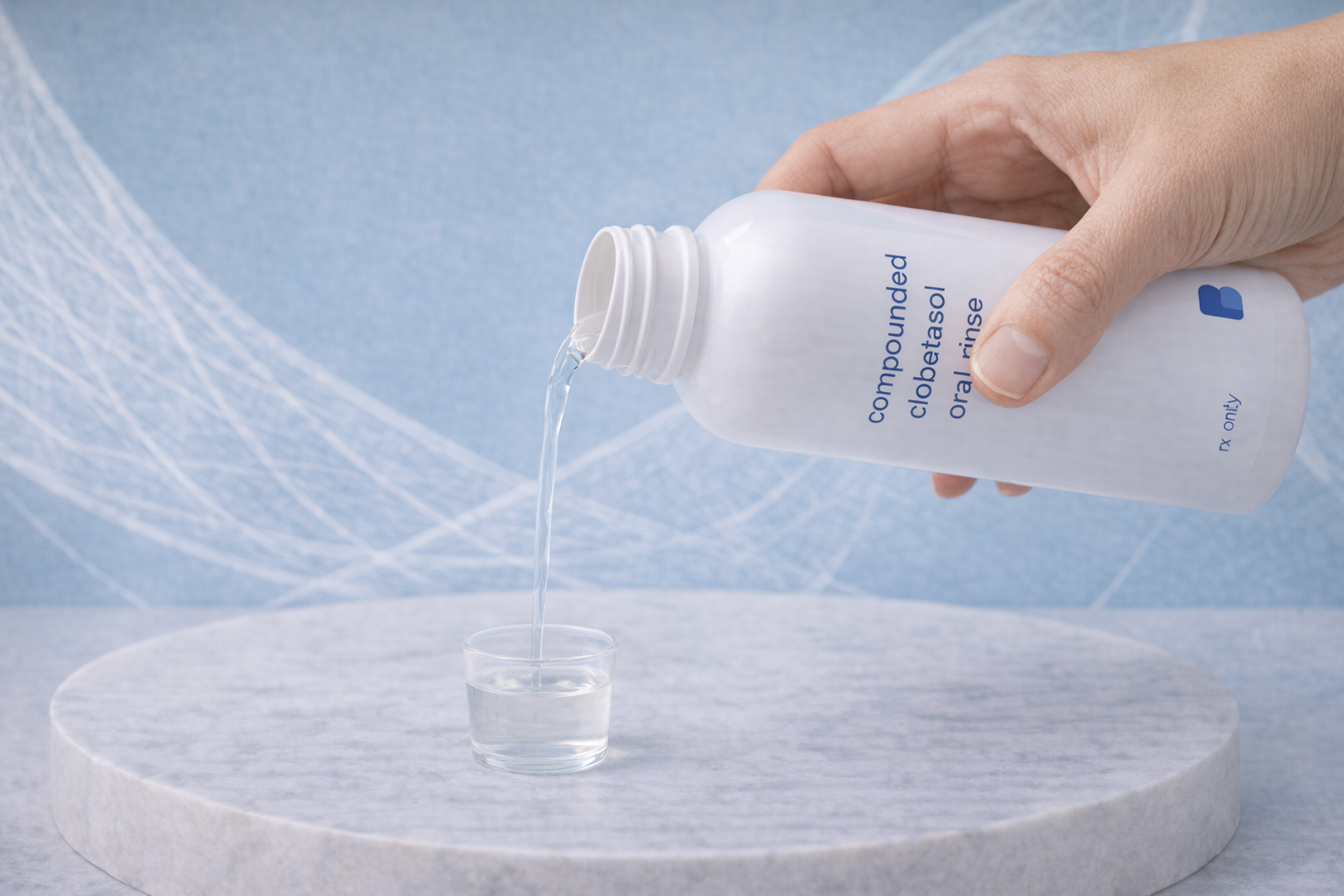
Bayview Pharmacy compounds steroid mouth rinses and pastes and a tacrolimus mouth rinse on prescription, and dispenses the manufactured triamcinolone dental paste and dexamethasone oral solution when they fit the prescription. Compounded preparations are not FDA-approved, and a valid prescription is required.

What is oral lichen planus?

Oral lichen planus is a long-term inflammatory condition of the lining of the mouth, in which the immune system attacks the cells lining the cheeks, tongue, or gums. It usually shows up as white, lacy patches, and some people also get red, sore areas that sting with spicy or acidic food. It tends to come and go in flares, and in most people it cannot be cured, but treatment can ease the soreness.

Is oral lichen planus contagious?

No. Oral lichen planus is not an infection and cannot be passed from one person to another.

Trusted by 105,826 patients to date.
A group of faces of our past satisfied patients.
Compounded medications are prepared pursuant to a valid prescription for an individual patient and are not FDA-approved. This page is for educational purposes and is not medical advice.
**The FDA does not review or approve compounded medications for safety or effectiveness. A valid prescription from a licensed practitioner is required.
Important safety information →
Service availability

Prescription delivery in your state

Bayview Pharmacy is licensed to serve patients in eight states and serves eligible New York patients on a limited basis while nonresident registration is pending. Check your state before getting started.

See every state we ship to, with shipping times and pickup details →

Where we currently serve

Select a highlighted state to check availability.

Currently licensed Limited basis, registration pending Not currently licensed Your selection

Select a state on the map or use the state checker.

Do we serve your state?

Choose your state to confirm current service availability.

Thank you! Your submission has been received!
Oops! Something went wrong while submitting the form.
Where we serve
Fill my prescription

Getting your prescription filled is simple

Send us your prescription

STEP
1
Have your provider e-prescribe to Bayview, fax it to us, or call it in directly to one of our pharmacists.
A thin blue light beam connecting two clear glass slabs on a white surface.

A pharmacist reviews it

STEP
2
We verify your prescription and prepare your medication to your provider's exact instructions.
Close-up of a white dial with blue measurement markings and a rotating knob.

We compound & ship

STEP
3
We prepare your medication and ship it discreetly to your door, with support when you need it.
Close-up of a gray box with a precise blue line running along its folded edges.

Understanding Oral Lichen Planus

Oral lichen planus is a long-term inflammatory condition of the lining of the mouth, in which the immune system's T cells attack the cells lining the cheeks, tongue, or gums (StatPearls). It most often appears as white, lacy patches on the inside of the cheeks or on the tongue, and some people also have red, thin, or open areas that burn or sting, especially with spicy or acidic food (British Association of Dermatologists; StatPearls). It is not an infection and cannot be passed from one person to another (BISOM). A 2020 review of studies from around the world estimated that it affects a little under 1 in 100 people, and more often women and people aged 40 or older (Li et al. 2020).

In most people oral lichen planus cannot be cured, but it goes through quieter periods and flares, and treatment aims to ease soreness and settle flares (British Association of Dermatologists; StatPearls). Topical corticosteroids used inside the mouth, as an adhesive gel or paste or as a mouth rinse, are the usual first treatment (StatPearls). Few manufactured products are made for use in the mouth, so most of the preparations used in clinical trials were compounded (Cochrane review 2020). Bayview Pharmacy compounds steroid mouth rinses and pastes and a tacrolimus mouth rinse on prescription. Your dentist, oral medicine specialist, or dermatologist decides whether any of them fits your situation, and a valid prescription is required.

Compounded preparations are not FDA-approved. No medicine is FDA-approved specifically for oral lichen planus (Brennan et al. 2022), and FDA has not evaluated compounded mouth rinses or pastes for safety or effectiveness. Manufactured clobetasol and tacrolimus products for the skin are labeled not for oral use (clobetasol topical label; tacrolimus ointment label). Using these medicines in the mouth is off-label.

What does oral lichen planus look like?

Doctors describe several forms, including reticular, plaque, atrophic, erosive, and bullous (StatPearls). The reticular form, fine white lacy lines, is the classic pattern (StatPearls). Atrophic and erosive forms are red, thinned, or open areas that tend to hurt, and sensitivity to spicy or acidic food is a common complaint (StatPearls). When it affects the gums, they can look red and shiny, which is called desquamative gingivitis (British Association of Dermatologists).

Other conditions can look the same, including reactions to some medicines and to dental fillings, called oral lichenoid reactions (StatPearls). That is one reason a dentist or specialist examines the mouth and may take a small sample (biopsy), particularly when the white lacy pattern is missing (French guidelines 2022).

How is oral lichen planus treated?

Topical corticosteroids are the first-line treatment (StatPearls; Cochrane review 2020). They are applied as an adhesive gel or paste to a sore spot, or used as a mouth rinse that reaches widespread or hard-to-reach areas (StatPearls). A 2020 Cochrane review of 35 trials found low-certainty evidence, from 2 small trials of steroid gels, that a steroid may relieve pain better than a placebo. It found no consistent evidence that any one steroid works better than another (Cochrane review 2020; Cochrane review 2020).

Tacrolimus, which is not a steroid, is generally a second-line option (American Family Physician 2011). Very low-certainty evidence in the same review suggests it may resolve pain more often than clobetasol, in trials that used tacrolimus ointment, with conflicting results on how the patches look (Cochrane review 2020). Long, continuous courses of steroid treatment are not recommended because of side effects (Rotaru et al. 2020), so your prescriber sets how long and how often you use each preparation.

Mouth rinse or adhesive paste?

Mouth rinseAdhesive paste or gel
What it isA liquid you swish around the mouth and spit outA thick paste or gel pressed onto a spot inside the mouth
Where it is often usedWidespread patches, or areas a paste cannot reachOne sore spot, or a few
Medicines Bayview preparesClobetasol, fluocinonide, triamcinolone, betamethasone, dexamethasone, tacrolimusClobetasol, clobetasol with lidocaine, fluocinonide, triamcinolone

This comparison is for education only and is not a statement that either form is better or more effective. Your prescriber chooses the medicine, form, strength, and schedule.

Which medicines are used in the mouth?

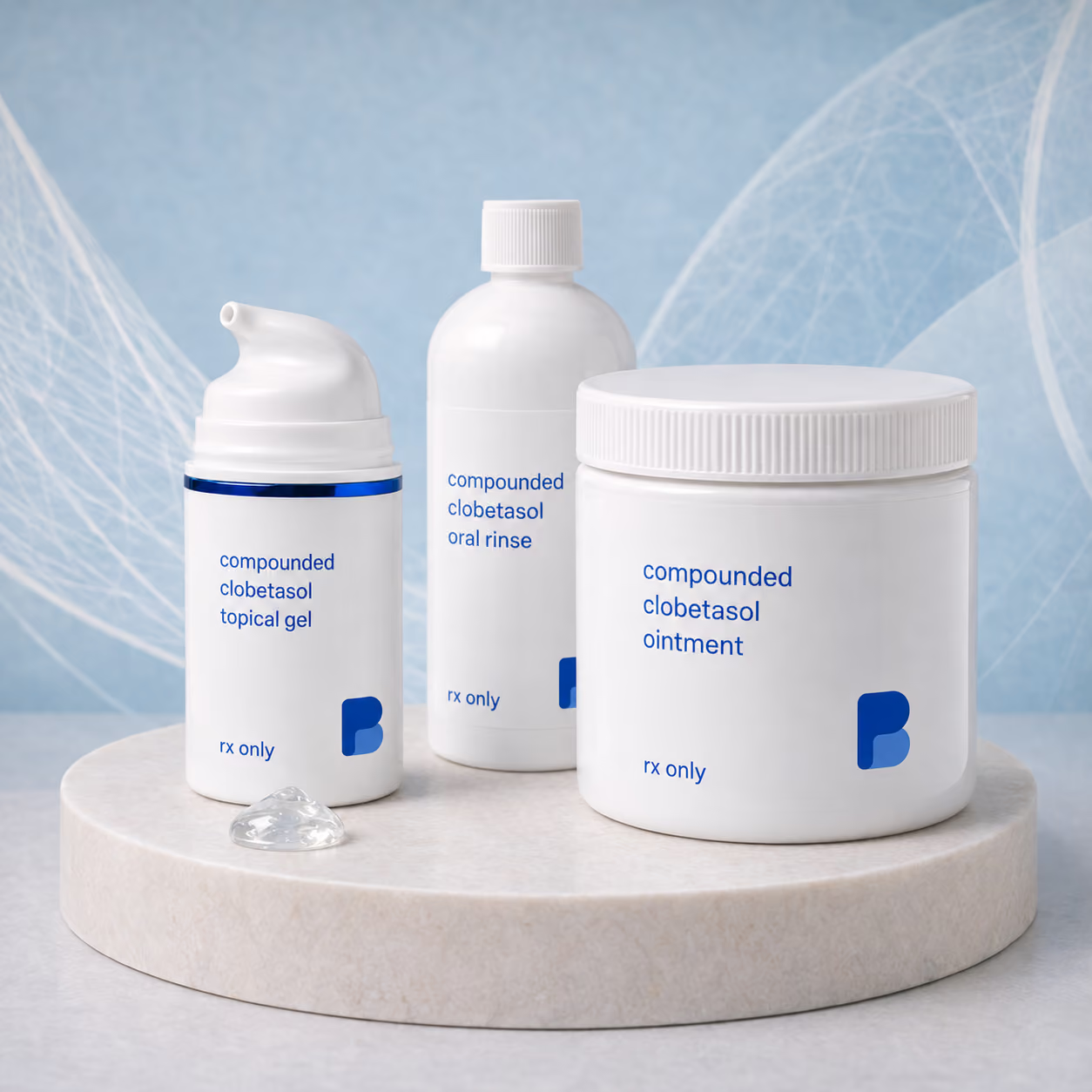
Clobetasol propionate is a super-high-potency steroid (clobetasol topical label). In a small trial, 0.025% and 0.05% clobetasol in an adhesive gel gave similar results (Carbone et al. 2009). That trial tested a gel, not a rinse. Bayview prepares a 0.05% dental paste, a 0.05% oral gel with lidocaine 1%, a numbing medicine, and 0.025% and 0.05% mouth rinses. See clobetasol.

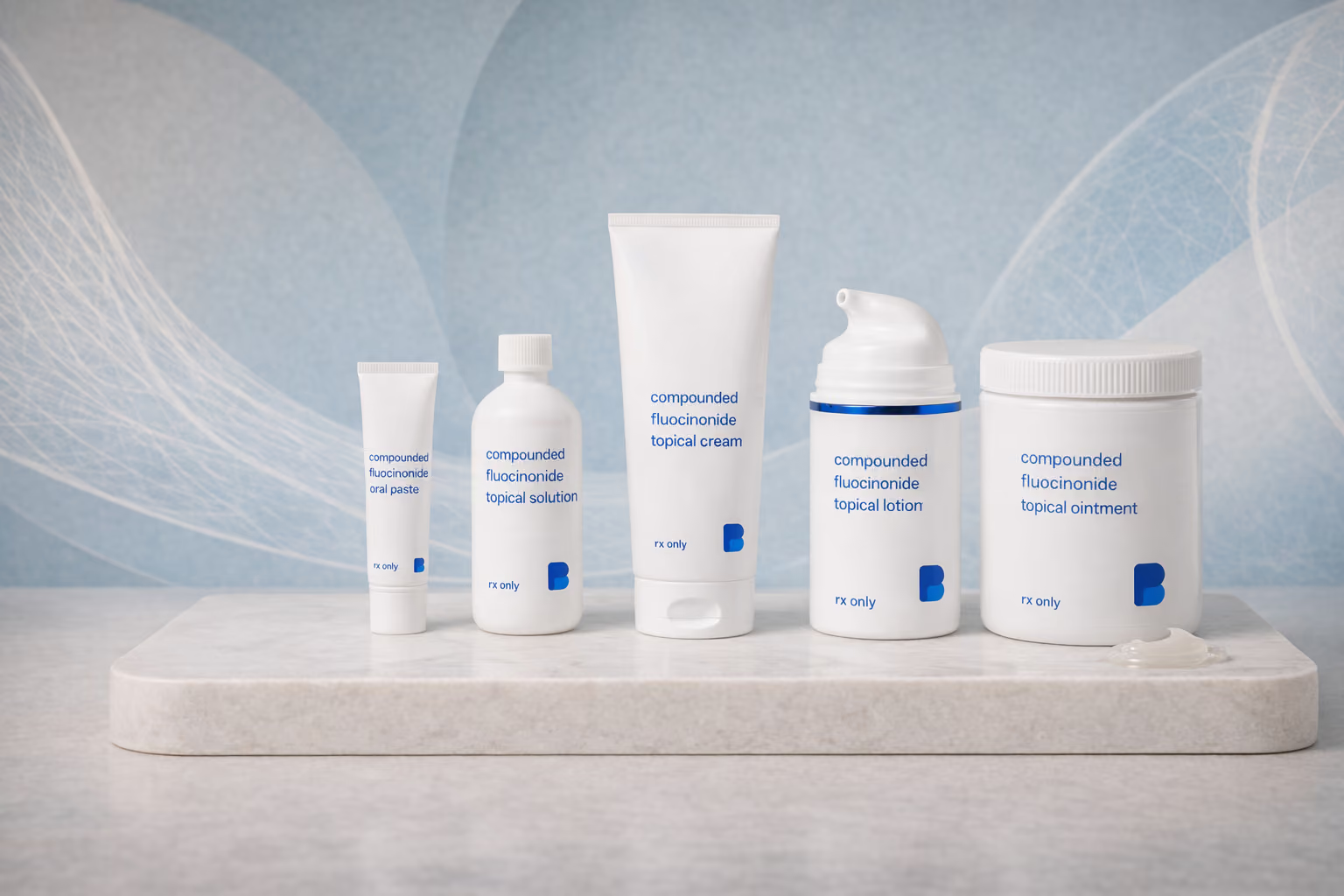
Fluocinonide. In a 2024 randomized trial of 47 people, a fluocinonide 0.05% gel was compared with a placebo, with results measured over 6 months of follow-up (Polizzi et al. 2024). Bayview prepares a 0.05% oral adhesive paste and a 0.05% mouth rinse. See fluocinonide.

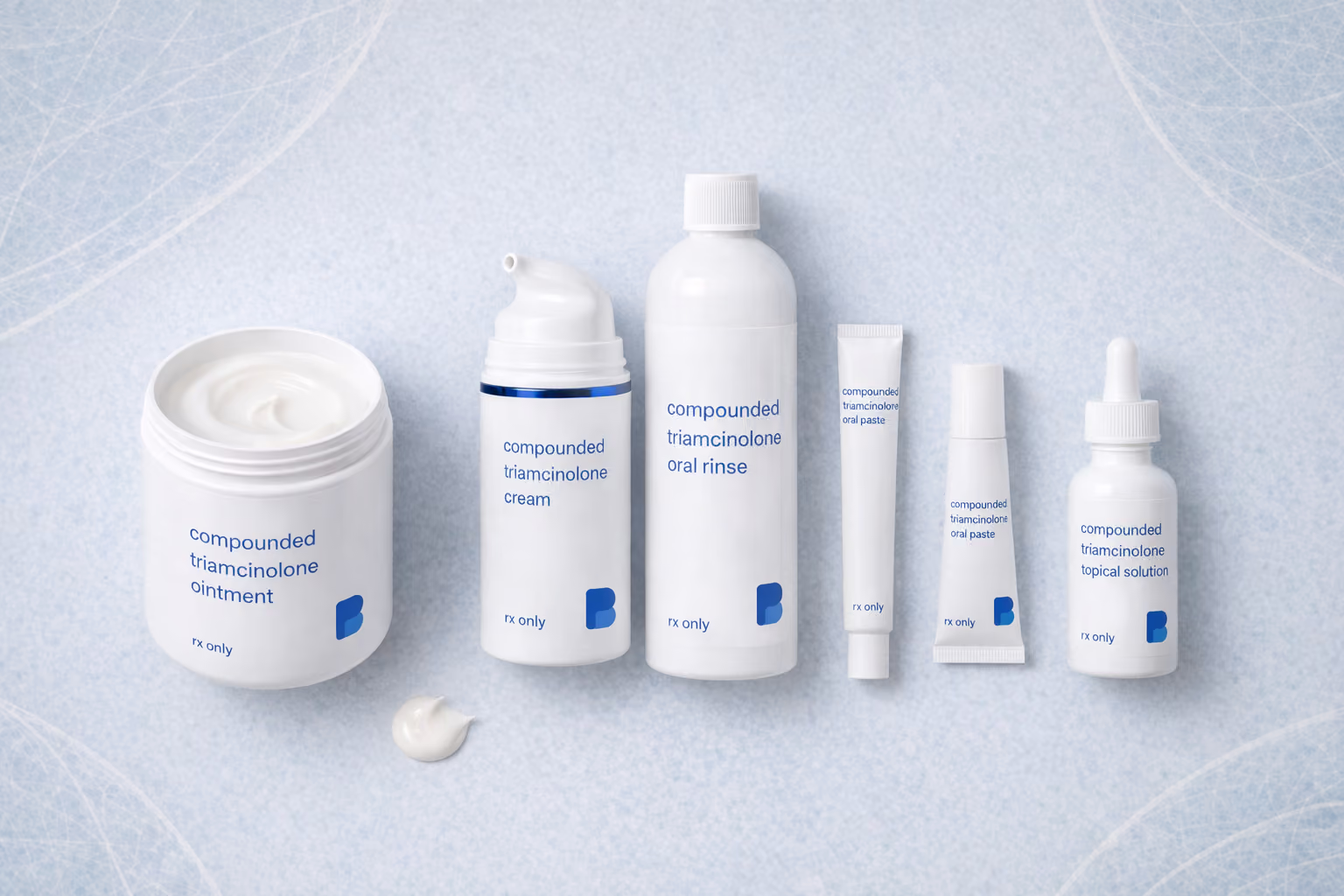
Triamcinolone acetonide. A manufactured triamcinolone 0.1% dental paste is FDA-approved for the temporary relief of symptoms of oral inflammatory lesions (triamcinolone dental paste label), and Bayview dispenses it when it fits the prescription. Bayview compounds triamcinolone mouth rinses in 0.1%, 0.2%, and 0.4% strengths, the 0.4% without preservatives. See triamcinolone.

Dexamethasone mouth rinse. Dexamethasone rinses are often used when patches are widespread or hard to reach (StatPearls). A manufactured dexamethasone oral solution, 0.5 mg in 5 mL, is FDA-approved for conditions treated with the swallowed medicine, and its ingredient list does not include alcohol (dexamethasone oral solution label); the elixir version contains 5% alcohol (dexamethasone elixir label). Prescribers also use the solution off-label as a swish-and-spit rinse, and a small trial used dexamethasone 0.1 mg/mL solution alone as its comparison (Villa et al. 2020). When the manufactured solution fits the prescription, that is what Bayview dispenses. Bayview compounds a dexamethasone rinse in another strength, or in a mucoadhesive base (a thicker base designed to stick to the lining of the mouth), when your prescriber orders it.

Betamethasone tablets dissolved in water are used as a steroid mouthwash in UK practice, off-label (BISOM betamethasone mouthwash leaflet). Bayview is not aware of a betamethasone product made for the mouth that is sold in the United States, and compounds a betamethasone mouth rinse on prescription.

Tacrolimus calms the immune response in a different way from a steroid. In a trial comparing tacrolimus ointment with clobetasol ointment, 9 of the 16 people using tacrolimus said their burning got worse in the first 2 days, and it settled within 4 to 5 days (Corrocher et al. 2008). A review of 57 people using a 0.03% tacrolimus mouth rinse reported results up to 2 years after starting treatment; 4 of them (7%) developed mouth cancer during the observation period, and the study did not attribute this to tacrolimus (Utz et al. 2022). The manufactured tacrolimus ointment for the skin is labeled not for oral use, and its label says oral application is not recommended. It carries a boxed warning that long-term safety has not been established and that rare cases of skin cancer and lymphoma have been reported, although a causal link has not been shown (tacrolimus ointment label). Bayview compounds 0.03% and 0.1% tacrolimus mouth rinses. See tacrolimus.

How do I use a mouth rinse or paste?

Follow the directions on your label. For a rinse, measure the amount on the label, swish it around your mouth for the time directed, often 3 to 5 minutes, then spit it out and do not swallow it (BISOM betamethasone mouthwash leaflet). Try not to eat or drink for 30 minutes afterward so the medicine stays in contact with the patches (BISOM betamethasone mouthwash leaflet). Medicines prescribed as a mouthwash have been swallowed by mistake, so read the label each time (UHB Dental Hospital guide).

For a paste or gel, dry the area first and avoid eating or drinking for at least 30 minutes after applying it (StatPearls). Press a small dab onto the spot until a thin film forms, and do not rub it in (triamcinolone dental paste label).

Side effects & safety

Thrush. Thrush, a yeast infection that can cause white or red patches and soreness, is one of the most common side effects of steroids used in the mouth (StatPearls). In a review of 315 people treated with steroids for oral lichen planus, 13.6% developed a fungal infection (Marable et al. 2016). Your prescriber may add an antifungal if it happens (BISOM).

Absorption into the body. Some of a steroid used in the mouth is absorbed into the bloodstream (Varoni et al. 2012). Rarely, long daily use has led to Cushing syndrome and a period when the body made too little of its own cortisol; one published case followed about a year of daily use of a compounded mouthwash containing clobetasol, clotrimazole, and lidocaine (Lin et al. 2024). Use these preparations only as prescribed and for the length of time your prescriber sets.

Pregnancy and breastfeeding. Tell your prescriber if you are pregnant, planning a pregnancy, or breastfeeding. The label for the triamcinolone dental paste advises using it in pregnancy only if the potential benefit justifies the potential risk, and caution while nursing (triamcinolone dental paste label).

Get help right away. Call 911 for swelling of the face, lips, tongue, or throat or trouble breathing. Call your provider if your mouth gets more painful or you notice new white patches that wipe off. The triamcinolone dental paste label advises a further check if a sore has not started to heal within seven days of using it (triamcinolone dental paste label). See your dentist or specialist about a lump, a sore that does not heal, or a patch that changes.

Living with oral lichen planus

Avoid spicy, salty, or acidic foods that cause soreness and mouthwashes that contain alcohol, and keep your mouth clean with a soft toothbrush (BISOM). A toothpaste without the foaming agent sodium lauryl sulfate may be more comfortable, and stopping smoking and cutting down on alcohol are advised (British Association of Dermatologists). Ask your dentist about sharp teeth or rough fillings that rub (StatPearls).

Oral lichen planus carries a small long-term risk of mouth cancer, around 1% over 10 years (BISOM; British Association of Dermatologists). Large reviews found that between about 0.4% and 1.4% of people with oral lichen planus in the included studies developed mouth cancer, with a higher risk in people who smoke or drink alcohol (Idrees et al. 2021; González-Moles and Ramos-García 2024). Regular check-ups with someone who knows the condition, at least once a year, help catch changes early (French guidelines 2022; BISOM).

Who should not use these preparations?

Do not use a preparation if you are allergic to its medicine or any other ingredient in it. The triamcinolone dental paste label says not to use it when there is a fungal, viral, or bacterial infection of the mouth or throat (triamcinolone dental paste label), so tell your prescriber about any mouth infection. Tell your prescriber about any other steroid you use, any medicine that weakens the immune system, and whether you are pregnant or breastfeeding.

How do I get started?

Talk with the dentist, oral medicine specialist, or dermatologist who manages your mouth. A licensed prescriber decides whether a rinse or paste is appropriate and chooses the medicine, strength, and schedule. Bayview Pharmacy does not provide consultations or determine appropriateness. Already have a prescription at another pharmacy? You can transfer it to Bayview. Once you have a prescription, your prescriber can order through Bayview, and a pharmacist is available if you have questions. These preparations are part of our compounded medications catalog, alongside magic mouthwash for other mouth sores.

Clinical details for prescribers

Regulatory. No product is FDA-approved specifically for oral lichen planus (Brennan et al. 2022). Two manufactured products can be used in the mouth and are dispensed as such when they fit: triamcinolone acetonide 0.1% dental paste (generics marketed; indicated for adjunctive treatment and temporary relief of symptoms of oral inflammatory and traumatic ulcerative lesions) (label), and dexamethasone oral solution 0.5 mg/5 mL (systemic indications; the Hikma solution lists no alcohol, the elixir contains 5%) (solution label; dexamethasone elixir label). Under FDA's 503A guidance, a compounded drug is essentially a copy of a commercially available product when it has the same active ingredient, the same, similar (within 10%), or easily substitutable strength (one reachable with fractional or multiple doses), and the commercial product can be used by the prescribed route (FDA guidance). A compounded dexamethasone 0.1 mg/mL rinse or triamcinolone 0.1% oral paste therefore needs the prescriber's determination of the significant difference it makes for the patient, which the guidance says should be documented on the prescription. No clobetasol, fluocinonide, betamethasone, or tacrolimus product is approved for use in the mouth; the clobetasol topical label reads not for oral use, and the tacrolimus ointment label says oral application is not recommended and carries the topical calcineurin inhibitor boxed warning (clobetasol label; tacrolimus ointment label).

Published evidence:

  • Corticosteroids: Lodi et al. 2020 (Cochrane, 35 RCTs, 1,474 participants): steroid vs placebo for pain RR 1.91 (95% CI 1.08 to 3.36; 2 trials, 72 participants; low certainty); clinical response inconclusive; no steroid consistently superior to another; most trials used galenical preparations (Cochrane summary; Cochrane review 2020). Zheng et al. 2024: 17 RCTs of topical clobetasol, no GRADE rating, high or unclear risk of bias in most (Front Med).
  • Clobetasol: Carbone et al. 1999, n=60, clobetasol 0.05% vs fluocinonide 0.05% ointment in 4% hydroxyethyl cellulose gel vs placebo, all with miconazole gel and chlorhexidine; lesions resolved in 75%, 25%, and 0%; plasma cortisol showed no significant systemic effect (Oral Dis). Carbone et al. 2009: 0.025% vs 0.05% in a bioadhesive gel, about 15 per arm, no statistical difference (J Oral Pathol Med). No trial of a 0.025% rinse was found.
  • Fluocinonide: Polizzi et al. 2024, n=47, 0.05% gel vs placebo, 6-month follow-up; outcomes favored fluocinonide (abstract).
  • Dexamethasone: Villa et al. 2020, open-label phase II, 24 randomized, commercial solution 0.5 mg/5 mL vs dexamethasone in Mucolox; both improved, larger REU reduction with Mucolox (6 vs 4.3); preliminary, and the protocol lists PCCA as sponsor (OOOO; trial protocol). Georgaki et al. 2022, n=32, dexamethasone 2 mg/5 mL swish and spit three times daily for 4 weeks vs cyclosporine; more clinical improvement and more candidiasis with dexamethasone (Med Oral).
  • Betamethasone: UK oral medicine practice dissolves a 500 microgram soluble tablet in 10 to 20 mL of water as a mouthwash, off-label (BISOM); that is about 0.025 to 0.05 mg/mL. Bayview's 0.025% rinse is 0.25 mg/mL, a higher concentration, prepared to the prescriber's order. No randomized trial of a betamethasone rinse in oral lichen planus was found.
  • Tacrolimus: Corrocher et al. 2008, double-blind, n=32, 0.1% tacrolimus vs 0.05% clobetasol ointment four times daily for 4 weeks; better response with tacrolimus, though the authors state other studies are needed before it can be recommended in clinical practice; initial worsening of burning in 56.3% of the tacrolimus arm (first 2 days); blood tacrolimus undetectable (J Clin Periodontol). Utz et al. 2022, retrospective, 0.03% tacrolimus rinse, 57 patients (98% previously on topical steroids): objective remission 28%, 62%, 87%, and 97% at 3, 6, 12, and 24 months; 4 patients (7%) developed squamous cell carcinoma during follow-up, not attributed to the drug in the abstract (JEADV). No published trial of a 0.1% rinse was found.

Safety and follow-up:

  • Candidiasis in 13.6% of 315 steroid-treated patients; the antifungal prevention strategies used did not differ significantly (Marable et al. 2016).
  • Transmucosal clobetasol absorption confirmed in a 10-patient study (Varoni et al. 2012). Iatrogenic Cushing syndrome and secondary adrenal insufficiency after about 12 months of a compounded clobetasol 0.05% mouthwash (with clotrimazole 1% and lignocaine 2%; 15 mL, 5 minutes, once daily); the HPA axis had recovered when checked 2 months after withdrawal (Lin et al. 2024). The dental paste label notes reversible HPA axis suppression with systemic absorption of topical corticosteroids (label).
  • Malignant transformation: 0.44% with strict diagnostic criteria (33 studies, 12,838 patients; higher with smoking and alcohol) (Idrees et al.) to 1.43% (97 studies, 36,889 patients; higher with dysplasia, tobacco, alcohol, tongue site, atrophic or erosive forms, and HCV) (González-Moles and Ramos-García). Follow-up at least yearly by a practitioner familiar with the disease, and an initial biopsy when the lesions are not reticulated (French guidelines 2022); others suggest 6-monthly review in severe disease and 3-monthly with dysplasia (Rotaru et al. 2020).
  • Hepatitis C: the French guidelines recommend testing when risk factors are present (French guidelines 2022); an older US review suggested screening all patients with lichen planus (Am Fam Physician 2011).

What Bayview compounds (2026 fills):

  • Mouth rinses (swish and spit): clobetasol propionate 0.025% in a mucoadhesive base or 0.05%; fluocinonide 0.05%; triamcinolone acetonide 0.1%, 0.2%, or 0.4% preservative-free; betamethasone 0.025%; tacrolimus 0.03% or 0.1% anhydrous suspension.
  • Adhesive pastes and gels: clobetasol propionate 0.05% dental paste; lidocaine 1% / clobetasol 0.05% oral gel in a mucoadhesive base; fluocinonide 0.05% oral adhesive paste.
  • Dexamethasone: the manufactured 0.5 mg/5 mL solution is dispensed when it fits; a compounded rinse in another strength or base is prepared on prescription.
  • Writing the prescription: the medicine, strength, and base (aqueous or mucoadhesive), the amount per rinse and how long to swish, how often, the length of the course, an ICD-10 code for the diagnosis, the quantity, and refills. For a compounded product that matches or can substitute for a manufactured strength, state the patient-specific change and the significant difference it makes.

Licensed to dispense in RI, MA, CT, NJ, NH, FL, ME, and PA. Ordering and account setup are covered on our for providers page.

This information is about prescription medications and is not medical advice. Compounded medications are prescription-only and are not FDA-approved. Your prescriber determines whether a mouth rinse or paste is appropriate and sets the medicine, strength, and schedule.
Reviewed by Ryan Dyer, RPh, pharmacist at Bayview Pharmacy. Last reviewed October 22, 2026. Bayview does not provide consultations and does not decide whether a medication is right for you. Your prescriber makes that call.

In Stock

On this page

Mouth rinses and pastes, compounded to order

Bayview compounds steroid mouth rinses, adhesive pastes, and a tacrolimus rinse in the strength and base your prescriber orders.

See strengths

Your oral lichen planus prescription, filled at Bayview

Send your prescription to Bayview. A pharmacist reviews every order, and we ship to the states where we are licensed.

Fill my prescription

Personalized compounding for patients who need more than a standard option.

"As a compounding pharmacy, we prepare each medication to a provider’s exact specifications. My focus, and my team’s focus, is quality, consistency, and close communication with prescribers so patients receive medication prepared for their individual needs."
Ryan Dyer, RPh
Owner and Chief Pharmacist, Bayview Pharmacy
Smiling man in blue scrubs with arms crossed and pen behind his ear
Three clear liquid vials, white powder on spoon, two capsules, and a cream jar on a metal surface.
QUALITY AND TESTING

Held to a higher standard

Every preparation is made under strict quality controls, and verified by a licensed pharmacist.
We use validated quality processes and third-party testing where appropriate
Sterile compounding in a dedicated USP <797> cleanroom
Non-sterile compounding under USP <795> and <800> standards
USP/NF-grade ingredients from reputable, vetted suppliers

Why patients choose Bayview

Made in our own pharmacy
Made to your prescription
Quality tested
Real pharmacist support
Trusted since 2006

Our formulations

These are the mouth preparations Bayview prepares for oral lichen planus on prescription. Your prescriber selects the medicine, strength, base, and schedule.

FormMedicines and strengthsSizes and notes
Steroid mouth rinse (swish and spit)Clobetasol propionate 0.025% (mucoadhesive base) or 0.05%; fluocinonide 0.05%; triamcinolone acetonide 0.1%, 0.2%, or 0.4% (preservative-free); betamethasone 0.025%60 to 600 mL, depending on the preparation
Dexamethasone mouth rinseManufactured dexamethasone oral solution 0.5 mg/5 mL, dispensed when it fits; compounded in another strength or a mucoadhesive base on prescriptionAs ordered
Tacrolimus mouth rinseTacrolimus 0.03% or 0.1% (anhydrous suspension)As ordered
Adhesive paste or gelClobetasol propionate 0.05% dental paste; lidocaine 1% / clobetasol propionate 0.05% oral gel; fluocinonide 0.05% oral adhesive paste15 to 60 g
Triamcinolone dental pasteManufactured triamcinolone acetonide 0.1% dental paste, dispensed when it fits5 g tube

Forms and strengths are listed for education only and are not a statement that any option is better, stronger, or more effective. Other strengths and bases are available on prescription. A valid prescription is required, and your provider determines which preparation is appropriate for you. Compounded preparations are not FDA-approved.

Fill my prescription
Steroid rinse | Clobetasol propionate 0.025% oral rinse (mucoadhesive base) | 120 mL | Swish in mouth, hold as directed and then expectorate | | Once daily Steroid rinse | Clobetasol propionate 0.05% oral rinse | 240 mL | Swish in mouth, hold as directed and then expectorate | | Once daily Steroid rinse | Fluocinonide 0.05% oral rinse | 300 mL | Swish in mouth, hold as directed and then expectorate | | Three times daily Steroid rinse | Triamcinolone acetonide 0.4% oral rinse, preservative-free | 240 mL | Swish in mouth, hold as directed and then expectorate | | Three times daily Steroid rinse | Betamethasone 0.025% oral rinse | 600 mL | Swish in mouth, hold as directed and then expectorate | | As directed Tacrolimus rinse | Tacrolimus 0.03% oral rinse (anhydrous suspension) | 840 mL | Swish in mouth, hold as directed and then expectorate | | As directed Tacrolimus rinse | Tacrolimus 0.1% oral rinse (anhydrous suspension) | 960 mL | Swish in mouth, hold as directed and then expectorate | | As directed Paste or gel | Clobetasol propionate 0.05% dental paste | 30 g | Apply to affected area(s) in the mouth | | Once daily at bedtime Paste or gel | Lidocaine 1% / clobetasol propionate 0.05% oral gel | 60 g | Apply to affected area(s) in the mouth | | Twice daily Paste or gel | Fluocinonide 0.05% oral adhesive paste | 15 g | Apply to affected area(s) in the mouth | | Three times daily
Oral Lichen Planus

For prescribers

How to e-prescribe this formulation

Bayview accepts e-prescriptions from any Surescripts-connected EHR. Compounded preparations have no NDC, so they will not appear in your drug search. Choose the preparation below and copy the prescription into your EHR.

Patient? Send these instructions to your doctor's office.
  1. Find Bayview in your EHR's pharmacy directory

    Search by NCPDP 4106882, or by name and ZIP: Bayview Pharmacy, Warwick, RI 02886. Save it as a favorite so you never search again.

  2. Choose the preparation

    Name the preparation exactly as listed under Our formulations above: each active ingredient and strength, the dose form, the quantity, and the directions.

  3. Enter it as a compound

    Use your system's compound, non-formulary, or free-text prescription entry and paste the details. If your EHR forces you to pick a listed drug, pick the closest entry for the active ingredient and put the full formula in the prescription body (the Sig or directions field).

  4. Send it

    Transmit from your EHR. Prefer not to e-prescribe? For non-controlled preparations we also accept fax to (401) 284-4506 and phoned orders at (401) 284-4505. Order forms are in the Prescribers: download order form menu above.

Do not use Notes to Pharmacy for the formula. Some EHRs keep that field internal and never transmit it. A prescription that arrives without the formula is delayed while we call your office.

Compounded preparations are not FDA-approved. A valid prescription is required. Questions: call (401) 284-4505. Full e-prescribing guide

Frequently asked questions

What is oral lichen planus?

Oral lichen planus is a long-term inflammatory condition of the lining of the mouth, in which the immune system attacks the cells lining the cheeks, tongue, or gums. It usually shows up as white, lacy patches, and some people also get red, sore areas that sting with spicy or acidic food. It tends to come and go in flares, and in most people it cannot be cured, but treatment can ease the soreness.

Is oral lichen planus contagious?

No. Oral lichen planus is not an infection and cannot be passed from one person to another.

What is dexamethasone mouthwash?

Dexamethasone mouthwash is a liquid dexamethasone, a corticosteroid, that is swished around the mouth and spat out, usually for widespread or hard-to-reach patches. The manufactured dexamethasone oral solution, 0.5 mg in 5 mL, is FDA-approved for conditions treated with the swallowed medicine, and prescribers use it off-label as a rinse. Bayview dispenses the manufactured solution when it fits the prescription, and compounds a rinse in another strength or base when your prescriber orders it.

How do I use a steroid mouth rinse?

Follow your label. Usually you measure the amount on the label, swish it around your mouth for the time directed, often 3 to 5 minutes, and spit it out without swallowing. Try not to eat or drink for 30 minutes afterward so the medicine stays in contact with the patches. Use it only as often and for as long as your prescriber directs.

Why did I get thrush while using a steroid rinse?

Thrush is one of the most common side effects of steroids used in the mouth; in one study of people treated for oral lichen planus, about 1 in 7 developed a fungal infection. It can show up as white patches that wipe off, red areas, or new soreness. Tell your provider, who may prescribe an antifungal and may pause the steroid.

Can oral lichen planus turn into cancer?

There is a small long-term risk of mouth cancer, around 1% over 10 years, and the risk is higher in people who smoke or drink alcohol. Regular check-ups with your dentist or specialist, at least once a year, help catch changes early. See them sooner about a lump, a sore that does not heal, or a patch that changes.

Do I need a prescription?

Yes. All of our medications require a valid prescription from a licensed provider. We're a dispensing and compounding pharmacy, so we don't provide consultations or write prescriptions. If you don't have one yet, you'll need to see a provider first.

What is compounding?

Compounding is the practice of preparing a medication tailored to an individual patient's prescription. Instead of a mass-produced product, a compounding pharmacy makes the medication to the specific strength, form, or combination your provider orders.

Examples on this site include medications compounded as liquids for people who cannot swallow pills, thyroid capsules made to a T3/T4 ratio no manufactured product offers, and all-purpose nipple ointment, which combines three actives that are not sold together commercially.

Are compounded medications FDA-approved?

Compounded medications are not FDA-approved. They're prepared by a licensed pharmacy pursuant to a valid prescription for an individual patient, under USP standards. The FDA does not review compounded medications for safety or effectiveness.

How do providers send a prescription to Bayview?

Providers can submit a prescription three ways:

  • E-prescribe: Search Bayview Pharmacy, Warwick, RI (NCPDP 4106882) in your EHR. For compounds, use the compound, custom, or free-text option and include the full formulation, strength, quantity, refills, and directions.
  • Fax: Send a signed order to 401-284-4506 (alt. 401-210-2757) with patient and prescriber details, medication, quantity, refills, directions, signature, and date.
  • Phone: Call 401-284-4505 to submit, clarify, or coordinate refills.

A valid prescription is required, and compounded medications are not FDA-approved.

‍

Can you fill a prescription from my own provider?

Yes. Your provider can send your prescription to Bayview Pharmacy by e-prescribe, fax, or phone, or you can transfer an existing prescription from another pharmacy.

How does shipping work?

Once your prescription is verified, we prepare your medication and ship it discreetly in plain packaging either via UPS or USPS. A pharmacy technician confirms the details with you before it goes out, and we're available if you have any questions.

How do refills and automatic refills work?

Refills are coordinated with your prescriber and your prescription. You can request a refill through our website or by calling us, and we'll handle the rest as long as you have refills remaining on a valid prescription. You can also opt into automatic refills on non-controlled substances, with no need to worry about running out of your medication. We can either ship it to you automatically, or ready for pickup.

Shipping & Delivery

Every prescription ships directly to your door in discreet packaging. Refrigerated medications travel in insulated coolers with ice packs to stay cold in transit.

Delivery AreaStandard ShippingRefrigerated Shipping
Rhode Island, Massachusetts & Connecticut$9 USPS$20 UPS
New Hampshire, New Jersey, Pennsylvania, Maine & New York (limited basis)$15 UPS$40 UPS Next Day Air
Florida$15 UPS$80 UPS Next Day Air

Need it faster? Expedited UPS is $15 for Rhode Island, Massachusetts and Connecticut. Your pharmacist will let you know if your medication needs refrigerated shipping. Questions? Call us at (401) 284-4505.

References

Sources reviewed

The medical information on this page draws on the following sources, which are also linked where cited.

  1. StatPearls. Oral Lichen Planus. StatPearls Publishing, updated 2025.
  2. Lodi G, Manfredi M, Mercadante V, Murphy R, Carrozzo M. Interventions for treating oral lichen planus: corticosteroid therapies. Cochrane Database Syst Rev. 2020;2(2):CD001168. doi:10.1002/14651858.CD001168.pub3.
  3. British and Irish Society for Oral Medicine. Oral Lichen Planus. Patient information, October 2025.
  4. British and Irish Society for Oral Medicine. Betamethasone 500 microgram soluble tablets (mouthwash). Patient information, October 2025.
  5. British Association of Dermatologists. Oral Lichen Planus. Patient information leaflet, March 2023.
  6. Li C, et al. Global prevalence and incidence estimates of oral lichen planus: a systematic review and meta-analysis. JAMA Dermatol. 2020;156(2):172-181.
  7. Idrees M, Kujan O, Shearston K, Farah CS. Oral lichen planus has a very low malignant transformation rate: a systematic review and meta-analysis using strict diagnostic and inclusion criteria. J Oral Pathol Med. 2021;50(3):287-298.
  8. González-Moles MA, Ramos-García P. An evidence-based update on the potential for malignancy of oral lichen planus and related conditions: a systematic review and meta-analysis. Cancers. 2024;16(3):608.
  9. Campana F, et al. French guidelines for the management of oral lichen planus (excluding pharmacological therapy). Ann Dermatol Venereol. 2022;149(1):14-27.
  10. Rotaru D, et al. Treatment trends in oral lichen planus and oral lichenoid lesions (Review). Exp Ther Med. 2020;20(6):198.
  11. Usatine RP, Tinitigan M. Diagnosis and treatment of lichen planus. Am Fam Physician. 2011;84(1):53-60.
  12. Brennan MT, et al. Efficacy and safety of a novel mucoadhesive clobetasol patch for treatment of erosive oral lichen planus. J Oral Pathol Med. 2022;51(1):86-97.
  13. Carbone M, Conrotto D, Carrozzo M, Broccoletti R, Gandolfo S, Scully C. Topical corticosteroids in association with miconazole and chlorhexidine in the long-term management of atrophic-erosive oral lichen planus: a placebo-controlled and comparative study between clobetasol and fluocinonide. Oral Dis. 1999;5:44-49.
  14. Carbone M, Arduino PG, Carrozzo M, et al. Topical clobetasol in the treatment of atrophic-erosive oral lichen planus: a randomized controlled trial to compare two preparations with different concentrations. J Oral Pathol Med. 2009;38:227-233.
  15. Polizzi A, Tartaglia GM, Santonocito S, Alibrandi A, Verzì AE, Isola G. Impact of topical fluocinonide on oral lichen planus evolution: randomized controlled clinical trial. Oral Dis. 2025;31(2):510-521 (online 2024).
  16. Villa A, et al. Dexamethasone solution and dexamethasone in Mucolox for the treatment of oral lichen planus: preliminary report on findings. Oral Surg Oral Med Oral Pathol Oral Radiol. 2020;129.
  17. ClinicalTrials.gov. NCT04540133: study protocol and statistical analysis plan. Accessed October 2026.
  18. Georgaki M, Piperi E, Theofilou VI, Pettas E, Stoufi E, Nikitakis NG. A randomized clinical trial of topical dexamethasone vs. cyclosporine treatment for oral lichen planus. Med Oral Patol Oral Cir Bucal. 2022;27(2):e113-e124.
  19. Corrocher G, et al. Comparative effect of tacrolimus 0.1% ointment and clobetasol 0.05% ointment in patients with oral lichen planus. J Clin Periodontol. 2008;35(3):244-249.
  20. Utz S, et al. Outcome and long-term treatment protocol for topical tacrolimus in oral lichen planus. J Eur Acad Dermatol Venereol. 2022;36(12):2459-2465.
  21. Zheng T, et al. Efficacy and safety of topical clobetasol propionate in comparison with alternative treatments in oral lichen planus: an updated systematic review and meta-analysis. Front Med (Lausanne). 2024;11:1391754.
  22. Marable DR, et al. Oral candidiasis following steroid therapy for oral lichen planus. Oral Dis. 2016;22(2):140-147.
  23. Varoni EM, et al. Pharmacokinetics study about topical clobetasol on oral mucosa. J Oral Pathol Med. 2012;41(3):255-260.
  24. Lin M, Horgan L, Hsieh A. Beware of the rinse: magic mouthwash as a rare cause of iatrogenic Cushing syndrome and secondary adrenal insufficiency. Med J Aust. 2024;221(11):591-593.
  25. University Hospitals Bristol Dental Hospital. Guide for primary care on the use of off-label topical steroids for inflammatory oral conditions. June 2020.
  26. Hikma Pharmaceuticals. Dexamethasone oral solution and Intensol, prescribing information. DailyMed, 2025.
  27. ANI Pharmaceuticals. Dexamethasone elixir, prescribing information. DailyMed, 2025.
  28. MidAmerica. KOURZEQ (triamcinolone acetonide dental paste USP, 0.1%), prescribing information. DailyMed, 2026.
  29. Glenmark. Tacrolimus ointment, prescribing information. DailyMed, 2026.
  30. Fougera. Clobetasol propionate, prescribing information. DailyMed, 2025.
  31. U.S. Food and Drug Administration. Compounded Drug Products That Are Essentially Copies of a Commercially Available Drug Product Under Section 503A of the FD&C Act: Guidance for Industry. January 2018.

Important safety information

Important safety information

Compounded steroid mouth rinses and pastes and tacrolimus mouth rinse are prescription compounded preparations and are not FDA-approved. They are for use inside the mouth only. Use them only as prescribed and under the care of your prescriber.

Do not use these preparations if you:

  • Are allergic to the medicine or any other ingredient in your prescription.
  • Are using triamcinolone dental paste and have a fungal, viral, or bacterial infection of the mouth or throat; its label says not to use it then. Tell your prescriber about any mouth infection before starting a steroid preparation.

Warnings and precautions:

  • Swish rinses and spit them out. Do not swallow a rinse unless your label says to.
  • Thrush (a yeast infection in the mouth) can develop while you use a steroid. Tell your provider about new white or red patches or soreness.
  • Some of the medicine is absorbed into the body. Rarely, long daily use of a steroid in the mouth has caused hormone problems. Use it only for the time your prescriber sets.
  • Tacrolimus can cause a burning feeling; in one trial it got worse in the first 2 days for 9 of 16 people using it, then settled. The manufactured tacrolimus ointment for the skin is labeled not for oral use, and its boxed warning says long-term safety has not been established and that rare cases of skin cancer and lymphoma have been reported, although a causal link has not been shown.
  • If you are pregnant, planning a pregnancy, or breastfeeding, talk with your prescriber before using these preparations.

Possible side effects:

  • Thrush, burning, or stinging inside the mouth.

Call your provider if you have:

  • Pain that gets worse, or new white patches that wipe off.
  • With triamcinolone dental paste, a sore that has not started to heal within seven days (the label advises a further check).
  • A lump, a sore that does not heal, or a patch that changes.

Get emergency care if you have:

  • Swelling of the face, lips, tongue, or throat, or trouble breathing. Call 911.

Storage:

Store as directed on the label, with the cap closed, away from heat and moisture. Keep out of the reach of children and pets. Do not use past the beyond-use date on the label.

This is a compounded prescription medication and is not approved by the FDA. Use it only under the supervision of a licensed provider, exactly as prescribed. Do not adjust your dose without talking to your prescriber. Seek emergency care for any severe or unexpected reaction. This information is not complete; talk to your provider about your full medical history and all medications you take.

Ready to get started?

Send us your prescription and a Bayview pharmacist will take it from there.