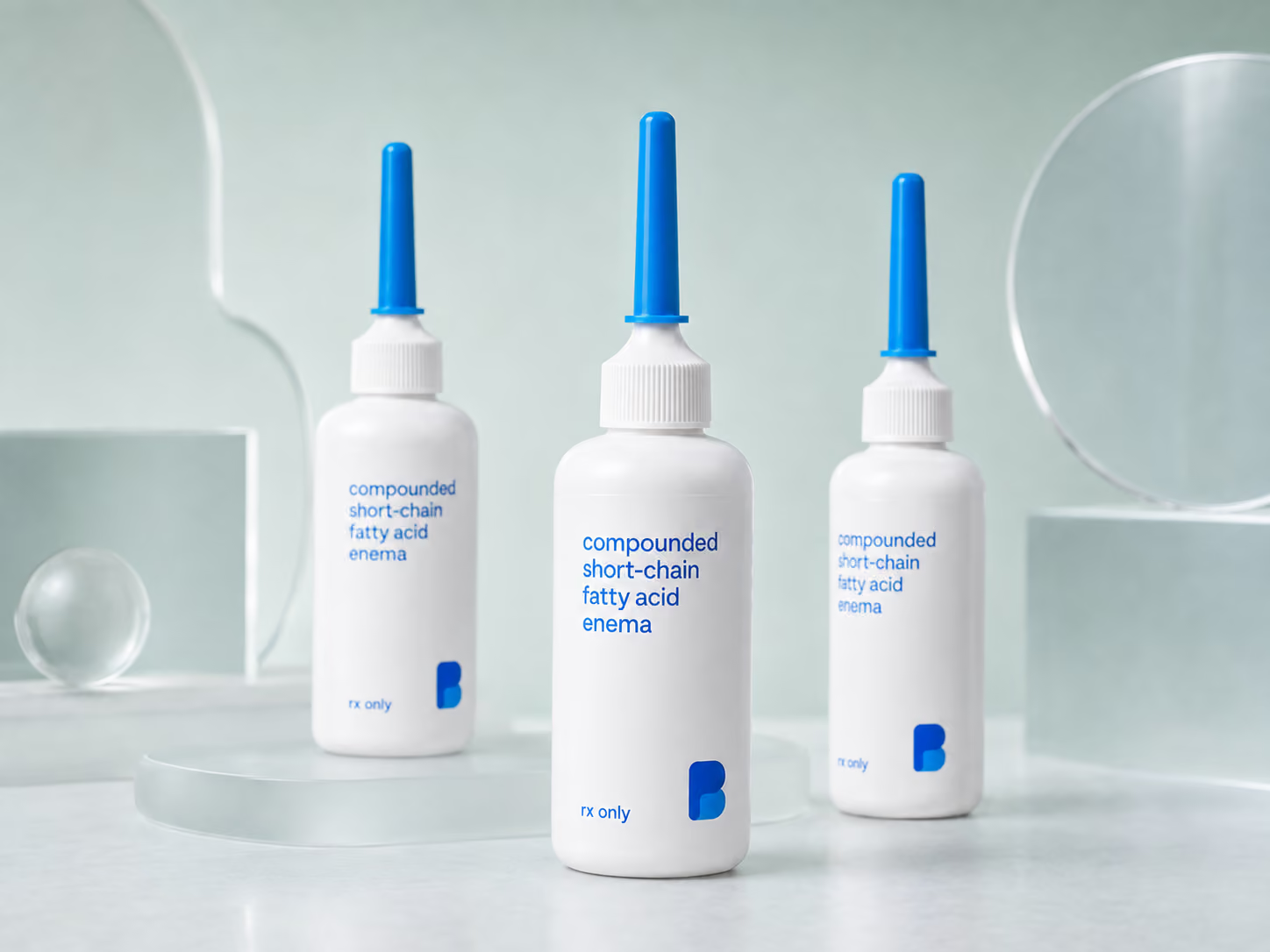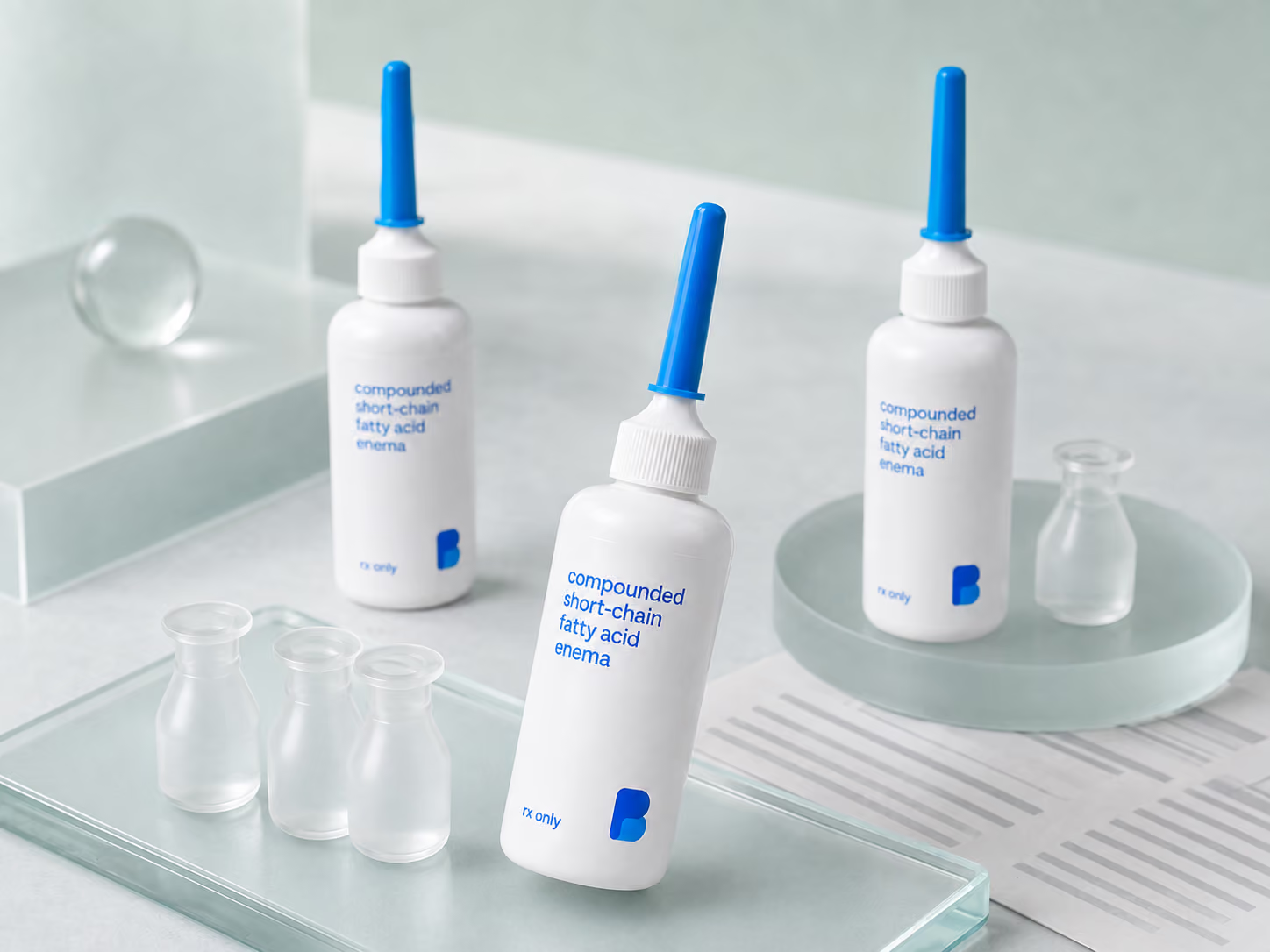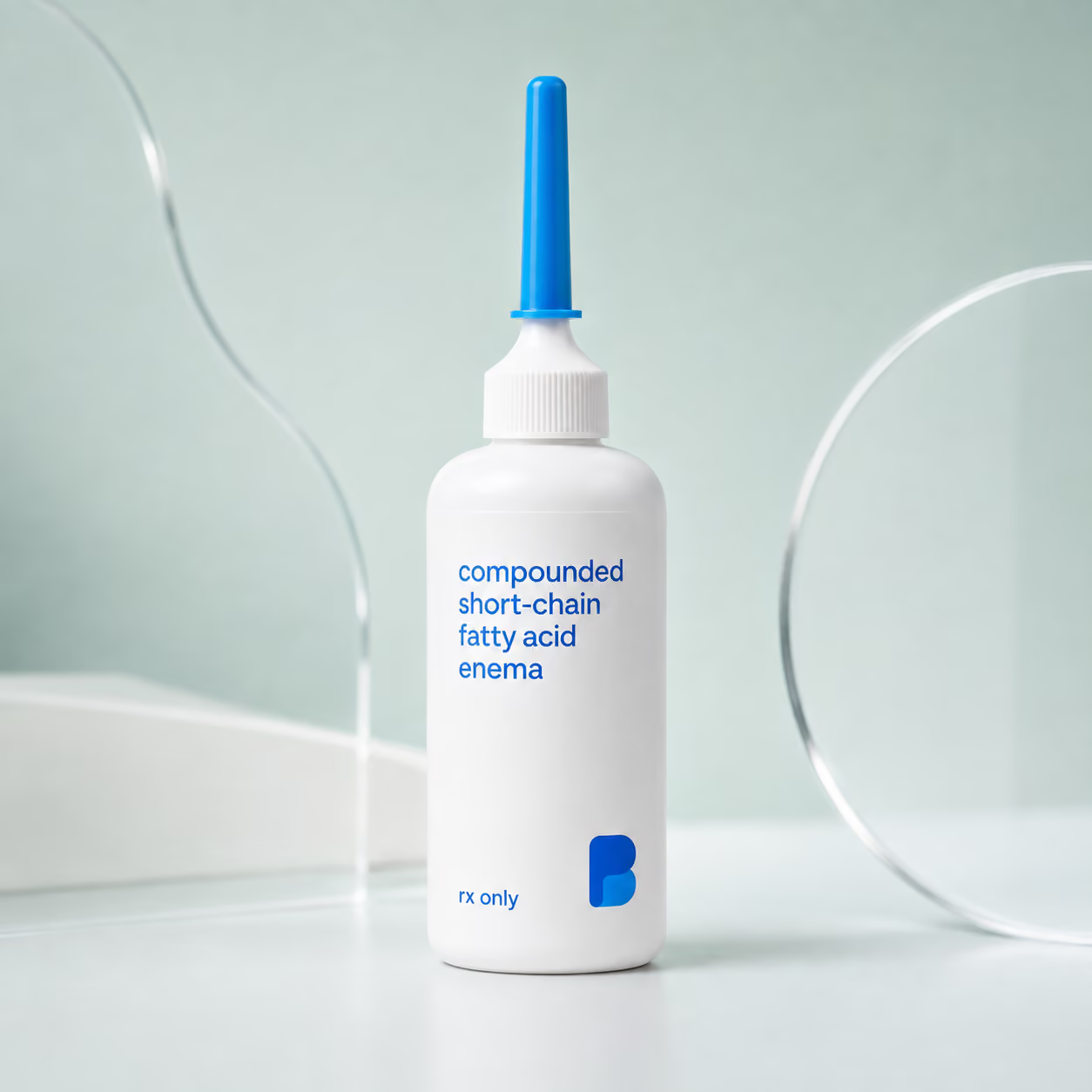





A short-chain fatty acid enema is a compounded, prescription liquid that is instilled into the rectum. It contains the sodium salts of acetate, propionate, and butyrate. The three short-chain fatty acids your own gut bacteria produce. Bayview dispenses it as single-use 60 mL enemas, most commonly at 60 mM acetate, 30 mM propionate, and 40 mM butyrate, or at whatever concentrations your prescriber specifies.
It is prescribed mostly for a condition called diversion colitis, and sometimes for inflammation limited to the lower colon or rectum. Before you read further, it is worth knowing that the reasoning behind this treatment is much stronger than the clinical evidence for it. We explain both below.
How does it work?
When you eat dietary fiber, your body cannot digest most of it. The bacteria living in your colon can. They ferment that fiber and produce short-chain fatty acids, mainly acetate, propionate, and butyrate.
Butyrate is the important one here. The cells lining your colon, called colonocytes, are unusual in that they do not primarily run on glucose from the bloodstream the way most cells do. They burn butyrate from inside the bowel instead. Butyrate is described in the literature as the primary energy source for colonocytes and as the major end product of bacterial fiber fermentation in the large intestine (Frontiers in Nutrition). Those cells are effectively fed from the inside.
An SCFA enema puts those fatty acids back into direct contact with the lining. The intent is to restore the fuel supply to cells that are not receiving it.
What is it used for?
Diversion colitis. This is the main use. When surgery routes stool away from part of the colon or rectum through a stoma, the bypassed segment stops receiving anything from inside the bowel. No stool means no bacteria fermenting fiber, which means no short-chain fatty acids, which means the lining loses its fuel. Over months, that bypassed segment often becomes inflamed and can bleed or produce mucus discharge. SCFA enemas aim to put back what the diversion took away.
Distal ulcerative colitis and ulcerative proctitis. Inflammation limited to the rectum or the left side of the colon has also been studied with SCFA and butyrate enemas, on the reasoning that the inflamed lining may not be using butyrate normally. Standard treatment for ulcerative colitis uses aminosalicylates, corticosteroids, immunosuppressants, and biologics (NIDDK); SCFA enemas are not part of that standard.
Only a licensed prescriber can decide whether an SCFA enema is right for you, and a valid prescription is required.
What does the evidence show?
This is where honesty matters most, so please read it before you form expectations.
The founding study was very small. In 1989, Harig and colleagues published a report in the New England Journal of Medicine on short-chain fatty acid irrigation in diversion colitis. It included four patients. Instilling SCFA solutions twice daily was followed by resolution of symptoms and of the inflammatory changes within four to six weeks, and remission was maintained for up to 14 months with continued treatment (Harig et al., NEJM 1989). That result is what launched the whole idea. Four patients is not a foundation you should base strong expectations on.
Later controlled studies did not consistently repeat it. Subsequent work comparing SCFA solutions against plain saline irrigation in diversion colitis found no significant difference between them on endoscopic or tissue examination, and a further study found no significant endoscopic or bacteriologic difference. Those conflicting human findings are laid out in a 2010 paper by de Oliveira and colleagues in Clinics (de Oliveira et al., Clinics 2010). Trials of SCFA and butyrate enemas in distal ulcerative colitis have likewise been small and mixed.
Where that leaves things. The mechanism is well established: butyrate really is the fuel colonocytes use, and a diverted segment really is deprived of it. What is not established is that supplying it by enema reliably improves the condition. There is no FDA-approved SCFA enema, and no guideline recommends one. Bayview does not claim that SCFA enemas treat or resolve diversion colitis or ulcerative colitis. If your prescriber has recommended a trial, ask them what they expect, how long the trial will run, and how you will both judge whether it helped.
One more thing worth knowing. For diversion colitis, the definitive treatment is surgical, reconnecting the bowel so stool flows through the diverted segment again. The literature describes reconstruction of intestinal transit as the preferred treatment, which in most cases resolves the inflammation. Where reversal is possible, an SCFA enema is generally a bridge or a fallback, not an alternative to it. That is a conversation for you and your surgeon.
How does the formula compare to other options?
Bayview compounds one main SCFA formula, and prescribers occasionally order variations. This table is for education only; your prescriber selects the formula.
| Component or option | Notes |
|---|---|
| Sodium acetate 60 mM | The most abundant short-chain fatty acid in the colon |
| Sodium propionate 30 mM | Largely taken up by the liver in normal physiology |
| Sodium butyrate 40 mM | The component of primary interest. The fuel colonocytes use |
| Butyrate-only enema | Some prescribers order butyrate alone; used in several ulcerative colitis studies |
| Custom concentrations | Other molar concentrations or volumes as your prescriber directs |
Components and options are described for education only and are not a statement that any formula is better for a particular person. Your prescriber selects the formula, volume, and schedule.
How is it used?
Use it exactly as your prescriber directs. Descriptively, SCFA enemas are commonly prescribed as one 60 mL enema instilled rectally once or twice daily, retained as long as is comfortable, for a defined course of several weeks. Many prescribers ask you to use it at bedtime so it stays in longer.
In practice: empty your bladder and, if you can, move your bowels first. Lie on your left side with your right knee drawn up, or use whatever position your prescriber recommended. Insert the tip gently, using a lubricant if your prescriber suggested one, and never force it. Instill the contents slowly. Then stay lying down and try to hold it as long as you comfortably can. Some leakage is normal, so a towel or pad is a good idea.
If insertion hurts, stop and call your prescriber rather than pushing. Do not stop the course early or change the schedule on your own. A Bayview pharmacist is available if you have questions about your prescription.
Side effects & safety
SCFA enemas are generally well tolerated, and the effects are local rather than body-wide. The most common are mild cramping, a feeling of urgency or fullness, local irritation, and leakage.
Contact your prescriber if cramping is severe, if bleeding increases, or if your symptoms get worse rather than better during the course.
Who should not use it?
Do not use an SCFA enema if a perforation or bowel obstruction is suspected. Do not use it after recent rectal or colorectal surgery unless your surgeon specifically directs it. Extra caution and prescriber judgment are needed if you have a rectal or colonic stricture, severely inflamed or friable tissue, a recent biopsy, or toxic megacolon. Because the preparation uses sodium salts, tell your prescriber if you are on a strict sodium restriction or have significant kidney or heart failure. Tell your prescriber about your full surgical and health history, allergies, pregnancy or breastfeeding status, and all medications, so they can decide whether this is appropriate.
How should it be stored?
Store it exactly as your label directs. SCFA enemas are typically refrigerated. If yours is refrigerated, letting the enema sit at room temperature for a few minutes before use makes it far more comfortable, a cold enema causes cramping. Do not freeze, and do not microwave it. Keep the containers closed until use, keep them out of the reach of children, and do not share them. Each 60 mL enema is single-use; discard it after one dose even if some liquid remains. The beyond-use date is assigned under USP standards and is printed on your label; do not use the preparation after that date, and dispose of unused medication as directed.
Why is this compounded?
No manufacturer makes a short-chain fatty acid enema in the United States. Sodium acetate, sodium propionate, and sodium butyrate exist as raw chemical ingredients, but there is no commercial finished product that combines them at the concentrations used in the diversion colitis and ulcerative colitis literature, and no FDA-approved product for these uses. Compounding is the only way a prescriber can obtain the formula. As a 503A compounding pharmacy, Bayview prepares each order in small batches from quality ingredients and dispenses it as single-use 60 mL enemas so each dose is measured out for you. Compounded preparations are not FDA-approved. Related preparations include Bladder Instillation Therapy, Diazepam / Baclofen Suppositories, and Diltiazem. The full list is in our compounded medications catalog.
Clinical details for prescribers
Regulatory status. Not a controlled substance. No FDA-approved SCFA enema product exists in the US, and no SCFA product is approved for diversion colitis or ulcerative colitis. Use is off-label and requires compounding. Compounded preparations are not FDA-approved.
Formulation. Sodium acetate 60 mM / sodium propionate 30 mM / sodium butyrate 40 mM, dispensed as single-use 60 mL enemas (commonly 7 × 60 mL or 12 × 60 mL). Butyrate-only and custom molarities available. Typically refrigerated; BUD assigned under USP standards and printed on the label.
Evidence & clinical points:
- Rationale: butyrate is the principal oxidative fuel of colonocytes; a defunctioned segment is deprived of luminal SCFA. Diversion colitis is framed in the original literature as a luminal nutritional deficiency state.
- Harig 1989 (NEJM): n=4. Twice-daily SCFA irrigation followed by clinical, endoscopic, and histologic resolution in 4 to 6 weeks, sustained up to 14 months on continued therapy. Hypothesis-generating only.
- Subsequent controlled work: comparisons of SCFA against saline irrigation in diversion colitis found no significant endoscopic or histopathologic difference (Guillemot et al.); a further study found no significant endoscopic or bacteriologic difference (Schauber et al.). Randomized trials of SCFA/butyrate enemas in distal UC are small and inconsistent. Do not counsel patients to expect a reliable response.
- Definitive management of diversion colitis is restoration of intestinal continuity where feasible; SCFA enemas are adjunctive or a bridge when reversal is not an option.
- Cautions: suspected perforation or obstruction, recent colorectal surgery without surgeon direction, stricture, friable mucosa, toxic megacolon. Sodium load is a consideration in strict sodium restriction, advanced CKD, or decompensated heart failure. Counsel on butyrate odor to support adherence.
Ordering: send a prescription to Bayview Pharmacy, 3844 Post Rd, Warwick, RI 02886 (NCPDP 4106882, fax 401-284-4506). Background: Harig et al., NEJM 1989; de Oliveira et al., Clinics 2010. Account setup, licensing, and ordering are covered on our for providers page.
This is a prescription compounded medication and is not FDA-approved. This information is educational and is not medical advice. The evidence supporting SCFA enemas is limited and inconsistent. Bayview Pharmacy does not provide consultations or determine whether this preparation is appropriate, your prescriber does that and sets the dose.