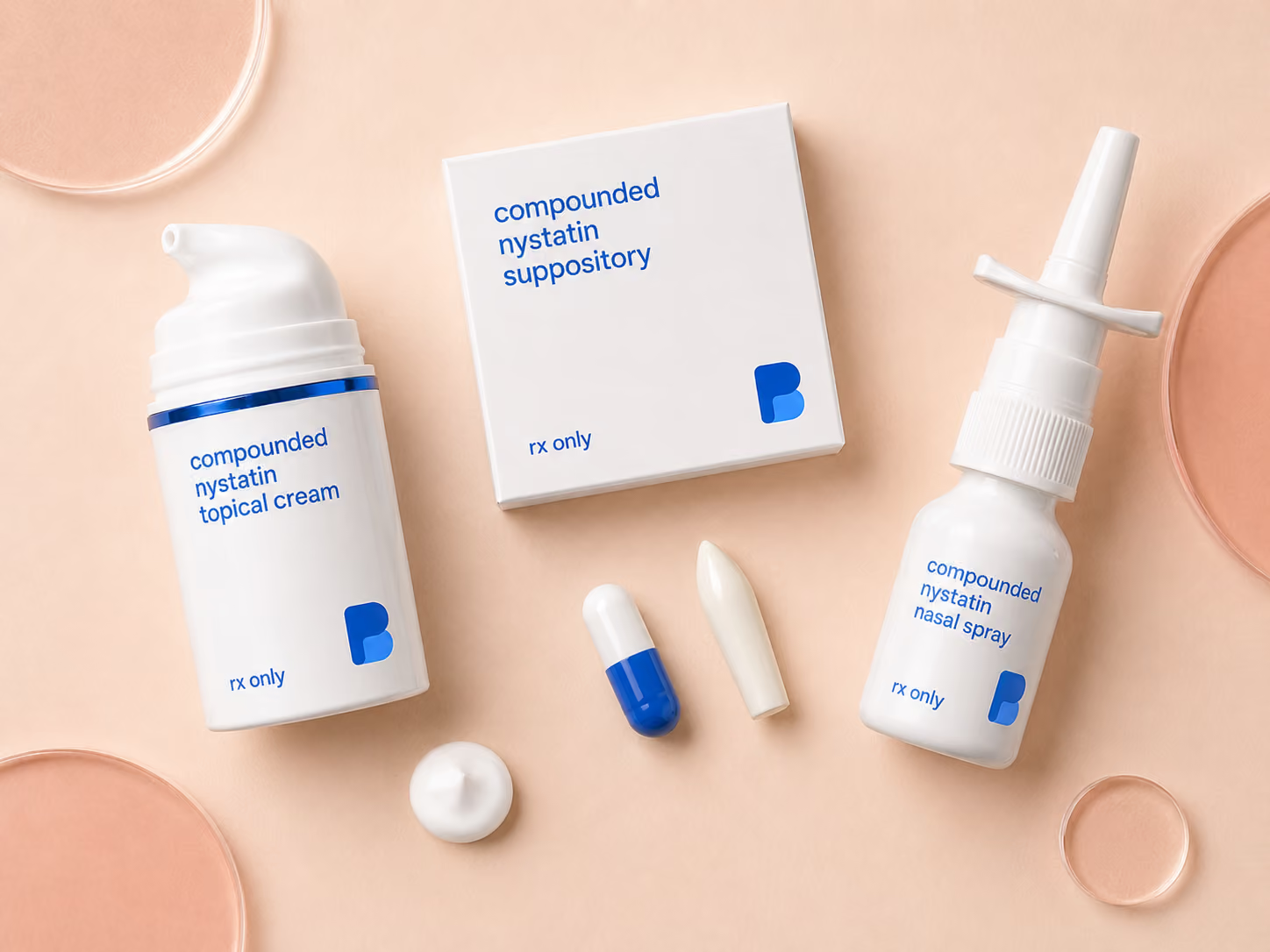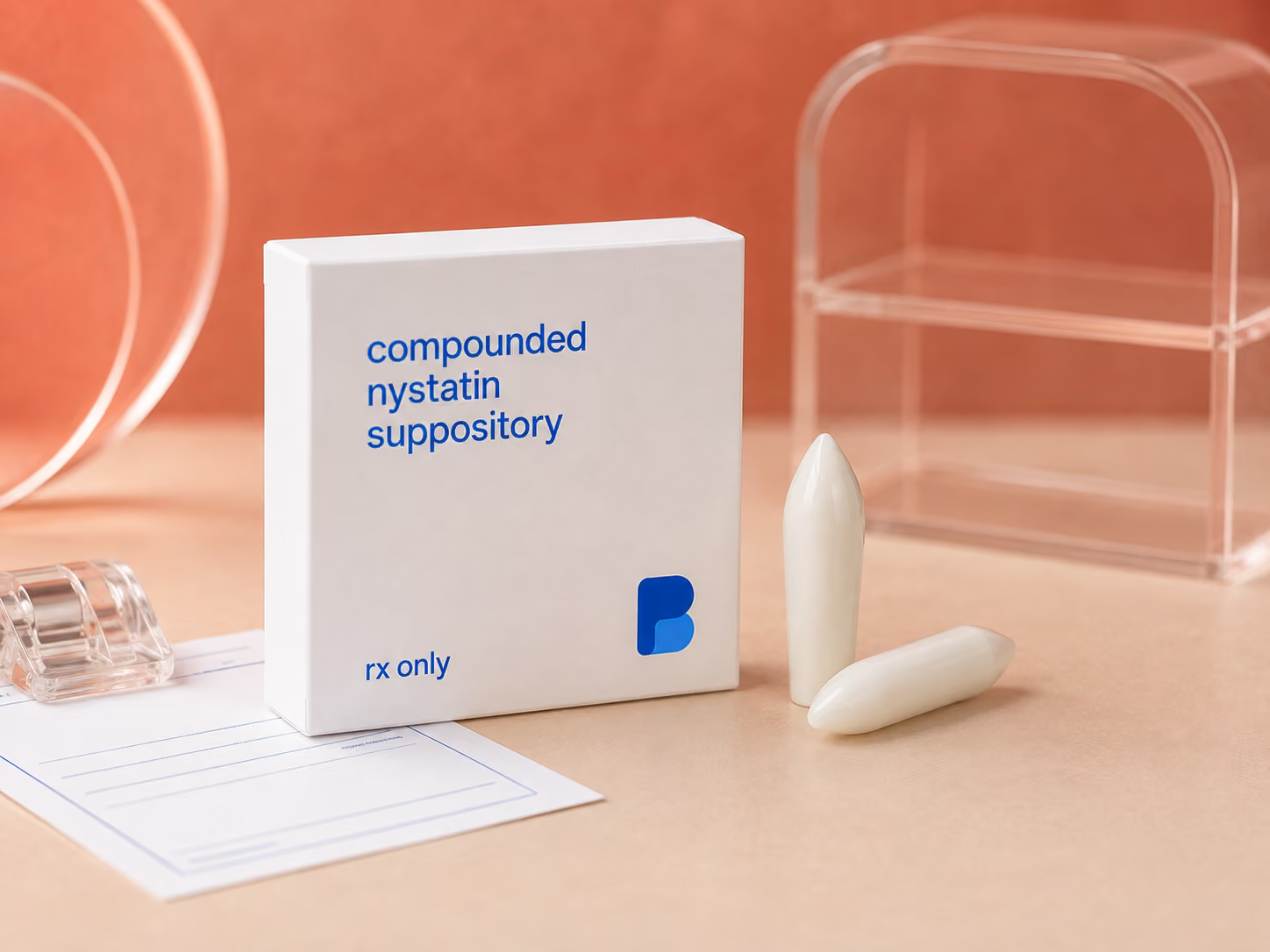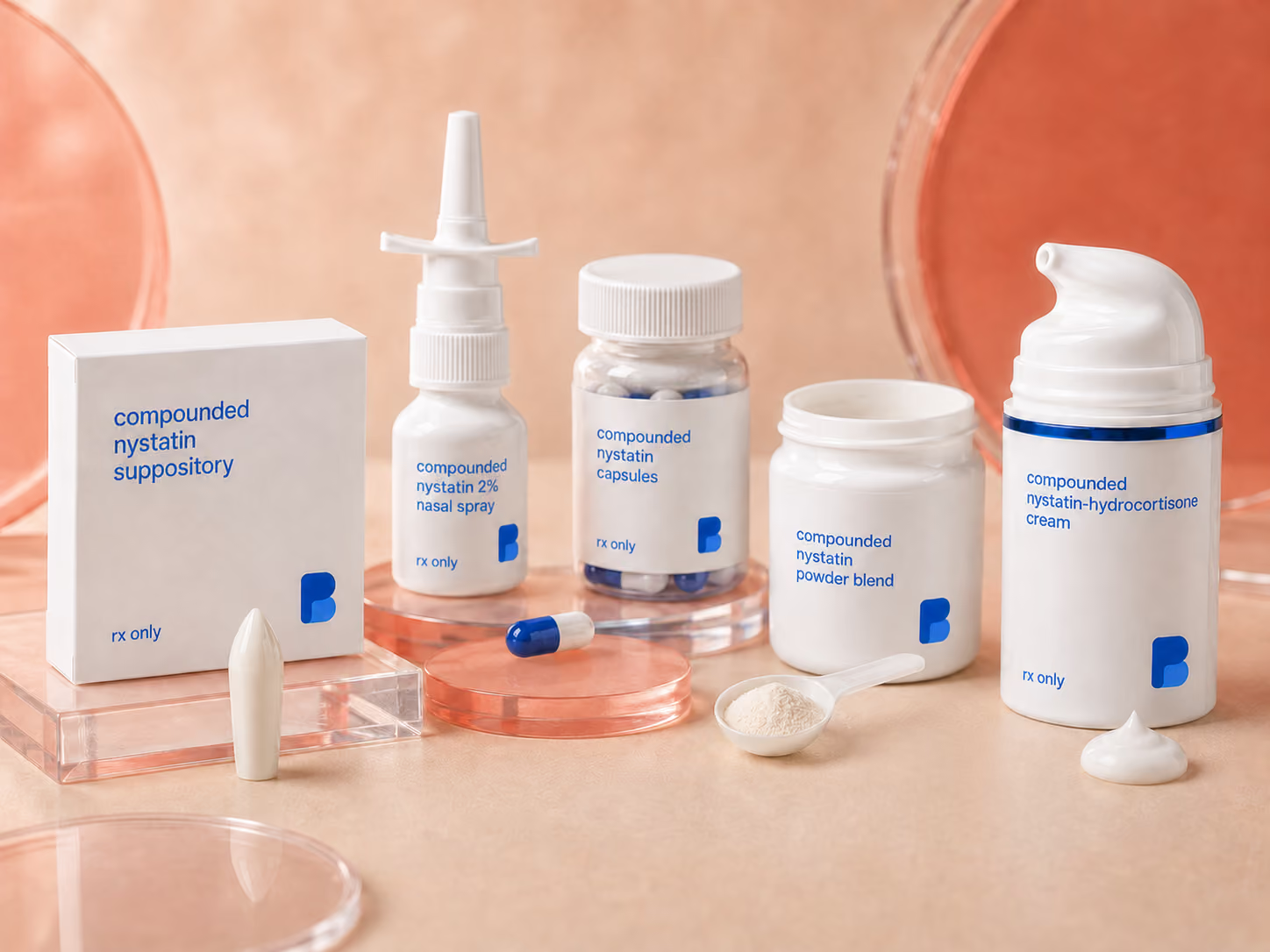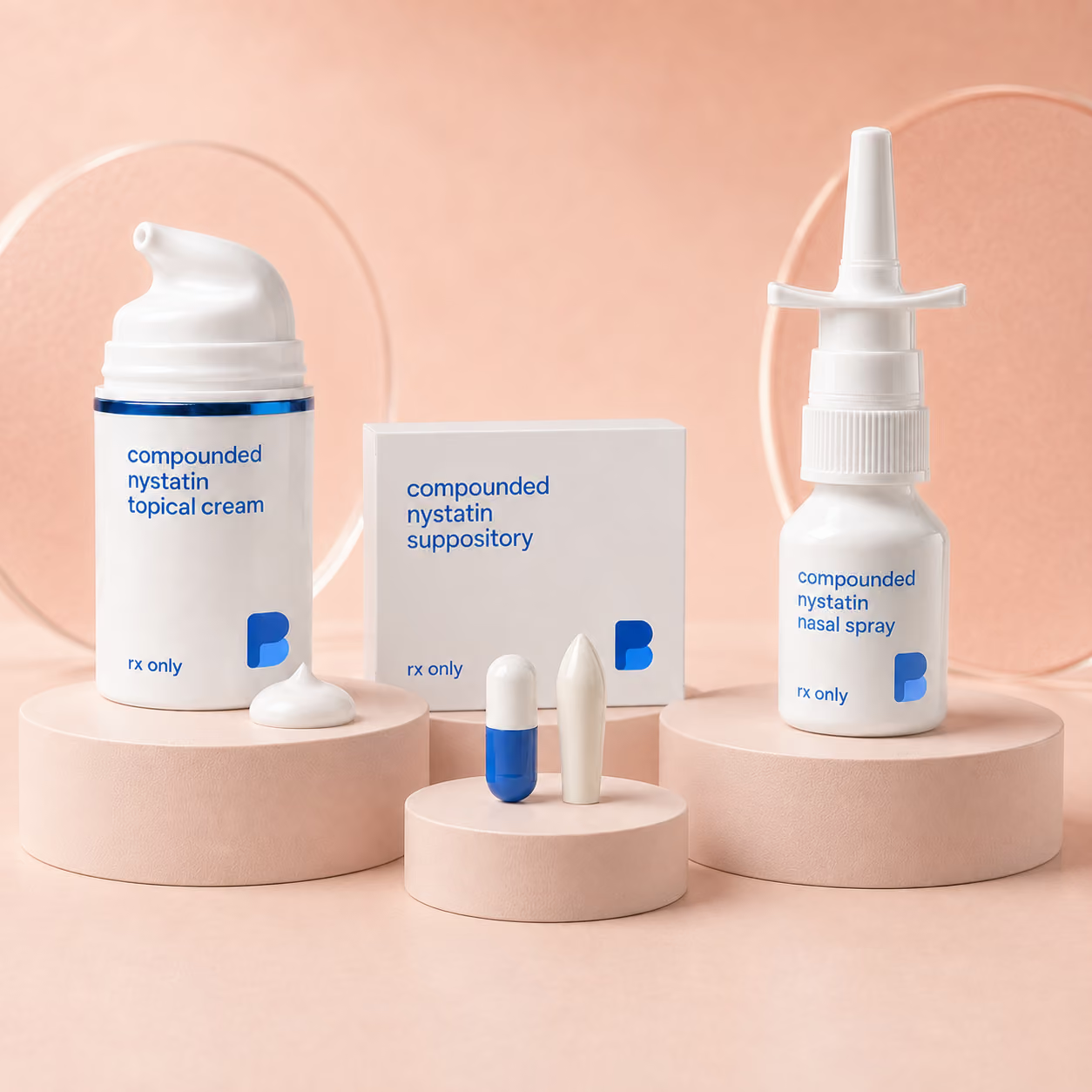



Nystatin is a prescription antifungal medicine that treats yeast infections caused by Candida. It has been used for decades and is available commercially as an oral liquid, oral tablets, and topical cream, ointment, and powder. Bayview compounds nystatin in the forms that are not commercially made, vaginal suppositories, a 2% nasal spray, capsules in custom strengths, and custom creams and powders, prepared to your prescriber's order.
Compounded preparations are not FDA-approved. A valid prescription is required, and Bayview Pharmacy does not provide consultations or determine whether a medication is appropriate for you. Only your prescriber can decide that.
How does it work?
Nystatin belongs to a group of antifungals called polyenes. It binds to ergosterol, a fat-like building block in the fungal cell membrane that human cells do not have. Binding punches tiny channels in the membrane, so the yeast cell leaks potassium and other contents and dies.
Nystatin is essentially not absorbed into the bloodstream from the digestive tract, from intact skin, or from mucous membranes. That is why it works where you put it and why it is not used for fungal infections in the blood or deep organs. It also explains why nystatin is generally very well tolerated, very little of it ever reaches the rest of your body (MedlinePlus).
What is it used for?
Nystatin is used for yeast infections on surfaces of the body:
- Vulvovaginal candidiasis (vaginal yeast infection). A suppository is placed in the vagina, usually once daily at bedtime for about two weeks. The CDC lists nystatin among the medicines a provider may use inside the vagina when first-line treatment has not worked (CDC, Treatment of Candidiasis).
- Oral candidiasis (thrush). Nystatin liquid is swished around the mouth, held there, and then swallowed or spit out as directed. The CDC lists nystatin as one of the antifungals applied inside the mouth for mild to moderate thrush.
- Denture stomatitis. Yeast that grows under a denture causes a red, sore roof of the mouth. Prescribers often treat the mouth and have the denture cleaned and soaked, because treating only the mouth tends to let the infection come back.
- Cutaneous candidiasis. Yeast in warm, moist skin folds, under the breasts, in the groin, between the toes, or around a stoma. Nystatin cream, ointment, or powder is applied to the area (MedlinePlus, Nystatin Topical). A powder blended into Stomahesive is sometimes ordered for irritated skin around an ostomy.
- Intestinal candidiasis. Oral nystatin tablets or capsules act inside the digestive tract without being absorbed.
Nystatin does not treat bacterial vaginosis or trichomoniasis. Those are different infections, one is an overgrowth of bacteria, the other is a parasite, and both need different medicines. Vaginal itching, burning, odor, or discharge can come from any of the three, and they can look alike, so it is worth being tested rather than assuming it is yeast (CDC STI Treatment Guidelines).
How do the forms compare?
Nystatin is compounded in several forms that differ mainly in where the medicine is meant to act. The table below is for education only; your prescriber chooses the form, strength, and schedule.
| Form | Where it acts | Notes |
|---|---|---|
| Vaginal suppository, 100,000 units | Vagina | Compounded because no FDA-approved nystatin vaginal product is marketed in the US |
| 2% nasal spray (aqueous or Mucolox base) | Nasal passages | Off-label; evidence for antifungals in chronic sinus disease is weak |
| Capsules, 500,000 units | Digestive tract | For custom strengths or when a commercial tablet is not suitable |
| Powder in Stomahesive, 100,000 units/g | Skin, often around a stoma | Combines an antifungal with a skin-protecting powder |
| Cream with hydrocortisone | Skin | Adds a corticosteroid for itch and inflammation when a prescriber orders it |
Forms are described for education only and are not a statement that any form is better for a particular person. Your prescriber selects the form, strength, and schedule.
How is it used?
Use nystatin exactly as your prescriber directs and finish the full course, even if you feel better after a few days, stopping early is a common reason yeast comes back.
- Vaginal suppositories. Typically one suppository placed high in the vagina at bedtime for about 14 days. Wash your hands before and after. A panty liner helps with leakage. Suppositories are generally continued through a menstrual period unless your prescriber says otherwise.
- Nasal spray. Blow your nose gently first, then spray into each nostril as directed, aiming slightly outward toward the ear rather than at the center wall of the nose. Do not share the bottle.
- Oral liquid or capsules. For thrush, liquid is usually swished and held in the mouth as long as possible before swallowing or spitting, four times a day. Do not eat or drink for a short time afterward so the medicine stays in contact with the tissue. Capsules for the digestive tract are swallowed whole.
- Cream, ointment, or powder. Apply a thin layer to the affected skin, usually two to three times a day. Dry the skin first; yeast thrives in moisture.
A Bayview pharmacist is available if you have questions about how to use your prescription.
Side effects & safety
Nystatin is generally very well tolerated, largely because so little of it is absorbed. Most side effects are local and mild.
- Vaginal suppositories: local irritation, burning, or itching; leakage or discharge from the suppository base.
- Oral forms: nausea is the most common complaint, and some people get vomiting, stomach upset, or diarrhea. Mouth irritation or burning can occur.
- Skin forms: burning, itching, or redness where applied.
- Nasal spray: nasal stinging, dryness, or irritation.
Rarely, people have allergic reactions to nystatin. Stop the medicine and get medical help right away for rash, hives, swelling of the face, lips, or tongue, or trouble breathing or swallowing (MedlinePlus). Serious skin reactions have been reported very rarely.
Call your prescriber if symptoms do not improve within about a week, get worse, or keep coming back, repeated yeast infections sometimes point to a different diagnosis, a resistant species of yeast, or an underlying condition such as diabetes that needs attention.
Who should not use it?
Do not use nystatin if you have had an allergic reaction to nystatin or to any ingredient in the preparation. Nystatin is not a treatment for fungal infections in the bloodstream or internal organs, because it is not absorbed. It also does not treat bacterial vaginosis, trichomoniasis, or any bacterial or viral infection.
Tell your prescriber and pharmacist about your full health history, allergies, and every medicine and supplement you take, and whether you are pregnant, planning to become pregnant, or breastfeeding. Ask your pharmacist about the suppository base before relying on a latex condom or diaphragm, since some suppository bases can weaken latex.
How should it be stored?
Store your preparation exactly as directed on the label. Compounded suppositories are commonly kept refrigerated so they stay firm; nasal sprays and liquids may also need refrigeration, while creams, ointments, powders, and capsules are usually stored at room temperature away from heat and moisture. Do not let nystatin freeze.
Keep everything in the container it came in, tightly closed and out of the reach of children, and do not share it. Do not use it past the beyond-use date on the label, and dispose of unused medication as your pharmacist directs or through a drug take-back program rather than flushing it.
Why is this compounded?
Nystatin vaginal tablets are no longer marketed in the United States, so there is no commercial product to fill a prescription for vaginal nystatin. Nystatin nasal spray, custom-strength capsules, powder blended into Stomahesive, and nystatin-plus-hydrocortisone cream have never been commercially available in those forms either. Compounding lets a licensed pharmacy prepare nystatin in the form, strength, and base your prescriber orders.
As a 503A compounding pharmacy, Bayview Pharmacy prepares each order in small batches using quality ingredients. Compounded preparations are not FDA-approved, they are not reviewed by the FDA for safety or effectiveness, and a valid prescription is required. Related ear, nose, and throat preparations include Amphotericin B Compounded Preparations. The full list is in our compounded medications catalog.
Clinical details for prescribers
Regulatory status. Nystatin is not a controlled substance. FDA-approved nystatin products currently marketed in the US include oral suspension, oral tablets, and topical cream, ointment, and powder (including nystatin/triamcinolone combinations). No nystatin vaginal product is currently marketed in the US. The FDA NDC Directory returns marketed nystatin products by oral and topical route but none by vaginal route, and DailyMed returns no nystatin vaginal labels. Vaginal suppositories, nasal spray, custom capsules, Stomahesive powder blends, and nystatin/hydrocortisone cream are compounded and off-label. Compounded preparations are not FDA-approved.
Pharmacology. Polyene macrolide; binds ergosterol, forming membrane pores with resultant leakage of intracellular potassium and cell death. Negligible absorption from intact GI mucosa, skin, and mucous membranes, therapy is topical/local by design and has no role in invasive candidiasis. Activity is against Candida species; it does not cover bacteria, Trichomonas, or dermatophytes.
Evidence & clinical points:
- Vulvovaginal candidiasis: CDC lists nystatin among intravaginal options, particularly for non-albicans or azole-refractory disease; typical compounded regimen is one 100,000-unit suppository intravaginally nightly for 14 days
- Oropharyngeal candidiasis: nystatin suspension 4 times daily; contact time drives response. Address dentures and inhaled-corticosteroid technique to prevent relapse
- Intranasal nystatin for chronic rhinosinusitis is off-label with low-quality supporting evidence. The Cochrane review (Head 2018, CD012453) found it uncertain whether topical or systemic antifungals affect patient-important outcomes; earlier randomized trials of topical amphotericin B were negative. Set expectations accordingly and define a stopping point
- Recurrent or refractory vulvovaginal candidiasis warrants culture/speciation before extending empiric therapy; consider non-albicans species and glycemic control
- Contraindicated with nystatin hypersensitivity; no clinically meaningful systemic drug interactions given negligible absorption
Ordering: send a prescription to Bayview Pharmacy, 3844 Post Rd, Warwick, RI 02886, NCPDP 4106882, fax 401-284-4506. Background: CDC, Treatment of Candidiasis; Cochrane review of antifungals in chronic rhinosinusitis. Account setup, licensing, and ordering are covered on our for providers page.
This is a prescription compounded medication and is not FDA-approved. This information is educational and is not medical advice. Your prescriber determines whether it is appropriate and sets the form, strength, and dose. Bayview Pharmacy does not provide consultations or determine appropriateness.