In Stock
Ichthammol Ointment, Drawing Salve | Bayview Pharmacy

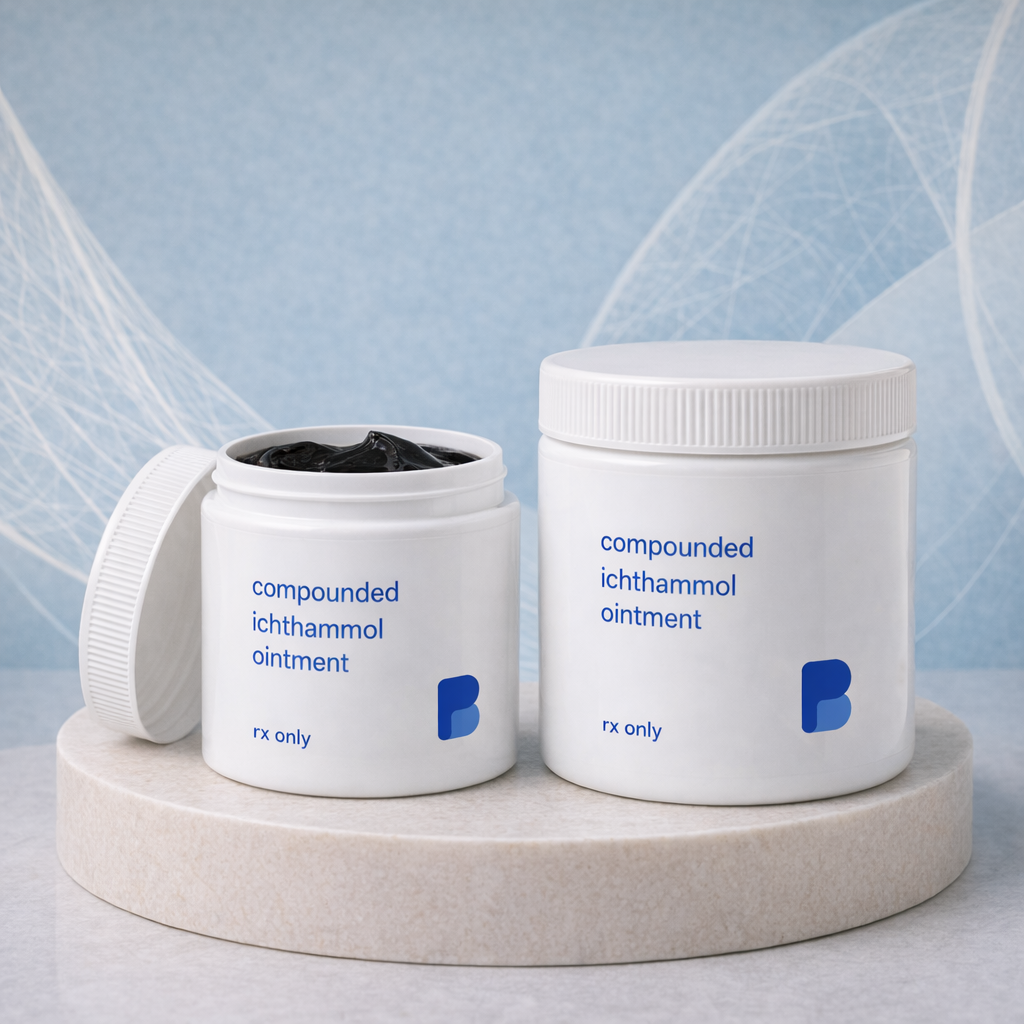
Ichthammol Ointment (Drawing Salve)

Smiling man in blue pharmacist scrubs with arms crossed and pen behind his ear.
Medically reviewed by Ryan Dyer, RPh
Last updated on
September 3, 2026
Starting at
$90
for
30 g
Checkmark icon followed by text 'HSA/FSA Eligible'.
Start with a prescription
Licensed to fill prescriptions for patients in RI, MA, CT, NY, NJ, NH, FL & ME
  • Prescriber-specified strength and base. 10%, 12%, or 20% ichthammol in white petrolatum, a lanolin-free base, or a base your prescriber names, beyond the 10 to 20% jars sold over the counter.
  • Evidence, not folklore. The page says plainly what studies show about ichthammol, what they do not, and why a boil that needs draining needs a clinician, not a salve.
  • Not black salve. Ichthammol is unrelated to the corrosive bloodroot products sold under that name, and this page says so.
  • Compounded to order. Prepared in our Rhode Island pharmacy for an individual prescription.

Ichthammol, or ammonium bituminosulfonate, is a dark, tarry, sulfur-rich substance distilled from oil shale that has been spread on boils, eczema, and psoriasis for more than a century, usually under the name drawing salve. No ichthammol product is FDA-approved; the 10 to 20% jars sold over the counter are marketed without FDA review, and a compounded ichthammol ointment is not FDA-approved either. Bayview compounds ichthammol when a prescriber orders a specific strength and base for an individual patient, most often 10%, 12%, or 20% in white petrolatum or a lanolin-free base. A valid prescription is required.

Two things this page is careful about. First, ichthammol does not pull toxins or infection out of the skin; the laboratory evidence is that it softens and loosens the outer skin and has some antibacterial action, and the clinical evidence is old and thin. Second, ichthammol drawing salve has nothing to do with the bloodroot product also sold as black salve, which is corrosive and has been marketed illegally as a cancer treatment. A boil that is large, painful, spreading, or on the face needs a clinician to drain it, not a salve. Your prescriber decides whether ichthammol has a place in your care.

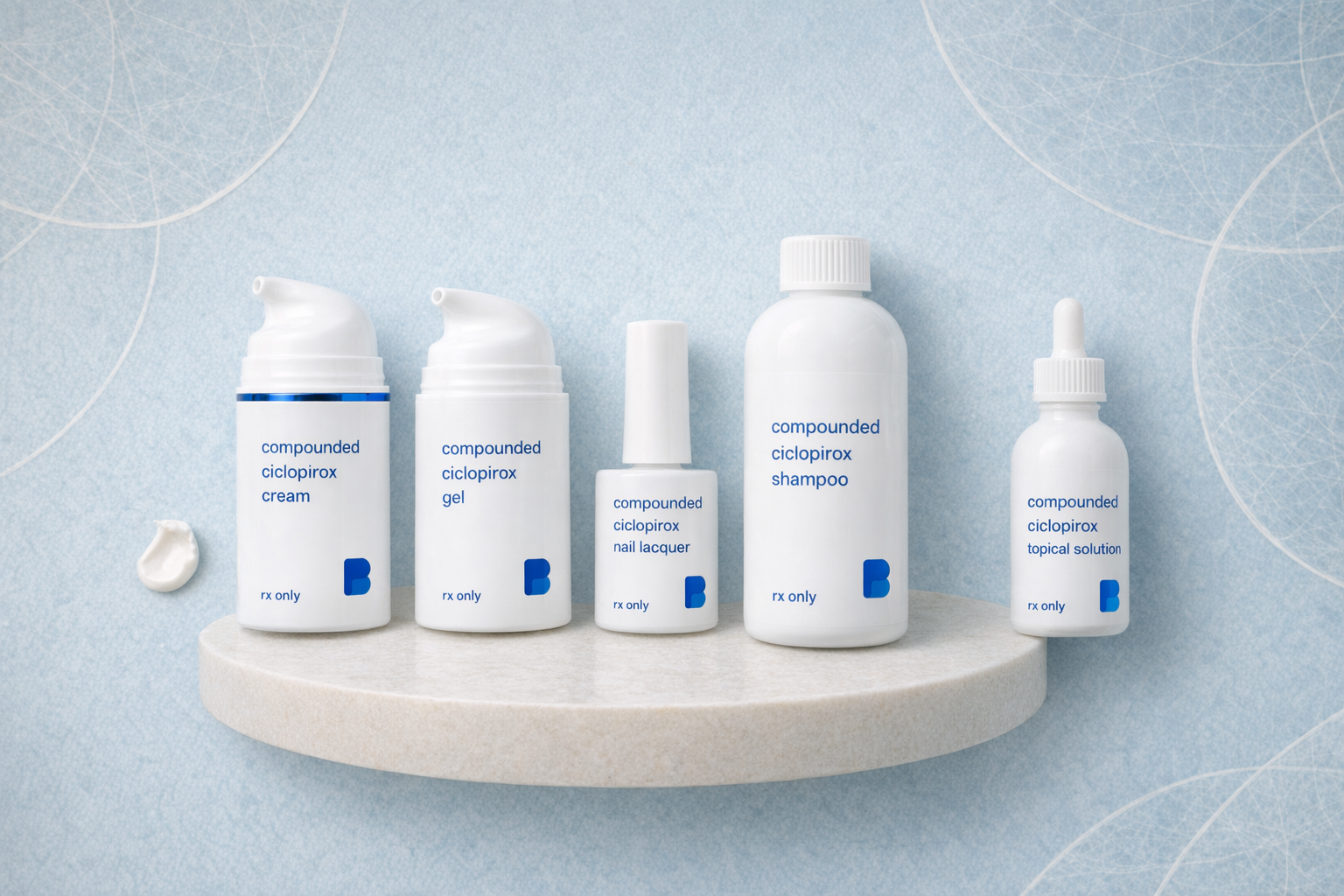
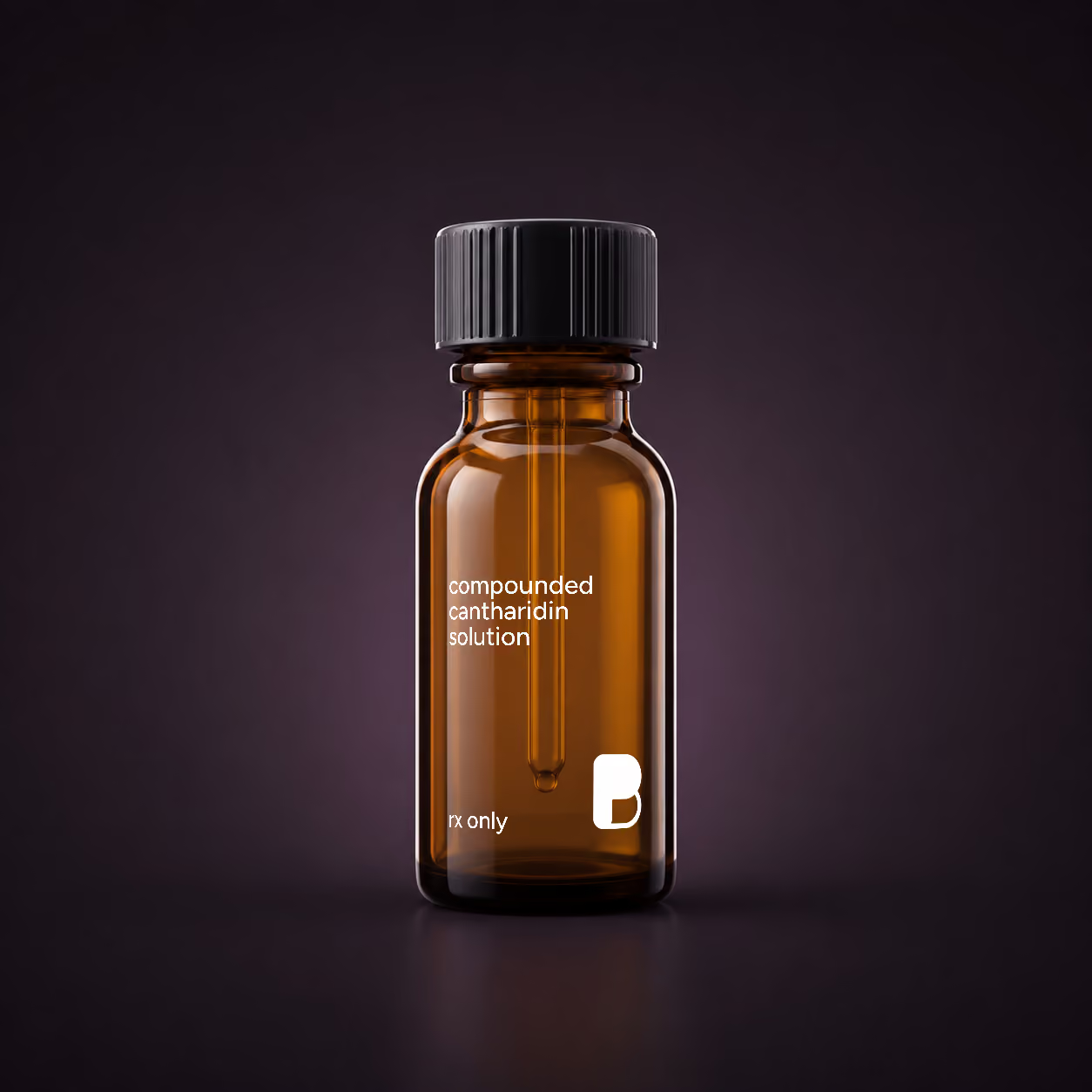
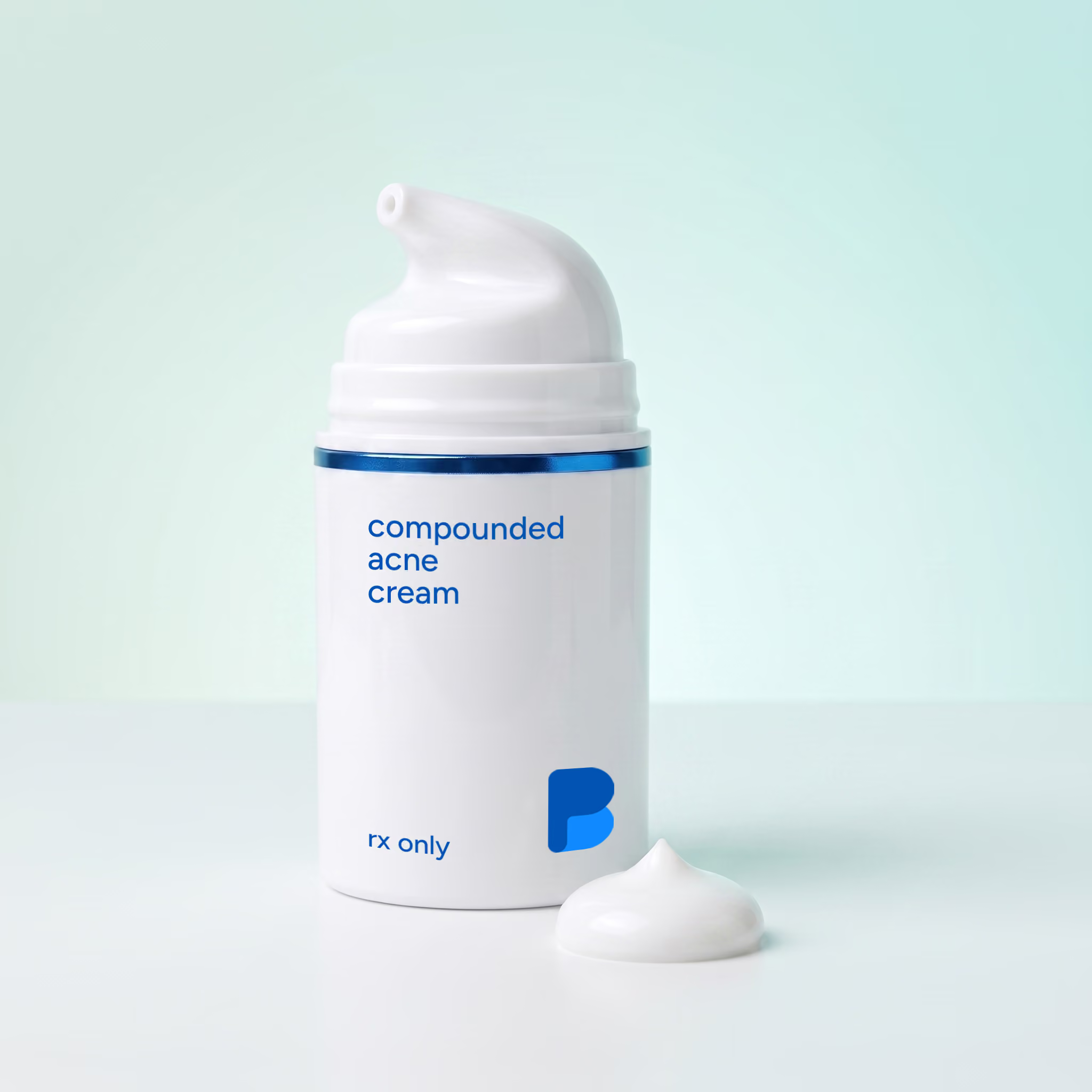
Bayview also compounds ciclopirox for fungal skin infections, cantharidin for warts, prescription acne treatments, and the full range of dermatology preparations.

What is ichthammol, and is it the same as drawing salve?

Ichthammol, or ammonium bituminosulfonate, is a dark, tar-smelling, sulfur-rich substance distilled from oil shale, and it is the active ingredient in most products sold as drawing salve. It has been spread on boils, eczema, and psoriasis for more than a century. No ichthammol product is FDA-approved: the 10 to 20% jars sold over the counter are marketed without FDA review, and a compounded ointment is not FDA-approved either. Bayview compounds it when a prescriber orders a specific strength and base.

Does drawing salve really draw out infection?

Not in the way the name suggests. Laboratory work on skin models shows that ichthammol loosens and softens the outer skin in a strength-dependent way, and in the test tube it kills common skin bacteria including staph and strep. That softening is probably why a small boil under an ichthammol dressing sometimes comes to a head on its own, and why a splinter can become easier to remove. Nothing is pulled out through the skin, and the clinical studies behind the salve are old, small, and mostly uncontrolled. A boil that has formed a pocket of pus needs a clinician to drain it; no salve does that.

Trusted by 105,826 patients to date.
A group of faces of our past satisfied patients.
Compounded medications are prepared pursuant to a valid prescription for an individual patient and are not FDA-approved. This page is for educational purposes and is not medical advice.
**The FDA does not review or approve compounded medications for safety or effectiveness. A valid prescription from a licensed practitioner is required.
Important safety information →
Service availability

Prescription delivery in your state

Bayview Pharmacy currently serves eligible patients in eight states. Check your state before getting started.

Where we currently serve

Select a highlighted state to check availability.

Currently licensed Licensed — non-controlled only Not currently licensed Your selection

Select a state on the map or use the state checker.

Do we serve your state?

Choose your state to confirm current service availability.

Thank you! Your submission has been received!
Oops! Something went wrong while submitting the form.
Currently licensed in
Start with a prescription

Getting your prescription filled is simple

Send us your prescription

STEP
1
Have your provider e-prescribe to Bayview, fax it to us, or call it in directly to one of our pharmacists.
A thin blue light beam connecting two clear glass slabs on a white surface.

A pharmacist reviews it

STEP
2
We verify your prescription and prepare your medication to your provider's exact instructions.
Close-up of a white dial with blue measurement markings and a rotating knob.

We compound & ship

STEP
3
We prepare your medication and ship it discreetly to your door, with support when you need it.
Close-up of a gray box with a precise blue line running along its folded edges.

What is Ichthammol Ointment (Drawing Salve)?

Ichthammol is one of the oldest topical medicines still in use. It is made by distilling sulfur-rich oil shale, sulfonating the oil, and neutralizing it with ammonia, which gives a dark, viscous, tar-smelling liquid that pharmacists have been mixing into ointments since the 1880s. In the United States it survives mainly as the drawing salve sold in small jars for boils and splinters.

No ichthammol product is FDA-approved. The over-the-counter 10 to 20% salves are marketed without FDA review, and a compounded ichthammol ointment is a 503A preparation that is not FDA-approved either. Bayview compounds it when a prescriber orders a specific strength and base, most often 10%, 12%, or 20% in white petrolatum or a lanolin-free base, for an individual patient. A valid prescription is required. Bayview compounds this as part of our dermatology compounding line.

Compounded ichthammol is not FDA-approved. It is prepared by a licensed pharmacy to a prescriber's order. Ichthammol has never been through the kind of controlled trials that approved drugs go through, in any strength, and no claim is made on this page that it heals, draws out, or prevents anything. The strength, the site, how often it is applied, and for how long are set by your prescriber and should be followed exactly.

How does it work?

The folklore says a drawing salve pulls infection, splinters, or toxins out through the skin. The laboratory evidence says something narrower. In a 2022 study on three-dimensional human skin models, ammonium bituminosulfonate ointments loosened the outer skin in a concentration-dependent way, reduced two of the proteins that hold the epidermis together, and made the skin more permeable (Fink et al., 2022). That softening is the plausible reason a boil under an ichthammol dressing sometimes comes to a head and drains on its own, and why a splinter can become easier to lift; nothing is pulled, the skin over it is loosened. Separately, sulfonated shale oil kills bacteria in the test tube: in a 2020 study using modern susceptibility methods it was active against Staphylococcus aureus, including methicillin-resistant strains, against streptococci, and against the acne bacterium Cutibacterium acnes, with much weaker activity against Gram-negative bacteria (Idelevich and Becker, 2020). How much of that activity reaches bacteria inside a boil through intact skin has not been measured. Older reviews also describe mild anti-inflammatory and antifungal effects (Boyd, 2010).

What is it used for?

For more than a century ichthammol has been applied to furuncles (boils), folliculitis, and the inflamed skin fold beside an ingrown toenail, and, in lower strengths, to eczema, seborrheic dermatitis, psoriasis, and leg ulcers (Boyd, 2010). Prescribers still order it for a small early boil that has not formed a pocket of pus, for the tender skin around an ingrown nail, for a splinter or insect bite, and occasionally for hidradenitis suppurativa. A 2020 paper reported a small case series of 10% ichthammol in hidradenitis together with a systematic review of ichthammol's published use in dermatology, and the literature it found is old, small, and largely uncontrolled (Fisher and Ziv, 2020). That is the honest state of the evidence: long experience, some laboratory support, and very few trials. Your prescriber decides whether it fits your situation.

When a boil needs a clinician, not a salve

An abscess is a walled-off pocket of pus, and the definitive treatment is incision and drainage by a clinician; antibiotics alone are not sufficient once a pocket has formed, and a salve is not either (StatPearls, Incision and Drainage). Ichthammol belongs, if anywhere, at the small, early, tender-lump stage. Do not use it as a substitute for care if the lesion is larger than about 2 cm, very painful, spreading, surrounded by widening redness or red streaks, on the face or near the spine, or if you have a fever, feel unwell, have diabetes, or have a weakened immune system. Those are reasons to be seen the same day.

Ichthammol is not black salve

The name overlaps and the color is similar, which causes real harm. The product sold as black salve is a corrosive paste made from bloodroot (sanguinarine) and zinc chloride that destroys whatever tissue it touches; it has been promoted as a home treatment for skin cancer, moles, and warts, the published clinical reports describe disfigurement and delayed cancer diagnosis, and no trial supports it (Lim, 2018). The FDA lists black salve among illegally sold cancer treatments (FDA, Illegally Sold Cancer Treatments). Ichthammol contains no bloodroot and no zinc chloride, does not burn tissue, and is not a treatment for any skin growth. If you have a mole, a sore that will not heal, or a lump you are worried about, that is a visit to a clinician, not a salve of any kind.

How is it used?

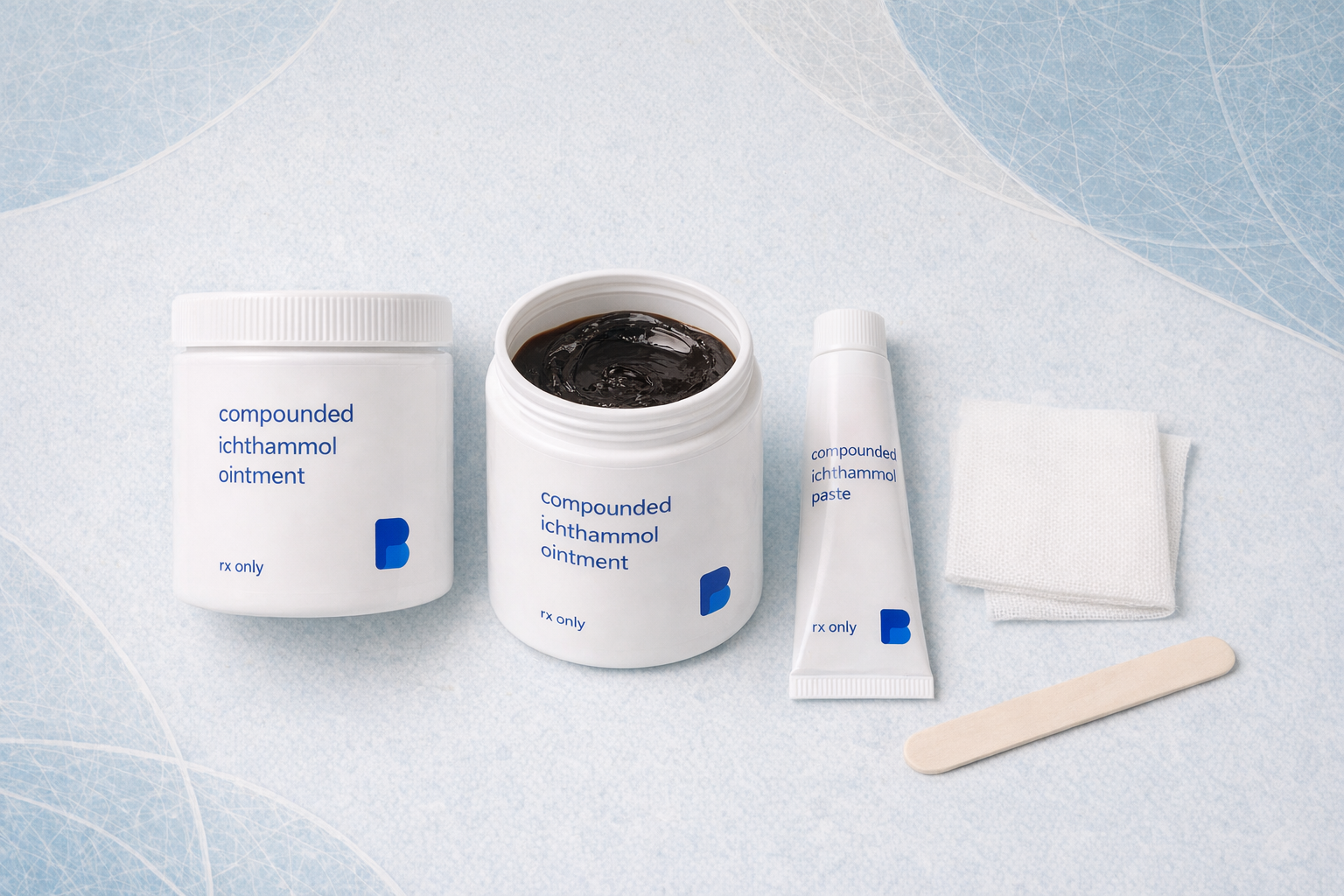
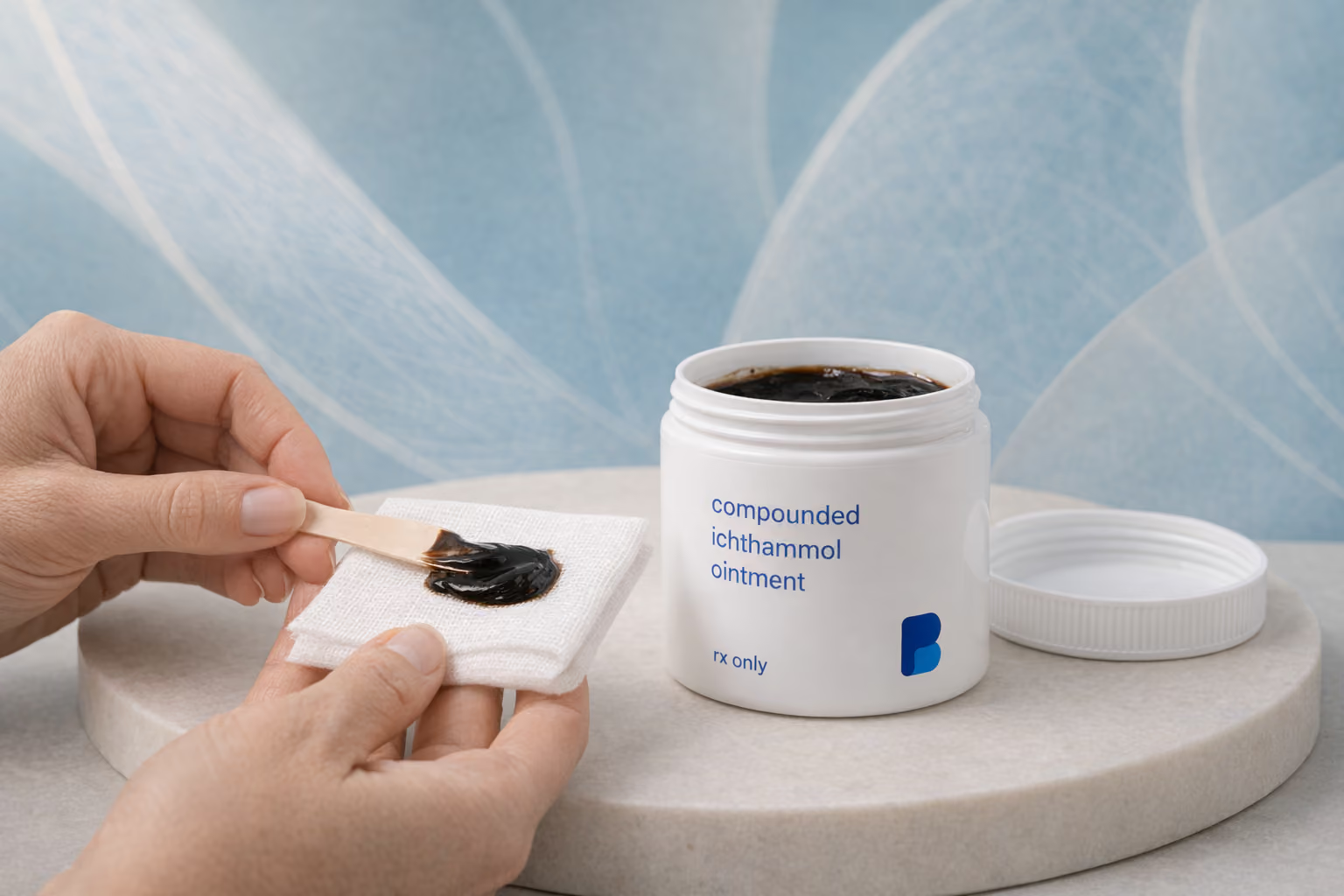
Follow the directions on your label exactly. Wash and dry the area, apply a thin layer of ointment to the lesion and a small margin of skin around it, and cover it with a dry gauze dressing; ichthammol is dark, smells of tar, and stains fabric permanently, so the dressing protects your clothes as much as the skin. Change it once or twice a day as directed, washing your hands afterward. A typical course is a few days. If a boil has not improved after 3 to 5 days, or gets worse at any point, stop and see a clinician. Keep it out of the eyes, mouth, and nose and off mucous membranes, and do not use it on a deep or open wound or a burn.

Side effects & safety

Ichthammol is generally well tolerated on intact skin. The usual effects are mild stinging, redness, or itching at the site, softening or wrinkling of the skin under the dressing, and a temporary brown stain. The problem to watch for is allergic contact dermatitis: ichthammol is a recognized, if weak, sensitizer, and a rash that gets redder, itchier, or blistered, or spreads beyond where the ointment was applied, means stop and tell your prescriber. The smell and the staining are not side effects, but they are the reason most people stop using it.

External use, small areas, short courses. Ichthammol has not been studied in pregnancy, in breastfeeding, or in children, so if it is used at all in those situations it is on the smallest area for the shortest time, at a prescriber's direction, and never on the breast. Because the usual base is petrolatum, keep an open jar away from heat and flame.

Who should not use it?

Avoid ichthammol if you are allergic to it, to sulfonated shale oil, to coal tar or other tar products, or to any ingredient in the base, and do not use it on the eyes, mouth, nose, genitals, or a deep or open wound. Tell your prescriber if you are pregnant or breastfeeding, if you have diabetes or a weakened immune system (a boil in those settings needs a clinician's eye), and if you have ever reacted to a tar shampoo or ointment. Use in children calls for a pediatric prescriber's direction.

How should it be stored?

Store as directed on your label, at room temperature away from heat, flame, and light, tightly closed, and keep it out of the reach of children and pets. Do not use it after the beyond-use date, and dispose of unused medication as directed.

Why is this compounded?

There is no FDA-approved ichthammol to dispense. The over-the-counter drawing salves are sold at 10 to 20% in whatever base the maker chooses, marketed without FDA review, and a prescriber who wants a particular strength, a lanolin-free or preservative-free base, a paste, a larger jar, or ichthammol combined with another ingredient has no manufactured option. As a 503A compounding pharmacy, Bayview prepares each order in small batches under USP standards, pursuant to a prescription for an individual patient. We do not supply ichthammol as clinic or office stock, that is the role of a 503B outsourcing facility, which Bayview is not. Compounded preparations are not FDA-approved. Related preparations include Ciclopirox Cream, Gel & Nail Lacquer, Cantharidin for Warts & Molluscum, and Acne Treatments. The full list is in our compounded medications catalog.

Clinical details for prescribers

Regulatory status. Ichthammol (ammonium bituminosulfonate, sulfonated shale oil) has no FDA-approved product in any form; over-the-counter 10 to 20% drawing salves are marketed without an approved application and outside any OTC monograph. Compounded ichthammol ointment is a 503A preparation, not FDA-approved. Not a controlled substance.

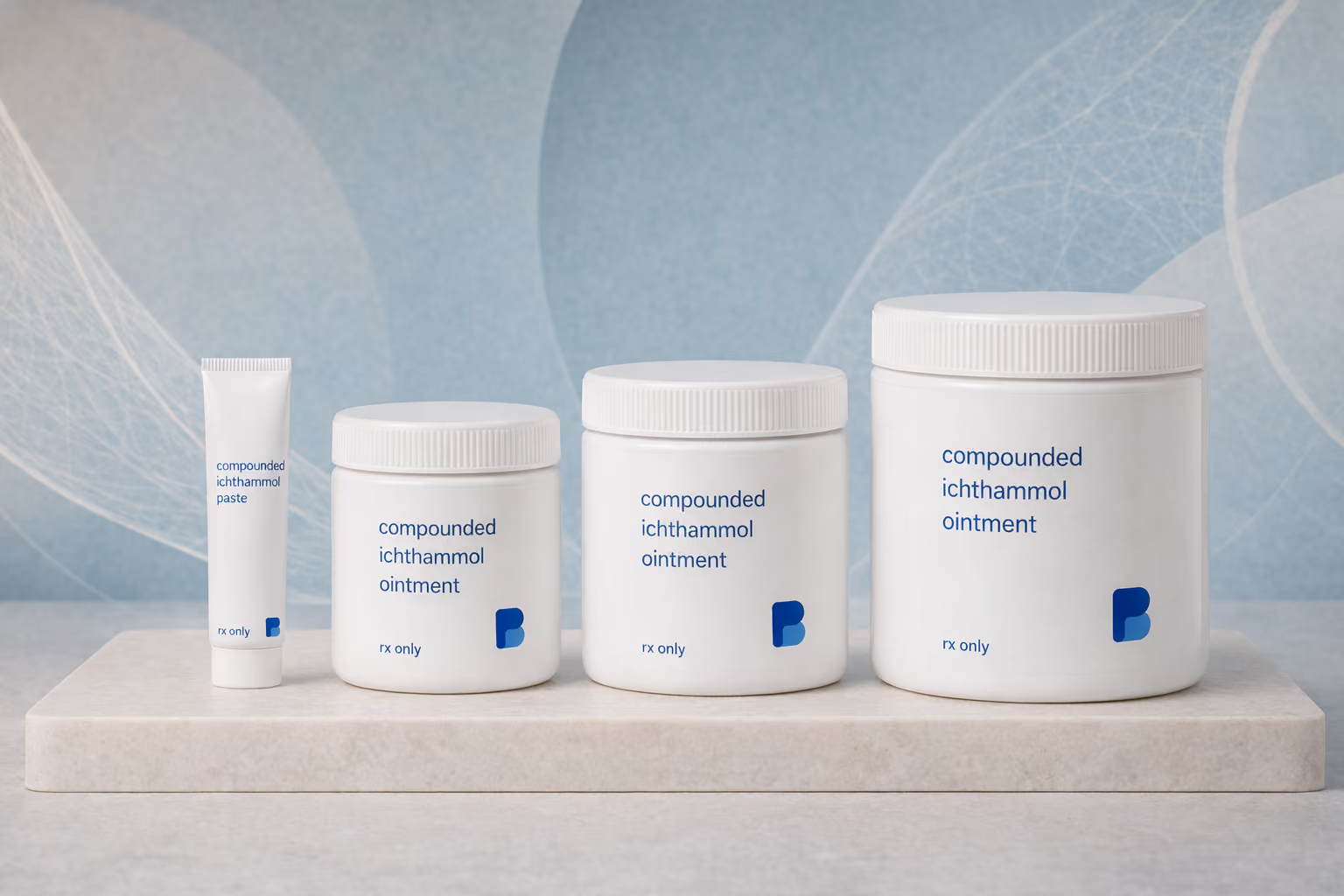
Formulation & directions. Bayview compounds ichthammol 10%, 12%, and 20% in white petrolatum or a lanolin-free ointment base (30 to 60 g); custom strengths, pastes, and combinations (zinc oxide, salicylic acid, a corticosteroid) on request. Typical directions: thin layer to the lesion under a dry dressing once or twice daily for up to 5 days, re-evaluate if not improved. Specify site, frequency, dressing, and duration on every prescription.

Evidence & counseling:

  • Mechanism: on 3D skin models, ammonium bituminosulfonate ointments produced concentration-dependent loosening of the epidermis with reduced filaggrin and laminin expression and increased permeability; keratin expression unchanged. This, rather than any drawing effect, is the proposed basis for use on furuncles (Fink et al., 2022).
  • Antimicrobial: sodium bituminosulfonate MIC90 (g/L) MRSA 0.25, MSSA 1, S. pyogenes 0.03, S. agalactiae 0.125, E. faecalis 0.25, C. acnes 0.03; substantially higher MICs for Gram-negative organisms; blood-supplemented media unsuitable for testing. In vitro data only; no clinical correlation established (Idelevich and Becker, 2020).
  • Clinical: historical use in psoriasis, eczematous dermatitis, leg ulcers, seborrheic dermatitis, and furuncles (Boyd, 2010); a 2020 case series of 10% ichthammol in hidradenitis suppurativa with a systematic review of dermatologic use (Fisher and Ziv, 2020). Controlled trials are lacking; frame expectations accordingly.
  • Abscess: incision and drainage is definitive; antibiotics alone are insufficient for an established collection, and topical agents have no role in drainage. Reserve ichthammol for early, non-fluctuant lesions and counsel red flags: size over 2 cm, cellulitis, systemic symptoms, facial or midline location, diabetes, immunosuppression (StatPearls, Incision and Drainage).
  • Sensitization: ichthammol is a recognized weak contact sensitizer; allergic contact dermatitis has been reported, including in polysensitized patients. Counsel to stop on spreading or worsening rash. No pregnancy, lactation, or pediatric data.
  • Black salve distinction: escharotic bloodroot/zinc chloride pastes marketed as black salve are unrelated to ichthammol; published reports describe tissue destruction, poor cosmesis, and delayed melanoma diagnosis (Lim, 2018); listed by FDA among illegally sold cancer treatments (FDA, Illegally Sold Cancer Treatments). Patients asking for drawing salve for a mole or non-healing lesion need evaluation, not a prescription.

Non-controlled; ship to patient or office per the order form. Licensed to dispense in RI, MA, CT, NY, NJ, NH, FL, and ME. Background: Boyd, 2010; Fink et al., 2022; Idelevich and Becker, 2020; Fisher and Ziv, 2020; StatPearls, Incision and Drainage. Account setup, licensing, and ordering are covered on our for providers page.

This is a prescription compounded medication and is not FDA-approved. This information is educational and is not medical advice. Your prescriber determines whether it is appropriate and sets the formulation and directions.

References

  1. Boyd, International Journal of Dermatology 2010: Ichthammol revisited
  2. Fink et al., European Journal of Pharmaceutical Sciences 2022: ammonium bituminosulfonate ointments on a 3D skin model
  3. Idelevich and Becker, Microbial Drug Resistance 2020: in vitro activity of sodium bituminosulfonate
  4. Fisher and Ziv, Dermatologic Therapy 2020: ichthammol case series and systematic review
  5. NCBI Bookshelf: StatPearls, Incision and Drainage
  6. Lim, Journal of Dermatological Treatment 2018: black salve review
  7. FDA: Illegally Sold Cancer Treatments
Reviewed by Ryan Dyer, RPh, pharmacist at Bayview Pharmacy. Last reviewed September 3, 2026. Bayview does not provide consultations and does not decide whether a medication is right for you. Your prescriber makes that call.

In Stock

On this page

The drawing salve, compounded to order and explained honestly

Ichthammol ointment in the strength and base your prescriber orders, with the evidence stated plainly: what it does to the skin, what it does not do, and when a boil needs a clinician instead.

Start with a prescription

10%, 12%, or 20%, in the base you name

Ichthammol in white petrolatum or a lanolin-free base, as a paste, or combined with zinc oxide, salicylic acid, or a corticosteroid, dispensed in 30 or 60 g and shipped to your patient or your office.

View our formulas

Personalized compounding for patients who need more than a standard option.

"As a compounding pharmacy, we prepare each medication to a provider’s exact specifications. My focus, and my team’s focus, is quality, consistency, and close communication with prescribers so patients receive medication prepared for their individual needs."
Ryan Dyer, RPh
Owner and Chief Pharmacist, Bayview Pharmacy
Smiling man in blue scrubs with arms crossed and pen behind his ear
Three clear liquid vials, white powder on spoon, two capsules, and a cream jar on a metal surface.
QUALITY AND TESTING

Held to a higher standard

Every preparation is made under strict quality controls, and verified by a licensed pharmacist.
We use validated quality processes and third-party testing where appropriate
Sterile compounding in a dedicated USP <797> cleanroom
Non-sterile compounding under USP <795> and <800> standards
USP/NF-grade ingredients from reputable, vetted suppliers

Why patients choose Bayview

Made in our own pharmacy
Made to your prescription
Quality tested
Real pharmacist support
Trusted since 2006

Our formulations

Bayview compounds ichthammol in the strength and base your prescriber orders. The usual base is white petrolatum, which holds the ichthammol against the skin under a dressing; a lanolin-free or wool-alcohol-free base is prepared for patients who react to those ingredients. Ichthammol is dark brown to black, smells of tar, and stains fabric, whatever the base. No ichthammol product is FDA-approved, over the counter or compounded.

Strength Form Commonly ordered for Sizes
Ichthammol 10%Topical ointmentThe lower strength; eczema patches, insect bites, and skin that reacts to stronger preparations30 g, 60 g
Ichthammol 12%Topical ointmentA middle strength some prescribers use for boils and folliculitis30 g, 60 g
Ichthammol 20%Topical ointmentThe traditional drawing-salve strength for a boil or an ingrown-nail fold, applied under a dressing30 g, 60 g
Ichthammol, customOintment, paste, or creamA prescriber's strength or base, or combined with another ingredient (zinc oxide, salicylic acid, a corticosteroid)As ordered

Strengths are listed for education only and are not a statement of effectiveness. Strength, directions, and duration are prescriber-directed, and a valid prescription is required. Compounded preparations are not FDA-approved.

Start with a prescription

Frequently asked questions

What is ichthammol, and is it the same as drawing salve?

Ichthammol, or ammonium bituminosulfonate, is a dark, tar-smelling, sulfur-rich substance distilled from oil shale, and it is the active ingredient in most products sold as drawing salve. It has been spread on boils, eczema, and psoriasis for more than a century. No ichthammol product is FDA-approved: the 10 to 20% jars sold over the counter are marketed without FDA review, and a compounded ointment is not FDA-approved either. Bayview compounds it when a prescriber orders a specific strength and base.

Does drawing salve really draw out infection?

Not in the way the name suggests. Laboratory work on skin models shows that ichthammol loosens and softens the outer skin in a strength-dependent way, and in the test tube it kills common skin bacteria including staph and strep. That softening is probably why a small boil under an ichthammol dressing sometimes comes to a head on its own, and why a splinter can become easier to remove. Nothing is pulled out through the skin, and the clinical studies behind the salve are old, small, and mostly uncontrolled. A boil that has formed a pocket of pus needs a clinician to drain it; no salve does that.

Is ichthammol the same as black salve?

No, and the confusion is dangerous. Black salve is a corrosive paste made from bloodroot and zinc chloride that destroys whatever tissue it touches. It has been sold as a home remedy for skin cancer, moles, and warts, it has caused disfigurement and delayed cancer diagnoses, and the FDA lists it among illegally sold cancer treatments. Ichthammol contains neither ingredient, does not burn tissue, and is not a treatment for any skin growth. If you are worried about a mole or a sore that will not heal, see a clinician; do not put any salve on it.

How do I use it?

Wash and dry the area, spread a thin layer over the boil, bite, or ingrown-nail fold and a little of the skin around it, and cover it with a dry gauze dressing. Change it once or twice a day as your label says, and wash your hands afterward. It is dark, smells of tar, and stains clothing and bedding permanently, so keep it covered. A course is usually a few days. If a boil has not improved after 3 to 5 days, or gets worse, stop and see a clinician. Keep it out of the eyes, mouth, and nose, and do not use it on a deep or open wound or a burn.

When should I see a clinician instead of using a salve?

The same day, if a boil or abscess is larger than about 2 cm, very painful, spreading, surrounded by widening redness or red streaks, on the face or near the spine or tailbone, or if you have a fever, feel unwell, have diabetes, or have a weakened immune system. An abscess with a pocket of pus is treated by draining it, and antibiotics alone are not enough once the pocket has formed. Ichthammol belongs, if anywhere, at the early tender-lump stage.

What are the side effects, and who should not use it?

Mild stinging, redness, or itching where it is applied, softening of the skin under the dressing, and a temporary brown stain are the usual effects. The one to watch for is an allergic skin reaction: if the area gets redder, itchier, blistered, or the rash spreads beyond where you applied it, stop and tell your prescriber. Do not use ichthammol if you are allergic to it, to coal tar or other tar products, or to anything in the base. It has not been studied in pregnancy, breastfeeding, or children, so it is used in those situations only at a prescriber's direction, on a small area, for a short time.

Do I need a prescription?

Yes. All of our medications require a valid prescription from a licensed provider. We're a dispensing and compounding pharmacy, so we don't provide consultations or write prescriptions. If you don't have one yet, you'll need to find and see a provider first.

What is compounding?

Compounding is the practice of preparing a medication tailored to an individual patient's prescription. Instead of a mass-produced product, a compounding pharmacy makes the medication to the specific strength, form, or combination your provider orders.

Examples on this site include medications compounded as liquids for people who cannot swallow pills, thyroid capsules made to a T3/T4 ratio no manufactured product offers, and all-purpose nipple ointment, which combines three actives that are not sold together commercially.

Are compounded medications FDA-approved?

Compounded medications are not FDA-approved. They're prepared by a licensed pharmacy pursuant to a valid prescription for an individual patient, under USP standards. The FDA does not review compounded medications for safety or effectiveness.

How do providers send a prescription to Bayview?

Providers can submit a prescription three ways:

  • E-prescribe: Search Bayview Pharmacy, Warwick, RI (NCPDP 4106882) in your EHR. For compounds, use the compound, custom, or free-text option and include the full formulation, strength, quantity, refills, and directions.
  • Fax: Send a signed order to 401-284-4506 (alt. 401-210-2757) with patient and prescriber details, medication, quantity, refills, directions, signature, and date.
  • Phone: Call 401-284-4505 to submit, clarify, or coordinate refills.

A valid prescription is required, and compounded medications are not FDA-approved.

Can you fill a prescription from my own provider?

Yes. Your provider can send your prescription to Bayview Pharmacy by e-prescribe, fax, or phone, or you can transfer an existing prescription from another pharmacy.

How does shipping work?

Once your prescription is verified, we prepare your medication and ship it discreetly in plain packaging either via UPS or USPS. A pharmacy technician confirms the details with you before it goes out, and we're available if you have any questions.

How do refills and automatic refills work?

Refills are coordinated with your prescriber and your prescription. You can request a refill through our website or by calling us, and we'll handle the rest as long as you have refills remaining on a valid prescription. You can also opt into automatic refills on non-controlled substances, with no need to worry about running out of your medication. We can either ship it to you automatically, or ready for pickup.

Shipping & Delivery

Every prescription ships directly to your door in discreet packaging. Refrigerated medications travel in insulated coolers with ice packs to stay cold in transit.

Delivery AreaStandard ShippingRefrigerated Shipping
Rhode Island, Massachusetts & Connecticut$9 USPS$20 UPS
New Hampshire, New Jersey & New York$15 UPS$40 UPS Next Day Air
Florida$15 UPS$80 UPS Next Day Air

Need it faster? Expedited UPS is $15 for Rhode Island, Massachusetts and Connecticut. Your pharmacist will let you know if your medication needs refrigerated shipping. Questions? Call us at (401) 284-4505.

References

Sources reviewed

The medical information on this page draws on the following sources, which are also linked where cited.

  1. Boyd AS. International Journal of Dermatology 2010;49(7):757-760. Ichthammol revisited.
  2. Fink S, Sethmann A, Hipler UC, Wiegand C. European Journal of Pharmaceutical Sciences 2022;172:106152. In vitro investigation of the principle of action of ammonium bituminosulfonate ointments on a 3D skin model.
  3. Idelevich EA, Becker K. Microbial Drug Resistance 2020;26(11):1405-1409. In vitro activity of sodium bituminosulfonate: susceptibility data for the revival of an old antimicrobial.
  4. Fisher S, Ziv M. Dermatologic Therapy 2020. Efficacy of topical ichthammol 10% for hidradenitis suppurativa: case series and systematic review of its use in dermatology.
  5. Pastorino A, Tavarez MM. StatPearls (NCBI Bookshelf). Incision and Drainage.
  6. Lim A. Journal of Dermatological Treatment 2018;29(4):388-392. Black salve treatment of skin cancer: a review.
  7. US Food and Drug Administration. Illegally Sold Cancer Treatments.

Important safety information

Important safety information

Compounded ichthammol ointment is a prescription compounded medication and is not FDA-approved; no ichthammol product is. It is for use on intact or minimally broken skin only. Use it only on the area, in the amount, and for the length of time your prescriber directs, and never share it.

Do not use ichthammol if you:

  • Are allergic to ichthammol, to sulfonated shale oil, to coal tar or other tar products, or to any ingredient in the base.
  • Would put it in or near the eyes, in the mouth or nose, or on the genitals or other mucous membranes.
  • Would use it on a deep or open wound, a burn, or a large area of broken skin.

A boil is not always a salve problem:

  • See a clinician the same day, rather than applying ichthammol, if a boil or abscess is larger than about 2 cm, very painful, spreading, surrounded by widening redness or red streaks, on the face, near the spine or the tailbone, or if you have a fever, feel unwell, have diabetes, or have a weakened immune system. An abscess that has formed a pocket of pus needs to be drained by a clinician; no salve does that.
  • If a boil has not improved after 3 to 5 days of use, or gets worse at any point, stop and see a clinician.

Warnings and precautions:

  • Ichthammol can cause allergic contact dermatitis. If the area becomes more red, itchy, swollen, or blistered, or the rash spreads beyond where you applied it, stop and tell your prescriber.
  • It is dark and smells of tar, and it stains skin temporarily and clothing, bedding, and towels permanently. Cover it with a dressing and wash your hands afterward.
  • Keep it away from heat and flame while the jar is open; the base is petrolatum.
  • Tell your prescriber if you are pregnant or breastfeeding; there are no studies of ichthammol in either, and it should be used on the smallest area for the shortest time, and never on the breast.
  • Children: use only as directed by a pediatric prescriber.

Common side effects:

  • Mild stinging, redness, or itching where it is applied; softening or wrinkling of the skin under the dressing; temporary brown staining of the skin.

Stop and contact your prescriber if you have:

  • A rash that spreads, blisters, or oozes, or itching that gets worse instead of better.
  • Fever, chills, or a boil that is growing, hardening, or streaking red.
  • Hives, swelling of the face or throat, or trouble breathing (get emergency care).

Storage:

Store at room temperature away from heat, flame, and light, tightly closed, out of the reach of children and pets. Do not use after the beyond-use date, and discard unused medication as directed by your pharmacist.

This is a compounded prescription medication and is not approved by the FDA. Use it only under the supervision of a licensed provider, exactly as prescribed. Do not adjust your dose without talking to your prescriber. Seek emergency care for any severe or unexpected reaction. This information is not complete; talk to your provider about your full medical history and all medications you take.

Ready to get started?

Send us your prescription and a Bayview pharmacist will take it from there.