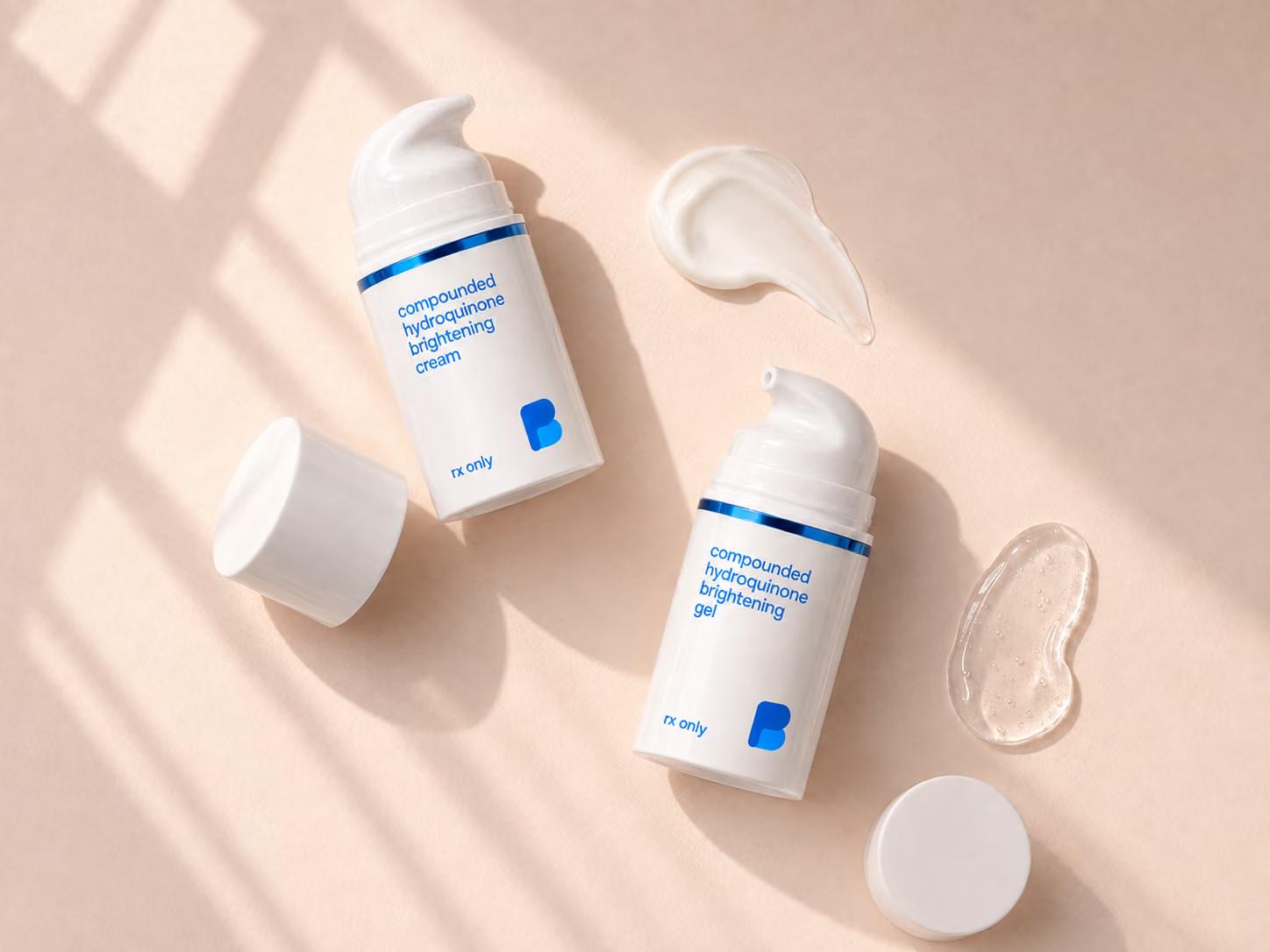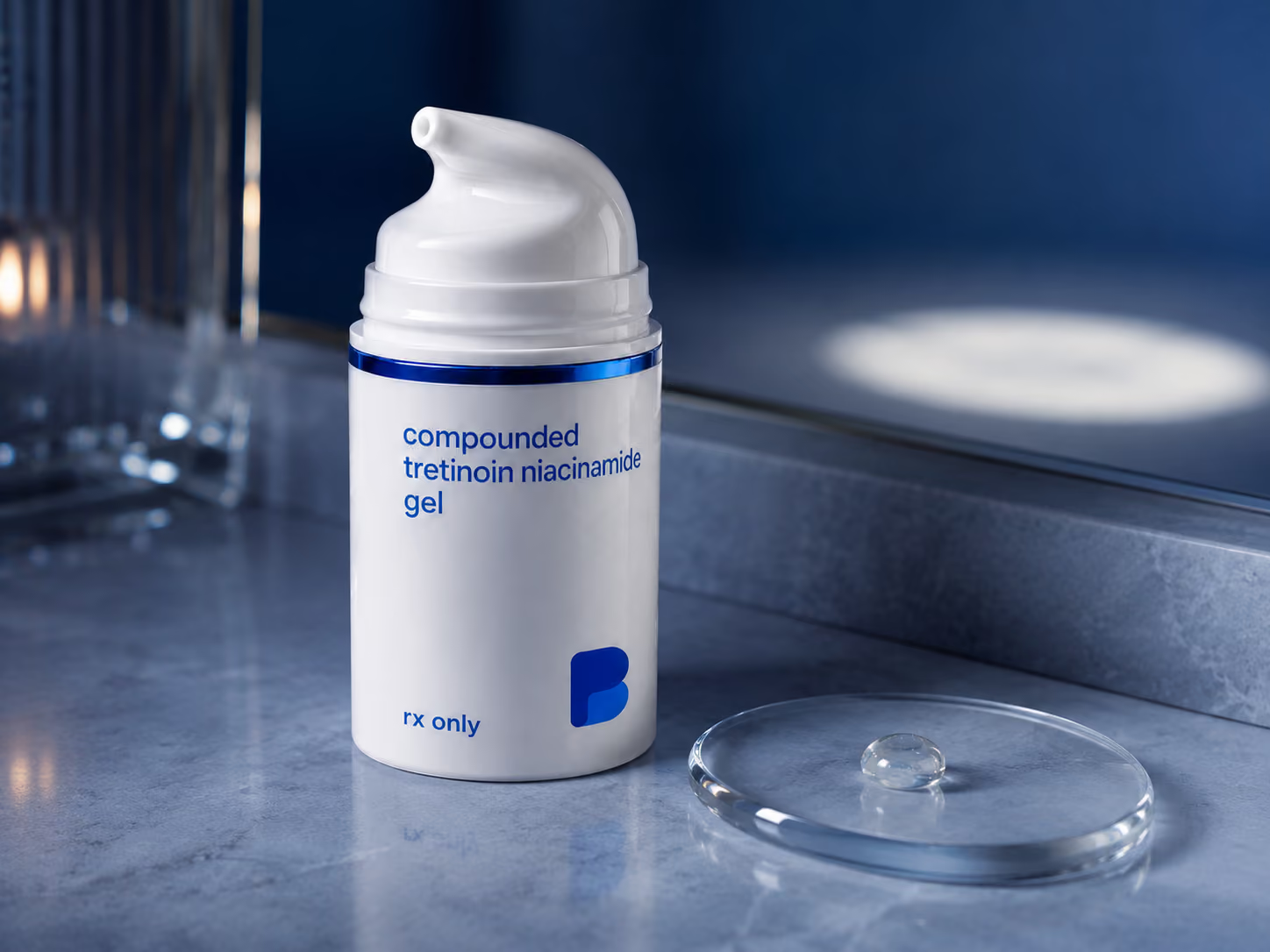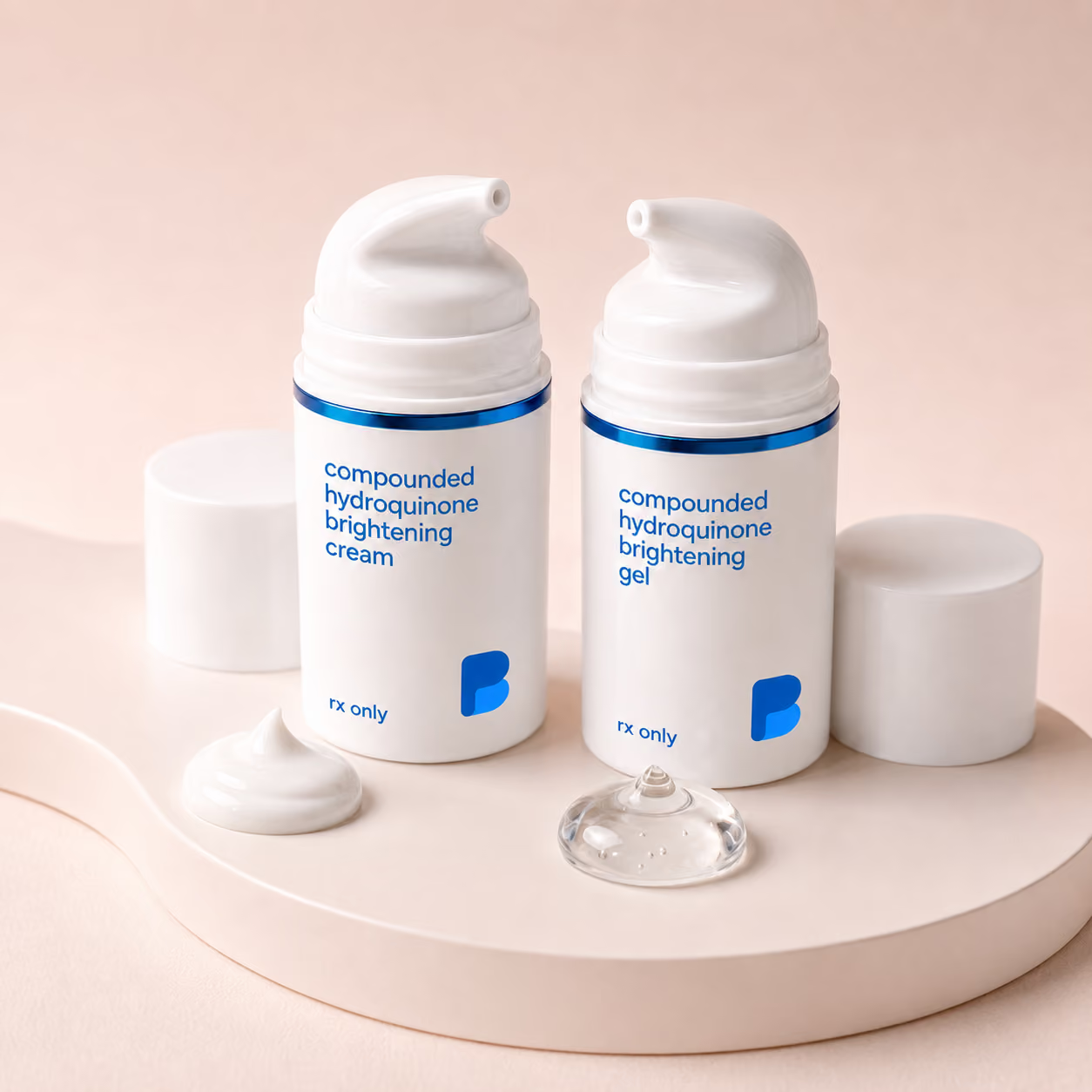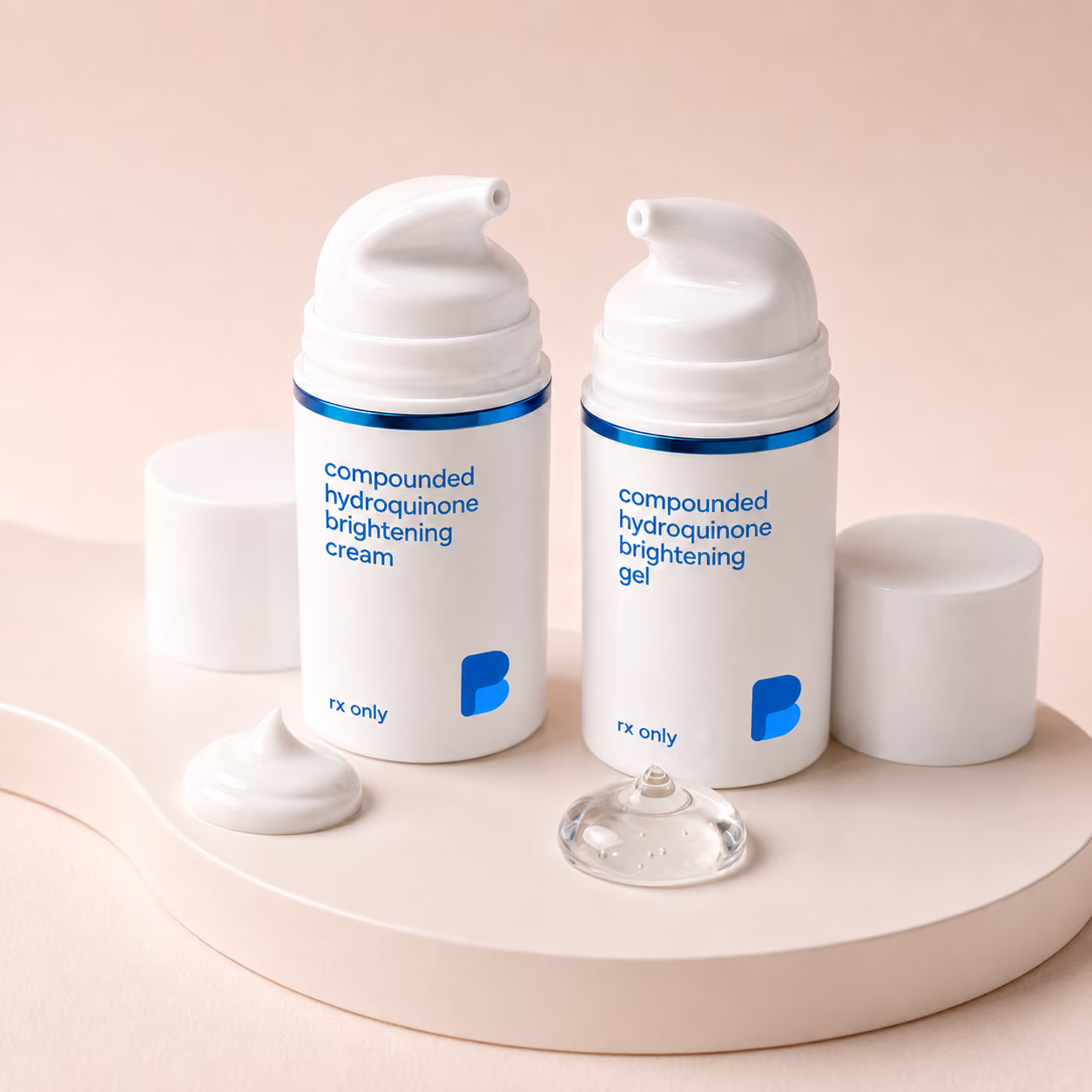




Hydroquinone brightening blends are compounded, prescription topical preparations used to fade areas of darker pigment on the skin, such as melasma, the marks left behind after acne or injury, and sun spots. Hydroquinone is the core ingredient. It is almost always combined with one or more partner actives, kojic acid, azelaic acid, niacinamide, tranexamic acid, tretinoin, or a low-potency corticosteroid such as hydrocortisone, because blends are a common approach in clinical practice.
Bayview prepares each blend to the exact formula your prescriber orders, in a gel or cream base, most often in 30 g or 60 g. Only a licensed prescriber can decide whether one of these blends is right for you. Bayview compounds this as part of our dermatology compounding line.
How does it work?
Skin color comes from melanin, a pigment made inside cells called melanocytes. The key step is an enzyme, tyrosinase, that converts the amino acid tyrosine into melanin. Hydroquinone inhibits tyrosinase, so less pigment is produced in the treated area (StatPearls, Hydroquinone).
The partner ingredients attack the same problem from different angles:
- Kojic acid and azelaic acid are also tyrosinase inhibitors, adding to hydroquinone's effect.
- Niacinamide (vitamin B3) reduces the transfer of finished pigment from melanocytes into surrounding skin cells.
- Tranexamic acid is used in melasma to dampen the signals that switch pigment production on.
- Tretinoin speeds up skin cell turnover, so pigmented cells are shed faster, and it helps the other ingredients penetrate.
- A corticosteroid such as hydrocortisone calms the irritation that hydroquinone and tretinoin can cause, which matters, because irritation itself can trigger more pigment.
The classic three-ingredient combination, hydroquinone plus tretinoin plus a corticosteroid, is known as the Kligman formula, and it is the pattern the FDA-approved product Tri-Luma follows (DailyMed, Tri-Luma label).
What is it used for?
Prescribers use hydroquinone blends for conditions where the skin is making too much pigment in specific areas:
- Melasma, symmetric brown or gray-brown patches, usually on the cheeks, forehead, upper lip, and chin, commonly linked to sun exposure, pregnancy, and hormonal contraceptives.
- Post-inflammatory hyperpigmentation. The dark marks left after acne, eczema, or an injury heals.
- Solar lentigines, sun spots or "age spots" from years of sun exposure.
The evidence for hydroquinone in melasma is reasonably strong, and combination therapy generally outperforms single agents; triple-combination creams are frequently used as first-line induction therapy (StatPearls, Melasma). Be realistic about what this can do: melasma is a chronic, relapsing condition. No formulation cures it, improvement usually takes three to twelve months, and it commonly returns without daily sun protection and a maintenance plan (American Academy of Dermatology). Bayview Pharmacy does not provide consultations or determine whether a formulation is appropriate for you; that is your prescriber's decision, and a valid prescription is required.
How do the blends compare?
Blends differ in which actives they contain and at what strengths. Broadly, more actives and higher hydroquinone concentrations mean more potential effect and more potential irritation. Steroid-containing blends are intended for defined treatment cycles, not indefinite use. The table below is for education only.
| Blend | What is in it | Notes |
|---|---|---|
| Hydroquinone + kojic acid | Two tyrosinase inhibitors | A steroid-free starting blend; often used when a prescriber wants to avoid a corticosteroid |
| Hydroquinone + kojic acid + tranexamic acid | Tyrosinase inhibition plus a melasma-directed agent | Commonly prescribed for melasma; steroid-free |
| Hydroquinone + azelaic acid + niacinamide + kojic acid | Multiple pigment pathways, no steroid, no retinoid | Often chosen for sensitive skin or for maintenance phases |
| Hydroquinone + hydrocortisone + tretinoin | The classic Kligman-type triple combination | Strongest evidence base in melasma; intended for short, defined cycles |
| Hydroquinone + hydrocortisone + kojic acid + niacinamide (± tretinoin) | Multi-agent blend with a steroid | Reserved for stubborn pigment; cycled, not used continuously |
| Custom | Actives and strengths as ordered | Any combination and concentration the prescriber specifies |
Blends are described for education only and are not a statement that any combination is better for a particular person. Your prescriber selects the actives, the concentrations, and how long you use them.
How is it used?
Use it exactly as your prescriber directs. A typical routine is a thin layer applied to the darkened areas once or twice daily, blends containing tretinoin are usually applied at night, because tretinoin breaks down in light. Wash and dry the skin first, wash your hands after, and apply only to the affected patches rather than the whole face unless told otherwise.
Two things matter more than most people expect. First, hydroquinone blends are prescribed in defined cycles, commonly around 8 to 12 weeks of treatment followed by a break or a switch to a steroid-free maintenance product, rather than being used indefinitely. Second, daily broad-spectrum SPF 30 or higher is not optional. Sunlight drives pigment production, and without consistent photoprotection the treatment simply will not work and the pigment will come back (AAD). Wide-brimmed hats and shade help too. Do not stop, extend, or restart a cycle on your own, check with your prescriber. A Bayview pharmacist is available if you have questions about your prescription.
Side effects & safety
The most common effects are local: stinging or burning on application, redness, dryness, peeling, and itching. These are more likely with tretinoin-containing blends and often settle as your skin adjusts. Irritant and allergic contact dermatitis can also occur. Hydroquinone can lighten the normal skin immediately around the treated patch, producing a temporary halo effect that fades after treatment stops.
A second paradox to watch for: irritation from the product can itself trigger post-inflammatory hyperpigmentation, making the area look darker rather than lighter. If the product is clearly irritating your skin, contact your prescriber rather than pushing through.
Contact your prescriber about any darkening of the treated skin, severe or persistent burning, blistering, swelling, or signs of an allergic reaction such as rash, facial swelling, or trouble breathing. The last of which needs emergency care.
Who should not use it?
These blends are not appropriate for everyone. Do not use them if you are allergic to hydroquinone or to any other ingredient in your blend. Avoid use in pregnancy. This is especially important for tretinoin-containing blends, because retinoids carry a risk of harm to a developing baby, and tell your prescriber if you are pregnant, planning to become pregnant, or breastfeeding.
Also tell your prescriber if you have very sensitive or broken skin in the treatment area, a history of ochronosis, or if you take medications that increase sun sensitivity. Do not use these blends on children unless a prescriber specifically directs it. Give your prescriber your full health history, allergies, and a complete list of your medications and skin products so they can decide whether a hydroquinone blend is appropriate for you.
How should it be stored?
Hydroquinone oxidizes when exposed to air and light, which turns the product brown and reduces its potency. Bayview dispenses these blends in opaque, air-limiting packaging for that reason. Keep the container tightly closed, store it at room temperature away from heat and direct light, and do not transfer it into another jar or container.
If the product turns brown or dark, stop using it and discard it, that is a sign the hydroquinone has oxidized. Do not use it after its beyond-use date, keep it out of the reach of children, do not share it, and dispose of unused medication as directed by your pharmacist.
Why is this compounded?
There is no FDA-approved product that combines these specific actives at these strengths. The only FDA-approved hydroquinone product is Tri-Luma, a fixed-dose prescription cream of fluocinolone acetonide 0.01%, hydroquinone 4%, and tretinoin 0.05%, one combination, one set of concentrations. Over-the-counter hydroquinone products are no longer legally marketed in the US following the CARES Act of 2020.
Compounding lets the prescriber set the hydroquinone concentration, choose which partner actives to include, and, importantly, omit the corticosteroid for maintenance phases between treatment cycles. As a 503A compounding pharmacy, Bayview Pharmacy prepares each order in small batches using quality ingredients, in packaging chosen to protect the hydroquinone from air and light. Compounded preparations are not FDA-approved, and a valid prescription is required. Related dermatology preparations include Melasma & Dark Spots, Tretinoin / Niacinamide / Hyaluronic Acid Gel, and Tranexamic Acid. The full list is in our compounded medications catalog.
Clinical details for prescribers
Regulatory status. Hydroquinone is not a controlled substance. Under the CARES Act of 2020, OTC skin-lightening products containing hydroquinone are deemed new drugs and misbranded; FDA issued warning letters to 12 companies on April 19, 2022. Tri-Luma (fluocinolone acetonide 0.01% / hydroquinone 4% / tretinoin 0.05%, initial US approval 2002) is the only FDA-approved hydroquinone-containing drug and is indicated for short-term treatment of moderate to severe facial melasma with sun avoidance measures; it is not indicated for maintenance. Compounded preparations are not FDA-approved.
Formulation & SIG. Compounded topical gels and creams, 30 g or 60 g. Representative blends dispensed: HQ 10% / kojic 6%; HQ 8% / kojic 6% / tranexamic 3%; HQ 4% / azelaic 10% / niacinamide 4% / kojic 2%; HQ 10% / hydrocortisone 1% / tretinoin 0.025%; HQ 7% / hydrocortisone 1% / tretinoin 0.05%; HQ 12% / hydrocortisone 1% / kojic 6% / niacinamide 2% (± tretinoin 0.05%). Custom concentrations available. Typical SIG: apply a thin layer to affected areas once or twice daily; tretinoin-containing blends at bedtime.
Clinical points:
- Triple-combination therapy outperforms single agents in melasma; hydroquinone monotherapy is less effective than Kligman-type regimens
- Prescribe in defined cycles (commonly 8 to 12 weeks) with planned holidays; transition to a hydroquinone-free or steroid-free maintenance regimen
- Exogenous ochronosis risk rises with duration and concentration and with Fitzpatrick IV-VI; discontinue on any paradoxical darkening
- Facial corticosteroid exposure, monitor for atrophy, telangiectasia, and steroid rosacea; omit the steroid for maintenance
- Daily broad-spectrum SPF 30+ is required for efficacy; tinted formulations with iron oxides also block visible light, which drives melasma
- Avoid in pregnancy, particularly tretinoin-containing blends; hydroquinone systemic absorption is appreciable
- Dispense in opaque, air-limiting packaging; hydroquinone oxidizes to brown discoloration with loss of potency
Ordering: e-prescribe to Bayview Pharmacy, or fax 401-284-4506. Background: FDA, OTC skin lightening products; StatPearls, Melasma. Account setup, licensing, and ordering are covered on our for providers page.
This is a prescription compounded medication and is not FDA-approved. This information is educational and is not medical advice. Bayview Pharmacy does not provide consultations or determine whether a formulation is appropriate for you, your prescriber decides that and sets the strengths, the schedule, and the duration.