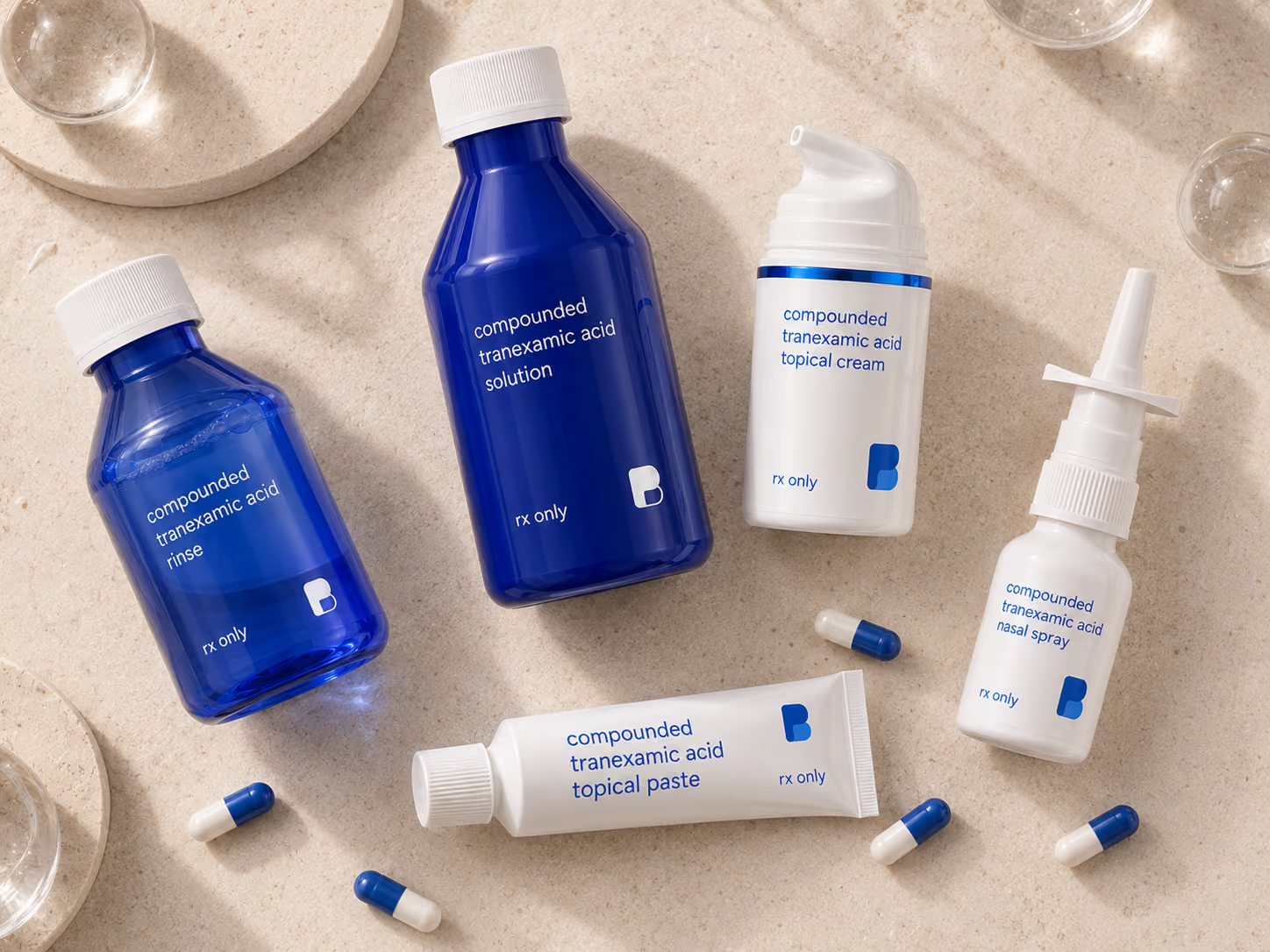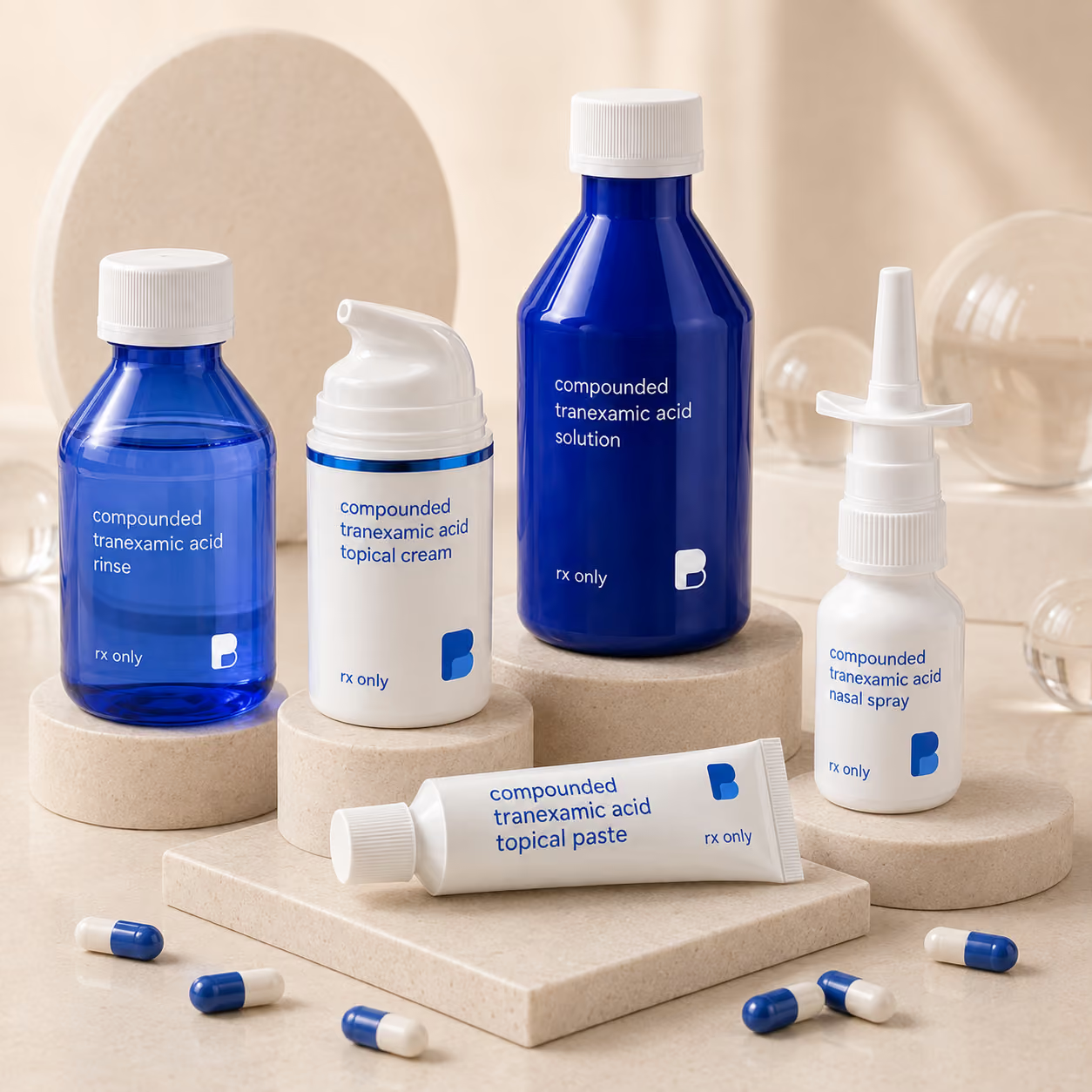




Tranexamic acid is an antifibrinolytic, a medication that slows the breakdown of blood clots and so reduces bleeding. Bayview compounds it several ways: as oral capsules, as a topical cream, paste, or solution for the skin, as a nasal spray, and as an oral rinse that is swished and spit out.
The route matters a great deal here, both for what the medication is being used for and for how strong the evidence behind it is. This page walks through each one honestly. Bayview compounds this as part of our dermatology compounding line.
How does it work?
When your body forms a clot, it also starts dismantling it. An enzyme called plasmin does the dismantling, and plasmin is made from an inactive precursor called plasminogen. Tranexamic acid is a lysine analog: it occupies the lysine binding sites that plasminogen uses to attach to fibrin, so plasmin cannot get to the clot and take it apart. The FDA label for Lysteda describes it as blocking "the lysine receptor binding sites of plasmin for fibrin," which preserves the fibrin meshwork (FDA Lysteda prescribing information).
In the skin, the reasoning is different and has nothing to do with clotting. Plasmin also drives signaling between skin cells (keratinocytes) and pigment-producing cells (melanocytes). By reducing the conversion of plasminogen to plasmin in keratinocytes, tranexamic acid is thought to lower the inflammatory messengers that prompt melanocytes to make pigment, which is the rationale for using it in melasma. This mechanism is plausible and supported by laboratory work, but it is a proposed pathway rather than a settled one.
What is it used for?
Tranexamic acid is used differently by route, and the strength of the evidence differs a lot between them.
- By mouth, for heavy menstrual bleeding. This is the FDA-approved use of oral tranexamic acid, and the evidence is strong. The approved product is a 650 mg tablet dosed at 1,300 mg three times a day for a maximum of 5 days during menstruation. Compounded capsules are made when a prescriber wants a strength the commercial tablet does not offer.
- On the skin, for melasma. Used off-label. A 2024 systematic review and meta-analysis of 22 randomized trials in 1,280 patients found that tranexamic acid reduced melasma severity scores across routes, with oral administration showing the largest effect and topical the smallest, but the authors noted "high heterogeneity" between studies and called for standardized methods and long-term data (Journal of Dermatological Treatment, 2024). Honestly stated: the evidence for topical tranexamic acid in melasma is moderate and comes mostly from small trials. It is not a cure. Melasma is chronic and relapse-prone, and sun protection remains central to any plan.
- In the nose, for nosebleeds. Used off-label. Topical tranexamic acid has reasonable support for epistaxis in emergency settings, most often applied on soaked nasal packing rather than as a spray (StatPearls, Tranexamic Acid). A compounded nasal spray is an off-label formulation of that idea, prescribed for at-home or clinic use.
- As an oral rinse, for bleeding after dental work. Used off-label, and a recognized approach, particularly for people taking anticoagulants who are having an extraction or minor oral surgery. A 2022 systematic review and meta-analysis of 5 randomized trials in 430 anticoagulated patients found a reduction in post-procedure oral bleeding with local antifibrinolytic mouthwash, rating the evidence moderate quality with notable variability between studies (Healthcare, 2022). The 4.8% rinse is swished and spit out, not swallowed.
Bayview Pharmacy does not provide consultations or determine appropriateness. Only your prescriber can decide whether tranexamic acid fits your situation.
How do the routes compare?
This table describes regulatory status and the state of the evidence for each route. It is for education only. It is not a ranking, and it is not a statement that a compounded preparation works better than an FDA-approved product.
| Route | US status | What the evidence looks like |
|---|---|---|
| Oral capsules | Compounded; FDA-approved 650 mg tablets exist | Strong for cyclic heavy menstrual bleeding. This is the approved indication |
| Topical cream, paste, or solution | No FDA-approved product | Moderate for melasma; mostly small randomized trials with high variability. Not a cure |
| Nasal spray | No FDA-approved product | Reasonable support for topical tranexamic acid in nosebleeds in emergency settings; the spray itself is an off-label formulation |
| Oral rinse (4.8%) | No FDA-approved product | Moderate quality evidence for reducing bleeding after dental procedures in anticoagulated patients |
| Custom strength or base | Compounded | Prepared as your prescriber orders |
Routes are described for education only. Bayview makes no claim that a compounded preparation is more effective than an FDA-approved tranexamic acid product. Your prescriber selects the route, strength, and directions.
How is it used?
Use it exactly as your prescriber directs, your label is the authority, and the directions differ completely between routes.
- Capsules. Swallow with water as directed. For heavy menstrual bleeding, the FDA-approved product is taken only during your period and not on days you are not bleeding. Do not take extra doses to catch up.
- Topical cream, paste, or solution. Apply a thin layer to the area your prescriber specifies, usually once or twice daily, and wash your hands afterward. Skin results are slow, pigment changes are typically judged over months, not weeks. Daily broad-spectrum sunscreen is part of the plan, since sun exposure undoes progress.
- Nasal spray. Spray into the nostril as directed. Do not use it more often than prescribed. A nosebleed that will not stop after direct pressure, or heavy bleeding, needs urgent medical care rather than more spray.
- Oral rinse. Swish the measured amount for the time your prescriber or dentist specifies, then spit it out, do not swallow it. Avoid eating or drinking for a short period afterward if you were told to.
Do not share tranexamic acid with anyone else, and do not use a leftover preparation for a new problem without asking your prescriber. A Bayview pharmacist is available for questions about your prescription.
Side effects & safety
Common side effects reported with oral tranexamic acid include headache, tiredness, sinus and back pain, stomach discomfort, and joint or muscle pain. Topical preparations most often cause local irritation, redness, dryness, or stinging where they are applied. The nasal spray can sting or cause local irritation.
Two more things to know:
- Vision. Report any visual change, blurring, loss of vision, or a change in color vision, promptly. FDA labeling advises stopping the medication and arranging a dilated retinal examination if ocular symptoms occur, and prescribers generally arrange eye monitoring for anyone using tranexamic acid long term.
- Seizures. Seizures have been reported with tranexamic acid, associated with high-dose intravenous use and inadvertent injection into the spinal space, settings quite different from a capsule, cream, spray, or rinse. It is listed here for completeness rather than as an expected effect of these preparations.
Absorption into the bloodstream from tranexamic acid applied to the skin is low, and small studies of topical preparations have not detected meaningful systemic levels. It is not accurate to say it is zero. If you have any personal or family history of clotting, tell your prescriber before using any form of tranexamic acid, including topical.
Who should not use it?
Tranexamic acid is not appropriate for everyone. Per FDA labeling for the approved oral product, it should not be used by people who:
- Have active intravascular clotting or active thromboembolic disease
- Have a history of, or an intrinsic risk of, thrombosis or thromboembolism, including retinal vein or artery occlusion
- Are using combination hormonal contraception. This is a contraindication in the Lysteda label, because combining the two further increases the risk of a blood clot. This matters, because many people being treated for melasma or for heavy periods are on the pill, patch, or ring. Tell your prescriber if you are.
- Are hypersensitive to tranexamic acid
Tranexamic acid should also be avoided in subarachnoid hemorrhage, FDA labeling states that "cerebral edema and cerebral infarction may be caused by use of LYSTEDA in women with subarachnoid hemorrhage." Use caution and expect dose adjustment in kidney impairment; the label reduces the dose when serum creatinine is above 1.4 mg/dL, since tranexamic acid is cleared almost entirely by the kidneys. Tell your prescriber about all your health conditions, allergies, and medications, especially blood thinners, clot-dissolving drugs, and hormonal contraceptives.
Bayview Pharmacy does not provide consultations or determine whether this medication is appropriate for you. Only your prescriber can do that.
How should it be stored?
Store exactly as directed on your label. Capsules are generally kept in their original container, tightly closed, at room temperature and away from excess heat and moisture, not in a steamy bathroom. Compounded creams, pastes, solutions, nasal sprays, and oral rinses vary: some are stored at room temperature and some are refrigerated, so your label is the authority. Keep pumps and bottles tightly closed, keep everything out of the reach of children, and do not share it.
Do not use a preparation past its beyond-use date, and do not use it if it has separated, changed color, or smells different. Dispose of unused medication as your pharmacist directs.
Why is this compounded?
Tranexamic acid tablets and injection are commercially available, so compounding is used where no commercial product exists or where the commercial product does not match the order. There is no FDA-approved topical, nasal, or oral-rinse tranexamic acid in the United States, so a compounding pharmacy is the only route to a 10% cream, a 5% nasal spray, or a 4.8% oral rinse. Capsules are compounded when a prescriber wants a strength, 250 mg, for example, that the 650 mg commercial tablet does not provide, or a count that fits a specific course.
As a 503A compounding pharmacy, Bayview Pharmacy prepares each order in small batches using quality ingredients, in bases such as Lipoderm and VersaBase and in jars, pumps, or bottles as ordered. Compounded preparations are not FDA-approved, and no claim is made that they work better than FDA-approved tranexamic acid products. Related dermatology preparations include Melasma & Dark Spots and Hydroquinone Brightening Blends. The full list is in our compounded medications catalog.
Clinical details for prescribers
Regulatory status. Tranexamic acid is not a controlled substance. FDA-approved products: tranexamic acid tablets 650 mg (Lysteda, NDA 022430) for cyclic heavy menstrual bleeding, and tranexamic acid injection (Cyklokapron). No FDA-approved topical, intranasal, or oral-rinse tranexamic acid exists in the US; those routes are compounded and off-label. Compounded preparations are not FDA-approved.
Formulation & SIG. Capsules 250 mg (60, 90, 112 count); topical 2% paste, 3% solution, 7% and 10% creams in Lipoderm or VersaBase (jar or pump), 30 g / 30 mL; 5% nasal spray 15 mL; 4.8% oral rinse 200 mL (expectorate). Custom strengths and bases available. Example SIG: apply a thin layer to affected areas of the face twice daily (melasma); swish 10 mL for 2 minutes and expectorate four times daily × 2 days after extraction (anticoagulated dental patient); 1 spray into affected nostril as directed (epistaxis).
Evidence & clinical points:
- Melasma: 2024 meta-analysis of 22 RCTs (n=1,280), significant MASI/mMASI reduction, oral > intradermal > topical, with high heterogeneity; screen for thromboembolic risk before oral use
- Dental: 2022 meta-analysis of 5 RCTs (n=430) in anticoagulated patients, reduced post-procedure bleeding with 4.8 to 10% mouthwash; moderate quality, I² = 58%
- Epistaxis: topical TXA (typically soaked packing) reduces bleeding and rebleeding in ED settings; the compounded spray is an off-label formulation of this approach
- Contraindications (Lysteda label): active thromboembolic disease or history/intrinsic risk of thrombosis or thromboembolism including retinal vein or artery occlusion; concomitant combination hormonal contraception; hypersensitivity
- Warnings: thromboembolic risk, severe allergic reaction, subarachnoid hemorrhage (cerebral edema/infarction), ligneous conjunctivitis; visual and ocular symptoms warrant discontinuation and dilated retinal exam
- Renal dose adjustment when SCr > 1.4 mg/dL; ~95% excreted unchanged by glomerular filtration
- Seizure risk is associated with high-dose IV and inadvertent neuraxial administration, not with these routes
- Systemic absorption from topical application is low but should not be assumed to be zero, particularly over large surface areas or broken skin
Ordering: send a prescription to Bayview Pharmacy, or fax 401-284-4506. Background: FDA Lysteda prescribing information; StatPearls, Tranexamic Acid. Account setup, licensing, and ordering are covered on our for providers page.
This is a prescription compounded medication and is not FDA-approved. This information is educational and is not medical advice. Bayview Pharmacy does not provide consultations or determine whether a medication is appropriate; your prescriber makes that determination and sets the route, strength, and directions.