



Pimobendan is a prescription heart medication that veterinarians use in dogs with certain forms of heart disease. It belongs to a class of drugs called inodilators, meaning it does two things at once: it helps the heart muscle contract more strongly and it relaxes and widens blood vessels so the heart does not have to work as hard.
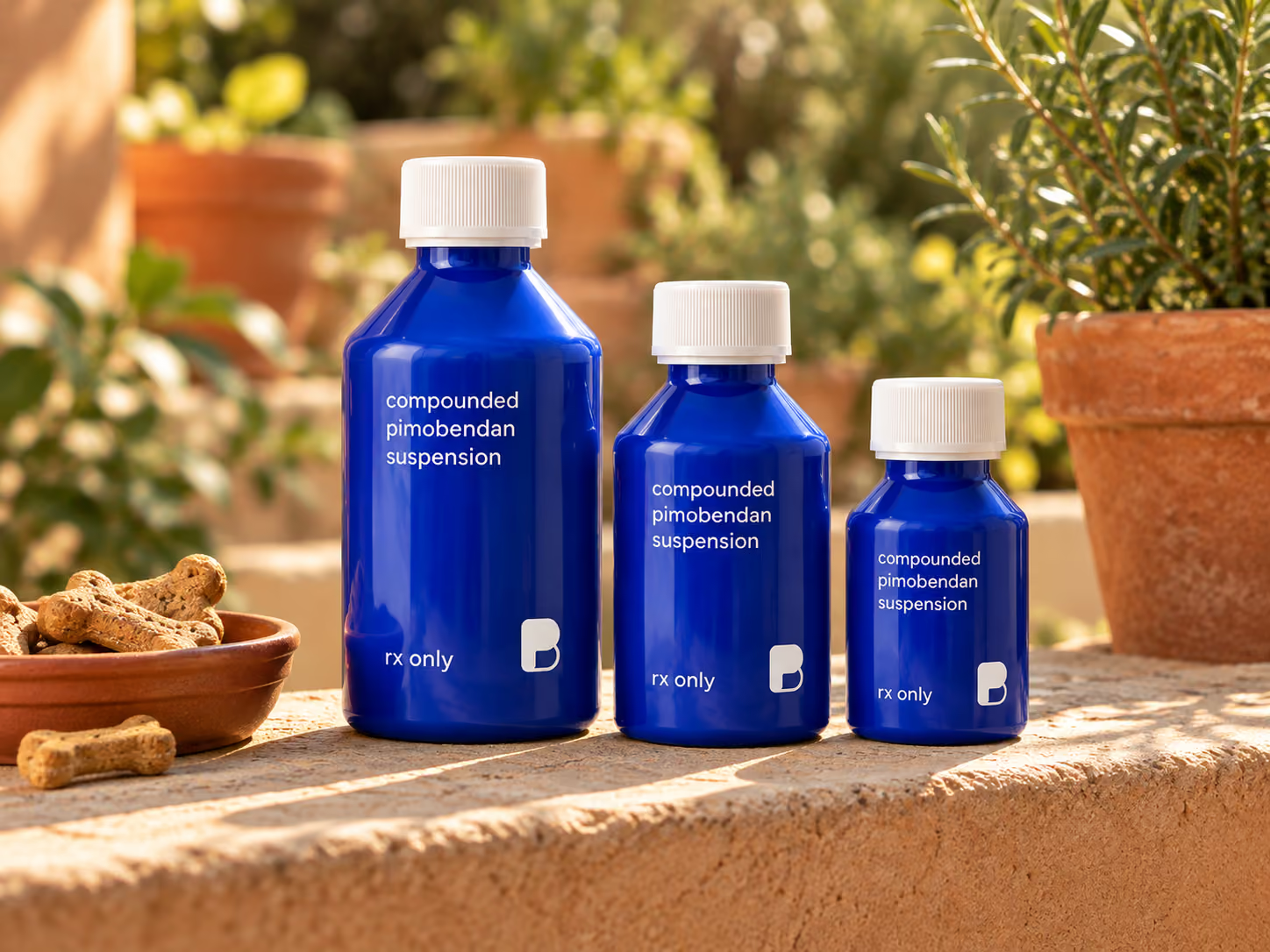
Bayview Pharmacy compounds pimobendan to the strength, form, and flavor your veterinarian specifies. Because an FDA-approved pimobendan product for dogs already exists, compounding is used only to fill a specific gap that the commercial product cannot, always at your veterinarian's direction. Bayview compounds this as part of our veterinary compounding line.
How does it work?
Pimobendan is described as an inodilator because it combines two proposed actions. It is thought to make the heart's contractile machinery more sensitive to calcium and to inhibit an enzyme called phosphodiesterase III, which together help the heart pump more forcefully without greatly increasing its oxygen demand. The same enzyme action is believed to relax blood vessels, reducing the resistance the heart pumps against. Your veterinarian can explain how this fits your dog's specific condition.
What is it used for?
Veterinarians may prescribe pimobendan for dogs diagnosed with certain forms of heart disease or congestive heart failure, for example, disease related to degenerative (myxomatous) mitral valve disease or dilated cardiomyopathy. Whether pimobendan is appropriate, and at what stage, is determined by your veterinarian based on examination and diagnostic testing.
Compounded pimobendan vs. the FDA-approved product
The FDA-approved product (Vetmedin) is the first-choice option because it has been reviewed by the FDA for safety, effectiveness, manufacturing quality, and labeling. Compounded pimobendan is used to fill gaps the approved product cannot, such as a tiny dose measured in fractions of a milligram, or an alternate form for a dog that cannot take the commercial version. Compounding is not a generic substitute and is not claimed to be equivalent to or better than the approved product; it is used only when a patient's specific need cannot be met commercially, at your veterinarian's direction.
How is it given?
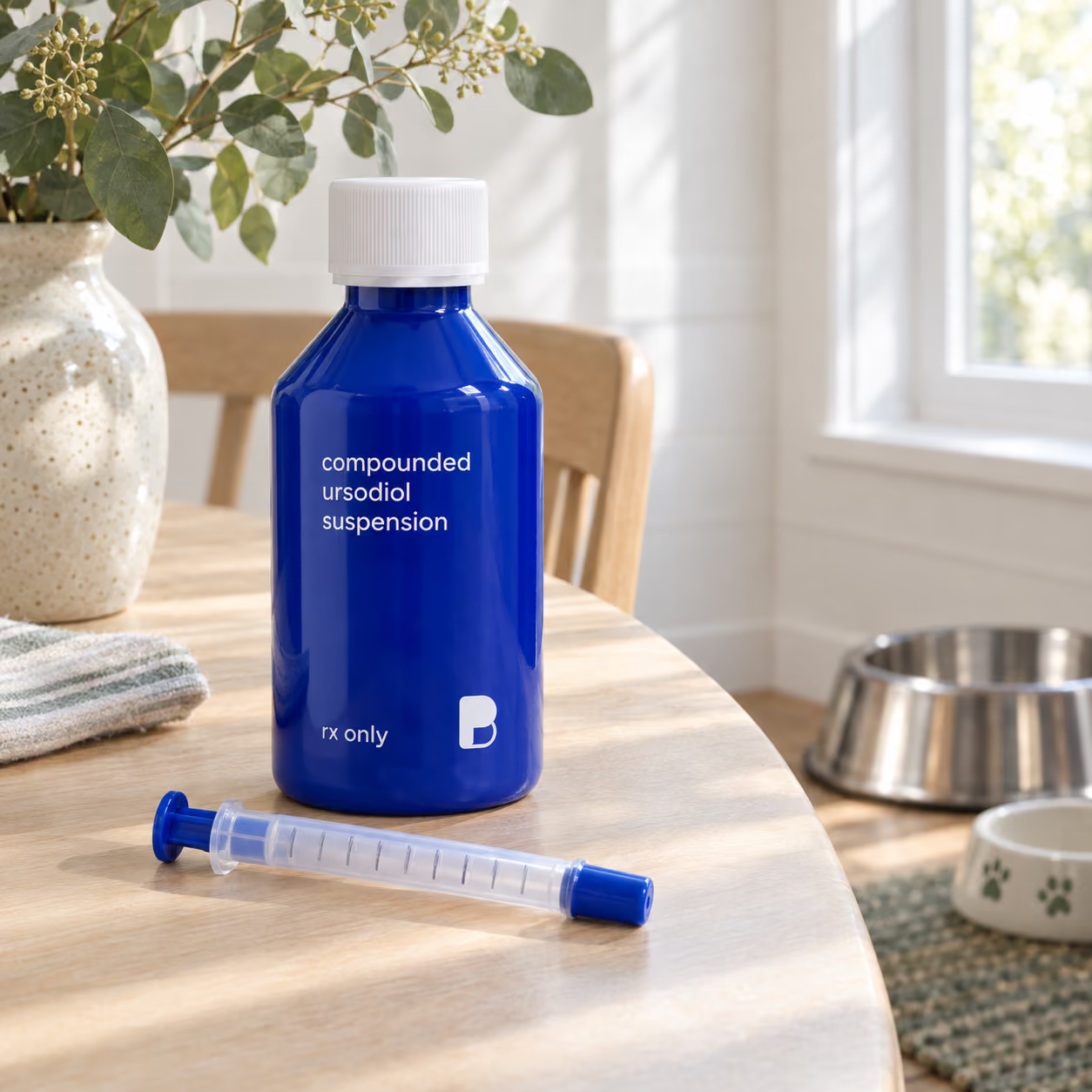
Compounded pimobendan is given by mouth, typically as a flavored oral suspension, capsule, or chew. Your veterinarian sets the exact dose based on your dog's weight and condition and tells you how often to give it, never adjust the amount on your own. It is often given at consistent times each day; follow the schedule your veterinarian provides and ask them about giving it in relation to food.
Side effects & safety
Pimobendan is generally well tolerated in dogs, but any medication can cause effects. Owners may notice reduced appetite, lethargy, or digestive upset, and your veterinarian will watch for changes specific to your dog's heart condition. A particular caution with compounded versions is that, unlike the FDA-reviewed product, their quality and potency may vary. Contact your veterinarian if you notice anything concerning.
Which pets should not take it?
Pimobendan is only for pets diagnosed with heart disease by a veterinarian. It may not be appropriate for dogs with conditions where increasing the heart's output could be harmful, for example, hypertrophic cardiomyopathy with outflow obstruction, unless your veterinarian specifically directs its use. Tell your veterinarian about all of your pet's health conditions and other medications so they can decide whether it is safe.
How should it be stored?
Store this medication as directed on the label, and keep it out of reach of children and pets. Ask your pharmacist how to store the specific form you receive, flavored liquids and chews may have particular storage needs, and do not use it past the beyond-use date on the label.
Why is this compounded?
Bayview Pharmacy compounds pimobendan when the commercial product cannot meet a patient's need: a very small dog that needs a fraction-of-a-milligram strength not sold commercially, or a dog that will not accept the commercial form and does better with a specific flavor or texture. Each preparation is made to your veterinarian's order. Other preparations we compound for animals include Trilostane for Dogs, Ursodiol for Pets, Cisapride, and Methimazole for Cats. The full list is in our compounded medications catalog.
Clinical details for prescribers
Regulatory status. Pimobendan is not a controlled substance. An FDA-approved canine chewable exists; compounded suspensions, capsules, and chews are used extralabel under AMDUCA when the approved product's fixed sizes do not fit a dog's calculated dose, within a valid veterinarian-client-patient relationship.
Formulation & dosing. Compounded as flavored oral suspension (~0.5 to 5 mg/mL), capsules, and flavored chews in custom strengths. Commonly reported dosing is approximately 0.25 to 0.3 mg/kg by mouth every 12 hours, given at least 1 hour before food. Staging and initiation (e.g., preclinical MMVD stage B2 vs. CHF) follow current cardiology consensus guidance.
Counseling / clinical points:
- Give on an empty stomach, food reduces bioavailability
- Precise small strengths matter most in toy breeds; verify the dose against current body weight at refills
- GI upset is the most common adverse effect; monitor appetite and energy
- Do not discontinue abruptly in CHF patients; changes should be cardiologist-directed with echo/radiographic monitoring
An inodilator (positive inotrope + vasodilator), pimobendan is dosed to the individual dog, which is exactly where compounded in-between strengths earn their place. Account setup, licensing, and ordering are covered on our for providers page.
Pimobendan for Dogs (Compounded) is a compounded veterinary medication and is not FDA-approved. This information is educational and is not a substitute for your veterinarian's instructions. Your veterinarian determines whether it is appropriate and sets the dose.