Methimazole is an antithyroid medication that veterinarians prescribe to manage hyperthyroidism in cats, a condition common in middle-aged and older cats in which an overactive thyroid gland produces too much thyroid hormone. An FDA-approved feline methimazole tablet, Felimazole, exists. Bayview Pharmacy also compounds methimazole for cats as a transdermal ear gel and as a flavored oral liquid, prepared to your veterinarian's order for cats the commercial tablet does not suit.
This page explains what each form is, how the ear gel is applied, how to handle it around your household, and what your veterinarian monitors. Whether methimazole is appropriate for your cat, which form to use, and what the dose should be are your veterinarian's decisions, not ours.
What is methimazole and what does it do in cats?

Methimazole is an antithyroid drug that reduces the thyroid gland's production of thyroid hormone. Our formulation page describes its pharmacology as inhibiting thyroid peroxidase, which reduces thyroid hormone synthesis. In its general human pharmacology, MedlinePlus describes methimazole as a treatment for hyperthyroidism, an overactive thyroid that produces excess hormone.
In cats, veterinarians use methimazole to lower elevated thyroid hormone levels as part of a plan they set and monitor. Hyperthyroid cats can lose weight despite a good appetite, become restless or vocal, and develop increased thirst and heart rate. How methimazole fits alongside other options such as diet, radioactive iodine, or surgery is a conversation to have with your veterinarian, who will base it on your cat's health and bloodwork.
Is there an FDA-approved methimazole for cats?
Yes. A veterinary methimazole tablet, Felimazole, is FDA-approved for cats. That matters for how you read the rest of this page.
Because an approved product exists, the compounded ear gel and the compounded flavored liquid are extralabel, which is another way of saying off-label. They are prepared under AMDUCA within a valid veterinarian-client-patient relationship, and they are prescription-only. Compounded preparations are not FDA-approved, and they are not an equivalent, a substitute, or an upgrade to the approved tablet. They exist so a veterinarian has a form and a strength to prescribe when the tablet is not a good fit for a particular cat or a particular household.
How do the tablet, the ear gel, and the liquid compare?

| Form | Status | How given | Strengths |
|---|---|---|---|
| Felimazole tablet | FDA-approved | Swallowed by mouth | Commercial fixed strengths |
| Compounded transdermal ear gel | Compounded, off-label, not FDA-approved | Applied to inner ear | Custom, per prescription |
| Compounded flavored oral liquid | Compounded, off-label, not FDA-approved | Given by mouth | Custom, per prescription |
The table describes what each form is, not how well any of them performs. Our formulation page notes that transdermal absorption can be more variable than an oral dose, which is why your veterinarian monitors your cat's response and thyroid levels and may adjust the strength or switch forms. The prescriber block on that page also notes that transdermal onset can be slower than oral dosing, and that adequate time should be allowed before a dose is escalated. Neither of those is a statement that one form is better than another.
Why do veterinarians choose transdermal methimazole for cats?
The reason is usually practical rather than clinical. Many owners choose the transdermal ear gel because their cat resists pills, spits out tablets, or becomes stressed at dosing time. The gel is applied to the inner surface of the ear rather than swallowed, so there is no pilling to negotiate twice a day.
Where a cat will take a liquid but not a pill, a flavored oral suspension is the other route. Bayview prepares flavored oral liquids in tastes cats often accept, such as chicken or fish, using the same approach we use for other custom oral suspensions. Your veterinarian decides which of these makes sense for your cat.
Methimazole sits in our veterinary compounding line alongside preparations such as cisapride, ursodiol for pets, pimobendan for dogs, and trilostane for dogs. If you want the wider picture of how veterinary compounding works, our veterinary compounding guide covers it, and you can browse the full searchable catalog of compounded medications.
How is the methimazole ear gel applied?
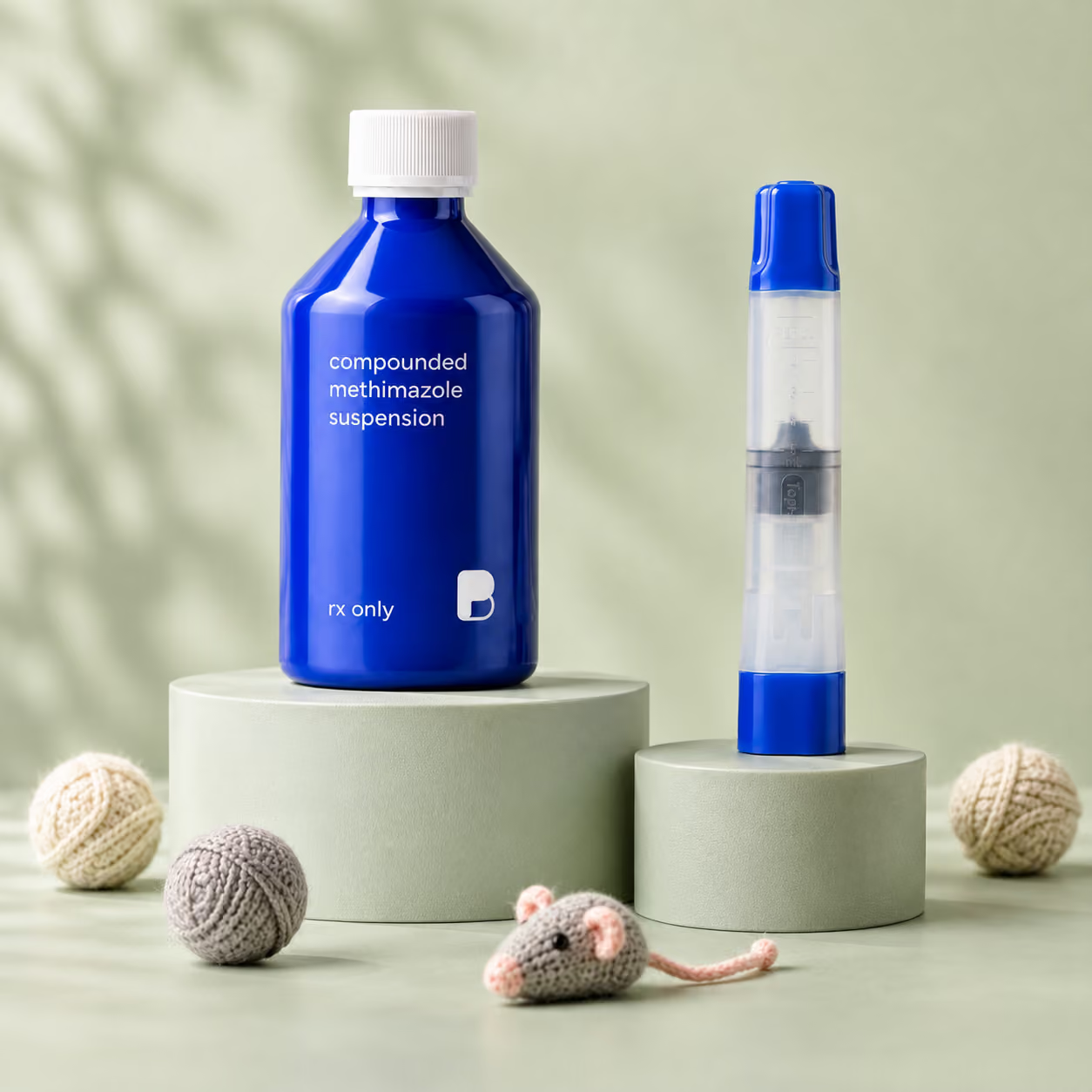
The transdermal gel is applied to the inner ear, usually with a metered TopiClick applicator that clicks out a measured amount. The flavored liquid is given by mouth. Your veterinarian sets the dose, which is specific to your cat, and sets the schedule.
The handling steps our formulation page gives for the gel are short and worth following every single time:
- Wear a glove or a finger cot to apply the dose.
- Wipe any residue from the previous dose off the ear before applying the next one.
- Rotate between the left and right ear so one ear is not treated every time.
- Wash your hands after each dose.
- Watch the treated ear for local irritation and tell your veterinarian if you see any.
Do not change the dose on your own, and do not make up your own schedule. Give it exactly as your veterinarian directs.
Is methimazole safe to handle around my household?
Handling matters here, and the instructions are not a formality. Methimazole absorbs through human skin, which is the whole reason the glove or finger cot is on the instructions. Handle the gel carefully and avoid skin contact.

Our page is explicit on two further points. Do not let children or other people in the household handle the medication. And pregnant caregivers should avoid handling it at all, which means someone else in the household needs to be the one who doses the cat.
For storage, keep the container tightly closed and store it as directed on the label, out of reach of children and other pets. Do not use the preparation after the beyond-use date printed on the label, and ask your veterinarian or pharmacist how to dispose of anything left over.
What side effects should I watch for in my cat?
Common effects can include vomiting, poor appetite, and lethargy. Some cats develop itching or scratching around the face and neck. Rare but serious problems involving blood cells or the liver can occur.
Contact your veterinarian promptly if your cat has persistent vomiting, weakness, or refuses to eat; if you see yellowing of the skin, eyes, or gums, or dark urine; if you notice unusual bruising, bleeding, pale gums, or signs of infection; or if there is severe facial scratching or any reaction that worries you.
Methimazole should not be given to a cat that is allergic to it, or to any animal it was not prescribed for. It is used with caution in pregnant cats and in cats with liver, kidney, or blood-cell problems. Tell your veterinarian about your cat's full history and every other medication your cat takes, so they can decide whether methimazole is appropriate at all.
What bloodwork will my cat need?
Veterinarians typically monitor bloodwork during treatment, including a complete blood count, liver values, thyroid levels, and kidney values. The prescriber notes on our formulation page describe rechecking total T4 two to four weeks after any dose change and titrating from there, and they flag that normalizing T4 can unmask underlying chronic kidney disease, so renal values get tracked alongside thyroid levels.
Clinical experience with transdermal methimazole in cats is described in the veterinary literature, including work by Sartor and colleagues published in The Canadian Veterinary Journal. Your veterinarian sets the recheck schedule for your cat.
What strengths and forms does Bayview compound?
Bayview prepares methimazole for cats to the strength and form a veterinarian orders, using USP 795 non-sterile compounding. Two forms are prepared on a prescriber's order: a transdermal ear gel at roughly 1.25 mg to 7.5 mg per 0.1 mL, in a Lipoderm or PLO base with a TopiClick applicator, and a flavored oral suspension at roughly 1.25 mg to 15 mg per mL in tastes such as chicken or fish. Custom strengths are compounded to the exact order written.
Forms and strengths are listed here for education only. They are not a statement that any option is better, stronger, or more effective than another, and your veterinarian determines which preparation, amount, and schedule are appropriate for your pet.
What does compounded methimazole for cats cost?
Compounded methimazole for cats starts at $75 for 60 mL. The final price depends on the form, the strength, and the quantity your veterinarian prescribes, so a quote for your cat's actual prescription is the number to work from.
Compounded preparations are generally not billed through insurance, and pet insurance plans vary in whether they reimburse them at all. We explain the reasons behind that in our post on whether compounding pharmacies take insurance. Keep your receipt if you plan to submit a claim to a pet insurer yourself.
How do I get compounded methimazole for my cat?
Start with your veterinarian. Compounded methimazole is prescription-only and is prescribed by a veterinarian for a specific animal, so the conversation about whether the ear gel or the flavored liquid fits your cat belongs in the exam room. If your veterinarian agrees, they can send the prescription to Bayview Pharmacy in Warwick, Rhode Island by e-prescribing platform, fax, or phone, and should include your cat's species, breed, and current body weight so the dose can be verified.
We fill the prescription as written and ship to the states where Bayview is licensed; details are on our FAQ page. If you are weighing a local pickup against mail order, our post on finding a compounding pharmacy near you walks through the difference.
Frequently asked questions
Is there a compounding pharmacy for pets near me?
Distance matters less than licensing. A compounded preparation is made to order and mailed like any other prescription, so the questions are whether the pharmacy holds a license in your state and whether your veterinarian can send the prescription there. Bayview compounds in Warwick, Rhode Island and dispenses to the states where it is licensed. Outside those states, ask your veterinarian for a local compounding pharmacy.
Why is compounded medication for pets not FDA approved?
Because it is made for one animal on a prescription rather than mass-produced and submitted for approval, so FDA has not reviewed that specific preparation for safety or effectiveness. Compounding animal drugs from bulk substances is addressed in FDA's Guidance for Industry #256, issued in 2022, which describes conditions including compounding on a prescription for an individual animal patient. State boards of pharmacy license and inspect the pharmacy.
Where to buy tacrolimus eye drops for dogs?
There is no FDA-approved veterinary ophthalmic tacrolimus product, so an ophthalmic preparation would have to be compounded on a veterinarian's prescription. Bayview's compounded tacrolimus preparations are listed as otic solutions, rectal enemas, gels, creams, foams, and shampoos, all off-label and not FDA-approved. Have your veterinarian contact the pharmacy with the strength and vehicle they intend to order so we can confirm what we can prepare.
Can I use my HSA or FSA for pet medication?
Generally no. HSA and FSA accounts cover qualified human medical expenses, so veterinary medications for a pet are not eligible, with narrow exceptions such as a service animal. Compounded veterinary preparations at Bayview are cash-priced and quoted before we compound them. If your pet insurance offers a prescription benefit, that is the usual route to reimbursement instead.
Does pet insurance cover compounded medications?
Sometimes. Some pet insurance plans reimburse compounded prescriptions and some do not, and it often depends on whether the policy includes a prescription medication benefit and how it treats preparations that are not FDA-approved. Check your specific policy or call your insurer before assuming either way. Compounded preparations are cash-priced at the pharmacy, so you would pay first and submit the receipt for reimbursement.
How do I get transdermal methimazole for my cat?
Ask your veterinarian whether a transdermal form is appropriate for your cat. If it is, they send a prescription to a compounding pharmacy specifying the gel strength per 0.1 mL, the base and applicator, and the directions. Bayview compounds methimazole as a transdermal ear gel or a flavored oral suspension to that order, starting at $75. Your veterinarian sets the dose and monitors thyroid levels and bloodwork.
Can I get compounded medication for my dog without a prescription?
No. A compounded veterinary preparation is made only against a prescription a veterinarian writes for a specific animal, and that prescription is what makes the compounding lawful. The veterinarian also decides the drug, the form, the strength, and the directions. Any site selling compounded prescription medication for animals without a veterinarian's prescription is not operating within those rules.
What is a compounding pharmacy for pets?
It is a licensed pharmacy that prepares a medication to a veterinarian's exact order for one named animal, rather than dispensing a manufactured product off the shelf. That can mean a strength no manufacturer sells, a flavored liquid instead of a tablet, or a transdermal gel instead of a pill. Compounded animal drugs are not FDA-approved, and a prescription from a licensed veterinarian is required for every preparation.
What side effects should I watch for?
Common effects include vomiting, poor appetite, lethargy, and facial itching. Call your veterinarian for persistent vomiting, yellowing of the gums or eyes, or unusual bruising or bleeding.
Is there an FDA-approved version?
Yes, an FDA-approved cat tablet (Felimazole) exists. Bayview compounds the transdermal gel, flavored liquid, and custom strengths for cats that will not take the tablet, at your veterinarian's direction. The compounded forms are not FDA-approved.
Does my cat need bloodwork?
Yes. Your veterinarian typically checks a CBC, liver values, thyroid levels, and kidney values during treatment, because methimazole can rarely affect blood cells or the liver.
How do I apply the transdermal gel safely?
Wear a glove or finger cot, wipe off any residue from the last dose, and rotate between the left and right ear. Wash your hands afterward and keep the medication away from children and other pets.
What is the difference between the ear gel and the liquid?
The transdermal gel is applied to the inner ear for cats that resist pills; the flavored liquid is given by mouth. Your veterinarian chooses the form and monitors your cat's thyroid levels either way.
What is methimazole used for in cats?
Veterinarians prescribe methimazole to manage hyperthyroidism in cats, an overactive thyroid that makes too much hormone. It lowers thyroid hormone production as part of a plan your veterinarian determines.
How long before my cat gets rechecked after a dose change?
The prescriber notes on our formulation page describe rechecking total thyroid hormone (total T4) two to four weeks after any dose change, then titrating from there. Your veterinarian sets the actual recheck schedule for your cat and may also track kidney values, liver values, and a complete blood count at the same visit. Keep the appointment even if your cat seems unchanged, because the bloodwork is what guides the next dose.
What do I do if I miss a dose of my cat's methimazole?
Call your veterinary clinic and ask. Our formulation page says to give methimazole exactly as your veterinarian directs and not to change the dose on your own, and that applies to a missed dose too. Do not double the next application to catch up. Write down when the miss happened so you can tell the clinic, and mention it at the next recheck, since dosing history affects how your veterinarian reads the bloodwork.
Do I need to clean my cat's ear before applying the gel?
Our page tells caregivers to wipe any residue from the previous dose off the inner ear before applying the next one, and to rotate between the left and right ear so one ear is not treated every time. That is different from a full ear cleaning with a cleaning solution. If your cat's ears look waxy, red, or irritated, ask your veterinarian what to use rather than choosing a product yourself.
Can my cat switch from the ear gel to the flavored liquid?
That is your veterinarian's call, not a change to make at home. Our formulation page notes that transdermal absorption can be more variable than an oral dose, which is why your veterinarian monitors your cat's response and thyroid levels and may adjust the strength or switch forms. A switch usually means a new prescription, because the gel and the oral suspension are prepared at different concentrations.
Is methimazole a risk to other pets or people in my house?
Methimazole absorbs through human skin, which is why our page tells caregivers to wear a glove or finger cot, wash their hands after each dose, and avoid skin contact with the gel. Do not let children or other people in the household handle the medication. Pregnant caregivers should avoid handling it, so someone else should dose the cat. Store the container tightly closed and out of reach of children and other pets.
What flavors does compounded methimazole liquid come in for cats?
Bayview prepares the flavored oral suspension in tastes cats often accept, such as chicken or fish. Flavoring is about acceptance at dosing time and does not change what your veterinarian prescribes. The strength is compounded to the exact order your veterinarian writes, and the transdermal ear gel is the other option when a cat will not take anything by mouth. Ask your veterinarian which form to put on the prescription.
What Bayview compounds for this
Important: Compounded medications are prepared to a prescriber's order for an individual patient. They are not FDA-approved, and the FDA has not evaluated them for safety, effectiveness, or manufacturing quality. This article is educational and is not a substitute for advice from your prescriber or pharmacist.
This preparation contains a controlled substance. Controlled-substance prescriptions carry refill limits, must be e-prescribed, and can only be shipped to states where Bayview holds the required licensure.
Uses discussed here may be off-label, meaning they are not part of any FDA-approved labeling. Off-label use is a decision for you and your prescriber, based on the available evidence.
Veterinary preparations are compounded to a veterinarian's order for a specific animal and are not FDA-approved animal drugs. Never give a compounded human medication to an animal without veterinary direction.
Compounded prescriptions are paid for directly rather than billed through insurance. Most are HSA/FSA-eligible, and many patients submit the receipt to their plan for possible reimbursement. Pricing depends on the strength, dose form and quantity your prescriber orders. Read more about cost and insurance.
Compounded methimazole for cats starts at $75 for 60 mL, and the final price depends on the form, strength, and quantity your veterinarian prescribes. Compounded preparations are generally not billed through insurance, and pet insurance plans vary in whether they reimburse them, so most owners pay cash and keep the receipt if they plan to submit a claim themselves.
Bayview Pharmacy is an NABP-accredited compounding pharmacy in Warwick, Rhode Island, licensed to fill and ship compounded prescriptions for patients in Rhode Island, Massachusetts, Connecticut, New Jersey, New Hampshire, Florida, New York and Maine. Controlled substances are not shipped to New York addresses. See where we ship and how to get started.
Related reading