A mast cell stabilizer is a medicine that makes mast cells less likely to release histamine and the other chemical messengers behind flushing, hives, itching, and gut symptoms. Two are taken by mouth for mast cell conditions such as mast cell activation syndrome (MCAS) and mastocytosis: cromolyn sodium and ketotifen.
Both are taken every day. Any benefit usually takes weeks to show, and neither one stops a severe reaction that is already happening. Compounded cromolyn and ketotifen are not FDA-approved, and a prescription is required. Your provider decides whether either one fits your situation. Bayview Pharmacy does not provide consultations or decide whether a medication is right for you.
What are mast cell stabilizers?
Mast cells are immune cells made in the bone marrow. When they are activated, they release chemical messengers called mediators, such as histamine, that signal an immune response (MedlinePlus Genetics). In MCAS, that release happens too easily, and symptoms show up in two or more parts of the body at the same time (AAAAI work group report).
Most MCAS medicines act at one of two points.
- Antihistamines block histamine at its receptors after it has been released. H1 blockers such as cetirizine are used for itching, hives, and flushing. H2 blockers such as famotidine are used mainly for stomach and gut symptoms.
- Mast cell stabilizers act earlier. They make mast cells less likely to release their messengers in the first place.
Ketotifen is an H1 antihistamine that is also described as having mast cell stabilizing activity. Cromolyn has no antihistamine activity of its own, according to its prescribing information.
The same two drugs also come in forms for the nose and eyes. Cromolyn comes as a nasal spray used for nasal allergy symptoms, and in the United States ketotifen is sold as an eye drop for itchy allergic eyes (MedlinePlus). Those products act where they are applied. This guide covers the forms taken by mouth.
Oral cromolyn sodium (Gastrocrom)
Oral cromolyn is FDA-approved as a liquid concentrate for the management of mastocytosis. It is sold under the brand name Gastrocrom and as a generic. Using it for MCAS is off-label, which means the FDA has not approved it for that use.
No more than 1% of an oral dose is absorbed into the body (prescribing information), so cromolyn is thought to act mainly in the gut. The AAAAI work group describes oral cromolyn as used mainly for gut symptoms, such as bloating, diarrhea, and cramps.
How oral cromolyn is taken
The manufactured concentrate comes in single-dose ampules. The label directs you to squeeze the dose into a glass of water, stir, and drink all of it at least half an hour before meals and at bedtime, four times a day. It is for drinking only, not for inhaling or injecting. For ages 13 and up the labeled dose is two ampules (200 mg) four times a day, and for ages 2 to 12 it is one ampule (100 mg). The manufactured concentrate is not recommended for children under 2.
Providers often start with a low dose and raise it slowly. The AAAAI report describes working up to 200 mg four times a day, before each meal and at bedtime. Bayview compounds cromolyn as capsules and as an oral suspension when a patient needs a strength or form the manufactured product does not offer. Your provider sets the dose and the schedule.
Side effects of oral cromolyn
In the clinical studies described in the label, the most common reports were headache and diarrhea, followed by itching, nausea, and muscle aches. Most were short-lived, and the label notes that some may have come from the disease itself. Do not take cromolyn if you have had an allergic reaction to it.
Oral ketotifen
In the United States, ketotifen is approved only in products for the eye, such as eye drops. No oral ketotifen product is FDA-approved or commercially available here, so ketotifen capsules are compounded to a provider's prescription. The AAAAI report notes the same thing: ketotifen is approved in the US for allergic eye disease and is available here as a compounded medication.
Providers may prescribe oral ketotifen off-label for MCAS and other histamine-related conditions. The AAAAI work group also states that whether ketotifen helps more than other antihistamines has not been proven.
How oral ketotifen is taken
Ketotifen is taken by mouth as a capsule or an oral suspension, usually twice a day. Because drowsiness is common at first, providers often start with a lower dose, sometimes in the evening, and increase it gradually. Canada's product monograph describes reaching the full dose within about 5 days. Bayview prepares 0.5, 1, and 2 mg capsules and a 1 mg/mL oral suspension. Your provider sets the strength and schedule.
Side effects of oral ketotifen
Drowsiness is the most common effect, and it is often strongest in the first days to weeks. Weight gain and increased appetite, dry mouth, and dizziness have also been reported. Ketotifen can add to the drowsiness caused by alcohol, sleep medicines, and other antihistamines, so be careful driving until you know how it affects you.
Canada's 2010 product monograph for oral ketotifen (Zaditen) adds two cautions. Ketotifen may lower the seizure threshold, so it is used with care in people with epilepsy. Rare, reversible drops in platelet count have been reported in people also taking diabetes pills. Tell your provider about every medication you take, and about pregnancy or breastfeeding, before you start.
Cromolyn vs. ketotifen
Cromolyn and ketotifen are both used in mast cell conditions, and some providers prescribe them together. They are not interchangeable. The table compares how each is taken and what is known about it. It is not a statement that one works better than the other.
| Oral cromolyn | Oral ketotifen | |
|---|---|---|
| What it does | Mast cell stabilizer with no antihistamine activity of its own | H1 antihistamine, also described as having mast cell stabilizing activity |
| US status by mouth | Manufactured concentrate FDA-approved for mastocytosis; MCAS use off-label; compounded forms not FDA-approved | No FDA-approved oral product; compounded forms not FDA-approved |
| Where it acts | Thought to act mainly in the gut; no more than 1% of a dose is absorbed | Throughout the body |
| Usual timing | Before meals and at bedtime | Usually twice a day |
| Most common side effects reported | Headache, diarrhea (manufactured concentrate label) | Drowsiness, weight gain (Canadian product monograph) |
| What Bayview prepares | Capsules 100 and 200 mg; oral suspension 25 and 50 mg/mL | Capsules 0.5, 1, and 2 mg; oral suspension 1 mg/mL |
How long do mast cell stabilizers take to work?
Weeks, not days. In the small studies of people with mastocytosis described in the cromolyn label, improvement appeared within 2 to 6 weeks, and the AAAAI report advises taking oral cromolyn for at least a month before deciding whether it helps. For ketotifen, Canada's monograph, which was written for childhood asthma, says several weeks may pass before any benefit appears. Take these medicines every day as prescribed rather than only when symptoms flare, and talk with your provider before you stop or change a dose.
They do not replace your emergency plan
Mast cell stabilizers are maintenance medicines. They do not stop a severe reaction that is already underway. The AAAAI work group advises that people at risk of anaphylaxis carry an epinephrine auto-injector. If you have trouble breathing, swelling of the throat or tongue, or feel faint, use your epinephrine auto-injector if one has been prescribed and call 911.
The same report advises against compounding medicines used to treat or prevent anaphylaxis just to remove additives, and notes that additives have not been studied in MCAS. Keep your auto-injector exactly as prescribed.
Where mast cell stabilizers fit in MCAS care
MCAS care usually starts with avoiding known triggers, then adds medications. The AAAAI report describes H1 antihistamines, with nonsedating ones generally preferred, H2 antihistamines for gut symptoms, oral cromolyn mainly for gut symptoms, ketotifen, and leukotriene blockers such as montelukast. It also notes that much of this rests on expert opinion, case reports, and case series, and that some of these medicines are not well studied in MCAS. Your provider chooses which medicines you take and in what order. Our MCAS medications page lays out each group and what Bayview prepares.
What does Bayview compound for this?
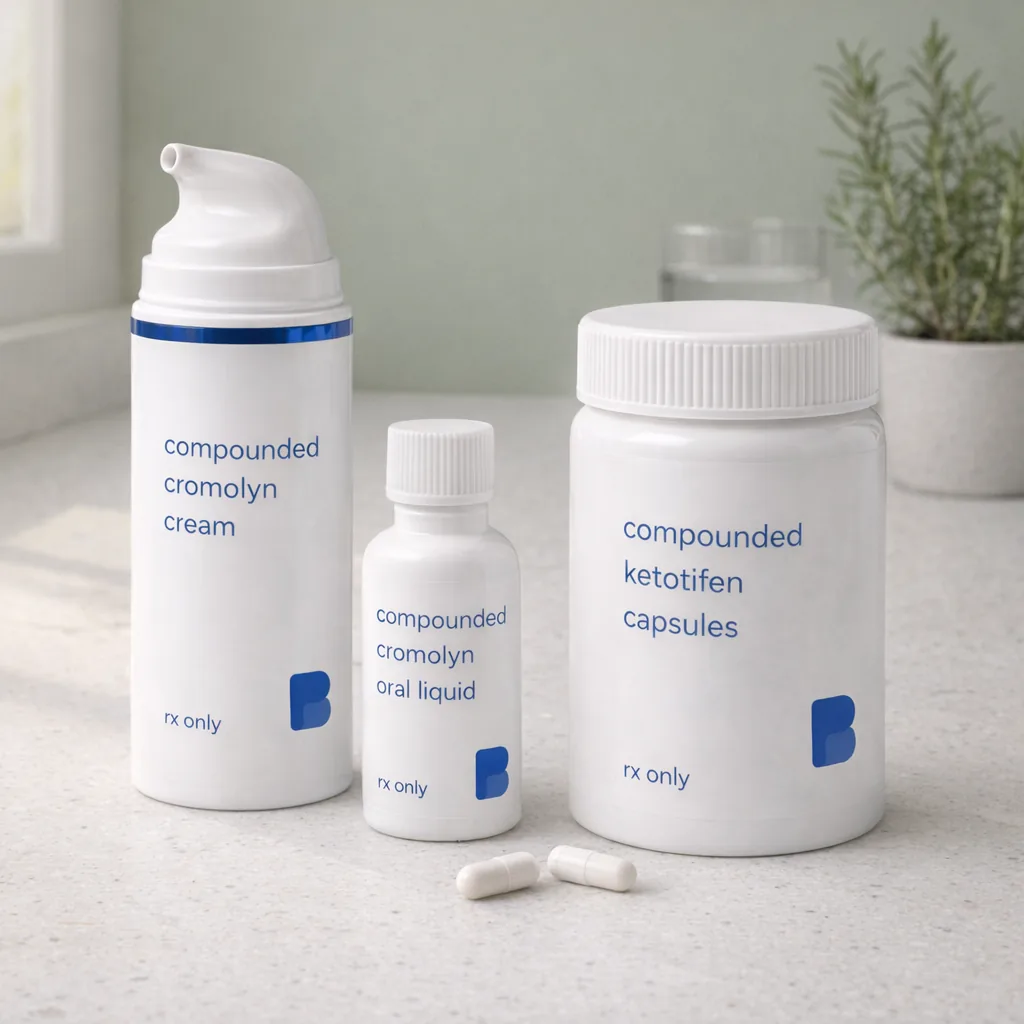
On a prescriber's order, Bayview prepares ketotifen capsules in 0.5, 1, and 2 mg strengths, oral cromolyn as 100 and 200 mg capsules and 25 and 50 mg/mL oral suspensions, and topical cromolyn cream or gel. Bayview also prepares a 1 mg/mL ketotifen oral suspension. These are compounded medications and are not FDA-approved, and a valid prescription is required.
Ketotifen capsules start at $90 for 60 capsules, and compounded cromolyn capsules start at $130 for 90 capsules. The final price depends on the strength, form, and quantity your provider orders. Compounded prescriptions at Bayview are cash-priced rather than billed through insurance, and HSA and FSA cards generally work. Do compounding pharmacies take insurance explains why.
How do you get them from Bayview?
Start with your provider, often an allergist or immunologist, who decides whether a mast cell stabilizer fits and which one. If they agree, they can e-prescribe, fax, or call the prescription to Bayview Pharmacy in Warwick, Rhode Island. Neither cromolyn nor ketotifen is a controlled substance. Already have a prescription at another pharmacy? You can transfer it to Bayview. We fill and ship to patients in the states where Bayview is licensed, which are listed on our FAQ.
Frequently asked questions
What are mast cell stabilizers?
Mast cell stabilizers are medicines that make mast cells less likely to release histamine and other chemical messengers. The two taken by mouth for mast cell conditions are cromolyn sodium and ketotifen. They are daily maintenance medicines and do not stop a reaction that is already happening.
What is the difference between a mast cell stabilizer and an antihistamine?
An antihistamine blocks histamine at its receptors after mast cells have released it. A mast cell stabilizer acts earlier, making mast cells less likely to release histamine and other messengers. Ketotifen is an antihistamine that is also described as having mast cell stabilizing activity, while cromolyn has no antihistamine activity of its own.
What is Gastrocrom?
Gastrocrom is the brand name of oral cromolyn sodium concentrate, an FDA-approved liquid for mastocytosis that is also sold as a generic. It is mixed into water and taken before meals and at bedtime. Using it for MCAS is off-label, which means the FDA has not approved it for that use. Bayview compounds cromolyn as capsules and oral suspensions, which are not FDA-approved, when a provider orders a strength or form the manufactured product does not offer.
How do you take oral cromolyn?
The manufactured concentrate is squeezed into a glass of water, stirred, and swallowed at least half an hour before meals and at bedtime. Compounded capsules and suspensions are taken on the schedule your provider sets, often starting low and increasing slowly. Take it every day, because any benefit usually takes weeks to show.
What are the side effects of cromolyn sodium?
In the clinical studies described in the oral concentrate's label, the most common reports were headache and diarrhea, followed by itching, nausea, and muscle aches, and most were short-lived. Do not take cromolyn if you have had an allergic reaction to it, and tell your provider about any effect that worries you.
What are the side effects of ketotifen?
Drowsiness is the most common, often strongest in the first days to weeks. Weight gain and increased appetite, dry mouth, and dizziness have also been reported. Alcohol and other sedating medicines can add to the drowsiness, so be careful driving until you know how ketotifen affects you.
Can you take cromolyn and ketotifen together?
Some providers prescribe both as part of a broader MCAS plan. They work differently and are not interchangeable. Whether you take one, both, or neither is your provider's decision, so do not add or combine them on your own.
How much do compounded ketotifen and cromolyn cost?
At Bayview, ketotifen capsules start at $90 for 60 capsules and compounded cromolyn capsules start at $130 for 90 capsules. The final price depends on the strength, form, and quantity your provider orders. Compounded prescriptions at Bayview are cash-priced rather than billed through insurance, and HSA and FSA cards generally work.
Why is oral ketotifen compounded?
In the United States, ketotifen is approved only in products for the eye, such as eye drops. No oral ketotifen product is FDA-approved or manufactured here, so a pharmacy compounds ketotifen capsules or suspension to a provider's prescription. Compounded ketotifen is not FDA-approved.
How long do mast cell stabilizers take to work?
They build up slowly. For oral cromolyn, the AAAAI work group advises allowing at least a month before judging whether it helps, and providers usually start with a low dose and increase it gradually. Take mast cell stabilizers every day as prescribed, not only when symptoms flare.
Do these medications replace my epinephrine auto-injector?
No. MCAS maintenance medications do not stop a severe reaction that is already underway. If your provider has prescribed an epinephrine auto-injector, keep it with you and use it as directed, then call 911. The AAAAI work group advises against compounding medicines used to treat or prevent anaphylaxis just to remove additives.
What Bayview compounds for this
Important: Compounded medications are prepared to a prescriber's order for an individual patient. They are not FDA-approved, and the FDA has not evaluated them for safety, effectiveness, or manufacturing quality. This article is educational and is not a substitute for advice from your prescriber or pharmacist.
This preparation contains a controlled substance. Controlled-substance prescriptions carry refill limits, must be e-prescribed, and can only be shipped to states where Bayview holds the required licensure.
Uses discussed here may be off-label, meaning they are not part of any FDA-approved labeling. Off-label use is a decision for you and your prescriber, based on the available evidence.
Veterinary preparations are compounded to a veterinarian's order for a specific animal and are not FDA-approved animal drugs. Never give a compounded human medication to an animal without veterinary direction.
Compounded prescriptions are paid for directly rather than billed through insurance. Most are HSA/FSA-eligible, and many patients submit the receipt to their plan for possible reimbursement. Pricing depends on the strength, dose form and quantity your prescriber orders. Read more about cost and insurance.
Compounded ketotifen capsules start at $90 for 60 capsules, and compounded cromolyn capsules start at $130 for 90 capsules. The price depends on the strength, form, and quantity your provider orders. Compounded preparations at Bayview are cash-priced rather than billed through insurance, and they are generally eligible for HSA and FSA cards. Do compounding pharmacies take insurance covers this in more detail.
Bayview Pharmacy is a compounding pharmacy in Warwick, Rhode Island, licensed to fill and ship compounded prescriptions for patients in Rhode Island, Massachusetts, Connecticut, New Jersey, New Hampshire, Florida, Maine and Pennsylvania. Prescriptions for New York patients are filled on a limited basis, and controlled substances are not shipped to New York addresses. See every state we ship to.
Related reading