



In Stock
Fortified Tobramycin Eye Drops | Compounded | Bayview Pharmacy

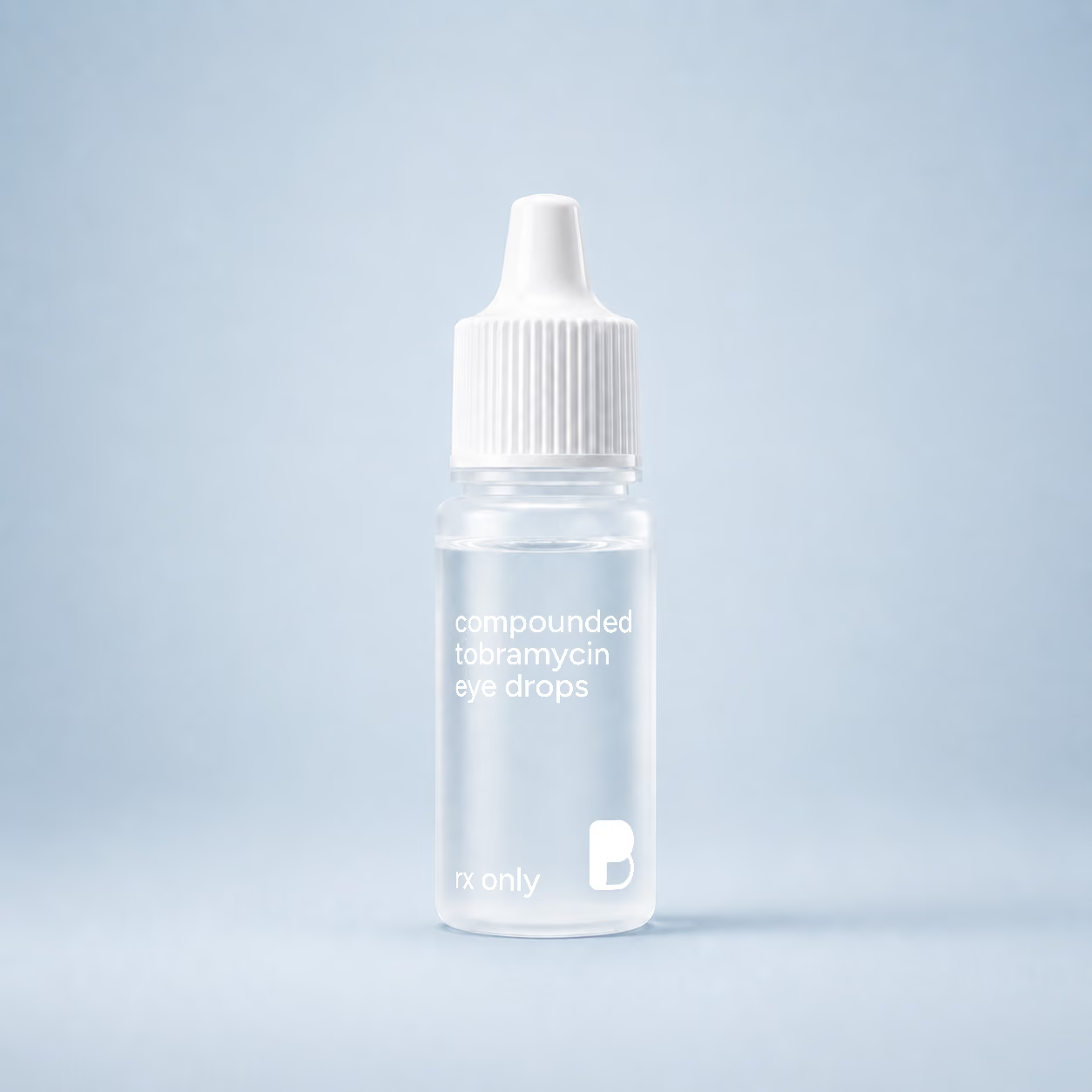
Tobramycin Eye Drops

Smiling man in blue pharmacist scrubs with arms crossed and pen behind his ear.
Medically reviewed by Ryan Dyer, RPh
Last updated on
July 23, 2026
  • A fortified antibiotic eye drop, far stronger than the commercial 0.3% drop
  • Broad gram-negative coverage, including Pseudomonas
  • Compounded sterile (15 or 13.6 mg/mL) to your specialist's order
  • Prepared fresh for serious eye infections

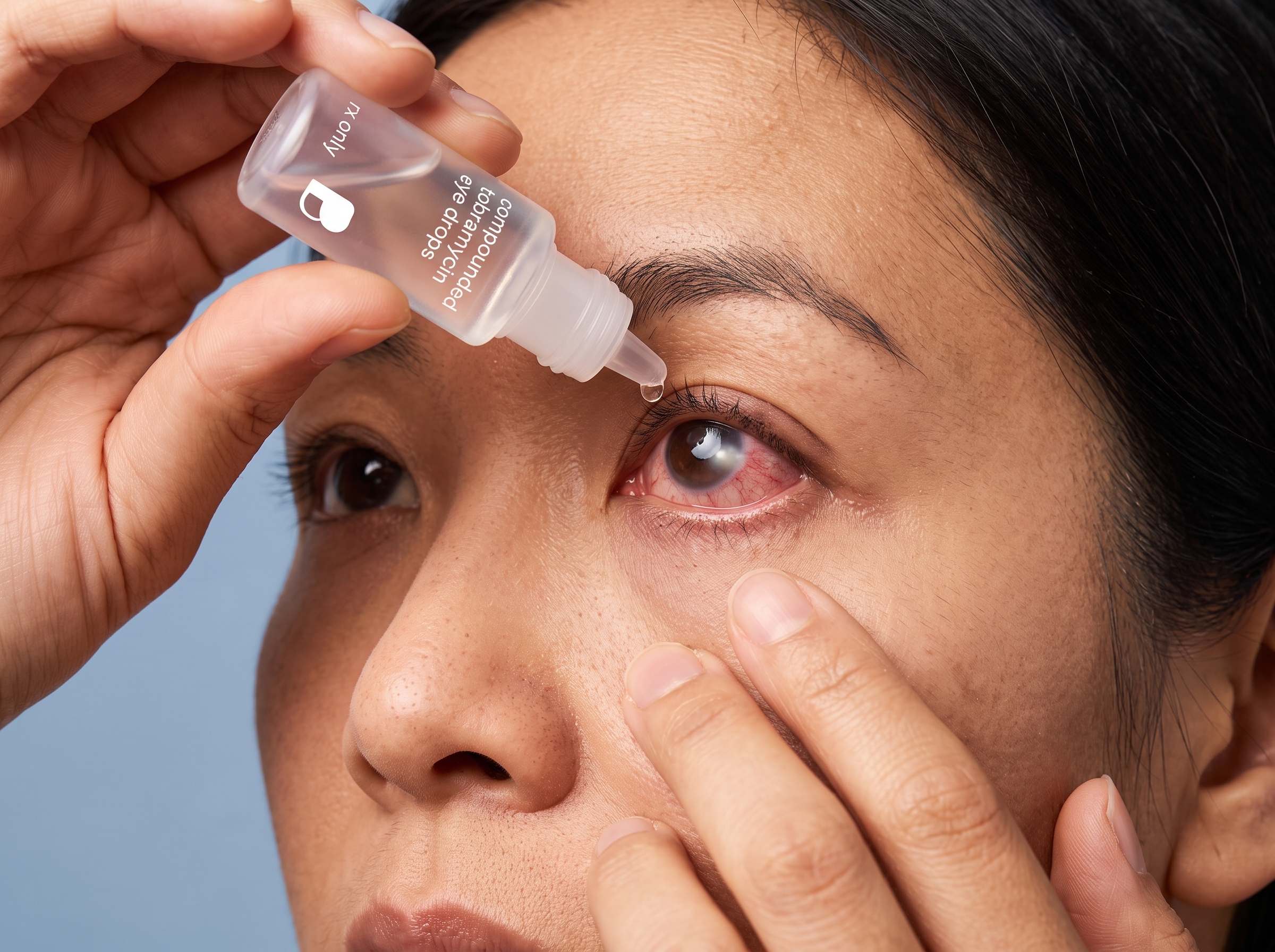
Fortified tobramycin ophthalmic solution is a compounded, prescription antibiotic eye drop used to treat serious bacterial eye infections, such as bacterial keratitis (corneal ulcer), under the care of an eye specialist. Tobramycin is an aminoglycoside that is especially active against gram-negative bacteria, including Pseudomonas.

Because the fortified strength is not sold commercially, Bayview compounds it sterile at the concentration your specialist orders (15 mg/mL or 13.6 mg/mL). Compounded medications are not FDA-approved, and a valid prescription is required.

What is "fortified" tobramycin?

"Fortified" means the eye drop is compounded at a much higher concentration than the standard commercial tobramycin drop, which is 0.3% (3 mg/mL). Bayview compounds it at 15 mg/mL and 13.6 mg/mL, roughly five times the commercial strength, because a serious eye infection can need more antibiotic delivered to the surface of the eye.

What is fortified tobramycin used for?

It is used to treat serious bacterial eye infections, most often bacterial keratitis (a corneal infection or ulcer), especially when gram-negative bacteria such as Pseudomonas are involved or suspected. An eye specialist prescribes and monitors it, often based on cultures of the infection.

Trusted by 105,826 patients to date.
A group of faces of our past satisfied patients.
Compounded medications are prepared pursuant to a valid prescription for an individual patient and are not FDA-approved. This page is for educational purposes and is not medical advice.
**The FDA does not review or approve compounded medications for safety or effectiveness. A valid prescription from a licensed practitioner is required.
Important safety information →

Internal Pricing

This is internal data that only pharmacy staff can see.

INTERNAL — PRICING REFERENCE · DO NOT PUBLISH TO PATIENTS

Based on 35 cash fills in 2025 (cash, autofill, and pickup/cash autofill; insurance-adjudicated fills excluded). Usual is the most commonly charged price for that product and quantity; the range reflects discounts, autofill pricing, and mid-year price changes.

ProductQtyUsual2025 rangeFills
TOBRAMYCIN SULFATE 15MG/ML [FORTIFIED] CONTAINS BAC AS A PRESERVATIVE OPH SOLN7.5 mL$150$15035

Starting price shown on the page: $150 (7.5 mL). Compiled July 2026 from 2025 dispensing data. Confirm current pricing for special orders, unusual quantities, or compounded-to-order strengths before quoting.

Getting your prescription filled is simple

Send us your prescription

STEP
1
Have your provider e-prescribe to Bayview, fax it to us, or call it in directly to one of our pharmacists.
A thin blue light beam connecting two clear glass slabs on a white surface.

A pharmacist reviews it

STEP
2
We verify your prescription and prepare your medication to your provider's exact instructions.
Close-up of a white dial with blue measurement markings and a rotating knob.

We compound & ship

STEP
3
We prepare your medication and ship it discreetly to your door, with support when you need it.
Close-up of a gray box with a precise blue line running along its folded edges.

What is Tobramycin Eye Drops?

Tobramycin ophthalmic solution (fortified) is a compounded, prescription antibiotic eye drop. It is a "fortified" preparation, meaning it is made at a higher concentration than the standard commercial tobramycin eye drop (0.3%, or 3 mg/mL). Tobramycin is an aminoglycoside antibiotic that is especially active against gram-negative bacteria, including Pseudomonas aeruginosa. It is prepared by a licensed pharmacy as a sterile eye drop and is used under the care of an eye specialist to treat serious bacterial eye infections.

Bayview compounds fortified tobramycin at two concentrations, 15 mg/mL and 13.6 mg/mL, roughly five times the strength of the commercial drop. Because there is no commercially available fortified tobramycin eye drop, providers prescribe these concentrations and rely on a compounding pharmacy to prepare them. Only a licensed provider can decide whether it is appropriate, and it is typically prescribed and monitored by an eye specialist.

This is a fortified antibiotic used under an eye specialist's care. Fortified tobramycin eye drops are prescribed for serious bacterial eye infections and are often used very frequently, sometimes as often as every hour, and are commonly paired with a second fortified antibiotic that covers gram-positive bacteria (such as fortified vancomycin or cefazolin). Use it exactly as directed, keep all follow-up appointments, and do not stop early even if the eye feels better.

How does it work?

Tobramycin is an aminoglycoside antibiotic. It kills bacteria by binding to their ribosomes and blocking the production of the proteins they need to survive, and it is especially active against aerobic gram-negative bacteria, including Pseudomonas aeruginosa (StatPearls, Tobramycin). Applied directly to the eye as a fortified (high-concentration) drop, it delivers the antibiotic to the surface tissue where a serious infection is present. Your eye specialist sets the concentration, schedule, and length of treatment, often based on cultures of the infection.

What is it used for?

Fortified tobramycin eye drops are used to treat serious bacterial eye infections caused, or suspected to be caused, by gram-negative bacteria such as Pseudomonas. The most common use is bacterial keratitis, an infection of the cornea (sometimes called a corneal ulcer). Because a serious corneal infection may involve either gram-negative or gram-positive bacteria, tobramycin is frequently prescribed together with a second fortified antibiotic, such as fortified vancomycin or cefazolin, to cover a broader range of bacteria until cultures return (EyeWiki, Bacterial Keratitis). The fortified concentration is used off-label, because there is no commercially available fortified tobramycin product. Only a licensed provider can decide whether it is appropriate; Bayview Pharmacy does not provide consultations or determine appropriateness, and a valid prescription is required.

How do the strengths compare?

Fortified tobramycin is compounded at two concentrations that are both far stronger than the commercial 0.3% (3 mg/mL) drop. They differ only slightly in concentration, and your specialist selects the one that fits their treatment plan. The table below describes those differences for education only.

StrengthNotes
15 mg/mL (1.5%)A fortified concentration, about five times the commercial 0.3% drop
13.6 mg/mL (1.36%)A fortified concentration in the traditional range used for keratitis

Strengths are described for education only and are not a statement that either concentration is better, stronger, or more effective for a particular infection. Your eye specialist selects the concentration, schedule, and length of treatment.

How is it used?

Use it exactly as your eye specialist directs. Because these are serious infections, the drops are often used very frequently at first, for example one drop in the affected eye every hour or every two hours while awake, and then tapered as the infection improves. When it is prescribed with a second antibiotic drop, your specialist will tell you how to alternate them and how many minutes to wait between different drops. Wash your hands before use, and do not let the dropper tip touch the eye or any surface. Keep every follow-up appointment so your specialist can check that the infection is responding, and do not stop early even if the eye feels better. A Bayview pharmacist is available if you have questions about your prescription.

Side effects & safety

The most common effects are local, such as stinging or burning when the drop goes in, eye redness or irritation, itching, and temporary blurred vision. Because the drops are strong and are often used very frequently, they can sometimes irritate the surface of the eye (surface toxicity); your specialist weighs this against treating the infection and may adjust the plan. Allergic reactions to tobramycin or other aminoglycosides are possible.

Get prompt care if the infection seems to be getting worse. Contact your eye specialist right away, or seek emergency eye care, if you have increasing eye pain, worsening redness, more discharge, increased light sensitivity, or any decrease in vision. These can be signs that a serious eye infection is not improving.

Who should not use it?

Fortified tobramycin eye drops are not appropriate for everyone. They should not be used by anyone with a known allergy to tobramycin, to other aminoglycoside antibiotics, or to any ingredient in the preparation. Tell your provider about the full health history, allergies, contact-lens use, and all medications of the person who will use it. Contact lenses are generally not worn during treatment of an eye infection unless your specialist directs otherwise.

How should it be stored?

Store exactly as directed on your label. Fortified tobramycin drops are kept refrigerated and have a short beyond-use date because the medication is only stable for a limited time, so follow your label closely and do not use the drops past the date given. Keep the bottle tightly closed and out of the reach of children, do not share it, and do not touch the dropper tip to the eye or any surface. Dispose of unused medication as directed, and ask your pharmacist if you need a fresh supply to complete your course.

Why is this compounded?

The commercial tobramycin eye drop is available only at 0.3% (3 mg/mL), and the fortified (high) concentration needed to treat a serious eye infection is not sold as a manufactured product. Compounding lets a licensed pharmacy prepare tobramycin as a sterile eye drop at the concentration a specialist orders, such as 15 mg/mL or 13.6 mg/mL. As a 503A compounding pharmacy, Bayview Pharmacy prepares each order as a sterile ophthalmic preparation in small batches under USP <797> standards using quality ingredients. Compounded preparations are not FDA-approved.

Clinical details for prescribers

Formulation. Fortified tobramycin sterile ophthalmic solution at 15 mg/mL (1.5%) and 13.6 mg/mL (1.36%), compounded under USP <797>. Both concentrations are roughly 5× the commercial 0.3% (3 mg/mL) drop and sit in the traditional fortified range (~14 mg/mL) used for bacterial keratitis. Refrigerated storage; short beyond-use date.

Spectrum. Aminoglycoside; aerobic gram-negative coverage including Pseudomonas aeruginosa. Commonly used as empiric dual therapy for bacterial keratitis alternating with a gram-positive agent (fortified vancomycin or fortified cefazolin) pending culture and sensitivities.

Counseling points:

  • Loading regimen (e.g., q1h) then taper per clinical response; specify alternating schedule when paired with a second fortified antibiotic
  • Watch for ocular surface toxicity with prolonged high-frequency dosing
  • Do not touch dropper tip; refrigerate; observe the beyond-use date and re-supply to complete the course
  • Hold contact lens wear during treatment unless otherwise directed

Background: StatPearls, Tobramycin; EyeWiki, Bacterial Keratitis.

This is a prescription compounded medication and is not FDA-approved. This information is educational and is not medical advice. Your provider determines whether it is appropriate and sets the concentration, schedule, and length of treatment.

In Stock

On this page

A fortified antibiotic for serious eye infections

When an eye specialist is treating a serious bacterial infection like a corneal ulcer, a standard-strength drop may not be enough. Bayview compounds fortified tobramycin, at a much higher concentration than the commercial product, sterile and to your specialist's exact prescription.

Start with a prescription

Broad gram-negative coverage

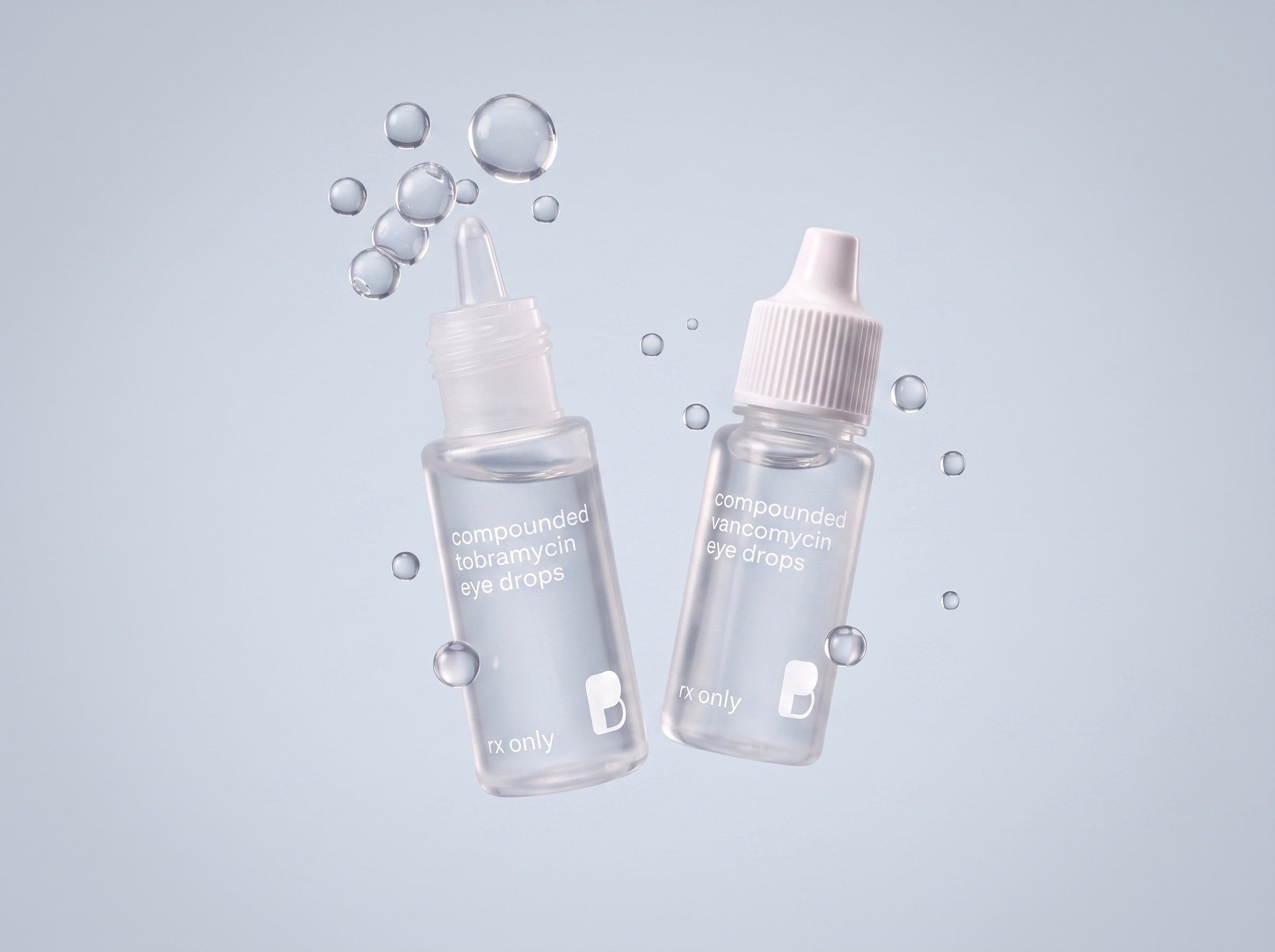
Tobramycin is especially active against gram-negative bacteria, including Pseudomonas, a common cause of aggressive corneal infection. For broader coverage, specialists often pair it with a fortified antibiotic that covers gram-positive bacteria, such as fortified vancomycin.

See fortified vancomycin

Compounded sterile, kept fresh

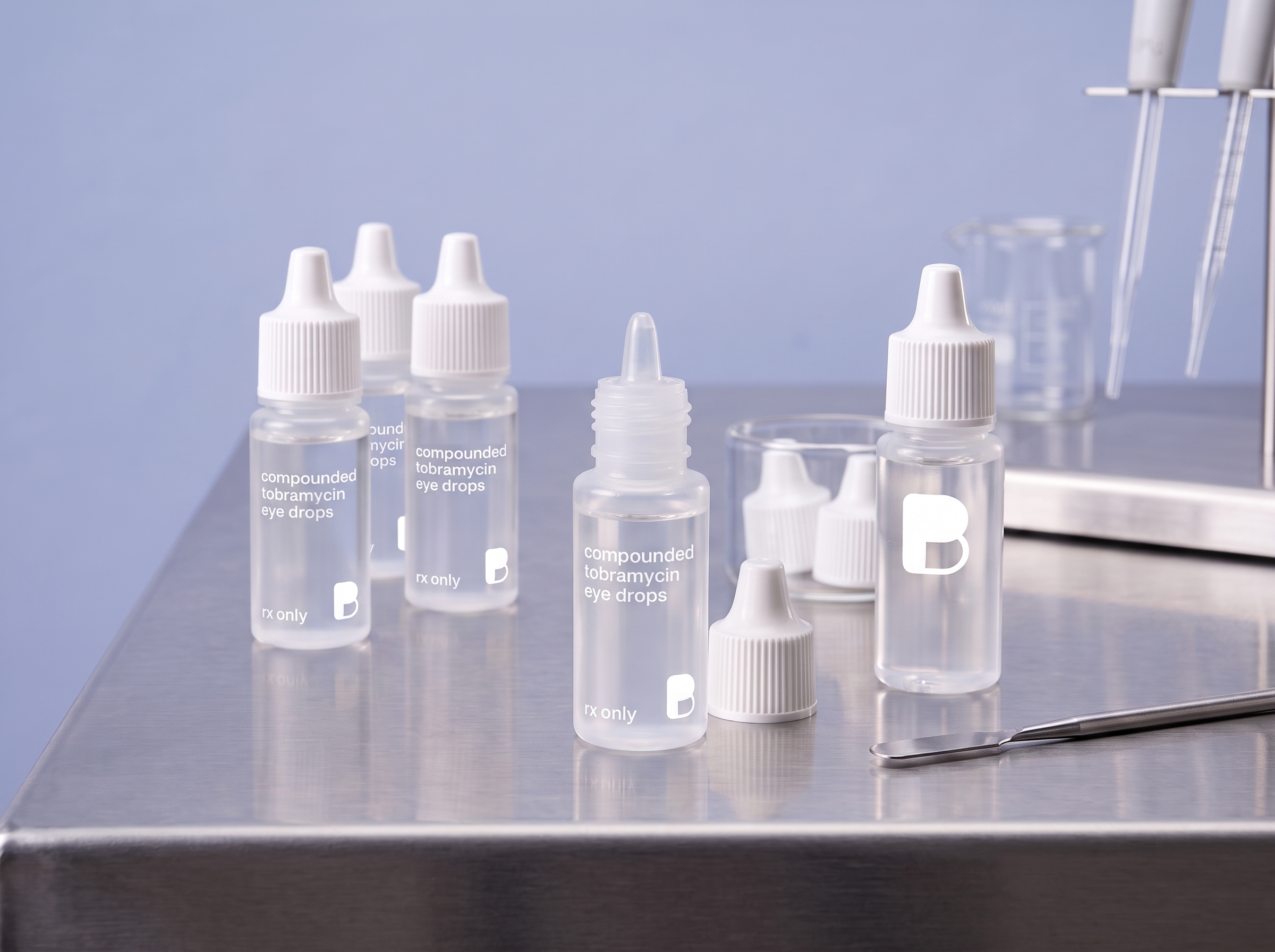
Fortified tobramycin is compounded in Bayview's state of the art walk-in sterile laboratory under USP <797> standards. Because it has a limited stability, it is refrigerated and assigned a short beyond-use date. We can prepare a fresh supply to help you complete your prescribed treatment.

View our formulas

Personalized compounding for patients who need more than a standard option.

"As a compounding pharmacy, we prepare each medication to a provider’s exact specifications. My focus, and my team’s focus, is quality, consistency, and close communication with prescribers so patients receive medication prepared for their individual needs."
Ryan Dyer, RPh
Owner and Chief Pharmacist, Bayview Pharmacy
Smiling man in blue scrubs with arms crossed and pen behind his ear
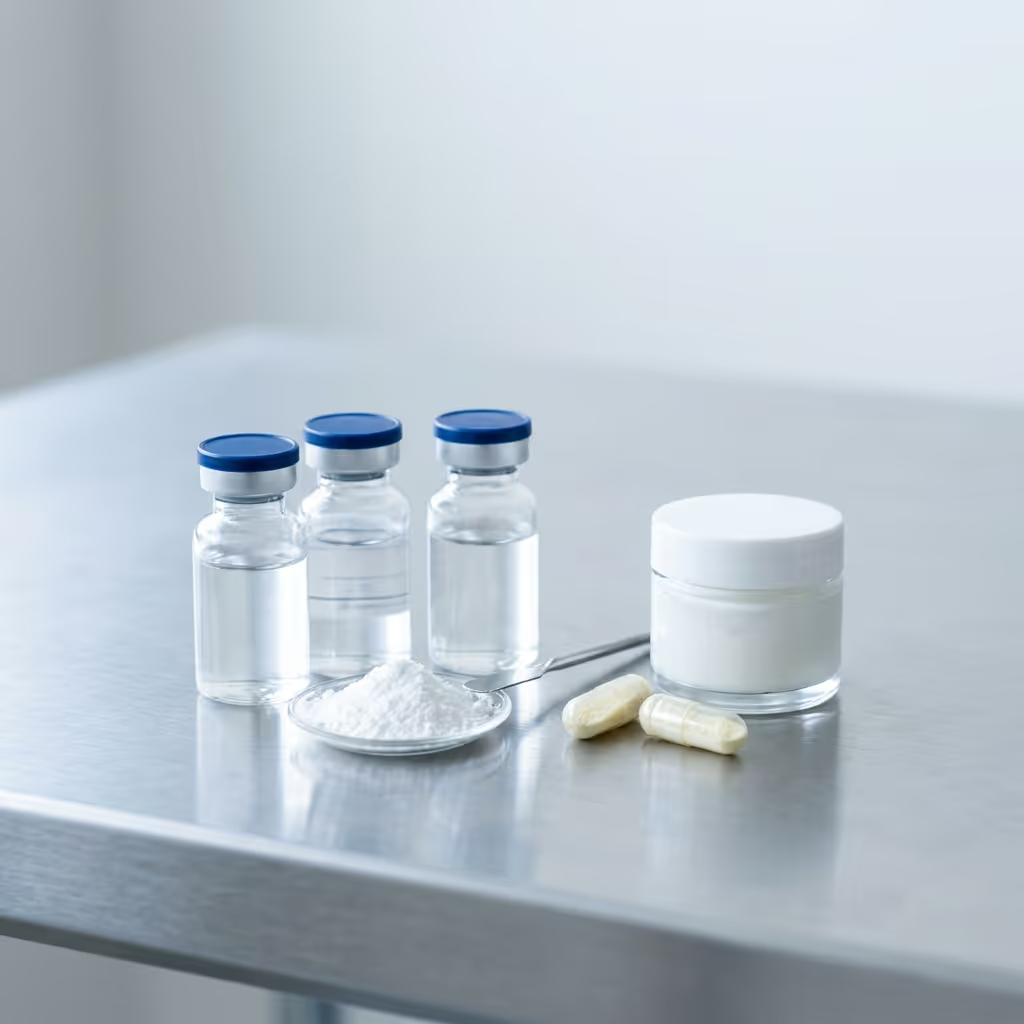
Three clear liquid vials, white powder on spoon, two capsules, and a cream jar on a metal surface.
QUALITY AND TESTING

Held to a higher standard

Every preparation is made under strict quality controls, and verified by a licensed pharmacist.
We use validated quality processes and third-party testing where appropriate
Sterile compounding in a dedicated USP <797> cleanroom
Non-sterile compounding under USP <795> and <800> standards
USP/NF-grade ingredients from reputable, vetted suppliers

Why patients choose Bayview

Made in our own pharmacy
Made to your prescription
Quality tested
Real pharmacist support
Trusted since 2006

Our formulations

Fortified tobramycin eye drops are compounded at the concentration your eye specialist orders. Both options below are "fortified," meaning far stronger than the commercial 0.3% (3 mg/mL) tobramycin drop. Strengths are shown for reference; your specialist selects the concentration and schedule that are appropriate.

Strength Notes
15 mg/mL (1.5%)A fortified concentration, about five times the commercial 0.3% drop
13.6 mg/mL (1.36%)A fortified concentration in the traditional range used for keratitis

Strengths are listed for education only and are not a statement that either concentration is better, stronger, or more effective. Fortified tobramycin is often used together with a second fortified antibiotic that covers gram-positive bacteria. A valid prescription is required, and your eye specialist determines which concentration and schedule are appropriate. This is a sterile compounded medication and is not FDA-approved.

Start with a prescription
Prescribers: download order form ↓

Frequently asked questions

What is "fortified" tobramycin?

"Fortified" means the eye drop is compounded at a much higher concentration than the standard commercial tobramycin drop, which is 0.3% (3 mg/mL). Bayview compounds it at 15 mg/mL and 13.6 mg/mL, roughly five times the commercial strength, because a serious eye infection can need more antibiotic delivered to the surface of the eye.

What is fortified tobramycin used for?

It is used to treat serious bacterial eye infections, most often bacterial keratitis (a corneal infection or ulcer), especially when gram-negative bacteria such as Pseudomonas are involved or suspected. An eye specialist prescribes and monitors it, often based on cultures of the infection.

Why is it compounded instead of bought off the shelf?

The commercial tobramycin eye drop is sold only at 0.3%. There is no commercially available fortified tobramycin, so the higher concentration your specialist needs is prepared by a compounding pharmacy. As a 503A pharmacy, Bayview compounds it sterile under USP <797> standards. Compounded medications are not FDA-approved.

Why is it compounded instead of bought off the shelf?

That is your eye specialist's decision. Both are fortified concentrations in the range used for serious eye infections; your specialist selects the one that fits their treatment plan and writes it on your prescription.

Is it used with another antibiotic?

Often, yes. Because a serious corneal infection may involve gram-negative or gram-positive bacteria, specialists frequently prescribe fortified tobramycin together with a second fortified antibiotic that covers gram-positive bacteria, such as fortified vancomycin or cefazolin, until cultures come back. Your specialist will tell you how to alternate the drops.

How often do I use the drops?

Serious infections are often treated very frequently at first, sometimes one drop every hour or two while awake, and then tapered as the eye improves. Use them exactly as your specialist directs, do not stop early even if the eye feels better, and keep every follow-up appointment.

How is it stored?

Fortified tobramycin is kept refrigerated and has a short beyond-use date because it is stable only for a limited time. Follow your label, keep the bottle closed and out of reach of children, do not touch the dropper tip to the eye or any surface, and ask your pharmacist for a fresh supply if you need more to finish your course.

What is compounding?

Compounding is the practice of preparing a medication tailored to an individual patient's prescription. Instead of a mass-produced product, a compounding pharmacy makes the medication to the specific strength, form, or combination your provider orders.

Are compounded medications FDA-approved?

Compounded medications are not FDA-approved. They're prepared by a licensed pharmacy pursuant to a valid prescription for an individual patient, under USP standards. The FDA does not review compounded medications for safety or effectiveness.

Do I need a prescription?

Yes. All of our medications require a valid prescription from a licensed provider. We're a dispensing and compounding pharmacy, so we don't provide consultations or write prescriptions. If you don't have one yet, you'll need to find and see a provider first.

Can you fill a prescription from my own provider?

Yes. Your provider can send your prescription to Bayview Pharmacy by e-prescribe, fax, or phone, or you can transfer an existing prescription from another pharmacy. Start a request and we'll guide you through it.

How do providers send a prescription to Bayview?

Providers can submit a prescription three ways:

  • E-prescribe: Search Bayview Pharmacy, Warwick, RI (NCPDP 4106882) in your EHR. For compounds, use the compound, custom, or free-text option and include the full formulation, strength, quantity, refills, and directions.
  • Fax: Send a signed order to 401-284-4506 (alt. 401-210-2757) with patient and prescriber details, medication, quantity, refills, directions, signature, and date.
  • Phone: Call 401-284-4505 to submit, clarify, or coordinate refills.

A valid prescription is required, and compounded medications are not FDA-approved.

How does shipping work?

Once your prescription is verified, we prepare your medication and ship it discreetly in plain packaging either via UPS or USPS. A pharmacy technician confirms the details with you before it goes out, and we're available if you have any questions.

How do refills and automatic refills work?

Refills are coordinated with your prescriber and your prescription. You can request a refill through our website or by calling us, and we'll handle the rest as long as you have refills remaining on a valid prescription. You can also opt into automatic refills on non-controlled substances, with no need to worry about running out of your medication. We can either ship it to you automatically, or ready for pickup.

References

Sources reviewed

The medical information on this page draws on the following sources, which are also linked where cited.

  1. StatPearls (NCBI Bookshelf). Tobramycin.
  2. EyeWiki (American Academy of Ophthalmology). Bacterial Keratitis.
  3. MedlinePlus (NIH). Tobramycin Ophthalmic.

Important safety information

Important safety information

Fortified tobramycin eye drops are a prescription compounded sterile medication and are not FDA-approved. They are used to treat serious bacterial eye infections under the care of an eye specialist. Use only as prescribed, and keep all follow-up appointments.

Do not use fortified tobramycin eye drops if you:

  • Are allergic to tobramycin, to other aminoglycoside antibiotics, or to any ingredient in this preparation.
  • Have not been prescribed them. This medication is for the eye and the person it was prescribed for; do not share it.

Warnings and precautions:

  • For use in the eye only. Do not let the dropper tip touch the eye or any surface, to avoid contaminating the drops.
  • Use exactly as directed, including the frequent schedule your specialist sets. If another antibiotic drop is prescribed, follow the instructions for alternating them and for how long to wait between drops.
  • Do not stop early, even if the eye feels better, and keep every follow-up visit so your specialist can confirm the infection is responding.
  • Because the drops are strong and used frequently, they can irritate the surface of the eye. Tell your specialist about worsening irritation.
  • Do not wear contact lenses during treatment of an eye infection unless your specialist directs otherwise.
  • Tell your provider about the full health history, allergies, and all medications of the person who will use it.

Common side effects:

  • Stinging or burning when the drop goes in, eye redness, irritation or itching, and temporary blurred vision.

Get prompt eye care if you have:

  • Increasing eye pain, worsening redness, or more discharge.
  • Increased sensitivity to light, or any decrease in vision.
  • Signs of an allergic reaction, such as swelling, rash, or trouble breathing.

These can be signs that a serious eye infection is not improving, or of a reaction to the medication.

Storage:

Keep refrigerated as directed on the label, and observe the beyond-use date, fortified tobramycin is stable only for a limited time. Keep the bottle tightly closed and out of the reach of children, and do not share it. Do not use the drops past the date on the label. Ask your pharmacist for a fresh supply if you need more to complete your course, and discard unused medication as directed.

This is a compounded prescription medication and is not approved by the FDA. Use it only under the supervision of a licensed provider, exactly as prescribed. Do not adjust your dose without talking to your prescriber. Seek emergency care for any severe or unexpected reaction. This information is not complete; talk to your provider about your full medical history and all medications you take.

Ready to get started?

Send us your prescription and a Bayview pharmacist will take it from there.