



In Stock
Compounded Tacrolimus: Ear, Rectal & Skin | Bayview Pharmacy

Compounded Tacrolimus

Smiling man in blue pharmacist scrubs with arms crossed and pen behind his ear.
Medically reviewed by Ryan Dyer, RPh
Last updated on
August 7, 2026
Starting at
$121
for
15 mL
Checkmark icon followed by text 'HSA/FSA Eligible'.
Start with a prescriptionPrescribers: request this order form →
Licensed to fill prescriptions for patients in RI, MA, CT, NY, NJ, NH & FL
  • Calms inflammation without the skin-thinning that long-term steroids can cause
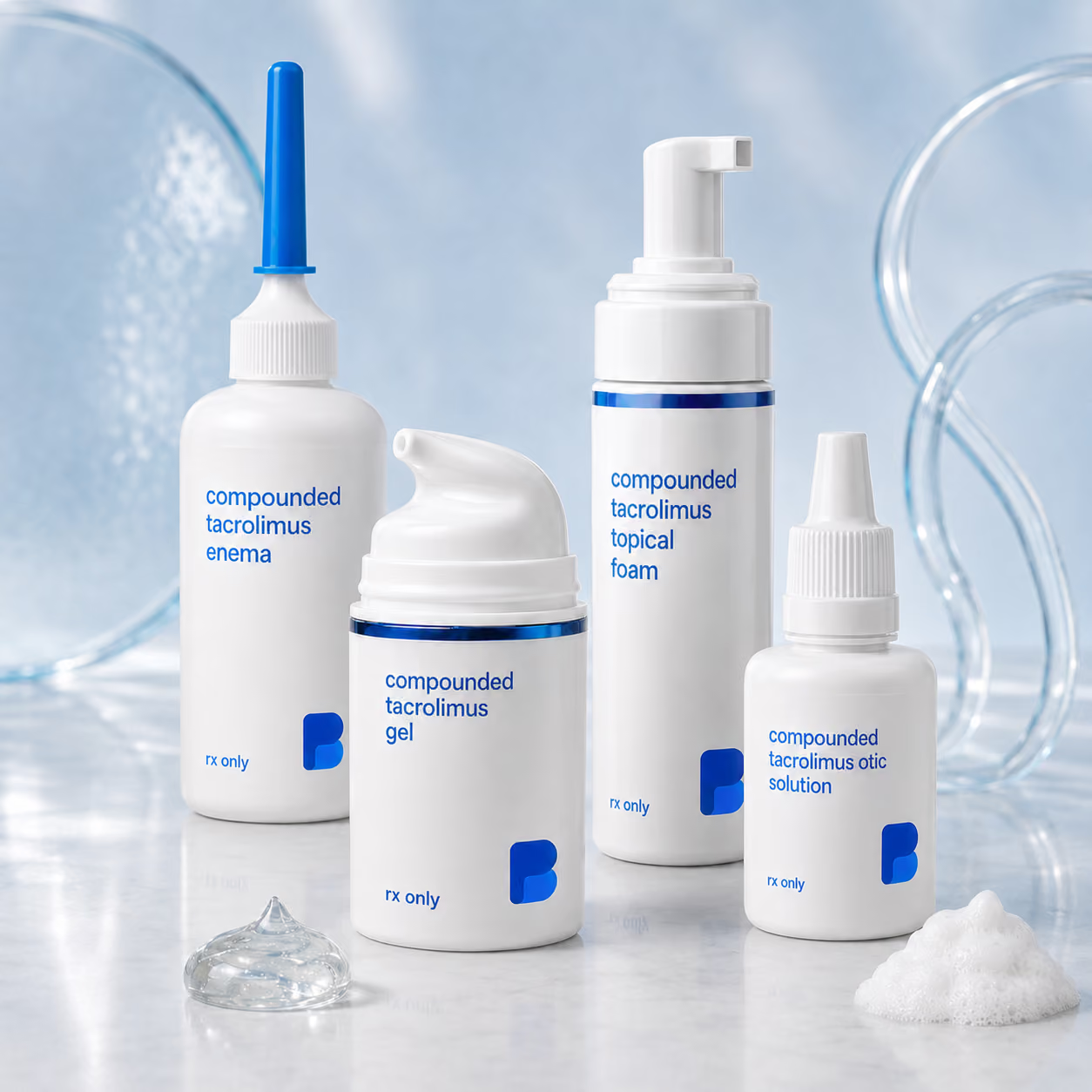
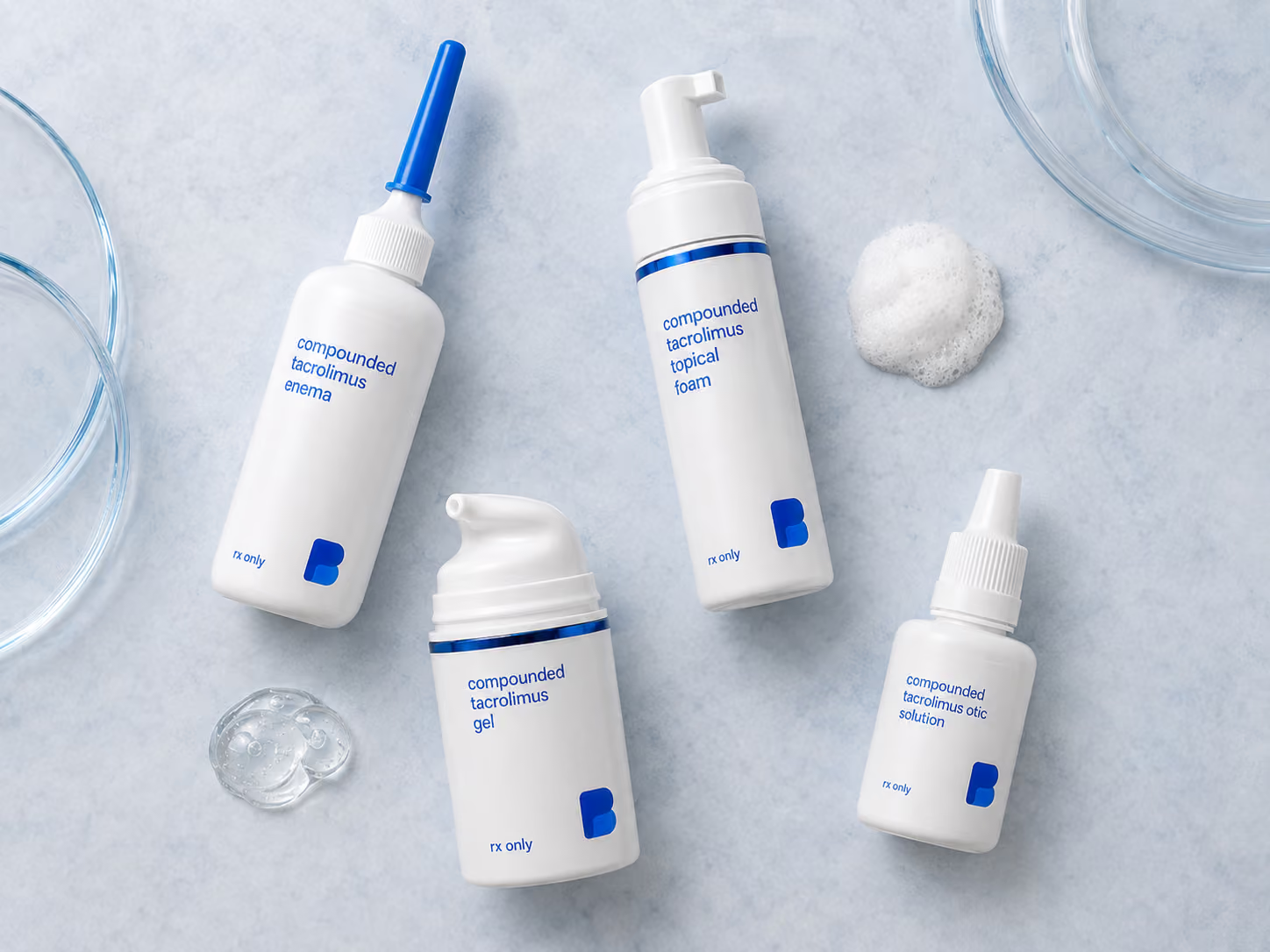
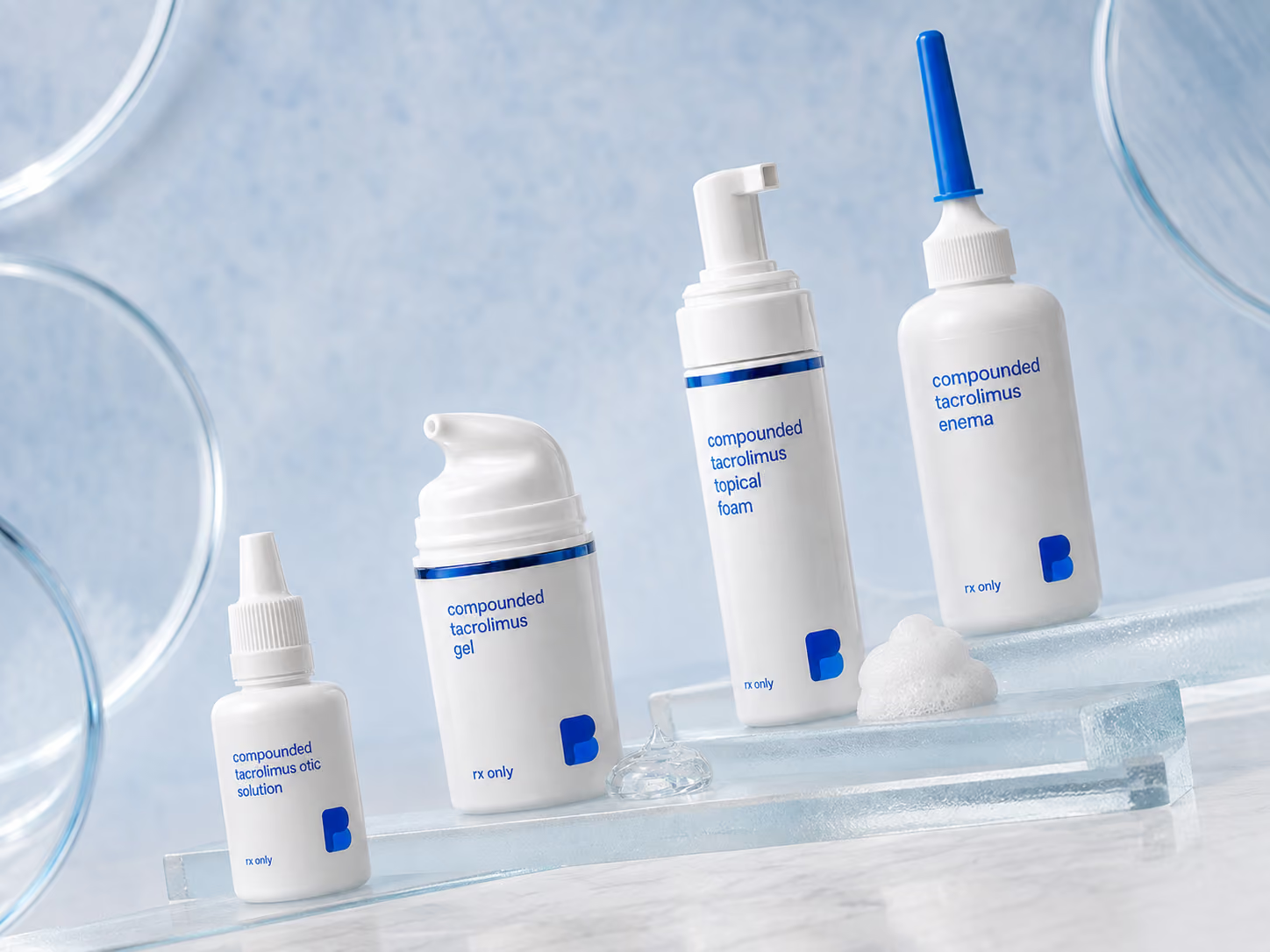
  • Available in forms no manufacturer makes — ear drops, rectal enemas, gels, foams, and shampoos
  • Combination formulas, such as tacrolimus with minoxidil and clobetasol for the scalp, when a prescriber orders them
  • Prepared by a licensed 503A compounding pharmacy to your prescriber's exact order

Tacrolimus is a prescription anti-inflammatory medicine called a calcineurin inhibitor. Applied to a specific spot, it quiets the immune cells driving inflammation there — without causing the skin thinning that long-term topical steroids can. FDA-approved tacrolimus products include a topical ointment for eczema and oral and injectable forms used after organ transplant. Bayview compounds tacrolimus in forms that do not exist commercially: ear drops, rectal enemas, gels, creams, foams, and shampoos. These are used off-label, they are not FDA-approved, and a valid prescription is required.

Topical calcineurin inhibitors carry a boxed warning about a possible risk of cancer, and evidence for the ear, rectal, and scalp routes comes mostly from small studies. We say more about both below. Bayview Pharmacy does not provide consultations and does not determine whether a medication is appropriate for you — that is your prescriber's decision.

How is this different from a steroid?

Tacrolimus is a calcineurin inhibitor, not a corticosteroid. It quiets the immune activity driving inflammation in the area where it is applied, and it does not thin the skin the way long-term topical steroids can. That is why prescribers reach for it on delicate places such as the face, eyelids, skin folds, and the ear canal, and for longer stretches of treatment.

What is the boxed warning about?

The FDA-approved tacrolimus ointment label carries a boxed warning that rare cases of malignancy, including skin cancer and lymphoma, have been reported in people treated with topical calcineurin inhibitors, although a causal relationship has not been established. FDA added it in 2006 because long-term safety had not been established.

Larger studies since then have not confirmed a causal link, but the warning is still on the label today. The label directs avoiding continuous long-term use and applying only to affected areas. This is worth discussing directly with your prescriber.

Trusted by 105,826 patients to date.
A group of faces of our past satisfied patients.
Compounded medications are prepared pursuant to a valid prescription for an individual patient and are not FDA-approved. This page is for educational purposes and is not medical advice.
**The FDA does not review or approve compounded medications for safety or effectiveness. A valid prescription from a licensed practitioner is required.
Important safety information →
Service availability

Prescription delivery in your state

Bayview Pharmacy currently serves eligible patients in six states. Check your state before getting started.

Where we currently serve

Select a highlighted state to check availability.

Currently licensed Licensed — non-controlled only Not currently licensed Your selection

Select a state on the map or use the state checker.

Do we serve your state?

Choose your state to confirm current service availability.

Thank you! Your submission has been received!
Oops! Something went wrong while submitting the form.
Currently licensed in
Start with a prescription

Send us your prescription

STEP
1
Have your provider e-prescribe to Bayview, fax it to us, or call it in directly to one of our pharmacists.
A thin blue light beam connecting two clear glass slabs on a white surface.

A pharmacist reviews it

STEP
2
We verify your prescription and prepare your medication to your provider's exact instructions.
Close-up of a white dial with blue measurement markings and a rotating knob.

We compound & ship

STEP
3
We prepare your medication and ship it discreetly to your door, with support when you need it.
Close-up of a gray box with a precise blue line running along its folded edges.

What is Compounded Tacrolimus?

Tacrolimus is a prescription medicine in a class called calcineurin inhibitors. When it is applied to one area of the body, it calms the immune activity in that area. Its main appeal is that it is steroid-sparing: unlike topical corticosteroids, tacrolimus does not thin the skin, so it can be used on delicate places like the face, eyelids, skin folds, and the ear canal, and over longer stretches of time.

Commercially, tacrolimus is sold as a topical ointment (0.03% and 0.1%) for atopic dermatitis, and as capsules, granules, and an injection for preventing organ transplant rejection. Bayview compounds tacrolimus in the forms that no manufacturer makes — otic (ear) solutions, rectal enemas, anhydrous gels, creams, foams, and shampoos — to your prescriber's order.

Compounded preparations are not FDA-approved. A valid prescription is required, and Bayview Pharmacy does not provide consultations or determine whether a medication is appropriate for you.

Important: topical calcineurin inhibitors carry a boxed warning about a possible cancer risk. The FDA-approved tacrolimus ointment label still carries this boxed warning today: “Although a causal relationship has not been established, rare cases of malignancy (e.g., skin and lymphoma) have been reported in patients treated with topical calcineurin inhibitors, including tacrolimus ointment.” The label directs avoiding continuous long-term use, applying only to affected areas, and not using it in children under 2 (DailyMed, tacrolimus ointment label). The FDA added this warning in 2006 because rare cancers had been reported and “the long term safety of these drugs has not been established” (FDA). Since then, larger studies have not confirmed a causal link, and the American Academy of Dermatology describes these medicines as having “a good safety record when used as directed,” while noting that “the risk of developing cancer remains unknown” (AAD). Here is the honest summary: the warning is still on the label, the evidence has not proven the risk is real, and the evidence has not proven it is not. Talk it through with your prescriber.

How does it work?

Inflammation in conditions like eczema is driven largely by immune cells called T cells. To switch on, a T cell needs an internal signal relayed by an enzyme called calcineurin. Tacrolimus blocks calcineurin, so the T cell never gets the message, and the chemical signals that cause redness, swelling, and itch are turned down.

Because it is applied where the problem is, tacrolimus acts mostly at that spot. Very little is normally absorbed into the bloodstream through skin — though absorption goes up when skin is broken or inflamed, and it is more of a consideration for the rectal route (more on that below). Unlike a corticosteroid, tacrolimus does not cause skin thinning, stretch marks, or the visible small blood vessels that can follow long steroid use, which is why prescribers reach for it on the face, eyelids, skin folds, and ear canal.

What is it used for?

The only FDA-approved topical use is moderate to severe atopic dermatitis (eczema), as a second-line therapy for short-term and non-continuous treatment in people who did not respond well to other topical prescription treatments or for whom those are not advisable. Everything else on this page is off-label, and the quality of the supporting evidence varies a lot by route. We think you should know which is which.

  • Ear (otic solution) — chronic otitis externa and eczema of the ear canal. The ear canal is thin-skinned and easily damaged by repeated steroid drops, so a steroid-sparing option is attractive. The evidence here is limited to small studies and case series, not large randomized trials. There is no FDA-approved otic tacrolimus.
  • Rectal enema — ulcerative proctitis and distal ulcerative colitis that has not responded to standard treatment. This route has the most supportive off-label evidence of the group, but it is still small. A double-blind placebo-controlled trial of rectal tacrolimus in resistant ulcerative proctitis reported clinical response in 73% of patients versus 10% on placebo, and was stopped early after only 20 patients because the benefit appeared so clear — which is encouraging, but 20 patients is a small trial. A retrospective series of 23 patients found about half achieved remission (Cohen & Weisshof, Gastroenterology & Hepatology, 2020). A 2024 review concluded the data “are supportive of the use of topical tacrolimus in selected patients” while pointing out that most reports were retrospective, open-label, short, and small (Khayatan, Lemberg & Day, J Clin Med, 2024).
  • Oral lichen planus. A gel or rinse applied to sore mouth lesions. Supported by open-label trials and comparative studies rather than large definitive ones.
  • Vitiligo, especially on the face and neck, where topical tacrolimus is a common steroid-sparing choice. Response is slow, partial, and not guaranteed.
  • Scalp inflammation and alopecia areata (shampoo and foam). This is the weakest evidence of the group — largely case reports and small series. Combination foams such as minoxidil with tacrolimus and clobetasol are prescriber-designed formulas, not studied products. If your prescriber orders one, ask what result they are hoping for and by when.
There is no FDA-approved otic, rectal, shampoo, gel, or foam tacrolimus. Only the ointment (0.03% and 0.1%) is approved for use on the skin, plus oral and injectable tacrolimus for transplant patients. Ear drops, enemas, gels, creams, foams, and shampoos exist only because a compounding pharmacy makes them. They are off-label, they are not FDA-approved, and — apart from the rectal route, which has one small randomized trial — they are supported mainly by small studies and case series. That does not mean they do not help people; it means the evidence is thin, and anyone who tells you otherwise is overselling it.

How do the strengths and forms compare?

Tacrolimus is compounded in several strengths, bases, and combinations depending on where it needs to go. The table below is for education only; your prescriber selects the form and strength.

PreparationWhere it is usedEvidence
Otic solution 0.1% or 0.2%Ear canalSmall studies and case series; off-label
Rectal enema, 4 mg per 60 mLRectum and lower colonOne small randomized trial plus case series; off-label
Anhydrous gel 0.1% (WO6 base)Skin or mouth, as directedOff-label; base chosen for stability and feel
Cream 0.1% with ketotifen 0.05%Itchy, inflamed skinPrescriber-designed combination; off-label
Shampoo 0.1%ScalpLimited — mostly case reports; off-label
Foam with minoxidil 5% and clobetasol 0.05%ScalpLimited — prescriber-designed combination; off-label

Preparations are described for education only and are not a statement that any form or strength is better for a particular person. Your prescriber selects the preparation, strength, and schedule.

How is it used?

Use tacrolimus exactly as your prescriber directs, and only on the area they specify. Wash your hands before and after, unless your hands are the area being treated.

  • Skin (gel, cream, ointment). Apply a thin layer to the affected area, usually twice a day. Do not cover the area with bandages or occlusive wraps unless your prescriber tells you to — covering increases absorption.
  • Ear drops. Warm the bottle briefly in your hand, lie with the affected ear up, place the number of drops ordered, and stay in that position for a few minutes. Do not touch the dropper to your ear.
  • Rectal enema. Usually given at bedtime so it stays in place overnight. Empty your bowel first if you can, lie on your left side, insert gently, and then try to retain it. Your prescriber will tell you how long a course to use.
  • Shampoo or foam. Apply to the scalp as directed, leave in contact for the time your prescriber specifies, then rinse if instructed.

Tacrolimus works gradually. Most people are told to use it for a defined stretch and then stop or step down, rather than continuously — the approved label specifically directs avoiding continuous long-term use. Do not extend a course, increase the amount, or use it on new areas without asking your prescriber. A Bayview pharmacist is available if you have questions about your prescription.

Side effects & safety

Burning and stinging where you apply it is very common early on — and it usually fades. On the approved ointment label, skin burning or stinging was reported by roughly half of patients (46–58%) and itching by about 41–46%. The AAD notes this “tends to disappear as the skin heals.” It is typically worst in the first days of treatment and on the rawest skin. Knowing to expect it is the main reason people stick with the medicine long enough for it to work.

  • Alcohol flushing. Some people get facial flushing, warmth, or redness after drinking alcohol while using topical tacrolimus.
  • Sun sensitivity. Treated skin can be more sensitive to sunlight.
  • Skin infections. Because tacrolimus damps down local immunity, cold sores, shingles, warts, and other skin infections can occur or spread more easily. Tell your prescriber about any new blisters, sores, or spreading rash.
  • Ear route: stinging or itching in the canal.
  • Rectal route: local irritation, urgency, or cramping. Tacrolimus given rectally can be absorbed into the bloodstream. Levels are usually low or undetectable, but they are not always — one series reported a mean serum level of about 5.5 ng/mL and one patient with a reversible rise in creatinine along with tremor, headache, and fatigue. Reviews recommend checking blood tacrolimus levels regardless of the route used. Your prescriber may order blood tests; please do them.
  • Boxed warning: as described above, rare cases of skin cancer and lymphoma have been reported in people using topical calcineurin inhibitors. A causal relationship has not been established.
Protect treated skin from the sun. The AAD advises staying out of the sun while a topical calcineurin inhibitor is part of the treatment plan, avoiding tanning beds, and not using phototherapy at the same time (AAD). In practice: cover treated areas with clothing or a hat when you can, use sunscreen on exposed skin, and skip the tanning bed entirely (MedlinePlus).

Who should not use it?

Do not use tacrolimus if you have had a hypersensitivity reaction to tacrolimus or to any ingredient in your preparation. The approved ointment is not for children younger than 2 years, and only the 0.03% strength is approved for ages 2 through 15.

Talk with your prescriber before using it if you have a weakened immune system, an active skin infection at the treatment site, a skin condition such as Netherton syndrome or widespread erythroderma where absorption may be much higher, a history of skin cancer or lymphoma, or kidney or liver problems. Tacrolimus should not be applied to skin that is actively infected or to a suspected malignant lesion.

Tell your prescriber and pharmacist about your full health history, allergies, and every medicine and supplement you take — including any oral tacrolimus or other immune-suppressing medicine — and whether you are pregnant, planning to become pregnant, or breastfeeding. A valid prescription is required, and your prescriber determines whether tacrolimus is appropriate for you.

How should it be stored?

Store your preparation exactly as directed on your label. Most tacrolimus creams, gels, ointments, foams, and shampoos are kept at room temperature, around 68–77°F (20–25°C), away from heat and light. Compounded otic solutions and rectal enemas are frequently refrigerated — follow your label. Do not freeze.

Keep everything in the container it came in, tightly closed and out of the reach of children, and do not share it with anyone. Do not use it past the beyond-use date on the label, and dispose of unused medication as your pharmacist directs or through a drug take-back program rather than flushing it.

Why is this compounded?

Tacrolimus is only manufactured as a topical ointment, oral capsules and granules, and an injection. There is no commercial ear drop, no rectal enema, no gel, no foam, and no shampoo — so when a prescriber wants tacrolimus to reach the ear canal, the rectum, or the scalp, a compounding pharmacy has to make it. The same is true of combination formulas such as tacrolimus with ketotifen, or with minoxidil and clobetasol.

As a 503A compounding pharmacy, Bayview Pharmacy prepares each order in small batches using quality ingredients. Compounded preparations are not FDA-approved, they are not reviewed by the FDA for safety or effectiveness, and a valid prescription is required. Because most of these routes rest on limited evidence, we think it is worth asking your prescriber what result they expect and how they will decide whether it is working.

Clinical details for prescribers

Regulatory status. Tacrolimus is not a controlled substance. FDA-approved products: tacrolimus ointment 0.03% and 0.1% (Protopic and generics) as second-line, short-term and non-continuous therapy for moderate-to-severe atopic dermatitis in non-immunocompromised patients — 0.03% for ages 2–15, 0.1% for 16 and older, contraindicated under age 2; plus oral capsules/granules and IV tacrolimus for transplant. There is no FDA-approved otic, rectal, gel, foam, or shampoo tacrolimus — all are compounded and off-label. Compounded preparations are not FDA-approved.

Boxed warning — current status. The warning remains on the label as of the current (October 2025) revision, verbatim: “Although a causal relationship has not been established, rare cases of malignancy (e.g., skin and lymphoma) have been reported in patients treated with topical calcineurin inhibitors, including tacrolimus ointment.” It directs avoiding continuous long-term use, limiting application to affected areas, and restricting pediatric use as above. FDA added it in 2006 citing unestablished long-term safety. Subsequent pharmacoepidemiologic data have not established causation, and AAD characterizes TCIs as having a good safety record with the cancer risk “unknown.” The warning has not been removed.

Pharmacology. Calcineurin inhibitor; binds FKBP-12, inhibiting calcineurin phosphatase and blocking NFAT-mediated transcription of IL-2 and other pro-inflammatory cytokines, suppressing T-cell activation locally. No corticosteroid effect on collagen, so no atrophy, striae, or telangiectasia — the basis for use on face, eyelids, flexures, and the external auditory canal. Percutaneous absorption is low through intact skin but rises with barrier disruption, erythroderma, occlusion, and mucosal or rectal administration.

Evidence by route — stated honestly:

  • Otic (chronic/eczematous otitis externa): small prospective studies and case series only; no randomized controlled trial. Attractive where repeated topical steroids have caused canal skin atrophy
  • Rectal (refractory ulcerative proctitis / distal UC): the strongest of the off-label routes but still small. Double-blind placebo-controlled trial reported clinical response and mucosal healing in 73% vs 10% with placebo, terminated early at n=20; a retrospective series (n=23) reported 52.3% clinical remission with mean serum tacrolimus 5.5 ng/mL and one reversible creatinine rise with tremor, headache, fatigue. A 2024 review notes topical tacrolimus “usually results in low (<3.2 ng/mL) or undetectable systemic levels” but recommends monitoring levels regardless of route; most reports are retrospective, open-label, short, and heterogeneous
  • Oral lichen planus: open-label trials and comparative studies; reasonable but not definitive
  • Vitiligo: best supported on face/neck; slow and partial response
  • Scalp (shampoo, combination foam): weakest — case reports and small series; combination foams are prescriber-designed and unstudied as products
  • Monitoring: consider whole-blood tacrolimus levels and renal function for rectal courses, extensive-BSA application, or barrier-compromised skin. Counsel on application-site burning (46–58% on the ointment label), alcohol-related flushing, photoprotection, and the risk of local viral/bacterial skin infection

Ordering: send a prescription to Bayview Pharmacy, 3844 Post Rd, Warwick, RI 02886 — NCPDP 4106882, fax 401-284-4506. Background: tacrolimus ointment label (DailyMed); topical tacrolimus in IBD review (J Clin Med 2024).

This is a prescription compounded medication and is not FDA-approved. The otic, rectal, gel, foam, and shampoo forms are off-label and are supported mainly by small studies and case series. This information is educational and is not medical advice. Your prescriber determines whether it is appropriate and sets the preparation, strength, and dose. Bayview Pharmacy does not provide consultations or determine appropriateness.
In Stock

On this page

Why prescribers reach for tacrolimus

Tacrolimus calms inflammation where it is applied without the skin thinning long-term steroids can cause, which is why it is used on delicate spots like the face, eyelids, and ear canal. It carries a boxed warning, so talk it through with your prescriber.

Start with a prescription
Why prescribers reach for tacrolimus – Tacrolimus Compounded Preparations from Bayview Pharmacy

Forms no manufacturer makes

Ear drops, a rectal enema, gels, creams, foams, and shampoos, including combinations like minoxidil with tacrolimus. All are compounded and used off-label. Some burning or stinging in the first days is common.

View our formulas
Forms no manufacturer makes – Tacrolimus Compounded Preparations from Bayview Pharmacy

Personalized compounding for patients who need more than a standard option.

"As a compounding pharmacy, we prepare each medication to a provider’s exact specifications. My focus, and my team’s focus, is quality, consistency, and close communication with prescribers so patients receive medication prepared for their individual needs."
Ryan Dyer, RPh
Owner and Chief Pharmacist, Bayview Pharmacy
Smiling man in blue scrubs with arms crossed and pen behind his ear
Three clear liquid vials, white powder on spoon, two capsules, and a cream jar on a metal surface.
QUALITY AND TESTING

Held to a higher standard

Every preparation is made under strict quality controls, and verified by a licensed pharmacist.
We use validated quality processes and third-party testing where appropriate
Sterile compounding in a dedicated USP <797> cleanroom
Non-sterile compounding under USP <795> and <800> standards
USP/NF-grade ingredients from reputable, vetted suppliers

Why patients choose Bayview

Made in our own pharmacy
Made to your prescription
Quality tested
Real pharmacist support
Trusted since 2006

Our formulations

Tacrolimus is compounded in the strength, base, and form your prescriber orders. Preparations are shown for reference only; your prescriber selects what is appropriate for you.

Preparation Typical size How it's used
Tacrolimus 0.1% otic solution15 mLInstill in the affected ear as directed
Tacrolimus 0.2% otic solution15 or 30 mLInstill in the affected ear as directed
Tacrolimus 4 mg/60 mL rectal enemaMulti-dose supplyOne 60 mL dose per rectum, usually at bedtime
Tacrolimus 0.1% anhydrous gel (WO6)30 gApply a thin layer as directed
Tacrolimus 0.1% with ketotifen 0.05% cream60 gApply a thin layer as directed
Tacrolimus 0.1% shampoo (VersaBase)60 or 100 mLApply to the scalp as directed
Minoxidil / tacrolimus / clobetasol 5%-0.3%-0.05% foam30 mLApply to the scalp as directed

Directions are set by the prescriber; the descriptions above reflect common regimens and are not treatment recommendations. Preparations are listed for education only and are not a statement that any strength or form is better for a particular person. Apart from the FDA-approved ointment for eczema, these uses are off-label, and the otic, rectal, and scalp routes are supported mainly by small studies and case series. A valid prescription is required, and your prescriber determines what is appropriate. Bayview Pharmacy does not provide consultations or determine appropriateness. These are compounded medications and are not FDA-approved.
Start with a prescription
Prescribers: request this order form →

Frequently asked questions

How is this different from a steroid?

Tacrolimus is a calcineurin inhibitor, not a corticosteroid. It quiets the immune activity driving inflammation in the area where it is applied, and it does not thin the skin the way long-term topical steroids can. That is why prescribers reach for it on delicate places such as the face, eyelids, skin folds, and the ear canal, and for longer stretches of treatment.

What is the boxed warning about?

The FDA-approved tacrolimus ointment label carries a boxed warning that rare cases of malignancy, including skin cancer and lymphoma, have been reported in people treated with topical calcineurin inhibitors, although a causal relationship has not been established. FDA added it in 2006 because long-term safety had not been established.

Larger studies since then have not confirmed a causal link, but the warning is still on the label today. The label directs avoiding continuous long-term use and applying only to affected areas. This is worth discussing directly with your prescriber.

Will it burn when I apply it?

Often, yes. Burning, stinging, warmth, or itching where you apply it is common, especially in the first days of treatment, and it usually eases as your skin settles. Tell your prescriber if it is severe or does not improve, and report new blisters, sores, or a spreading rash, tacrolimus lowers local immunity, so skin infections such as cold sores, shingles, and warts can occur or spread.

Why are the ear, rectal, and scalp forms compounded?

No manufacturer makes a tacrolimus ear drop, rectal enema, gel, foam, or shampoo, so each one is compounded to the prescriber's order and used off-label. These routes are supported mainly by small studies and case series rather than large trials, so the evidence behind them is limited. Compounded preparations are not FDA-approved, and your prescriber decides whether one is appropriate for you.

Do I need to protect treated skin from the sun?

Yes. Protect treated areas from sunlight, avoid tanning beds, and do not use phototherapy while you are using tacrolimus. Cover up or use sunscreen on exposed areas as your prescriber advises. Also avoid applying it to infected skin, and do not bandage or wrap a treated area unless your prescriber tells you to, since covering it increases how much is absorbed.

How should I store my preparation?

Follow the storage instructions on your label, since they depend on the base and the form, an otic solution, an enema, a gel, a cream, a foam, and a shampoo are not all kept the same way. Keep it out of the reach of children, use it by the beyond-use date on the label, and do not share it. Call us if anything on the label is unclear.

Do I need a prescription?

Yes. All of our medications require a valid prescription from a licensed provider. We're a dispensing and compounding pharmacy, so we don't provide consultations or write prescriptions. If you don't have one yet, you'll need to find and see a provider first.

What is compounding?

Compounding is the practice of preparing a medication tailored to an individual patient's prescription. Instead of a mass-produced product, a compounding pharmacy makes the medication to the specific strength, form, or combination your provider orders.

Are compounded medications FDA-approved?

Compounded medications are not FDA-approved. They're prepared by a licensed pharmacy pursuant to a valid prescription for an individual patient, under USP standards. The FDA does not review compounded medications for safety or effectiveness.

How do providers send a prescription to Bayview?

Providers can submit a prescription three ways:

  • E-prescribe: Search Bayview Pharmacy, Warwick, RI (NCPDP 4106882) in your EHR. For compounds, use the compound, custom, or free-text option and include the full formulation, strength, quantity, refills, and directions.
  • Fax: Send a signed order to 401-284-4506 (alt. 401-210-2757) with patient and prescriber details, medication, quantity, refills, directions, signature, and date.
  • Phone: Call 401-284-4505 to submit, clarify, or coordinate refills.

A valid prescription is required, and compounded medications are not FDA-approved.

Can you fill a prescription from my own provider?

Yes. Your provider can send your prescription to Bayview Pharmacy by e-prescribe, fax, or phone, or you can transfer an existing prescription from another pharmacy. Start a request and we'll guide you through it.

How does shipping work?

Once your prescription is verified, we prepare your medication and ship it discreetly in plain packaging either via UPS or USPS. A pharmacy technician confirms the details with you before it goes out, and we're available if you have any questions.

How do refills and automatic refills work?

Refills are coordinated with your prescriber and your prescription. You can request a refill through our website or by calling us, and we'll handle the rest as long as you have refills remaining on a valid prescription. You can also opt into automatic refills on non-controlled substances, with no need to worry about running out of your medication. We can either ship it to you automatically, or ready for pickup.

Shipping & Delivery

Every prescription ships directly to your door in discreet packaging. Refrigerated medications travel in insulated coolers with ice packs to stay cold in transit.

Delivery AreaStandard ShippingRefrigerated Shipping
Rhode Island, Massachusetts & Connecticut$9 USPS$20 UPS
New Hampshire, New Jersey & New York$15 UPS$40 UPS Next Day Air
Florida$15 UPS$80 UPS Next Day Air

Need it faster? Expedited UPS is $15 for Rhode Island, Massachusetts and Connecticut. Your pharmacist will let you know if your medication needs refrigerated shipping. Questions? Call us at (401) 284-4505.

References

Sources reviewed

The medical information on this page draws on the following sources, which are also linked where cited.

  1. DailyMed / U.S. National Library of Medicine. Tacrolimus Ointment 0.1% — Prescribing Information (boxed warning, indications, adverse reactions).
  2. U.S. Food and Drug Administration. FDA Approves Updated Labeling with Boxed Warning and Medication Guide for Two Eczema Drugs, Elidel and Protopic.
  3. American Academy of Dermatology. Eczema treatment: Topical calcineurin inhibitors (TCIs) for children.
  4. MedlinePlus. Tacrolimus Topical: MedlinePlus Drug Information.
  5. Khayatan D, Lemberg DA, Day AS. The Role of Topical Tacrolimus in the Management of Inflammatory Bowel Disease: A Comprehensive Review. Journal of Clinical Medicine. 2024;13(18):5518.
  6. Cohen RD, Weisshof R. A Comprehensive Review of Topical Therapies for Distal Ulcerative Colitis. Gastroenterology & Hepatology. 2020;16(1).

Important safety information

Important safety information

Compounded tacrolimus preparations are prescription medications and are not FDA-approved. There is no FDA-approved otic, rectal, gel, foam, or shampoo tacrolimus — those forms are compounded and used off-label, and apart from the rectal route they are supported mainly by small studies and case series. Use only as prescribed.

Boxed warning — possible cancer risk:

Rare cases of skin cancer and lymphoma have been reported in people treated with topical calcineurin inhibitors, including tacrolimus. A causal relationship has not been established, but the boxed warning remains on the FDA-approved label today. Avoid continuous long-term use, apply only to the areas your prescriber specifies, and discuss the risks and benefits with your prescriber.

Do not use tacrolimus if you:

  • Are allergic to tacrolimus or to any ingredient in your preparation.
  • Are treating a child under 2 years old — the approved ointment is not for children under 2.

Warnings and precautions:

  • Protect treated skin from the sun. Avoid tanning beds, and do not use phototherapy while on tacrolimus.
  • Do not apply to infected skin or cover treated areas with bandages or wraps unless your prescriber tells you to — covering increases absorption.
  • Tacrolimus lowers local immunity, so skin infections such as cold sores, shingles, and warts may occur or spread. Report new blisters, sores, or spreading rash.
  • With the rectal enema, tacrolimus can be absorbed into the bloodstream. Your prescriber may order blood tests to check tacrolimus levels and kidney function — please have them done.
  • Tell your prescriber if you have a weakened immune system, a history of skin cancer or lymphoma, kidney or liver problems, or a skin condition that affects the skin barrier.
  • Tell your prescriber and pharmacist about your health history, allergies, all medicines you take including other immune-suppressing medicines, and whether you are pregnant or breastfeeding.

Common side effects:

  • Burning or stinging where applied — very common in the first days and usually improves as the skin heals.
  • Itching, redness, or soreness at the treated area; flu-like symptoms; headache.
  • Facial flushing or warmth after drinking alcohol; increased sensitivity to sunlight.
  • With the rectal enema: local irritation, urgency, or cramping.

Get emergency care for:

  • Signs of a serious allergic reaction such as rash, swelling of the face, lips, or tongue, or trouble breathing.
  • Signs of a spreading infection, such as fever with a rapidly worsening rash, blisters, or sores.

Also contact your prescriber for:

  • Any new or changing mole, growth, or skin lesion; swollen glands; or symptoms that do not improve.
  • Tremor, headache, or unusual fatigue while using the rectal enema.

Storage:

Store as directed on the label — creams, gels, ointments, foams, and shampoos are usually kept at room temperature away from heat and light, while compounded ear drops and enemas are often refrigerated. Do not freeze. Keep in the original container, tightly closed and out of the reach of children, and do not share it. Discard unused medication as your pharmacist directs.

This is a compounded prescription medication and is not approved by the FDA. Use it only under the supervision of a licensed provider, exactly as prescribed. Do not adjust your dose without talking to your prescriber. Seek emergency care for any severe or unexpected reaction. This information is not complete; talk to your provider about your full medical history and all medications you take.

Ready to get started?

Send us your prescription and a Bayview pharmacist will take it from there.