A compounding pharmacy prepares a medication from individual ingredients on a prescriber's written order, in the strength, dose form and ingredient list that prescriber specified. A retail pharmacy dispenses a product that arrived from a manufacturer already finished. Bayview Pharmacy in Warwick, Rhode Island has worked as a compounding pharmacy since 2006, and this page covers what compounding is, why a prescriber writes for it, and what a compounding pharmacy cannot do.
What is a compounding pharmacy?
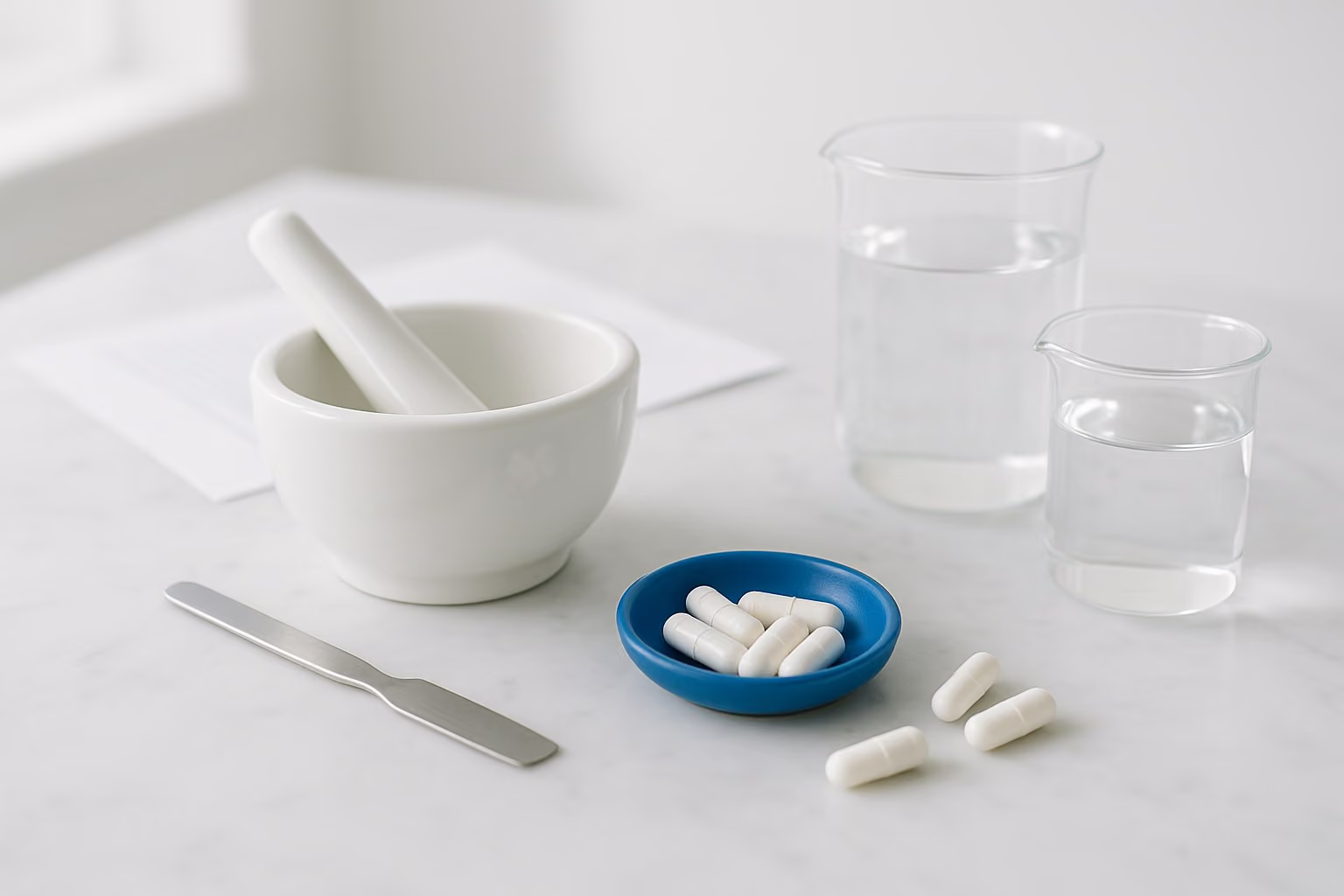
Compounding is the preparation of a medication for one patient, to the specification on that patient's prescription. A pharmacist starts with pharmaceutical grade ingredients, prepares the finished item in the pharmacy, and labels it for that named patient.
Every compounded preparation begins with a prescription. There is no shelf of finished compounded products waiting for a walk-in customer, because a preparation made against one person's prescription cannot be handed to someone else. To see what Bayview keeps formulas for, start with the searchable catalog of compounded medications, organized by therapeutic category with a starting price on every page.
Compounded medications are not FDA-approved. Compounding is regulated instead through state boards of pharmacy, federal law, and United States Pharmacopeia standards.
How is a compounding pharmacy different from a regular pharmacy?
Both hold a state pharmacy license, both require a valid prescription for prescription drugs, and both are staffed by licensed pharmacists. The difference is what happens after the prescription arrives.

A retail pharmacy selects a manufactured product, labels it and counsels the patient. The tablet, capsule or cream left the factory finished, and nothing about it changes at the counter. A compounding pharmacy receives an order no manufactured product matches and prepares it from components.
| Feature | Retail pharmacy | Compounding pharmacy |
|---|---|---|
| Product source | Manufactured, finished | Prepared per prescription |
| FDA status | FDA-approved | Not FDA-approved |
| Strengths | Fixed by manufacturer | Specified by prescriber |
| Dose forms | As manufactured | Liquid, cream, capsule, suppository |
| Ingredients | Fixed formula | Dyes, fillers can be excluded |
| Prescription | Required for Rx | Patient-specific, required |
| Insurance | Usually billed | Usually not billed |
Neither model replaces the other. Most people who use a compounding pharmacy still fill the rest of their prescriptions at a retail counter, and a compounded preparation is appropriate only when the prescriber decides no manufactured product fits the patient. There is more detail in our post on how compounding and retail pharmacies differ.
What does 503A mean?
Section 503A of the Federal Food, Drug, and Cosmetic Act describes traditional pharmacy compounding: a licensed pharmacist prepares a medication for an identified individual patient on receipt of a valid prescription. Bayview is a 503A pharmacy, licensed and inspected by its state board of pharmacy and by the boards of the states it ships into.
Section 503B, added by the Drug Quality and Security Act of 2013, created a separate category called an outsourcing facility. A 503B registers with FDA, may prepare batches without a patient-specific prescription, and follows current good manufacturing practice. Hospitals and clinics that stock prefilled syringes or bags for office use generally buy from a 503B. If you are holding a prescription with your own name on it, you are dealing with a 503A. Our explainer on what a 503A compounding pharmacy is and how it differs from a 503B outsourcing facility covers the oversight and licensing differences.
Why would a prescriber order a compounded medication?
The reasons are variations on one problem: the manufactured product does not fit the patient in front of the prescriber. Five situations account for most compounded prescriptions.

The strength is not manufactured
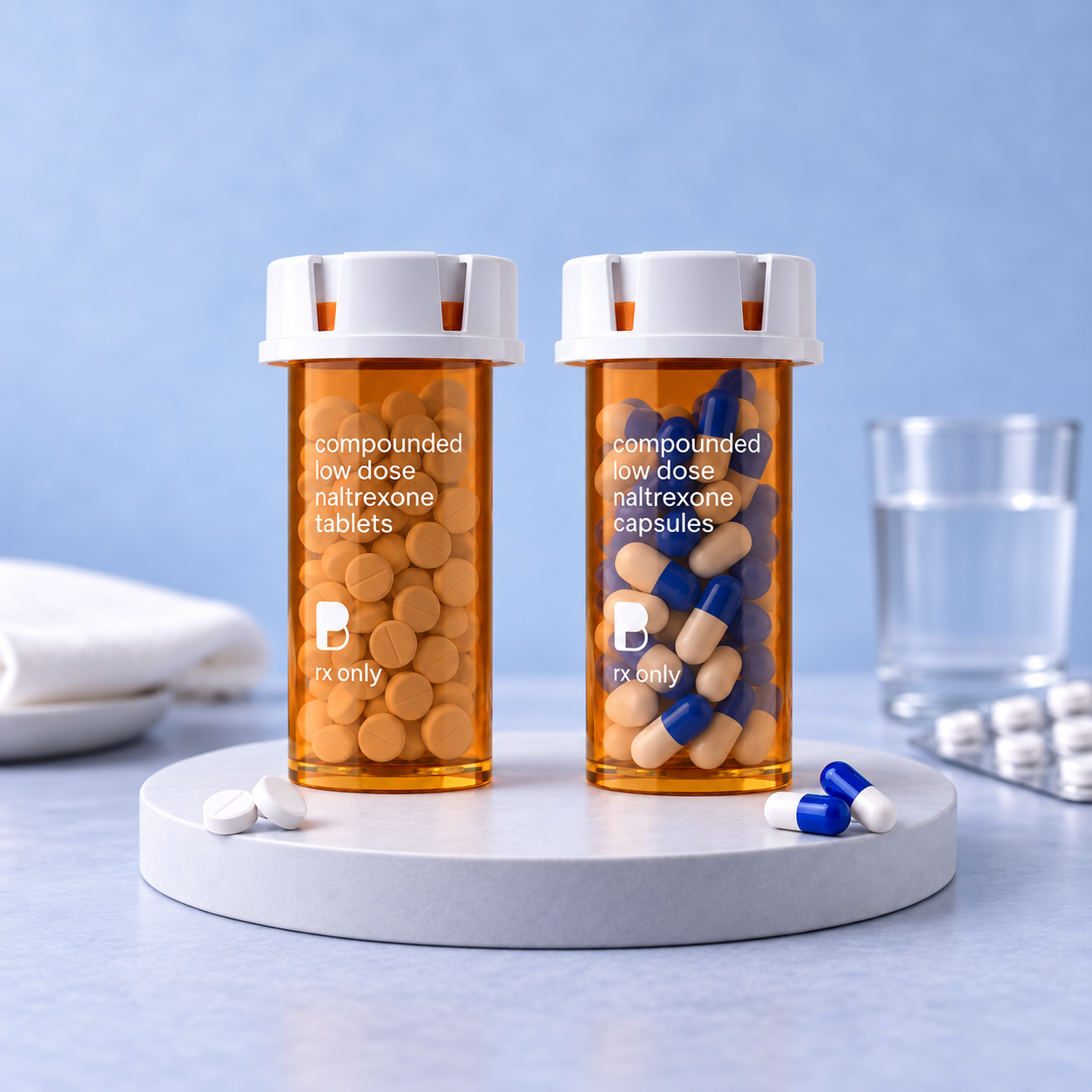
A prescriber may want a dose that falls between marketed strengths, or far below the lowest one. Low dose naltrexone is prepared at a small fraction of the 50 mg strength manufactured commercially, a dose no marketed tablet provides. Published work on low dose naltrexone is limited to small trials and case series, and whether it is appropriate is a prescriber's decision. Our post on what low dose naltrexone is and how prescribers order it goes through the detail, and the strengths Bayview prepares are listed on the low dose naltrexone formulation page.
The dose form or the route has to change
This is the most common trigger. A patient may not be able to swallow a capsule, or the prescriber may want the drug delivered to skin, mouth, nose, eye or rectum instead of by mouth. A custom oral suspension can be prepared at the concentration the prescriber specifies, including for a feeding tube.
A drug manufactured only as a tablet can sometimes be prescribed as a cream, a rinse or a suppository when the prescriber wants it delivered where the problem is rather than through the whole body. Preparations built around the route include compounded rectal suppositories known as rectal rockets, compounded BLT topical anesthetic preparations, Jack Newman's all-purpose nipple ointment, and the preparations in our post on compounded medications prescribers write for TMJ. Where a preparation delivers a drug by a route its manufactured form is not approved for, that use is off-label.
An ingredient has to come out
Dyes, lactose, gluten, alcohol, preservatives and specific flavorings can be excluded from a compounded preparation. The prescriber notes on the prescription why the change matters for that patient.
The manufactured product is discontinued or in shortage
A compounding pharmacy can prepare an alternative while the commercial supply is unavailable, and the rules that apply change while a drug sits on FDA's shortage list. Because those lists change as supply changes, whether a specific item can be compounded on a given day is a question for the pharmacy on the day you ask. Our post on how drug shortages and compounding interact covers the moving parts.
The patient is an animal
Species and body weight often make human dose forms unusable. Every veterinary preparation is prescribed by a veterinarian for a specific animal.
What can a compounding pharmacy not do?
The limits are as defining as the capabilities, and most confusion about compounding starts with assuming a pharmacy can do things it cannot.
Section 503A also does not permit a pharmacy to compound a preparation that is essentially a copy of a commercially available drug product, so a pharmacy cannot reproduce a marketed tablet at the same strength in the same dose form because a patient would prefer to buy it that way. The exception is a change made for an identified individual patient that, in the prescriber's determination, produces a significant difference for that patient: a dye-free version, a liquid for a patient who cannot swallow, or a strength between two marketed strengths.
Are compounded medications FDA-approved?
No. The specific preparation has not gone through FDA's new drug approval process, so FDA has not reviewed data on that exact formulation and has made no finding about it. That is the structural premise of compounding rather than a gap in it: a preparation made for one patient cannot be the subject of a multi-year approval program.

What it does not mean is that the drug substance is unknown, that no one is inspecting anything, or that the preparation is unregulated. The active ingredients used in compounding are typically the same well-characterized drug substances found in approved products, and a compounding pharmacy is inspected, licensed, and accountable for how it sources, tests and prepares them. The practical consequence is that a compounded preparation does not carry FDA-approved labeling, and your prescriber decides whether one is appropriate for you, at what strength, and in what form.
What is the difference between USP 795 and USP 797?
United States Pharmacopeia publishes general chapters that set standards for how compounding is carried out. USP 795 non-sterile compounding covers capsules, creams, ointments, suspensions, troches and suppositories. USP 797 covers sterile preparations, the ones that enter the eye, the bloodstream or another sterile site of the body.
The two categories are prepared under different conditions and by different procedures, and beyond-use dates are assigned differently for each. Sterile preparations at Bayview are compounded in our USP 797 sterile lab. Ask about the form written on your prescription rather than about compounding in general: a pharmacy set up for creams and capsules may not do sterile eye drops.
How does a compounded prescription reach you?
The process starts with your prescriber rather than with the pharmacy. A prescription for a compounded preparation names the active ingredients, the strengths, the dose form and the directions, because each of those is the prescriber's decision.
Prescribers send compounded prescriptions the same ways they send any other: electronically, by fax, or by telephone where the item allows it. If your prescriber has not written for a compounded preparation before, the pharmacy can supply a formula name and the details needed on the order, and it confirms allergies, other medications and the intended use before preparing anything.
Preparations are shipped to patients in the states where Bayview is licensed. Controlled substances are dispensed only on a prescription written for a named patient, and Bayview does not ship them to New York addresses. If you are weighing a local pharmacy against one that mails, our post on what to check before choosing a compounding pharmacy near you puts the questions in the order we would ask them.
What does a compounded prescription cost?
Compounded preparations are generally not billed through insurance. A pharmacy benefit plan prices a claim against a national drug code, which identifies a specific manufactured product from a specific manufacturer, and a preparation made for one patient does not have one. Many plans also exclude compounded ingredients outright. A denial is usually a billing limitation rather than a judgment about your prescription.
Price depends on the active ingredients, the strength and quantity, the base, the dose form, and whether the work is sterile or non-sterile. Every preparation page in the catalog shows its own starting price and quantity, and Bayview will quote a specific prescription before preparing it, which matters because a preparation made for you cannot be returned to stock. Our post on why compounded prescriptions usually are not covered and how patients pay covers HSA and FSA use and what moves the number.
What Bayview compounds
Bayview prepares non-sterile and sterile items on a prescriber's order across most therapeutic areas. Non-sterile work is done under USP 795 and covers capsules, creams, ointments, oral suspensions, troches and suppositories. Sterile preparations, including ophthalmic drops and injections, are compounded in our USP 797 sterile lab.
Dermatology is where several of the reasons above meet at once, because a prescriber may want two or three actives in one base at strengths chosen for that patient. Compounded tacrolimus preparations can be prepared for the ear, scalp, skin or rectum, routes for which no commercial product exists. Pain management is another area where route drives the prescription: a topical pain cream combines actives in a base applied to the affected area, and the prescriber selects which actives and at what strengths. Hormone, veterinary, ear nose and throat, and gastrointestinal preparations are made the same way, each in the strength and base named on the order.
Talk to your prescriber
If a manufactured medication is not working out because of the dose, the form, an ingredient in it, or because it has become unavailable, raise it with the person who prescribes for you. Bring the specific problem: what you cannot swallow, what you react to, or what you were asked to split.
Bayview does not write prescriptions or provide consultations, and dose and appropriateness are your prescriber's decisions. If your prescriber decides a compounded preparation is the right approach, they can e-prescribe to Bayview Pharmacy, Warwick, RI (NCPDP 4106882), fax an order form to 401-284-4506, or call 401-284-4505. A pharmacist will contact you before anything is prepared.
Frequently asked questions
Do you perform sterile compounding?
Yes.
Our sterile laboratory operates under USP 797. Preparations made there include fortified gentamicin, tobramycin and vancomycin eye drops, low-dose atropine drops, and preservative-free hydromorphone infusions for hospice and palliative care.
Are these compounded preparations FDA-approved?
No. Compounded preparations are not FDA-approved, and FDA does not verify the safety, effectiveness, or quality of compounded drugs before they are marketed. They are prepared under USP <797> sterile compounding standards and dispensed only on a valid prescription for an identified individual patient.
Where an FDA-approved commercial product exists, Section 503A restricts compounding a copy of it absent a documented shortage or a documented patient-specific need, such as a dye-free, alcohol-free, or different concentration. Note that need on the prescription.
What is a compounding pharmacy?
A compounding pharmacy prepares a medication from individual ingredients on a prescriber's written order, in the strength, dose form and ingredient list that prescriber specified. A retail pharmacy dispenses a product that arrived from a manufacturer already finished. Compounding starts with pharmaceutical grade ingredients, and the finished preparation is labeled for one named patient. Compounded preparations are not FDA-approved, and whether one is appropriate is a decision for your prescriber.
Do I need a prescription for a compounded medication?
Yes. A 503A compounding pharmacy compounds only in response to a valid prescription written for an identified individual patient. There is no shelf of finished compounded products for a walk-in customer, because a preparation made against one person's prescription cannot be handed to someone else. If a website offers to sell you a compounded prescription medication with no prescription at all, that is not operating under section 503A.
Why would a doctor prescribe a compounded medication?
Because the manufactured product does not fit the patient. The usual reasons are a strength that is not manufactured, a dose form or route the patient needs instead of a tablet, an ingredient such as a dye or lactose that has to be excluded, a commercial product that is discontinued or in shortage, or a veterinary patient whose species and weight make human dose forms unusable. The decision is the prescriber's.
What is the difference between a compounding pharmacy and a regular pharmacy?
Both hold a state pharmacy license, both require a valid prescription for prescription drugs, and both are staffed by licensed pharmacists. The difference is what happens after the prescription arrives. A retail pharmacy selects a manufactured product and labels it. A compounding pharmacy receives an order no manufactured product matches and prepares it from components, in the strength and dose form the prescriber wrote.
Can a compounding pharmacy copy a brand name drug?
Generally no. Section 503A does not permit a pharmacy to compound a preparation that is essentially a copy of a commercially available drug product. The exception is a change made for an identified individual patient that, in the prescriber's determination, produces a significant difference for that patient, such as a dye-free version, a liquid for a patient who cannot swallow, or a strength between two marketed strengths. Drugs on FDA's shortage list are handled differently.
Does insurance cover compounded medications?
Usually not. A pharmacy benefit plan prices a claim against a national drug code that identifies a specific manufactured product, and a preparation made for one patient does not have one. Many plans also exclude compounded ingredients outright. Most patients pay the pharmacy directly. Price depends on the ingredients, strength, quantity, base, dose form and whether the work is sterile, and Bayview can quote a prescription before preparing it.
What is the difference between USP 795 and USP 797?
United States Pharmacopeia publishes general chapters that set standards for how compounding is carried out. USP 795 non-sterile compounding covers capsules, creams, ointments, suspensions, troches and suppositories. USP 797 covers sterile preparations, the ones that enter the eye, the bloodstream or another sterile site. The two are prepared under different conditions, and beyond-use dates are assigned differently for each.
What Bayview compounds for this
Important: Compounded medications are prepared to a prescriber's order for an individual patient. They are not FDA-approved, and the FDA has not evaluated them for safety, effectiveness, or manufacturing quality. This article is educational and is not a substitute for advice from your prescriber or pharmacist.
This preparation contains a controlled substance. Controlled-substance prescriptions carry refill limits, must be e-prescribed, and can only be shipped to states where Bayview holds the required licensure.
Uses discussed here may be off-label, meaning they are not part of any FDA-approved labeling. Off-label use is a decision for you and your prescriber, based on the available evidence.
Veterinary preparations are compounded to a veterinarian's order for a specific animal and are not FDA-approved animal drugs. Never give a compounded human medication to an animal without veterinary direction.
Compounded prescriptions are paid for directly rather than billed through insurance. Most are HSA/FSA-eligible, and many patients submit the receipt to their plan for possible reimbursement. Pricing depends on the strength, dose form and quantity your prescriber orders. Read more about cost and insurance.
Compounded preparations are generally not billed through insurance, because a pharmacy benefit plan prices a claim against a national drug code that identifies a specific manufactured product, and a preparation made for one patient does not have one. Price depends on the active ingredients, the strength and quantity, the base, the dose form, and whether the work is sterile or non-sterile. Every preparation page in the catalog shows its own starting price and quantity, and Bayview will quote a specific prescription before preparing it.
Bayview Pharmacy is a compounding pharmacy in Warwick, Rhode Island, licensed to fill and ship compounded prescriptions for patients in Rhode Island, Massachusetts, Connecticut, New Jersey, New Hampshire, Florida, Maine and Pennsylvania. Prescriptions for New York patients are filled on a limited basis, and controlled substances are not shipped to New York addresses. See every state we ship to.
Related reading