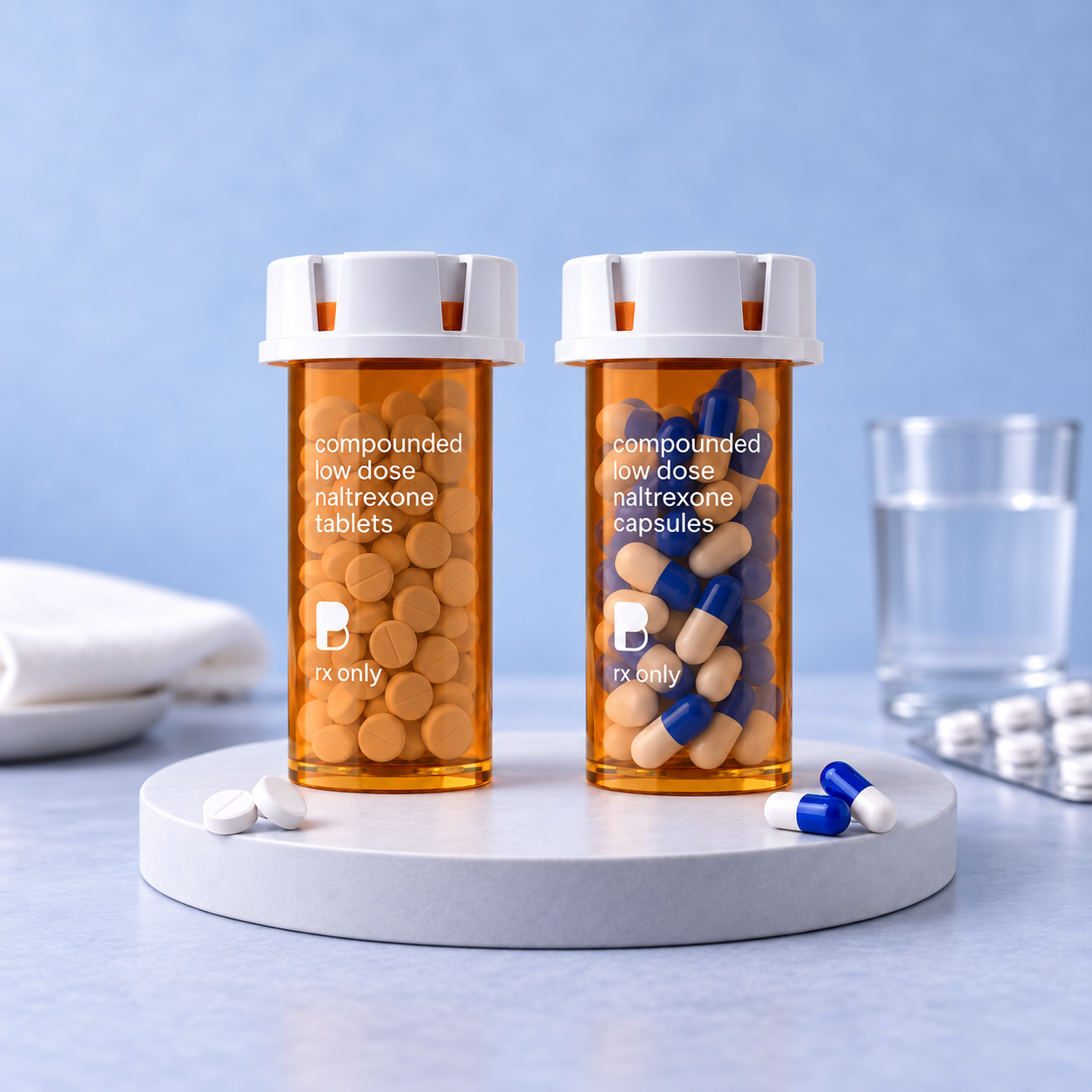
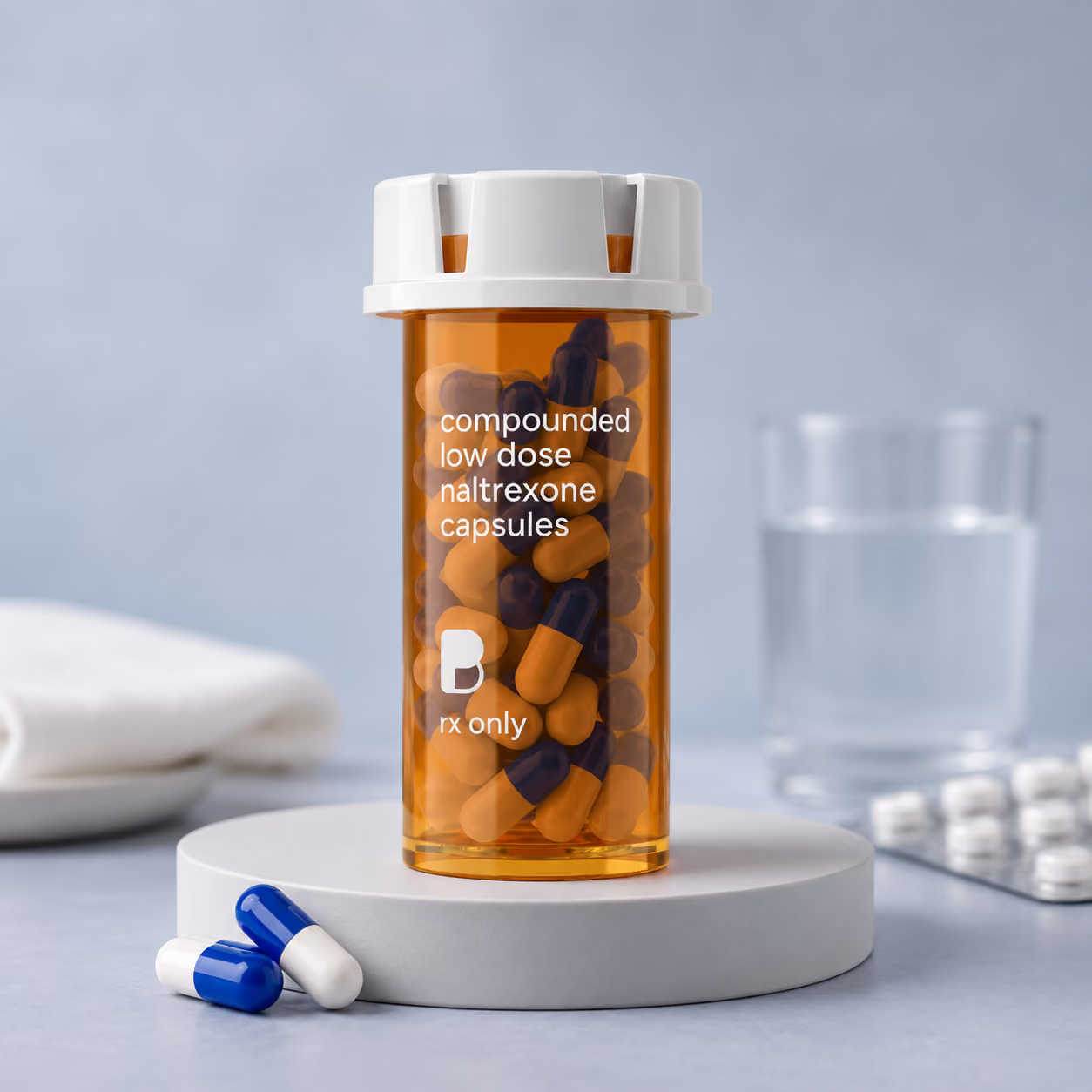
Prescribing low dose naltrexone means writing a compound order, because naltrexone is manufactured only as a 50 mg tablet and the low strengths do not exist commercially. Low Dose Naltrexone (LDN) is naltrexone hydrochloride compounded at a fraction of the FDA-approved 50 mg strength, prepared as capsules, tablets, or a 1 mg/mL oral liquid to the specification on the prescription. Every use at these doses is off-label, and the compounded preparation is not FDA-approved.
This guide covers what the published literature reports and does not report, the strengths and forms Bayview prepares, the titration patterns described in reviews, perioperative considerations, and what to include when you send the order.
Why does low dose naltrexone have to be compounded?
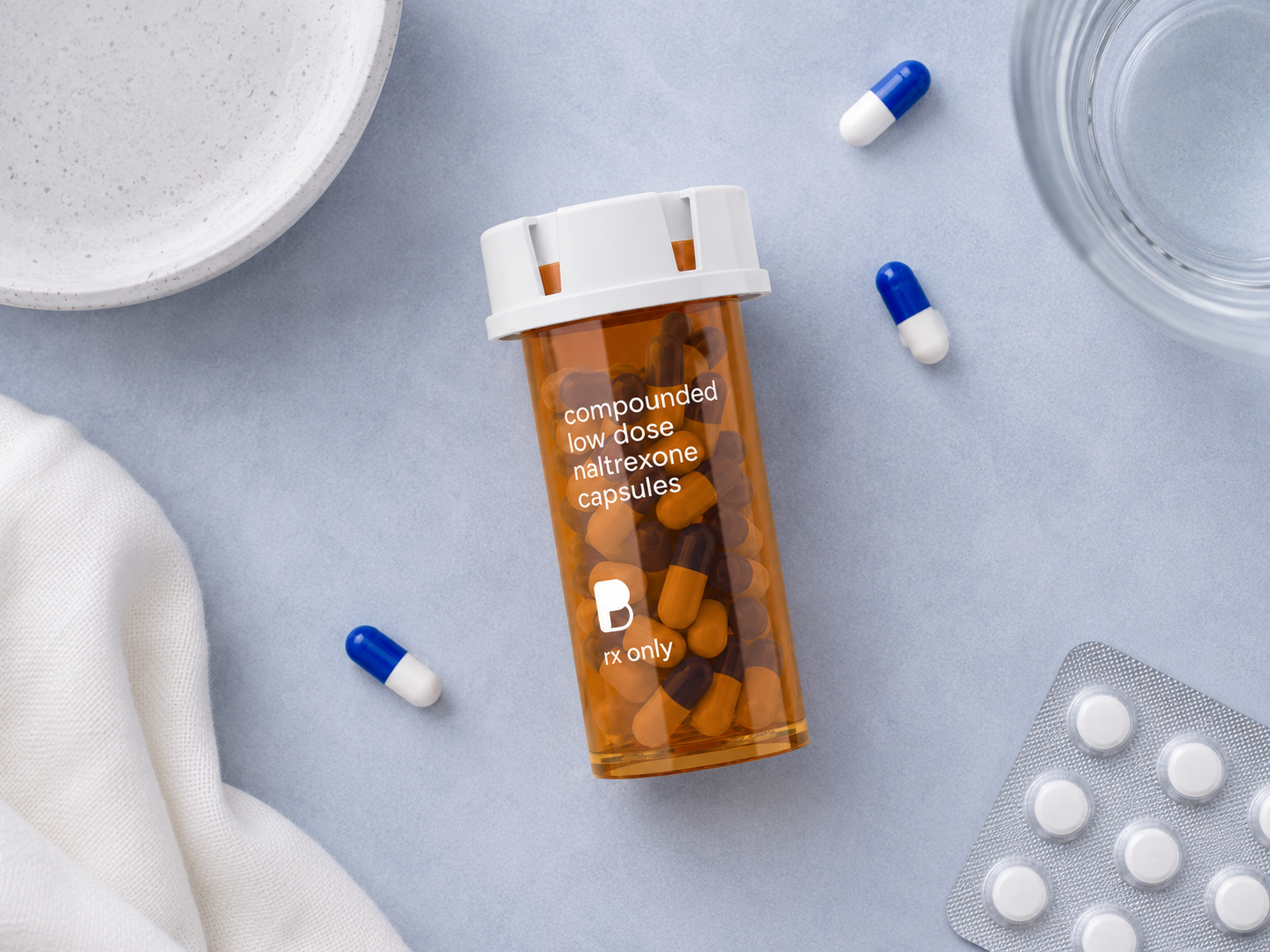
Naltrexone is commercially available as a 50 mg tablet, approved by the FDA for alcohol use disorder and opioid use disorder. There is no mass-produced 1.5 mg or 4.5 mg product, so any low-dose strength has to be prepared by a compounding pharmacy. The reason is strength availability, not a claim that a compounded preparation differs in any other way.
Patients frequently encounter online instructions for splitting or dissolving 50 mg tablets at home. A 50 mg tablet is roughly ten to thirty times a typical low dose, tablet splitting cannot deliver that accuracy, and there is no published stability data supporting home-prepared naltrexone solutions. It is worth addressing directly in the visit. More on how the compounding side works is in our post on LDN and compounding pharmacies.
| Attribute | Standard dose | Low dose |
|---|---|---|
| Typical dose | 50 mg daily | 0.5 to 6 mg daily |
| Regulatory status | FDA-approved | Off-label, compounded |
| Approved indication | Alcohol, opioid use disorders | None |
| Product source | Manufactured tablet or injection | Compounded capsule, tablet, liquid |
| Controlled substance | No | No |
The 50 mg product also exists as a monthly injection. The low-dose column describes the range reported across published reviews, not a recommended dose.
Is LDN a controlled substance?
No. Naltrexone is an opioid antagonist, not an opioid agonist, and it is not a scheduled controlled substance at any strength. Published references describe it as having low potential for misuse and no withdrawal syndrome on discontinuation. Because the preparation is noncontrolled, Bayview accepts fax and phone orders in addition to electronic prescriptions.

What does the LDN evidence actually show?
The most recent independent review, Gouda and colleagues in Advances in Therapy (2026), examined 105 studies of LDN, of which only 15 were randomized controlled trials. The authors concluded that "early positive findings from uncontrolled studies were rarely replicated in placebo-controlled trials" and that "current evidence does not support routine clinical use."
Where adequately powered placebo-controlled trials have been run, most did not separate from placebo on their primary endpoint.
| Area studied | Best evidence | Reported result |
|---|---|---|
| Fibromyalgia | 2 RCTs (n=99, n=98) | Primary endpoints not met |
| Crohn's disease | 2 RCTs, Cochrane 2018 | Insufficient evidence |
| Multiple sclerosis | RCT, 96 participants | No difference from placebo |
| Ulcerative colitis | No trials | No controlled evidence |
| Long COVID, ME/CFS | No trials | Uncontrolled reports only |
| Complex regional pain syndrome | No trials | Case reports only |
| Dermatologic uses | No trials | Case series only |
| Thyroid conditions | No human studies | No evidence |
The two fibromyalgia trials are Due Bruun and colleagues in The Lancet Rheumatology (2024), 99 participants at 6 mg, p=0.27, and Luciano and colleagues in the European Journal of Pain (2026), 98 participants at 4.5 mg over 12 months, p=0.236. The Cochrane review in Crohn's disease (CD010410.pub3, 2018) pooled 2 trials and 46 participants at GRADE low certainty and found insufficient evidence to allow any firm conclusions.
Two interpretation points are worth carrying into the chart. Placebo response in these trials ran from 18 to 40%, which accounts for much of what uncontrolled series report. And vivid dreams are common enough on naltrexone to create a plausible route to functional unblinding, which matters when reading crossover data. Research conducted at 50 mg or higher is also frequently cited as though it were LDN evidence.
How is LDN thought to work?
Naltrexone is a competitive mu- and delta-opioid receptor antagonist. Three low-dose mechanisms are proposed in the literature: transient receptor blockade with compensatory upregulation of endogenous opioid tone, TLR4-mediated glial modulation, and effects on the OGF/OGFr axis. None has been confirmed in human populations.

A 2026 review in the Journal of Personalized Medicine describes the leading theory as "a proposed explanation rather than a clinically confirmed mechanism," and the 2026 Advances in Therapy review describes the proposed mechanisms as remaining "largely theoretical and speculative." No clinical trial has demonstrated TLR4 modulation in treated patients, and the trials reporting symptom change did not include imaging or biomarker confirmation.
What LDN strengths are available?
Bayview prepares low dose naltrexone in three oral forms, compounded to the strength named on the prescription.
| Form | Strengths | Status | Practical note |
|---|---|---|---|
| Capsules | 1, 2, 4, 4.5, 5, 6, 9 mg | Compounded, off-label | Longest beyond-use dating |
| Tablets | 1.5, 3, 4.5 mg | Compounded, off-label | Made in-house |
| Oral liquid | 1 mg/mL | Compounded, off-label | Sub-milligram titration steps |
The 4.5 mg capsule is prepared as a special order. The oral liquid is available as an anhydrous suspension or a flavored solution and is measured with an oral syringe, which is the option to specify for patients who cannot swallow a solid dose or who need increments smaller than a capsule allows. Other strengths and forms are compounded to order; contact the pharmacy to confirm before prescribing an unusual strength. If a patient raises questions about capsule fillers, our pharmacists can state exactly what is in the preparation and discuss alternatives with you.
What LDN titration schedule does the literature describe?
Dose and appropriateness are the prescriber's decisions. What follows describes patterns reported in published reviews, not a recommendation from the pharmacy.

Reviews describe a reported range of 0.5 to 6 mg daily, with typical initiation at 0.5 to 1.5 mg and increments of roughly 0.5 to 1.5 mg every 1 to 2 weeks toward 4.5 mg, the most commonly used target. Doses above 4.5 mg are sometimes prescribed, and reviews note there is no high-quality evidence supporting higher doses.
The quality qualifier matters here: no randomized study has compared one titration strategy against another, or fixed against titrated regimens. Dose-response is poorly characterized, and one chart review found none. Step sizes therefore vary between prescribers without an evidence basis for choosing among them.
Nocturnal dosing is conventional, and it came from the receptor-rebound theory rather than from comparative data. Reviews state that no clear evidence shows nighttime dosing differs from daytime dosing. Because vivid dreams and disturbed sleep are the most commonly reported effects, some prescribers move the dose to the morning if sleep becomes a problem. Patient-facing references commonly suggest allowing 8 to 10 weeks before reassessing, though no trial has established a reliable time-to-response figure and reviews note that time to any reported change is inconsistently described across studies.
How do I write an LDN prescription?
E-prescribe to Bayview Pharmacy, 3844 Post Rd, Warwick, RI 02886. If your EHR does not list the compound, enter it as a compound or free-text prescription naming the active ingredient, strength, and dosage form. Fax and phone orders are also accepted.
Account setup, licensing, and ordering details are on our for providers page.
Which patients should not be started on LDN?
Do not initiate in patients on chronic daily opioid therapy without a supervised opioid-free interval; naltrexone blocks opioid receptors and can precipitate withdrawal or blunt analgesia. Confirm the patient is opioid-free before the first dose. Patients currently in opioid withdrawal, and patients with a known allergy to naltrexone or an excipient in the preparation, should not receive it.
Serious liver injury has been reported with naltrexone at the 50 mg dose. Reviews report that clinically significant hepatic enzyme elevations are uncommon at low doses, and whether to monitor is a clinical judgment rather than a defined protocol. There is no low-dose-specific safety data in pregnancy or lactation; the manufacturer's labeling for standard-dose naltrexone states there are no adequate and well-controlled studies in pregnant women and that it is not known whether naltrexone passes into human milk, and reviews of LDN describe the available data as insufficient.
Documented interactions are narrow. Beyond opioids and opioid-containing over-the-counter products, the labeling notes lethargy and somnolence reported when naltrexone was combined with thioridazine. There is no published low-dose-specific interaction data for antidepressants, thyroid medication, stimulants, or biologics. Alcohol data comes from studies at 50 mg and has not been examined at low doses.
How should LDN be managed perioperatively?
Published stop intervals range from 24 hours to 7 days, and no low-dose-specific interval has been established. Coordinate directly with the anesthesia team rather than applying a fixed rule, and note that post-discontinuation receptor upregulation can make the opioid response unpredictable after the drug is held.
Tell the patient to disclose low-dose naltrexone to any surgeon, anesthesiologist, dentist, or emergency clinician, in advance wherever possible, and that carrying a card or medical ID noting naltrexone is a reasonable precaution. They should also know that opioid-containing cough, cold, and anti-diarrhea products may not act as expected, and that taking extra opioid to overcome the blockade is dangerous and can be fatal. Our patient-facing post on what to avoid on LDN covers the same ground in plain language.
What should patients be counseled to expect?
Tolerability is the best-supported part of the LDN evidence base. In the two largest randomized trials the overall adverse event rate was close to the same on naltrexone as on placebo, 84% versus 86% in one and 69% versus 72% in the other, which means most reported effects in those studies were not attributable to the medication. Some participants did stop because of adverse events.
The effects that exceeded placebo in pooled trial data are vivid or abnormal dreams and nausea. Other commonly mentioned effects include trouble sleeping, headache, dizziness, and fatigue. Counsel patients not to change dose, strength, form, or schedule on their own, and to report anything that concerns them.
What does LDN cost, and is it billed to insurance?
Compounded LDN at Bayview starts at $100 for 90 capsules, paid as cash at the time of dispensing. Compounded preparations are made for one named patient rather than dispensed from a manufactured stock bottle, and they are not billed through pharmacy benefit plans. Patients sometimes ask whether a plan will reimburse them afterward, and our post on insurance and compounding pharmacies is a reasonable thing to point them to.
What Bayview compounds for this
On a prescriber's order, Bayview prepares naltrexone HCl as capsules in 1, 2, 4, 4.5, 5, 6, and 9 mg, as in-house compounded tablets in 1.5, 3, and 4.5 mg, and as a 1 mg/mL oral liquid in either an anhydrous suspension or a flavored solution. Other strengths are compounded to order. Each prescription is prepared in small batches under USP 795 non-sterile compounding standards, using ingredients from FDA-registered suppliers with certificates of analysis on file.
Other oral preparations Bayview compounds on a prescriber's order include oral cromolyn sodium, ketotifen capsules, and compounded thyroid (T3/T4) capsules. The full searchable list is in our compounded medications catalog.
How to order
Send the prescription electronically, by fax, or by phone to Bayview Pharmacy in Warwick, Rhode Island, naming the active ingredient, strength, dosage form, directions, quantity, and refills. We dispense to patients in the states where Bayview is licensed; the current list is on our FAQ page, and patients searching for a compounding pharmacy near them often land there first. If you want to confirm an unusual strength, or set up an account before sending your first order, start on the for providers page and our pharmacists will work through it with you.
Frequently asked questions
How should I store LDN?
Store capsules and tablets at room temperature unless the prescription label says otherwise. Keep the container tightly closed, away from excess heat, moisture, and direct light, a bathroom cabinet is a poor choice because of humidity. If you have been prescribed a liquid, check your label to see whether it needs refrigeration. Keep all medication out of reach of children and pets, and do not use any preparation past the beyond-use date on the label.
How long does it take to notice a response?
LDN does not produce an immediate effect. Patient-facing references commonly suggest allowing up to eight to ten weeks, though no clinical trial has established a reliable time-to-response figure, and published studies describe it inconsistently. Response can vary with the individual, the dose, and the overall treatment plan. Follow your prescriber’s instructions and check in as directed rather than stopping early on your own.
What side effects can happen with LDN?
LDN is generally well tolerated at these doses. The effects reported most often, and more often than with placebo in pooled trial data, are vivid or unusual dreams and nausea. Others reported include sleep disturbance, headache, dizziness, stomach upset, and fatigue. Worth knowing: in the two largest randomized trials the overall rate of side effects was about the same on naltrexone as on placebo, so many reported effects were not attributable to the medication. Contact your prescriber if anything is bothersome, persistent, or unexpected.
Can I take LDN if I use opioid pain medication?
You should not take LDN with opioid medications unless your prescriber specifically determines it is safe. Naltrexone blocks opioid receptors, which may reduce the effect of opioid pain medications and may trigger withdrawal in someone who is physically dependent on opioids. Tell your provider and pharmacist about all medications you take.
Why is LDN compounded?
Naltrexone is commercially manufactured only as a 50 mg tablet, so the low doses commonly used, such as 1.5 mg, 3 mg, or 4.5 mg, are not available as a standard product. Compounding allows a licensed pharmacy to prepare naltrexone at the exact strength your provider prescribes, and in the form that suits you: a capsule, a tablet, or an oral liquid. Please do not attempt to split or dissolve a 50 mg tablet at home, that cannot deliver an accurate low dose.
How do I take LDN?
Take LDN exactly as prescribed by your provider, whether it is a capsule, a tablet, or an oral liquid. It is often taken once daily, sometimes at bedtime, but your directions may be different. If you have been prescribed the liquid, measure each dose with the oral syringe provided rather than a household spoon. Do not change your dose, timing, or frequency unless your prescriber tells you to.
What strengths are available?
Bayview Pharmacy prepares LDN in the strength and form your prescriber orders. Compounded tablets, pressed in our own pharmacy, are available in 1.5, 3 and 4.5 mg. Capsules cover the strengths in between and the very low starting doses, from 0.125 mg up to 9 mg. An oral liquid is also available, which allows very small dose steps for patients who need them or who cannot swallow a solid dose. Other strengths can be compounded to order. Many providers start at a lower strength and adjust gradually.
Is Low Dose Naltrexone FDA-approved?
Naltrexone is FDA-approved at standard doses for opioid and alcohol use disorders. Low Dose Naltrexone is prescribed off-label and compounded at lower strengths, so it is not FDA-approved for these uses. Your prescriber determines whether it is appropriate for your treatment plan.
What is Low Dose Naltrexone?
Low Dose Naltrexone, often called LDN, is naltrexone prepared in much smaller doses than the commercially available 50 mg tablet. Because these low strengths are not sold as a standard manufactured product, they are commonly prepared by a compounding pharmacy with a prescription.
How do I write a prescription for low dose naltrexone?
Send it as a compound or free-text prescription naming the active ingredient, strength, and dosage form, for example naltrexone HCl 4.5 mg capsules. Include directions, an ICD-10 code supporting the indication, quantity, and refills. Low-dose naltrexone is off-label, and the compounded preparation is not FDA-approved. For sub-milligram steps, specify the 1 mg/mL oral liquid with the concentration and volume.
Is low dose naltrexone a controlled substance?
No. Naltrexone is an opioid antagonist and is not scheduled at any strength, including the low doses that have to be compounded. Published references describe it as having low potential for misuse and no withdrawal syndrome on discontinuation. Because it is noncontrolled, Bayview accepts fax and phone orders in addition to electronic prescriptions.
What titration schedule does the LDN literature describe?
Published reviews describe a reported range of 0.5 to 6 mg daily, with typical initiation at 0.5 to 1.5 mg and increments of roughly 0.5 to 1.5 mg every 1 to 2 weeks toward 4.5 mg. No randomized study has compared one titration strategy against another, or fixed against titrated regimens, so step sizes vary between prescribers. Dose and appropriateness are the prescriber's decisions.
Do I need to monitor liver enzymes on low dose naltrexone?
Serious liver injury has been reported with naltrexone at the 50 mg dose. Reviews report that clinically significant hepatic enzyme elevations are uncommon at low doses, and no monitoring protocol is established for compounded low-dose naltrexone. Whether to check liver tests, and how often, is a clinical judgment for the prescriber based on the individual patient.
Can I start LDN in a patient on chronic opioid therapy?
Do not initiate low-dose naltrexone in a patient on chronic daily opioid therapy without a supervised opioid-free interval. Naltrexone blocks opioid receptors, which can precipitate withdrawal or blunt analgesia. Confirm the patient is opioid-free before the first dose. Opioid-containing cough, cold, and anti-diarrhea products may also not act as expected, and taking extra opioid to overcome the blockade is dangerous.
How do I set up a prescriber account with Bayview for LDN?
Account setup, licensing, and ordering are covered on our for providers page. You can e-prescribe to Bayview Pharmacy, 3844 Post Rd, Warwick, RI 02886, or send the order by fax or phone, since this is a noncontrolled preparation. If you want to confirm an unusual strength or dose form before sending a first prescription, contact the pharmacy and a pharmacist will confirm what can be prepared.
What Bayview compounds for this
Important: Compounded medications are prepared to a prescriber's order for an individual patient. They are not FDA-approved, and the FDA has not evaluated them for safety, effectiveness, or manufacturing quality. This article is educational and is not a substitute for advice from your prescriber or pharmacist.
This preparation contains a controlled substance. Controlled-substance prescriptions carry refill limits, must be e-prescribed, and can only be shipped to states where Bayview holds the required licensure.
Uses discussed here may be off-label, meaning they are not part of any FDA-approved labeling. Off-label use is a decision for you and your prescriber, based on the available evidence.
Veterinary preparations are compounded to a veterinarian's order for a specific animal and are not FDA-approved animal drugs. Never give a compounded human medication to an animal without veterinary direction.
Compounded prescriptions are paid for directly rather than billed through insurance. Most are HSA/FSA-eligible, and many patients submit the receipt to their plan for possible reimbursement. Pricing depends on the strength, dose form and quantity your prescriber orders. Read more about cost and insurance.
Compounded low dose naltrexone at Bayview starts at $100 for 90 capsules, paid as cash at the time of dispensing. Compounded preparations are made for one named patient rather than dispensed from a manufactured stock bottle, and they are not billed through pharmacy benefit plans. Price varies with the strength, form, and quantity on the prescription, so patients asking about the liquid or an unusual strength should call the pharmacy for a quote.
Bayview Pharmacy is a compounding pharmacy in Warwick, Rhode Island, licensed to fill and ship compounded prescriptions for patients in Rhode Island, Massachusetts, Connecticut, New Jersey, New Hampshire, Florida, Maine and Pennsylvania. Prescriptions for New York patients are filled on a limited basis, and controlled substances are not shipped to New York addresses. See every state we ship to.
Related reading