


In Stock
Magic Mouthwash | Compounded Mucositis Rinse | Bayview Pharmacy

Magic Mouthwash

Smiling man in blue pharmacist scrubs with arms crossed and pen behind his ear.
Medically reviewed by Ryan Dyer, RPh
Last updated on
August 7, 2026
Starting at
$94
for
100 mL
Checkmark icon followed by text 'HSA/FSA Eligible'.
Start with a prescriptionPrescribers: request this order form →
Licensed to fill prescriptions for patients in RI, MA, CT, NY, NJ, NH & FL
  • Numbs and coats sore, inflamed areas in the mouth and throat
  • Mixed to your prescriber's exact formula — there is no single standard recipe
  • Available as a swish-and-spit version or a swish-and-swallow version
  • Prepared in the volume ordered, from a single 100 mL bottle to a larger supply

Magic mouthwash is a compounded prescription mouth rinse used to ease the pain of mouth sores and oral mucositis — the raw, inflamed lining of the mouth and throat that often follows chemotherapy or radiation. The most common version combines diphenhydramine, an antacid, and viscous lidocaine in equal parts (1:1:1). There is no FDA-approved magic mouthwash product and no standard formula; recipes differ from one hospital and one prescriber to the next. Compounded medications are not FDA-approved, and a valid prescription is required.

Magic mouthwash is also widely used in hospice and palliative care, where keeping the mouth comfortable enough to talk, eat, and drink matters a great deal. Bayview Pharmacy does not provide consultations and does not determine whether a medication is appropriate for you — that is your prescriber's decision.

What is in magic mouthwash?

The version most people mean combines three ingredients in equal parts (1:1:1): diphenhydramine, an antacid such as aluminum and magnesium hydroxide, and viscous lidocaine.

But magic mouthwash is a nickname, not a defined medicine. There is no standard recipe and no FDA-approved product, and formulas vary between hospitals, clinics, and individual prescribers. Some add a steroid, an antifungal, or an antibiotic. What is in your bottle is whatever your prescriber ordered, so read your label.

What is it used for?

It is used to ease the pain of mouth sores and oral mucositis, the raw, inflamed lining of the mouth and throat that often follows chemotherapy or radiation. It is also widely used in hospice and palliative care, where keeping the mouth comfortable enough to talk, eat, and drink matters a great deal. It eases symptoms; it does not treat what caused them.

Trusted by 105,826 patients to date.
A group of faces of our past satisfied patients.
Compounded medications are prepared pursuant to a valid prescription for an individual patient and are not FDA-approved. This page is for educational purposes and is not medical advice.
**The FDA does not review or approve compounded medications for safety or effectiveness. A valid prescription from a licensed practitioner is required.
Important safety information →
Service availability

Prescription delivery in your state

Bayview Pharmacy currently serves eligible patients in six states. Check your state before getting started.

Where we currently serve

Select a highlighted state to check availability.

Currently licensed Licensed — non-controlled only Not currently licensed Your selection

Select a state on the map or use the state checker.

Do we serve your state?

Choose your state to confirm current service availability.

Thank you! Your submission has been received!
Oops! Something went wrong while submitting the form.
Currently licensed in
Start with a prescription

Send us your prescription

STEP
1
Have your provider e-prescribe to Bayview, fax it to us, or call it in directly to one of our pharmacists.
A thin blue light beam connecting two clear glass slabs on a white surface.

A pharmacist reviews it

STEP
2
We verify your prescription and prepare your medication to your provider's exact instructions.
Close-up of a white dial with blue measurement markings and a rotating knob.

We compound & ship

STEP
3
We prepare your medication and ship it discreetly to your door, with support when you need it.
Close-up of a gray box with a precise blue line running along its folded edges.

What is Magic Mouthwash?

“Magic mouthwash” is the informal name for a compounded prescription mouth rinse used to relieve the pain of mouth sores and oral mucositis. The version most people mean combines three ingredients in equal parts: diphenhydramine (an antihistamine), an antacid (usually aluminum and magnesium hydroxide), and viscous lidocaine (a numbing medicine). That combination is often written as 1:1:1.

Bayview compounds magic mouthwash to your prescriber's formula and in the volume ordered, as either a swish-and-spit or a swish-and-swallow preparation. Compounded preparations are not FDA-approved, a valid prescription is required, and Bayview Pharmacy does not provide consultations or determine whether a medication is appropriate for you.

There is no standard magic mouthwash and no FDA-approved product. “Magic mouthwash” is a nickname, not a defined medicine. Formulas vary widely between hospitals, clinics, and individual prescribers — some add a steroid, an antifungal such as nystatin, or an antibiotic; some leave out the antacid; some use a different anesthetic. Because there is no FDA-approved magic mouthwash, every version is compounded and used off-label. What is in your bottle is whatever your prescriber ordered, so read your label and ask if anything is unclear.

How does it work?

Each ingredient does a different job, and they are mixed so one rinse can do all three.

  • Viscous lidocaine is a local anesthetic. It temporarily blocks nerve signals in the surface of the mouth and throat, so sore areas feel numb for a short time (MedlinePlus, Lidocaine Viscous Oral Rinse). This is the ingredient that does most of the pain relief — and the one that carries most of the safety cautions.
  • The antacid (aluminum/magnesium hydroxide) is thick and coats the lining of the mouth, which helps the mixture stay in contact with sore spots instead of running straight down.
  • Diphenhydramine is an antihistamine with mild local numbing and anti-itch properties (MedlinePlus, Diphenhydramine). It can also make you drowsy and dry your mouth, especially in a swallowed version.

None of these ingredients heals mucositis or makes it go away faster. Magic mouthwash is a comfort measure — it treats the pain, not the cause.

What is it used for?

Magic mouthwash is prescribed to relieve pain from:

  • Oral mucositis from chemotherapy or radiation. This is the most common reason. Mucositis can make swallowing, eating, and even talking painful, and it is a major reason people lose weight during cancer treatment.
  • Painful mouth sores from other causes, including canker sores and sores related to some medications or illnesses.
  • Comfort care in hospice and palliative settings, where the goal is keeping the mouth comfortable enough to eat, drink, and speak.
Being honest about the evidence: magic mouthwash helps some people a little, and it is not the first thing guidelines recommend. The best trial of this question is Alliance A221304 (Sio TT, et al. JAMA. 2019;321(15):1481–1490), which randomized 275 people getting head-and-neck radiation to doxepin rinse, a diphenhydramine-lidocaine-antacid rinse, or placebo. Both active rinses reduced mouth pain more than placebo over the first four hours, and both differences were statistically significant — but both were smaller than the difference the researchers had decided in advance would be clinically meaningful. In plain terms: real, measurable, modest. Meanwhile, the National Cancer Institute puts plain bland rinses first — 0.9% salt water and sodium bicarbonate (salt-and-soda) rinses to keep the mouth clean and moist — and adds topical anesthetics like lidocaine as a next step. The MASCC/ISOO mucositis guidelines recommend basic oral care, benzydamine mouthwash for head-and-neck radiation, oral cryotherapy for certain chemotherapy, and photobiomodulation — they do not endorse a specific compounded “magic” mixture, largely because the mixtures have never been standardized enough to study as one thing. Magic mouthwash is a reasonable comfort measure your prescriber may choose; it is not a proven treatment for mucositis itself.

How do the versions compare?

The two versions Bayview dispenses most often differ in what you do at the end of the rinse. Your prescriber decides which one you get, and the label tells you which it is.

VersionWhat you doNotes
1:1:1 expectorate (swish and spit)Swish, then spit it outThe more common order; less lidocaine is absorbed and the throat is less likely to be numbed
1:1:1 swallow (swish and swallow)Swish, then swallowOrdered when sores extend into the throat or esophagus; more lidocaine reaches the body, so dose limits matter more
Custom formulasAs your prescriber directsSome prescribers add a corticosteroid, an antifungal such as nystatin, or an antibiotic; there is no standard recipe

Versions are described for education only and are not a statement that any formula is better for a particular person. Your prescriber selects the formula, volume, and schedule.

How is it used?

Follow the directions on your label exactly — both the amount per dose and how many times a day. A common order is about one teaspoon (5 mL) swished around the mouth for one to two minutes, then spit out or swallowed as directed, up to every four to six hours. Do not take more than your label allows, and do not use it more often than directed, even if the numbness wears off sooner than you expected.

Shake the bottle before each dose — the antacid settles. Use the measuring device the pharmacy provides rather than a kitchen spoon.

Wait to eat and drink. Your mouth and throat will be numb for a while after a dose. Your prescriber will tell you how long to wait before eating or drinking — often around an hour — because numb tissue makes it easy to bite your tongue or cheek, burn yourself on hot food, or choke. Follow their direction rather than guessing.

A Bayview pharmacist is available if you have questions about your prescription.

Side effects & safety

The lidocaine is the part that needs respect. It is what makes the rinse work, and it is also why the dose limits on your label are not suggestions.

  • Numbness affects swallowing. A numb mouth and throat make it easier to choke or to inhale food or liquid into the lungs (aspiration). This matters most with the swallow version, in older adults, in anyone who already has trouble swallowing, and in people who are frail or sedated.
  • Too much lidocaine can be absorbed, especially with repeated doses, when the mouth is raw and inflamed, or when the rinse is swallowed. Warning signs of lidocaine toxicity include numbness or tingling around the mouth, a metallic taste, ringing in the ears, blurred vision, dizziness, drowsiness, confusion, muscle twitching, seizures, and changes in heart rhythm or breathing. Children and small adults reach a dangerous dose at much smaller volumes — serious harm and deaths in young children have been reported with viscous lidocaine (MedlinePlus).
  • Diphenhydramine can cause drowsiness, dry mouth, blurred vision, constipation, difficulty urinating, and confusion — effects that are more noticeable with the swallow version and in older adults.
  • The antacid can cause constipation or loose stools, and antacids can interfere with the absorption of some other medicines taken around the same time. Ask your pharmacist about spacing.
  • Local stinging or an unpleasant taste is common, particularly on very raw tissue.
Get emergency help right away for ringing in the ears, blurred vision, dizziness, confusion, slurred speech, muscle twitching, seizures, an irregular or slow heartbeat, or trouble breathing after using this rinse — these can be signs of too much lidocaine. Keep the bottle out of the reach of children; call Poison Control at 1-800-222-1222 or seek emergency care if a child swallows it.

Tell your prescriber if the mouth pain is not controlled, if sores get worse, or if you develop a fever, thick white patches, or new bleeding in the mouth — those may need different treatment.

Who should not use it?

Do not use magic mouthwash if you are allergic to lidocaine or other local anesthetics, to diphenhydramine or other antihistamines, or to any ingredient in your formula. Talk with your prescriber before using it if you have significant trouble swallowing or a history of aspiration, serious liver disease or heart rhythm problems (which affect how lidocaine is handled), glaucoma, an enlarged prostate or trouble urinating, or if you are already taking a sedating antihistamine or another anticholinergic medicine.

Extra caution applies to children, to older adults, and to anyone who is frail, sedated, or has a small body size, because the same volume delivers a proportionally larger lidocaine dose. Tell your prescriber and pharmacist about your full health history, allergies, all medicines and supplements you take, and whether you are pregnant or breastfeeding. A prescription is required.

How should it be stored?

Store as directed on your label — most magic mouthwash is kept at room temperature away from heat, light, and moisture, though some formulas are refrigerated. Do not freeze it. Keep the bottle tightly closed, shake before each use, and keep it out of the reach of children.

Do not share it with anyone, and do not use it past the beyond-use date on the label. Dispose of unused medication as your pharmacist directs or through a drug take-back program rather than flushing it.

Why is this compounded?

There is no FDA-approved magic mouthwash product. The mixture only exists because a pharmacy makes it: the individual ingredients are commercially available, but no manufacturer sells them premixed in the ratios and volumes prescribers want. Because formulas differ from one prescriber to the next, each order is compounded to that specific recipe.

As a 503A compounding pharmacy, Bayview Pharmacy prepares each order in small batches using quality ingredients. Compounded preparations are not FDA-approved, they are not reviewed by the FDA for safety or effectiveness, and a valid prescription is required.

Clinical details for prescribers

Regulatory status. No FDA-approved “magic mouthwash” product exists; all versions are compounded and off-label. Component ingredients (diphenhydramine, aluminum/magnesium hydroxide, lidocaine HCl 2% viscous) are individually approved. Not a controlled substance. Compounded preparations are not FDA-approved.

Formulation & SIG. Bayview's standard is a 1:1:1 mixture of diphenhydramine 12.5 mg/5 mL elixir, aluminum hydroxide/magnesium hydroxide suspension, and lidocaine HCl 2% viscous solution, dispensed as expectorate or swallow. Typical SIG: swish 5 mL for 1–2 minutes and expectorate (or swallow) every 4–6 hours as needed for oral pain; specify a maximum number of doses per 24 hours. Custom formulas (with nystatin, a corticosteroid, or an antibiotic) are compounded on request. Volumes from 100 mL to 900 mL.

Evidence & clinical points:

  • Alliance A221304 (Sio TT, et al. JAMA. 2019;321(15):1481–1490): in 275 patients receiving head-and-neck RT, doxepin rinse and diphenhydramine-lidocaine-antacid rinse each reduced 4-hour mucositis pain AUC vs placebo (differences 2.9 and 3.0 points respectively; both statistically significant) but both fell below the prespecified minimal clinically important difference of 3.5 points
  • MASCC/ISOO 2020 mucositis guidelines support basic oral care, benzydamine for head-and-neck RT, oral cryotherapy for selected chemotherapy regimens, and photobiomodulation; no guideline endorses a specific compounded mixed mouthwash, which is largely a consequence of formula heterogeneity
  • NCI PDQ positions bland rinses (0.9% saline, sodium bicarbonate) as the foundation, escalating to topical anesthetics, mucosal coating agents, and systemic analgesia
  • Lidocaine dosing is the key safety issue. Counsel on maximum doses per 24 hours; risk of systemic toxicity rises with denuded mucosa, swallowed formulations, repeated dosing, hepatic impairment, and low body weight. Pharyngeal anesthesia increases aspiration risk — use caution in dysphagia, frailty, and sedation. Specify a post-dose interval before eating or drinking
  • Anticholinergic burden from diphenhydramine is relevant in older adults and in palliative patients already on anticholinergics; consider omitting it or ordering an alternative if sedation or delirium is a concern

Ordering: send a prescription to Bayview Pharmacy, 3844 Post Rd, Warwick, RI 02886 — NCPDP 4106882, fax 401-284-4506. Background: Alliance A221304 (JAMA 2019); NCI PDQ, Oral Complications of Cancer Therapies.

This is a prescription compounded medication and is not FDA-approved. There is no standard magic mouthwash formula. This information is educational and is not medical advice. Your prescriber determines whether it is appropriate and sets the formula, volume, and dose. Bayview Pharmacy does not provide consultations or determine appropriateness.

In Stock

On this page

What is in your bottle

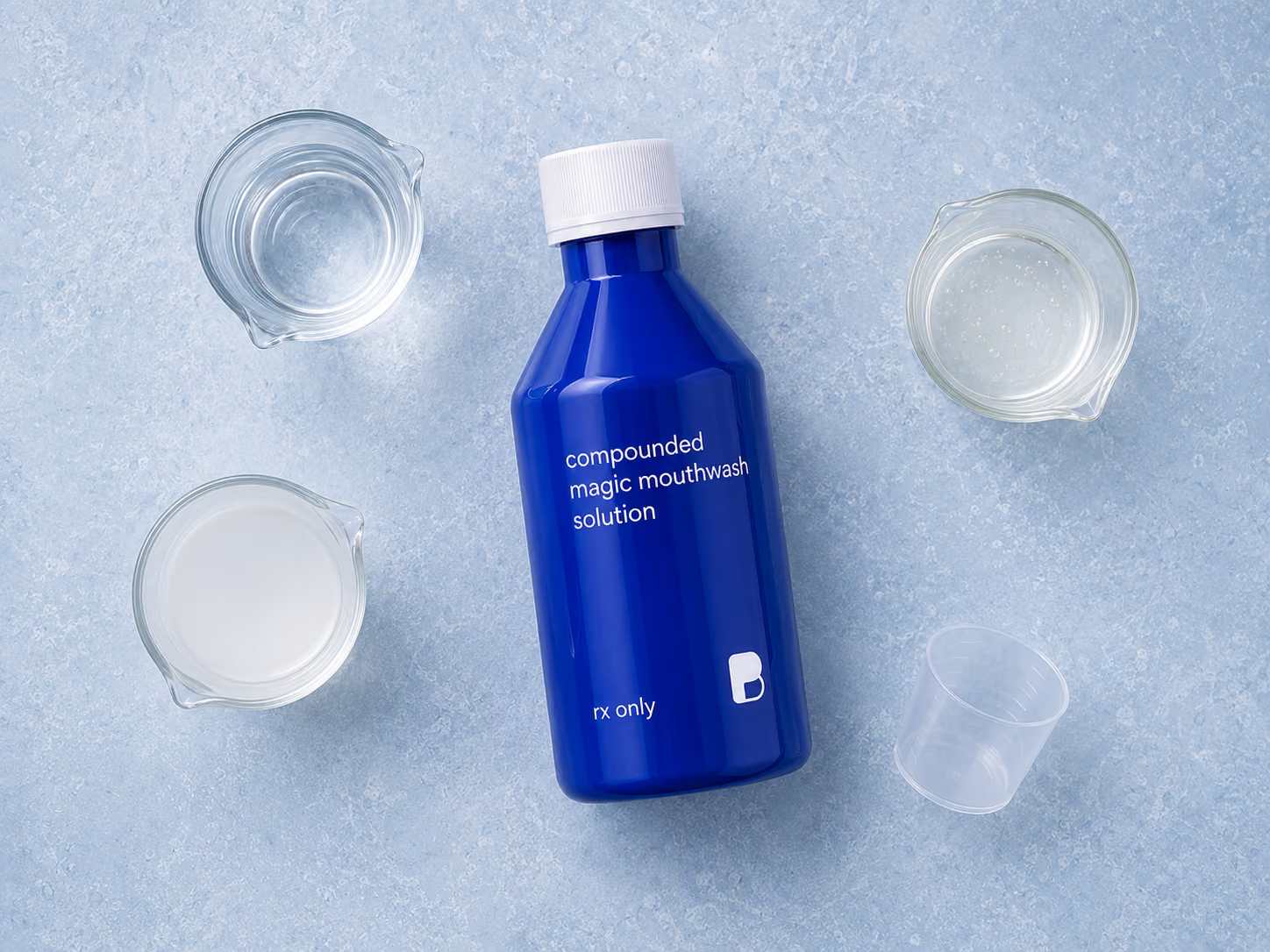
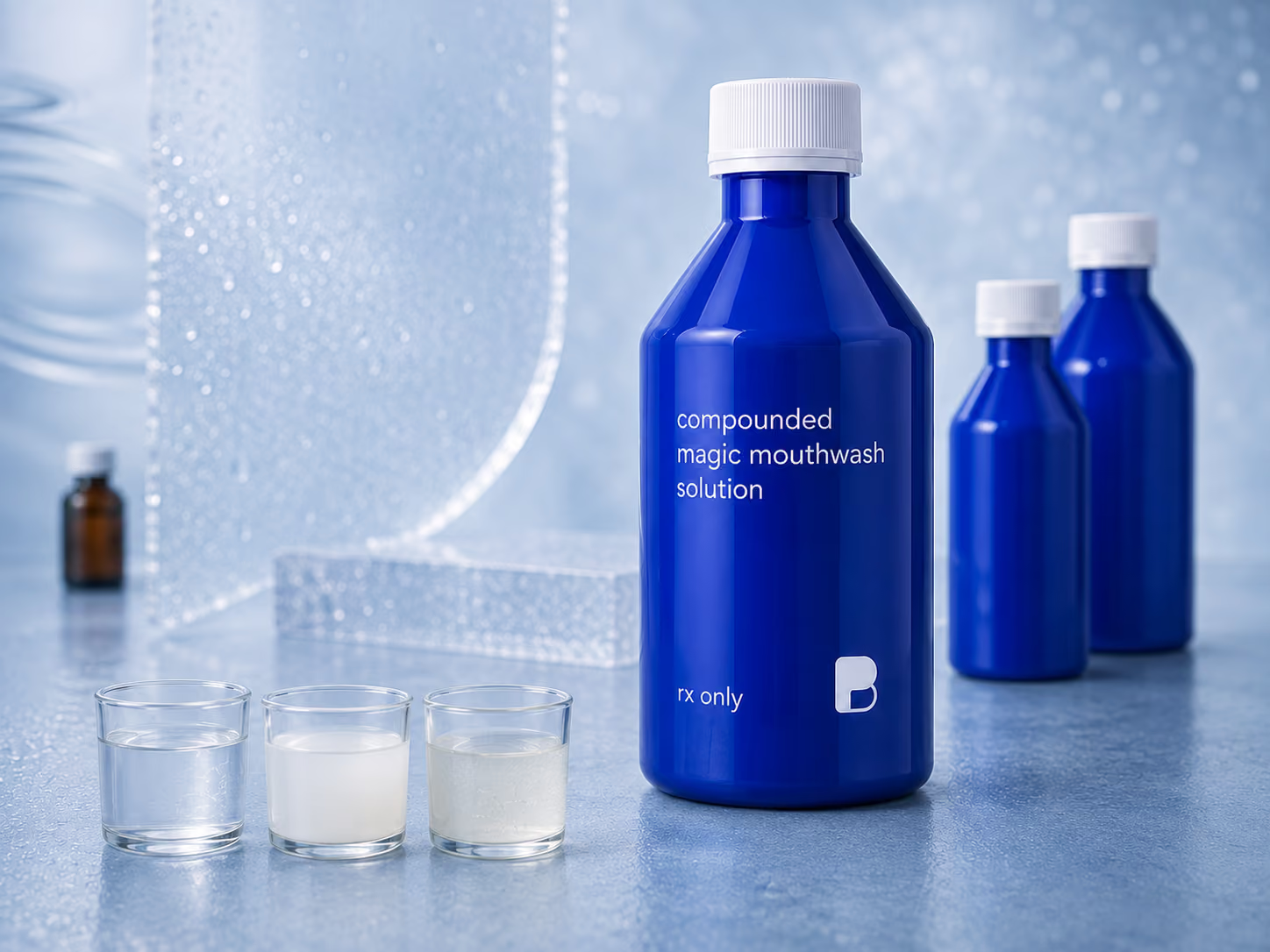
Magic mouthwash is a nickname, not a standard recipe. What you receive is what your prescriber ordered, most often diphenhydramine, an antacid, and viscous lidocaine in equal parts. Read your label, and ask us if anything is unclear.

Start with a prescription
What is in your bottle – Magic Mouthwash from Bayview Pharmacy

Formulas, volumes, and versions

We compound the classic 1:1:1 rinse as swish-and-spit or swish-and-swallow, in single bottles up to a full course, plus custom versions that add nystatin, a steroid, or an antibiotic. The lidocaine numbs your mouth and throat, so stick to the doses on your label.

View our formulas
Formulas, volumes, and versions – Magic Mouthwash from Bayview Pharmacy

Personalized compounding for patients who need more than a standard option.

"As a compounding pharmacy, we prepare each medication to a provider’s exact specifications. My focus, and my team’s focus, is quality, consistency, and close communication with prescribers so patients receive medication prepared for their individual needs."
Ryan Dyer, RPh
Owner and Chief Pharmacist, Bayview Pharmacy
Smiling man in blue scrubs with arms crossed and pen behind his ear
Three clear liquid vials, white powder on spoon, two capsules, and a cream jar on a metal surface.
QUALITY AND TESTING

Held to a higher standard

Every preparation is made under strict quality controls, and verified by a licensed pharmacist.
We use validated quality processes and third-party testing where appropriate
Sterile compounding in a dedicated USP <797> cleanroom
Non-sterile compounding under USP <795> and <800> standards
USP/NF-grade ingredients from reputable, vetted suppliers

Why patients choose Bayview

Made in our own pharmacy
Made to your prescription
Quality tested
Real pharmacist support
Trusted since 2006

Our formulations

Magic mouthwash is compounded to your prescriber's formula and in the volume ordered. There is no standard recipe, so the versions below are examples of what Bayview commonly dispenses — not a menu to choose from.

Formula Volumes How it's used
Diphenhydramine / antacid / lidocaine 1:1:1, expectorate100, 237, 240, or 900 mLSwish as directed, then spit out
Diphenhydramine / antacid / lidocaine 1:1:1, swallow280 mL and other volumesSwish as directed, then swallow
Custom formulaAs orderedAs your prescriber directs — some formulas add nystatin, a steroid, or an antibiotic

Directions are set by the prescriber; the descriptions above reflect common regimens and are not treatment recommendations. Formulas are listed for education only and are not a statement that any version is better for a particular person. Never exceed the per-dose volume or the number of daily doses on your label. A valid prescription is required, and your prescriber determines what is appropriate. Bayview Pharmacy does not provide consultations or determine appropriateness. There is no FDA-approved magic mouthwash product, and compounded preparations are not FDA-approved.
Start with a prescription
Prescribers: request this order form →

Frequently asked questions

What is in magic mouthwash?

The version most people mean combines three ingredients in equal parts (1:1:1): diphenhydramine, an antacid such as aluminum and magnesium hydroxide, and viscous lidocaine.

But magic mouthwash is a nickname, not a defined medicine. There is no standard recipe and no FDA-approved product, and formulas vary between hospitals, clinics, and individual prescribers. Some add a steroid, an antifungal, or an antibiotic. What is in your bottle is whatever your prescriber ordered, so read your label.

What is it used for?

It is used to ease the pain of mouth sores and oral mucositis, the raw, inflamed lining of the mouth and throat that often follows chemotherapy or radiation. It is also widely used in hospice and palliative care, where keeping the mouth comfortable enough to talk, eat, and drink matters a great deal. It eases symptoms; it does not treat what caused them.

Does it actually work?

Somewhat, and probably less than you are hoping. In the JAMA 2019 Alliance A221304 randomized trial, both a doxepin rinse and the diphenhydramine-lidocaine-antacid rinse reduced radiotherapy-related mucositis pain more than placebo.

Both, however, fell below the minimum clinically important difference the investigators had set in advance. So there is a real but modest effect. Ask your prescriber how it fits alongside the rest of your mouth care rather than expecting it to solve the pain.

Why can't I eat or drink after a dose?

The lidocaine numbs your mouth and throat. While you are numb it is easier to choke, to inhale food or liquid into your lungs, and to bite or burn yourself without feeling it. Do not eat or drink until the time your prescriber tells you, often about an hour after a dose, and wait until normal sensation has come back. Take extra care if you already have trouble swallowing.

What is the difference between the spit and swallow versions?

The expectorate version is swished and then spat out, so it acts on the mouth. The swallow version is swished and then swallowed, which also coats the throat and esophagus but delivers more lidocaine into the body. Your prescriber decides which one you get and states it on the label. Do not swallow an expectorate formula, and do not switch versions on your own.

What are the warning signs of too much lidocaine?

Enough lidocaine can be absorbed to cause serious harm, especially with repeated doses, with the swallow version, when the mouth is very raw, and in children and small adults.

Get medical help right away for ringing in the ears, a metallic taste, numbness or tingling around the mouth, dizziness, blurred vision, confusion, drowsiness, tremor, seizures, or an irregular heartbeat. Never take more than the per-dose volume or number of daily doses on your label.

Do I need a prescription?

Yes. All of our medications require a valid prescription from a licensed provider. We're a dispensing and compounding pharmacy, so we don't provide consultations or write prescriptions. If you don't have one yet, you'll need to find and see a provider first.

What is compounding?

Compounding is the practice of preparing a medication tailored to an individual patient's prescription. Instead of a mass-produced product, a compounding pharmacy makes the medication to the specific strength, form, or combination your provider orders.

Are compounded medications FDA-approved?

Compounded medications are not FDA-approved. They're prepared by a licensed pharmacy pursuant to a valid prescription for an individual patient, under USP standards. The FDA does not review compounded medications for safety or effectiveness.

How do providers send a prescription to Bayview?

Providers can submit a prescription three ways:

  • E-prescribe: Search Bayview Pharmacy, Warwick, RI (NCPDP 4106882) in your EHR. For compounds, use the compound, custom, or free-text option and include the full formulation, strength, quantity, refills, and directions.
  • Fax: Send a signed order to 401-284-4506 (alt. 401-210-2757) with patient and prescriber details, medication, quantity, refills, directions, signature, and date.
  • Phone: Call 401-284-4505 to submit, clarify, or coordinate refills.

A valid prescription is required, and compounded medications are not FDA-approved.

Can you fill a prescription from my own provider?

Yes. Your provider can send your prescription to Bayview Pharmacy by e-prescribe, fax, or phone, or you can transfer an existing prescription from another pharmacy. Start a request and we'll guide you through it.

How does shipping work?

Once your prescription is verified, we prepare your medication and ship it discreetly in plain packaging either via UPS or USPS. A pharmacy technician confirms the details with you before it goes out, and we're available if you have any questions.

How do refills and automatic refills work?

Refills are coordinated with your prescriber and your prescription. You can request a refill through our website or by calling us, and we'll handle the rest as long as you have refills remaining on a valid prescription. You can also opt into automatic refills on non-controlled substances, with no need to worry about running out of your medication. We can either ship it to you automatically, or ready for pickup.

Shipping & Delivery

Every prescription ships directly to your door in discreet packaging. Refrigerated medications travel in insulated coolers with ice packs to stay cold in transit.

Delivery AreaStandard ShippingRefrigerated Shipping
Rhode Island, Massachusetts & Connecticut$9 USPS$20 UPS
New Hampshire, New Jersey & New York$15 UPS$40 UPS Next Day Air
Florida$15 UPS$80 UPS Next Day Air

Need it faster? Expedited UPS is $15 for Rhode Island, Massachusetts and Connecticut. Your pharmacist will let you know if your medication needs refrigerated shipping. Questions? Call us at (401) 284-4505.

References

Sources reviewed

The medical information on this page draws on the following sources, which are also linked where cited.

  1. Sio TT, Le-Rademacher JG, Leenstra JL, et al. Effect of Doxepin Mouthwash or Diphenhydramine-Lidocaine-Antacid Mouthwash vs Placebo on Radiotherapy-Related Oral Mucositis Pain: The Alliance A221304 Randomized Clinical Trial. JAMA. 2019;321(15):1481–1490.
  2. National Cancer Institute. Oral Complications of Cancer Therapies (PDQ®) – Health Professional Version.
  3. Multinational Association of Supportive Care in Cancer / International Society of Oral Oncology. MASCC/ISOO Clinical Practice Guidelines for the Management of Mucositis Secondary to Cancer Therapy (Elad S, et al., Cancer, 2020).
  4. MedlinePlus. Lidocaine Viscous Oral Rinse: MedlinePlus Drug Information.
  5. MedlinePlus. Diphenhydramine: MedlinePlus Drug Information.

Important safety information

Important safety information

Magic mouthwash is a prescription compounded medication and is not FDA-approved. There is no standard formula — what is in your bottle is what your prescriber ordered. Use it only as prescribed, and do not exceed the amount or number of doses on your label.

Do not use magic mouthwash if you:

  • Are allergic to lidocaine or other local anesthetics, to diphenhydramine or other antihistamines, or to any ingredient in your formula.

Warnings and precautions:

  • The lidocaine numbs your mouth and throat. Numbness makes it easier to choke, to inhale food or liquid into your lungs, and to bite or burn yourself without feeling it. Do not eat or drink until the time your prescriber tells you — often about an hour after a dose.
  • Too much lidocaine can be absorbed and cause serious harm, especially with repeated doses, with the swallow version, when the mouth is very raw, and in children and small adults. Never take more than your label allows.
  • Diphenhydramine can cause drowsiness, dry mouth, blurred vision, constipation, trouble urinating, and confusion. Do not drive until you know how it affects you.
  • Use extra caution if you have trouble swallowing, a history of aspiration, liver disease, heart rhythm problems, glaucoma, or an enlarged prostate, or if you are frail or sedated.
  • Antacids can interfere with other medicines taken at the same time — ask your pharmacist about spacing doses.
  • Tell your prescriber and pharmacist about your health history, allergies, all medicines you take, and whether you are pregnant or breastfeeding.

Common side effects:

  • Numbness of the mouth and throat, unpleasant taste, or stinging on raw tissue.
  • Drowsiness and dry mouth; constipation or loose stools.

Get emergency care for signs of too much lidocaine, such as:

  • Numbness or tingling around the mouth, a metallic taste, ringing in the ears, or blurred vision.
  • Dizziness, confusion, slurred speech, muscle twitching, or seizures.
  • An irregular or slow heartbeat, or trouble breathing.
  • Signs of a serious allergic reaction such as rash, swelling, or trouble breathing.

Also contact your prescriber if:

  • Mouth pain is not controlled, sores get worse, or you develop fever, white patches, or bleeding in the mouth.

Storage:

Store as directed on the label, usually at room temperature away from heat, light, and moisture; some formulas are refrigerated. Do not freeze. Shake before each dose. Keep tightly closed and out of the reach of children — call Poison Control at 1-800-222-1222 if a child swallows it. Do not share it. Discard unused medication as your pharmacist directs.

This is a compounded prescription medication and is not approved by the FDA. Use it only under the supervision of a licensed provider, exactly as prescribed. Do not adjust your dose without talking to your prescriber. Seek emergency care for any severe or unexpected reaction. This information is not complete; talk to your provider about your full medical history and all medications you take.

Ready to get started?

Send us your prescription and a Bayview pharmacist will take it from there.