


In Stock
Phenylephrine for Priapism | Compounded Rx | Bayview Pharmacy

Phenylephrine for Priapism

Smiling man in blue pharmacist scrubs with arms crossed and pen behind his ear.
Medically reviewed by Ryan Dyer, RPh
Last updated on
August 7, 2026
Starting at
$75
for
1 mL
Checkmark icon followed by text 'HSA/FSA Eligible'.
Start with a prescriptionPrescribers: request this order form →
Licensed to fill prescriptions for patients in RI, MA, CT, NY, NJ, NH & FL
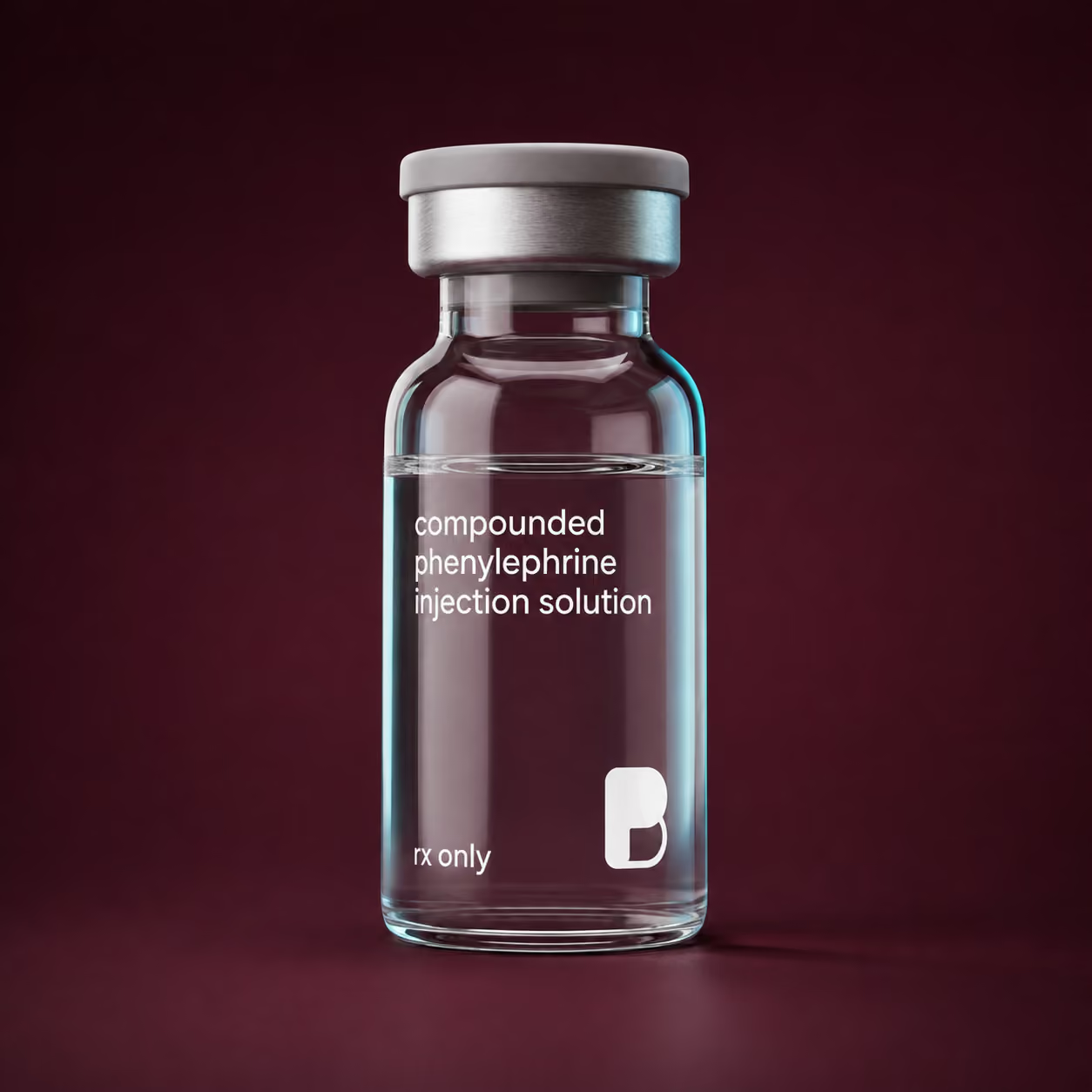
  • Prepared preservative-free at the concentration your urologist specifies
  • Dispensed as a 1 mL single-dose vial, kept refrigerated
  • Compounded sterile in small batches under USP <797> standards
  • Dispensed only on a prescriber's order, as part of a supervised plan

Phenylephrine priapism rescue injection is a compounded, preservative-free sterile solution prepared for intracavernosal use — injection into the erectile chamber of the penis. Urologists prescribe it as a rescue dose for a prolonged erection (priapism), most often for men who already use intracavernosal injection therapy. An erection lasting more than 4 hours is a urologic emergency: seek emergency care right away rather than trying to manage it at home. Compounded medications are not FDA-approved, the intracavernosal route is off-label, and a valid prescription is required.

Bayview also compounds the intracavernosal erectile dysfunction injections this rescue dose is usually paired with, including Trimix, Bimix, Quadmix, and alprostadil.

When is this an emergency?

An erection lasting more than 4 hours is a urologic emergency and requires immediate medical attention. Go to an emergency department or contact your urologist right away. Do not wait to see whether it resolves on its own.

Ischemic priapism traps deoxygenated blood inside the penis. The AUA states that acute ischemic priapism lasting more than four hours may lead to cavernosal fibrosis and subsequent erectile dysfunction. Scarring can begin after roughly 14 hours, and after about 24 hours most men do not recover normal erections. A home rescue dose does not replace being evaluated.

What is it and how does it work?

It is a compounded, preservative-free sterile solution of phenylephrine hydrochloride prepared for intracavernosal injection, meaning injection into the erectile chamber of the penis. Phenylephrine is a selective alpha-1 agonist. In the corpus cavernosum it contracts the smooth muscle and small arteries, which lets the trapped blood drain and allows an ischemic erection to come down. It is not a treatment for erectile dysfunction itself.

Trusted by 105,826 patients to date.
A group of faces of our past satisfied patients.
Compounded medications are prepared pursuant to a valid prescription for an individual patient and are not FDA-approved. This page is for educational purposes and is not medical advice.
**The FDA does not review or approve compounded medications for safety or effectiveness. A valid prescription from a licensed practitioner is required.
Important safety information →
Service availability

Prescription delivery in your state

Bayview Pharmacy currently serves eligible patients in six states. Check your state before getting started.

Where we currently serve

Select a highlighted state to check availability.

Currently licensed Licensed — non-controlled only Not currently licensed Your selection

Select a state on the map or use the state checker.

Do we serve your state?

Choose your state to confirm current service availability.

Thank you! Your submission has been received!
Oops! Something went wrong while submitting the form.
Currently licensed in
Start with a prescription

Send us your prescription

STEP
1
Have your provider e-prescribe to Bayview, fax it to us, or call it in directly to one of our pharmacists.
A thin blue light beam connecting two clear glass slabs on a white surface.

A pharmacist reviews it

STEP
2
We verify your prescription and prepare your medication to your provider's exact instructions.
Close-up of a white dial with blue measurement markings and a rotating knob.

We compound & ship

STEP
3
We prepare your medication and ship it discreetly to your door, with support when you need it.
Close-up of a gray box with a precise blue line running along its folded edges.

What is Phenylephrine for Priapism?

Phenylephrine priapism rescue injection is a compounded, preservative-free sterile solution of phenylephrine hydrochloride, prepared in a 1 mL single-dose vial for injection into the corpus cavernosum — the spongy erectile chamber inside the penis. A urologist prescribes it as a rescue dose for an erection that will not go down, a condition called priapism.

It is most often dispensed to men who already use intracavernosal injection therapy for erectile dysfunction, as one part of a plan their prescriber has set up and trained them on. It is not a treatment for erectile dysfunction itself, and it is not something to start on your own.

An erection lasting more than 4 hours is a urologic emergency. Get emergency care now. Ischemic (low-flow) priapism traps blood inside the penis and starves the tissue of oxygen. The American Urological Association states that prolonged acute ischemic priapism lasting more than four hours “represents a medical emergency and may lead to cavernosal fibrosis and subsequent erectile dysfunction” (AUA/SMSNA Priapism Guideline). Permanent scarring of the erectile tissue can begin after roughly 14 hours, and after about 24 hours most men do not recover normal erections (StatPearls, Priapism). Do not wait to see whether it resolves on its own, and do not use a home rescue dose in place of being evaluated. Go to an emergency department or contact your urologist immediately.

How does it work?

Phenylephrine is a selective alpha-1 adrenergic agonist. Injected into the corpus cavernosum, it makes the cavernosal smooth muscle and the small arteries there contract. That constriction lets the trapped, deoxygenated blood drain out of the erectile chambers and allows an ischemic erection to come down.

Phenylephrine acts almost entirely on alpha-1 receptors and has very little effect on beta receptors, which is why it is the sympathomimetic generally chosen for this use rather than agents with more direct cardiac stimulation. It can still raise blood pressure and slow the heart rate, which is why blood pressure and pulse are monitored during administration (AUA/SMSNA, Acute Ischemic Priapism).

What is it used for?

Intracavernosal phenylephrine is used to reverse ischemic priapism. The AUA/SMSNA guideline recommends that clinicians manage acute ischemic priapism with intracavernosal phenylephrine together with corporal aspiration, with or without irrigation, as first-line therapy and before operative interventions. That is a Moderate Recommendation at Evidence Level Grade C. Separately, for a prolonged erection of four hours or less that follows intracavernosal injection therapy for erectile dysfunction, the guideline says clinicians should give intracavernosal phenylephrine as the initial treatment option — a statement graded as Expert Opinion. The guideline also sets out, as a Clinical Principle, that clinicians should monitor blood pressure and heart rate in patients receiving intracavernosal phenylephrine (AUA/SMSNA, Acute Ischemic Priapism).

Some urologists give a patient who uses intracavernosal injection therapy — Trimix, Bimix, Quadmix, or alprostadil — a rescue dose to keep on hand as part of a supervised plan. Whether that is appropriate is entirely the prescriber's decision. Your prescriber decides whether you are a candidate, sets the concentration and the dose, trains you or your partner on how and when to use it, and tells you what to do afterward. A rescue dose does not replace emergency evaluation: the standard of care is aspiration and irrigation alongside the injection, performed by a clinician who can monitor you. Bayview Pharmacy does not provide consultations, does not determine appropriateness, and cannot advise you on when to use a rescue dose. A valid prescription is required.

What does the evidence show?

The evidence behind intracavernosal phenylephrine is best described as strong clinical consensus resting on modest formal evidence. The AUA/SMSNA first-line recommendation carries Evidence Level Grade C, meaning it rests largely on observational studies and expert consensus rather than randomized trials, and the guideline's suggested dosing range of 100 to 500 mcg diluted in 1 mL of saline is expert opinion rather than a trial-derived figure.

Reported outcomes are meaningful but incomplete. Diluted phenylephrine injections alone reverse ischemic priapism in roughly 58% of cases, rising to about 81% to 86% when combined with aspiration and irrigation and used within the first 24 to 36 hours after onset (StatPearls, Priapism). Two things follow from that. First, the drug works best as part of a procedure, not by itself. Second, and most importantly, this evidence describes clinician-administered treatment in a monitored setting. There is no comparable body of evidence for patients self-administering phenylephrine at home, and nothing here should be read as showing that a home rescue dose is a safe substitute for emergency care.

How do the presentations compare?

Bayview compounds phenylephrine in several unrelated presentations. Only the 1 mL preservative-free single-dose vial is the priapism-rescue product; the others are separate preparations that happen to share the same ingredient and are never injected.

PresentationSizeNotes
Phenylephrine HCl 100 mcg/0.1 mL, preservative-free, refrigerated single-dose vial1 mLThe intracavernosal priapism-rescue presentation. 0.1 mL delivers 100 mcg; the full vial contains 1,000 mcg
Phenylephrine HCl 10% rectal ointment (plasticized)60 gA separate rectal preparation. Not for injection
Lidocaine 27% / tetracaine 7% / phenylephrine 0.05% topical60 gA topical anesthetic blend. Not for injection
Lidocaine / phenylephrine / tetracaine 20-2-4% PLO gel60 mL pumpA topical anesthetic blend. Not for injection

Presentations are listed for education only. Your prescriber selects the product, concentration, and dose. Never inject a product that was not dispensed for injection.

How is it used?

Use it only exactly as your urologist has directed, and only if they have specifically prescribed and trained you on a home rescue dose. In a clinical setting, phenylephrine is diluted and given as small intracavernosal injections of about 100 to 500 mcg, repeated at roughly five-minute intervals while blood pressure and pulse are checked, usually alongside aspiration and irrigation of the erectile chambers, and stopped if blood pressure changes appear or if the erection persists past about an hour of repeated attempts.

If you have been given a rescue dose to keep at home, follow your prescriber's written instructions on the amount to draw up, where to inject, and how long to wait. Call your urologist or go to an emergency department if the erection has lasted more than four hours, or if it does not fully resolve after the dose your prescriber authorized. Do not repeat doses beyond what you were told. The vial is single-dose: use it once and discard it. A Bayview pharmacist is available for questions about your prescription, but cannot tell you whether or when to use it.

Side effects & safety

Because phenylephrine constricts blood vessels throughout the body, the main risks are cardiovascular. Reported effects include a rise in blood pressure, reflex slowing of the heart (bradycardia), headache, dizziness, palpitations, and irregular heart rhythms. Blood pressure and pulse monitoring during administration is advised for exactly this reason (StatPearls, Penile Irrigation, Aspiration, and Vasoactive Injections). The FDA-approved intravenous phenylephrine labeling notes that its pressor effect can precipitate angina in people with severe arteriosclerosis or a history of angina and can worsen underlying heart failure, and that the pressor effect is increased in people taking monoamine oxidase (MAO) inhibitors (FDA prescribing information). Extra caution is needed with cardiovascular disease, uncontrolled hypertension, and MAO inhibitors.

There are also injection-site risks. Bruising and bleeding into the penis (hematoma) can follow puncture of the tunica albuginea, and repeated injections over time can cause scarring and fibrosis of the erectile tissue. Pain and swelling at the site are common.

Do not use this to avoid going to the emergency department. Ischemic priapism damages the erectile tissue the longer it lasts, and the damage is not reversible. If an erection has lasted more than four hours, seek emergency care immediately, even if you have a rescue dose on hand and even if you have already used it. Call 911 or go to an emergency department for chest pain, severe headache, trouble breathing, fainting, or a very fast or very slow heartbeat after an injection.

If you have more than one episode of priapism, tell your urologist. Repeated episodes are a signal that the intracavernosal injection regimen itself needs to be reassessed — the dose lowered, the formula changed, or the therapy reconsidered — rather than managed with more rescue doses.

Who should not use it?

This is not appropriate for everyone. It should not be used by anyone with a known allergy to phenylephrine or to any component of the preparation. It requires careful evaluation, and in many cases avoidance, in people with significant cardiovascular disease, coronary artery disease or angina, heart failure, arrhythmias, or uncontrolled high blood pressure, and in anyone taking an MAO inhibitor. It is not intended for anyone who has not been prescribed and trained on it by their own prescriber.

Priapism also has causes — sickle cell disease and other blood disorders among them — that need a different workup and different treatment, which is another reason emergency evaluation matters. Tell your prescriber your full health history, allergies, and every medication and supplement you take, so they can decide whether this is appropriate for you.

How should it be stored?

Store the vial in the refrigerator and protect it from light, exactly as your label directs. Keep it in its carton, tightly closed, and out of the reach of children and pets. Do not freeze it. It is a single-dose vial with no preservative: use it once and discard the vial and any remaining solution, even if some is left. Do not use it if the solution is discolored or contains particles, and do not use it after its beyond-use date. Dispose of the vial and needle in a sharps container as your pharmacist directs, and never share it with anyone.

Why is this compounded?

Phenylephrine injection is FDA-approved, but only as an intravenous product for raising blood pressure — for clinically important hypotension in the setting of anesthesia, and for septic shock — supplied as a 10 mg/mL concentrate that must be diluted or as a 100 mcg/mL solution for intravenous bolus (FDA prescribing information). Neither the intracavernosal route nor a small preservative-free single-dose vial at the concentration used for priapism is an FDA-approved presentation, so the route here is off-label and the preparation itself is compounded.

Compounding lets a licensed pharmacy prepare phenylephrine preservative-free, at the exact concentration the urologist specifies, ready to draw up. That matters in an emergency: the AUA guideline notes that having phenylephrine premixed by the pharmacy helps minimize dilution and calculation errors at the moment of use. As a 503A compounding pharmacy, Bayview Pharmacy prepares each order as a sterile preparation in small batches under USP <797> standards. Compounded preparations are not FDA-approved.

Clinical details for prescribers

Regulatory status. Phenylephrine is not a controlled substance. Phenylephrine HCl injection is FDA-approved for intravenous use (hypotension in the setting of anesthesia; septic shock). Intracavernosal administration is off-label, and a preservative-free low-concentration single-dose vial for intracavernosal use is not an approved presentation. Compounded preparations are not FDA-approved.

Formulation. Phenylephrine HCl 100 mcg/0.1 mL (1 mg/mL, 0.1%), preservative-free, 1 mL single-dose vial, refrigerated, protect from light. Prepared under USP <797> sterile-compounding standards. Custom concentrations on request. Drawing 0.1 mL yields 100 mcg; 0.5 mL yields 500 mcg; the full vial contains 1,000 mcg.

Guideline & clinical points:

  • AUA/SMSNA: intracavernosal phenylephrine plus corporal aspiration ± irrigation is first-line therapy for acute ischemic priapism, prior to operative intervention (Moderate Recommendation; Evidence Level Grade C)
  • AUA/SMSNA: for prolonged erection of ≤4 hours after ICI pharmacotherapy for ED, intracavernosal phenylephrine is the initial treatment option (Expert Opinion)
  • AUA/SMSNA: monitor blood pressure and heart rate during intracavernosal phenylephrine (Clinical Principle)
  • Commonly cited regimen: 100–500 mcg in 1 mL, repeated at ~5-minute intervals; stop for blood pressure changes, or after ~1 hour of repeated injection plus aspiration/irrigation without detumescence
  • Caution or avoidance with coronary artery disease, uncontrolled hypertension, heart failure, arrhythmia, and MAO inhibitors; pressor response is potentiated by MAOIs
  • Recurrent episodes warrant reassessment of the underlying ICI regimen (dose reduction, formula change, or alternative therapy) and evaluation for sickle cell disease and other hematologic causes
  • If dispensing a take-home rescue dose, document patient selection, training, and explicit instructions to seek emergency evaluation at four hours regardless of response

Ordering: send a prescription to Bayview Pharmacy, 3844 Post Rd, Warwick, RI 02886 (NCPDP 4106882, fax 401-284-4506). Guidelines: AUA/SMSNA Diagnosis and Management of Priapism (2022); Acute Ischemic Priapism: an AUA/SMSNA Guideline.

This is a prescription compounded medication and is not FDA-approved, and the intracavernosal route is off-label. This information is educational and is not medical advice. Ischemic priapism is a urologic emergency — an erection lasting more than four hours requires immediate medical attention. Your prescriber determines whether this preparation is appropriate and sets the dose. Bayview Pharmacy does not provide consultations or determine appropriateness.
In Stock

On this page

More than 4 hours is an emergency

An erection lasting more than 4 hours is an emergency. Go to an emergency department or call your urologist right away. This rescue dose is dispensed only when a urologist has ordered it and trained the patient, and it never replaces emergency care.

Start with a prescription
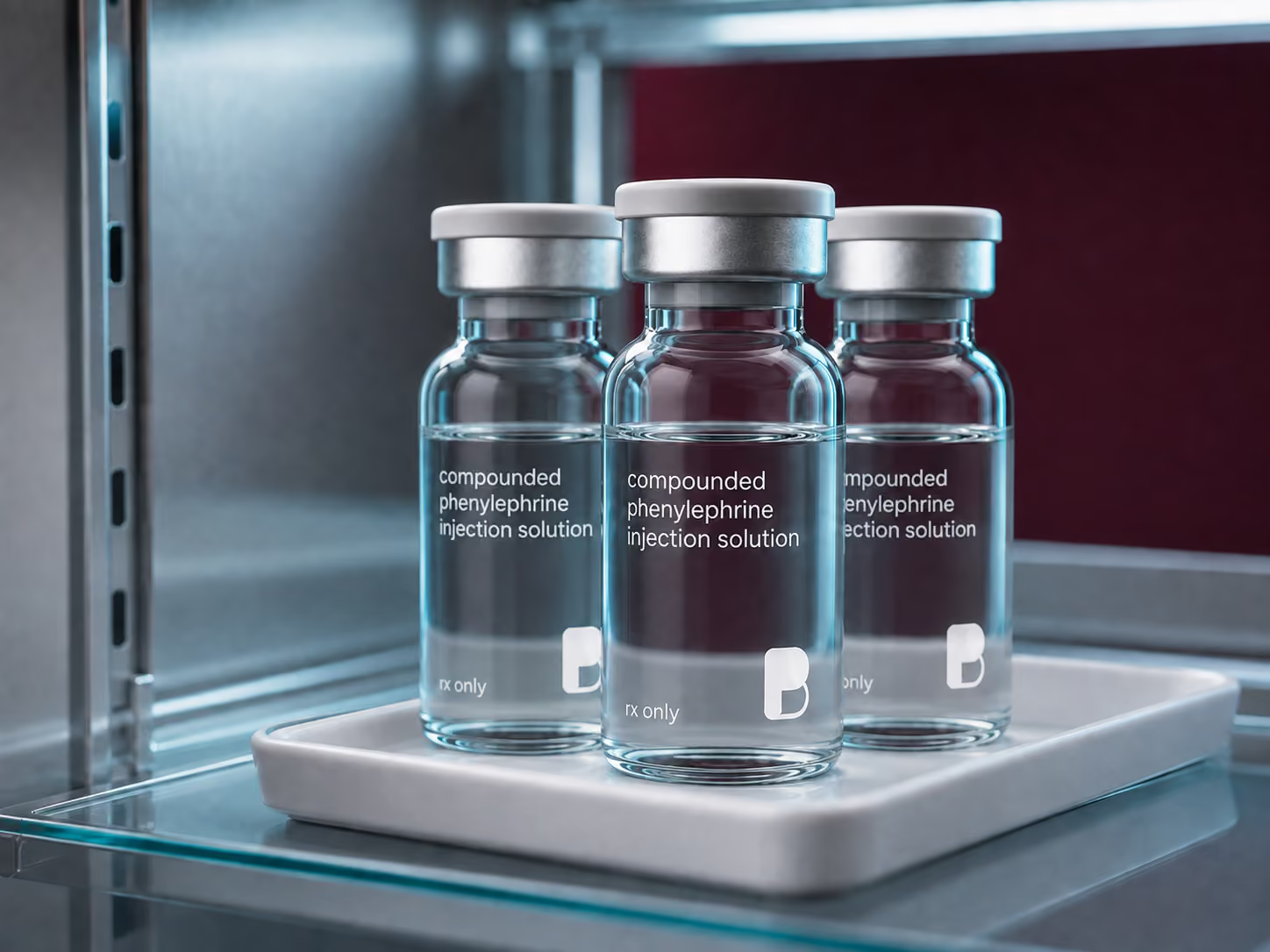
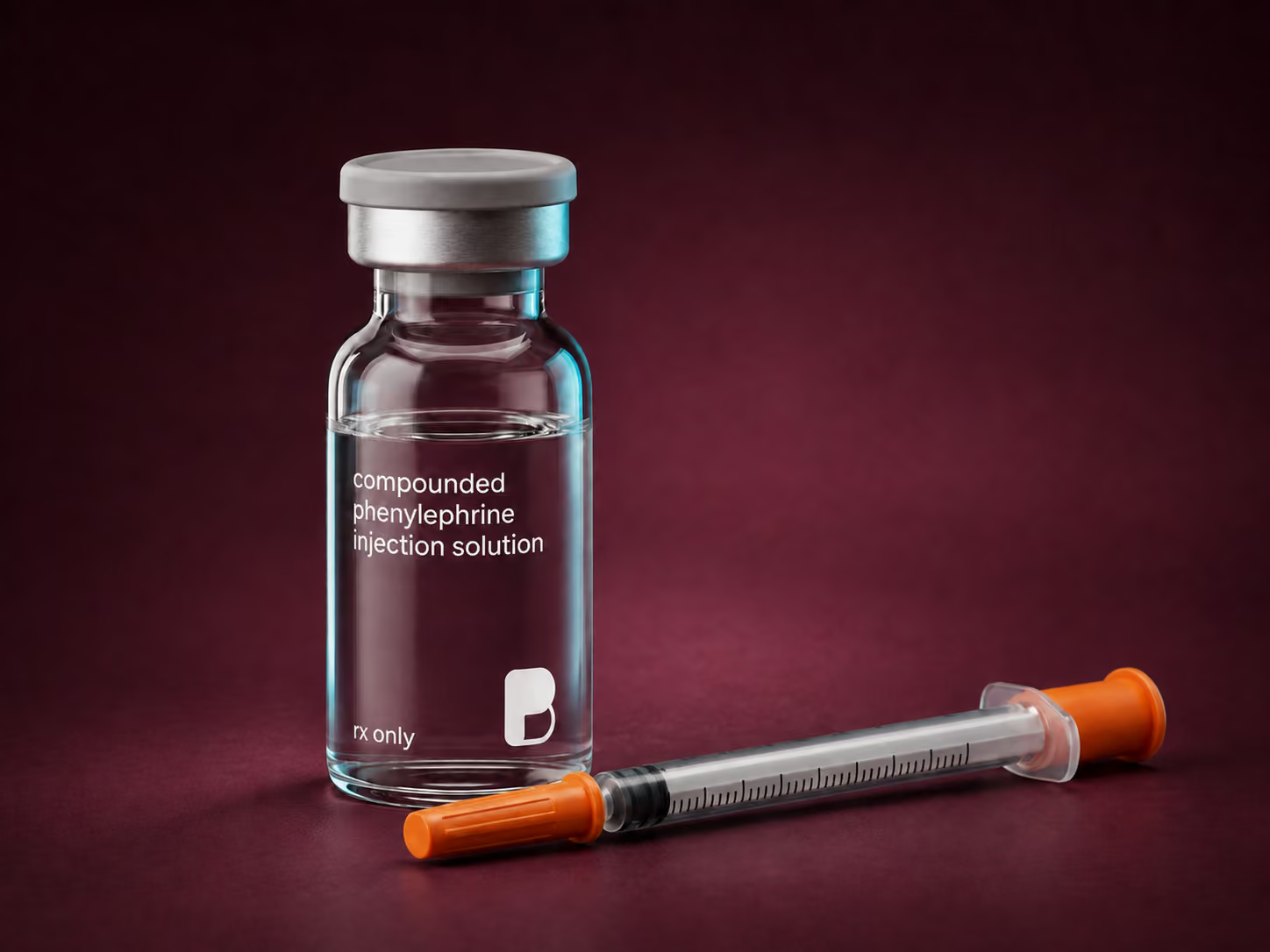
More than 4 hours is an emergency – Phenylephrine Priapism Rescue from Bayview Pharmacy

How the vial is prepared

Each vial is compounded sterile and preservative-free, kept refrigerated, and discarded after one use. The concentration comes from your urologist's order. Compounded preparations are not FDA-approved, and this route is off-label.

View our formulas
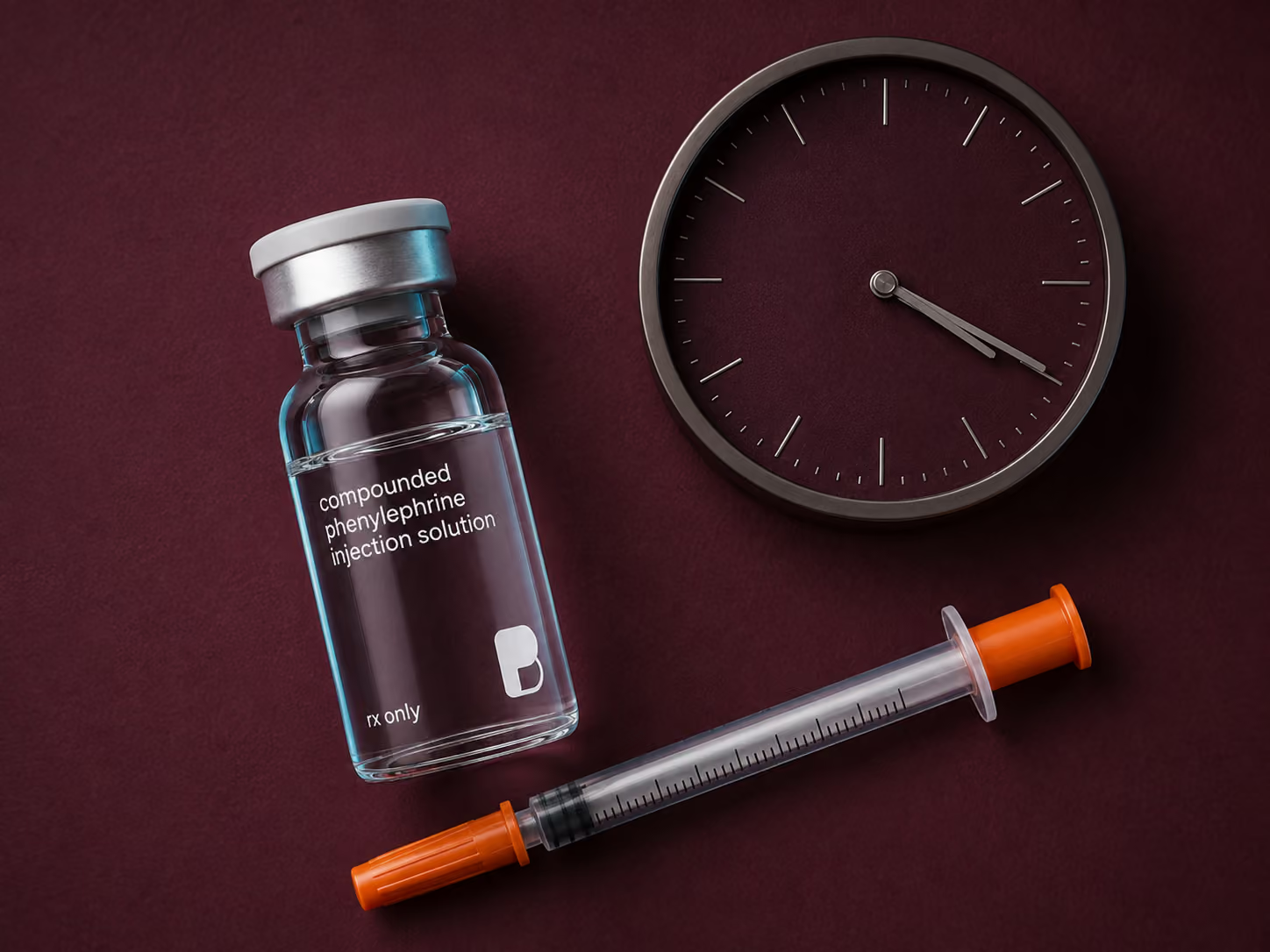
How the vial is prepared – Phenylephrine Priapism Rescue from Bayview Pharmacy

Personalized compounding for patients who need more than a standard option.

"As a compounding pharmacy, we prepare each medication to a provider’s exact specifications. My focus, and my team’s focus, is quality, consistency, and close communication with prescribers so patients receive medication prepared for their individual needs."
Ryan Dyer, RPh
Owner and Chief Pharmacist, Bayview Pharmacy
Smiling man in blue scrubs with arms crossed and pen behind his ear
Three clear liquid vials, white powder on spoon, two capsules, and a cream jar on a metal surface.
QUALITY AND TESTING

Held to a higher standard

Every preparation is made under strict quality controls, and verified by a licensed pharmacist.
We use validated quality processes and third-party testing where appropriate
Sterile compounding in a dedicated USP <797> cleanroom
Non-sterile compounding under USP <795> and <800> standards
USP/NF-grade ingredients from reputable, vetted suppliers

Why patients choose Bayview

Made in our own pharmacy
Made to your prescription
Quality tested
Real pharmacist support
Trusted since 2006

Our formulations

The priapism-rescue preparation is a preservative-free single-dose vial compounded at the concentration your urologist orders. Bayview also compounds unrelated phenylephrine preparations, listed here so they are not confused with the injection — they are never injected.

Preparation Size How it's used
Phenylephrine HCl 100 mcg/0.1 mL, preservative-free, refrigerated1 mL single-dose vialIntracavernosal injection, as your urologist directs
Custom concentration, preservative-free1 mL single-dose vialIntracavernosal injection, as your urologist directs
Phenylephrine 10% rectal ointment (plasticized)60 gSeparate rectal preparation — not for injection
Lidocaine / tetracaine / phenylephrine topical anesthetic blends60 g tube or 60 mL pumpSeparate topical preparations — not for injection

Directions are set by the prescriber; the descriptions above are not treatment recommendations. Never inject a preparation that was not dispensed for injection. A valid prescription is required, and your prescriber determines which preparation, concentration, and dose are appropriate. Intracavernosal use of phenylephrine is off-label, and this is a compounded medication that is not FDA-approved. Ischemic priapism is a urologic emergency — an erection lasting more than four hours requires immediate medical attention.

Start with a prescription
Prescribers: request this order form →

Frequently asked questions

When is this an emergency?

An erection lasting more than 4 hours is a urologic emergency and requires immediate medical attention. Go to an emergency department or contact your urologist right away. Do not wait to see whether it resolves on its own.

Ischemic priapism traps deoxygenated blood inside the penis. The AUA states that acute ischemic priapism lasting more than four hours may lead to cavernosal fibrosis and subsequent erectile dysfunction. Scarring can begin after roughly 14 hours, and after about 24 hours most men do not recover normal erections. A home rescue dose does not replace being evaluated.

What is it and how does it work?

It is a compounded, preservative-free sterile solution of phenylephrine hydrochloride prepared for intracavernosal injection, meaning injection into the erectile chamber of the penis. Phenylephrine is a selective alpha-1 agonist. In the corpus cavernosum it contracts the smooth muscle and small arteries, which lets the trapped blood drain and allows an ischemic erection to come down. It is not a treatment for erectile dysfunction itself.

Who is it dispensed to?

Only to a person whose own prescriber, usually a urologist, has ordered it and trained them on it, most often someone already using intracavernosal injection therapy for erectile dysfunction. It is one part of a supervised plan, not something to start on your own, and it does not replace emergency evaluation. Never use a vial that was not dispensed for you.

Does it affect blood pressure?

Yes. Phenylephrine raises blood pressure and can slow the pulse, so blood pressure and pulse monitoring is advised during administration. Caution is needed with cardiovascular disease, coronary artery disease or angina, heart failure, arrhythmias, and uncontrolled high blood pressure. Tell your prescriber if you take a monoamine oxidase (MAO) inhibitor, which increases the pressor effect. Headache, sweating, and palpitations can also occur.

Can I save the rest of the vial?

No. It is dispensed as a 1 mL single-dose vial with no preservative, kept refrigerated until it is used. Use it once and discard it, do not save, reuse, or share it. The concentration is set by your urologist and the dose is whatever your prescriber directed. Contact your prescriber or the pharmacy about a replacement rather than keeping an opened vial.

What if it happens again?

More than one episode of priapism means your injection regimen needs to be reassessed by your prescriber, not managed with more rescue doses. Tell your urologist about every episode, and about any lump, curve, or pain that develops, since repeated injections can cause bruising, bleeding into the penis, scarring, and fibrosis. Each episode still needs medical evaluation on its own.

Do I need a prescription?

Yes. All of our medications require a valid prescription from a licensed provider. We're a dispensing and compounding pharmacy, so we don't provide consultations or write prescriptions. If you don't have one yet, you'll need to find and see a provider first.

What is compounding?

Compounding is the practice of preparing a medication tailored to an individual patient's prescription. Instead of a mass-produced product, a compounding pharmacy makes the medication to the specific strength, form, or combination your provider orders.

Are compounded medications FDA-approved?

Compounded medications are not FDA-approved. They're prepared by a licensed pharmacy pursuant to a valid prescription for an individual patient, under USP standards. The FDA does not review compounded medications for safety or effectiveness.

How do providers send a prescription to Bayview?

Providers can submit a prescription three ways:

  • E-prescribe: Search Bayview Pharmacy, Warwick, RI (NCPDP 4106882) in your EHR. For compounds, use the compound, custom, or free-text option and include the full formulation, strength, quantity, refills, and directions.
  • Fax: Send a signed order to 401-284-4506 (alt. 401-210-2757) with patient and prescriber details, medication, quantity, refills, directions, signature, and date.
  • Phone: Call 401-284-4505 to submit, clarify, or coordinate refills.

A valid prescription is required, and compounded medications are not FDA-approved.

Can you fill a prescription from my own provider?

Yes. Your provider can send your prescription to Bayview Pharmacy by e-prescribe, fax, or phone, or you can transfer an existing prescription from another pharmacy. Start a request and we'll guide you through it.

How does shipping work?

Once your prescription is verified, we prepare your medication and ship it discreetly in plain packaging either via UPS or USPS. A pharmacy technician confirms the details with you before it goes out, and we're available if you have any questions.

How do refills and automatic refills work?

Refills are coordinated with your prescriber and your prescription. You can request a refill through our website or by calling us, and we'll handle the rest as long as you have refills remaining on a valid prescription. You can also opt into automatic refills on non-controlled substances, with no need to worry about running out of your medication. We can either ship it to you automatically, or ready for pickup.

Shipping & Delivery

Every prescription ships directly to your door in discreet packaging. Refrigerated medications travel in insulated coolers with ice packs to stay cold in transit.

Delivery AreaStandard ShippingRefrigerated Shipping
Rhode Island, Massachusetts & Connecticut$9 USPS$20 UPS
New Hampshire, New Jersey & New York$15 UPS$40 UPS Next Day Air
Florida$15 UPS$80 UPS Next Day Air

Need it faster? Expedited UPS is $15 for Rhode Island, Massachusetts and Connecticut. Your pharmacist will let you know if your medication needs refrigerated shipping. Questions? Call us at (401) 284-4505.

References

Sources reviewed

The medical information on this page draws on the following sources, which are also linked where cited.

  1. American Urological Association / Sexual Medicine Society of North America. Diagnosis and Management of Priapism: AUA/SMSNA Guideline (2022).
  2. American Urological Association / Sexual Medicine Society of North America. Acute Ischemic Priapism: an AUA/SMSNA Guideline.
  3. StatPearls [Internet]. Priapism. NCBI Bookshelf, National Library of Medicine.
  4. StatPearls [Internet]. Penile Irrigation, Aspiration, and Vasoactive Injections for Priapism Treatment. NCBI Bookshelf, National Library of Medicine.
  5. U.S. Food and Drug Administration. Phenylephrine Hydrochloride Injection — full prescribing information.
  6. MedlinePlus, National Library of Medicine. Penis Disorders.

Important safety information

Important safety information

Compounded phenylephrine injection for intracavernosal use is a prescription compounded medication and is not FDA-approved. Phenylephrine injection is FDA-approved only for intravenous use to raise blood pressure; injection into the penis is an off-label route. Use it only as prescribed and under the care of the prescriber who ordered it.

Ischemic priapism is a urologic emergency:

  • An erection lasting more than 4 hours requires immediate medical attention. Go to an emergency department or contact your urologist right away.
  • Prolonged ischemia scars the erectile tissue (cavernosal fibrosis) and can cause permanent erectile dysfunction. The damage is not reversible.
  • A home rescue dose does not replace emergency evaluation. Seek care even if you have used one, and even if the erection improved.

Do not use this medication if you:

  • Are allergic to phenylephrine or any component of the preparation.
  • Were not specifically prescribed and trained on it by your own prescriber.

Warnings and precautions:

  • Blood pressure and pulse monitoring is advised during administration.
  • Caution is needed with cardiovascular disease, coronary artery disease or angina, heart failure, arrhythmias, and uncontrolled high blood pressure.
  • Tell your prescriber if you take a monoamine oxidase (MAO) inhibitor — the pressor effect of phenylephrine is increased.
  • Repeated injections can cause bruising, bleeding into the penis, scarring, and fibrosis. Tell your urologist about any lump, curve, or pain that develops.
  • More than one episode of priapism means your injection regimen needs to be reassessed by your prescriber, not managed with more rescue doses.
  • Single-dose vial with no preservative — use once and discard. Do not save, reuse, or share it.

Common side effects:

  • Raised blood pressure, headache, dizziness, palpitations, and pain, bruising, or swelling at the injection site.

Get emergency care for:

  • An erection lasting more than 4 hours, or one that does not fully resolve.
  • Chest pain, severe headache, trouble breathing, fainting, or a very fast or very slow heartbeat.
  • Signs of a serious allergic reaction such as rash, swelling, or trouble breathing.

Storage:

Refrigerate and protect from light as directed on the label. Do not freeze. Keep out of the reach of children. Discard the vial after a single use, in a sharps container as your pharmacist directs, and do not use it after its beyond-use date.

This is a compounded prescription medication and is not approved by the FDA. Use it only under the supervision of a licensed provider, exactly as prescribed. Do not adjust your dose without talking to your prescriber. Seek emergency care for any severe or unexpected reaction. This information is not complete; talk to your provider about your full medical history and all medications you take.

Ready to get started?

Send us your prescription and a Bayview pharmacist will take it from there.