
Trimix dosage is set by the prescriber, not by the pharmacy. Bayview compounds Trimix injection, the intracavernosal combination of alprostadil, papaverine and phentolamine, at the concentration written on the prescription, and dispenses it in 2.5 mL multi-dose vials. This guide covers what is in each preparation, which concentrations Bayview compounds, what an order needs to contain, and the priapism language that appears on the formulation pages.
Bayview does not provide consultations and does not determine whether a preparation is appropriate for a patient. Selection, starting dose, titration and any rescue plan are the prescriber's decisions. Compounded preparations are not FDA-approved.
What is in compounded Trimix, and how do Bimix and Quadmix differ?
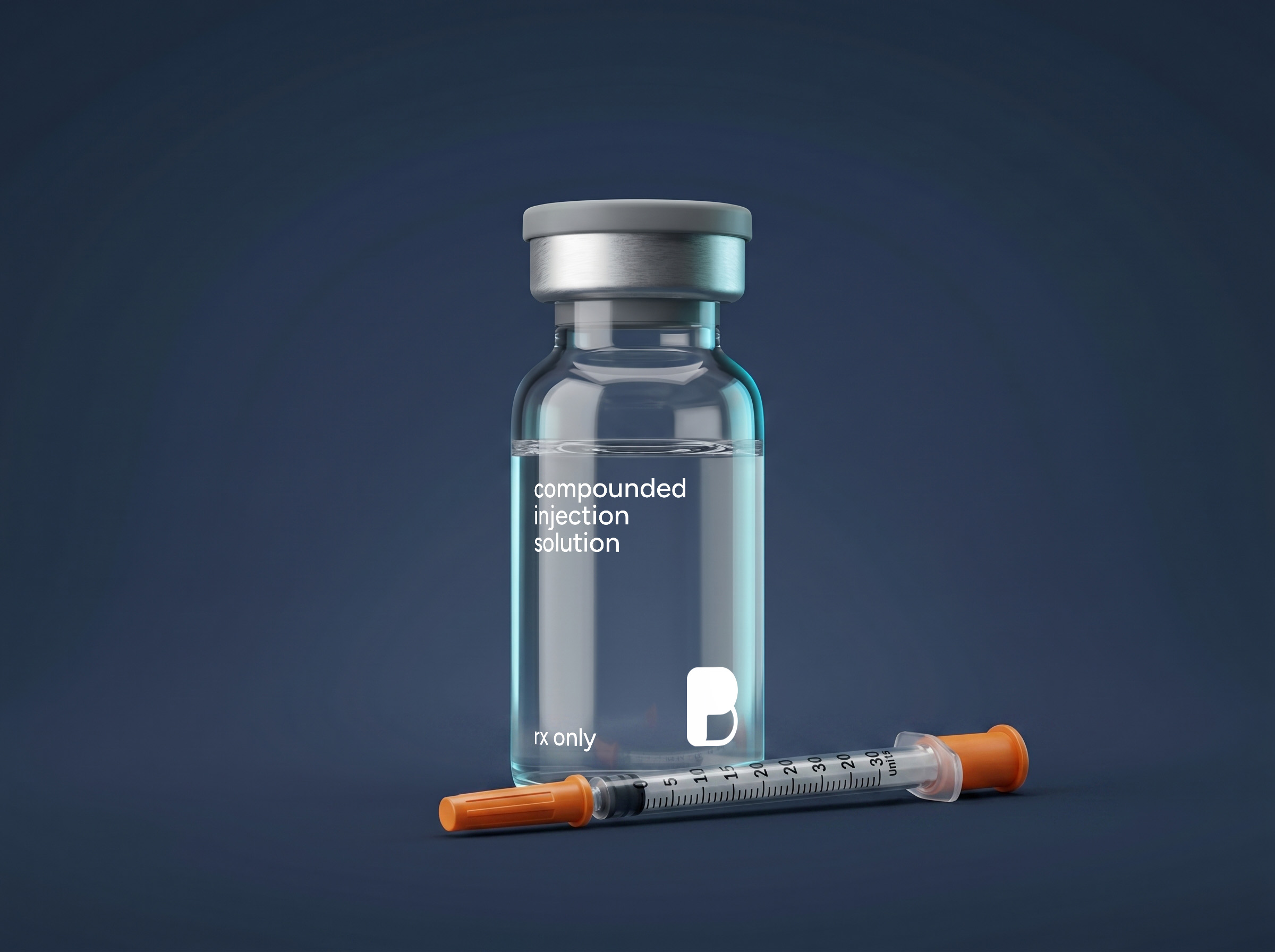
All three are vasoactive preparations given by intracavernosal injection, compounded on a prescriber's order and dispensed in 2.5 mL multi-dose vials that require refrigeration. They differ in how many actives they combine.

- Alprostadil (prostaglandin E1), described on the formulation page as a vasodilator that relaxes smooth muscle.
- Papaverine, a non-specific phosphodiesterase inhibitor producing cavernosal smooth-muscle relaxation.
- Phentolamine, a non-selective alpha-adrenergic antagonist attenuating sympathetic vasoconstriction.
- Atropine, the fourth active present in Quadmix only.
| Preparation | Active ingredients | Regulatory status |
|---|---|---|
| Bimix | papaverine, phentolamine | Compounded, not FDA-approved |
| Trimix | alprostadil, papaverine, phentolamine | Compounded, not FDA-approved |
| Quadmix | Trimix actives plus atropine | Compounded, not FDA-approved |
| Phenylephrine rescue | phenylephrine, preservative-free | Compounded, off-label route |
The differences above are differences in composition and route. They are not a statement that any option is better, stronger or more effective than another, and none of these preparations is FDA-approved. Intracavernosal use of papaverine and phentolamine is off-label, and intracavernosal use of phenylephrine is off-label, as stated on the phenylephrine priapism rescue page. Bayview's page copy positions Trimix in the middle of the injectable line, between two-ingredient Bimix and four-ingredient Quadmix.
What strengths are available?
Papaverine is held constant at 30 mg/mL across the line. Alprostadil and phentolamine are the concentrations that vary, which is what makes written concentrations, or a Bayview formulation code, the useful part of the prescription. These are the Trimix concentrations Bayview prepares most often.

| Alprostadil | Papaverine | Phentolamine |
|---|---|---|
| 5 mcg/mL | 30 mg/mL | 1 mg/mL |
| 10 mcg/mL | 30 mg/mL | 1 mg/mL |
| 20 mcg/mL | 30 mg/mL | 1 mg/mL |
| 20 mcg/mL | 30 mg/mL | 2 mg/mL |
| 30 mcg/mL | 30 mg/mL | 1 mg/mL |
| 30 mcg/mL | 30 mg/mL | 2 mg/mL |
| 40 mcg/mL | 30 mg/mL | 1 mg/mL |
| 40 mcg/mL | 30 mg/mL | 2 mg/mL |
Concentrations outside that table are compounded as validated strengths as well. The published ranges across the three combinations are below.
| Preparation | Alprostadil range | Phentolamine range |
|---|---|---|
| Bimix | None | 0.5 to 6 mg/mL |
| Trimix | 2.5 to 100 mcg/mL | 1 to 6 mg/mL |
| Quadmix | 2.5 to 120 mcg/mL | 1 to 6 mg/mL |
Papaverine sits at 30 mg/mL in every one of these preparations, and Quadmix carries atropine at 0.15 to 0.4 mg/mL. Every strength in the line is dispensed in a 2.5 mL multi-dose vial. Concentrations are listed here for reference; the prescriber selects which one is appropriate for a given patient.
How is titration handled, and who sets the dose?
The prescriber establishes the starting dose and any adjustments, and the formulation page tells patients not to change a dose on their own. Bayview's role is to compound the concentration ordered and to be available for questions about the prescription itself. The pharmacy does not titrate, does not recommend a starting concentration, and does not assess whether injection therapy suits a particular patient.
Two levers exist. The first is the concentration of the vial, which is fixed when the prescription is written. The second is the injected volume, which the prescriber specifies in the directions. That is why a change in regimen sometimes means a new prescription at a different concentration rather than a new instruction about volume.
The example directions printed on Bayview's ED Injection Order Form read: inject ___ mL intracavernosally 10 to 15 minutes before intercourse, maximum 1 dose per 24 hours and no more than 2 to 3 doses per week. The formulation pages attach a qualifier to that example, and it is repeated here in the same spirit: example directions reflect common regimens and are not treatment recommendations, and dosing remains the prescriber's responsibility.
The counseling points Bayview lists for prescribers are individualized dose titration set by the prescriber, injection technique training before independent use, priapism precautions, monitoring for penile fibrosis with long-term use, and the possibility of alprostadil-associated penile pain. Injectable therapy is one of several recognized erectile dysfunction treatment options described in the American Urological Association erectile dysfunction guideline; the guideline, not this page, is the place to look for treatment sequencing.
When do prescribers order Bimix or Quadmix instead of Trimix?
Bayview's own page copy describes the pattern it sees on incoming orders. Bimix is described as an alprostadil-free option often chosen when alprostadil causes penile pain. Quadmix is described as typically reserved for patients with an inadequate response to Trimix. Both statements describe prescribing patterns, not outcomes, and neither is a claim that one preparation performs better than another.

Contraindication and caution language is consistent across the injectable line. The pages state that penile injection therapy is generally avoided in men for whom sexual activity is inadvisable, and that extra caution applies with conditions that raise the risk of prolonged erections such as sickle cell disease, leukemia or multiple myeloma, with penile anatomical conditions or an implant, and with known sensitivity to any ingredient.
What is the priapism protocol?
An erection lasting more than 4 hours (priapism) is a medical emergency and can cause permanent damage if it is not treated promptly. That is the wording on the Trimix page, and it is worth reading to patients rather than paraphrasing. The phenylephrine page adds that prolonged ischemia scars erectile tissue (cavernosal fibrosis) and can cause permanent erectile dysfunction, and that the damage is not reversible.
For urology practices that manage priapism in office, Bayview compounds a phenylephrine priapism rescue preparation on a prescriber's order: phenylephrine HCl 100 mcg/0.1 mL (1 mg/mL), preservative-free, in a 1 mL single-dose refrigerated vial, with custom concentrations compounded when ordered. Phenylephrine injection is FDA-approved only for intravenous use to raise blood pressure, so injection into the penis is an off-label route, and the compounded preparation is not FDA-approved.
The safety copy on that page names blood pressure and pulse monitoring during administration, caution with cardiovascular disease, coronary artery disease or angina, heart failure, arrhythmias and uncontrolled hypertension, and an increased pressor effect in patients taking a monoamine oxidase inhibitor. It also states that repeated injections can cause bruising, bleeding into the penis, scarring and fibrosis, and that more than one episode of priapism means the injection regimen needs to be reassessed by the prescriber rather than managed with more rescue doses.
Two further points from that page apply to any take-home rescue dose. A home rescue dose does not replace emergency evaluation, and the page asks prescribers who dispense one to document the training given and to instruct the patient to seek emergency evaluation at four hours regardless of response. The AUA and SMSNA priapism guideline (2022) is listed as background reading on both pages.
How do I write a Trimix or Bimix prescription?
These are noncontrolled preparations. E-prescribe to Bayview Pharmacy, 3844 Post Rd, Warwick, RI 02886 (NCPDP 4106882); fax and phone orders are also accepted. If the EHR does not list the compound, enter it as a compound or free-text prescription naming each active ingredient and strength.


- The Bayview formulation code or the exact concentrations. For example, TM2 is alprostadil 5 mcg/mL with papaverine 30 mg/mL and phentolamine 1 mg/mL; BM2 is papaverine 30 mg/mL with phentolamine 1 mg/mL; QM4 is alprostadil 20 mcg/mL with atropine 0.15 mg/mL, papaverine 30 mg/mL and phentolamine 2 mg/mL.
- Directions, including the volume to inject and the frequency limit you intend.
- An ICD-10 diagnosis code, for example N52.9 for erectile dysfunction, or N48.30 for priapism on a rescue-dose order.
- Quantity, expressed as the number of 2.5 mL multi-dose vials.
- Refills as clinically appropriate.
Strengths printed on the ED Injection Order Form can be checked off directly. Anything else is ordered on the CUSTOM line of the form, or by including the Bayview code when e-prescribing. The current form and the full concentration tables live on the ED injectable ordering page, and account setup is on the for providers page. Bayview fills for patients in the states where it is licensed; the current list is on the shipping and licensing FAQ.
What do these preparations cost, and how are they paid for?
Compounded preparations are generally not billed through insurance, because a pharmacy benefit plan prices a claim against a national drug code that identifies a specific manufactured product, and a preparation compounded for one patient does not carry one. Patients pay cash, and it is worth naming a figure during the visit rather than leaving it to the pharmacy call.
The published cash prices are $100 per 2.5 mL multi-dose vial for the Trimix, Bimix and Quadmix strengths printed on the order form, and $150 per 2.5 mL multi-dose vial for the other validated strengths. The phenylephrine priapism rescue preparation starts at $75 for a 1 mL single-dose vial. These are cash prices and are subject to change. The post on insurance and compounded medications covers the billing mechanics in more detail, and the 503A and 503B explainer covers why a patient-specific preparation is dispensed differently from an office stock product.
What should patients be counseled on before the first injection?
Technique training before independent use is the first item on Bayview's counseling list. Beyond that, the formulation pages ask patients to use a new sterile needle each time, rotate injection sites, store vials as the label directs (usually refrigerated, away from heat, light and moisture), keep them out of the reach of children, and dispose of needles in an approved sharps container.
The patient-facing companion to this guide, the Trimix questions post, answers the step-by-step technique, storage, needle-size and cost questions patients ask, so those instructions are not repeated here. It is written for patients and can be sent as a link after the visit. For patients earlier in the conversation, the post on oral erectile dysfunction medication and the testosterone replacement overview cover adjacent ground, and what a compounding pharmacy is answers the question that often comes first.
What Bayview compounds for this
On a prescriber's order, Bayview compounds Trimix (alprostadil 2.5 to 100 mcg/mL, papaverine 30 mg/mL, phentolamine 1 to 6 mg/mL), Bimix (papaverine 30 mg/mL, phentolamine 0.5 to 6 mg/mL), and Quadmix (alprostadil 2.5 to 120 mcg/mL, atropine 0.15 to 0.4 mg/mL, papaverine 30 mg/mL, phentolamine 1 to 6 mg/mL), all in 2.5 mL multi-dose vials, along with single-ingredient alprostadil injection, a urethral gel option, and the preservative-free phenylephrine priapism rescue vial. Sterile preparations are compounded in our USP 797 sterile lab. The rest of the injectable line, and the oral and urethral alternatives, are listed in the compounded medications catalog.
How do I send an order?
E-prescribe to Bayview Pharmacy, 3844 Post Rd, Warwick, RI 02886, or send the ED Injection Order Form by fax. Include the concentration or the Bayview code, the directions, an ICD-10 code, the number of 2.5 mL vials and refills. If you are choosing between concentrations, or want the current order form, a Bayview pharmacist can walk through the Trimix concentration list with your office. Questions about an existing prescription, a refill, or a patient's vial go to the pharmacy directly.
Frequently asked questions
How should I store my ED injection medication?
Storage depends on the specific formulation and the instructions on your prescription label. Many sterile compounded ED injections are stored refrigerated or frozen to help maintain stability. Keep the medication protected from heat and light, do not use it beyond the labeled beyond-use date, and do not use it if it appears cloudy, discolored, contaminated, or otherwise unusual unless your pharmacist confirms it is acceptable.
What is priapism and what should I do if it happens?
Priapism is an erection that lasts too long and does not go away normally. An erection lasting 4 hours or longer is a medical emergency because it can cause permanent injury if not treated promptly. Follow your prescriber’s emergency instructions and seek urgent medical care if this occurs.
What side effects can occur?
Possible side effects include penile pain, bruising, bleeding at the injection site, temporary swelling, aching, dizziness, firmness lasting longer than desired, or development of scar tissue with repeated use. Seek urgent medical attention for an erection lasting 4 hours or longer, severe pain, significant swelling, or symptoms that concern you.
How often can I use ED injections?
Use only as directed by your prescriber. Many protocols limit use to a certain number of times per week with spacing between doses to reduce the risk of priapism, bruising, irritation, or tissue changes. Do not increase your dose or frequency unless your prescriber tells you to.
How quickly do ED injections work?
Many patients experience a response within several minutes, but timing can vary depending on the formulation, dose, injection technique, and individual response. Follow your prescriber’s instructions regarding when to use the medication and how long to wait before sexual activity.
How are ED injections used?
These medications are injected into the side of the penis using the dose and technique taught by your prescriber. The injection should not be given into a vein, the top of the penis, the underside of the penis, or through visible blood vessels. Always follow the specific instructions provided by your prescriber.
How do I know which ED injection is right for me?
Your prescriber determines the most appropriate formulation and starting dose. Factors may include prior ED treatment response, side effects, medical history, cardiovascular status, and whether you have used injectable therapy before. Bayview Pharmacy prepares the medication as prescribed but does not determine which formula is clinically appropriate for you.
What is the difference between Alprostadil, BiMix, TriMix, Atropine TriMix, and QuadMix?
The main difference is the combination of active ingredients. Alprostadil contains a single active medication. BiMix usually contains two medications. TriMix usually contains three. Atropine TriMix includes atropine in addition to a TriMix-style formula, and QuadMix generally contains four medications. Your prescriber chooses the formulation based on your medical history, response to treatment, and tolerance.
Why are ED injections compounded?
ED injections are often compounded because prescribers may need a specific combination, strength, or dose that is not available as a standard manufactured product. Compounding allows the medication to be prepared according to the prescriber’s instructions and adjusted to the patient’s individual response.
What are compounded erectile dysfunction injections?
Compounded erectile dysfunction injections are sterile prescription medications injected directly into the side of the penis to help produce an erection. Depending on the prescription, the injection may contain one medication, such as alprostadil, or a combination of medications, such as papaverine, phentolamine, alprostadil, and/or atropine.
Who sets the Trimix dose?
The prescriber does. Bayview compounds the concentration written on the prescription and dispenses it in a 2.5 mL multi-dose vial, and the prescriber sets the starting dose, the injected volume and any adjustments. The pharmacy does not titrate, does not recommend a starting concentration and does not assess whether injection therapy suits a patient. Compounded preparations are not FDA-approved, and a valid prescription for a named patient is required.
What Trimix strengths does Bayview compound?
Papaverine is held at 30 mg/mL, while alprostadil ranges from 2.5 to 100 mcg/mL and phentolamine from 1 to 6 mg/mL. The concentrations prepared most often pair papaverine 30 mg/mL with alprostadil at 5, 10, 20, 30 or 40 mcg/mL and phentolamine at 1 or 2 mg/mL; the exact pairings are listed on the formulation page. Every strength is dispensed in a 2.5 mL multi-dose vial, and the prescriber selects which concentration is appropriate.
How do I e-prescribe compounded Trimix?
These are noncontrolled preparations. E-prescribe to Bayview Pharmacy, 3844 Post Rd, Warwick, RI 02886 (NCPDP 4106882), or send the ED Injection Order Form by fax. If the EHR does not list the compound, enter it as a compound or free-text prescription naming each active and strength. Include the Bayview formulation code or exact concentrations, directions, an ICD-10 code such as N52.9, the number of 2.5 mL vials, and refills.
What does compounded Trimix cost?
The published cash price is $100 per 2.5 mL multi-dose vial for the Trimix, Bimix and Quadmix strengths printed on the ED Injection Order Form, and $150 per 2.5 mL multi-dose vial for the other validated strengths. The phenylephrine priapism rescue preparation starts at $75 for a 1 mL single-dose vial. These are cash prices and are subject to change. Compounded preparations are generally not billed through insurance.
What should I tell patients about priapism?
Use the formulation page wording. An erection lasting more than 4 hours (priapism) is a medical emergency and can cause permanent damage if it is not treated promptly. The phenylephrine page adds that prolonged ischemia scars erectile tissue and that the damage is not reversible, and that a home rescue dose does not replace emergency evaluation. Instruct patients to seek emergency evaluation at four hours regardless of response.
Does Bayview compound a phenylephrine rescue preparation?
Yes, on a prescriber's order. It is phenylephrine HCl 100 mcg/0.1 mL (1 mg/mL), preservative-free, in a 1 mL single-dose refrigerated vial, with custom concentrations compounded when ordered. Phenylephrine injection is FDA-approved only for intravenous use to raise blood pressure, so injection into the penis is an off-label route, and the compounded preparation is not FDA-approved. Patient selection, dose and any take-home rescue plan are prescriber-directed.
What Bayview compounds for this
Important: Compounded medications are prepared to a prescriber's order for an individual patient. They are not FDA-approved, and the FDA has not evaluated them for safety, effectiveness, or manufacturing quality. This article is educational and is not a substitute for advice from your prescriber or pharmacist.
This preparation contains a controlled substance. Controlled-substance prescriptions carry refill limits, must be e-prescribed, and can only be shipped to states where Bayview holds the required licensure.
Uses discussed here may be off-label, meaning they are not part of any FDA-approved labeling. Off-label use is a decision for you and your prescriber, based on the available evidence.
Veterinary preparations are compounded to a veterinarian's order for a specific animal and are not FDA-approved animal drugs. Never give a compounded human medication to an animal without veterinary direction.
Compounded prescriptions are paid for directly rather than billed through insurance. Most are HSA/FSA-eligible, and many patients submit the receipt to their plan for possible reimbursement. Pricing depends on the strength, dose form and quantity your prescriber orders. Read more about cost and insurance.
Compounded preparations are generally not billed through insurance, because a pharmacy benefit plan prices a claim against a national drug code that identifies a specific manufactured product, and a preparation compounded for one patient does not carry one. Bayview's published cash prices for the intracavernosal line are $100 per 2.5 mL multi-dose vial for the strengths printed on the ED Injection Order Form and $150 per 2.5 mL multi-dose vial for the other validated strengths, and the phenylephrine priapism rescue preparation starts at $75 for a 1 mL single-dose vial. These are cash prices and are subject to change.
Bayview Pharmacy is an NABP-accredited compounding pharmacy in Warwick, Rhode Island, licensed to fill and ship compounded prescriptions for patients in Rhode Island, Massachusetts, Connecticut, New Jersey, New Hampshire, Florida, New York and Maine. Controlled substances are not shipped to New York addresses. See where we ship and how to get started.