


In Stock
All-Purpose Nipple Ointment (APNO) | Compounded by Bayview Pharmacy

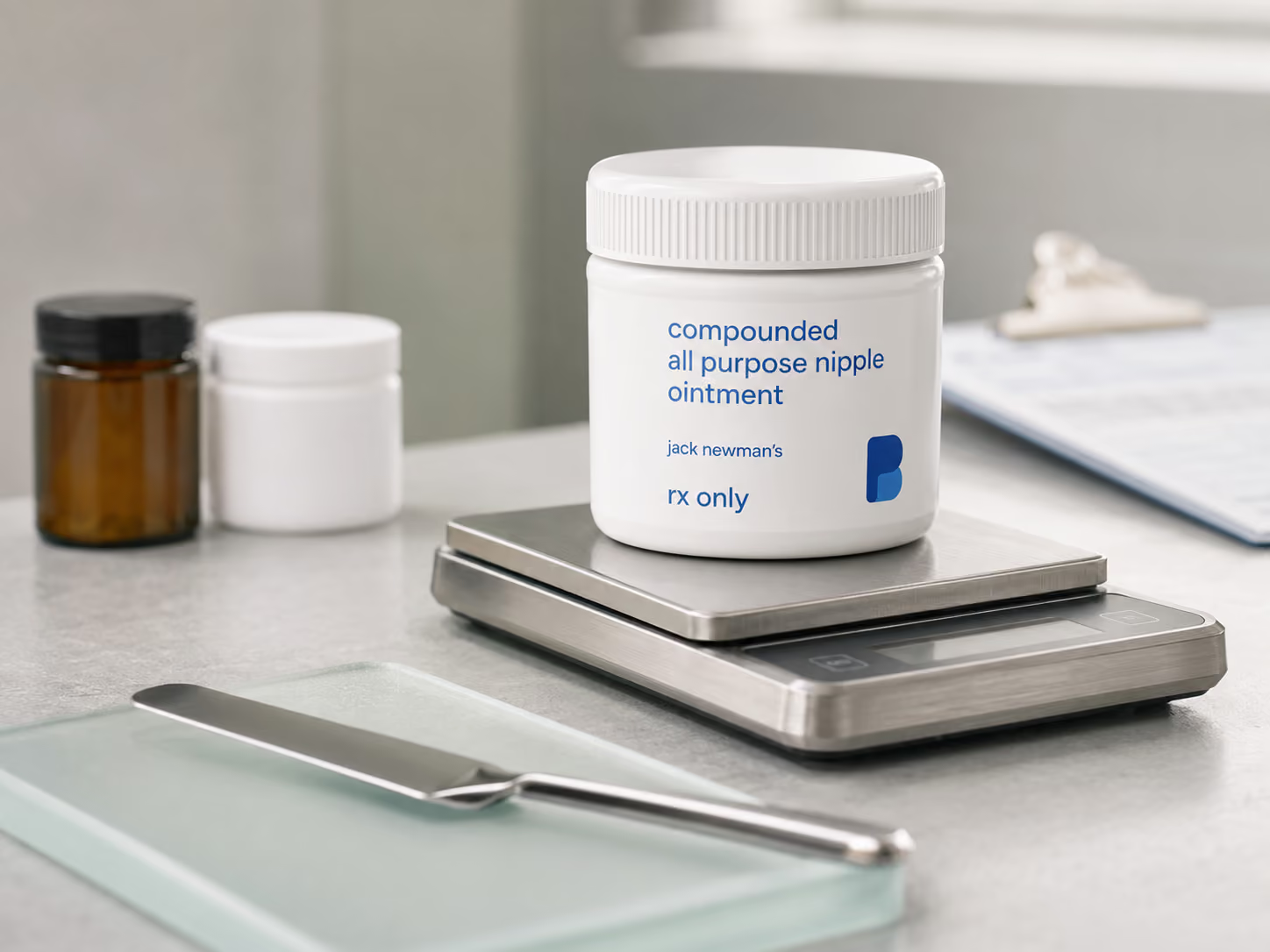
All-Purpose Nipple Ointment

Smiling man in blue pharmacist scrubs with arms crossed and pen behind his ear.
Medically reviewed by Ryan Dyer, RPh
Last updated on
July 23, 2026
  • Made for sore, cracked, or thrush-affected nipples during breastfeeding
  • Three actions in one: antibacterial, antifungal, and anti-inflammatory steroid
  • The compounded ointment widely known as all-purpose nipple ointment (APNO)
  • Applied after feeds; often no need to wipe off before nursing

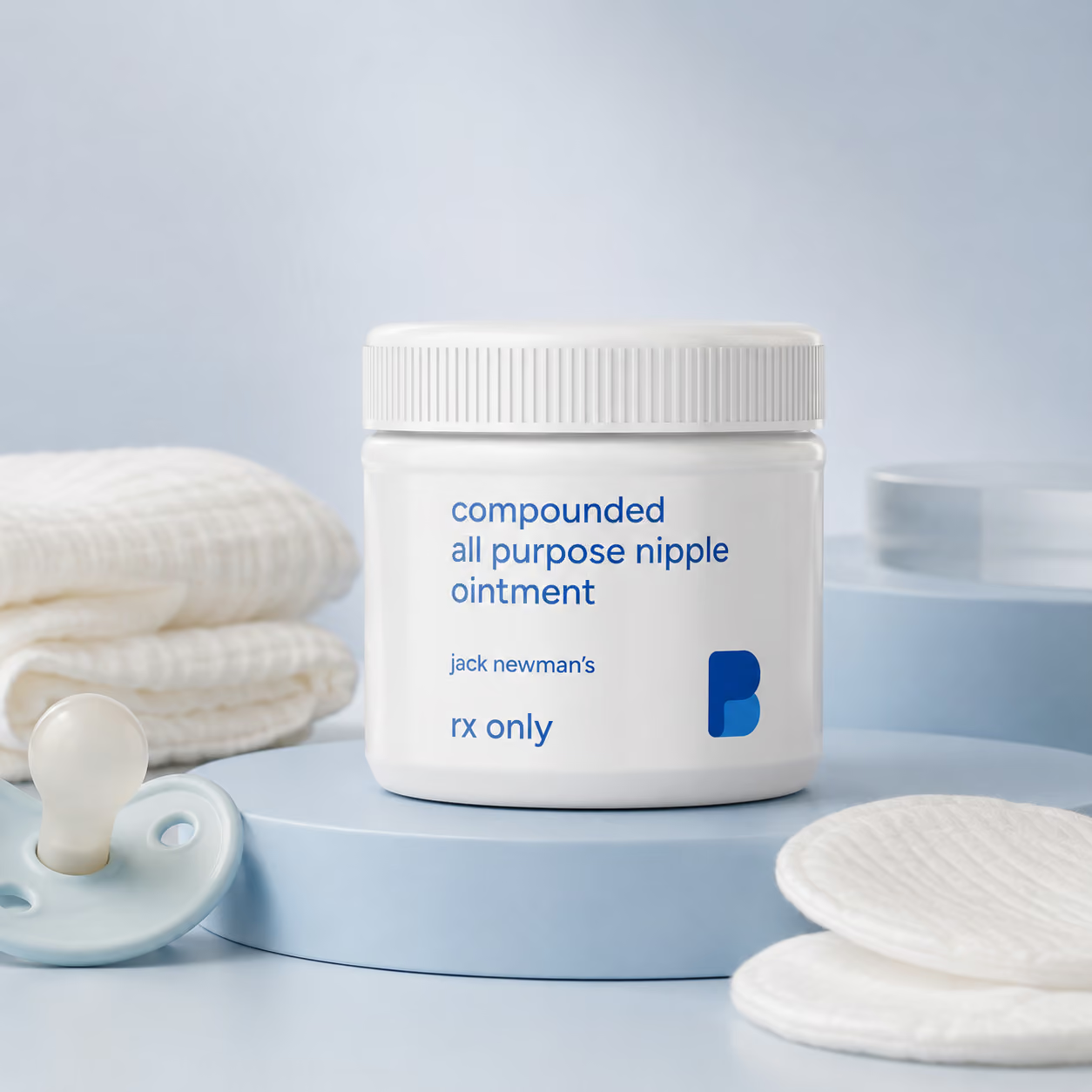
All-purpose nipple ointment (APNO) is a compounded ointment used for the sore, cracked, or infected nipples that can come with breastfeeding. It combines mupirocin (an antibacterial), miconazole (an antifungal for yeast and thrush), and betamethasone (a corticosteroid that calms inflammation and soreness) in one preparation.

The same three-in-one ointment is also used for other rashes with mixed bacterial, fungal, and inflammatory causes. No commercial product combines these drugs, so it is not FDA-approved — it is compounded by Bayview Pharmacy and dispensed only with a valid prescription.

What is this triple cream?

A compounded topical cream that combines mupirocin (antibacterial), betamethasone (a steroid that calms inflammation), and miconazole (antifungal) in one preparation. No commercial product combines all three, so it is compounded and prescription-only.

What is it used for?

Providers may prescribe it for rashes thought to involve bacteria, fungus, and inflammation together — such as skin-fold rashes (intertrigo), dermatitis with a suspected infection, or some diaper rashes. These uses are provider-determined and often off-label.

Trusted by 105,826 patients to date.
A group of faces of our past satisfied patients.
Compounded medications are prepared pursuant to a valid prescription for an individual patient and are not FDA-approved. This page is for educational purposes and is not medical advice.
**The FDA does not review or approve compounded medications for safety or effectiveness. A valid prescription from a licensed practitioner is required.
Important safety information →

Internal Pricing

This is internal data that only pharmacy staff can see.

INTERNAL — PRICING REFERENCE · DO NOT PUBLISH TO PATIENTS

Based on 104 cash fills in 2025 (cash, autofill, and pickup/cash autofill; insurance-adjudicated fills excluded). Usual is the most commonly charged price for that product and quantity; the range reflects discounts, autofill pricing, and mid-year price changes.

ProductQtyUsual2025 rangeFills
MUPIROCIN/BETAMET/MICONAZOLE 1-0.05-2% OINTMENT30 g$77$70–$77104

Starting price shown on the page: $77 (30 g). Compiled July 2026 from 2025 dispensing data. Confirm current pricing for special orders, unusual quantities, or compounded-to-order strengths before quoting.

Getting your prescription filled is simple

Send us your prescription

STEP
1
Have your provider e-prescribe to Bayview, fax it to us, or call it in directly to one of our pharmacists.
A thin blue light beam connecting two clear glass slabs on a white surface.

A pharmacist reviews it

STEP
2
We verify your prescription and prepare your medication to your provider's exact instructions.
Close-up of a white dial with blue measurement markings and a rotating knob.

We compound & ship

STEP
3
We prepare your medication and ship it discreetly to your door, with support when you need it.
Close-up of a gray box with a precise blue line running along its folded edges.

What is All-Purpose Nipple Ointment?

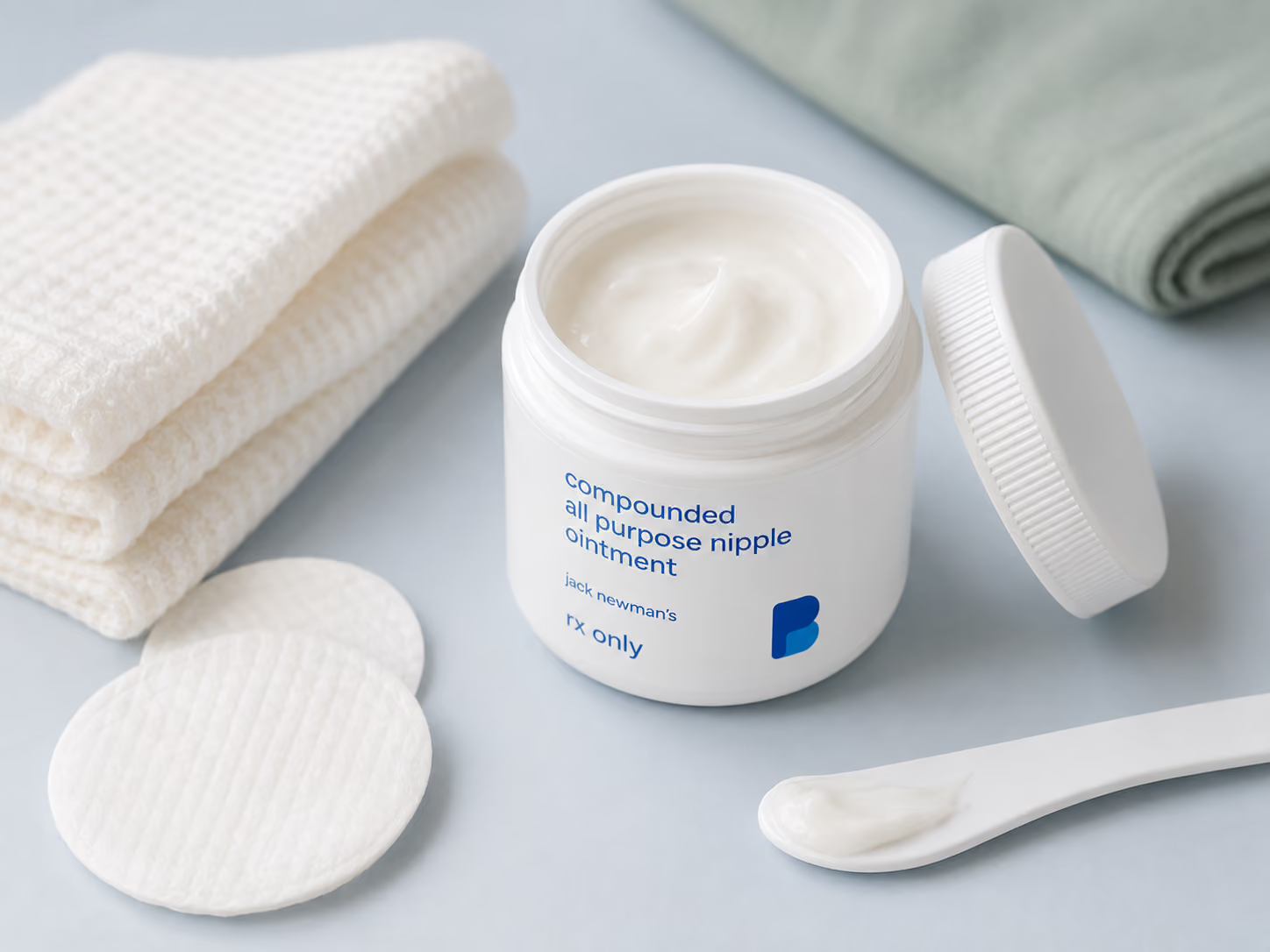
All-purpose nipple ointment — often shortened to APNO — is a compounded ointment for the sore, cracked, or infected nipples that can come with breastfeeding. It brings three actions together in one preparation: mupirocin, an antibacterial; miconazole, an antifungal that targets yeast and thrush; and betamethasone, a corticosteroid that calms inflammation and soreness.

The same three-in-one ointment is also used for other rashes that involve bacteria, fungus, and inflammation at once, such as rashes in skin folds.

This is a compounded medication and is not FDA-approved. No single commercial product combines mupirocin, betamethasone, and miconazole, so it is prepared by Bayview Pharmacy for an individual patient. Its use in breastfeeding is off-label, and your provider or lactation consultant decides whether it is appropriate for you.

How does it work?

Sore nipples in breastfeeding can have more than one cause at the same time. Mupirocin limits bacteria, miconazole limits yeast and thrush, and betamethasone reduces inflammation, redness, and pain. See MedlinePlus on mupirocin, betamethasone, and miconazole.

What is it used for?

It is most often used for painful, cracked, or damaged nipples during breastfeeding, including when a yeast or bacterial component is suspected. Providers also use the same ointment for other mixed rashes — for example, intertrigo in skin folds or dermatitis with a suspected infection. These uses are decided case by case and are typically off-label.

Why is it called “all-purpose”?

Nipple pain while breastfeeding rarely has a single cause — the skin can be inflamed while bacteria and yeast are both present. Combining an antibacterial, an antifungal, and an anti-inflammatory steroid lets one ointment address that mixed picture, which is how it earned the “all-purpose” name.

How is it used?

It is usually applied as a thin layer to the nipple and areola after each feed. In many cases it does not need to be wiped off before the next feed, but your provider sets the exact amount, how often to apply it, and how long to continue — follow the directions on your prescription label.

Side effects & safety

For external use only; avoid the eyes, nose, and mouth. Because it contains a corticosteroid, providers usually limit how much and how long it is used, since steroids can thin the skin with prolonged use. If yeast is involved, your provider may also treat the baby, since thrush can pass back and forth. Tell your provider if the pain or rash worsens or does not improve. See MedlinePlus on mupirocin, betamethasone, and miconazole.

Who should not use it?

It is not for viral skin lesions and should not be used by anyone allergic to mupirocin, betamethasone, miconazole, or other ingredients in the preparation. Share your full history with your provider, including anything your baby is being treated for, and follow their guidance.

How should it be stored?

Store at room temperature away from heat and moisture unless your label says otherwise. Keep it out of reach of children, and do not use it past the beyond-use date on the container.

Why is this compounded?

Because no manufactured product combines these three active ingredients, a compounding pharmacy prepares them together at the strengths a provider specifies — which is what makes an all-purpose nipple ointment possible.

Clinical details for prescribers

Regulatory status. None of the components is a controlled substance. Each active is FDA-approved as a single-agent product, but the triple combination for nipple use (the 'all-purpose nipple ointment') is not FDA-approved and is available only through 503A compounding; use during lactation is off-label.

Formulation & dosing. Most commonly compounded as mupirocin 1% / betamethasone dipropionate 0.05% / miconazole 2% cream, dispensed in 30 g; custom ratios on request. Commonly reported directions are to apply sparingly to the nipples and areolae after each feeding, without washing off before nursing; the sparing application keeps infant exposure minimal. Reassess if not improved within 1–2 weeks.

Counseling / clinical points:

  • Address the underlying cause in parallel — latch assessment and lactation support remain first-line
  • Counsel to apply a thin layer only; potent topical corticosteroids can cause skin atrophy with prolonged use, so limit treatment duration
  • If symptoms persist, consider culture for bacterial or fungal resistance and re-evaluate for dermatitis or vasospasm
  • Fever, spreading erythema, or a breast mass warrants evaluation for mastitis or abscess

The combination targets the bacterial, fungal, and inflammatory components of persistent nipple pain in one preparation.

All-purpose nipple ointment is a compounded medication and is not FDA-approved. This information is educational and is not medical advice. Your provider determines whether it is appropriate and sets the dose.

In Stock

On this page

Personalized compounding for patients who need more than a standard option.

"As a compounding pharmacy, we prepare each medication to a provider’s exact specifications. My focus, and my team’s focus, is quality, consistency, and close communication with prescribers so patients receive medication prepared for their individual needs."
Ryan Dyer, RPh
Owner and Chief Pharmacist, Bayview Pharmacy
Smiling man in blue scrubs with arms crossed and pen behind his ear
Three clear liquid vials, white powder on spoon, two capsules, and a cream jar on a metal surface.
QUALITY AND TESTING

Held to a higher standard

Every preparation is made under strict quality controls, and verified by a licensed pharmacist.
We use validated quality processes and third-party testing where appropriate
Sterile compounding in a dedicated USP <797> cleanroom
Non-sterile compounding under USP <795> and <800> standards
USP/NF-grade ingredients from reputable, vetted suppliers

Why patients choose Bayview

Made to your prescription
Made in our own pharmacy
Quality tested
Real pharmacist support
Discreet, secure shipping
Trusted since 2006

Our formulations

Prepared to the strength your provider orders and dispensed as a topical cream. The combination below is the most common; other ratios can be compounded when specified.

Preparation Strength Notes
Mupirocin / betamethasone / miconazole creamMupirocin 1 % / betamethasone dipropionate 0.05 % / miconazole 2 %Most commonly prepared combination
Custom ratio creamAs prescribedOther strengths or ratios compounded on provider order

Forms and strengths are listed for education only and are not a statement that any option is better, stronger, or more effective. A valid prescription is required, and your provider determines which preparation, amount, and schedule are appropriate for you. This is a compounded medication and is not FDA-approved.

Start with a prescription
Prescribers: download order form ↓

Frequently asked questions

What is this triple cream?

A compounded topical cream that combines mupirocin (antibacterial), betamethasone (a steroid that calms inflammation), and miconazole (antifungal) in one preparation. No commercial product combines all three, so it is compounded and prescription-only.

What is it used for?

Providers may prescribe it for rashes thought to involve bacteria, fungus, and inflammation together — such as skin-fold rashes (intertrigo), dermatitis with a suspected infection, or some diaper rashes. These uses are provider-determined and often off-label.

How do I apply it?

Apply a thin layer to the affected skin as your provider directs. Avoid the eyes, nose, and mouth, and do not cover or bandage the area unless told to, since covering skin increases how much medication is absorbed.

Is it safe to use for a long time?

Because it contains a steroid, providers usually limit how much, how large an area, and how long it is used. Long-term use — especially on the face, in skin folds, or under coverings — can thin the skin. Use only as directed.

Can I use it on my child?

Extra caution applies in children and infants, where more steroid can be absorbed. Only use it on a child if a provider has prescribed it for them, and follow their instructions closely.

When should I call my provider?

Contact your provider if the rash worsens or spreads, does not improve, or shows signs of a new infection, or if you notice signs of an allergic reaction.

Are compounded medications FDA-approved?

Compounded medications are not FDA-approved. They're prepared by a licensed pharmacy pursuant to a valid prescription for an individual patient, under USP standards. The FDA does not review compounded medications for safety or effectiveness.

Can you fill a prescription from my own provider?

Yes. Your provider can send your prescription to Bayview Pharmacy by e-prescribe, fax, or phone, or you can transfer an existing prescription from another pharmacy. Start a request and we'll guide you through it.

Do I need a prescription?

Yes. All of our medications require a valid prescription from a licensed provider. We're a dispensing and compounding pharmacy, so we don't provide consultations or write prescriptions. If you don't have one yet, you'll need to find and see a provider first.

How does shipping work?

Once your prescription is verified, we prepare your medication and ship it discreetly in plain packaging either via UPS or USPS. A pharmacy technician confirms the details with you before it goes out, and we're available if you have any questions.

How do providers send a prescription to Bayview?

Providers can submit a prescription three ways:

  • E-prescribe: Search Bayview Pharmacy, Warwick, RI (NCPDP 4106882) in your EHR. For compounds, use the compound, custom, or free-text option and include the full formulation, strength, quantity, refills, and directions.
  • Fax: Send a signed order to 401-284-4506 (alt. 401-210-2757) with patient and prescriber details, medication, quantity, refills, directions, signature, and date.
  • Phone: Call 401-284-4505 to submit, clarify, or coordinate refills.

A valid prescription is required, and compounded medications are not FDA-approved.

How do refills and automatic refills work?

Refills are coordinated with your prescriber and your prescription. You can request a refill through our website or by calling us, and we'll handle the rest as long as you have refills remaining on a valid prescription. You can also opt into automatic refills on non-controlled substances, with no need to worry about running out of your medication. We can either ship it to you automatically, or ready for pickup.

What is compounding?

Compounding is the practice of preparing a medication tailored to an individual patient's prescription. Instead of a mass-produced product, a compounding pharmacy makes the medication to the specific strength, form, or combination your provider orders.

References

Sources reviewed

The medical information on this page draws on the following sources, which are also linked where cited.

  1. MedlinePlus. Mupirocin Topical.
  2. MedlinePlus. Betamethasone Topical.
  3. MedlinePlus. Miconazole Topical.

Important safety information

Do not use in or near the eyes, nose, or mouth; on viral skin lesions; or if you are allergic to mupirocin, betamethasone, miconazole, or any ingredient in the cream.

Warnings and precautions: for external use only. Topical steroids can thin the skin and be absorbed, especially on the face, in skin folds, under occlusion, or in children. Use only as your provider directs, and do not extend treatment on your own.

Common side effects: irritation, burning, stinging, dryness, or redness at the application site.

Get medical care if you have: a rash that worsens or spreads, signs of allergic reaction, or new swelling, blistering, or drainage.

Storage: keep at room temperature away from heat and moisture, out of reach of children, and do not use past the beyond-use date.

This is a compounded prescription medication and is not approved by the FDA. Use it only under the supervision of a licensed provider, exactly as prescribed. Do not adjust your dose without talking to your prescriber. Seek emergency care for any severe or unexpected reaction. This information is not complete; talk to your provider about your full medical history and all medications you take.

Ready to get started?

Send us your prescription and a Bayview pharmacist will take it from there.