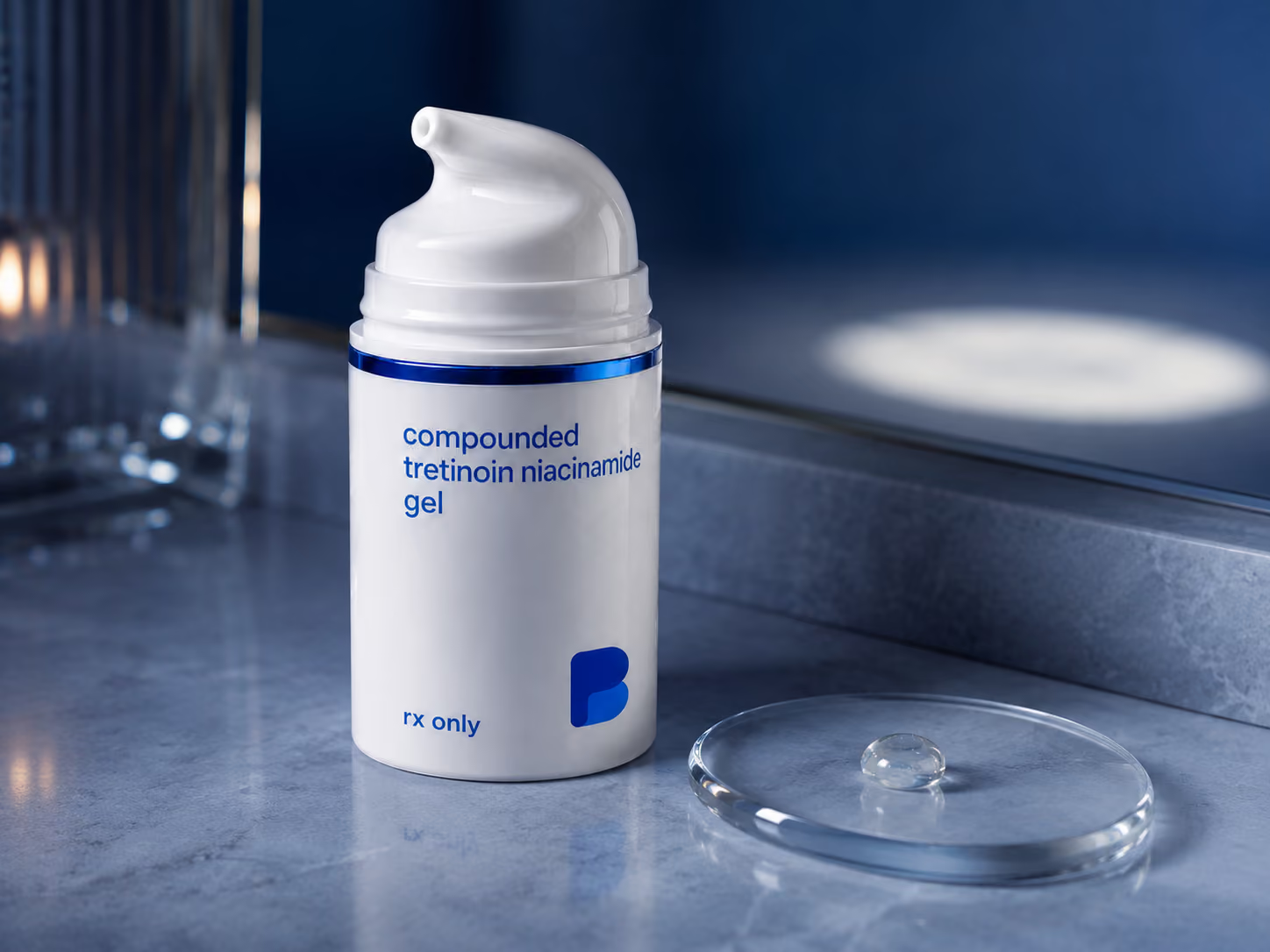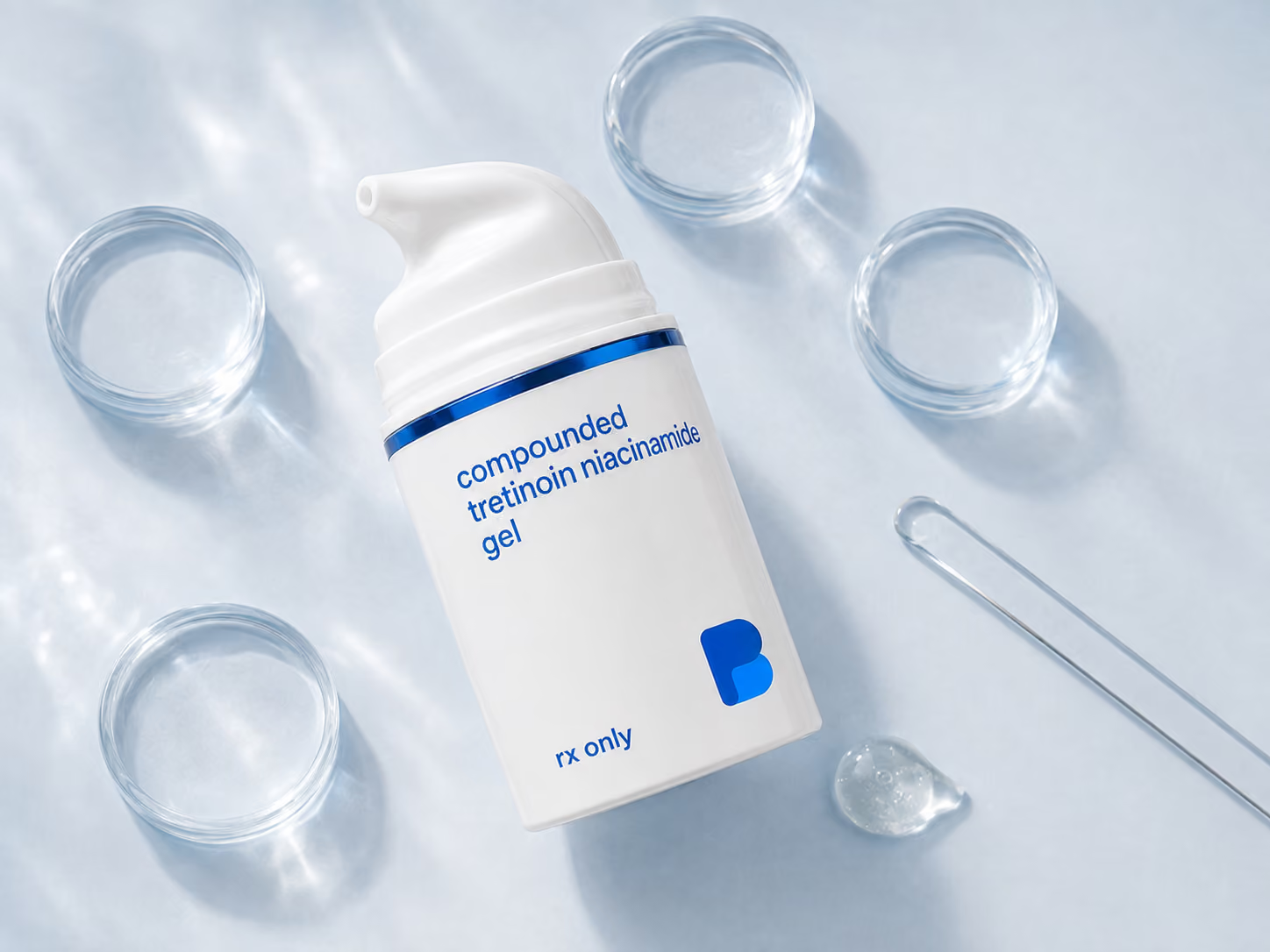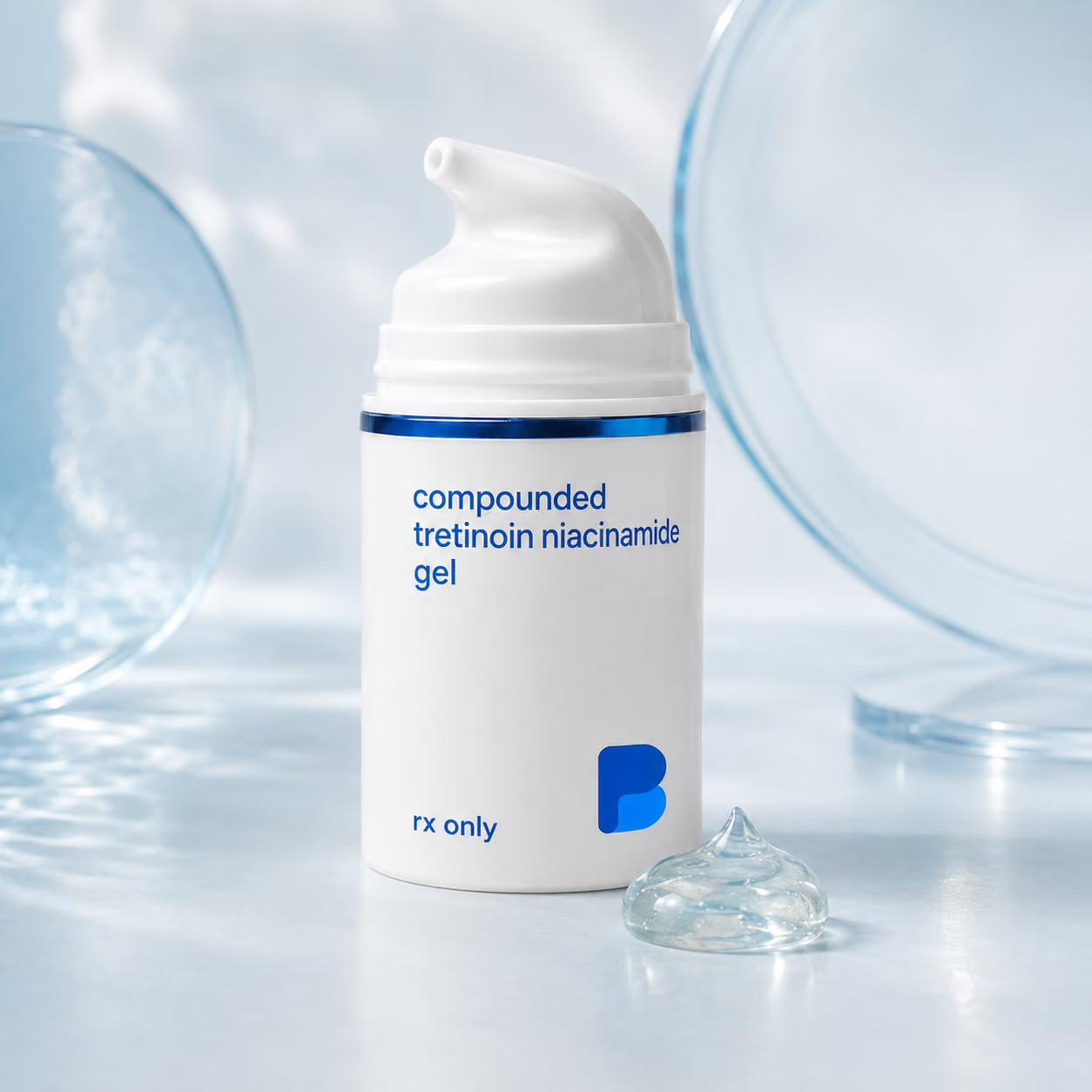





This is a compounded prescription gel that puts three ingredients into one nightly step. Tretinoin is the prescription active, a vitamin A derivative (a retinoid) used for acne and for fine facial wrinkling and rough, mottled skin from sun exposure. Niacinamide (vitamin B3) is added as a soothing, barrier-supporting ingredient. Sodium hyaluronate, the salt form of hyaluronic acid, is a humectant that holds water at the skin surface.
Bayview prepares the gel at the tretinoin strength your prescriber orders, most often 0.01%, 0.025%, 0.05%, or 0.1%, with niacinamide 2% and sodium hyaluronate 0.05%. Only your prescriber can decide whether it is right for you. Bayview compounds this as part of our dermatology compounding line.
How does it work?
Tretinoin binds retinoic acid receptors inside skin cells and speeds up how quickly cells lining the pore turn over. That clears the plugs (microcomedones) that acne starts from and makes new ones less likely to form. Used over months, tretinoin also encourages new collagen and helps even out pigment, which is why it is used for fine wrinkling and sun-related texture changes. Niacinamide is an anti-inflammatory that supports the skin barrier, and sodium hyaluronate draws water to the surface, both are included with the aim of making a retinoid easier to tolerate.
What is it used for?
Prescribers use tretinoin gels for acne vulgaris and for fine facial wrinkling, roughness, and mottled pigmentation associated with sun exposure. It is important to be realistic about what a retinoid does: the FDA-approved label for tretinoin emulsion (Renova) states that tretinoin does not eliminate wrinkles, repair sun-damaged skin, reverse photoaging, or restore more youthful skin. The 2024 American Academy of Dermatology acne guideline strongly recommends topical retinoids and supports combining topical agents with different mechanisms. Bayview Pharmacy does not provide consultations or determine whether a medication is appropriate; that is your prescriber's decision, and a valid prescription is required.
How do the strengths compare?
The strengths differ in how much tretinoin is present. Higher strengths tend to work faster but cause more dryness and peeling, especially in the first weeks. Most prescribers start low and step up. The table below describes those differences for education only.
| Tretinoin strength | Notes |
|---|---|
| 0.01% | The gentlest option; often chosen for sensitive or very dry skin, or as a starting point |
| 0.025% | The most commonly prescribed strength here; a typical starting strength for acne |
| 0.05% | A step up, often used after several weeks at a lower strength |
| 0.1% | The strongest routinely compounded; most likely to cause irritation |
| Custom | Other strengths, or additions such as spironolactone or ascorbic acid, as ordered |
Strengths are described for education only and are not a statement that any strength is better for a particular person. Your prescriber selects the strength and schedule.
How is it used?
Use it exactly as your prescriber directs. A common approach is a pea-sized amount spread over the whole face at bedtime, on clean, dry skin, starting two or three nights a week and building up to nightly as your skin tolerates it. Wash your hands after applying. Avoid the corners of the nose, the eyes, and the lips. Because retinoids increase sun sensitivity, a broad-spectrum SPF 30 or higher every morning is part of using this medication. Expect an adjustment period of dryness and flaking, and for acne, allow eight to twelve weeks before judging results, some people see a temporary flare first. Do not use it more often than directed; more is not faster.
Side effects & safety
The common effects are local and related to strength: dryness, peeling, redness, burning or stinging, and increased sensitivity to sun and wind. A temporary worsening of acne in the first weeks is common. In deeper skin tones, over-irritating the skin can leave dark marks afterward, so easing into it matters. Less commonly, the skin can become severely inflamed or blistered, which means stopping and calling your prescriber.
Contact your prescriber about severe or persistent burning, swelling, blistering, or any reaction that does not settle as your skin adjusts.
Who should not use it?
This gel is not appropriate for everyone. Avoid it if you are pregnant, trying to conceive, or breastfeeding without your prescriber's direction, or if you have had a reaction to tretinoin or another retinoid. It should not go on eczematous, sunburned, or broken skin. Tell your prescriber about everything you use on your face, including benzoyl peroxide, acids, and scrubs, and avoid waxing or chemical peels while you are using it. Your prescriber decides whether it is appropriate for you.
How should it be stored?
Store at room temperature, tightly closed, away from heat, light, and open flame. Do not freeze. Tretinoin breaks down with light and air, so keep it in the opaque container it was dispensed in and close it fully after each use. Keep it out of the reach of children, do not share it, and do not use it after the beyond-use date on your label. Dispose of unused medication as your pharmacist directs.
Why is this compounded?
FDA-approved tretinoin products are available in the United States, including Retin-A cream and gel, Renova, Altreno, and Atralin. There is no FDA-approved product that combines tretinoin with niacinamide and sodium hyaluronate. Compounding lets a licensed pharmacy prepare that combination, and tretinoin strengths outside the marketed range, to a prescriber's exact order for an individual patient. As a 503A compounding pharmacy, Bayview prepares each order in small batches under USP <795> standards. Compounded preparations are not FDA-approved, and where an FDA-approved product would meet a patient's need, prescribers are expected to use it. Related dermatology preparations include Wrinkles & Fine Lines, Melasma & Dark Spots, Hydroquinone Brightening Blends, and Acne. The full list is in our compounded medications catalog.
Clinical details for prescribers
Regulatory status. Tretinoin is not a controlled substance. FDA-approved topical tretinoin products include Retin-A cream 0.025/0.05/0.1% and gel 0.01/0.025%, Renova 0.02% and 0.05%, Altreno lotion 0.05%, and Atralin gel 0.05%. Niacinamide and sodium hyaluronate have no FDA drug approval. No FDA-approved tretinoin/niacinamide/sodium hyaluronate combination exists. Because the 0.01% and 0.025% tretinoin components match marketed gel strengths, please document on the prescription the clinical significance of the compounded combination for this patient, per FDA's guidance on compounded products that are essentially copies under FDCA 503A. Compounded preparations are not FDA-approved.
Formulation & SIG. Compounded topical gel, tretinoin 0.01%, 0.025%, 0.05%, or 0.1%, with niacinamide 2% and sodium hyaluronate 0.05%; 30 g, 60 g, and 120 g. Custom additions dispensed include spironolactone 5% and ascorbic acid 5%. Typical SIG: apply a pea-sized amount to the face at bedtime, three nights weekly, titrating to nightly as tolerated; daily broad-spectrum SPF 30+. Prepared under USP <795>.
Evidence & clinical points:
- Tretinoin: strong evidence for acne vulgaris; moderate for fine wrinkling and mottled pigmentation. AAD 2024 acne guideline strongly recommends topical retinoids.
- Niacinamide: 4% nicotinamide gel performed comparably to 1% clindamycin in small inflammatory-acne RCTs. Note this preparation is 2%, below the studied concentration.
- Sodium hyaluronate: humectant; no drug-level efficacy evidence. No controlled trial exists of this three-ingredient combination, synergy should not be assumed.
- Tretinoin is light- and oxidation-sensitive and pH-sensitive in aqueous gels; dispensed in opaque, airtight packaging with a beyond-use date assigned per USP <795>.
- Counsel on pregnancy avoidance, photoprotection, the expected retinization period, and separating benzoyl peroxide applications.
Ordering: e-prescribe to Bayview Pharmacy, Warwick RI, or fax 401-284-4506. Background: AAD acne clinical guideline; MedlinePlus, Tretinoin Topical. Account setup, licensing, and ordering are covered on our for providers page.
This is a prescription compounded medication and is not FDA-approved. This information is educational and is not medical advice. Your prescriber determines whether it is appropriate and sets the strength and schedule.