

In Stock
Topical Sodium Thiosulfate | Compounded Rx | Bayview Pharmacy

Topical Sodium Thiosulfate

Smiling man in blue pharmacist scrubs with arms crossed and pen behind his ear.
Medically reviewed by Ryan Dyer, RPh
Last updated on
August 7, 2026
Starting at
$112
for
60 g
Checkmark icon followed by text 'HSA/FSA Eligible'.
Start with a prescriptionPrescribers: request this order form →
Licensed to fill prescriptions for patients in RI, MA, CT, NY, NJ, NH & FL
  • Compounded at 20% or 25%, alone or with zinc oxide, in the base your prescriber specifies
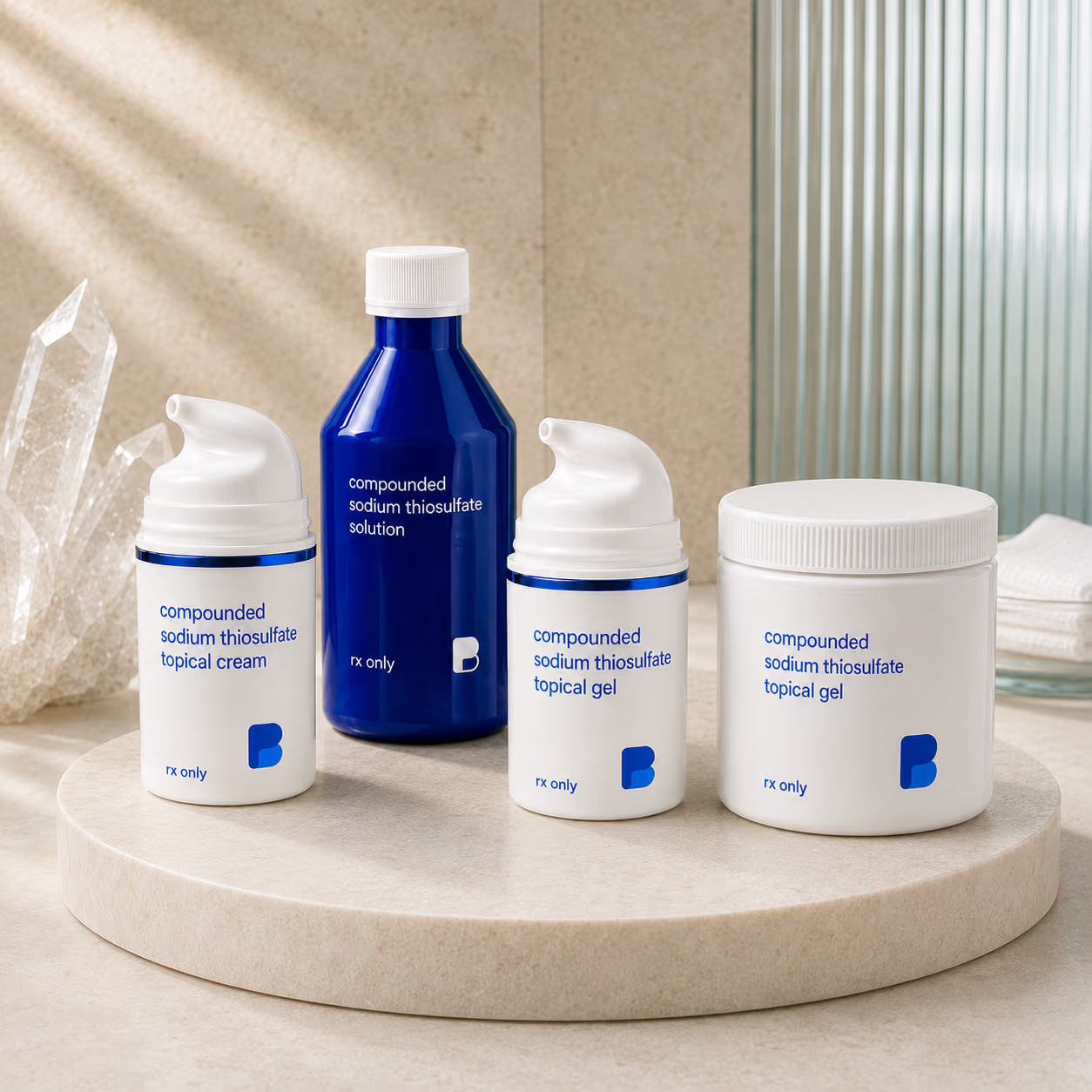
  • Available as a cream, gel, or solution — including a metered pump and a fragrance-free option
  • Fills a genuine gap — there is no FDA-approved topical sodium thiosulfate product in the United States
  • Prepared in small batches by a 503A compounding pharmacy using quality ingredients
  • Fragrance-free bases are available to help with the characteristic sulfur odor

Topical sodium thiosulfate is a compounded, prescription cream, gel, or solution most often used for calcium deposits in the skin (calcinosis cutis) and, historically, for the fungal rash tinea versicolor. Sodium thiosulfate makes calcium salts more soluble, which is the rationale for applying it over calcium deposits, and it releases sulfur on the skin, which gives it antifungal and mild keratolytic activity. There is no FDA-approved topical sodium thiosulfate product in the United States, so prescribers rely on a compounding pharmacy. Bayview prepares it at the concentration and in the base your prescriber orders. Compounded medications are not FDA-approved, and a valid prescription is required.

What is topical sodium thiosulfate used for?

Prescribers use it most often for calcium deposits in the skin, called calcinosis cutis, and historically for the fungal rash tinea versicolor. Sodium thiosulfate makes calcium salts more soluble, which is the rationale for applying it over deposits, and it releases sulfur on the skin, which gives mild antifungal and keratolytic activity. Your prescriber decides whether it fits your situation.

How strong is the evidence behind it?

Honestly, limited. Topical use is supported mainly by case series and retrospective reports rather than randomized trials, so published results may not predict yours.

It is also worth being clear that topical sodium thiosulfate is not a treatment for calciphylaxis, which requires specialist medical care. Ask your prescriber what a realistic result looks like before you start.

Trusted by 105,826 patients to date.
A group of faces of our past satisfied patients.
Compounded medications are prepared pursuant to a valid prescription for an individual patient and are not FDA-approved. This page is for educational purposes and is not medical advice.
**The FDA does not review or approve compounded medications for safety or effectiveness. A valid prescription from a licensed practitioner is required.
Important safety information →
Service availability

Prescription delivery in your state

Bayview Pharmacy currently serves eligible patients in six states. Check your state before getting started.

Where we currently serve

Select a highlighted state to check availability.

Currently licensed Licensed — non-controlled only Not currently licensed Your selection

Select a state on the map or use the state checker.

Do we serve your state?

Choose your state to confirm current service availability.

Thank you! Your submission has been received!
Oops! Something went wrong while submitting the form.
Currently licensed in
Start with a prescription

Send us your prescription

STEP
1
Have your provider e-prescribe to Bayview, fax it to us, or call it in directly to one of our pharmacists.
A thin blue light beam connecting two clear glass slabs on a white surface.

A pharmacist reviews it

STEP
2
We verify your prescription and prepare your medication to your provider's exact instructions.
Close-up of a white dial with blue measurement markings and a rotating knob.

We compound & ship

STEP
3
We prepare your medication and ship it discreetly to your door, with support when you need it.
Close-up of a gray box with a precise blue line running along its folded edges.

What is Topical Sodium Thiosulfate?

Topical sodium thiosulfate is a compounded, prescription cream, gel, or solution. Sodium thiosulfate itself is a simple sulfur-containing salt that has been used in medicine for over a century, most familiarly as an intravenous antidote. Applied to the skin, it is used mainly for calcium deposits in the skin and, historically, for the fungal rash tinea versicolor.

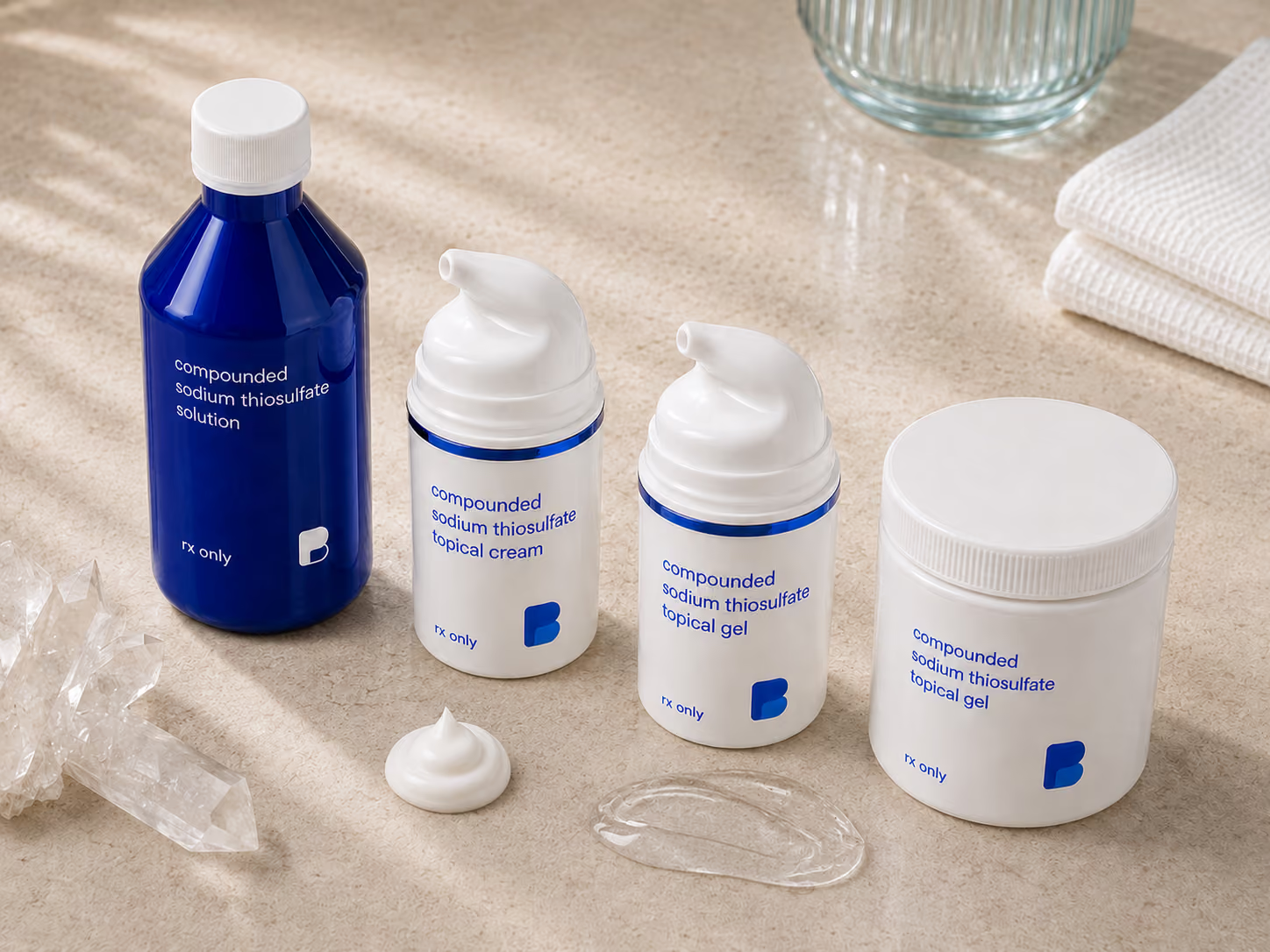
Bayview prepares it at the concentration and in the base your prescriber orders — commonly 20% or 25%, sometimes combined with zinc oxide, and available as a jar, a metered pump, a solution, or a fragrance-free cream. Only a licensed prescriber can decide whether it is right for you.

There is no FDA-approved topical sodium thiosulfate product in the United States. Sodium thiosulfate is FDA-approved as an injection: as part of a cyanide antidote given with sodium nitrite (DailyMed label), and as Pedmark, approved in 2022 to reduce the risk of hearing damage from cisplatin in children with localized, non-metastatic solid tumors (FDA label). Neither is a topical product. Every topical use described on this page is off-label and requires compounding. Compounded preparations are not FDA-approved, and a valid prescription is required.

How does it work?

Sodium thiosulfate appears to work in two quite different ways, depending on what it is being used for.

On calcium deposits. Sodium thiosulfate increases the solubility of calcium salts — the idea is that it converts poorly soluble calcium deposits into a more soluble calcium thiosulfate that the body can clear (StatPearls, Calcinosis Cutis). It also has antioxidant and blood-vessel-dilating effects. Honest caveat: the mechanism is not settled. Newer work suggests sodium thiosulfate may reduce soft-tissue calcification through pathways that have nothing to do with calcium binding (StatPearls, Calciphylaxis).

On fungus. On contact with the skin, sodium thiosulfate slowly releases sulfur and sulfurous acid. That gives it activity against Malassezia furfur, the yeast responsible for tinea versicolor, along with a mild keratolytic effect that helps shed the scaly surface layer (AHFS monograph). This is also the source of the sulfur smell.

What is it used for?

All topical uses are off-label. Here is what the literature actually supports, stated plainly.

Calcinosis cutis — hard calcium deposits in the skin, often seen with autoimmune connective tissue diseases such as dermatomyositis and systemic sclerosis. This is the most common reason topical sodium thiosulfate is prescribed today. A published case series and systematic review, plus a Mayo Clinic case series, report improvement in a substantial proportion of treated lesions, and a recent review puts topical improvement rates in the range of roughly 68–78%, with small lesions responding best. But the evidence is low- to moderate-level observational data — case series and retrospective cohorts, not randomized trials (J Clin Med review). Expect a treatment worth trying, not a proven cure.

Tinea versicolor (pityriasis versicolor) — sodium thiosulfate has a long history here, typically as a 25% lotion or solution applied twice daily, and it appears in the US in fixed combination with salicylic acid (AHFS monograph). Be honest about where it sits: the supporting studies are old and small, and modern first-line treatment is topical azoles such as ketoconazole, selenium sulfide, or zinc pyrithione, with oral fluconazole for extensive or recurrent disease. A sodium thiosulfate/salicylic acid shampoo remains among the listed options (Merck Manual). One thing to expect either way: the pale patches left behind take months to years to repigment after the yeast is gone.

Calciphylaxis — a serious condition, mostly in people with advanced kidney disease, in which calcium builds up in small blood vessels and causes painful skin ulcers. Intravenous sodium thiosulfate is routinely used off-label for it, and case series report improvement or resolution of skin lesions in more than 70% of patients — but no prospective trials have assessed it, and the evidence base is case reports, case series, and retrospective analyses (StatPearls, Calciphylaxis). Topical sodium thiosulfate is sometimes prescribed alongside systemic care as a wound-directed measure. Topical sodium thiosulfate is not a treatment for calciphylaxis and should not be relied on as one; calciphylaxis is managed by a specialist team.

Extravasation antidote — this is the best-established use, but it is a hospital procedure rather than a home therapy. Sodium thiosulfate is a recognized antidote when the chemotherapy drug mechlorethamine leaks out of a vein into surrounding tissue: the manufacturer's labeling directs prompt infiltration of the area with sterile isotonic (1/6 molar) sodium thiosulfate plus an ice compress, and a 2% solution for accidental skin contact (Mustargen label). It also appears in some institutional protocols for cisplatin extravasation.

Bayview Pharmacy does not provide consultations or determine whether a formulation is appropriate for you; that is your prescriber's decision, and a valid prescription is required.

How do the strengths and forms compare?

The preparations differ mainly in concentration, in whether zinc oxide is included, and in how they are packaged. Zinc oxide adds a protective barrier and is often chosen for ulcerated or fragile skin. The table below is for education only.

PreparationTypical sizeNotes
Sodium thiosulfate 20% cream (metered pump)50–60 mLPump delivers a measured 0.5 mL per actuation, which helps with consistent dosing
Sodium thiosulfate 25% cream60 mLThe most commonly dispensed strength
Sodium thiosulfate 25% cream, fragrance free60 mLChosen when fragrance is irritating or when masking is not wanted
Sodium thiosulfate 25% in zinc oxide cream (jar)60 gZinc oxide adds a barrier; often used over ulcerated deposits
Sodium thiosulfate 25% / zinc oxide 20% gel (jar)60 gA thicker preparation that stays where it is placed
Sodium thiosulfate 25% solution30 mL or 175 mLUsed where a liquid is preferred, including larger areas
CustomAs orderedOther concentrations, bases, and container types as your prescriber specifies

Preparations are described for education only and are not a statement that any strength or base is better for a particular person. Your prescriber selects the concentration, the base, and the schedule. Bayview also compounds oral sodium thiosulfate capsules when a prescriber orders them; those are a separate preparation and are not covered by this page.
How is it used?

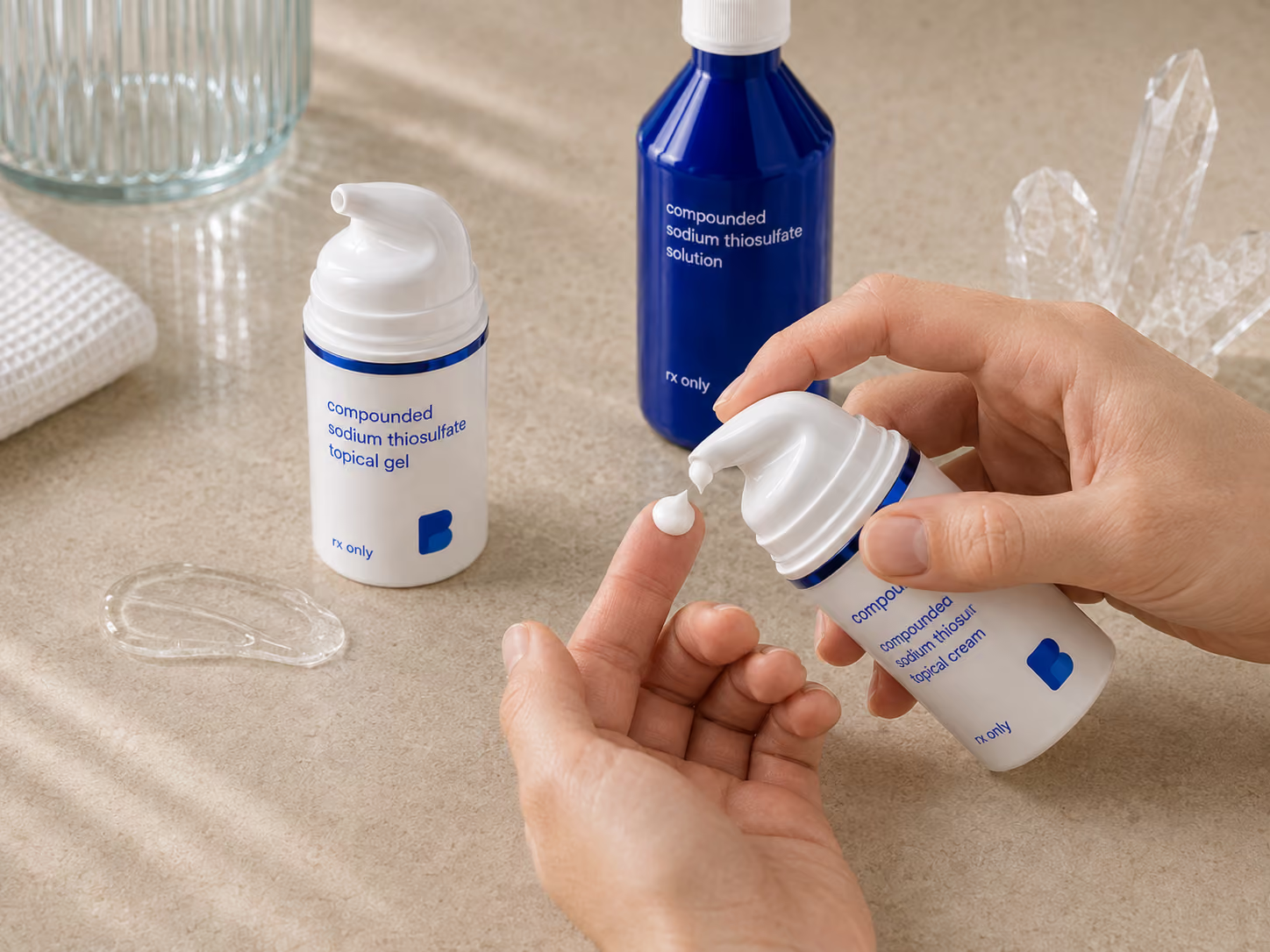
Use it exactly as your prescriber directs. Regimens vary by condition and by prescriber, but the pattern is usually a thin layer applied to the affected area once or twice daily. For calcinosis cutis it is typically applied over the calcium deposits and sometimes covered with a dressing; for tinea versicolor the historic regimen is a 25% lotion or solution twice daily to clean, dry skin.

Wash and dry the area first, apply only to the areas your prescriber specifies, and wash your hands afterward unless your hands are the treatment site. Patience matters: response is measured in weeks to months, not days, and stopping early is a common reason treatment appears to fail. Do not increase the amount, extend the area, or stop on your own — check with your prescriber first. A Bayview pharmacist is available if you have questions about your prescription.

Side effects & safety

Topical sodium thiosulfate is generally well tolerated when applied to a limited area. The effects people notice most are local: stinging or burning on application (more likely on broken or ulcerated skin), redness, itching, dryness, and peeling or flaking. If irritation is persistent or severe, contact your prescriber — the usual advice is to stop and reassess rather than push through.

It smells like sulfur, and that is expected. Sodium thiosulfate releases sulfur on the skin, so a rotten-egg or "struck match" odor is characteristic of these preparations. It is not a sign that something is wrong with your medication. Applying at bedtime, covering with a dressing when your prescriber allows it, or asking your prescriber about a fragrance-free or differently scented base can all help. Tell us if the odor is a problem — base choice is one of the things compounding can adjust.

Sodium thiosulfate absorbed through the skin is expected to be minimal, but the body-wide effects seen with high-dose intravenous use — nausea, vomiting, and disturbances of blood acid balance — are worth knowing about if you are applying it to large or ulcerated areas. Tell your prescriber if you develop nausea, vomiting, unusual fatigue, or shortness of breath during treatment. Get emergency care for signs of a serious allergic reaction such as widespread rash, swelling of the face or throat, or trouble breathing.

Who should not use it?

Do not use it if you are allergic to sodium thiosulfate or to any other ingredient in your preparation, including zinc oxide or the base, if those are part of your formula.

Use caution and talk to your prescriber first if you have kidney disease (sodium thiosulfate is cleared by the kidneys, and systemic exposure is higher when kidney function is reduced), if you would be applying it over large areas or over open ulcers, or if you are pregnant, may be pregnant, or are breastfeeding — topical sodium thiosulfate has not been studied in pregnancy. Do not use it on children unless a prescriber specifically directs it. Give your prescriber your full health history, your allergies, and a complete list of your medications so they can decide whether it is appropriate for you.

How should it be stored?

Store exactly as directed on your label. Compounded sodium thiosulfate creams, gels, and solutions are generally kept at controlled room temperature, roughly 68–77°F (20–25°C), with brief excursions permitted between 59–86°F (15–30°C), away from heat and direct light. Some formulations are labeled for refrigeration — follow your label rather than a general rule.

Keep the container tightly closed, since exposure to air can degrade the product and worsen the odor. Sodium thiosulfate solutions can form crystals or turn cloudy over time; if your preparation changes in appearance, separates, or develops an unusual odor beyond the normal sulfur smell, contact the pharmacy before using it. Do not use it after its beyond-use date, keep it out of the reach of children, do not share it, and dispose of unused medication as directed by your pharmacist.

Why is this compounded?

There is no FDA-approved topical sodium thiosulfate product in the United States. The FDA-approved sodium thiosulfate products are injections — the cyanide antidote given with sodium nitrite, and Pedmark for reducing cisplatin-related hearing loss in children — and neither can be applied to the skin. Prescribers who want a topical preparation have no commercial option.

Compounding lets the prescriber set the concentration (commonly 20% or 25%), decide whether to include zinc oxide, choose a cream, gel, or solution, select a fragrance-free base when odor or sensitivity is an issue, and pick a container — jar, metered pump, or bottle — that fits how and where the medication will be used. As a 503A compounding pharmacy, Bayview Pharmacy prepares each order in small batches using quality ingredients. Compounded preparations are not FDA-approved, and a valid prescription is required.

Clinical details for prescribers

Regulatory status. Sodium thiosulfate is not a controlled substance. No topical sodium thiosulfate product is FDA-approved in the US. Approved parenteral products: sodium thiosulfate injection (sequential use with sodium nitrite for acute cyanide poisoning) and PEDMARK (sodium thiosulfate injection, approved 2022, to reduce the risk of ototoxicity associated with cisplatin in pediatric patients ≥1 month with localized, non-metastatic solid tumors). All topical use is off-label and requires compounding. Compounded preparations are not FDA-approved.

Formulation & SIG. Compounded topical sodium thiosulfate 20% and 25%, ± zinc oxide 20%, as cream, gel, or solution; jar, metered pump (0.5 mL/actuation), or bottle; fragrance-free bases available. Common sizes 50–60 mL / 60 g, with 30 mL and 175 mL solutions. Typical SIG: apply a thin layer to the affected area once or twice daily, ± occlusion. Oral sodium thiosulfate 300 mg capsules are also compounded on order.

Evidence & clinical points:

  • Calcinosis cutis: case series and systematic review support topical 10–25% STS; reported improvement roughly 68–78%, best for small/superficial lesions; intralesional preferred for larger lesions. Evidence is low- to moderate-level observational, predominantly in connective tissue disease–associated disease
  • Calciphylaxis: IV STS is routine off-label practice with >70% lesion improvement in case series, but no prospective trials; topical STS is adjunctive wound care, not a treatment for the underlying process
  • Tinea versicolor: historic 25% lotion/solution BID; evidence is old and limited; topical azoles, selenium sulfide, and zinc pyrithione are first-line, with oral fluconazole for extensive/recurrent disease. Counsel that hypopigmentation persists months to years post-clearance
  • Extravasation: mechlorethamine labeling directs infiltration with sterile isotonic (1/6 M) sodium thiosulfate plus ice compress; 2% solution for accidental skin contact. Also used in some cisplatin extravasation protocols
  • Caution with renal impairment and with application over large or ulcerated surfaces (systemic exposure, GI upset, metabolic acidosis with high systemic doses)
  • Counsel patients on the characteristic sulfur odor up front; it is the leading reason for discontinuation. Fragrance-free and alternative bases are available

Ordering: e-prescribe to Bayview Pharmacy, or fax 401-284-4506. Background: StatPearls, Calcinosis Cutis; StatPearls, Calciphylaxis.

This is a prescription compounded medication and is not FDA-approved. This information is educational and is not medical advice. Bayview Pharmacy does not provide consultations or determine whether a formulation is appropriate for you — your prescriber decides that and sets the concentration, the base, and the schedule.
In Stock

On this page

What this is used for

Prescribers order topical sodium thiosulfate mainly for calcium deposits in the skin, and sometimes for tinea versicolor. There is no FDA-approved topical version, so use is off-label. It is not a treatment for calciphylaxis.

Start with a prescription
What this is used for – Sodium Thiosulfate Topical from Bayview Pharmacy

Strengths, bases, and the sulfur smell

Bayview compounds sodium thiosulfate at 20% or 25%, alone or with zinc oxide, as a cream, gel, or solution. A metered pump and a fragrance-free base are available. A sulfur smell is normal for this medication, not a sign something is wrong.

View our formulas
Strengths, bases, and the sulfur smell – Sodium Thiosulfate Topical from Bayview Pharmacy

Personalized compounding for patients who need more than a standard option.

"As a compounding pharmacy, we prepare each medication to a provider’s exact specifications. My focus, and my team’s focus, is quality, consistency, and close communication with prescribers so patients receive medication prepared for their individual needs."
Ryan Dyer, RPh
Owner and Chief Pharmacist, Bayview Pharmacy
Smiling man in blue scrubs with arms crossed and pen behind his ear
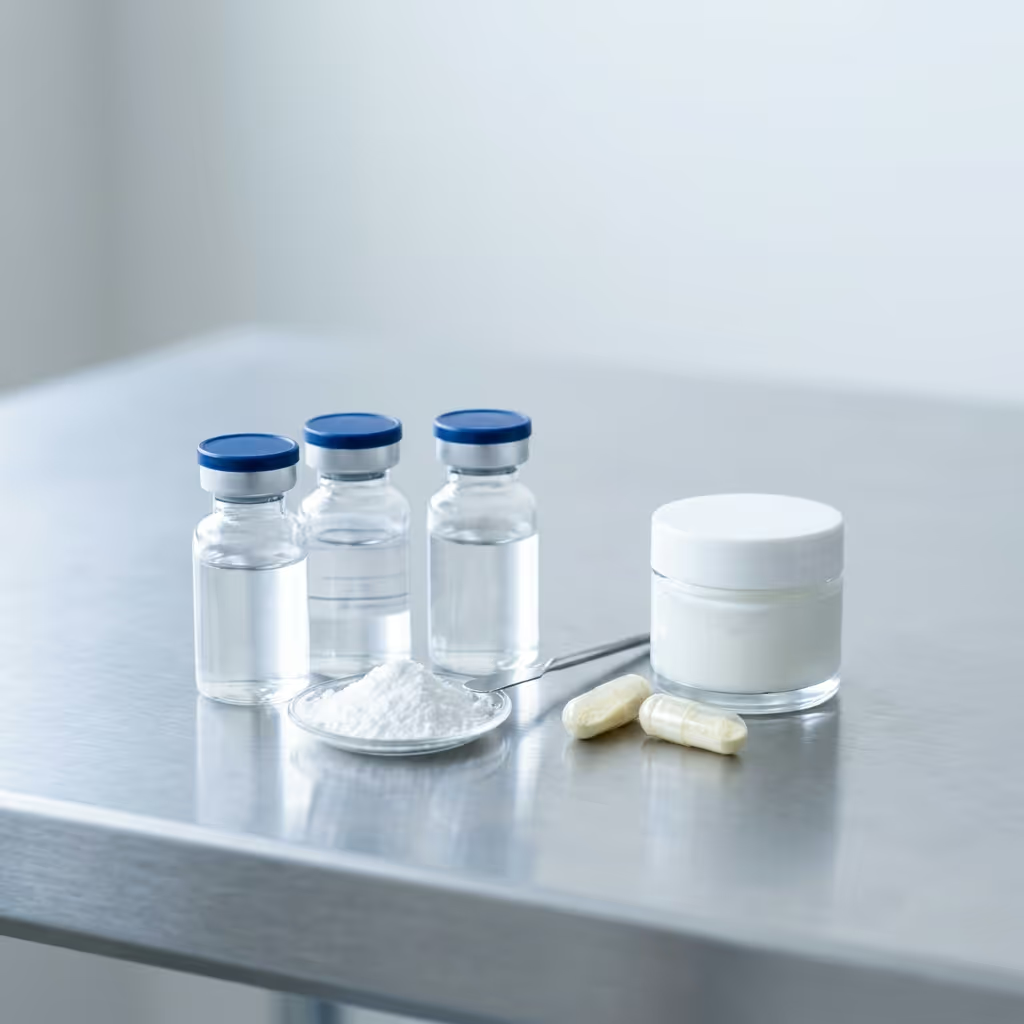
Three clear liquid vials, white powder on spoon, two capsules, and a cream jar on a metal surface.
QUALITY AND TESTING

Held to a higher standard

Every preparation is made under strict quality controls, and verified by a licensed pharmacist.
We use validated quality processes and third-party testing where appropriate
Sterile compounding in a dedicated USP <797> cleanroom
Non-sterile compounding under USP <795> and <800> standards
USP/NF-grade ingredients from reputable, vetted suppliers

Why patients choose Bayview

Made in our own pharmacy
Made to your prescription
Quality tested
Real pharmacist support
Trusted since 2006

Our formulations

Topical sodium thiosulfate is compounded at the concentration and in the base your prescriber orders. The preparations below are those Bayview makes most often and are shown for reference only; your prescriber selects what is appropriate.

Preparation Size How it's used
Sodium thiosulfate 20% cream (metered pump, 0.5 mL per actuation)50–60 mLThin layer to affected area as directed
Sodium thiosulfate 25% cream60 mLThin layer to affected area as directed
Sodium thiosulfate 25% cream, fragrance free60 mLThin layer to affected area as directed
Sodium thiosulfate 25% in zinc oxide cream (jar)60 gThin layer to affected area, ± dressing, as directed
Sodium thiosulfate 25% / zinc oxide 20% gel (jar)60 gThin layer to affected area, ± dressing, as directed
Sodium thiosulfate 25% solution30 mL or 175 mLApply to affected area as directed
Custom concentration or baseAs orderedAs your prescriber directs

Directions are set by the prescriber; the schedules above reflect common regimens and are not treatment recommendations. Preparations are listed for education only and are not a statement that any strength or base is better for a particular person. All topical uses of sodium thiosulfate are off-label; there is no FDA-approved topical sodium thiosulfate product in the United States. Oral sodium thiosulfate 300 mg capsules are compounded separately on prescriber order. A valid prescription is required, and your prescriber determines what is appropriate. This is a compounded medication and is not FDA-approved.

Start with a prescription
Prescribers: request this order form →

Frequently asked questions

What is topical sodium thiosulfate used for?

Prescribers use it most often for calcium deposits in the skin, called calcinosis cutis, and historically for the fungal rash tinea versicolor. Sodium thiosulfate makes calcium salts more soluble, which is the rationale for applying it over deposits, and it releases sulfur on the skin, which gives mild antifungal and keratolytic activity. Your prescriber decides whether it fits your situation.

How strong is the evidence behind it?

Honestly, limited. Topical use is supported mainly by case series and retrospective reports rather than randomized trials, so published results may not predict yours.

It is also worth being clear that topical sodium thiosulfate is not a treatment for calciphylaxis, which requires specialist medical care. Ask your prescriber what a realistic result looks like before you start.

Does it really smell like sulfur?

Yes, plainly. It smells like rotten eggs, and that is expected rather than a sign anything is wrong with your preparation. Most people find it noticeable. Applying at bedtime, covering the area with a dressing if your prescriber agrees, and asking about a fragrance-free base all help. The odor is a common reason people stop using it, so it is better to plan around it than be surprised.

How is it applied?

Use it exactly as your label directs. In general a thin layer goes on the affected area only, sometimes under a dressing, once or twice daily. Avoid the eyes and mouth and any area not meant for treatment, and wash your hands afterward. Response takes weeks to months, so do not increase the amount, the area, or the frequency on your own.

Is there an FDA-approved topical version?

No. The FDA-approved sodium thiosulfate products are injections. There is no FDA-approved topical sodium thiosulfate in the United States, so every topical use is off-label and every topical preparation is compounded. Compounded medications are not reviewed by the FDA for safety, effectiveness, or quality before they are dispensed, and a valid prescription is required.

How should I store it?

Follow your label. Generally that means controlled room temperature, away from heat and direct light, unless the label tells you to refrigerate. Keep the container tightly closed so it does not dry out. If the preparation separates, forms crystals, or changes in appearance, call the pharmacy before using it. Keep it out of the reach of children, do not share it, and discard unused medication as your pharmacist directs.

Do I need a prescription?

Yes. All of our medications require a valid prescription from a licensed provider. We're a dispensing and compounding pharmacy, so we don't provide consultations or write prescriptions. If you don't have one yet, you'll need to find and see a provider first.

What is compounding?

Compounding is the practice of preparing a medication tailored to an individual patient's prescription. Instead of a mass-produced product, a compounding pharmacy makes the medication to the specific strength, form, or combination your provider orders.

Are compounded medications FDA-approved?

Compounded medications are not FDA-approved. They're prepared by a licensed pharmacy pursuant to a valid prescription for an individual patient, under USP standards. The FDA does not review compounded medications for safety or effectiveness.

How do providers send a prescription to Bayview?

Providers can submit a prescription three ways:

  • E-prescribe: Search Bayview Pharmacy, Warwick, RI (NCPDP 4106882) in your EHR. For compounds, use the compound, custom, or free-text option and include the full formulation, strength, quantity, refills, and directions.
  • Fax: Send a signed order to 401-284-4506 (alt. 401-210-2757) with patient and prescriber details, medication, quantity, refills, directions, signature, and date.
  • Phone: Call 401-284-4505 to submit, clarify, or coordinate refills.

A valid prescription is required, and compounded medications are not FDA-approved.

Can you fill a prescription from my own provider?

Yes. Your provider can send your prescription to Bayview Pharmacy by e-prescribe, fax, or phone, or you can transfer an existing prescription from another pharmacy. Start a request and we'll guide you through it.

How does shipping work?

Once your prescription is verified, we prepare your medication and ship it discreetly in plain packaging either via UPS or USPS. A pharmacy technician confirms the details with you before it goes out, and we're available if you have any questions.

How do refills and automatic refills work?

Refills are coordinated with your prescriber and your prescription. You can request a refill through our website or by calling us, and we'll handle the rest as long as you have refills remaining on a valid prescription. You can also opt into automatic refills on non-controlled substances, with no need to worry about running out of your medication. We can either ship it to you automatically, or ready for pickup.

Shipping & Delivery

Every prescription ships directly to your door in discreet packaging. Refrigerated medications travel in insulated coolers with ice packs to stay cold in transit.

Delivery AreaStandard ShippingRefrigerated Shipping
Rhode Island, Massachusetts & Connecticut$9 USPS$20 UPS
New Hampshire, New Jersey & New York$15 UPS$40 UPS Next Day Air
Florida$15 UPS$80 UPS Next Day Air

Need it faster? Expedited UPS is $15 for Rhode Island, Massachusetts and Connecticut. Your pharmacist will let you know if your medication needs refrigerated shipping. Questions? Call us at (401) 284-4505.

References

Sources reviewed

The medical information on this page draws on the following sources, which are also linked where cited.

  1. U.S. Food and Drug Administration. PEDMARK (sodium thiosulfate injection) — prescribing information.
  2. DailyMed (U.S. National Library of Medicine). Sodium Thiosulfate Injection — prescribing information (cyanide antidote).
  3. U.S. Food and Drug Administration. MUSTARGEN (mechlorethamine HCl for injection) label — extravasation management with sodium thiosulfate.
  4. Reddy S, Kumar P, Al Aboud AM. Calcinosis Cutis. StatPearls, NCBI Bookshelf.
  5. Chang JJ. Calciphylaxis. StatPearls, NCBI Bookshelf.
  6. Calcinosis Cutis Universalis: A Review of Therapeutic Strategies and Surgical Management. Journal of Clinical Medicine.
  7. Merck Manual Professional Edition. Tinea Versicolor (Pityriasis Versicolor).
  8. AHFS Drug Information. Sodium Thiosulfate (Topical) monograph.

Important safety information

Important safety information

Compounded topical sodium thiosulfate is a prescription medication and is not FDA-approved. There is no FDA-approved topical sodium thiosulfate product in the United States; the approved products are injections. All topical use is off-label. Use it only as prescribed and under the care of a licensed prescriber. Bayview Pharmacy does not provide consultations or determine whether a formulation is appropriate for you.

Do not use topical sodium thiosulfate if you:

  • Are allergic to sodium thiosulfate or to any other ingredient in your preparation, including zinc oxide or the base.

Warnings and precautions:

  • Evidence is limited. Topical use is supported mainly by case series and retrospective reports, not randomized trials. Topical sodium thiosulfate is not a treatment for calciphylaxis, which requires specialist care.
  • Sulfur odor is expected. These preparations smell like sulfur. Applying at bedtime or asking your prescriber about a fragrance-free base can help.
  • Talk to your prescriber first if you have kidney disease, or if you will be applying it over large areas or over open ulcers.
  • Tell your prescriber if you are pregnant, may be pregnant, or are breastfeeding — topical sodium thiosulfate has not been studied in pregnancy.
  • Apply only to the areas your prescriber specifies. Avoid the eyes, mouth, and areas not intended for treatment.
  • Response takes weeks to months. Do not change the amount, the area, or the schedule on your own.
  • Tell your prescriber about your full health history, allergies, and all medications you take.

Common side effects:

  • Stinging or burning on application, redness, itching, dryness, and peeling — more likely on broken or ulcerated skin.
  • A characteristic sulfur odor.

Get emergency care for:

  • Signs of a serious allergic reaction such as widespread rash, swelling of the face or throat, or trouble breathing.

Also contact your prescriber for:

  • Severe or persistent burning, blistering, or worsening of the treated skin.
  • Nausea, vomiting, unusual fatigue, or shortness of breath during treatment, especially if you are treating large or ulcerated areas.

Storage:

Store as directed on the label — generally at controlled room temperature away from heat and direct light, unless your label says to refrigerate. Keep the container tightly closed. If the product separates, forms crystals, or changes in appearance, contact the pharmacy before using it. Keep out of the reach of children, do not share it, and discard unused medication as directed by your pharmacist.

This is a compounded prescription medication and is not approved by the FDA. Use it only under the supervision of a licensed provider, exactly as prescribed. Do not adjust your dose without talking to your prescriber. Seek emergency care for any severe or unexpected reaction. This information is not complete; talk to your provider about your full medical history and all medications you take.

Ready to get started?

Send us your prescription and a Bayview pharmacist will take it from there.