



In Stock
DMSO Cream & Gel, Compounded | Bayview Pharmacy

DMSO (Dimethyl Sulfoxide) Cream & Gel

Smiling man in blue pharmacist scrubs with arms crossed and pen behind his ear.
Medically reviewed by Ryan Dyer, RPh
Last updated on
September 2, 2026
Starting at
$90
for
30 g
Checkmark icon followed by text 'HSA/FSA Eligible'.
Start with a prescription
Licensed to fill prescriptions for patients in RI, MA, CT, NY, NJ, NH & FL
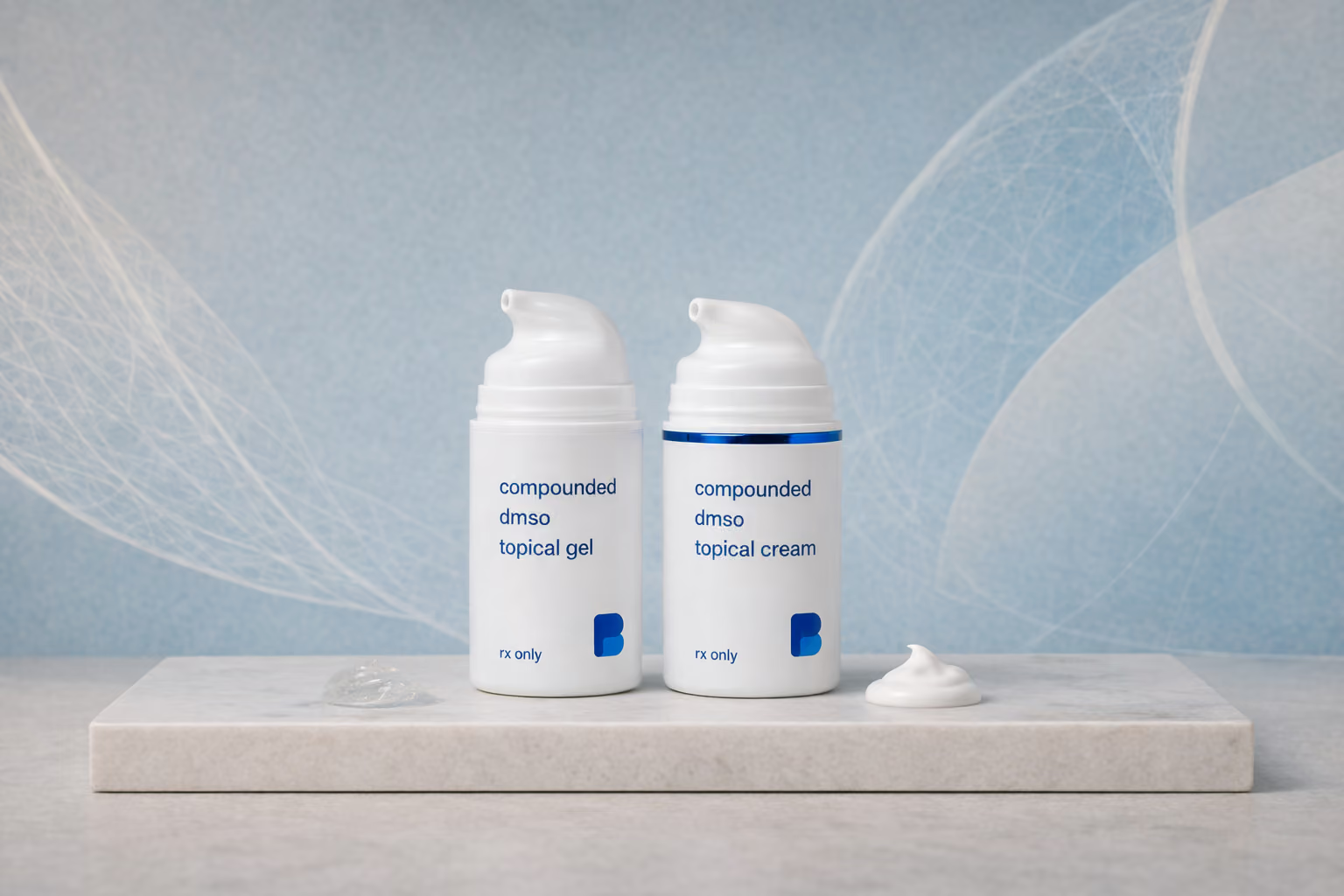
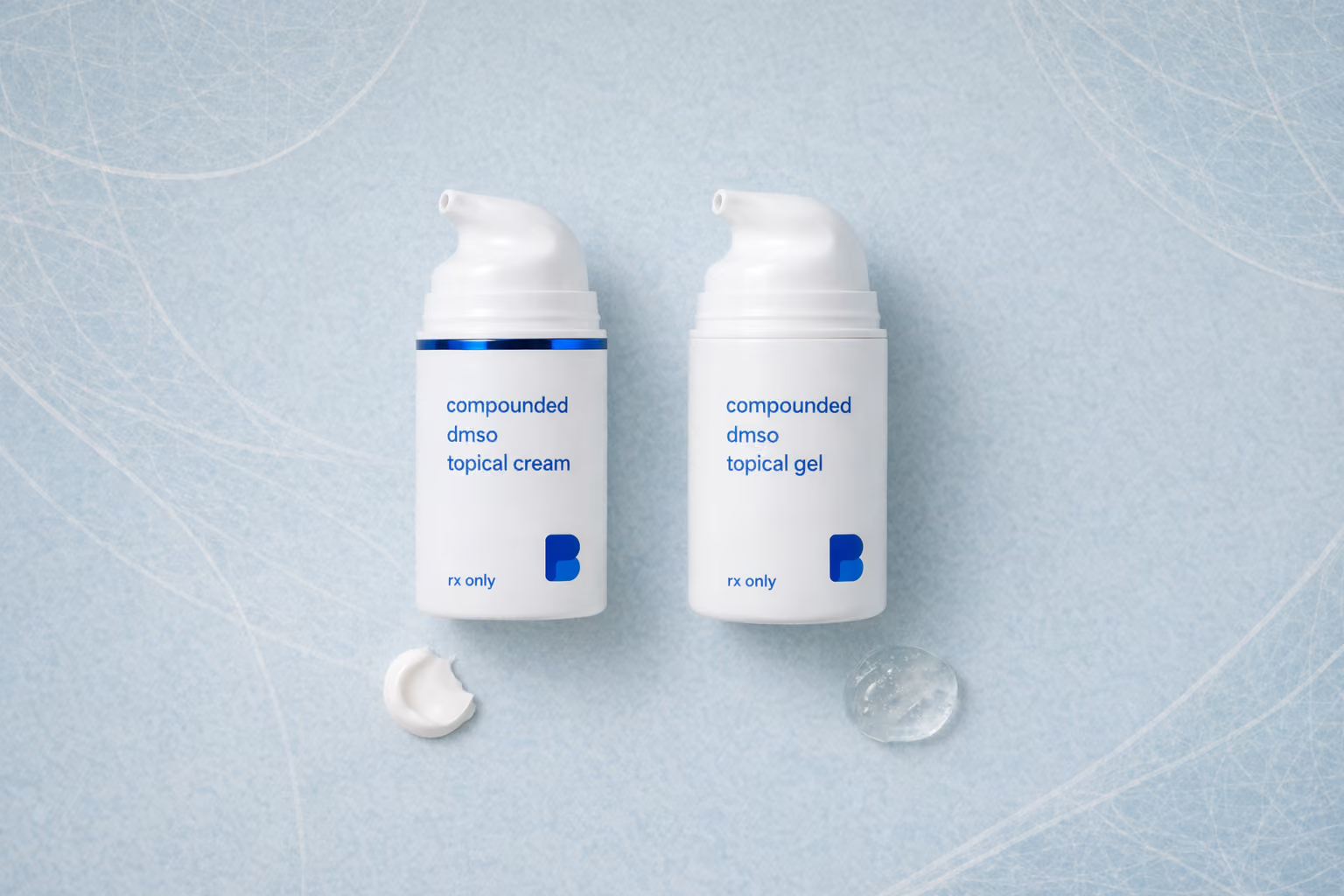
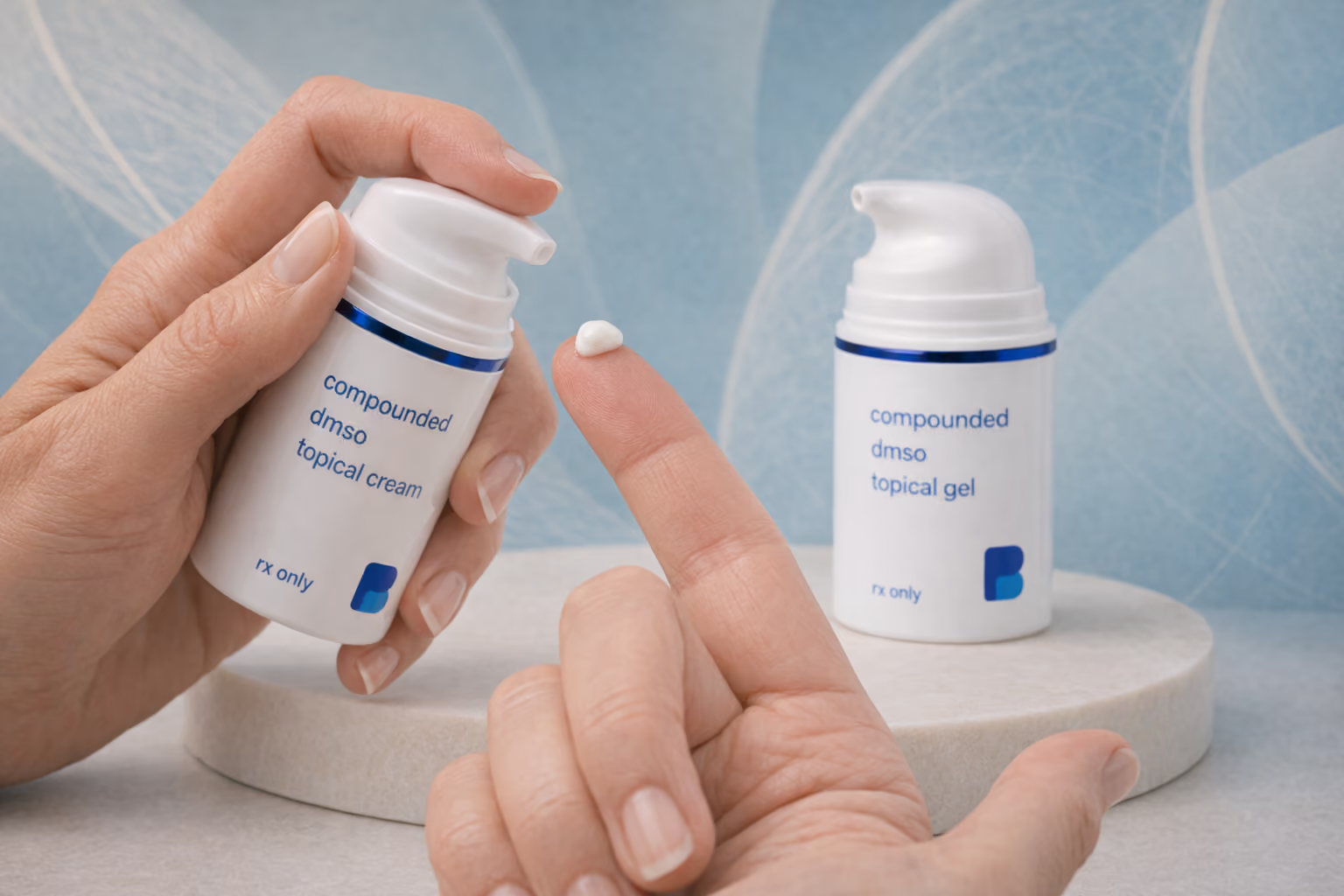
  • Two topical strengths. A 10% gel and a 50% cream, the strengths Bayview has prepared for the skin.
  • Pharmaceutical-grade DMSO. USP dimethyl sulfoxide, the same grade used in the approved bladder solution, not industrial solvent.
  • Not manufactured for the skin. The only FDA-approved DMSO product is a bladder instillation; topical DMSO is compounded off-label.
  • Compounded to order. Prepared in our Rhode Island pharmacy for an individual prescription.

Dimethyl sulfoxide, or DMSO, is a clear liquid solvent that passes readily through skin and carries other substances with it. The only FDA-approved DMSO product is Rimso-50, a 50% solution instilled into the bladder for the symptoms of interstitial cystitis. DMSO is also the vehicle in Pennsaid, an approved diclofenac solution for knee osteoarthritis, at 45.5% of the product. No DMSO cream or gel is manufactured for the skin, so when a prescriber orders one, Bayview compounds it as a 10% topical gel or a 50% topical cream. These preparations are not FDA-approved, their use is off-label, and a valid prescription is required.

Prescribers most often order topical DMSO for localized musculoskeletal pain and inflammation, such as an arthritic joint, a strain, or a tendon, and sometimes as a skin-penetration vehicle for other ingredients in a custom preparation. The clinical evidence for DMSO alone in osteoarthritis is old and of limited quality, so your prescriber weighs it case by case and decides whether it is appropriate, at what strength, and how it should be applied.

Bayview also compounds diclofenac gel, custom topical pain cream, and the full range of pain management preparations.

What is compounded DMSO cream?

A cream or gel made with dimethyl sulfoxide, a solvent that passes through skin and carries other substances with it, prepared by Bayview at 10% (gel) or 50% (cream) to a prescriber's order. No DMSO cream or gel is manufactured; the only FDA-approved DMSO product is a bladder solution for interstitial cystitis. Compounded topical DMSO is not FDA-approved, its use is off-label, and a prescription is required.

What do prescribers use it for?

Most often for pain and inflammation in one place: an arthritic knee or hand, a sprain, tendinitis, or bursitis. Some prescribers also use it as a base that helps another ingredient in a custom cream reach deeper tissue. The trials of DMSO alone in knee osteoarthritis are old and of limited quality, so it is a case-by-case decision for your prescriber, not a proven treatment.

Trusted by 105,826 patients to date.
A group of faces of our past satisfied patients.
Compounded medications are prepared pursuant to a valid prescription for an individual patient and are not FDA-approved. This page is for educational purposes and is not medical advice.
**The FDA does not review or approve compounded medications for safety or effectiveness. A valid prescription from a licensed practitioner is required.
Important safety information →
Service availability

Prescription delivery in your state

Bayview Pharmacy currently serves eligible patients in six states. Check your state before getting started.

Where we currently serve

Select a highlighted state to check availability.

Currently licensed Licensed — non-controlled only Not currently licensed Your selection

Select a state on the map or use the state checker.

Do we serve your state?

Choose your state to confirm current service availability.

Thank you! Your submission has been received!
Oops! Something went wrong while submitting the form.
Currently licensed in
Start with a prescription

Getting your prescription filled is simple

Send us your prescription

STEP
1
Have your provider e-prescribe to Bayview, fax it to us, or call it in directly to one of our pharmacists.
A thin blue light beam connecting two clear glass slabs on a white surface.

A pharmacist reviews it

STEP
2
We verify your prescription and prepare your medication to your provider's exact instructions.
Close-up of a white dial with blue measurement markings and a rotating knob.

We compound & ship

STEP
3
We prepare your medication and ship it discreetly to your door, with support when you need it.
Close-up of a gray box with a precise blue line running along its folded edges.

What is DMSO (Dimethyl Sulfoxide) Cream & Gel?

Dimethyl sulfoxide, usually shortened to DMSO, is a clear, colorless liquid first produced as a by-product of paper making. It dissolves an unusually wide range of substances, mixes with water, and passes through skin within minutes, carrying dissolved material with it. Those properties are why it has been studied as a medicine since the 1960s and why it is also treated with care: whatever is on the skin can travel inward with it.

In the United States the only FDA-approved DMSO product is Rimso-50, a 50% solution that a clinician instills into the bladder for the symptoms of interstitial cystitis. DMSO is also the carrier in Pennsaid, an approved diclofenac solution for knee osteoarthritis, where it makes up 45.5% of the product. No DMSO cream, gel, or solution is manufactured for direct use on the skin, so when a prescriber orders one, Bayview compounds dimethyl sulfoxide USP as a 10% topical gel or a 50% topical cream. These compounded preparations are not FDA-approved, their use is off-label, and a valid prescription is required. Bayview compounds this as part of our pain management line.

Compounded topical DMSO is not FDA-approved, and this use is off-label. It is prepared by a licensed pharmacy to a prescriber's order from pharmaceutical-grade DMSO. Because DMSO carries other substances through the skin, the strength, the site, how often it is applied, and what else may touch that skin are set by your prescriber and should be followed exactly.

How does it work?

DMSO is a small, polar solvent that moves through the outer layer of skin and increases the passage of other molecules with it, which is why it is used as a penetration enhancer in Pennsaid and in custom topical preparations (Capriotti and Capriotti, 2012). On its own it has been reported to scavenge hydroxyl free radicals, to reduce local inflammation, and to slow conduction in small pain fibers, which is the basis for its study in painful and inflamed joints and soft tissue (Capriotti and Capriotti, 2012). In the body it is broken down to dimethyl sulfone and dimethyl sulfide, and the sulfide is what produces the garlic-like breath odor (DailyMed, Rimso-50 label).

What is it used for?

Prescribers most often order topical DMSO for localized musculoskeletal pain and inflammation: an osteoarthritic knee or hand, a sprain or strain, tendinitis, or bursitis. It is also ordered as a vehicle, added to a custom cream so that another ingredient reaches deeper tissue. The evidence for DMSO by itself is thin. A systematic review of the randomized trials in knee osteoarthritis found that two of four DMSO trials reported less pain than the comparator, but judged all of them to be of poor methodology, with possible unblinding from the odor and uncertain dose and duration, and concluded that no definitive conclusion could be drawn (Brien et al., 2008). The approved uses of DMSO, the bladder instillation for interstitial cystitis and the vehicle in Pennsaid, are for different routes and products (DailyMed, Rimso-50 label; FDA, Pennsaid label). Your prescriber decides whether topical DMSO fits your situation.

Gel or cream?

The 10% gel is the lighter, lower-strength option and dries quickly; the 50% cream is the strength most prescribers ask for and is closer to the concentration of the approved bladder solution. Both come in a metered pump so that each press delivers about the same amount. Higher strengths are more likely to redden, dry, or irritate the skin, which is one reason a prescriber may start with the gel. Your prescriber selects the form and strength; see the strengths section for what Bayview compounds.

How is it used?

Wash and dry the area first and apply nothing else to it: no other cream, lotion, sunscreen, or insect repellent, because DMSO can carry it through the skin. Apply a thin layer to the painful area as often as your prescriber directed, usually two or three times a day, and let it dry without covering it unless you were told to. Wash your hands afterward. Expect a garlic-like taste within minutes and a matching odor on your breath and skin that can last up to three days; it fades once treatment stops. Do not apply it near the eyes, to broken skin, or over a large area of the body.

Side effects & safety

The most common effects are the garlic-like taste and odor, and skin reactions at the site: dryness, redness, itching, warmth, and burning. In the Pennsaid trials, where DMSO is 45.5% of the product, dry skin at the application site was reported by about a third of patients, and contact dermatitis, sometimes with blisters, occurred with long-term use (FDA, Pennsaid label). Stronger preparations and covering the area with a dressing make irritation more likely.

Eyes, allergy, and what DMSO carries with it. Changes in the lens of the eye were seen in monkeys, dogs, and rabbits given high doses of DMSO, and the Rimso-50 labeling recommends eye examinations, including a slit-lamp exam, before and periodically during treatment (DailyMed, Rimso-50 label); the Pennsaid labeling notes the same lens findings in animals (FDA, Pennsaid label). DMSO can release histamine, so hives, swelling, wheezing, or faintness after application need medical care (DailyMed, Rimso-50 label). And because it potentiates other medicines and carries anything on the skin inward, tell your prescriber about every medicine and product you use, keep the treated skin free of other substances, and use only the pharmaceutical-grade preparation the pharmacy dispensed.

Who should not use it?

Do not use DMSO if you are allergic to it. Avoid it on broken, infected, or freshly shaved skin, near the eyes, or under a dressing unless your prescriber directed otherwise. Talk with your prescriber before using it if you take a blood thinner or other medicines whose effect could be increased, if you have a history of eye problems, or if you are pregnant or breastfeeding: the approved labeling says DMSO should be used in pregnancy only if the potential benefit justifies the risk, and safety in children has not been established. Do not substitute industrial or veterinary DMSO bought online; its impurities travel through the skin as readily as the DMSO does.

How should it be stored?

Store as directed on your label, at room temperature away from heat and light, with the pump closed, and keep it out of the reach of children and pets. Do not use it after the beyond-use date, and dispose of unused medication as directed.

Why is this compounded?

The only FDA-approved DMSO product is the 50% bladder solution, and the only approved topical product containing DMSO uses it as a vehicle for diclofenac. When a prescriber wants DMSO itself on the skin, at 10% or 50%, alone or as the base for other ingredients, compounding is the only way to prepare it. As a 503A compounding pharmacy, Bayview prepares each order in small batches under USP standards, pursuant to a prescription for an individual patient. We do not supply it as clinic or office stock, that is the role of a 503B outsourcing facility, which Bayview is not. Compounded preparations are not FDA-approved. Related preparations include Diclofenac Gel, Topical Pain Cream, and Lidocaine Cream & Ointment. The full list is in our compounded medications catalog.

Clinical details for prescribers

Regulatory status. Dimethyl sulfoxide USP. FDA-approved presentations: Rimso-50, 50% w/w aqueous solution for intravesical instillation, indicated for symptomatic relief of interstitial cystitis; and as the 45.5% w/w vehicle in Pennsaid (diclofenac sodium 1.5% and 2% topical solution) for osteoarthritis of the knee. No single-agent topical DMSO product is approved. Compounded 10% gel and 50% cream are 503A preparations, not FDA-approved, and off-label. Not a controlled substance.

Formulation & directions. Bayview compounds dimethyl sulfoxide USP as a 10% topical gel and a 50% topical cream, each in a metered pump, dispensed in 30 g or 60 g. Typical directions: a thin layer to the affected area two to three times daily on clean, dry, intact skin, no occlusion, no other topical to the site. DMSO is also available as the penetration-enhancing base for custom preparations (diclofenac, ketoprofen, lidocaine, antifungal nail suspensions), which are separate preparations and are not covered by this page.

Safety & counseling:

  • Garlic-like taste within minutes and breath and skin odor for up to 72 hours (dimethyl sulfide metabolite); counsel in advance, since it is the usual reason for discontinuation and it unblinds trials (DailyMed, Rimso-50 label; Brien et al., 2008).
  • Application-site dryness, erythema, pruritus, burning, and contact dermatitis with vesiculation, more likely at 50% and under occlusion; in Pennsaid trials dry skin 32%, and in the long-term study contact dermatitis 13% and with vesicles 10% (FDA, Pennsaid label).
  • Lens refractive changes and opacities in animals at high doses; Rimso-50 labeling recommends slit-lamp examination before and periodically during treatment. Consider baseline and periodic eye examination for prolonged or high-strength courses (DailyMed, Rimso-50 label).
  • Histamine release and anaphylactoid reactions; potentiation of concomitant medications; enhanced percutaneous absorption of any co-applied agent. Caution with anticoagulants and with any other topical on the same site (DailyMed, Rimso-50 label).
  • Efficacy evidence for topical DMSO alone in osteoarthritis is limited to older trials of poor methodology; no definitive conclusion could be drawn (Brien et al., 2008). Frame expectations accordingly.
  • Pregnancy only if benefit justifies risk; safety and effectiveness in children not established. Pharmaceutical (USP) grade only; industrial-grade DMSO carries impurities transdermally.

Non-controlled; ship to patient or office per the order form. Licensed to dispense in RI, MA, CT, NY, NJ, NH, and FL. Background: DailyMed, Rimso-50 label; FDA, Pennsaid label; Brien et al., 2008; Capriotti and Capriotti, 2012. Account setup, licensing, and ordering are covered on our for providers page.

This is a prescription compounded medication and is not FDA-approved; topical use is off-label. This information is educational and is not medical advice. Your prescriber determines whether it is appropriate and sets the formulation and directions.
References

  1. DailyMed: Rimso-50 (dimethyl sulfoxide) prescribing information
  2. FDA: Pennsaid (diclofenac in 45.5% DMSO) prescribing information
  3. Brien et al., Osteoarthritis and Cartilage 2008: systematic review of DMSO and MSM in osteoarthritis
  4. Capriotti and Capriotti, JCAD 2012: dimethyl sulfoxide in dermatology

Reviewed by Ryan Dyer, RPh, pharmacist at Bayview Pharmacy. Last reviewed September 3, 2026. Bayview does not provide consultations and does not decide whether a medication is right for you. Your prescriber makes that call.

In Stock

On this page

A solvent that goes through skin, compounded to order

DMSO passes through skin within minutes and carries other substances with it. Compounded as a 10% gel or a 50% cream, to your prescriber's order, for localized pain and inflammation or as the base of a custom preparation.

Start with a prescription

Two topical strengths, not manufactured for the skin

The 10% gel and the 50% cream, each in a metered pump, prepared from pharmaceutical-grade dimethyl sulfoxide. Dispensed in 30 g and 60 g, shipped to your patient or your office.

View our formulas

Personalized compounding for patients who need more than a standard option.

"As a compounding pharmacy, we prepare each medication to a provider’s exact specifications. My focus, and my team’s focus, is quality, consistency, and close communication with prescribers so patients receive medication prepared for their individual needs."
Ryan Dyer, RPh
Owner and Chief Pharmacist, Bayview Pharmacy
Smiling man in blue scrubs with arms crossed and pen behind his ear
Three clear liquid vials, white powder on spoon, two capsules, and a cream jar on a metal surface.
QUALITY AND TESTING

Held to a higher standard

Every preparation is made under strict quality controls, and verified by a licensed pharmacist.
We use validated quality processes and third-party testing where appropriate
Sterile compounding in a dedicated USP <797> cleanroom
Non-sterile compounding under USP <795> and <800> standards
USP/NF-grade ingredients from reputable, vetted suppliers

Why patients choose Bayview

Made in our own pharmacy
Made to your prescription
Quality tested
Real pharmacist support
Trusted since 2006

Our formulations

Bayview compounds dimethyl sulfoxide USP for the skin in the strength and base your prescriber orders. Both preparations are dispensed in a metered pump so each press delivers about the same amount. DMSO passes through skin quickly and takes whatever is on the skin with it, so the treated area should be clean and dry, and nothing else should be applied to it. The approved DMSO product is a 50% bladder solution and is not what this page describes.

Strength Form Commonly ordered for Sizes
DMSO 10%Topical gel (pump)The lower strength; a common starting point for a painful joint or soft tissue30 g, 60 g
DMSO 50%Topical cream (pump)The strength most often ordered; matches the concentration of the approved bladder solution30 g, 60 g
Custom strengthAs orderedStrength and base set by your prescriber, alone or with other ingredientsAs ordered

Strengths are listed for education only and are not a statement of effectiveness. Strength, directions, and duration are prescriber-directed, and a valid prescription is required. Compounded preparations are not FDA-approved, and this use is off-label.

Start with a prescription

Frequently asked questions

What is compounded DMSO cream?

A cream or gel made with dimethyl sulfoxide, a solvent that passes through skin and carries other substances with it, prepared by Bayview at 10% (gel) or 50% (cream) to a prescriber's order. No DMSO cream or gel is manufactured; the only FDA-approved DMSO product is a bladder solution for interstitial cystitis. Compounded topical DMSO is not FDA-approved, its use is off-label, and a prescription is required.

What do prescribers use it for?

Most often for pain and inflammation in one place: an arthritic knee or hand, a sprain, tendinitis, or bursitis. Some prescribers also use it as a base that helps another ingredient in a custom cream reach deeper tissue. The trials of DMSO alone in knee osteoarthritis are old and of limited quality, so it is a case-by-case decision for your prescriber, not a proven treatment.

Why does it make my breath smell like garlic?

Your body breaks DMSO down into dimethyl sulfide, which is breathed out through the lungs. The garlic or oyster-like taste starts within minutes of applying it, and the odor on your breath and skin can last up to three days. It is expected, it is not an allergy, and it stops when treatment stops. Brushing your teeth does not remove it, because it comes from inside.

How do I apply it?

Wash and dry the area, then apply a thin layer with the pump as often as your prescriber directed, usually two or three times a day, and let it dry. Do not put anything else on that skin, including other creams, sunscreen, or insect repellent, because DMSO carries them into the body. Do not cover the area unless told to, keep it away from your eyes and broken skin, and wash your hands afterward.

What are the side effects?

Besides the garlic-like taste and odor, the common effects are on the skin where it is applied: dryness, redness, itching, warmth, or burning. Blisters or a rash can develop, especially with the 50% cream or under a bandage. Lens changes were seen in animals given high doses, so tell your prescriber about any change in vision. Get medical care for hives, swelling, wheezing, or faintness.

Can I use it with other medicines or products?

Ask first. DMSO increases the absorption of anything applied to the same skin and can strengthen the effect of some medicines taken by mouth, including blood thinners, so tell your prescriber about everything you use. Never mix it with, or apply it over, a non-pharmaceutical DMSO product bought online; the impurities in industrial or veterinary DMSO pass through the skin as easily as the DMSO does.

Do I need a prescription?

Yes. All of our medications require a valid prescription from a licensed provider. We're a dispensing and compounding pharmacy, so we don't provide consultations or write prescriptions. If you don't have one yet, you'll need to find and see a provider first.

What is compounding?

Compounding is the practice of preparing a medication tailored to an individual patient's prescription. Instead of a mass-produced product, a compounding pharmacy makes the medication to the specific strength, form, or combination your provider orders.

Examples on this site include medications compounded as liquids for people who cannot swallow pills, thyroid capsules made to a T3/T4 ratio no manufactured product offers, and all-purpose nipple ointment, which combines three actives that are not sold together commercially.

Are compounded medications FDA-approved?

Compounded medications are not FDA-approved. They're prepared by a licensed pharmacy pursuant to a valid prescription for an individual patient, under USP standards. The FDA does not review compounded medications for safety or effectiveness.

How do providers send a prescription to Bayview?

Providers can submit a prescription three ways:

  • E-prescribe: Search Bayview Pharmacy, Warwick, RI (NCPDP 4106882) in your EHR. For compounds, use the compound, custom, or free-text option and include the full formulation, strength, quantity, refills, and directions.
  • Fax: Send a signed order to 401-284-4506 (alt. 401-210-2757) with patient and prescriber details, medication, quantity, refills, directions, signature, and date.
  • Phone: Call 401-284-4505 to submit, clarify, or coordinate refills.

A valid prescription is required, and compounded medications are not FDA-approved.

Can you fill a prescription from my own provider?

Yes. Your provider can send your prescription to Bayview Pharmacy by e-prescribe, fax, or phone, or you can transfer an existing prescription from another pharmacy.

How does shipping work?

Once your prescription is verified, we prepare your medication and ship it discreetly in plain packaging either via UPS or USPS. A pharmacy technician confirms the details with you before it goes out, and we're available if you have any questions.

How do refills and automatic refills work?

Refills are coordinated with your prescriber and your prescription. You can request a refill through our website or by calling us, and we'll handle the rest as long as you have refills remaining on a valid prescription. You can also opt into automatic refills on non-controlled substances, with no need to worry about running out of your medication. We can either ship it to you automatically, or ready for pickup.

Shipping & Delivery

Every prescription ships directly to your door in discreet packaging. Refrigerated medications travel in insulated coolers with ice packs to stay cold in transit.

Delivery AreaStandard ShippingRefrigerated Shipping
Rhode Island, Massachusetts & Connecticut$9 USPS$20 UPS
New Hampshire, New Jersey & New York$15 UPS$40 UPS Next Day Air
Florida$15 UPS$80 UPS Next Day Air

Need it faster? Expedited UPS is $15 for Rhode Island, Massachusetts and Connecticut. Your pharmacist will let you know if your medication needs refrigerated shipping. Questions? Call us at (401) 284-4505.

References

Sources reviewed

The medical information on this page draws on the following sources, which are also linked where cited.

  1. DailyMed, US National Library of Medicine. RIMSO-50 (dimethyl sulfoxide) 50% w/w aqueous solution for intravesical instillation: Prescribing Information.
  2. US Food and Drug Administration. PENNSAID (diclofenac sodium topical solution) in 45.5% w/w dimethyl sulfoxide: Prescribing Information (2016).
  3. Brien S, Prescott P, Bashir N, Lewith H, Lewith G. Osteoarthritis and Cartilage 2008;16:1277-1288. Systematic review of the nutritional supplements dimethyl sulfoxide (DMSO) and methylsulfonylmethane (MSM) in the treatment of osteoarthritis.
  4. Capriotti K, Capriotti JA. Journal of Clinical and Aesthetic Dermatology 2012;5(9):24-26. Dimethyl sulfoxide: history, chemistry, and clinical utility in dermatology.

Important safety information

Important safety information

Compounded DMSO cream and gel are prescription compounded medications and are not FDA-approved. No DMSO product is FDA-approved for use on the skin, so that use is off-label. DMSO carries other substances through the skin, so use it exactly as prescribed, on clean dry skin, and never share it.

Do not use DMSO if you:

  • Are allergic to dimethyl sulfoxide or to any ingredient in the preparation.
  • Have broken, infected, or freshly shaved skin at the site, unless your prescriber has specifically directed it.
  • Are using any other cream, ointment, lotion, sunscreen, insect repellent, or chemical on the same area of skin. DMSO can carry it into the body.

Warnings and precautions:

  • Garlic-like taste and odor. Within minutes of application most people notice a garlic or oyster-like taste, and a similar odor on the breath and skin can last up to 72 hours. This is expected and is not an allergy.
  • Skin reactions. Dryness, redness, itching, warmth, and burning at the site are common, and blistering or contact dermatitis can occur, especially with the 50% cream or with occlusion. Do not cover the area with a bandage or plastic wrap unless directed.
  • Eyes. Lens changes were seen in animals given high doses of DMSO, and the approved product's labeling recommends eye examinations before and during treatment. Tell your prescriber about any change in vision, and keep DMSO away from your eyes.
  • Allergic reactions. DMSO can release histamine; hives, swelling, wheezing, or faintness after application need medical care.
  • Other medicines. DMSO can increase the absorption and effect of medicines applied to the skin and of some taken by mouth. Tell your prescriber about every medicine you use, including blood thinners.
  • Pregnancy, breastfeeding, and children. Safety has not been established. Use in pregnancy only if your prescriber has decided the benefit justifies the risk, and do not use on children unless directed.
  • Grade matters. Use only the pharmaceutical-grade preparation dispensed by the pharmacy. Industrial or veterinary DMSO sold online can contain impurities that DMSO will carry through the skin.

Common side effects:

  • Garlic-like taste and breath odor, skin dryness, redness, itching, warmth, or mild burning at the site. Most fade after each application or when treatment stops.

Get medical care if you have:

  • Hives, swelling of the face or throat, wheezing, or faintness.
  • Blistering, peeling, or a spreading rash at the site.
  • Any change in your vision.

Storage:

Store as directed on your label, at room temperature away from heat and light, with the pump closed, and keep it out of the reach of children and pets. Do not use after the beyond-use date, and discard unused medication as directed by your pharmacist.

This is a compounded prescription medication and is not approved by the FDA. Use it only under the supervision of a licensed provider, exactly as prescribed. Do not adjust your dose without talking to your prescriber. Seek emergency care for any severe or unexpected reaction. This information is not complete; talk to your provider about your full medical history and all medications you take.

Ready to get started?

Send us your prescription and a Bayview pharmacist will take it from there.