



In Stock
Vulvodynia & Pelvic Pain Vaginal Creams | Compounded Rx | Bayview Pharmacy

Vulvodynia Creams

Smiling man in blue pharmacist scrubs with arms crossed and pen behind his ear.
Medically reviewed by Ryan Dyer, RPh
Last updated on
August 7, 2026
Starting at
$90
for
30 g
Checkmark icon followed by text 'HSA/FSA Eligible'.
Start with a prescriptionPrescribers: request this order form →
Licensed to fill prescriptions for patients in RI, MA, CT, NY, NJ, NH & FL
  • Compounded to the actives and strengths your prescriber chooses
  • Prepared in a base intended for vulvar and vaginal tissue
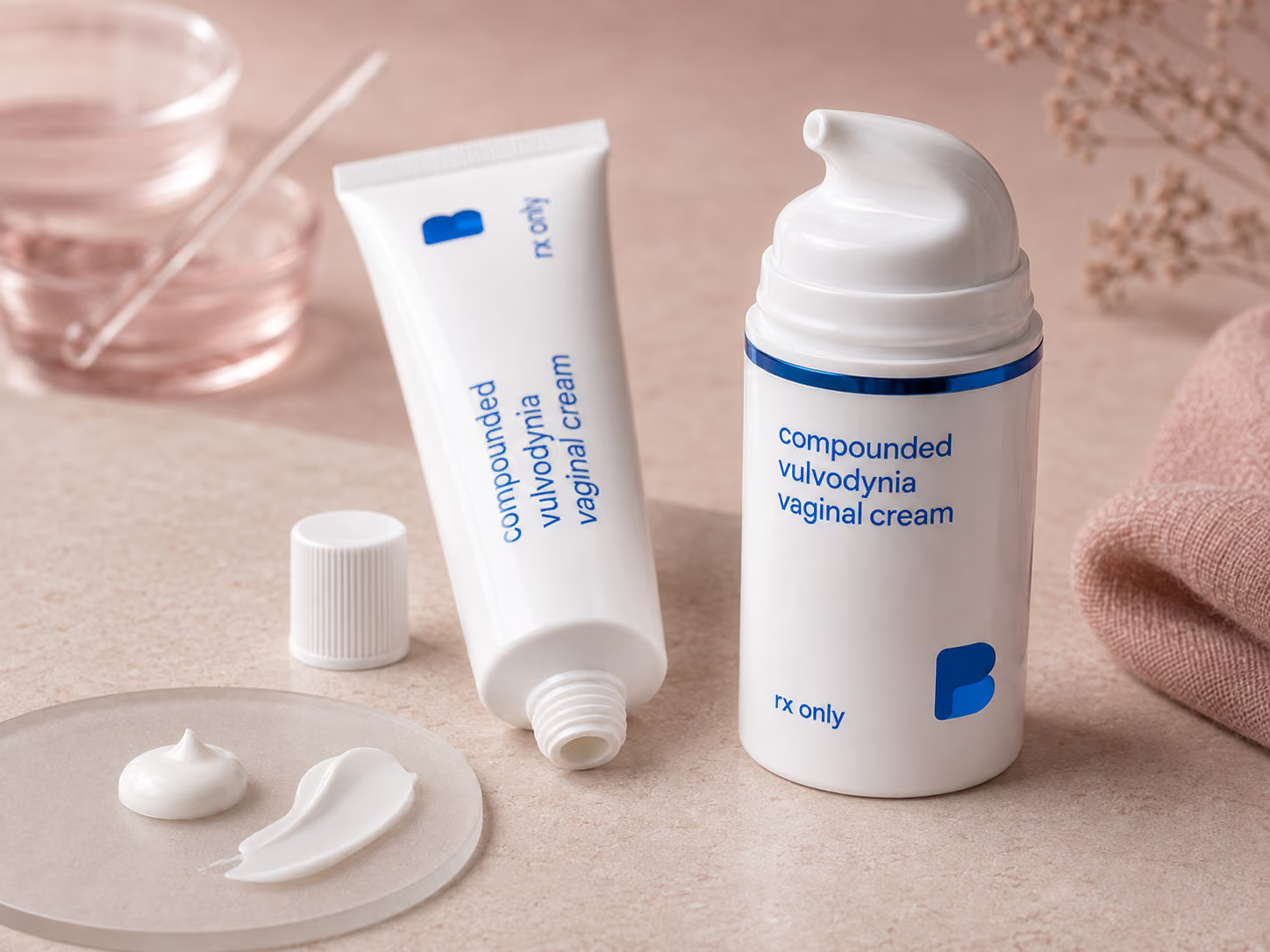
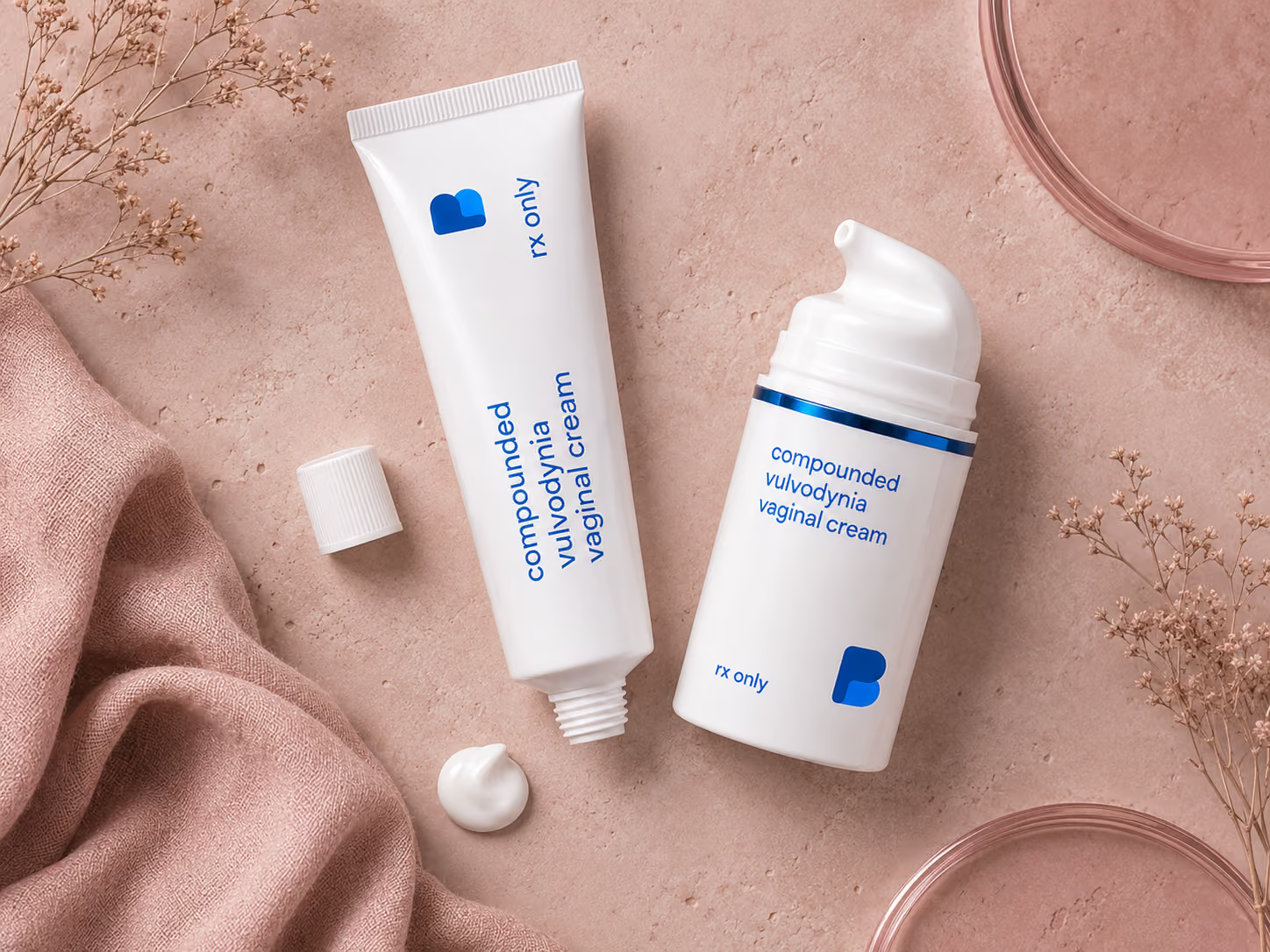
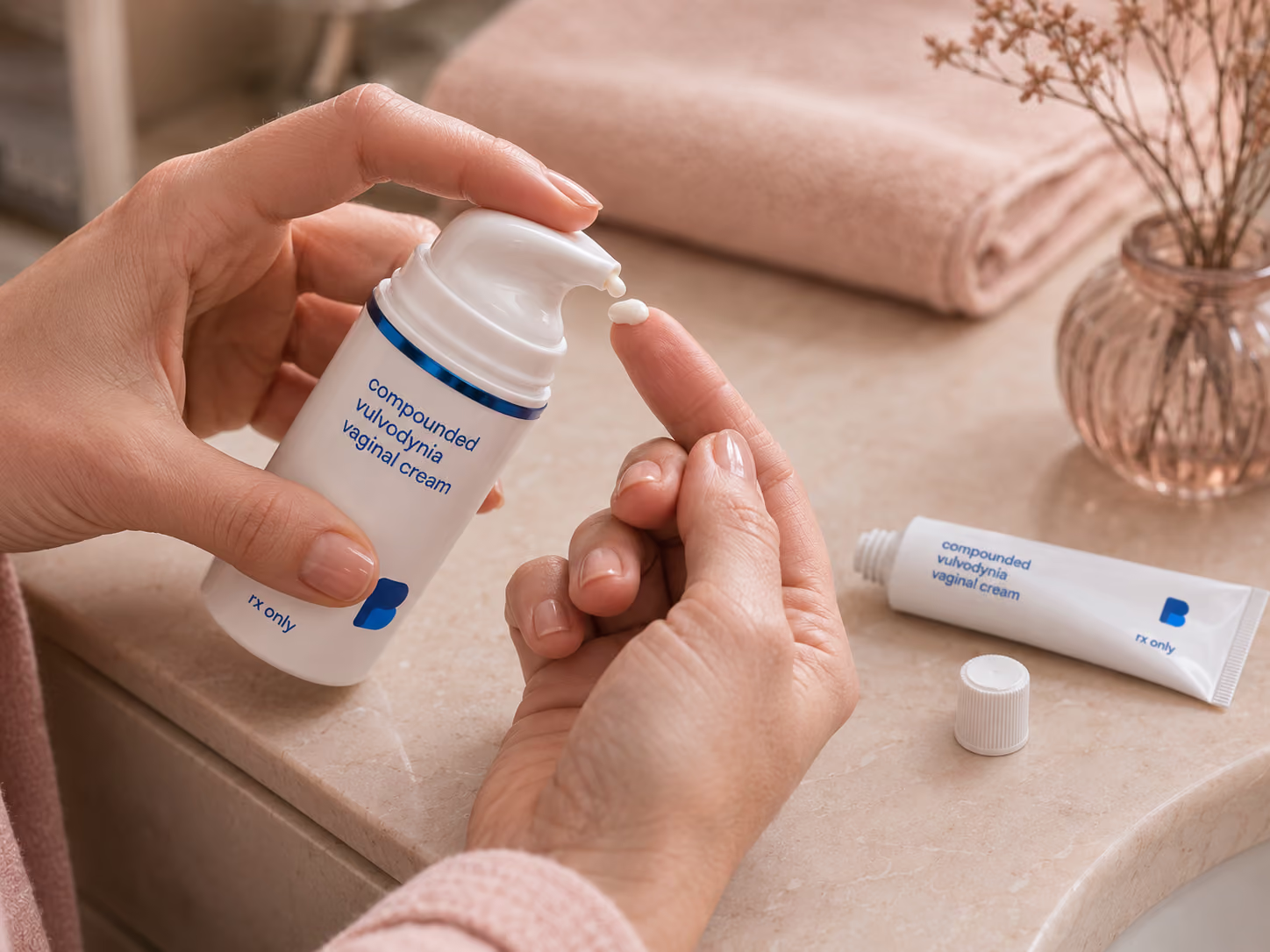
  • Dispensed in a tube or a metered pump for a measured amount
  • Made in small batches under USP <795> standards
  • Dispensed on a prescriber's order, as one part of a broader care plan

Vulvodynia and pelvic pain vaginal creams are compounded, prescription topical preparations that combine one or more nerve-pain, muscle-relaxing, or anesthetic medications in a base intended for vulvar and vaginal tissue. Prescribers use them for chronic vulvar pain, including provoked vestibulodynia. There is no FDA-approved compounded cream for vulvodynia — every combination here is off-label and an unapproved dosage form, the controlled evidence is limited, and these creams are used as one part of a broader care plan rather than as a proven standalone treatment. A valid prescription is required, and compounded medications are not FDA-approved.

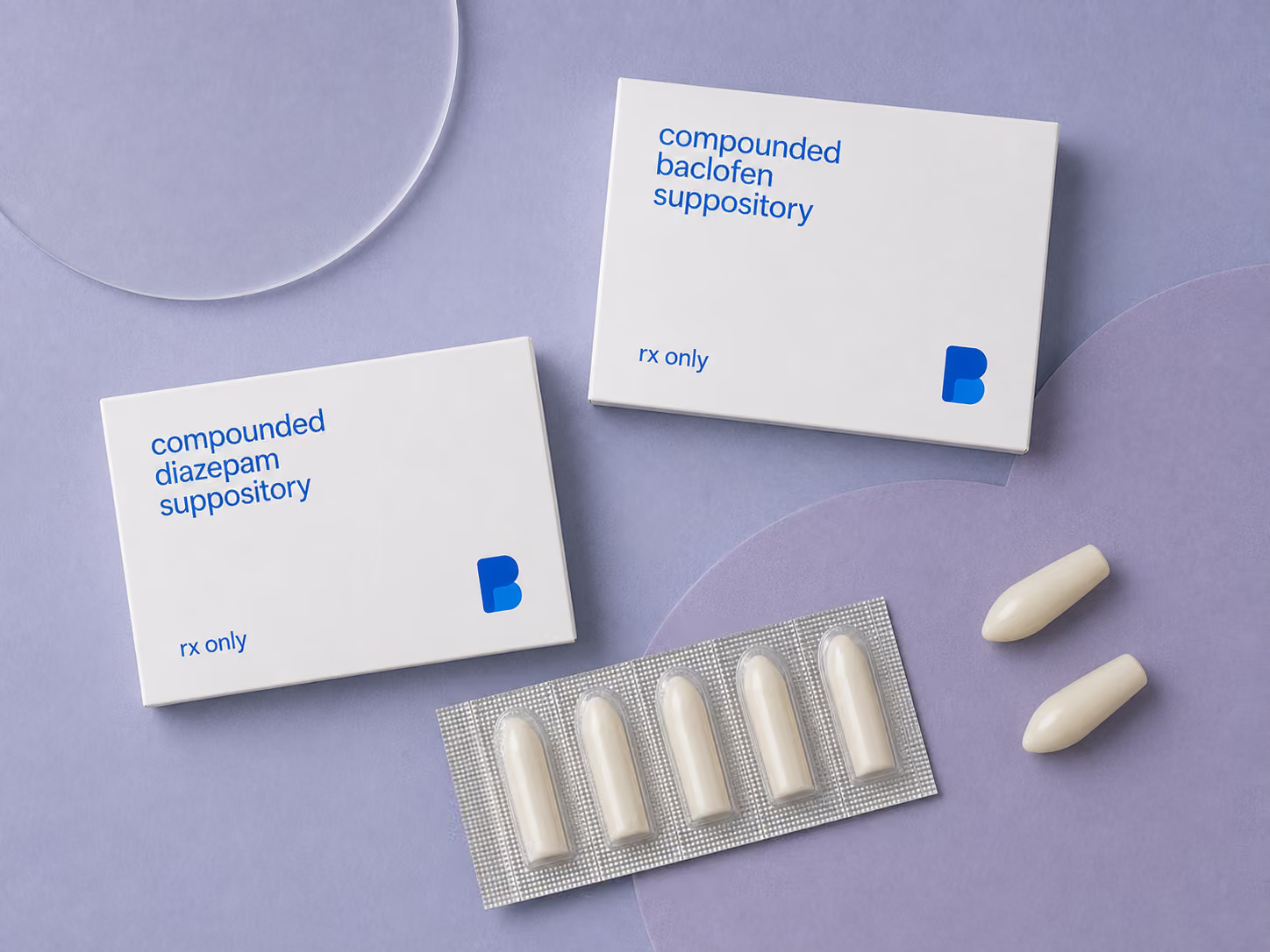
For pelvic floor muscle pain, Bayview also compounds diazepam and baclofen vaginal suppositories.

What is vulvodynia?

Vulvodynia is chronic vulvar pain lasting three months or longer without a clear identifiable cause. It often shows up as burning, stinging, rawness, or soreness. In provoked vestibulodynia, the pain is triggered by touch or pressure at the vestibule, the entrance to the vagina. It is a real and common condition, and it is usually managed with a combination of approaches rather than one medication.

What do the actives in these creams do?

Each active is borrowed from another use. Gabapentin and amitriptyline are nerve-pain medications, baclofen is a muscle relaxant, and lidocaine is a local anesthetic that numbs tissue. Ketotifen is a mast cell stabilizer, and its rationale for vulvar pain comes from laboratory and animal work only. Applying any of them this way is off-label and an unapproved dosage form.

Trusted by 105,826 patients to date.
A group of faces of our past satisfied patients.
Compounded medications are prepared pursuant to a valid prescription for an individual patient and are not FDA-approved. This page is for educational purposes and is not medical advice.
**The FDA does not review or approve compounded medications for safety or effectiveness. A valid prescription from a licensed practitioner is required.
Important safety information →
Service availability

Prescription delivery in your state

Bayview Pharmacy currently serves eligible patients in six states. Check your state before getting started.

Where we currently serve

Select a highlighted state to check availability.

Currently licensed Licensed — non-controlled only Not currently licensed Your selection

Select a state on the map or use the state checker.

Do we serve your state?

Choose your state to confirm current service availability.

Thank you! Your submission has been received!
Oops! Something went wrong while submitting the form.
Currently licensed in
Start with a prescription

Send us your prescription

STEP
1
Have your provider e-prescribe to Bayview, fax it to us, or call it in directly to one of our pharmacists.
A thin blue light beam connecting two clear glass slabs on a white surface.

A pharmacist reviews it

STEP
2
We verify your prescription and prepare your medication to your provider's exact instructions.
Close-up of a white dial with blue measurement markings and a rotating knob.

We compound & ship

STEP
3
We prepare your medication and ship it discreetly to your door, with support when you need it.
Close-up of a gray box with a precise blue line running along its folded edges.

What is Vulvodynia Creams?

Vulvodynia and pelvic pain vaginal creams are compounded, prescription topical preparations. Each one combines one or more medications — commonly gabapentin, amitriptyline, baclofen, lidocaine, or ketotifen — in a cream base intended for vulvar and vaginal tissue, at the strengths your prescriber chooses.

Vulvodynia is chronic vulvar pain lasting at least three months without a clear identifiable cause, which may have potential associated factors (2015 ISSVD, ISSWSH and IPPS consensus terminology). It is described by where it is felt (localized, such as vestibulodynia at the vaginal opening, or generalized), whether it is provoked by touch or happens spontaneously, and whether it began with first contact or after a period of pain-free contact. Many people have provoked vestibulodynia — localized pain at the vestibule that appears with touch, tampon use, or intercourse.

These creams are one part of a care plan, not a proven standalone treatment. There is no FDA-approved compounded cream for vulvodynia, and every combination described here is used off-label in an unapproved dosage form. Compounded topical neuromodulators are widely prescribed, but the controlled evidence for them is limited. The American College of Obstetricians and Gynecologists notes that most evidence in this area comes from clinical experience and observational studies rather than randomized trials, and that in randomized testing topical lidocaine 5% was actually less effective than topical placebo (20% versus 33% response) (ACOG Committee Opinion 673). The mainstay of care is multimodal: pelvic floor physical therapy, cognitive behavioral therapy, and identifying and treating any co-existing dermatologic, hormonal, or infectious cause. Your prescriber decides whether a cream has a role alongside those.

How does it work?

Each active works on a different part of the pain picture, which is why prescribers often combine them.

Gabapentin modulates calcium channels on sensory nerves, reducing the neuropathic pain signalling that can make vulvar tissue painfully sensitive. Amitriptyline is a tricyclic antidepressant that, at pain-management doses, dampens pain transmission in the nervous system. Baclofen is a GABA-B agonist that reduces muscle tension, which matters because pelvic floor muscle overactivity is common alongside vulvar pain. Lidocaine is a local anesthetic that numbs the surface tissue it touches. Ketotifen is a mast-cell stabilizer, included because mast cell activity has been implicated in some vestibulodynia (Frontiers in Cellular and Infection Microbiology, 2023).

Applying these to the vulva puts the medication where the pain is, at doses far lower than the oral equivalents. That is the rationale — not proof that it works better than other approaches.

What is it used for?

These creams are prescribed for chronic vulvar pain, most often provoked vestibulodynia, and sometimes for vulvar pain that accompanies pelvic floor dysfunction. Vulvodynia is a diagnosis of exclusion: ACOG describes an evaluation that includes a careful history, a cotton-swab test to map where the pain is, testing for infection, and a musculoskeletal assessment, with specific treatable conditions ruled out first (ACOG Committee Opinion 673). That workup matters, because a cream will not help pain that is actually coming from a dermatologic condition, an infection, or hormonal changes.

Every use of these combinations is off-label. Only a licensed provider can decide whether one is appropriate for you and which actives and strengths to use. Bayview Pharmacy does not provide consultations and does not determine appropriateness, and a valid prescription is required.

What does the evidence show?

Honestly: the evidence for compounded topical treatments in vulvodynia is thin, and it is worth knowing that before you start.

The clearest finding is a negative one. A randomized trial of topical lidocaine 5% for provoked vestibulodynia did not outperform placebo — it performed slightly worse (20% response versus 33% for placebo) (ACOG Committee Opinion 673). ACOG also states plainly that few randomized trials of vulvodynia treatment exist at all, and that most of the evidence base is clinical experience and observational work. A 2024 scoping review of interventions for localized provoked vulvodynia concluded there is “insufficient evidence to suggest the superiority of one treatment modality for LPV relative to others,” while noting that pelvic floor physical therapy showed superior outcomes to topical lidocaine in head-to-head trials, and that cognitive behavioral therapy produced benefits comparable to or exceeding pharmacologic interventions (Rains et al., International Journal of Women's Health, 2024).

Topical gabapentin, amitriptyline, and baclofen have not been tested against placebo in vulvodynia with anything like the same rigor; they are used on the strength of clinical experience and their oral track record in neuropathic pain. Ketotifen's rationale is newer still: mast cell accumulation has been documented in vulvar tissue, and ketotifen reduced vulvar sensitivity in a rat model, but that work is preclinical and has not been confirmed in human clinical trials (Frontiers in Cellular and Infection Microbiology, 2023).

The National Vulvodynia Association puts the practical consequence well: there is no single treatment that helps everyone, and finding the right combination is a trial-and-error process (NVA, Vulvodynia Treatments). A cream may be a reasonable thing to try as part of a plan that also includes physical therapy, psychological support, and treatment of any underlying cause. It is not a substitute for that plan.

How do the formulas compare?

Bayview compounds these combinations to prescriber order. The table describes what each active contributes; it is not a statement that one formula works better than another for any particular person.

FormulaCommon sizesWhat the actives contribute
Gabapentin 4% or 6% vaginal cream30 g, 60 g tube or metered pumpNeuropathic pain modulation alone
Amitriptyline 2% / baclofen 2%10 g, 30 g tubePain transmission plus muscle tension
Amitriptyline 2% / gabapentin 6%45 g tubeTwo different nerve-pain mechanisms
Amitriptyline / baclofen / gabapentin 2-2-10%90 gNerve pain plus muscle tension, in a water-based base
Gabapentin / lidocaine 6-2.5% or 6-5%90 g, 420 g tubeNerve-pain modulation plus surface numbing
Amitriptyline 2% / ketotifen 0.05%30 g anhydrous basePain transmission plus mast-cell stabilization
CustomAs orderedOther actives and strengths as your prescriber directs

Formulas are described for education only and are not a statement that any combination is better for a particular person. Your prescriber selects the actives, strengths, base, and directions. All of these combinations are off-label and are not FDA-approved.

How is it used?

Use it exactly as your prescriber directs. In practice, a small amount — often about a pea-sized amount, or one actuation of a 0.5 mL metered pump — is applied to the vestibule or the vulva, commonly once or twice daily, and some prescribers also direct an application before intercourse. Some direct a cotton-swab application to the vestibule specifically, so the cream reaches the small painful area rather than the whole vulva.

Wash your hands before and after applying. Many people are started on a lower strength and moved up if it is tolerated, and it is common to be asked to give a formula several weeks before judging it. Do not apply more than prescribed, do not use it internally unless your prescriber has told you to, and do not change the amount or frequency on your own. If you are also doing pelvic floor physical therapy or other treatment, keep going with it — the cream is meant to work alongside that, not replace it. A Bayview pharmacist is available if you have questions about your prescription.

Side effects & safety

The most common problem is local: burning, stinging, or irritation when the cream is applied, especially in the first days. Vulvar tissue that is already painful is often sensitive to anything applied to it. Tell your prescriber if burning is severe or does not settle — sometimes the base, the strength, or a specific active is the problem.

Medication applied to vulvar and vaginal tissue can be absorbed into the bloodstream. These tissues absorb medication well, so body-wide effects are possible even though the cream is applied topically. That means the side effects of the oral drugs can occur: amitriptyline can cause drowsiness, dry mouth, constipation, difficulty urinating, blurred vision, and confusion; baclofen can cause drowsiness and weakness, and stopping it abruptly after prolonged use can cause a withdrawal reaction including seizures, fever, confusion, muscle stiffness, or hallucinations; gabapentin can cause drowsiness and dizziness. Do not stop a baclofen-containing cream suddenly after using it for a long time — ask your prescriber how to taper. Do not drive or operate machinery until you know how the cream affects you.

Lidocaine-containing creams numb the tissue, which can reduce your ability to feel injury during intercourse, and they carry the same toxicity cautions as other lidocaine products: do not exceed the amount you were prescribed, do not apply to large areas or broken skin, and seek care for ringing in the ears, numbness around the mouth, dizziness, confusion, or an irregular heartbeat.

A practical note on contraception: some of these creams are made in oil-based (anhydrous) bases, and oil-based products can weaken latex condoms and diaphragms. If you rely on latex barrier contraception, ask your prescriber or pharmacist about your specific base. Numbing agents can also transfer to a partner. Tell your prescriber about pregnancy, plans for pregnancy, or breastfeeding — these creams should be avoided in pregnancy and lactation unless you have specifically discussed it with your prescriber.

Who should not use it?

These creams are not appropriate for everyone. Do not use one if you are allergic to any active in it or to any component of the base. They are generally avoided in pregnancy and breastfeeding unless your prescriber has specifically weighed it with you. Extra caution is needed if you already take an oral form of one of the same medications, since the topical dose adds to it; if you have significant heart, liver, or kidney disease; if you have a seizure disorder; or if you take other sedating medications, since drowsiness can add up.

Amitriptyline belongs to a class of antidepressants that carries a warning about increased suicidal thoughts and behavior in children, teenagers, and young adults; if a cream containing amitriptyline is prescribed for a young person, that risk should be discussed with the prescriber. Tell your prescriber your full health history, allergies, and every medication and supplement you take, so they can decide whether one of these combinations is appropriate for you.

How should it be stored?

Store at room temperature, away from heat, direct light, and moisture, unless your label says otherwise. Keep the tube or pump tightly closed and out of the reach of children and pets — these creams contain real doses of medication and are not safe if swallowed. Do not freeze. Do not use the cream after its beyond-use date, and do not use it if the color, smell, or texture has changed or the product has separated. Do not share it with anyone, even someone with similar symptoms, and dispose of unused medication as your pharmacist directs.

Why is this compounded?

There is no commercially manufactured, FDA-approved cream that contains these actives at these strengths for vulvar use. Gabapentin, amitriptyline, baclofen, and ketotifen are approved as oral or ophthalmic products, not as vulvar or vaginal creams, so a prescriber who wants to deliver them to the vestibule has to have them compounded. Compounding also lets a prescriber combine two or three actives in one application, adjust a strength up or down based on how you tolerate it, choose a base suited to vulvar and vaginal tissue, and leave out a preservative or excipient you react to.

As a 503A compounding pharmacy, Bayview Pharmacy prepares each order in small batches under USP <795> standards using quality ingredients, in a tube or a metered pump as ordered. Compounded preparations are not FDA-approved, they have not been evaluated by the FDA for safety or effectiveness in this use, and a valid prescription is required.

Clinical details for prescribers

Regulatory status. None of these actives are controlled substances. There is no FDA-approved compounded vaginal or vulvar cream for vulvodynia; all combinations are off-label and represent unapproved dosage forms. Compounded preparations are not FDA-approved.

Formulations dispensed. Gabapentin 4% or 6%; amitriptyline 2% / baclofen 2%; amitriptyline 2% / gabapentin 6%; amitriptyline / baclofen / gabapentin 2-2-10%; gabapentin / lidocaine 6-2.5% or 6-5%; amitriptyline 2% / ketotifen 0.05%. Bases include Ellage (vaginal, anhydrous available) and VersaBase; tube or 0.5 mL metered pump. Sizes from 10 g to 420 g. Custom actives and strengths on request. Prepared under USP <795> nonsterile-compounding standards.

Evidence & clinical points:

  • 2015 ISSVD/ISSWSH/IPPS consensus: vulvodynia is vulvar pain of ≥3 months' duration without clear identifiable cause, with descriptors for localization, provocation, onset, and temporal pattern
  • ACOG Committee Opinion 673 (reaffirmed 2020): diagnosis of exclusion; cotton-swab mapping; few randomized trials exist, and most evidence is clinical experience or observational
  • Topical lidocaine 5% was less effective than topical placebo in randomized testing for provoked vestibulodynia (20% vs 33% response)
  • 2024 scoping review (Rains et al., Int J Womens Health): insufficient evidence to establish superiority of any one modality; pelvic floor PT outperformed topical lidocaine head-to-head; CBT benefits comparable to or exceeding pharmacologic intervention
  • Ketotifen rationale rests on mast cell involvement in vestibulodynia; supporting therapeutic data are preclinical (rodent models), not clinical trial data
  • Counsel on systemic absorption from vulvovaginal tissue: anticholinergic effects with amitriptyline, sedation and taper requirement with baclofen, sedation and dizziness with gabapentin, local anesthetic toxicity cautions with lidocaine
  • Anhydrous/oil-based vehicles can compromise latex barrier contraception
  • Position as adjunctive within multimodal care: pelvic floor physical therapy, CBT or sex therapy, and treatment of co-existing dermatologic, infectious, or hormonal contributors

Ordering: send a prescription to Bayview Pharmacy, 3844 Post Rd, Warwick, RI 02886 (NCPDP 4106882, fax 401-284-4506). Background: ACOG Committee Opinion 673, Persistent Vulvar Pain; 2015 ISSVD, ISSWSH and IPPS consensus terminology.

These are prescription compounded medications and are not FDA-approved; all of these combinations are used off-label in unapproved dosage forms, and the controlled evidence supporting them is limited. This information is educational and is not medical advice. Your provider determines whether a compounded cream is appropriate, selects the actives and strengths, and sets the directions. Bayview Pharmacy does not provide consultations or determine appropriateness.
In Stock

On this page

Made to your prescriber's formula

There is no FDA-approved cream for vulvodynia, so these are compounded to your prescriber's formula and used as one part of a broader care plan, usually alongside pelvic floor therapy and other treatments.

Start with a prescription
Made to your prescriber's formula – Vulvodynia Vaginal Creams from Bayview Pharmacy

Strengths, bases, and packaging

Common formulas pair gabapentin, amitriptyline, baclofen, lidocaine, or ketotifen in a base made for vulvar tissue, as a tube or metered pump. Your prescriber picks the actives and strengths.

View our formulas
Strengths, bases, and packaging – Vulvodynia Vaginal Creams from Bayview Pharmacy

Personalized compounding for patients who need more than a standard option.

"As a compounding pharmacy, we prepare each medication to a provider’s exact specifications. My focus, and my team’s focus, is quality, consistency, and close communication with prescribers so patients receive medication prepared for their individual needs."
Ryan Dyer, RPh
Owner and Chief Pharmacist, Bayview Pharmacy
Smiling man in blue scrubs with arms crossed and pen behind his ear
Three clear liquid vials, white powder on spoon, two capsules, and a cream jar on a metal surface.
QUALITY AND TESTING

Held to a higher standard

Every preparation is made under strict quality controls, and verified by a licensed pharmacist.
We use validated quality processes and third-party testing where appropriate
Sterile compounding in a dedicated USP <797> cleanroom
Non-sterile compounding under USP <795> and <800> standards
USP/NF-grade ingredients from reputable, vetted suppliers

Why patients choose Bayview

Made in our own pharmacy
Made to your prescription
Quality tested
Real pharmacist support
Trusted since 2006

Our formulations

These creams are compounded with the actives and strengths your prescriber orders, in a base intended for vulvar and vaginal tissue, and dispensed in a tube or a metered pump. Formulas are shown for reference; your prescriber selects what is appropriate.

Formula Sizes & packaging How it's used
Gabapentin 4% or 6% vaginal cream30 g or 60 g tube; 30 g 0.5 mL pumpSmall amount to the vestibule or vulva, as directed
Amitriptyline 2% / baclofen 2%10 g or 30 g tubeSmall amount to the vestibule or vulva, as directed
Amitriptyline 2% / gabapentin 6%45 g tubeSmall amount to the vestibule or vulva, as directed
Amitriptyline / baclofen / gabapentin 2-2-10%90 g (VersaBase)Small amount to the vestibule or vulva, as directed
Gabapentin / lidocaine 6-2.5% or 6-5%90 g or 420 g tubeSmall amount to the vestibule or vulva, as directed
Amitriptyline 2% / ketotifen 0.05%30 g (anhydrous base)Small amount to the vestibule or vulva, as directed
Custom actives and strengthsTube or metered pump, as orderedAs your prescriber directs

Directions are set by the prescriber; the descriptions above reflect common regimens and are not treatment recommendations. Formulas are listed for education only and are not a statement that any combination is better for a particular person. A valid prescription is required, and your provider determines which formula, strength, and schedule are appropriate. There is no FDA-approved compounded cream for vulvodynia — these are compounded medications used off-label in unapproved dosage forms, with limited controlled evidence, as one part of a broader care plan.

Start with a prescription
Prescribers: request this order form →

Frequently asked questions

What is vulvodynia?

Vulvodynia is chronic vulvar pain lasting three months or longer without a clear identifiable cause. It often shows up as burning, stinging, rawness, or soreness. In provoked vestibulodynia, the pain is triggered by touch or pressure at the vestibule, the entrance to the vagina. It is a real and common condition, and it is usually managed with a combination of approaches rather than one medication.

What do the actives in these creams do?

Each active is borrowed from another use. Gabapentin and amitriptyline are nerve-pain medications, baclofen is a muscle relaxant, and lidocaine is a local anesthetic that numbs tissue. Ketotifen is a mast cell stabilizer, and its rationale for vulvar pain comes from laboratory and animal work only. Applying any of them this way is off-label and an unapproved dosage form.

Do these creams work?

Benefit is not established for these creams as a standalone treatment. In a randomized trial, topical lidocaine for provoked vestibulodynia did not do better than placebo, and in a head-to-head comparison pelvic floor physical therapy outperformed it. There is no FDA-approved compounded vaginal cream for vulvodynia.

If you are considering one, ask your prescriber how it fits alongside pelvic floor physical therapy and the rest of your care plan rather than in place of it.

How is the cream applied?

Use it exactly as your prescriber directs. As commonly prescribed, a small amount is applied to the vestibule or vulva, often with a cotton swab so the medication reaches the tender area and the amount stays small; a metered pump measures the dose for you. Oil-based (anhydrous) bases can weaken latex condoms and diaphragms, so ask about your base if you rely on latex barrier contraception.

Can a topical cream cause body-wide side effects?

Yes. Vulvar and vaginal tissue absorbs medication into the bloodstream, so these creams are not purely local. Depending on which actives yours contains, drowsiness, dizziness, dry mouth, or confusion are possible. Tell your prescriber if you also take an oral form of any of these medications, because the topical dose adds to it. Numbing agents can also transfer to a partner.

How should I store it?

Follow your label. These creams are generally kept at controlled room temperature, away from heat, light, and moisture, with the tube or pump closed tightly. Do not freeze. Do not use the cream after the beyond-use date printed on your label, or if the color, smell, or texture has changed, and do not share it with anyone. Keep it out of the reach of children and pets.

Do I need a prescription?

Yes. All of our medications require a valid prescription from a licensed provider. We're a dispensing and compounding pharmacy, so we don't provide consultations or write prescriptions. If you don't have one yet, you'll need to find and see a provider first.

What is compounding?

Compounding is the practice of preparing a medication tailored to an individual patient's prescription. Instead of a mass-produced product, a compounding pharmacy makes the medication to the specific strength, form, or combination your provider orders.

Are compounded medications FDA-approved?

Compounded medications are not FDA-approved. They're prepared by a licensed pharmacy pursuant to a valid prescription for an individual patient, under USP standards. The FDA does not review compounded medications for safety or effectiveness.

How do providers send a prescription to Bayview?

Providers can submit a prescription three ways:

  • E-prescribe: Search Bayview Pharmacy, Warwick, RI (NCPDP 4106882) in your EHR. For compounds, use the compound, custom, or free-text option and include the full formulation, strength, quantity, refills, and directions.
  • Fax: Send a signed order to 401-284-4506 (alt. 401-210-2757) with patient and prescriber details, medication, quantity, refills, directions, signature, and date.
  • Phone: Call 401-284-4505 to submit, clarify, or coordinate refills.

A valid prescription is required, and compounded medications are not FDA-approved.

Can you fill a prescription from my own provider?

Yes. Your provider can send your prescription to Bayview Pharmacy by e-prescribe, fax, or phone, or you can transfer an existing prescription from another pharmacy. Start a request and we'll guide you through it.

How does shipping work?

Once your prescription is verified, we prepare your medication and ship it discreetly in plain packaging either via UPS or USPS. A pharmacy technician confirms the details with you before it goes out, and we're available if you have any questions.

How do refills and automatic refills work?

Refills are coordinated with your prescriber and your prescription. You can request a refill through our website or by calling us, and we'll handle the rest as long as you have refills remaining on a valid prescription. You can also opt into automatic refills on non-controlled substances, with no need to worry about running out of your medication. We can either ship it to you automatically, or ready for pickup.

Shipping & Delivery

Every prescription ships directly to your door in discreet packaging. Refrigerated medications travel in insulated coolers with ice packs to stay cold in transit.

Delivery AreaStandard ShippingRefrigerated Shipping
Rhode Island, Massachusetts & Connecticut$9 USPS$20 UPS
New Hampshire, New Jersey & New York$15 UPS$40 UPS Next Day Air
Florida$15 UPS$80 UPS Next Day Air

Need it faster? Expedited UPS is $15 for Rhode Island, Massachusetts and Connecticut. Your pharmacist will let you know if your medication needs refrigerated shipping. Questions? Call us at (401) 284-4505.

References

Sources reviewed

The medical information on this page draws on the following sources, which are also linked where cited.

  1. American College of Obstetricians and Gynecologists. Persistent Vulvar Pain (Committee Opinion No. 673, reaffirmed 2020).
  2. International Society for the Study of Women's Sexual Health. 2015 ISSVD, ISSWSH and IPPS Consensus Terminology and Classification of Persistent Vulvar Pain and Vulvodynia (full text PDF).
  3. National Vulvodynia Association. Vulvodynia Treatments.
  4. Rains A, Bajzak K, Miller ME, et al. Multimodal and Interdisciplinary Interventions for the Treatment of Localized Provoked Vulvodynia: A Scoping Review of the Literature from 2010 to 2023. International Journal of Women's Health, 2024.
  5. Falsetta ML, et al. Immune mechanisms in vulvodynia: key roles for mast cells and fibroblasts. Frontiers in Cellular and Infection Microbiology, 2023.
  6. MedlinePlus, National Library of Medicine. Drug information for the individual actives: Gabapentin, Amitriptyline, and Baclofen.

Important safety information

Important safety information

Compounded vulvodynia and pelvic pain vaginal creams are prescription compounded medications and are not FDA-approved. There is no FDA-approved compounded cream for vulvodynia — every combination is used off-label in an unapproved dosage form, and the controlled evidence supporting these creams is limited. They are used as one part of a broader care plan, alongside pelvic floor physical therapy, psychological support, and treatment of any underlying cause. Use only as prescribed and under the care of your provider.

Do not use this medication if you:

  • Are allergic to any active ingredient in the cream or to any component of the base.
  • Are pregnant, planning pregnancy, or breastfeeding, unless you have specifically discussed it with your prescriber.

Warnings and precautions:

  • Medication can be absorbed into the bloodstream through vulvar and vaginal tissue, so body-wide side effects are possible even from a topical cream.
  • Amitriptyline can cause drowsiness, dry mouth, constipation, difficulty urinating, blurred vision, and confusion. Antidepressants of this class carry a warning about increased suicidal thoughts and behavior in children, teenagers, and young adults.
  • Baclofen can cause drowsiness and weakness. Do not stop a baclofen-containing cream abruptly after prolonged use — withdrawal can cause seizures, fever, confusion, muscle stiffness, or hallucinations. Ask your prescriber how to taper.
  • Gabapentin can cause drowsiness and dizziness. Do not drive or operate machinery until you know how the cream affects you.
  • Lidocaine numbs the tissue. Do not exceed the prescribed amount, do not apply to large areas or broken skin, and be aware that numbness can reduce your ability to feel injury.
  • Tell your prescriber if you also take an oral form of any of these medications — the topical dose adds to it.
  • Oil-based (anhydrous) products can weaken latex condoms and diaphragms. Ask about your specific base if you rely on latex barrier contraception. Numbing agents can also transfer to a partner.
  • Keep out of the reach of children and pets. These creams contain real doses of medication and are not safe if swallowed.

Common side effects:

  • Burning, stinging, or irritation where the cream is applied, especially in the first days of use.
  • Drowsiness, dizziness, or dry mouth, depending on which actives your cream contains.

Get emergency care for:

  • Ringing in the ears, numbness around the mouth, severe dizziness, confusion, seizures, or an irregular heartbeat.
  • Signs of a serious allergic reaction such as rash, swelling, or trouble breathing.
  • Accidental swallowing — contact Poison Control at 1-800-222-1222 or seek emergency care.

Also contact your provider for:

  • Burning or irritation that is severe or does not settle, new sores or discharge, or pain that gets worse.

Storage:

Store at room temperature away from heat, light, and moisture unless your label says otherwise. Keep the tube or pump tightly closed and out of the reach of children. Do not freeze. Do not use after the beyond-use date or if the product has changed in color, smell, or texture, and do not share it. Dispose of unused medication as your pharmacist directs.

This is a compounded prescription medication and is not approved by the FDA. Use it only under the supervision of a licensed provider, exactly as prescribed. Do not adjust your dose without talking to your prescriber. Seek emergency care for any severe or unexpected reaction. This information is not complete; talk to your provider about your full medical history and all medications you take.

Ready to get started?

Send us your prescription and a Bayview pharmacist will take it from there.