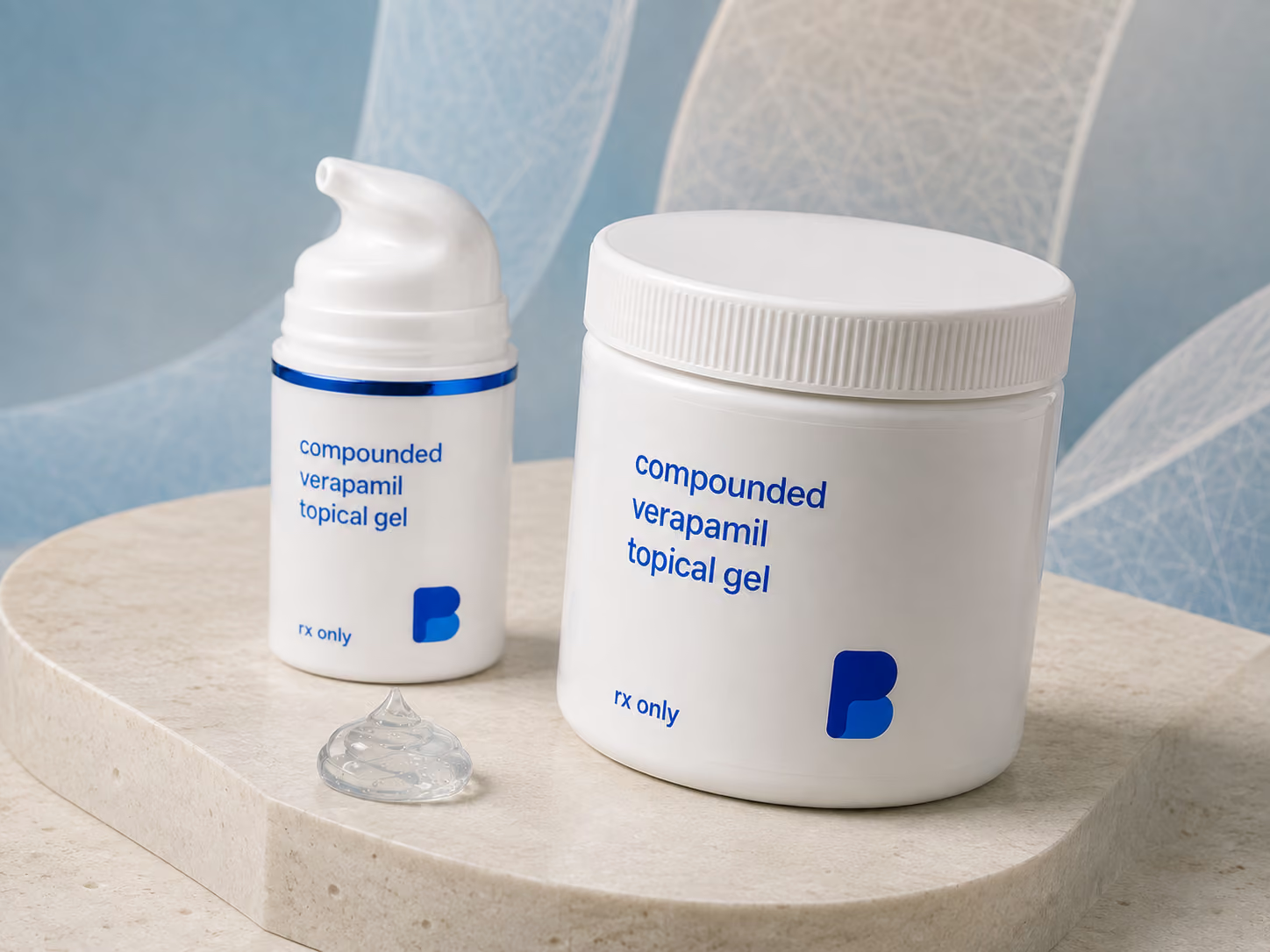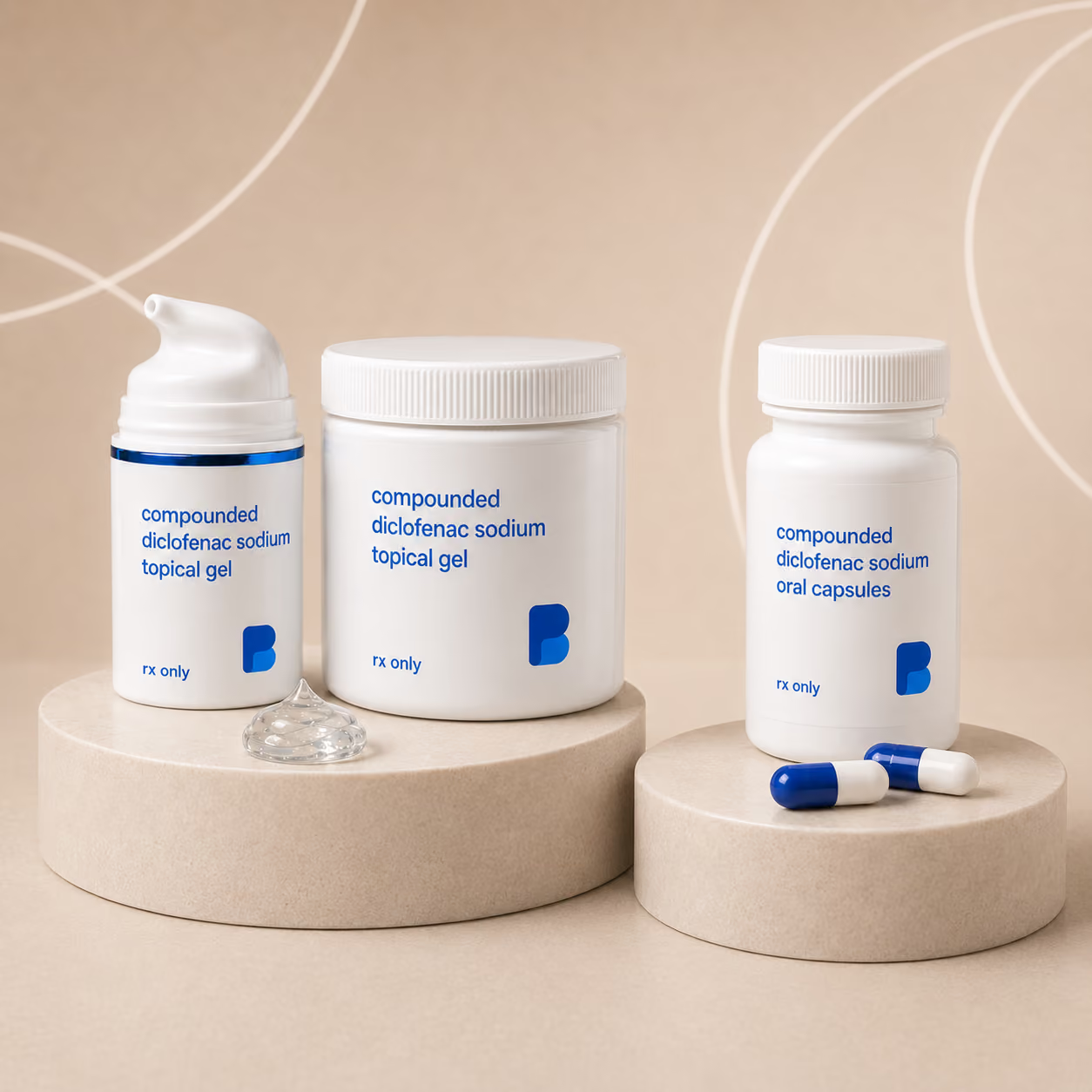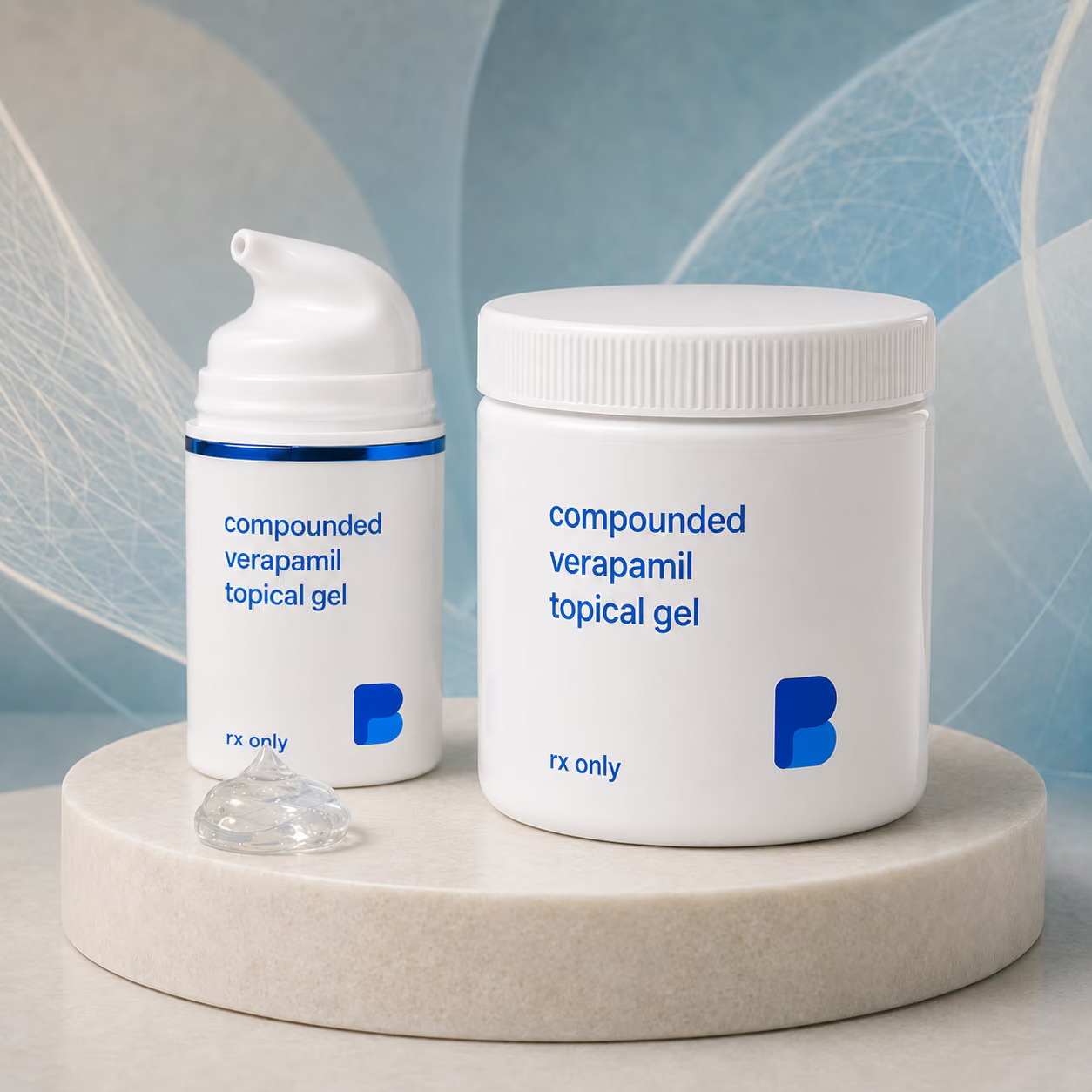



Verapamil 15% topical gel is a compounded, prescription gel containing verapamil hydrochloride in a penetration-enhancing base, most often Perme8, an anhydrous base, or Lipoderm. It is prepared by a licensed pharmacy to the strength and base your prescriber orders rather than mass-produced. Prescribers order it most often for Peyronie's disease, and sometimes for plantar fibromatosis or Dupuytren's contracture. Bayview compounds this as part of our pain management compounding line.
There is no FDA-approved topical verapamil product anywhere. Verapamil is approved only in oral and intravenous forms, for high blood pressure, angina, and certain abnormal heart rhythms. A gel is entirely off-label and uses an unapproved route. This page exists so that you and your prescriber can see what is actually known about it, including the findings that do not support it.
How does it work?
Verapamil is an L-type calcium channel blocker. The reason it is prescribed here has nothing to do with its effects on the heart. In cell culture, blocking calcium channels changes how fibroblasts, the cells that build scar tissue, handle collagen: they produce less extracellular matrix and show more collagenase activity. The theory is that this could soften a fibrotic plaque.
That is a laboratory rationale, not a demonstrated effect in people, and it depends entirely on the drug reaching the plaque. Perme8 (anhydrous) and Lipoderm are penetration-enhancing bases meant to help drugs cross the skin. When researchers looked for verapamil in penile tunical tissue after applying the gel, they found none. So the proposed mechanism has not been shown to happen where it would need to.
What is it used for?
Prescribers order verapamil topical gel for Peyronie's disease, a condition in which fibrous plaque in the tunica albuginea of the penis causes curvature, pain, or shortening. It is sometimes ordered for plantar fibromatosis (nodules in the arch of the foot) or Dupuytren's contracture (thickening in the palm). All of these uses are off-label, and the dosage form itself is unapproved.
Benefit is not established for any of these conditions. Only a licensed prescriber can decide whether to try it. Bayview Pharmacy does not provide consultations and does not determine whether a medication is appropriate for you; a valid prescription is required.
What does the evidence show?
Plainly: the evidence does not support verapamil gel, and the most directly relevant study is negative.
- The drug does not reach the plaque. Martin and colleagues (J Urol, 2002) applied verapamil gel to the penile shaft before surgery and assayed the tunica albuginea removed at surgery. No verapamil was detected in any tunical specimen; only trace urinary levels were found (mean 46 ng/mL). The authors concluded the approach "has no scientific basis."
- The AUA guideline says nothing about topical verapamil. The American Urological Association Peyronie's Disease Guideline (2015) contains no statement for or against topical verapamil. What it does say is that clinicians should not offer electromotive therapy with verapamil (Moderate Recommendation; Evidence Strength Grade C), and that clinicians may offer intralesional verapamil, verapamil injected directly into the plaque by a clinician (Conditional Recommendation; Evidence Strength Grade C).
- The one topical gel with a positive pilot study is not verapamil. H-100 (Twidwell & Levine, Int J Impot Res, 2016, N=22) is a different product containing nicardipine, superoxide dismutase and emu oil. Its results say nothing about verapamil gel.
- For plantar fibromatosis and Dupuytren's, there are no specific trials. The 2018 evidence-based review in Foot & Ankle Specialist rates topical verapamil at Level V, expert opinion, and extrapolates from Peyronie's data. That is the lowest level of evidence, and it should not be described as evidence-based support.
The only FDA-approved drug for Peyronie's disease is collagenase clostridium histolyticum (Xiaflex), given as an injection into the plaque by a trained clinician. Bayview makes no claim that this gel penetrates the tunica albuginea, reduces plaque size, or corrects curvature, and we do not repeat efficacy figures published on compounding-vendor websites.
How is it used?
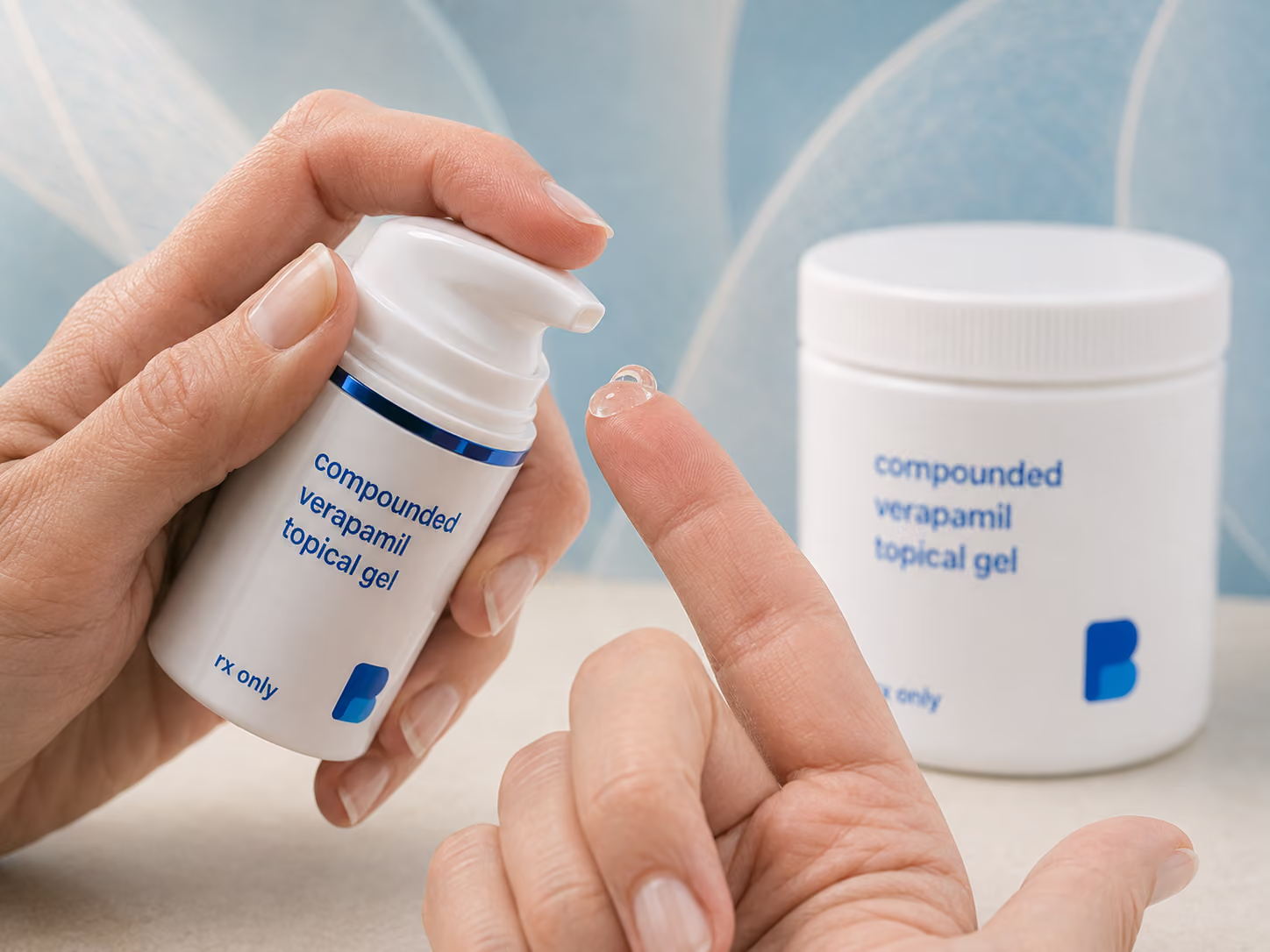
Use it exactly as your prescriber directs. As it is commonly prescribed, roughly 0.5 mL, about a pea-sized to dime-sized amount, is massaged into the plaque and the surrounding shaft two to three times daily. It is typically dispensed as 30 g to 100 g in an airless pump or a jar. Prescribers often set a trial of about three months before reassessing, and courses of three to nine months are described in practice.
Wash your hands after applying, and keep the gel off broken or inflamed skin. These details describe common regimens and are not treatment recommendations; your prescriber sets the strength, the amount, and the schedule, and decides when to stop. A Bayview pharmacist can answer questions about your prescription.
What strengths and bases are used?
Verapamil gel is compounded to order. The combinations below are the ones prescribers request most often.
| Strength | Base | Container |
|---|---|---|
| Verapamil HCl 15% | Perme8 (anhydrous) | 30 g, 60 g, 90 to 100 g; 0.5 mL or 1 mL airless pump, or jar |
| Verapamil HCl 3% to 12% | Lipoderm or Perme8 | 30 g to 100 g; pump or jar |
| Custom strength | As ordered | As ordered |
Strengths and bases are listed for reference only. None has been shown to be effective, and listing them is not a statement that any strength or base works or that one is better than another.
Side effects & safety
The effects reported most often are at the site of application: redness, irritation, dryness, contact dermatitis, and occasionally numbness or tingling where the gel is rubbed in. Stop using it and contact your prescriber if you develop a rash, blistering, or a reaction that does not settle.
Body-wide calcium channel blocker effects, low blood pressure, slow heart rate, constipation, or AV block, are unlikely, because absorption into the bloodstream appears to be close to absent. Even so, tell your prescriber if you take a beta-blocker or digoxin, or if you have a heart conduction problem, so they can weigh it. Do not apply the gel to broken or inflamed skin.
A gel is not a substitute for being evaluated. If you have pain or a curvature that is still changing, the acute, active phase of Peyronie's disease, see your urologist rather than relying on a topical product.
Who should not use it?
Do not use it if you are allergic to verapamil or to any ingredient in the base. Do not apply it to broken, inflamed, or infected skin. Talk with your prescriber first if you take a beta-blocker or digoxin, or if you have existing heart conduction disease, low blood pressure, or significant heart failure. Tell your prescriber about your full health history, your allergies, and every medication you take, including anything else you apply to the same area. Discuss pregnancy or breastfeeding with your prescriber before using it.
How should it be stored?
Store it at controlled room temperature, about 20 to 25 °C (68 to 77 °F), with the container tightly closed. Anhydrous Perme8 bases should be protected from moisture. Do not refrigerate it, cold changes the viscosity of the gel and can stop an airless pump from working properly. Keep it out of the reach of children and do not share it. Discard it after the beyond-use date printed on your label, and dispose of unused medication as directed.
Why is this compounded?
There is no FDA-approved topical verapamil product. Verapamil is approved only in oral and intravenous forms for high blood pressure, angina, and arrhythmias, so a gel can exist only as a compounded preparation. When a prescriber orders it, Bayview Pharmacy prepares it as a 503A compounding pharmacy under USP <795> standards, at the strength and in the base specified, using quality ingredients. Compounding makes the dosage form available; it does not make it effective. Compounded preparations are not FDA-approved.
Clinical details for prescribers
Key negative evidence. Martin DJ, Badwan K, Parker M, Mulhall JP. Transdermal application of verapamil gel to the penile shaft fails to infiltrate the tunica albuginea. J Urol. 2002. Verapamil gel was applied to the penile shaft preoperatively and tunical specimens were assayed at surgery: no verapamil was detected in any tunical specimen, with only trace urinary levels (mean 46 ng/mL). The authors concluded that the approach "has no scientific basis" because the drug does not reach the target tissue.
Guideline status. The AUA Peyronie's Disease Guideline (approved April 2015) makes no statement for or against topical verapamil. It states: "Clinicians should not offer electromotive therapy with verapamil" (Moderate Recommendation; Evidence Strength Grade C), and "Clinicians may offer intralesional verapamil for the treatment of patients with Peyronie's disease" (Conditional Recommendation; Evidence Strength Grade C). The intralesional statement does not extend to a topical gel and must not be cited as support for one. Guideline silence is not endorsement.
Regulatory. Verapamil is not a controlled substance. FDA-approved verapamil products are oral and intravenous only (hypertension, angina, arrhythmias). No topical verapamil product is approved anywhere; a gel is off-label and by an unapproved route. The only FDA-approved drug for Peyronie's disease is collagenase clostridium histolyticum (Xiaflex), administered intralesionally by a trained clinician. Compounded preparations are not FDA-approved.
Related but distinct. H-100 gel (Twidwell & Levine, Int J Impot Res 2016; N=22) reported benefit in a randomized placebo-controlled pilot, but contains nicardipine, superoxide dismutase and emu oil, not verapamil; it does not support verapamil gel. For plantar fibromatosis and Dupuytren's, the 2018 Foot & Ankle Specialist evidence-based review rates topical verapamil Level V (expert opinion), extrapolated from Peyronie's data; there are no plantar-fibromatosis-specific trials.
Formulation & SIG. Verapamil HCl 15% (3% to 12% also compounded) in Perme8 anhydrous or Lipoderm; 30 g, 60 g, or 90 to 100 g; 0.5 mL or 1 mL airless pump, or jar. Descriptive SIG: apply approximately 0.5 mL to the plaque and shaft and massage in 2 to 3 times daily; a trial of about 3 months before reassessment is common, with courses of 3 to 9 months described. Prepared under USP <795>.
Clinical points:
- Distinguish acute/active disease (pain, changing curvature, duration under 12 months) from stable disease, treatment decisions differ.
- AUA calls for in-office intracavernosal injection testing, with or without duplex Doppler ultrasound, before invasive intervention, and for stable disease before surgical reconstruction.
- Monitor with serial goniometric curvature measurement, stretched penile length, standardized photographs, and pain scores.
- Local reactions predominate. Systemic calcium-channel effects are unlikely given near-absent absorption, but use caution with concurrent beta-blockers, digoxin, or existing conduction disease.
Ordering: e-prescribe or fax a prescription to Bayview. Bayview does not recommend this preparation and makes no efficacy claim; it is prepared on prescriber request. References: Martin et al., J Urol 2002; AUA Peyronie's Disease Guideline (PDF).
This is a prescription compounded medication and is not FDA-approved. This information is educational and is not medical advice, and it is not a recommendation to use this preparation. Benefit for Peyronie's disease, plantar fibromatosis, and Dupuytren's contracture is not established. Your prescriber determines whether it is appropriate and sets the strength and directions. A valid prescription is required.
What else does Bayview compound for this?
Related preparations for localized pain include Topical Pain Cream and Tacrolimus Compounded Preparations. The full list is in our compounded medications catalog.